Who am I?

What do I enjoy?

How do others see me?

What do I find challenging?
What kind of person do I want
to be?

What am I aiming to achieve?

What do I want out of my life?
+


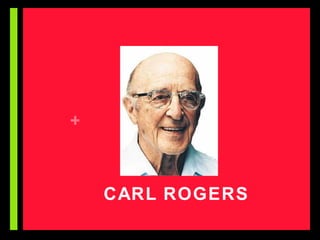
    CARL ROGERS
+
        Carl Rogers and his
              Theories

    Actualizing Tendency


    Real vs. Ideal Self Congruence
+
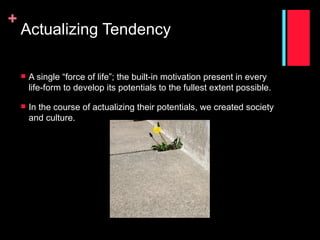
    Actualizing Tendency

       A single “force of life”; the built-in motivation present in every
        life-form to develop its potentials to the fullest extent possible.

       In the course of actualizing their potentials, we created society
        and culture.
+

                “Self-actualization implies
                that the person is acceptantly
Self-           aware of what’s going on
Actualization   within and is consequently
                changing practically every
                moment and is moving on in
                complexity.”


                      Rogers, C. from Evans, R. I. 1975, pp. 17
+
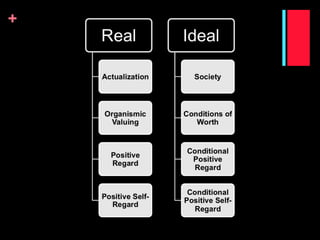
    Real vs Ideal
+
    Real Self

    Organismic    Valuing
    Positive   Regard
    Positive   Self-Regard
+
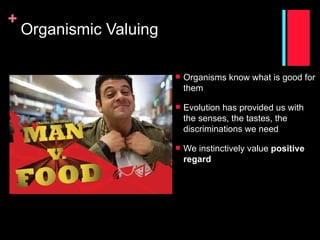
    Organismic Valuing

                            Organisms know what is good for
                             them

                            Evolution has provided us with
                             the senses, the tastes, the
                             discriminations we need

                            We instinctively value positive
                             regard
+
    Positive Regard


       Rogers’ umbrella term for things
        like love, affection, attention,
        nurturance, etc
+
    Positive Self-Regard

                          Self-esteem, self-worth and
                           self-image all come under this
                           idea.

                          These feelings and images
                           come from others showing
                           positive regard to us and
                           caring for us (e.g.
                           compliments)

                          Without this self-regard, we
                           feel small and helpless, and
                           again we fail to become all
                           that we can be
+
    Ideal Self
    Conditions   of Worth
    Conditional   Positive Regard
    Conditional   Positive Self-Regard
+
    Conditions of Worth
   Society also leads us astray
    with conditions of worth

   Parents, teachers, peers, the
    media, and others, only give us
    what we need when we show
    we are “worthy,” rather than just
    because we need it.

   E.g. We go to the toilet if we ask
    the teacher, we get something
    sweet when we finish our
    vegetables, and most
    importantly, we get love and
    affection if and only if we
    “behave!”
+
    Conditional Positive Regard

       Getting positive regard on “on condition”

       Society gives us positive regard only when we do what they
        want (the reward to the condition of worth)
+
    Conditional Self-Regard
   Conditioning leads people to only like themselves when they
    meet the standards society sets

   Standards were created without keeping each individual in
    mind  unable to meet them  unable to maintain any sense
    of self-esteem.
+
+


    The
    Fully-Functioning
    Person
+
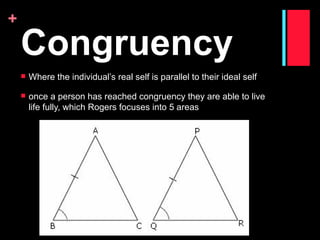
    Congruency
       Where the individual’s real self is parallel to their ideal self

       once a person has reached congruency they are able to live
        life fully, which Rogers focuses into 5 areas
+
    Openess to Experience
    Carl Rogers, 1961

    “[the individual] is more able fully to live the
      experiences of his organism rather than shutting
      them out of awareness.”
     Fully-functioning people are able to experience
     things to the full extent, without defences stopping
     them
     Comfortable with real self = feeling and sensing new
     things without fear of judgement
+
    Existential Living

       Living in the here-and-now; The present is the only reality we
        have.

       Doesn't mean we shouldn't remember and learn from our past.
        Nor that we shouldn't plan the future.

       Just recognize these things for what they are: memories and
        dreams, which are being experienced in the present.
+
    Organismic Trusting

       Trust the real self, do what feels right, what comes naturally.

       One can only know what your real self has to say if you are
        open to experience and living existentially!

       Assumes you are in contact with the actualizing tendency.
+
    Experiential Freedom

       Irrelevant whether or not people really had free will.

       One feels free when choices are available to us.

       The fully-functioning person acknowledges that feeling of
        freedom, and takes responsibility for his/her choices.
+
    Creativity

       Free and responsible  participate in the world.

       Obliged to contribute to the actualization of others, even life
        itself.

       This can be through creativity in the arts or sciences, through
        social concern and parental love, or simply by doing one's best
        at one's job.

       Creativity as Rogers uses it is very close to Erikson’s
        generativity.
+
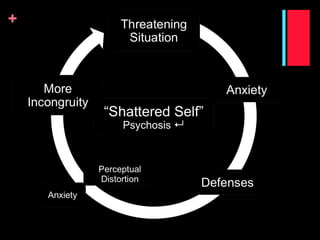
    Incongruence
       occurs when ideal and real self are not similar > more disparity
        > more problems created
+

10 carl rogers

  • 1.
    Who am I? Whatdo I enjoy? How do others see me? What do I find challenging?
  • 2.
    What kind ofperson do I want to be? What am I aiming to achieve? What do I want out of my life?
  • 3.
    + CARL ROGERS
  • 4.
    + Carl Rogers and his Theories Actualizing Tendency Real vs. Ideal Self Congruence
  • 5.
    + Actualizing Tendency  A single “force of life”; the built-in motivation present in every life-form to develop its potentials to the fullest extent possible.  In the course of actualizing their potentials, we created society and culture.
  • 6.
    + “Self-actualization implies that the person is acceptantly Self- aware of what’s going on Actualization within and is consequently changing practically every moment and is moving on in complexity.” Rogers, C. from Evans, R. I. 1975, pp. 17
  • 7.
    + Real vs Ideal
  • 8.
    + Real Self Organismic Valuing Positive Regard Positive Self-Regard
  • 9.
    + Organismic Valuing  Organisms know what is good for them  Evolution has provided us with the senses, the tastes, the discriminations we need  We instinctively value positive regard
  • 10.
    + Positive Regard  Rogers’ umbrella term for things like love, affection, attention, nurturance, etc
  • 11.
    + Positive Self-Regard  Self-esteem, self-worth and self-image all come under this idea.  These feelings and images come from others showing positive regard to us and caring for us (e.g. compliments)  Without this self-regard, we feel small and helpless, and again we fail to become all that we can be
  • 12.
    + Ideal Self Conditions of Worth Conditional Positive Regard Conditional Positive Self-Regard
  • 13.
    + Conditions of Worth  Society also leads us astray with conditions of worth  Parents, teachers, peers, the media, and others, only give us what we need when we show we are “worthy,” rather than just because we need it.  E.g. We go to the toilet if we ask the teacher, we get something sweet when we finish our vegetables, and most importantly, we get love and affection if and only if we “behave!”
  • 14.
    + Conditional Positive Regard  Getting positive regard on “on condition”  Society gives us positive regard only when we do what they want (the reward to the condition of worth)
  • 15.
    + Conditional Self-Regard  Conditioning leads people to only like themselves when they meet the standards society sets  Standards were created without keeping each individual in mind  unable to meet them  unable to maintain any sense of self-esteem.
  • 16.
  • 17.
    + The Fully-Functioning Person
  • 18.
    + Congruency  Where the individual’s real self is parallel to their ideal self  once a person has reached congruency they are able to live life fully, which Rogers focuses into 5 areas
  • 19.
    + Openess to Experience Carl Rogers, 1961 “[the individual] is more able fully to live the experiences of his organism rather than shutting them out of awareness.”  Fully-functioning people are able to experience things to the full extent, without defences stopping them  Comfortable with real self = feeling and sensing new things without fear of judgement
  • 20.
    + Existential Living  Living in the here-and-now; The present is the only reality we have.  Doesn't mean we shouldn't remember and learn from our past. Nor that we shouldn't plan the future.  Just recognize these things for what they are: memories and dreams, which are being experienced in the present.
  • 21.
    + Organismic Trusting  Trust the real self, do what feels right, what comes naturally.  One can only know what your real self has to say if you are open to experience and living existentially!  Assumes you are in contact with the actualizing tendency.
  • 22.
    + Experiential Freedom  Irrelevant whether or not people really had free will.  One feels free when choices are available to us.  The fully-functioning person acknowledges that feeling of freedom, and takes responsibility for his/her choices.
  • 23.
    + Creativity  Free and responsible  participate in the world.  Obliged to contribute to the actualization of others, even life itself.  This can be through creativity in the arts or sciences, through social concern and parental love, or simply by doing one's best at one's job.  Creativity as Rogers uses it is very close to Erikson’s generativity.
  • 24.
    + Incongruence  occurs when ideal and real self are not similar > more disparity > more problems created
  • 25.