Downloaded 17 times

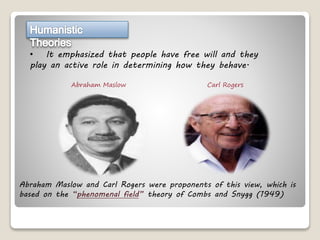




Maslow and Rogers were proponents of humanistic psychology, which views people as having free will and playing an active role in shaping their own behavior. Maslow studied self-actualized individuals and identified key characteristics like maintaining constant enjoyment of life, focusing on problems in their environment, accepting realities, and valuing democratic friendships. Both emphasized viewing people as active, creative beings who live in the present and subjectively respond to current experiences. Humanistic therapy relies on clients to understand the past's effects and stresses the therapist's empathetic reflective responses to help clients.


