“ I have had dreams and I
have had nightmares. I
overcame the nightmares
because of my dreams”
Jonas Salk
Functional Anatomy of
the Kidney
Functions of the Kidney
 Regulation of body fluid osmolality
 Regulation of blood volume
 Regulation of systemic arterial blood pressure
 Regulation of electrolyte balance
 Regulation of acid base balance (pH of blood)
 Excretion of metabolic products, drugs and
foreign substances
 Endocrine organ [ renin (RAA), erythropoietin,
calcitriol( 1,25-dihydroxy vitamin D3) and
thrombopoietin.
Introduction
• Nephron: function unit of the kidney.
• About 1 million nephron within each kidney.
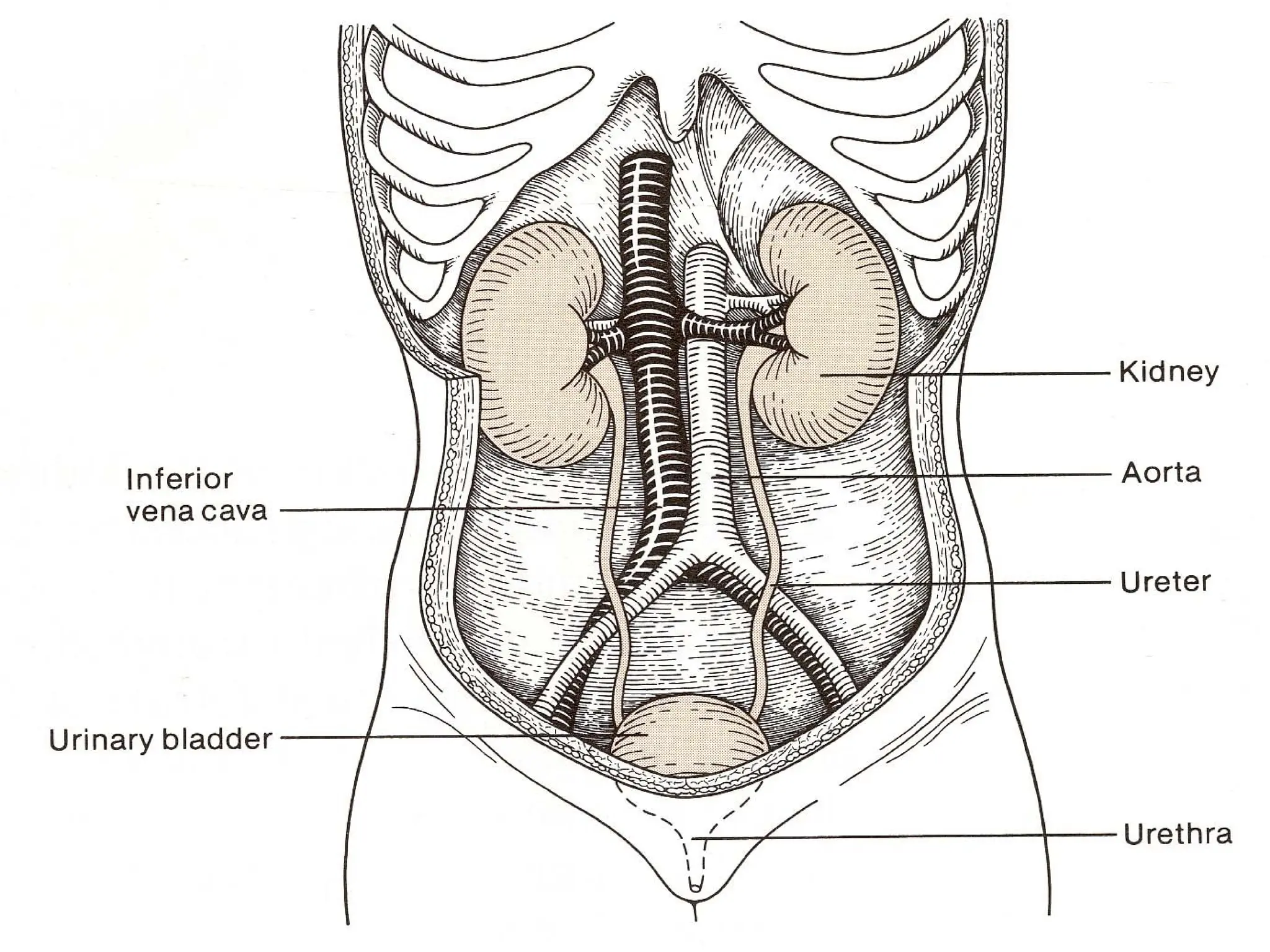
• Paired,retroperitonel organs that comprises a complex mixture of vascular and
epithelial elements.
• Lies behind the peritoneum on each side of the vertebral column.
• Extend from T12-L3 vertebrae.
• In men- 125 to 174 gm each
• In female- 115 to 155gm each
• Fibrous, almost non distensible capsule covers each kidney.
• In the middle of the concave surface, a slit in the capsule: HILUS
• HILUS serve as:
– The port of entry for the renal artery and nerves.
– Site of exist for the renal vein, the lymphatics and ureter.
• Renal blood flow is about 20-22 % CO, about about 1100ml/min
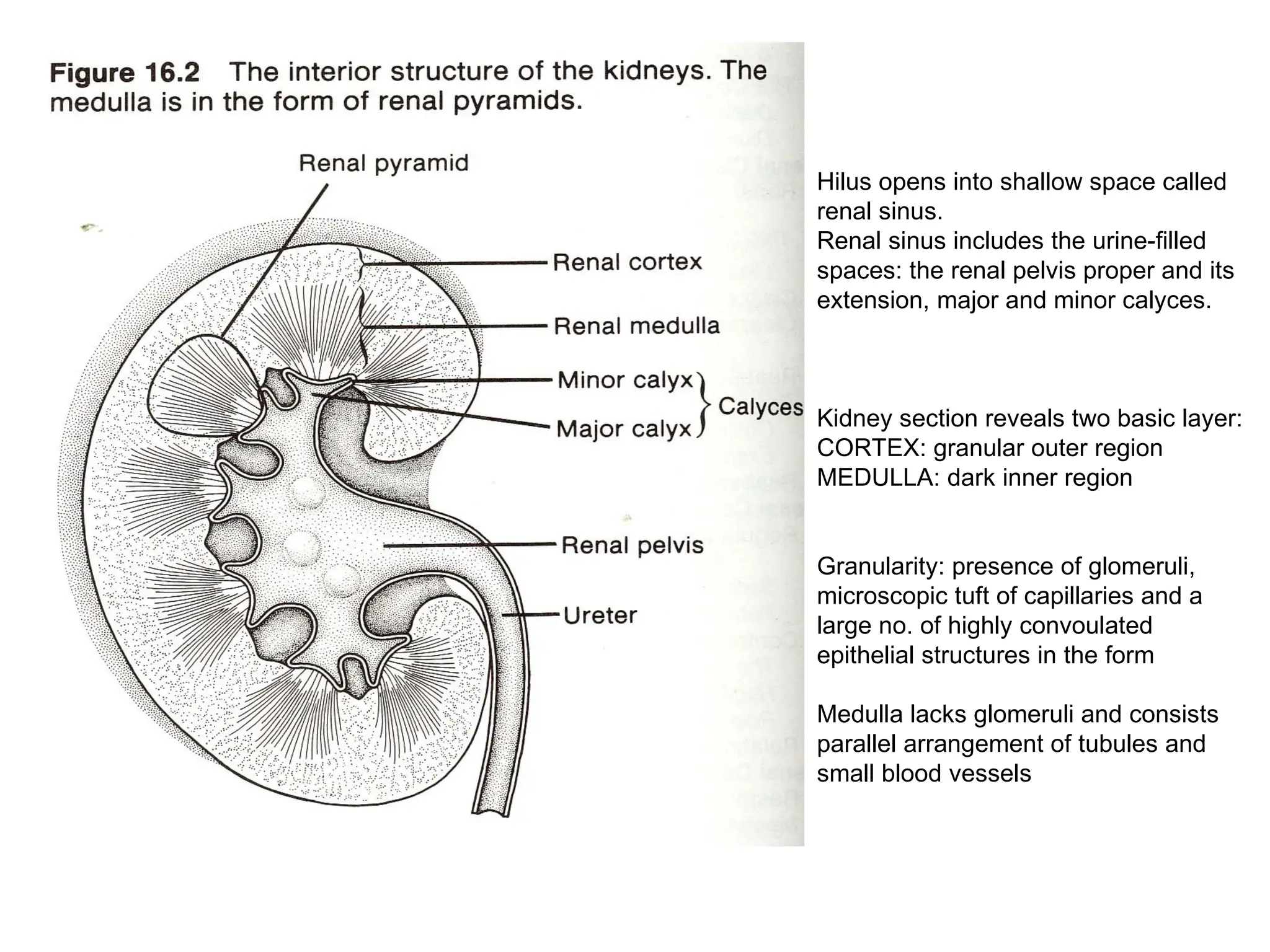
Hilus opens into shallow space called
renal sinus.
Renal sinus includes the urine-filled
spaces: the renal pelvis proper and its
extension, major and minor calyces.
Kidney section reveals two basic layer:
CORTEX: granular outer region
MEDULLA: dark inner region
Granularity: presence of glomeruli,
microscopic tuft of capillaries and a
large no. of highly convoulated
epithelial structures in the form
Medulla lacks glomeruli and consists
parallel arrangement of tubules and
small blood vessels
Medulla is sub-divided into 8-18
conical pyramids
The base of pyramid face the
cortical-medulla border.
The tip of each pyramid terminate
in renal pelvis.
The initial parts of 8-10 cortical
collecting ducts to form a single
large collecting duct.
In each kidney, there are about 250
of the very large collecting ducts,
each of which collects urine from
about 4000 nephrons.
PCT: 15 mm, two parts, convoulated and straight, microvilli, numerous mitochondria
LOH: thin segment (2-14mm), thick ascending limb (12 mm)
DCT: 5 mm,cellsget modified to columnar (macula densa), along with afferent arteriole
froms JUXTRAGLOMERULAR apparatus.
CT: 20 mm: principal cell and intercalated cell.
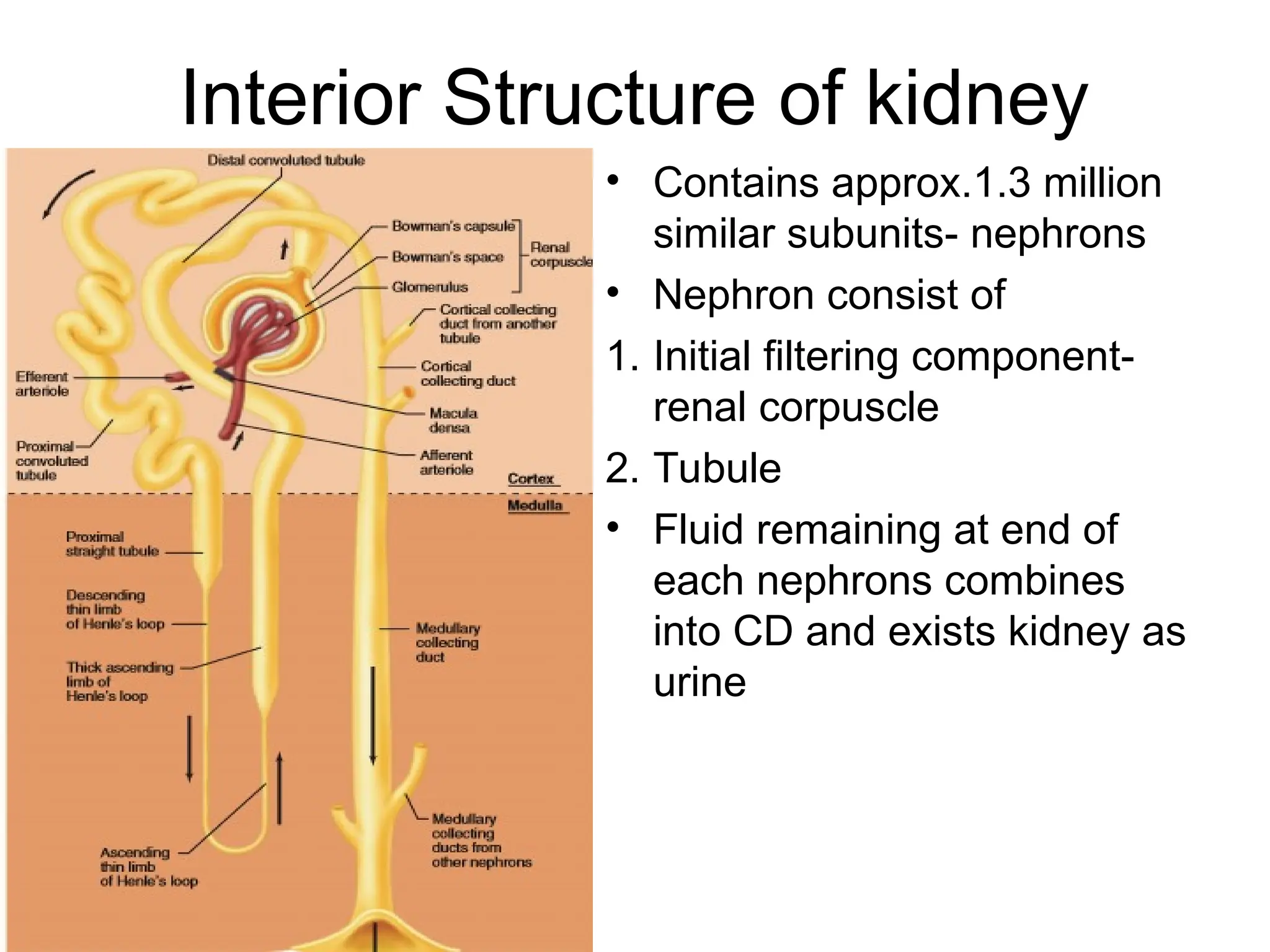
Interior Structure of kidney
• Contains approx.1.3 million
similar subunits- nephrons
• Nephron consist of
1. Initial filtering component-
renal corpuscle
2. Tubule
• Fluid remaining at end of
each nephrons combines
into CD and exists kidney as
urine
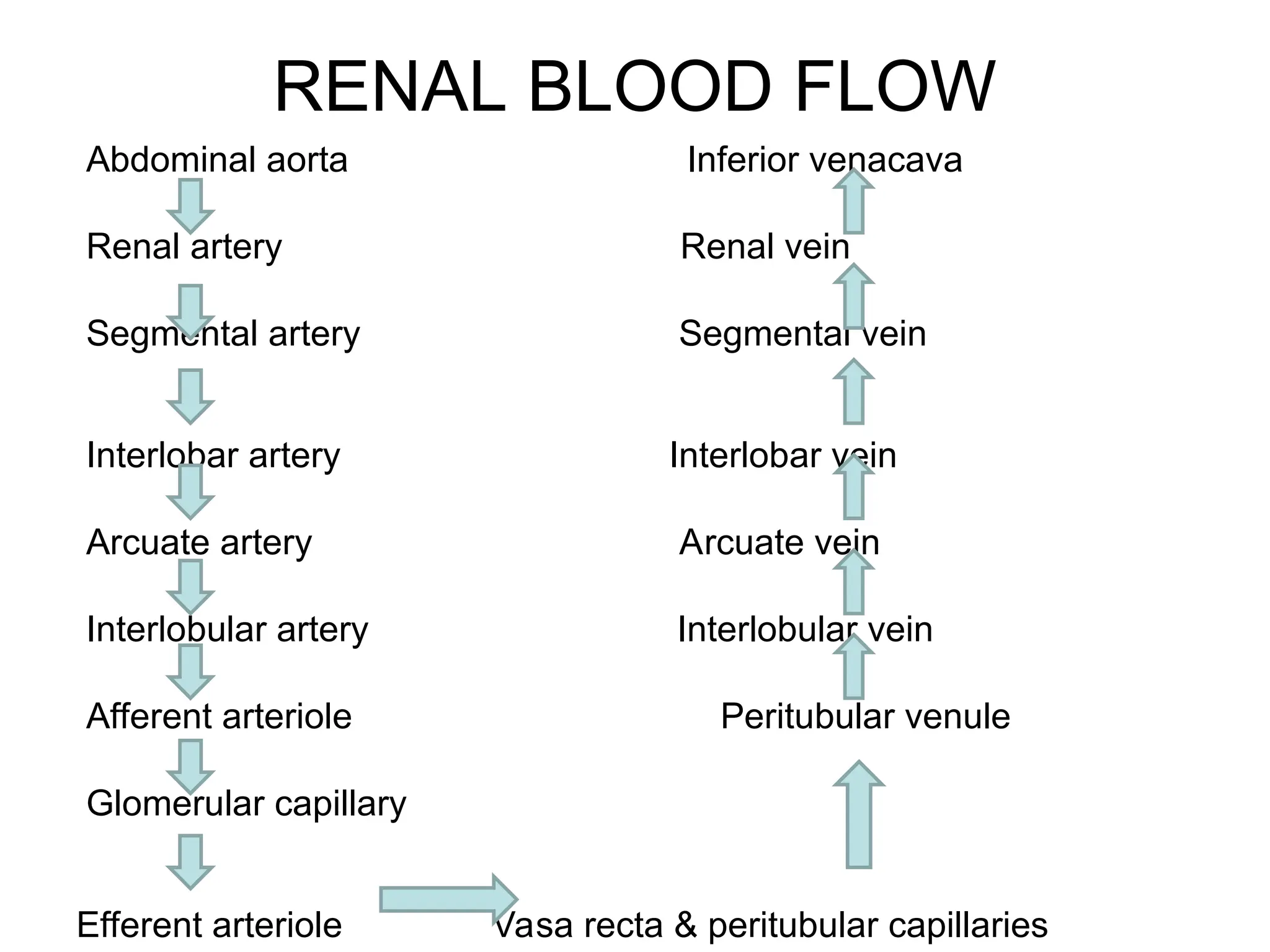
RENAL BLOOD FLOW
Abdominal aorta Inferior venacava
Renal artery Renal vein
Segmental artery Segmental vein
Interlobar artery Interlobar vein
Arcuate artery Arcuate vein
Interlobular artery Interlobular vein
Afferent arteriole Peritubular venule
Glomerular capillary
Efferent arteriole Vasa recta & peritubular capillaries
Blood flow to the
kidneys is 25% of CO
(1.25 L/min)
Some 90% of renal , prefuses
Cortex and superficial glomeruli
Only about 10% perfuses
juxtramedullary glomeruli and
medulla.
Lymphatics are absent from the
medulla, as they can drain the
high osmolality interstitial fluid,
which is necessary for producing
concentrated urine.
Lymphatic vessels, which drains
the interstitial fluid of the cortex
and may contain high
concentration of renal hormone
such as Erythropoietin
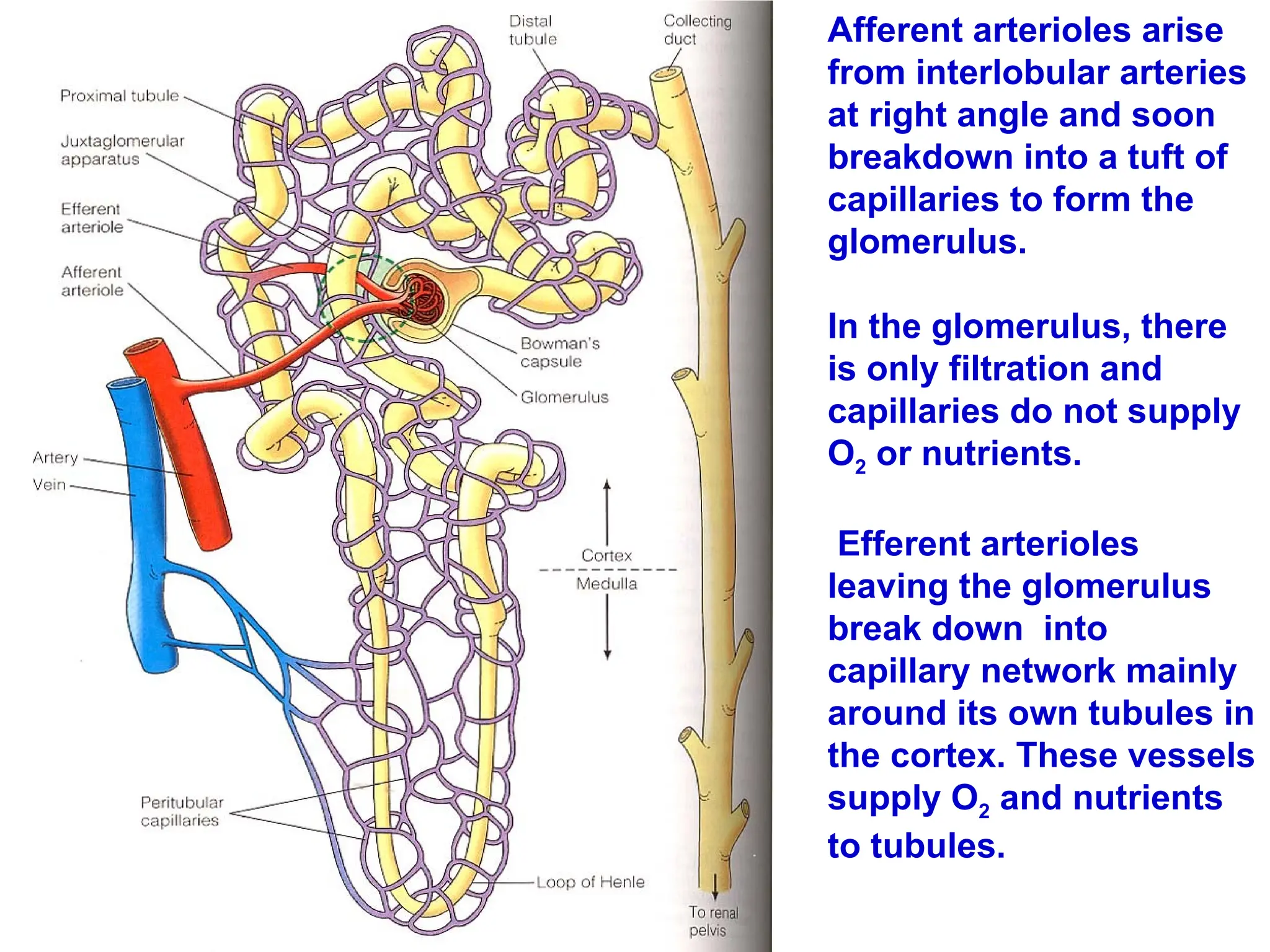
Afferent arterioles arise
from interlobular arteries
at right angle and soon
breakdown into a tuft of
capillaries to form the
glomerulus.
In the glomerulus, there
is only filtration and
capillaries do not supply
O2 or nutrients.
Efferent arterioles
leaving the glomerulus
break down into
capillary network mainly
around its own tubules in
the cortex. These vessels
supply O2 and nutrients
to tubules.
Efferent arteriolar
capillary network
supplies O2 and
nutrients to the
tubules.
Renal sympathetic
nerves are
vasoconstrictor.
Prolonged stimulation
of sympathetic nerves
(as in shock) will lead
to hypoxia of renal
tubules and may lead
to acute tubular
necrosis and acute
renal failure.
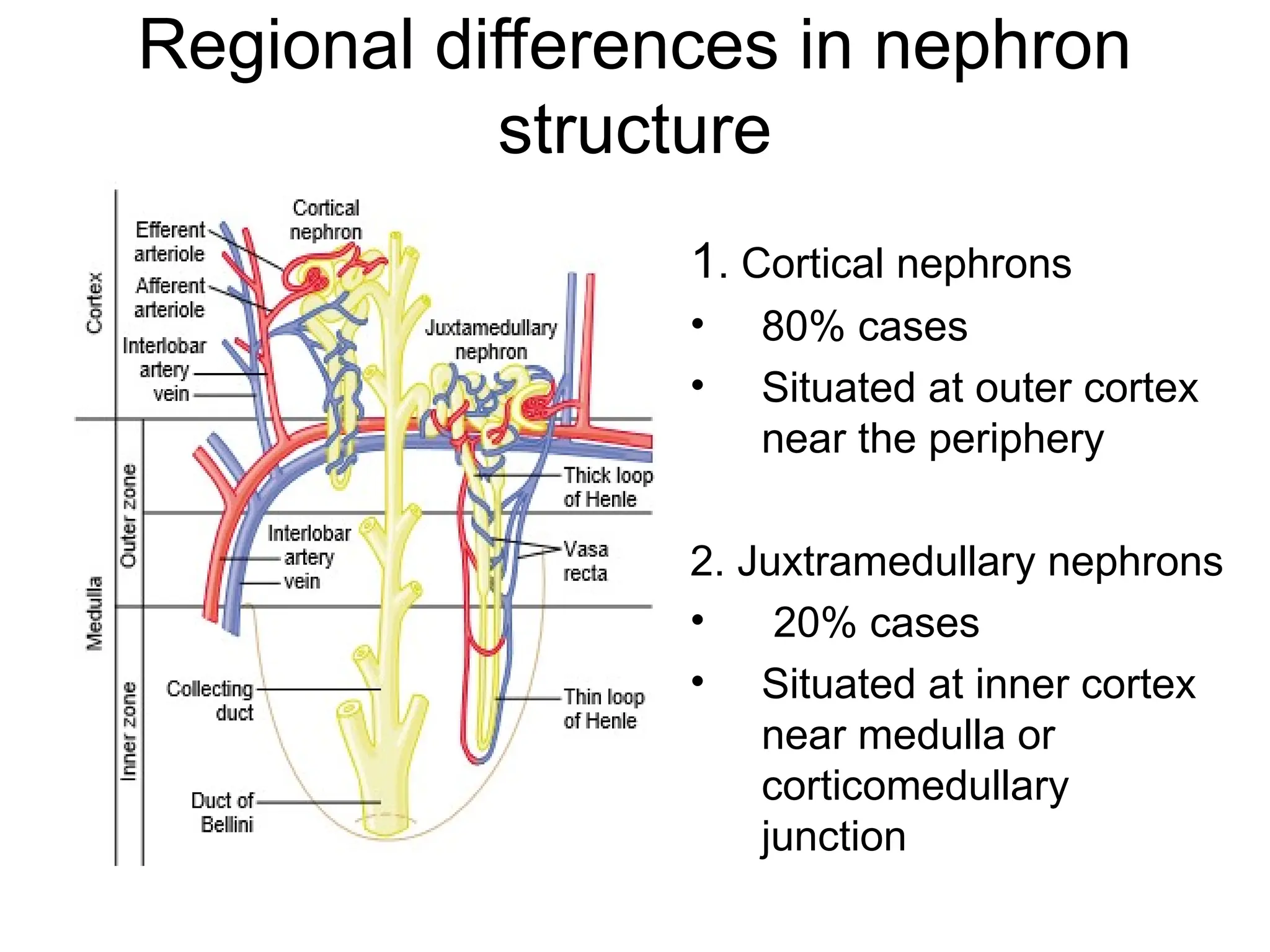
Regional differences in nephron
structure
1. Cortical nephrons
• 80% cases
• Situated at outer cortex
near the periphery
2. Juxtramedullary nephrons
• 20% cases
• Situated at inner cortex
near medulla or
corticomedullary
junction
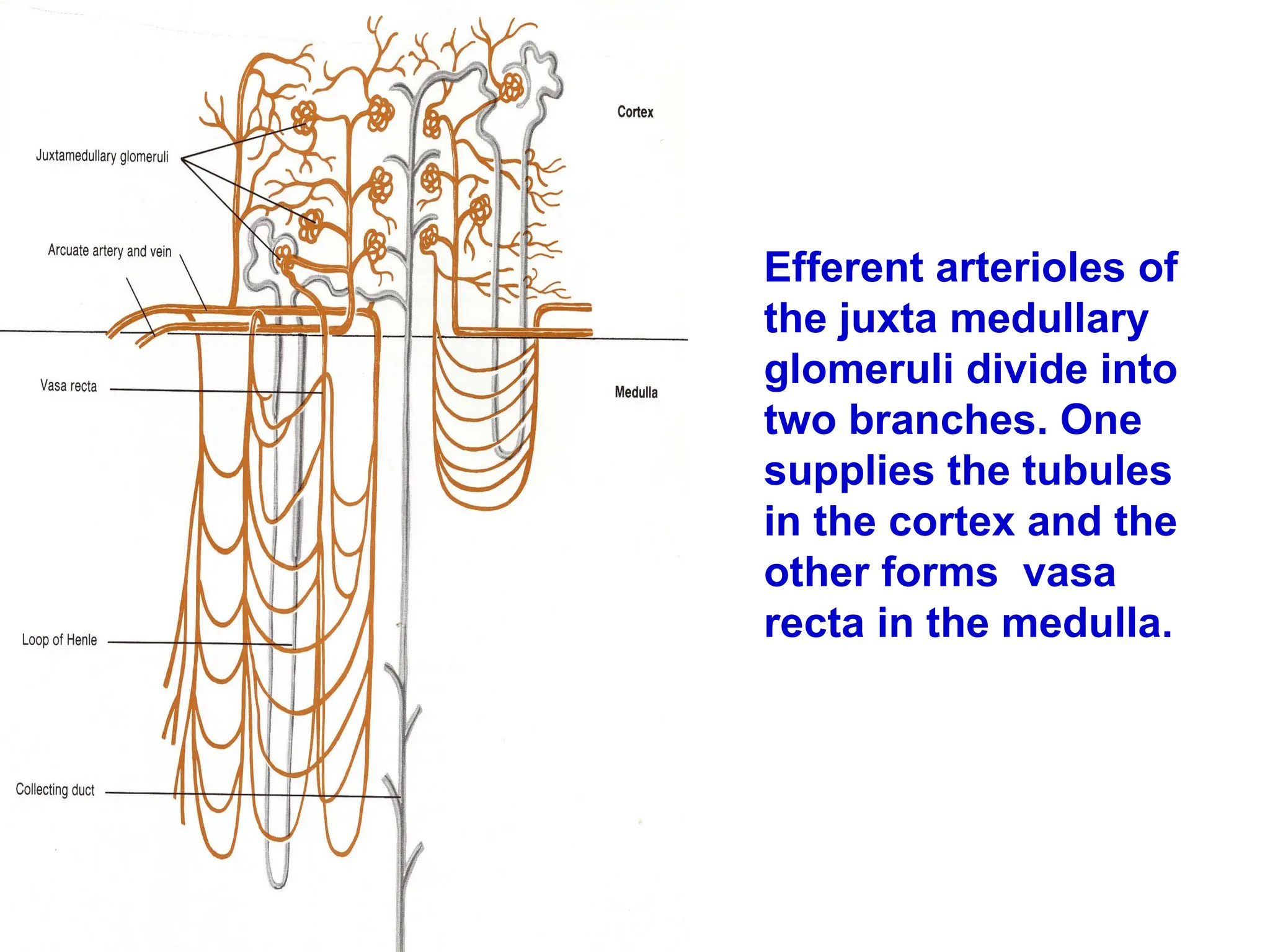
Efferent arterioles of
the juxta medullary
glomeruli divide into
two branches. One
supplies the tubules
in the cortex and the
other forms vasa
recta in the medulla.
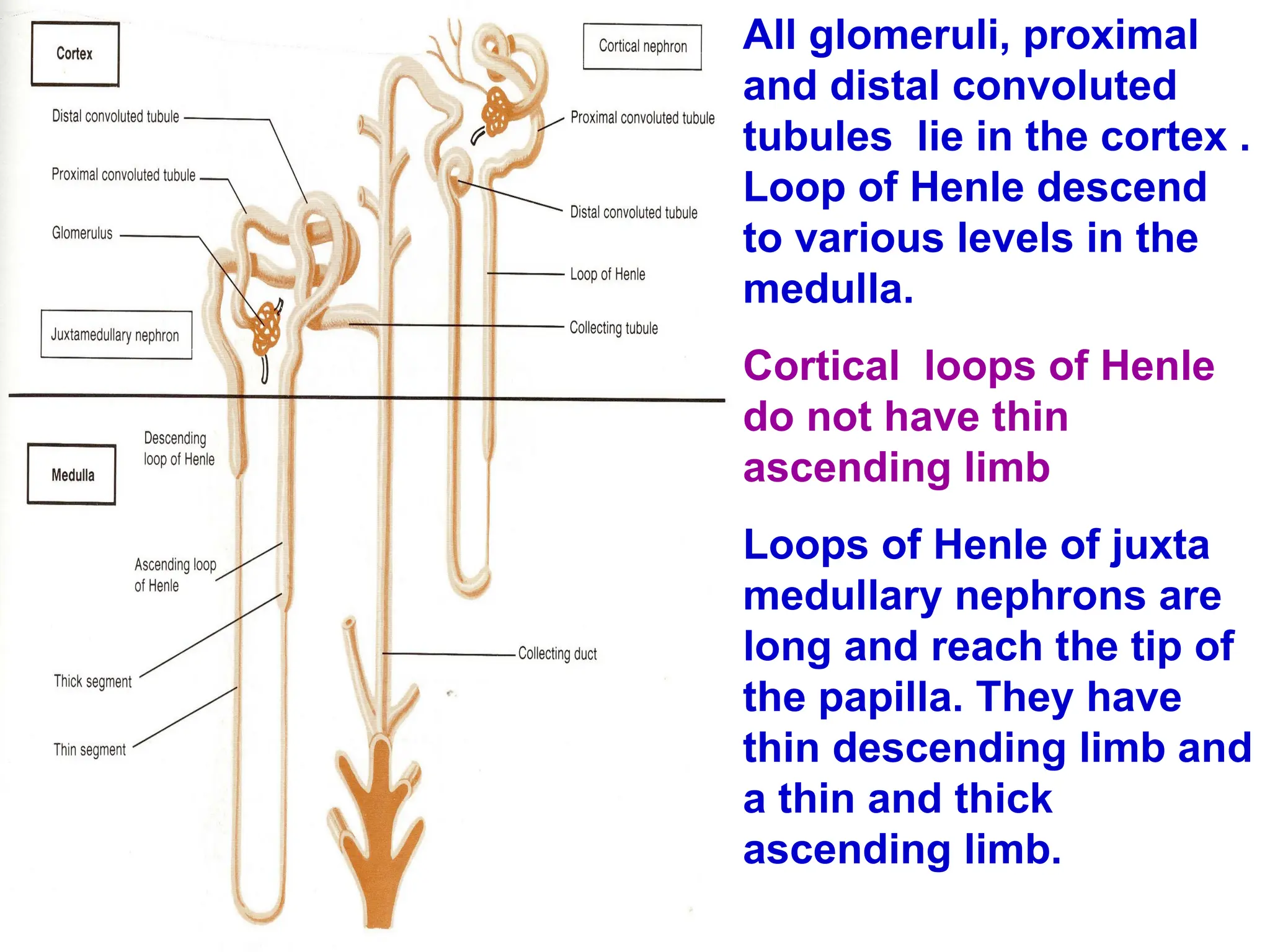
All glomeruli, proximal
and distal convoluted
tubules lie in the cortex .
Loop of Henle descend
to various levels in the
medulla.
Cortical loops of Henle
do not have thin
ascending limb
Loops of Henle of juxta
medullary nephrons are
long and reach the tip of
the papilla. They have
thin descending limb and
a thin and thick
ascending limb.
Types of Nephron
Cortical Nephron Juxtra medulla
Comprise 85% of total nephrons Comprise 15% of total nephrons
Have smaller size glomeruli located in
the renal tubules
Large size glomeruli located at the
cortex and medulla junction
Posses short loops of henle which
penerate upto outer layer of the
medulla
Posses long loops of henle which
penetrate deep into the medulla.
Ascending limb contains only a thick
segments
Ascending limbs also contains thin
segments
Henle loop vascular supply in the form
of peritubular capillary plexus
Henle loops vascular supply in the
form of vasrecta
Rate of filtration is slow High
Major role in excretion of waste
products in the urine
Important in the counter current
system: causing concentrate urine
The Glomerulus
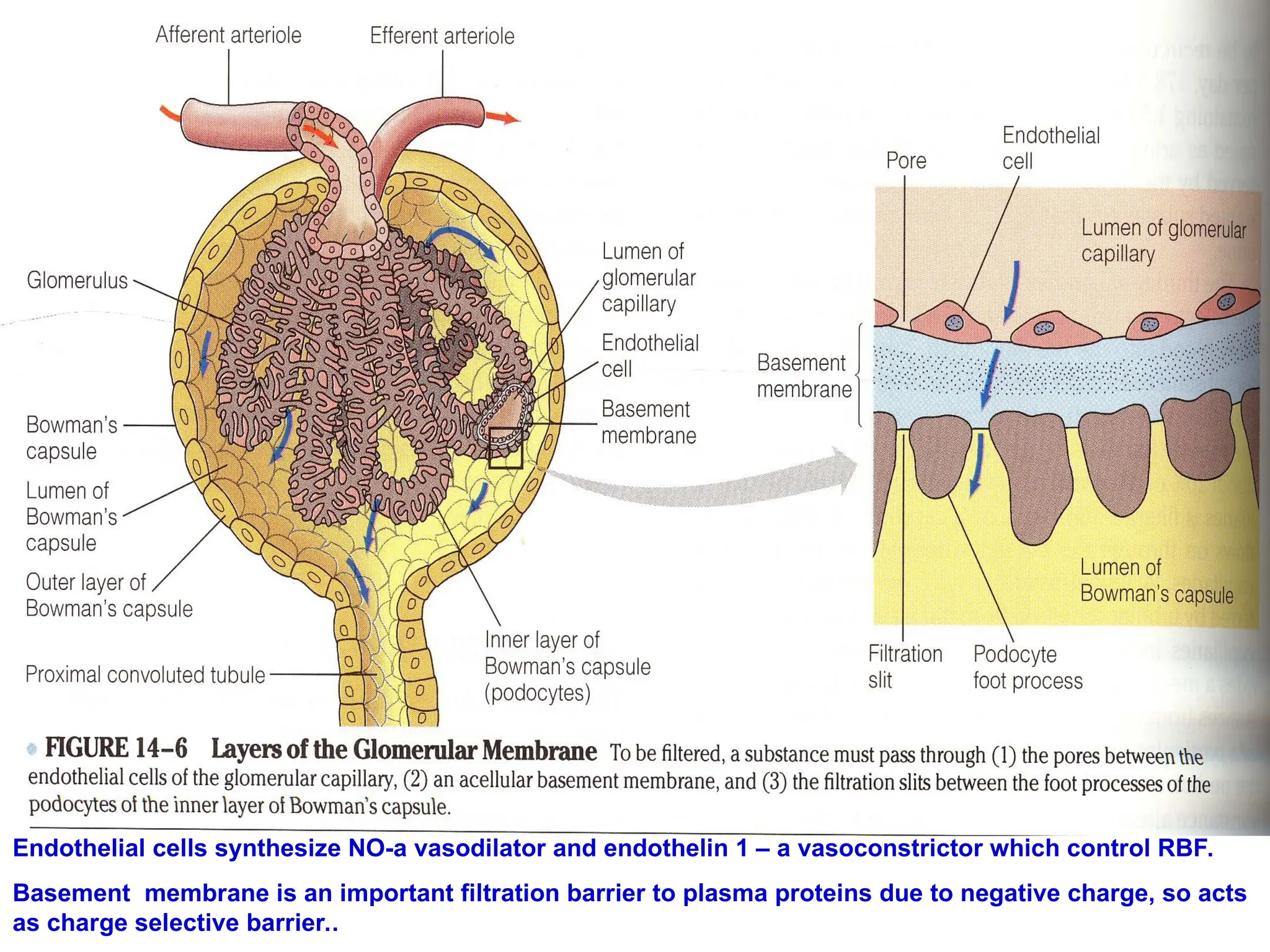
Endothelial cells synthesize NO-a vasodilator and endothelin 1 – a vasoconstrictor which control RBF.
Basement membrane is an important filtration barrier to plasma proteins due to negative charge, so acts
as charge selective barrier..
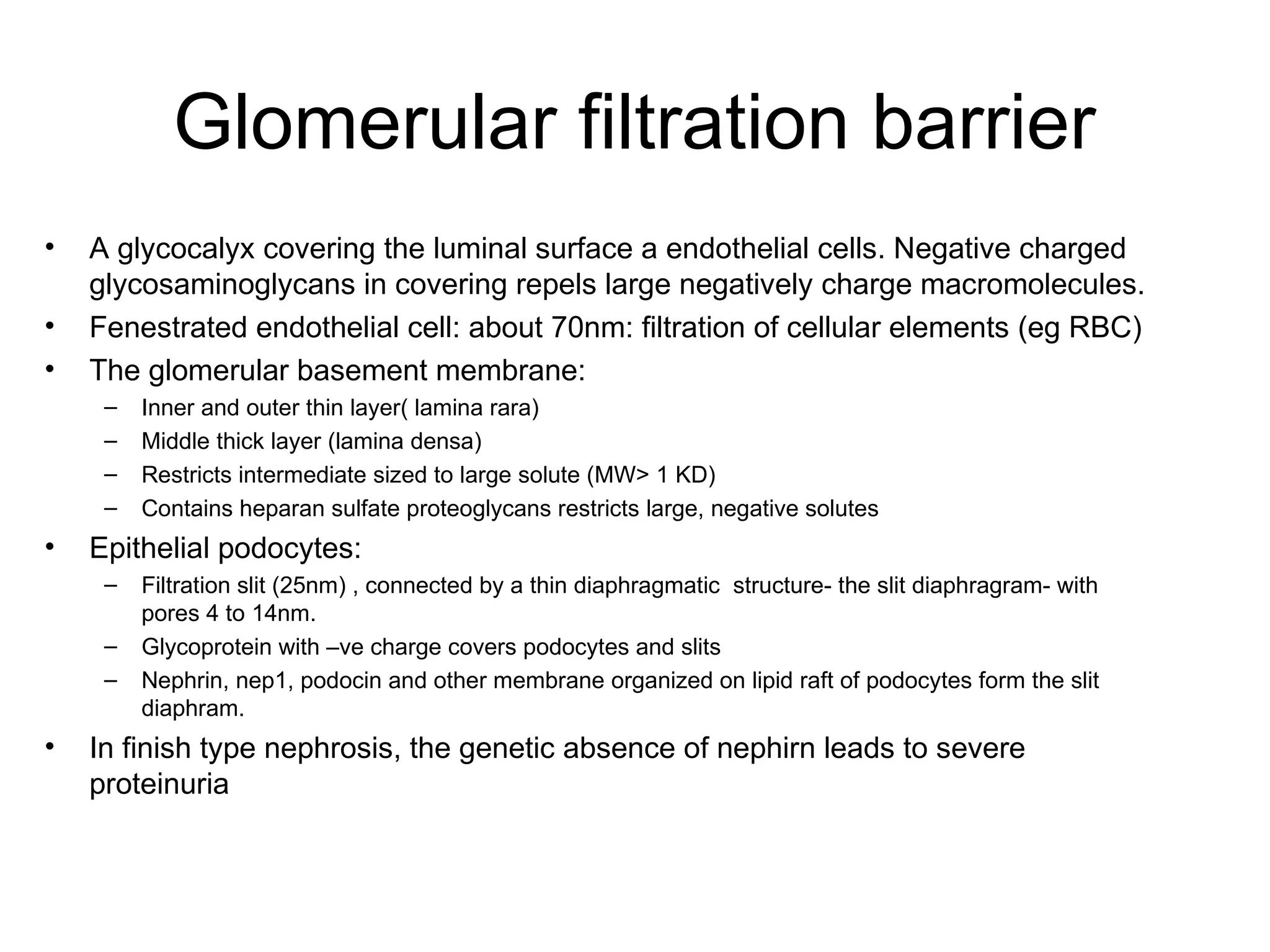
Glomerular filtration barrier
• A glycocalyx covering the luminal surface a endothelial cells. Negative charged
glycosaminoglycans in covering repels large negatively charge macromolecules.
• Fenestrated endothelial cell: about 70nm: filtration of cellular elements (eg RBC)
• The glomerular basement membrane:
– Inner and outer thin layer( lamina rara)
– Middle thick layer (lamina densa)
– Restricts intermediate sized to large solute (MW> 1 KD)
– Contains heparan sulfate proteoglycans restricts large, negative solutes
• Epithelial podocytes:
– Filtration slit (25nm) , connected by a thin diaphragmatic structure- the slit diaphragram- with
pores 4 to 14nm.
– Glycoprotein with –ve charge covers podocytes and slits
– Nephrin, nep1, podocin and other membrane organized on lipid raft of podocytes form the slit
diaphram.
• In finish type nephrosis, the genetic absence of nephirn leads to severe
proteinuria
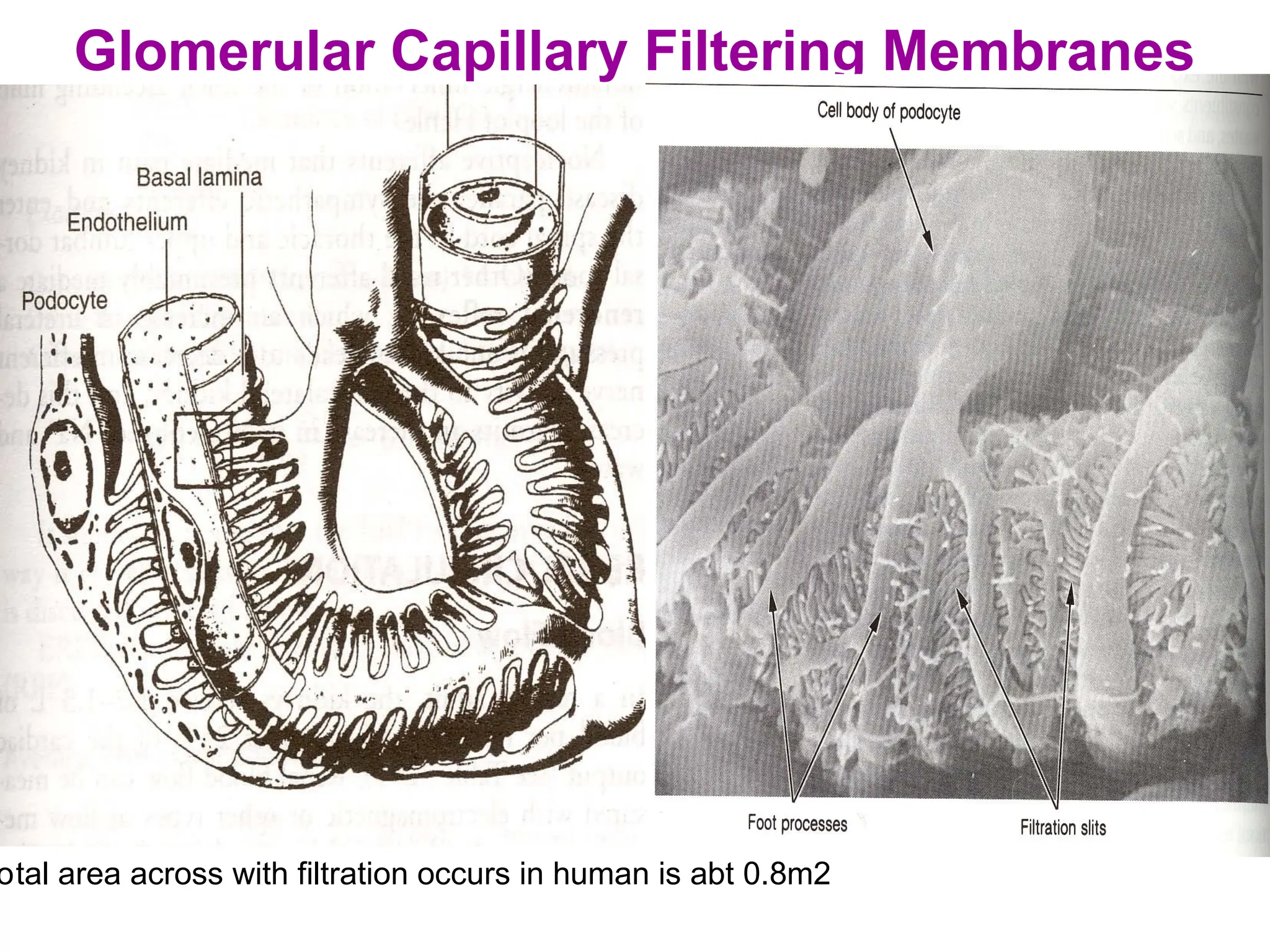
Glomerular Capillary Filtering Membranes
otal area across with filtration occurs in human is abt 0.8m2
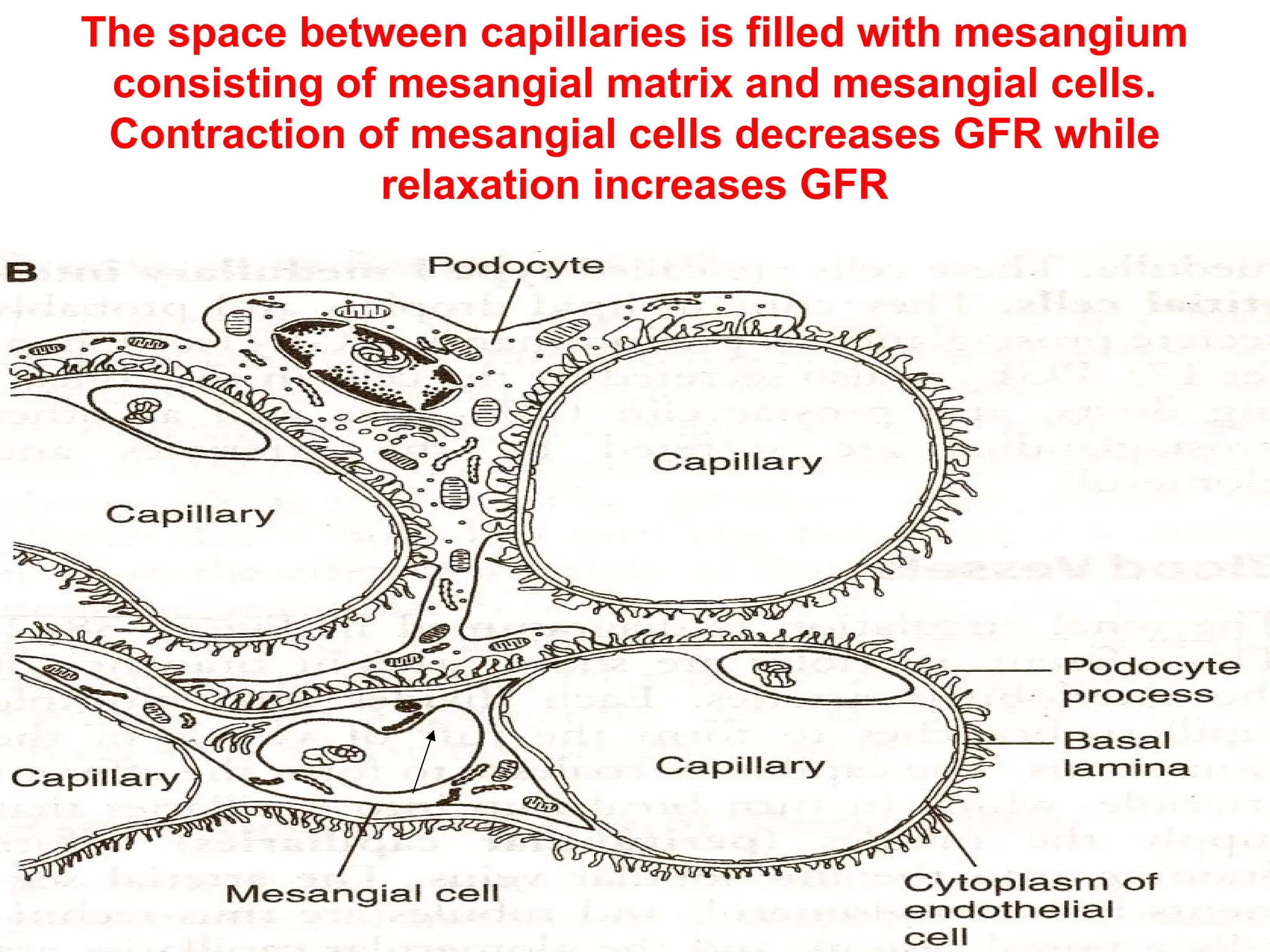
The space between capillaries is filled with mesangium
consisting of mesangial matrix and mesangial cells.
Contraction of mesangial cells decreases GFR while
relaxation increases GFR
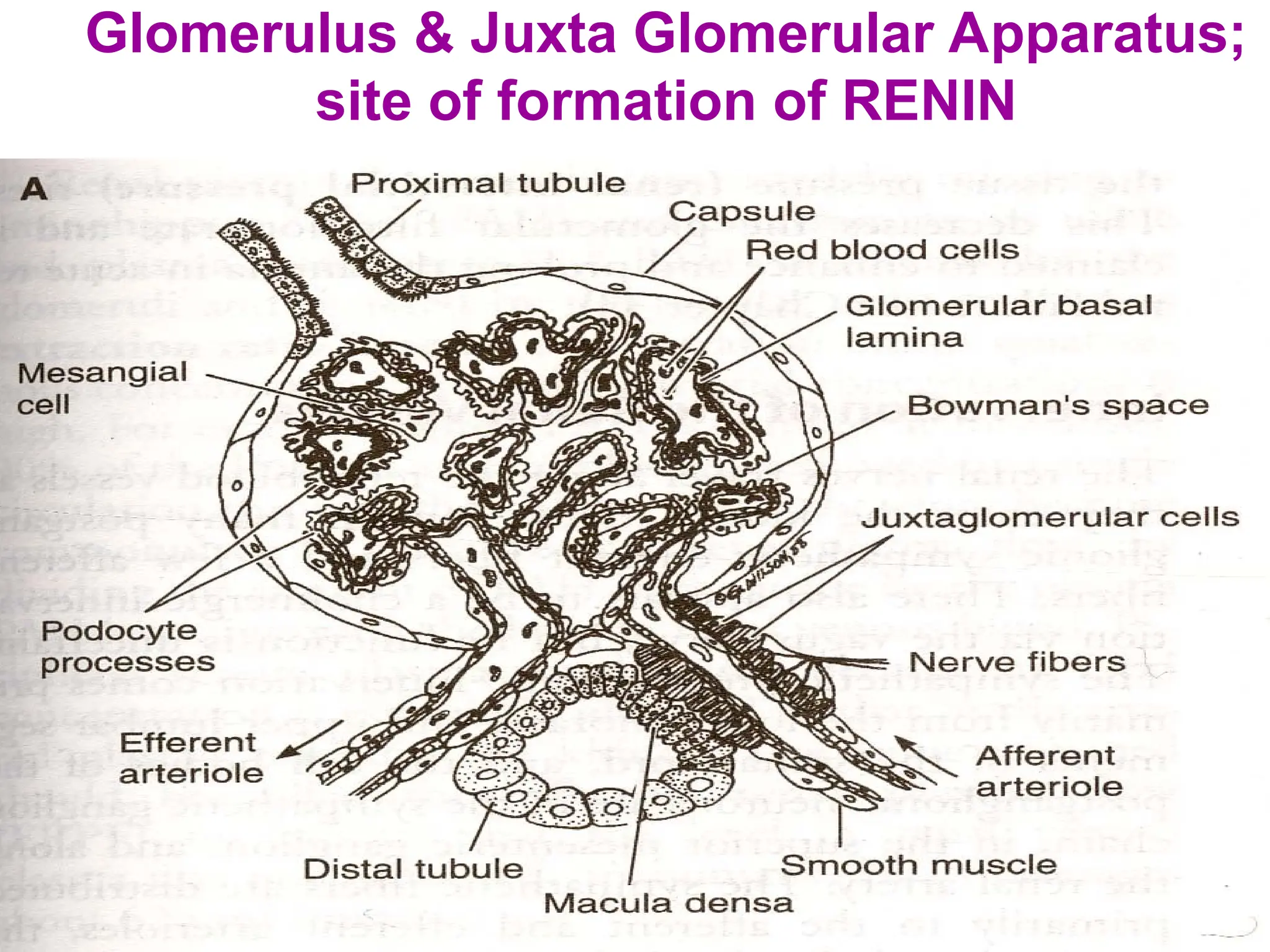
Glomerulus & Juxta Glomerular Apparatus;
site of formation of RENIN
Components of JGA
• JG cells:
– Modified vascular smooth muscle cells in the afferent arterioles
– Synthesize, store and release RENIN.
– Function as baroreceptor
– Innervation: sympathetic constrictor nerve.
– Stimulated by: hypovolemia or decrease renal perfusion.
• Macula densa cells:
– Modified specialized renal tubular epithelial cells in DCT; lie in close
contact with JG cells, and adjoining with both the afferent and efferent
arterioles;
– Function as chemoreceptors
– Stimulated by decrease Nacl load: renin release
• Mesengial (or Lacis) cells:
– Supporting cells for JGA
– Contractile: regulate GFR
– May secrete renin in extreme in extreme hyperactivity
Regulation of renin secretion
Increase Decrease
1. Stimulated of JG cells by
- increase sympathetic activity due
to : hypovolemia, decrease BP
- increase catecholamines
- PG
1. Inhibition of JG cells by:
- Increase afferent arteriole pressure
-Ag II
-ADH
2. Sodium depletion 2. Increase rate Na and Cl
reabsorption across macula densa
Blood supply
• Afferent arterioles form a major site of auto-regulatory resistance, whereas efferent
arterioles have a relatively high resistances.
• Glomerular capillaries:
– Exhibit higher pressure (about 60 mm Hg)
– Only capillaries that drain into arterioles
– Don’t provides oxygen and nutrients
– Total volume of blood at any given time: 30-40 mL
• Pressure in renal vessels:
– In glomerular capillaries: about 60 mm Hg
– Peritubular capillaries: about 8 mm Hg
– In renal vein: about 4 mm Hg
• Innervation of renal vessels
– Parasympathetic: vagus
– Sympathetic from T10 to L2 via splanchnic nerves; superior mesenteric
ganglion: decrease RBF
• RBF at rest is very high: 1.2/1.3 L/min
• (A-V)O2 difference across kidney is low: 19-17.5=
1.5ml/dL
• Renal V02 at rest is very high: 18-20 ml/min=
6ml/100gm/min.
• Cortical blood flow and V02 is more than that of medulla.
• Slow medullary flow-----development of hyperosmolarity
of the inner medulla----hypertonic urine
• Low medullary blood flow is due to:
– Greater length of vasa recta
– High interstitium osmotic pressure-----increases viscosity
– Low hydrostatic pressure head
Auto-regulation
• RBF and GFR remain constant despite change in MAP
between 90-200 mm Hg.
• Auto-regulation is a feature of only cortical blood flow.
• Due to alteration in the intrinsic myogenic tone of
afferent arterioles in response to changes in the
perfusion pressure.
• At perfusion pressure of 50 mmHg, RBF is reduced to
half; less than that kidney does not filter.
• Auto-regulation of RBF and GFR is related to the filtered
load of salts, NaCl by Tubulo-Glomerular Feed back
mechanism.
• RBF, Renal V02 and tubular reabsorption
of sodium.
• Renal V02 correlates best with the rate of
active reabsorption of Na+.
• There exist a linear relationship between
renal V02 and RBF (or GFR) above
perfusion pressure of 50 mmHg.
• RBF, GFR and filtered load of sodium
determines renal metabolism.
Factors
• NE constricts the renal vessels, with greater effect
of inj. NE on interlobular, and afferent arterioles.
• Dopamine: vasodilation and natriuresis
• AgII: constrictor effect
• PG: increases blood flow in cortex and decreases
in medulla.
• Ach: renal vasodilation
• A high protein diet : increase capillary pressure
and increases renal blood flow.
THANK YOU

1. Introduction to Kidney and the renal circulation

  • 1.
    “ I havehad dreams and I have had nightmares. I overcame the nightmares because of my dreams” Jonas Salk
  • 2.
  • 3.
    Functions of theKidney  Regulation of body fluid osmolality  Regulation of blood volume  Regulation of systemic arterial blood pressure  Regulation of electrolyte balance  Regulation of acid base balance (pH of blood)  Excretion of metabolic products, drugs and foreign substances  Endocrine organ [ renin (RAA), erythropoietin, calcitriol( 1,25-dihydroxy vitamin D3) and thrombopoietin.
  • 4.
    Introduction • Nephron: functionunit of the kidney. • About 1 million nephron within each kidney. • Paired,retroperitonel organs that comprises a complex mixture of vascular and epithelial elements. • Lies behind the peritoneum on each side of the vertebral column. • Extend from T12-L3 vertebrae. • In men- 125 to 174 gm each • In female- 115 to 155gm each • Fibrous, almost non distensible capsule covers each kidney. • In the middle of the concave surface, a slit in the capsule: HILUS • HILUS serve as: – The port of entry for the renal artery and nerves. – Site of exist for the renal vein, the lymphatics and ureter. • Renal blood flow is about 20-22 % CO, about about 1100ml/min
  • 6.
    Hilus opens intoshallow space called renal sinus. Renal sinus includes the urine-filled spaces: the renal pelvis proper and its extension, major and minor calyces. Kidney section reveals two basic layer: CORTEX: granular outer region MEDULLA: dark inner region Granularity: presence of glomeruli, microscopic tuft of capillaries and a large no. of highly convoulated epithelial structures in the form Medulla lacks glomeruli and consists parallel arrangement of tubules and small blood vessels
  • 7.
    Medulla is sub-dividedinto 8-18 conical pyramids The base of pyramid face the cortical-medulla border. The tip of each pyramid terminate in renal pelvis. The initial parts of 8-10 cortical collecting ducts to form a single large collecting duct. In each kidney, there are about 250 of the very large collecting ducts, each of which collects urine from about 4000 nephrons. PCT: 15 mm, two parts, convoulated and straight, microvilli, numerous mitochondria LOH: thin segment (2-14mm), thick ascending limb (12 mm) DCT: 5 mm,cellsget modified to columnar (macula densa), along with afferent arteriole froms JUXTRAGLOMERULAR apparatus. CT: 20 mm: principal cell and intercalated cell.
  • 8.
    Interior Structure ofkidney • Contains approx.1.3 million similar subunits- nephrons • Nephron consist of 1. Initial filtering component- renal corpuscle 2. Tubule • Fluid remaining at end of each nephrons combines into CD and exists kidney as urine
  • 10.
    RENAL BLOOD FLOW Abdominalaorta Inferior venacava Renal artery Renal vein Segmental artery Segmental vein Interlobar artery Interlobar vein Arcuate artery Arcuate vein Interlobular artery Interlobular vein Afferent arteriole Peritubular venule Glomerular capillary Efferent arteriole Vasa recta & peritubular capillaries
  • 11.
    Blood flow tothe kidneys is 25% of CO (1.25 L/min) Some 90% of renal , prefuses Cortex and superficial glomeruli Only about 10% perfuses juxtramedullary glomeruli and medulla. Lymphatics are absent from the medulla, as they can drain the high osmolality interstitial fluid, which is necessary for producing concentrated urine. Lymphatic vessels, which drains the interstitial fluid of the cortex and may contain high concentration of renal hormone such as Erythropoietin
  • 12.
    Afferent arterioles arise frominterlobular arteries at right angle and soon breakdown into a tuft of capillaries to form the glomerulus. In the glomerulus, there is only filtration and capillaries do not supply O2 or nutrients. Efferent arterioles leaving the glomerulus break down into capillary network mainly around its own tubules in the cortex. These vessels supply O2 and nutrients to tubules.
  • 13.
    Efferent arteriolar capillary network suppliesO2 and nutrients to the tubules. Renal sympathetic nerves are vasoconstrictor. Prolonged stimulation of sympathetic nerves (as in shock) will lead to hypoxia of renal tubules and may lead to acute tubular necrosis and acute renal failure.
  • 14.
    Regional differences innephron structure 1. Cortical nephrons • 80% cases • Situated at outer cortex near the periphery 2. Juxtramedullary nephrons • 20% cases • Situated at inner cortex near medulla or corticomedullary junction
  • 15.
    Efferent arterioles of thejuxta medullary glomeruli divide into two branches. One supplies the tubules in the cortex and the other forms vasa recta in the medulla.
  • 16.
    All glomeruli, proximal anddistal convoluted tubules lie in the cortex . Loop of Henle descend to various levels in the medulla. Cortical loops of Henle do not have thin ascending limb Loops of Henle of juxta medullary nephrons are long and reach the tip of the papilla. They have thin descending limb and a thin and thick ascending limb.
  • 17.
    Types of Nephron CorticalNephron Juxtra medulla Comprise 85% of total nephrons Comprise 15% of total nephrons Have smaller size glomeruli located in the renal tubules Large size glomeruli located at the cortex and medulla junction Posses short loops of henle which penerate upto outer layer of the medulla Posses long loops of henle which penetrate deep into the medulla. Ascending limb contains only a thick segments Ascending limbs also contains thin segments Henle loop vascular supply in the form of peritubular capillary plexus Henle loops vascular supply in the form of vasrecta Rate of filtration is slow High Major role in excretion of waste products in the urine Important in the counter current system: causing concentrate urine
  • 18.
  • 19.
    Endothelial cells synthesizeNO-a vasodilator and endothelin 1 – a vasoconstrictor which control RBF. Basement membrane is an important filtration barrier to plasma proteins due to negative charge, so acts as charge selective barrier..
  • 20.
    Glomerular filtration barrier •A glycocalyx covering the luminal surface a endothelial cells. Negative charged glycosaminoglycans in covering repels large negatively charge macromolecules. • Fenestrated endothelial cell: about 70nm: filtration of cellular elements (eg RBC) • The glomerular basement membrane: – Inner and outer thin layer( lamina rara) – Middle thick layer (lamina densa) – Restricts intermediate sized to large solute (MW> 1 KD) – Contains heparan sulfate proteoglycans restricts large, negative solutes • Epithelial podocytes: – Filtration slit (25nm) , connected by a thin diaphragmatic structure- the slit diaphragram- with pores 4 to 14nm. – Glycoprotein with –ve charge covers podocytes and slits – Nephrin, nep1, podocin and other membrane organized on lipid raft of podocytes form the slit diaphram. • In finish type nephrosis, the genetic absence of nephirn leads to severe proteinuria
  • 21.
    Glomerular Capillary FilteringMembranes otal area across with filtration occurs in human is abt 0.8m2
  • 22.
    The space betweencapillaries is filled with mesangium consisting of mesangial matrix and mesangial cells. Contraction of mesangial cells decreases GFR while relaxation increases GFR
  • 25.
    Glomerulus & JuxtaGlomerular Apparatus; site of formation of RENIN
  • 26.
    Components of JGA •JG cells: – Modified vascular smooth muscle cells in the afferent arterioles – Synthesize, store and release RENIN. – Function as baroreceptor – Innervation: sympathetic constrictor nerve. – Stimulated by: hypovolemia or decrease renal perfusion. • Macula densa cells: – Modified specialized renal tubular epithelial cells in DCT; lie in close contact with JG cells, and adjoining with both the afferent and efferent arterioles; – Function as chemoreceptors – Stimulated by decrease Nacl load: renin release • Mesengial (or Lacis) cells: – Supporting cells for JGA – Contractile: regulate GFR – May secrete renin in extreme in extreme hyperactivity
  • 27.
    Regulation of reninsecretion Increase Decrease 1. Stimulated of JG cells by - increase sympathetic activity due to : hypovolemia, decrease BP - increase catecholamines - PG 1. Inhibition of JG cells by: - Increase afferent arteriole pressure -Ag II -ADH 2. Sodium depletion 2. Increase rate Na and Cl reabsorption across macula densa
  • 29.
    Blood supply • Afferentarterioles form a major site of auto-regulatory resistance, whereas efferent arterioles have a relatively high resistances. • Glomerular capillaries: – Exhibit higher pressure (about 60 mm Hg) – Only capillaries that drain into arterioles – Don’t provides oxygen and nutrients – Total volume of blood at any given time: 30-40 mL • Pressure in renal vessels: – In glomerular capillaries: about 60 mm Hg – Peritubular capillaries: about 8 mm Hg – In renal vein: about 4 mm Hg • Innervation of renal vessels – Parasympathetic: vagus – Sympathetic from T10 to L2 via splanchnic nerves; superior mesenteric ganglion: decrease RBF
  • 30.
    • RBF atrest is very high: 1.2/1.3 L/min • (A-V)O2 difference across kidney is low: 19-17.5= 1.5ml/dL • Renal V02 at rest is very high: 18-20 ml/min= 6ml/100gm/min. • Cortical blood flow and V02 is more than that of medulla. • Slow medullary flow-----development of hyperosmolarity of the inner medulla----hypertonic urine • Low medullary blood flow is due to: – Greater length of vasa recta – High interstitium osmotic pressure-----increases viscosity – Low hydrostatic pressure head
  • 31.
    Auto-regulation • RBF andGFR remain constant despite change in MAP between 90-200 mm Hg. • Auto-regulation is a feature of only cortical blood flow. • Due to alteration in the intrinsic myogenic tone of afferent arterioles in response to changes in the perfusion pressure. • At perfusion pressure of 50 mmHg, RBF is reduced to half; less than that kidney does not filter. • Auto-regulation of RBF and GFR is related to the filtered load of salts, NaCl by Tubulo-Glomerular Feed back mechanism.
  • 32.
    • RBF, RenalV02 and tubular reabsorption of sodium. • Renal V02 correlates best with the rate of active reabsorption of Na+. • There exist a linear relationship between renal V02 and RBF (or GFR) above perfusion pressure of 50 mmHg. • RBF, GFR and filtered load of sodium determines renal metabolism.
  • 33.
    Factors • NE constrictsthe renal vessels, with greater effect of inj. NE on interlobular, and afferent arterioles. • Dopamine: vasodilation and natriuresis • AgII: constrictor effect • PG: increases blood flow in cortex and decreases in medulla. • Ach: renal vasodilation • A high protein diet : increase capillary pressure and increases renal blood flow.
  • 34.