PERISTALSISShlok Pushpesh Mathur
Nayan Biswas
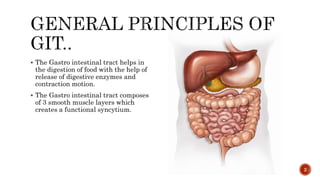
 The Gastro intestinal tract helps in
the digestion of food with the help of
release of digestive enzymes and
contraction motion.
 The Gastro intestinal tract composes
of 3 smooth muscle layers which
creates a functional syncytium.
2
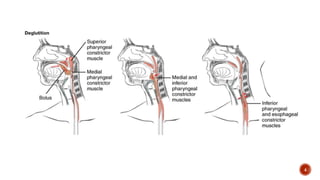
Deglutition :
 It is the process of movement of
bolous from mouth to the stomach.
 It has 4 different stages :
Oral stage
Pharyngeal stage
Esophageal stage
3
4
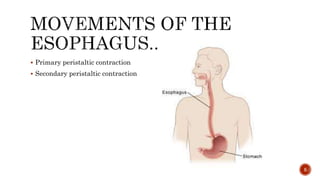
 Primary peristaltic contraction
 Secondary peristaltic contraction
5
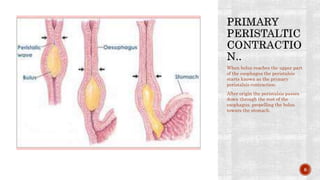
When bolus reaches the upper part
of the esophagus the peristalsis
starts known as the primary
peristalsis contraction.
After origin the peristalsis passes
down through the rest of the
esophagus, propelling the bolus
towars the stomach.
6
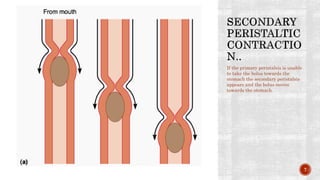
If the primary peristalsis is unable
to take the bolus towards the
stomach the secondary peristalsis
appears and the bolus moves
towards the stomach.
7
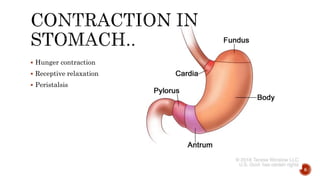
 Hunger contraction
 Receptive relaxation
 Peristalsis
8
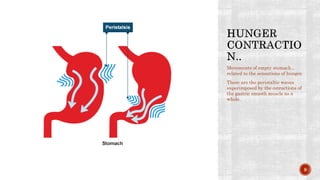
Movements of empty stomach ,
related to the sensations of hunger.
These are the peristaltic waves
superimposed by the cotractions of
the gastric smooth muscle as a
whole.
9
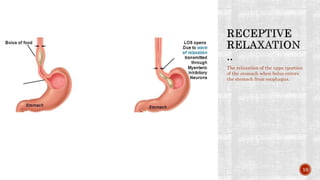
The relaxation of the uppe rportion
of the stomach when bolus enters
the stomach from esophagus.
10
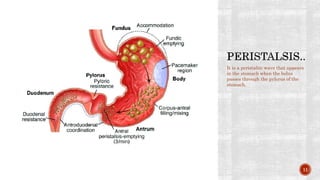
It is a peristaltic wave that appears
in the stomach when the bolus
passes through the pylorus of the
stomach.
11
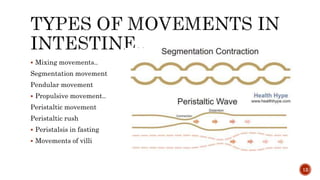
 Mixing movements..
Segmentation movement
Pendular movement
 Propulsive movement..
Peristaltic movement
Peristaltic rush
 Peristalsis in fasting
 Movements of villi
12
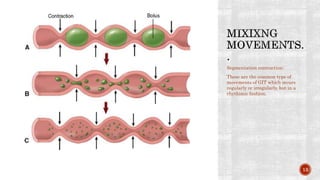
Segmentation contraction:
These are the common type of
movements of GIT which occurs
regularly or irregularly, but in a
rhythimic fashion.
13
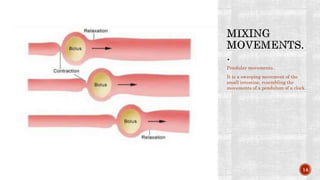
Pendular movements..
It is a sweeping movement of the
small intestine, resembling the
movements of a pendulum of a clock.
14
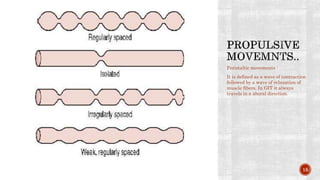
Peristaltic movements :
It is defined as a wave of contraction
followed by a wave of relaxation of
muscle fibers. In GIT it always
travels in a aboral direction.
15
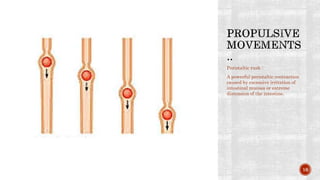
Peristaltic rush :
A powerful peristaltic contraction
caused by excessive irritation of
intestinal mucosa or extreme
distension of the intestine.
16
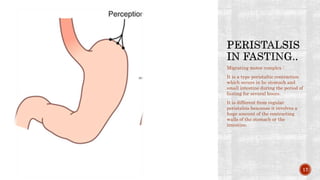
Migrating motor complex :
It is a type peristaltic contraction
which occurs in he stomach and
small intestine during the period of
fasting for several hours.
It is different from regular
peristalsis beacause it involves a
huge amount of the contracting
walls of the stomach or the
intestine.
17
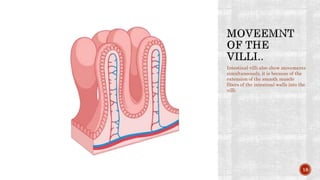
Intestinal villi also show movements
simultaneously, it is because of the
extension of the smooth muscle
fibers of the intestinal walls into the
villi.
18
THANK YOUsomeone@example.com

Peristalsis

  • 1.
  • 2.
     The Gastrointestinal tract helps in the digestion of food with the help of release of digestive enzymes and contraction motion.  The Gastro intestinal tract composes of 3 smooth muscle layers which creates a functional syncytium. 2
  • 3.
    Deglutition :  Itis the process of movement of bolous from mouth to the stomach.  It has 4 different stages : Oral stage Pharyngeal stage Esophageal stage 3
  • 4.
  • 5.
     Primary peristalticcontraction  Secondary peristaltic contraction 5
  • 6.
    When bolus reachesthe upper part of the esophagus the peristalsis starts known as the primary peristalsis contraction. After origin the peristalsis passes down through the rest of the esophagus, propelling the bolus towars the stomach. 6
  • 7.
    If the primaryperistalsis is unable to take the bolus towards the stomach the secondary peristalsis appears and the bolus moves towards the stomach. 7
  • 8.
     Hunger contraction Receptive relaxation  Peristalsis 8
  • 9.
    Movements of emptystomach , related to the sensations of hunger. These are the peristaltic waves superimposed by the cotractions of the gastric smooth muscle as a whole. 9
  • 10.
    The relaxation ofthe uppe rportion of the stomach when bolus enters the stomach from esophagus. 10
  • 11.
    It is aperistaltic wave that appears in the stomach when the bolus passes through the pylorus of the stomach. 11
  • 12.
     Mixing movements.. Segmentationmovement Pendular movement  Propulsive movement.. Peristaltic movement Peristaltic rush  Peristalsis in fasting  Movements of villi 12
  • 13.
    Segmentation contraction: These arethe common type of movements of GIT which occurs regularly or irregularly, but in a rhythimic fashion. 13
  • 14.
    Pendular movements.. It isa sweeping movement of the small intestine, resembling the movements of a pendulum of a clock. 14
  • 15.
    Peristaltic movements : Itis defined as a wave of contraction followed by a wave of relaxation of muscle fibers. In GIT it always travels in a aboral direction. 15
  • 16.
    Peristaltic rush : Apowerful peristaltic contraction caused by excessive irritation of intestinal mucosa or extreme distension of the intestine. 16
  • 17.
    Migrating motor complex: It is a type peristaltic contraction which occurs in he stomach and small intestine during the period of fasting for several hours. It is different from regular peristalsis beacause it involves a huge amount of the contracting walls of the stomach or the intestine. 17
  • 18.
    Intestinal villi alsoshow movements simultaneously, it is because of the extension of the smooth muscle fibers of the intestinal walls into the villi. 18
  • 19.