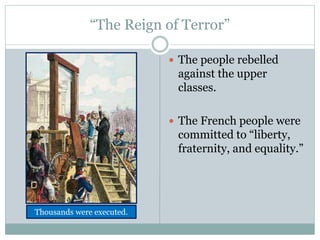
“The Reign of Terror”
 The people rebelled
against the upper
classes.
 The French people were
committed to “liberty,
fraternity, and equality.”
Thousands were executed.
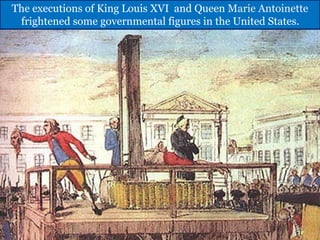
The executions of King Louis XVI and Queen Marie Antoinette
frightened some governmental figures in the United States.
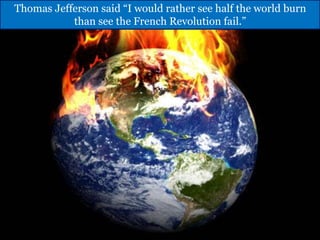
Thomas Jefferson said “I would rather see half the world burn
than see the French Revolution fail.”
Federalists Anti-Federalists
 Opposed it!
 Saw it as a democratic
revolution gone wrong.
 Supported it!
 Saw it as an extension of the
American Revolution.
 “Life, Liberty, and the
pursuit of Happiness.”
 Upset the monarchy in
acceptance of a republican
government.
American Reactions
French British
 U.S. should not abandon
the country that helped us
gain our independence.
 U.S. should not offend the
world’s best army and
navy.
From Revolution to War
What should the U.S. do?
 In 1793, President Washington issues the Proclamation of
Neutrality.
•Not taking sides.
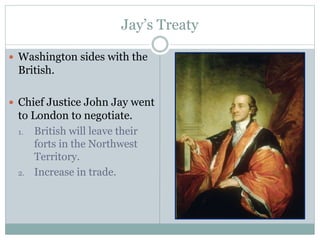
Jay’s Treaty
 Washington sides with the
British.
 Chief Justice John Jay went
to London to negotiate.
1. British will leave their
forts in the Northwest
Territory.
2. Increase in trade.
Jay’s Treaty didn’t stop the British Royal Navy from harassing
American sailors.
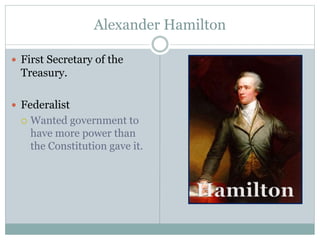
Alexander Hamilton
 First Secretary of the
Treasury.
 Federalist
 Wanted government to
have more power than
the Constitution gave it.
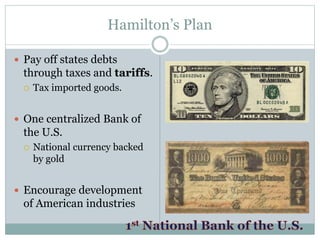
Hamilton’s Plan
 Pay off states debts
through taxes and tariffs.
 Tax imported goods.
 One centralized Bank of
the U.S.
 National currency backed
by gold
 Encourage development
of American industries
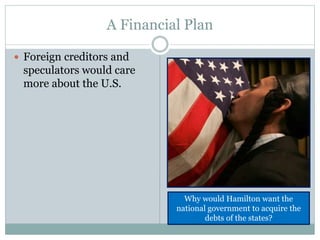
A Financial Plan
 Foreign creditors and
speculators would care
more about the U.S.
Why would Hamilton want the
national government to acquire the
debts of the states?
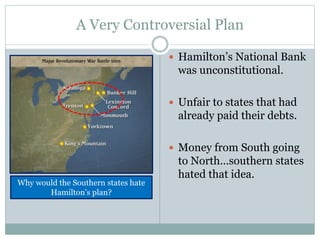
A Very Controversial Plan
 Hamilton’s National Bank
was unconstitutional.
 Unfair to states that had
already paid their debts.
 Money from South going
to North…southern states
hated that idea.
Why would the Southern states hate
Hamilton’s plan?
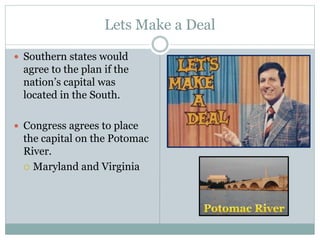
Lets Make a Deal
 Southern states would
agree to the plan if the
nation’s capital was
located in the South.
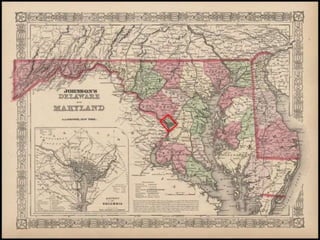
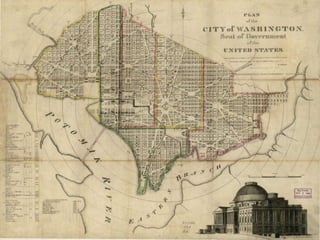
 Congress agrees to place
the capital on the Potomac
River.
 Maryland and Virginia
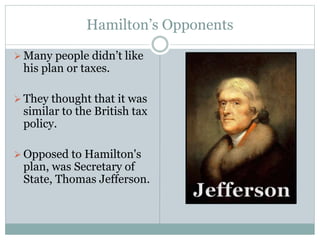
Hamilton’s Opponents
 Many people didn’t like
his plan or taxes.
 They thought that it was
similar to the British tax
policy.
 Opposed to Hamilton's
plan, was Secretary of
State, Thomas Jefferson.
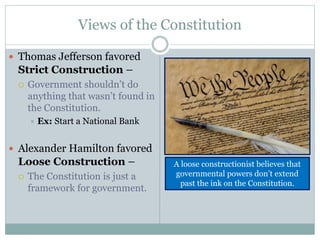
Views of the Constitution
 Thomas Jefferson favored
Strict Construction –
 Government shouldn’t do
anything that wasn’t found in
the Constitution.
 Ex: Start a National Bank
 Alexander Hamilton favored
Loose Construction –
 The Constitution is just a
framework for government.
A loose constructionist believes that
governmental powers don’t extend
past the ink on the Constitution.
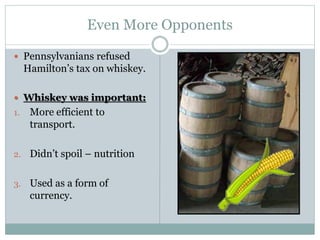
Even More Opponents
 Pennsylvanians refused
Hamilton’s tax on whiskey.
 Whiskey was important:
1. More efficient to
transport.
2. Didn’t spoil – nutrition
3. Used as a form of
currency.
Ain’t givin my
muny an
wiskie to no
wun.
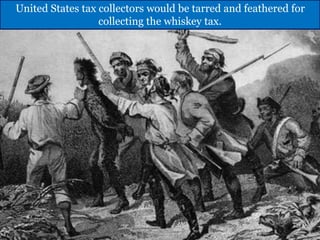
United States tax collectors would be tarred and feathered for
collecting the whiskey tax.
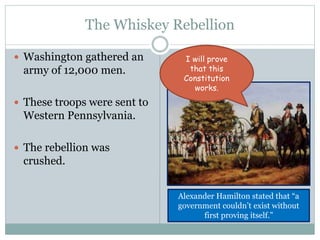
The Whiskey Rebellion
 Washington gathered an
army of 12,000 men.
 These troops were sent to
Western Pennsylvania.
 The rebellion was
crushed.
I will prove
that this
Constitution
works.
Alexander Hamilton stated that “a
government couldn’t exist without
first proving itself.”
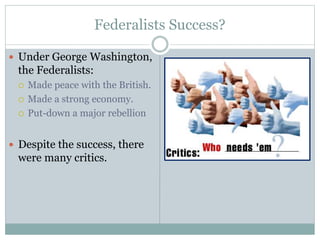
Federalists Success?
 Under George Washington,
the Federalists:
 Made peace with the British.
 Made a strong economy.
 Put-down a major rebellion
 Despite the success, there
were many critics.
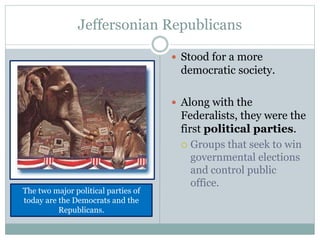
Jeffersonian Republicans
 Stood for a more
democratic society.
 Along with the
Federalists, they were the
first political parties.
 Groups that seek to win
governmental elections
and control public
office.
The two major political parties of
today are the Democrats and the
Republicans.
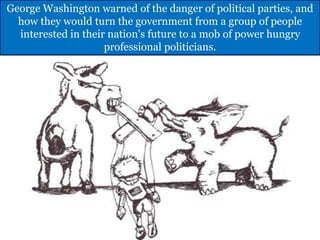
George Washington warned of the danger of political parties, and
how they would turn the government from a group of people
interested in their nation's future to a mob of power hungry
professional politicians.
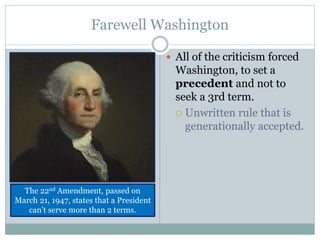
Farewell Washington
 All of the criticism forced
Washington, to set a
precedent and not to
seek a 3rd term.
 Unwritten rule that is
generationally accepted.
The 22nd Amendment, passed on
March 21, 1947, states that a President
can’t serve more than 2 terms.
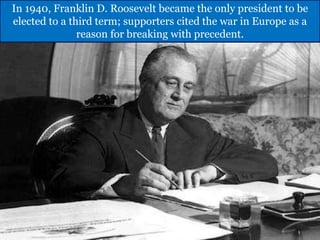
In 1940, Franklin D. Roosevelt became the only president to be
elected to a third term; supporters cited the war in Europe as a
reason for breaking with precedent.

1 chasing liberty

  • 3.
    “The Reign ofTerror”  The people rebelled against the upper classes.  The French people were committed to “liberty, fraternity, and equality.” Thousands were executed.
  • 4.
    The executions ofKing Louis XVI and Queen Marie Antoinette frightened some governmental figures in the United States.
  • 5.
    Thomas Jefferson said“I would rather see half the world burn than see the French Revolution fail.”
  • 6.
    Federalists Anti-Federalists  Opposedit!  Saw it as a democratic revolution gone wrong.  Supported it!  Saw it as an extension of the American Revolution.  “Life, Liberty, and the pursuit of Happiness.”  Upset the monarchy in acceptance of a republican government. American Reactions
  • 7.
    French British  U.S.should not abandon the country that helped us gain our independence.  U.S. should not offend the world’s best army and navy. From Revolution to War What should the U.S. do?  In 1793, President Washington issues the Proclamation of Neutrality. •Not taking sides.
  • 8.
    Jay’s Treaty  Washingtonsides with the British.  Chief Justice John Jay went to London to negotiate. 1. British will leave their forts in the Northwest Territory. 2. Increase in trade.
  • 9.
    Jay’s Treaty didn’tstop the British Royal Navy from harassing American sailors.
  • 10.
    Alexander Hamilton  FirstSecretary of the Treasury.  Federalist  Wanted government to have more power than the Constitution gave it.
  • 11.
    Hamilton’s Plan  Payoff states debts through taxes and tariffs.  Tax imported goods.  One centralized Bank of the U.S.  National currency backed by gold  Encourage development of American industries
  • 12.
    A Financial Plan Foreign creditors and speculators would care more about the U.S. Why would Hamilton want the national government to acquire the debts of the states?
  • 13.
    A Very ControversialPlan  Hamilton’s National Bank was unconstitutional.  Unfair to states that had already paid their debts.  Money from South going to North…southern states hated that idea. Why would the Southern states hate Hamilton’s plan?
  • 14.
    Lets Make aDeal  Southern states would agree to the plan if the nation’s capital was located in the South.  Congress agrees to place the capital on the Potomac River.  Maryland and Virginia
  • 17.
    Hamilton’s Opponents  Manypeople didn’t like his plan or taxes.  They thought that it was similar to the British tax policy.  Opposed to Hamilton's plan, was Secretary of State, Thomas Jefferson.
  • 18.
    Views of theConstitution  Thomas Jefferson favored Strict Construction –  Government shouldn’t do anything that wasn’t found in the Constitution.  Ex: Start a National Bank  Alexander Hamilton favored Loose Construction –  The Constitution is just a framework for government. A loose constructionist believes that governmental powers don’t extend past the ink on the Constitution.
  • 19.
    Even More Opponents Pennsylvanians refused Hamilton’s tax on whiskey.  Whiskey was important: 1. More efficient to transport. 2. Didn’t spoil – nutrition 3. Used as a form of currency.
  • 20.
    Ain’t givin my munyan wiskie to no wun.
  • 21.
    United States taxcollectors would be tarred and feathered for collecting the whiskey tax.
  • 22.
    The Whiskey Rebellion Washington gathered an army of 12,000 men.  These troops were sent to Western Pennsylvania.  The rebellion was crushed. I will prove that this Constitution works. Alexander Hamilton stated that “a government couldn’t exist without first proving itself.”
  • 23.
    Federalists Success?  UnderGeorge Washington, the Federalists:  Made peace with the British.  Made a strong economy.  Put-down a major rebellion  Despite the success, there were many critics.
  • 24.
    Jeffersonian Republicans  Stoodfor a more democratic society.  Along with the Federalists, they were the first political parties.  Groups that seek to win governmental elections and control public office. The two major political parties of today are the Democrats and the Republicans.
  • 25.
    George Washington warnedof the danger of political parties, and how they would turn the government from a group of people interested in their nation's future to a mob of power hungry professional politicians.
  • 26.
    Farewell Washington  Allof the criticism forced Washington, to set a precedent and not to seek a 3rd term.  Unwritten rule that is generationally accepted. The 22nd Amendment, passed on March 21, 1947, states that a President can’t serve more than 2 terms.
  • 27.
    In 1940, FranklinD. Roosevelt became the only president to be elected to a third term; supporters cited the war in Europe as a reason for breaking with precedent.