By Scott
Tenney
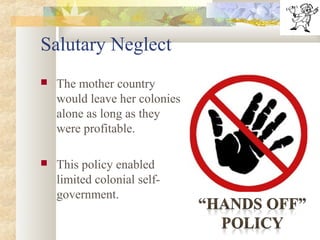
Salutary Neglect
 The mother country
would leave her colonies
alone as long as they
were profitable.
 This policy enabled
limited colonial self-
government.
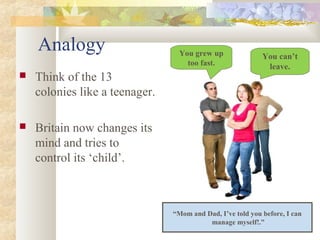
Analogy
 Think of the 13
colonies like a teenager.
 Britain now changes its
mind and tries to
control its ‘child’.
You grew up
too fast.
You can’t
leave.
“Mom and Dad, I’ve told you before, I can
manage myself!.”
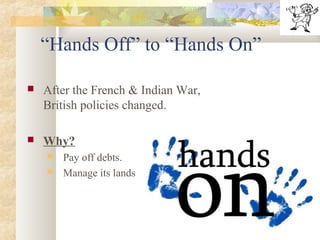
“Hands Off” to “Hands On”
 After the French & Indian War,
British policies changed.
 Why?
 Pay off debts.
 Manage its lands
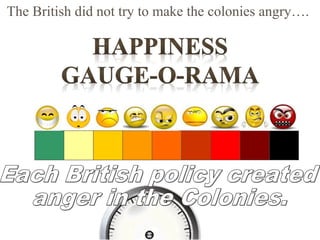
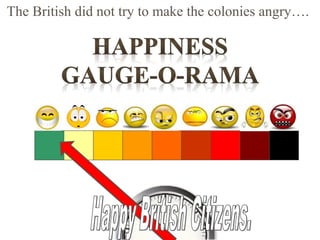
The British did not try to make the colonies angry….
 The project you did
should now make some
sense.
 Prime Ministers from
1651-1774 had to make
choices to solve
problems, but there was
no easy solution.
#1 Taxes and Money Problems#1 Taxes and Money Problems
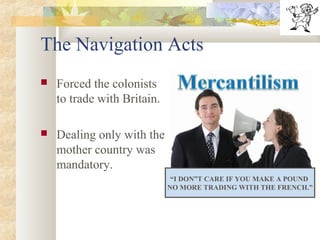
The Navigation Acts
 Forced the colonists
to trade with Britain.
 Dealing only with the
mother country was
mandatory.
“I DON”T CARE IF YOU MAKE A POUND
NO MORE TRADING WITH THE FRENCH.”
 You’re a Pennsylvania
merchant who sells wheat
what would you do?
 Do you defy the law and to
make big money or follow
the law and make little
money?
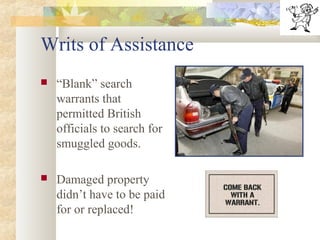
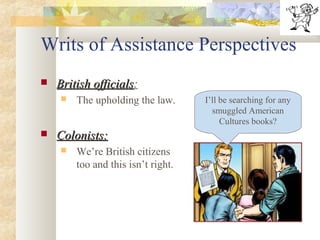
Writs of Assistance
 “Blank” search
warrants that
permitted British
officials to search for
smuggled goods.
 Damaged property
didn’t have to be paid
for or replaced!
Writs of Assistance Perspectives
 British officialsBritish officials:
 The upholding the law.
 Colonists:Colonists:
 We’re British citizens
too and this isn’t right.
I’ll be searching for any
smuggled American
Cultures books?
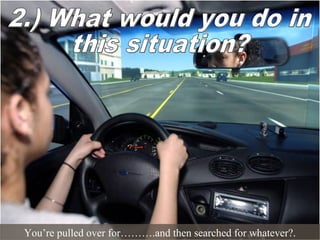
You’re pulled over for……….and then searched for whatever?.
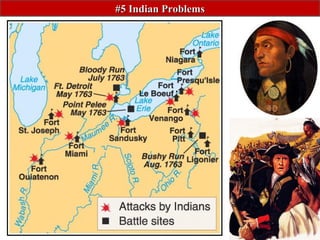
#5 Indian Problems#5 Indian Problems
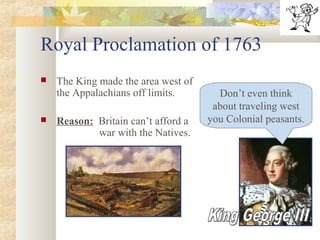
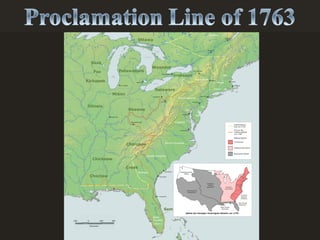
Royal Proclamation of 1763
 The King made the area west of
the Appalachians off limits.
 Reason: Britain can’t afford a
war with the Natives.
Don’t even think
about traveling west
you Colonial peasants.
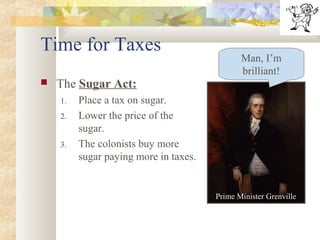
Time for Taxes
 The Sugar Act:
1. Place a tax on sugar.
2. Lower the price of the
sugar.
3. The colonists buy more
sugar paying more in taxes.
Man, I’m
brilliant!
Prime Minister Grenville
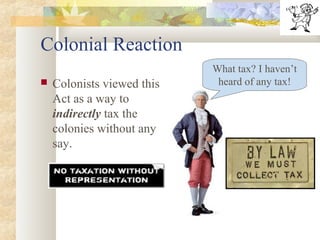
Colonial Reaction
 Colonists viewed this
Act as a way to
indirectly tax the
colonies without any
say.
What tax? I haven’t
heard of any tax!
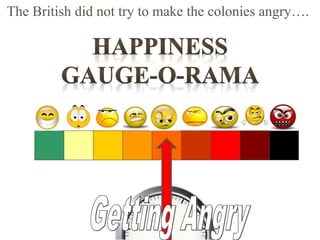
The British did not try to make the colonies angry….
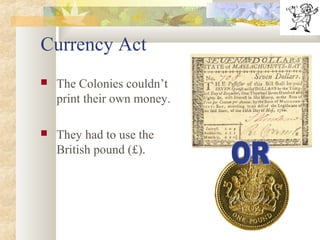
Currency Act
 The Colonies couldn’t
print their own money.
 They had to use the
British pound (£).
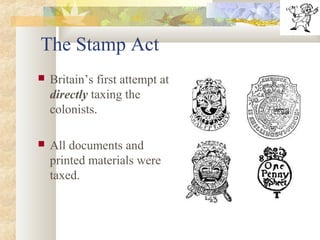
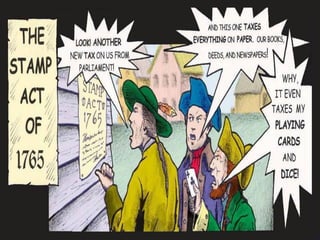
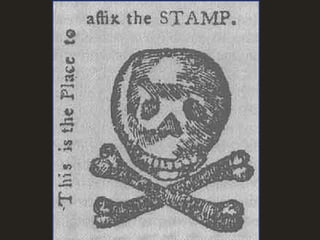
The Stamp Act
 Britain’s first attempt at
directly taxing the
colonists.
 All documents and
printed materials were
taxed.
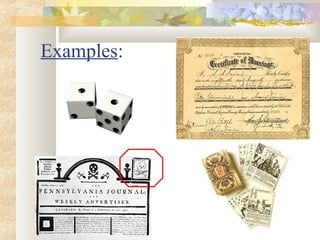
Examples:
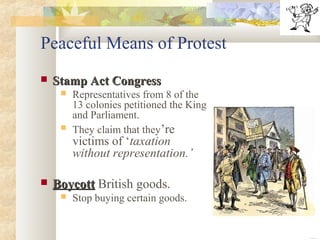
Peaceful Means of Protest
 Stamp Act CongressStamp Act Congress
 Representatives from 8 of the
13 colonies petitioned the King
and Parliament.
 They claim that they’re
victims of ‘taxation
without representation.’
 BoycottBoycott British goods.
 Stop buying certain goods.
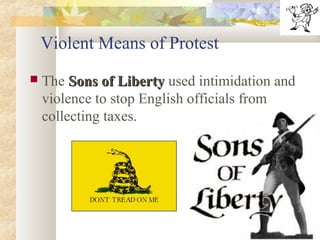
Violent Means of Protest
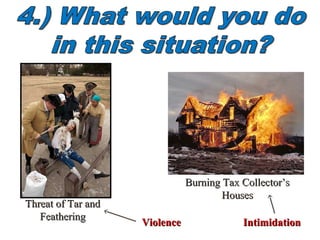
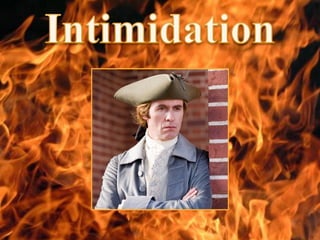
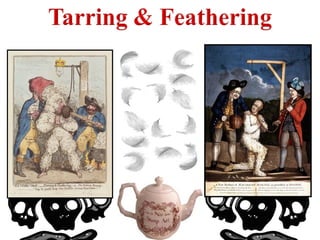
 The Sons of LibertySons of Liberty used intimidation and
violence to stop English officials from
collecting taxes.
Threat of Tar andThreat of Tar and
FeatheringFeathering
Burning Tax Collector’sBurning Tax Collector’s
HousesHouses
IntimidationIntimidationViolenceViolence
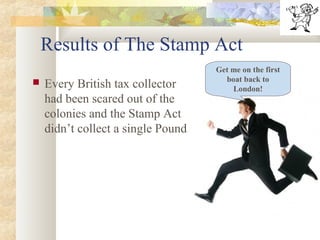
Results of The Stamp Act
 Every British tax collector
had been scared out of the
colonies and the Stamp Act
didn’t collect a single Pound.
Get me on the first
boat back to
London!

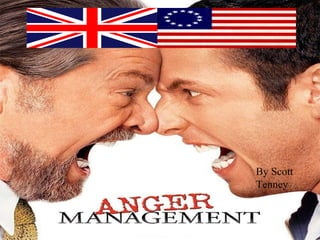
Anger management

  • 1.
  • 2.
    Salutary Neglect  Themother country would leave her colonies alone as long as they were profitable.  This policy enabled limited colonial self- government.
  • 3.
    Analogy  Think ofthe 13 colonies like a teenager.  Britain now changes its mind and tries to control its ‘child’. You grew up too fast. You can’t leave. “Mom and Dad, I’ve told you before, I can manage myself!.”
  • 4.
    “Hands Off” to“Hands On”  After the French & Indian War, British policies changed.  Why?  Pay off debts.  Manage its lands
  • 5.
    The British didnot try to make the colonies angry….
  • 6.
    The British didnot try to make the colonies angry….
  • 7.
     The projectyou did should now make some sense.  Prime Ministers from 1651-1774 had to make choices to solve problems, but there was no easy solution.
  • 8.
    #1 Taxes andMoney Problems#1 Taxes and Money Problems
  • 9.
    The Navigation Acts Forced the colonists to trade with Britain.  Dealing only with the mother country was mandatory. “I DON”T CARE IF YOU MAKE A POUND NO MORE TRADING WITH THE FRENCH.”
  • 10.
     You’re aPennsylvania merchant who sells wheat what would you do?  Do you defy the law and to make big money or follow the law and make little money?
  • 12.
    Writs of Assistance “Blank” search warrants that permitted British officials to search for smuggled goods.  Damaged property didn’t have to be paid for or replaced!
  • 13.
    Writs of AssistancePerspectives  British officialsBritish officials:  The upholding the law.  Colonists:Colonists:  We’re British citizens too and this isn’t right. I’ll be searching for any smuggled American Cultures books?
  • 14.
    You’re pulled overfor……….and then searched for whatever?.
  • 15.
    #5 Indian Problems#5Indian Problems
  • 16.
    Royal Proclamation of1763  The King made the area west of the Appalachians off limits.  Reason: Britain can’t afford a war with the Natives. Don’t even think about traveling west you Colonial peasants.
  • 19.
    Time for Taxes The Sugar Act: 1. Place a tax on sugar. 2. Lower the price of the sugar. 3. The colonists buy more sugar paying more in taxes. Man, I’m brilliant! Prime Minister Grenville
  • 20.
    Colonial Reaction  Colonistsviewed this Act as a way to indirectly tax the colonies without any say. What tax? I haven’t heard of any tax!
  • 21.
    The British didnot try to make the colonies angry….
  • 22.
    Currency Act  TheColonies couldn’t print their own money.  They had to use the British pound (£).
  • 23.
    The Stamp Act Britain’s first attempt at directly taxing the colonists.  All documents and printed materials were taxed.
  • 25.
  • 27.
    Peaceful Means ofProtest  Stamp Act CongressStamp Act Congress  Representatives from 8 of the 13 colonies petitioned the King and Parliament.  They claim that they’re victims of ‘taxation without representation.’  BoycottBoycott British goods.  Stop buying certain goods.
  • 29.
    Violent Means ofProtest  The Sons of LibertySons of Liberty used intimidation and violence to stop English officials from collecting taxes.
  • 30.
    Threat of TarandThreat of Tar and FeatheringFeathering Burning Tax Collector’sBurning Tax Collector’s HousesHouses IntimidationIntimidationViolenceViolence
  • 34.
    Results of TheStamp Act  Every British tax collector had been scared out of the colonies and the Stamp Act didn’t collect a single Pound. Get me on the first boat back to London!