SovereigntySovereignty
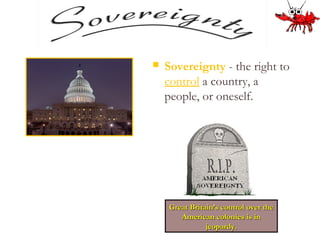
 Sovereignty - the right to
control a country, a
people, or oneself.
Great Britain’s control over theGreat Britain’s control over the
American colonies is inAmerican colonies is in
jeopardy.jeopardy.
Legal vs. Actual SovereigntyLegal vs. Actual Sovereignty
 Legal sovereigntyLegal sovereignty -- is the right to exercise controlis the right to exercise control
over one's subjects.over one's subjects.
 Actual sovereigntyActual sovereignty -- is concerned with whetheris concerned with whether
control exists.control exists.
1)1) Does the governing power have sufficient strengthDoes the governing power have sufficient strength
(police or whatever) to compel its subjects to obey it?(police or whatever) to compel its subjects to obey it?
2)2) Are the subjects of the governing power in the habit ofAre the subjects of the governing power in the habit of
obeying it?obeying it?
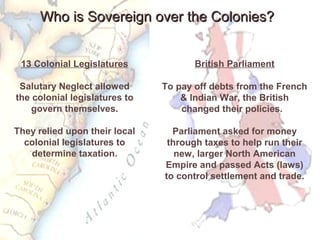
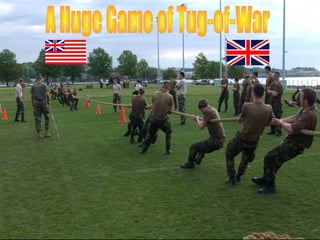
Who is Sovereign over the Colonies?Who is Sovereign over the Colonies?
13 Colonial Legislatures
Salutary Neglect allowed
the colonial legislatures to
govern themselves.
They relied upon their local
colonial legislatures to
determine taxation.
British Parliament
To pay off debts from the French
& Indian War, the British
changed their policies.
Parliament asked for money
through taxes to help run their
new, larger North American
Empire and passed Acts (laws)
to control settlement and trade.
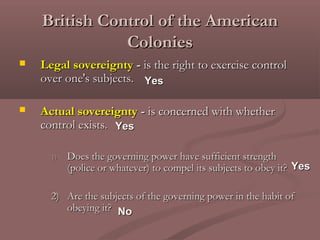
British Control of the AmericanBritish Control of the American
ColoniesColonies
 Legal sovereigntyLegal sovereignty -- is the right to exercise controlis the right to exercise control
over one's subjects.over one's subjects.
 Actual sovereigntyActual sovereignty -- is concerned with whetheris concerned with whether
control exists.control exists.
1)1) Does the governing power have sufficient strengthDoes the governing power have sufficient strength
(police or whatever) to compel its subjects to obey it?(police or whatever) to compel its subjects to obey it?
2)2) Are the subjects of the governing power in the habit ofAre the subjects of the governing power in the habit of
obeying it?obeying it?
YesYes
YesYes
NoNo
YesYes
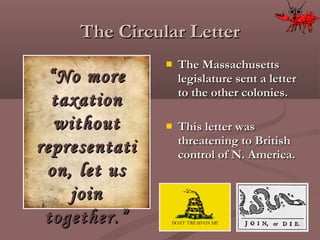
The Circular LetterThe Circular Letter
 The MassachusettsThe Massachusetts
legislature sent a letterlegislature sent a letter
to the other colonies.to the other colonies.
 This letter wasThis letter was
threatening to Britishthreatening to British
control of N. America.control of N. America.
““No moreNo more
taxationtaxation
withoutwithout
representatirepresentati
on, let uson, let us
joinjoin
together.”together.”
Increased TensionsIncreased Tensions
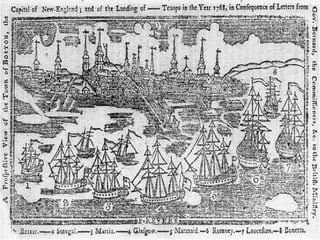
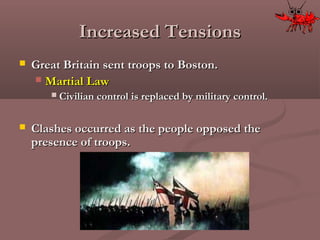
 Great Britain sent troops to Boston.Great Britain sent troops to Boston.
 Martial LawMartial Law
 Civilian control is replaced by military control.Civilian control is replaced by military control.
 Clashes occurred as the people opposed theClashes occurred as the people opposed the
presence of troops.presence of troops.
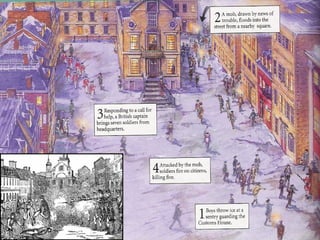
March 5, 1770March 5, 1770
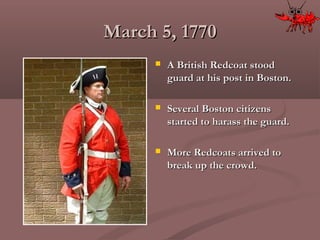
 A British Redcoat stoodA British Redcoat stood
guard at his post in Boston.guard at his post in Boston.
 Several Boston citizensSeveral Boston citizens
started to harass the guard.started to harass the guard.
 More Redcoats arrived toMore Redcoats arrived to
break up the crowd.break up the crowd.
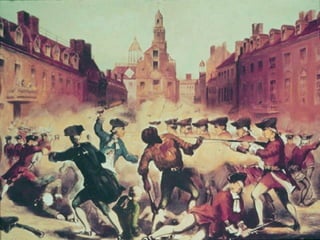
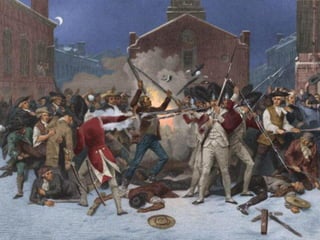
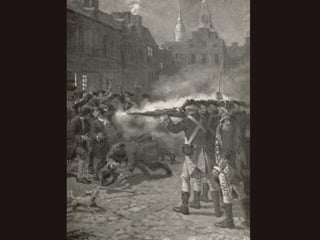
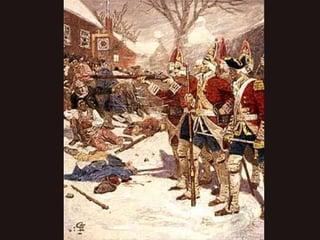
The Boston MassacreThe Boston Massacre
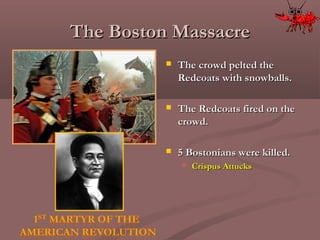
 The crowd pelted theThe crowd pelted the
Redcoats with snowballs.Redcoats with snowballs.
 The Redcoats fired on theThe Redcoats fired on the
crowd.crowd.
 5 Bostonians were killed.5 Bostonians were killed.
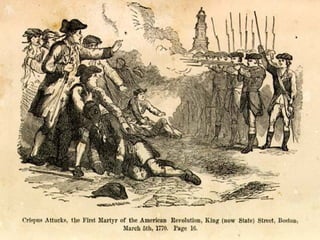
 Crispus AttucksCrispus Attucks
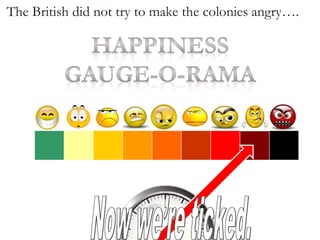
The British did not try to make the colonies angry….
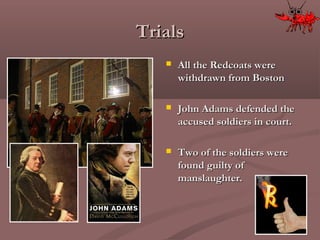
TrialsTrials
 All the Redcoats wereAll the Redcoats were
withdrawn from Bostonwithdrawn from Boston
 John Adams defended theJohn Adams defended the
accused soldiers in court.accused soldiers in court.
 Two of the soldiers wereTwo of the soldiers were
found guilty offound guilty of
manslaughter.manslaughter.
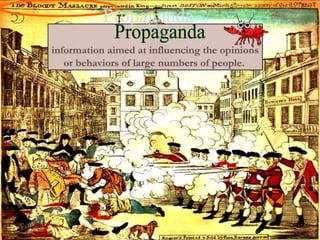
information aimed at influencing the opinions
or behaviors of large numbers of people.
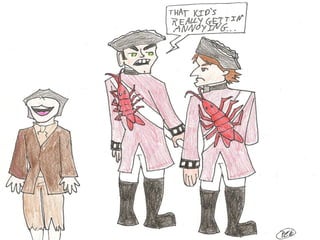
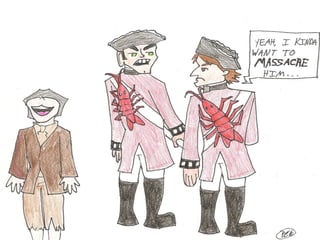
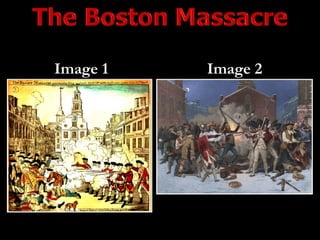
Image 1Image 1 Image 2Image 2

Pest control

  • 7.
    SovereigntySovereignty  Sovereignty -the right to control a country, a people, or oneself. Great Britain’s control over theGreat Britain’s control over the American colonies is inAmerican colonies is in jeopardy.jeopardy.
  • 8.
    Legal vs. ActualSovereigntyLegal vs. Actual Sovereignty  Legal sovereigntyLegal sovereignty -- is the right to exercise controlis the right to exercise control over one's subjects.over one's subjects.  Actual sovereigntyActual sovereignty -- is concerned with whetheris concerned with whether control exists.control exists. 1)1) Does the governing power have sufficient strengthDoes the governing power have sufficient strength (police or whatever) to compel its subjects to obey it?(police or whatever) to compel its subjects to obey it? 2)2) Are the subjects of the governing power in the habit ofAre the subjects of the governing power in the habit of obeying it?obeying it?
  • 9.
    Who is Sovereignover the Colonies?Who is Sovereign over the Colonies? 13 Colonial Legislatures Salutary Neglect allowed the colonial legislatures to govern themselves. They relied upon their local colonial legislatures to determine taxation. British Parliament To pay off debts from the French & Indian War, the British changed their policies. Parliament asked for money through taxes to help run their new, larger North American Empire and passed Acts (laws) to control settlement and trade.
  • 11.
    British Control ofthe AmericanBritish Control of the American ColoniesColonies  Legal sovereigntyLegal sovereignty -- is the right to exercise controlis the right to exercise control over one's subjects.over one's subjects.  Actual sovereigntyActual sovereignty -- is concerned with whetheris concerned with whether control exists.control exists. 1)1) Does the governing power have sufficient strengthDoes the governing power have sufficient strength (police or whatever) to compel its subjects to obey it?(police or whatever) to compel its subjects to obey it? 2)2) Are the subjects of the governing power in the habit ofAre the subjects of the governing power in the habit of obeying it?obeying it? YesYes YesYes NoNo YesYes
  • 12.
    The Circular LetterTheCircular Letter  The MassachusettsThe Massachusetts legislature sent a letterlegislature sent a letter to the other colonies.to the other colonies.  This letter wasThis letter was threatening to Britishthreatening to British control of N. America.control of N. America. ““No moreNo more taxationtaxation withoutwithout representatirepresentati on, let uson, let us joinjoin together.”together.”
  • 14.
    Increased TensionsIncreased Tensions Great Britain sent troops to Boston.Great Britain sent troops to Boston.  Martial LawMartial Law  Civilian control is replaced by military control.Civilian control is replaced by military control.  Clashes occurred as the people opposed theClashes occurred as the people opposed the presence of troops.presence of troops.
  • 15.
    March 5, 1770March5, 1770  A British Redcoat stoodA British Redcoat stood guard at his post in Boston.guard at his post in Boston.  Several Boston citizensSeveral Boston citizens started to harass the guard.started to harass the guard.  More Redcoats arrived toMore Redcoats arrived to break up the crowd.break up the crowd.
  • 16.
    The Boston MassacreTheBoston Massacre  The crowd pelted theThe crowd pelted the Redcoats with snowballs.Redcoats with snowballs.  The Redcoats fired on theThe Redcoats fired on the crowd.crowd.  5 Bostonians were killed.5 Bostonians were killed.  Crispus AttucksCrispus Attucks
  • 18.
    The British didnot try to make the colonies angry….
  • 19.
    TrialsTrials  All theRedcoats wereAll the Redcoats were withdrawn from Bostonwithdrawn from Boston  John Adams defended theJohn Adams defended the accused soldiers in court.accused soldiers in court.  Two of the soldiers wereTwo of the soldiers were found guilty offound guilty of manslaughter.manslaughter.
  • 20.
    information aimed atinfluencing the opinions or behaviors of large numbers of people.
  • 28.
    Image 1Image 1Image 2Image 2