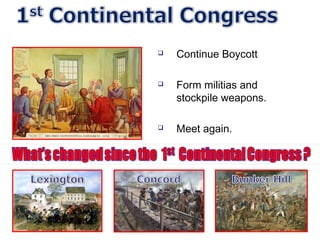
 Continue Boycott
 Form militias and
stockpile weapons.
 Meet again.
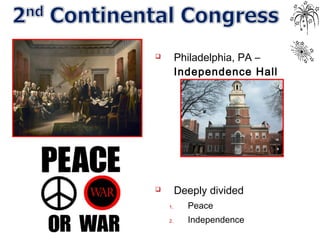
In 1776, the 2nd
Continental Congress was organized.
 Philadelphia, PA –
Independence Hall
 Deeply divided
1. Peace
2. Independence
 Some colonists begged
the King for peace.
 The King rejected it.
COMMON SENSECOMMON SENSE
AUTHORAUTHOR
THOMAS PAINETHOMAS PAINE
 COMMON SENSE:
pamphlet rallying colonists
to accept independence.
 No Greek or Latin.
 Structured similar to the
Bible.
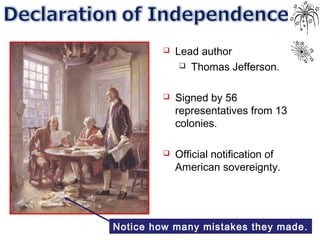
 Lead author
 Thomas Jefferson.
 Signed by 56
representatives from 13
colonies.
 Official notification of
American sovereignty.
Notice how many mistakes they made.
The resolution of independence was adopted on July 2, 1776.
The revised declaration was approved on the July 4, 1776.
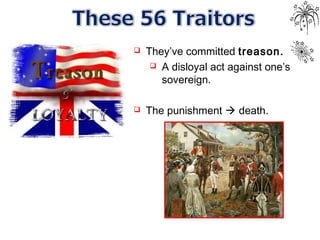
 They’ve committed treason.
 A disloyal act against one’s
sovereign.
 The punishment  death.
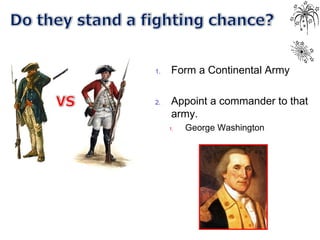
1. Form a Continental Army
2. Appoint a commander to that
army.
1. George Washington
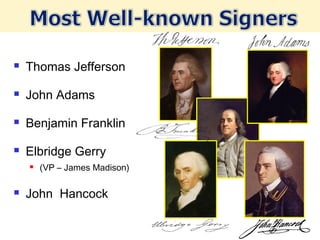
 Thomas Jefferson
 John Adams
 Benjamin Franklin
 Elbridge Gerry
 (VP – James Madison)
 John Hancock
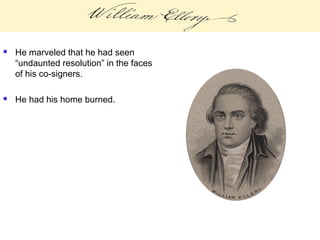
 He marveled that he had seen
“undaunted resolution” in the faces
of his co-signers.
 He had his home burned.
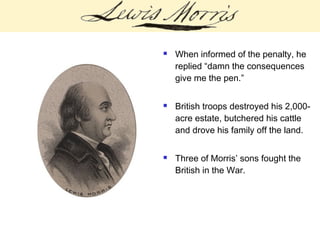
 When informed of the penalty, he
replied “damn the consequences
give me the pen.”
 British troops destroyed his 2,000-
acre estate, butchered his cattle
and drove his family off the land.
 Three of Morris’ sons fought the
British in the War.
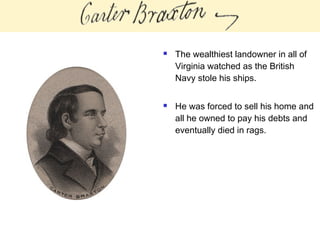
 The wealthiest landowner in all of
Virginia watched as the British
Navy stole his ships.
 He was forced to sell his home and
all he owned to pay his debts and
eventually died in rags.
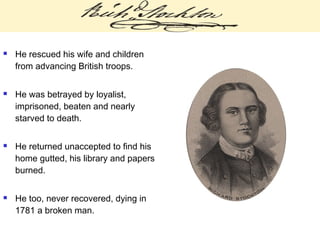
 He rescued his wife and children
from advancing British troops.
 He was betrayed by loyalist,
imprisoned, beaten and nearly
starved to death.
 He returned unaccepted to find his
home gutted, his library and papers
burned.
 He too, never recovered, dying in
1781 a broken man.
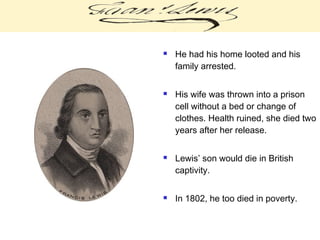
 He had his home looted and his
family arrested.
 His wife was thrown into a prison
cell without a bed or change of
clothes. Health ruined, she died two
years after her release.
 Lewis’ son would die in British
captivity.
 In 1802, he too died in poverty.
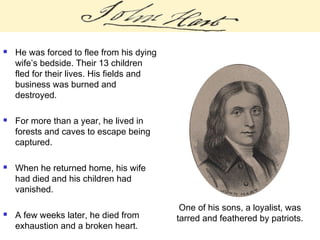
 He was forced to flee from his dying
wife’s bedside. Their 13 children
fled for their lives. His fields and
business was burned and
destroyed.
 For more than a year, he lived in
forests and caves to escape being
captured.
 When he returned home, his wife
had died and his children had
vanished.
 A few weeks later, he died from
exhaustion and a broken heart.
One of his sons, a loyalist, was
tarred and feathered by patriots.
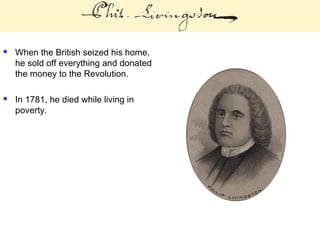
 When the British seized his home,
he sold off everything and donated
the money to the Revolution.
 In 1781, he died while living in
poverty.
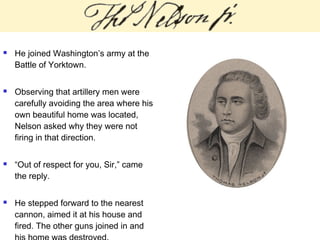
 He joined Washington’s army at the
Battle of Yorktown.
 Observing that artillery men were
carefully avoiding the area where his
own beautiful home was located,
Nelson asked why they were not
firing in that direction.
 “Out of respect for you, Sir,” came
the reply.
 
 He stepped forward to the nearest
cannon, aimed it at his house and
fired. The other guns joined in and
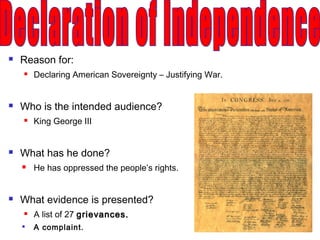
 Reason for:
 Declaring American Sovereignty – Justifying War.
 Who is the intended audience?
 King George III
 What has he done?
 He has oppressed the people’s rights.
 What evidence is presented?
 A list of 27 grievances.grievances.

A complaint.
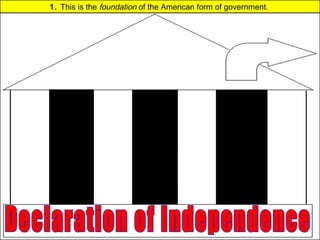
1. This is the foundation of the American form of government.

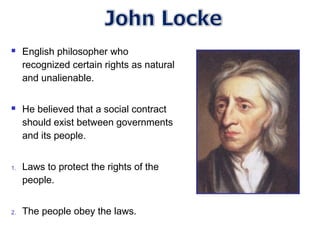
 English philosopher who
recognized certain rights as natural
and unalienable.
 He believed that a social contract
should exist between governments
and its people.
1. Laws to protect the rights of the
people.
2. The people obey the laws.
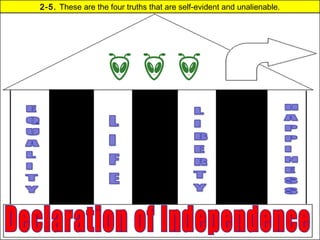
2-5. These are the four truths that are self-evident and unalienable.
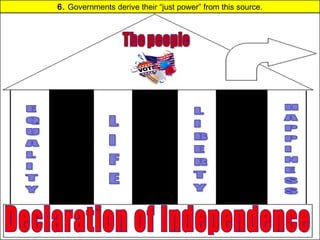
6. Governments derive their “just power” from this source.
d3ds
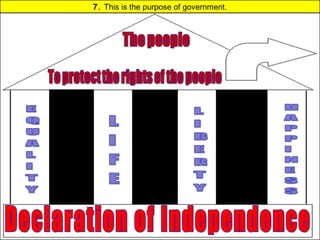
7. This is the purpose of government.
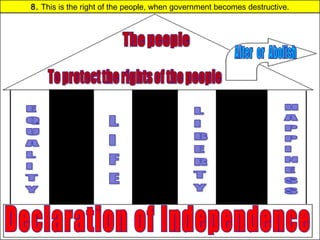
8. This is the right of the people, when government becomes destructive.
Indepence day
Indepence day
Indepence day

Indepence day

  • 2.
     Continue Boycott Form militias and stockpile weapons.  Meet again.
  • 3.
    In 1776, the2nd Continental Congress was organized.
  • 4.
     Philadelphia, PA– Independence Hall  Deeply divided 1. Peace 2. Independence
  • 5.
     Some colonistsbegged the King for peace.  The King rejected it.
  • 6.
    COMMON SENSECOMMON SENSE AUTHORAUTHOR THOMASPAINETHOMAS PAINE  COMMON SENSE: pamphlet rallying colonists to accept independence.  No Greek or Latin.  Structured similar to the Bible.
  • 7.
     Lead author Thomas Jefferson.  Signed by 56 representatives from 13 colonies.  Official notification of American sovereignty. Notice how many mistakes they made.
  • 8.
    The resolution ofindependence was adopted on July 2, 1776. The revised declaration was approved on the July 4, 1776.
  • 10.
     They’ve committedtreason.  A disloyal act against one’s sovereign.  The punishment  death.
  • 11.
    1. Form aContinental Army 2. Appoint a commander to that army. 1. George Washington
  • 13.
     Thomas Jefferson John Adams  Benjamin Franklin  Elbridge Gerry  (VP – James Madison)  John Hancock
  • 14.
     He marveledthat he had seen “undaunted resolution” in the faces of his co-signers.  He had his home burned.
  • 15.
     When informedof the penalty, he replied “damn the consequences give me the pen.”  British troops destroyed his 2,000- acre estate, butchered his cattle and drove his family off the land.  Three of Morris’ sons fought the British in the War.
  • 16.
     The wealthiestlandowner in all of Virginia watched as the British Navy stole his ships.  He was forced to sell his home and all he owned to pay his debts and eventually died in rags.
  • 17.
     He rescuedhis wife and children from advancing British troops.  He was betrayed by loyalist, imprisoned, beaten and nearly starved to death.  He returned unaccepted to find his home gutted, his library and papers burned.  He too, never recovered, dying in 1781 a broken man.
  • 18.
     He hadhis home looted and his family arrested.  His wife was thrown into a prison cell without a bed or change of clothes. Health ruined, she died two years after her release.  Lewis’ son would die in British captivity.  In 1802, he too died in poverty.
  • 19.
     He wasforced to flee from his dying wife’s bedside. Their 13 children fled for their lives. His fields and business was burned and destroyed.  For more than a year, he lived in forests and caves to escape being captured.  When he returned home, his wife had died and his children had vanished.  A few weeks later, he died from exhaustion and a broken heart. One of his sons, a loyalist, was tarred and feathered by patriots.
  • 20.
     When theBritish seized his home, he sold off everything and donated the money to the Revolution.  In 1781, he died while living in poverty.
  • 21.
     He joinedWashington’s army at the Battle of Yorktown.  Observing that artillery men were carefully avoiding the area where his own beautiful home was located, Nelson asked why they were not firing in that direction.  “Out of respect for you, Sir,” came the reply.    He stepped forward to the nearest cannon, aimed it at his house and fired. The other guns joined in and
  • 23.
     Reason for: Declaring American Sovereignty – Justifying War.  Who is the intended audience?  King George III  What has he done?  He has oppressed the people’s rights.  What evidence is presented?  A list of 27 grievances.grievances.  A complaint.
  • 24.
    1. This isthe foundation of the American form of government.
  • 25.
     English philosopherwho recognized certain rights as natural and unalienable.  He believed that a social contract should exist between governments and its people. 1. Laws to protect the rights of the people. 2. The people obey the laws.
  • 26.
    2-5. These arethe four truths that are self-evident and unalienable.
  • 28.
    6. Governments derivetheir “just power” from this source.
  • 29.
  • 30.
    7. This isthe purpose of government.
  • 32.
    8. This isthe right of the people, when government becomes destructive.

Editor's Notes

  • #15 William Ellery of Rhode Island, who marveled that he had seen only “undaunted resolution” in the faces of his co-signers, had his home burned also.
  • #16 Only days after Lewis Morris of New York signed, British troops ravaged his 2,000-acre estate, butchered his cattle and drove his family off the land. Three of Morris’ sons fought the British in the War.
  • #17 Mr. Carter Braxton from Virginia was a wealthy planter and trader who
  • #18 New Jersey’s Richard Stockton, suffered a similar fate. After rescuing his wife and children from advancing British troops, he was betrayed by loyalist, imprisoned, beaten and nearly starved. He returned unaccepted to find his home gutted, his library and papers burned. He, too, never recovered, dying in 1781 a broken man.   Hart and Stockton lost all they had, but honor.
  • #19 Francis Lewis’ Long Island home, too, was looted and gutted, his wife thrown into a damp dark prison cell without a bed. Health ruined, Mrs. Lewis died in two years. Lewis’ son would die in British captivity.
  • #20 Mr. John Hart was forced to flee from his wife’s bedside as she was dying. Their 13 children fled for their lives. His fields and business was burned and destroyed. For more than a year, he was forced to live in forests and caves to escape being captured. When he finally returned home, his wife had died and his children had vanished. A few weeks later, he died from exhaustion and a broken heart.
  • #21 When the British seized the New York houses of the wealthy Philip Livingston, he sold off everything so they could not use it too, and donated the money to the Revolution. Later, he died while living in poverty in 1781.
  • #22 But perhaps the most inspiring example of that “undaunted resolution” was Thomas Nelson Jr. Returning home from Philadelphia to become Governor of Virginia. Nelson joined Washington’s army just outside of Yorktown. Observing during that battle that his artillery men were directing fire all over the town, but were being careful to avoid the area where his own beautiful home was located, Nelson asked why they were not firing in that direction.   “Out of respect for you, Sir,” came the reply.   Nelson stepped forward to the nearest cannon, aimed it at his house and fired. The other guns joined in: his home was destroyed.