Bow-tie Risk Analysis 
Paulo Rheinboldt 
Process and Industrial Safety Consultant 
Det Norske Veritas
Objectives 
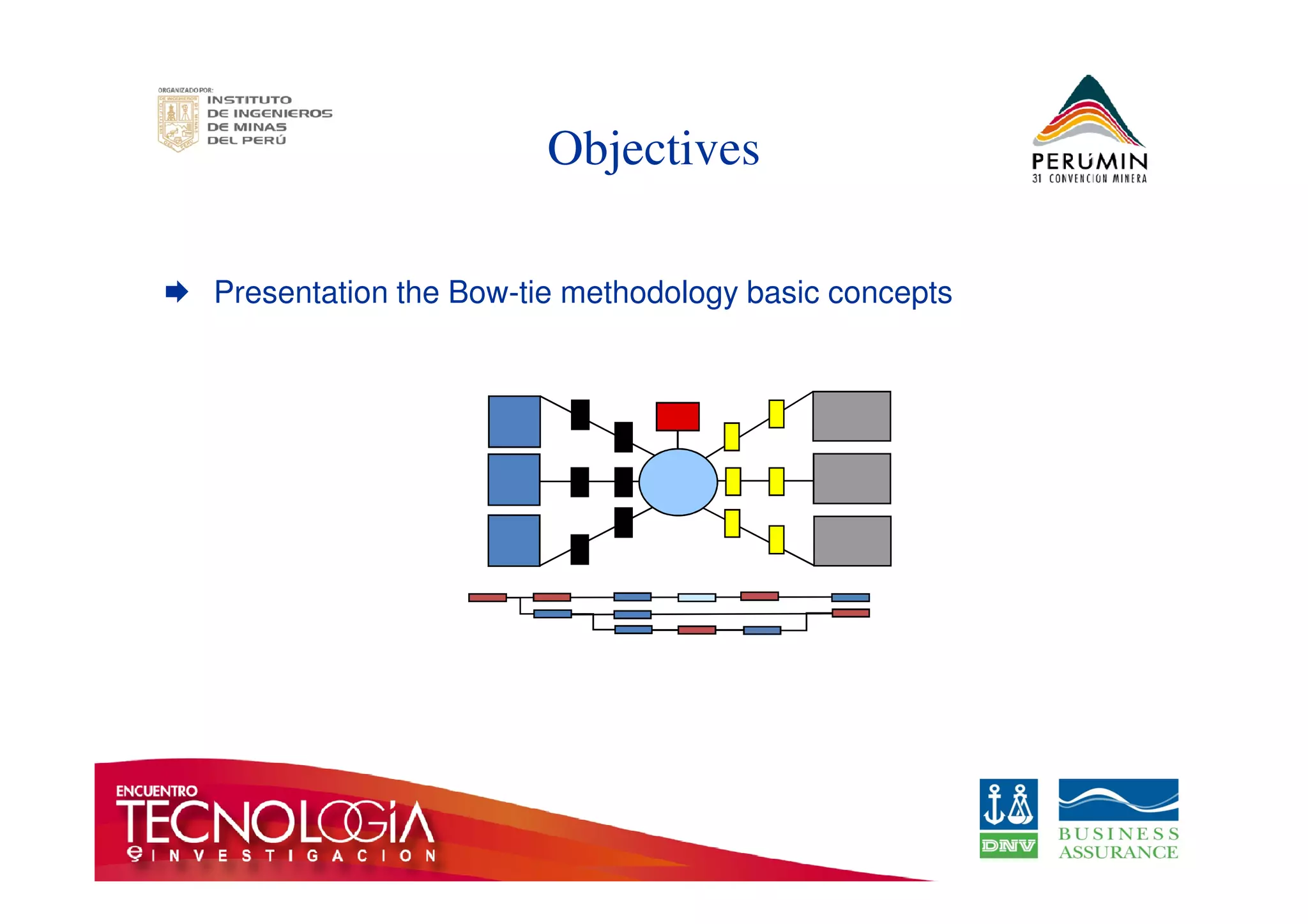
 Presentation the Bow-tie methodology basic concepts
Risk Management 
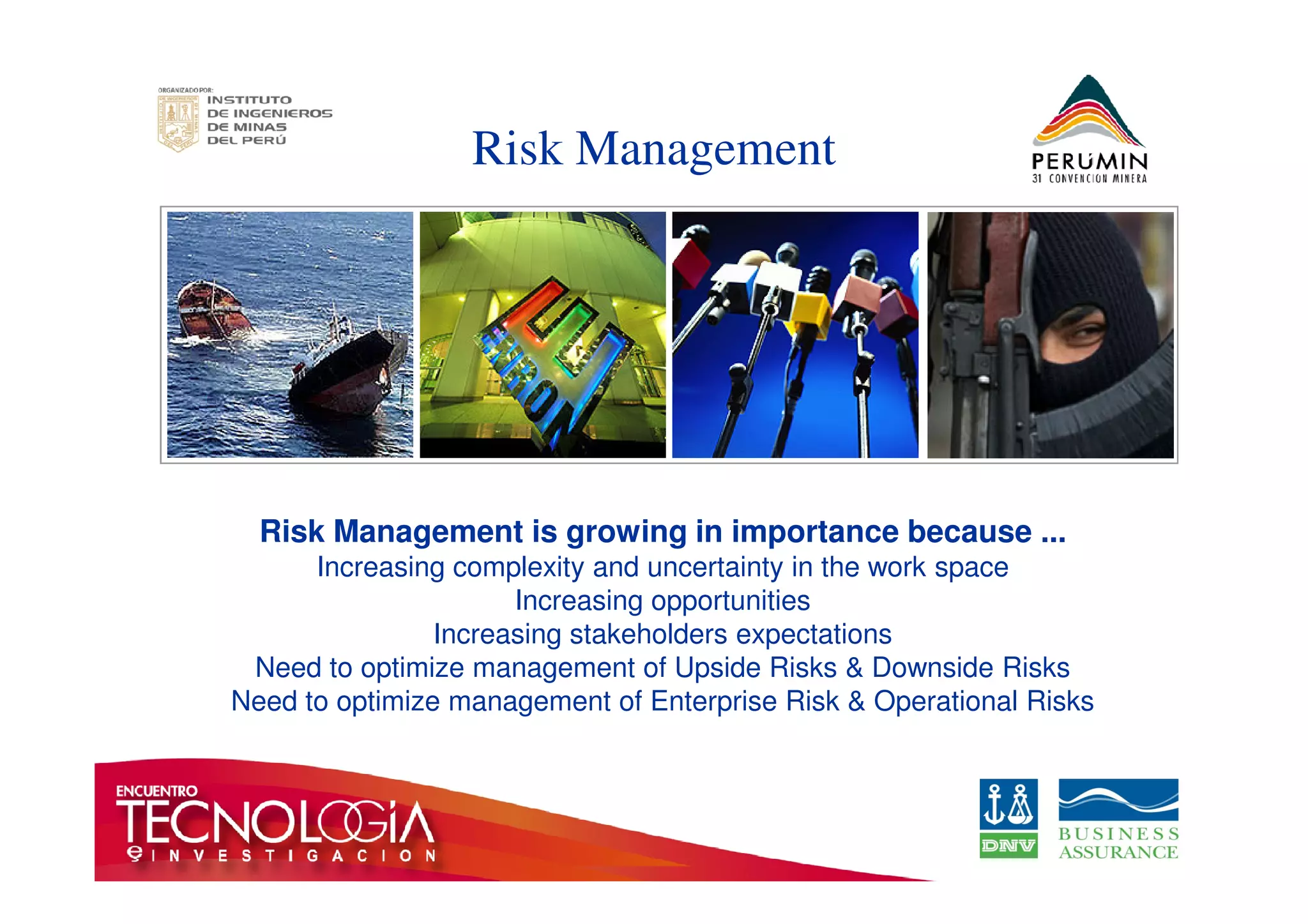
Risk Management is growing in importance because ... 
Increasing complexity and uncertainty in the work space 
Increasing opportunities 
Increasing stakeholders expectations 
Need to optimize management of Upside Risks  Downside Risks 
Need to optimize management of Enterprise Risk  Operational Risks
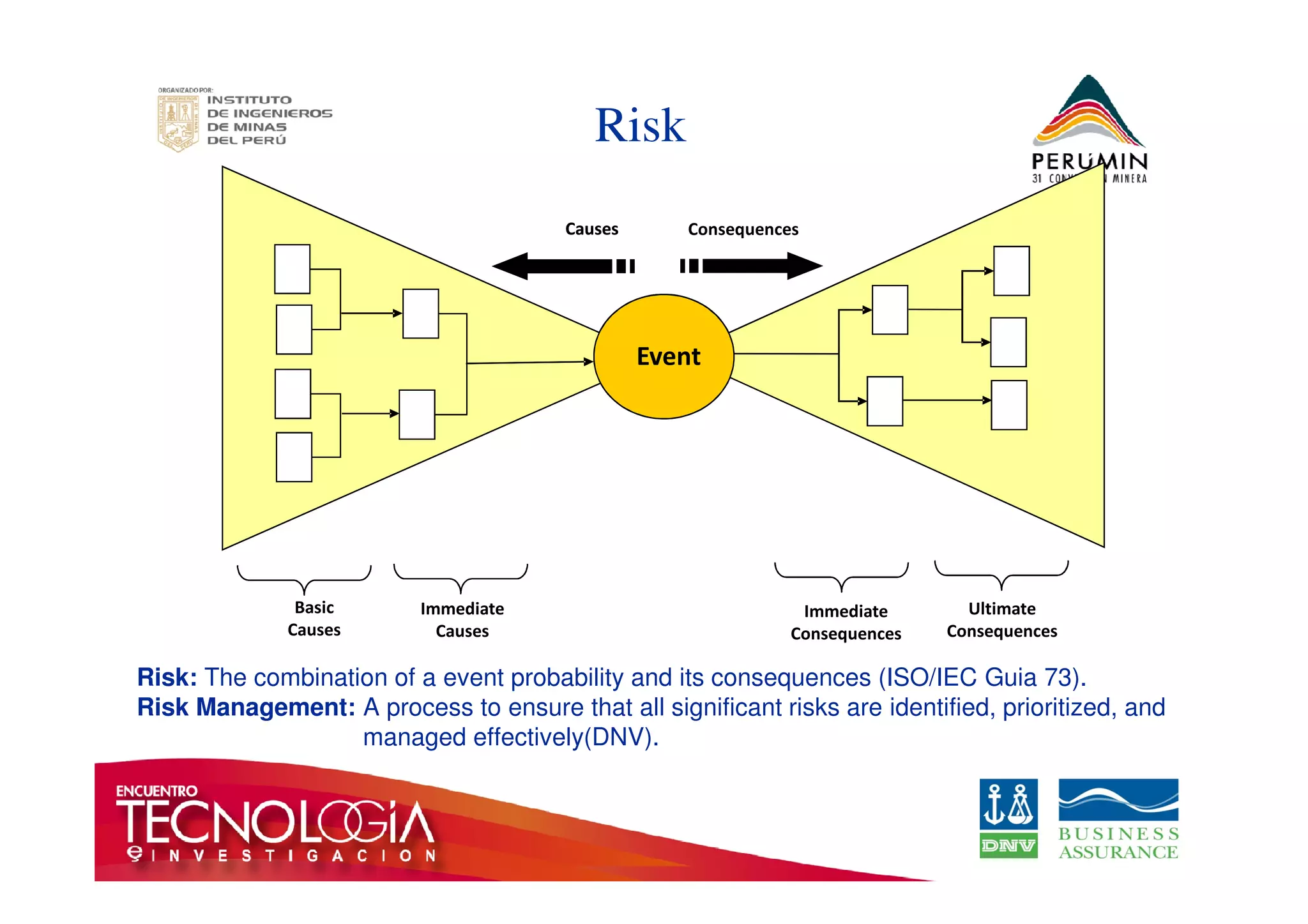
Risk 
Causes 
Consequences 
Major 
Event 
Event 
Basic 
Causes 
Immediate 
Causes 
Immediate 
Consequences 
Ultimate 
Consequences 
Risk: The combination of a event probability and its consequences (ISO/IEC Guia 73). 
Risk Management: A process to ensure that all significant risks are identified, prioritized, and 
managed effectively(DNV).
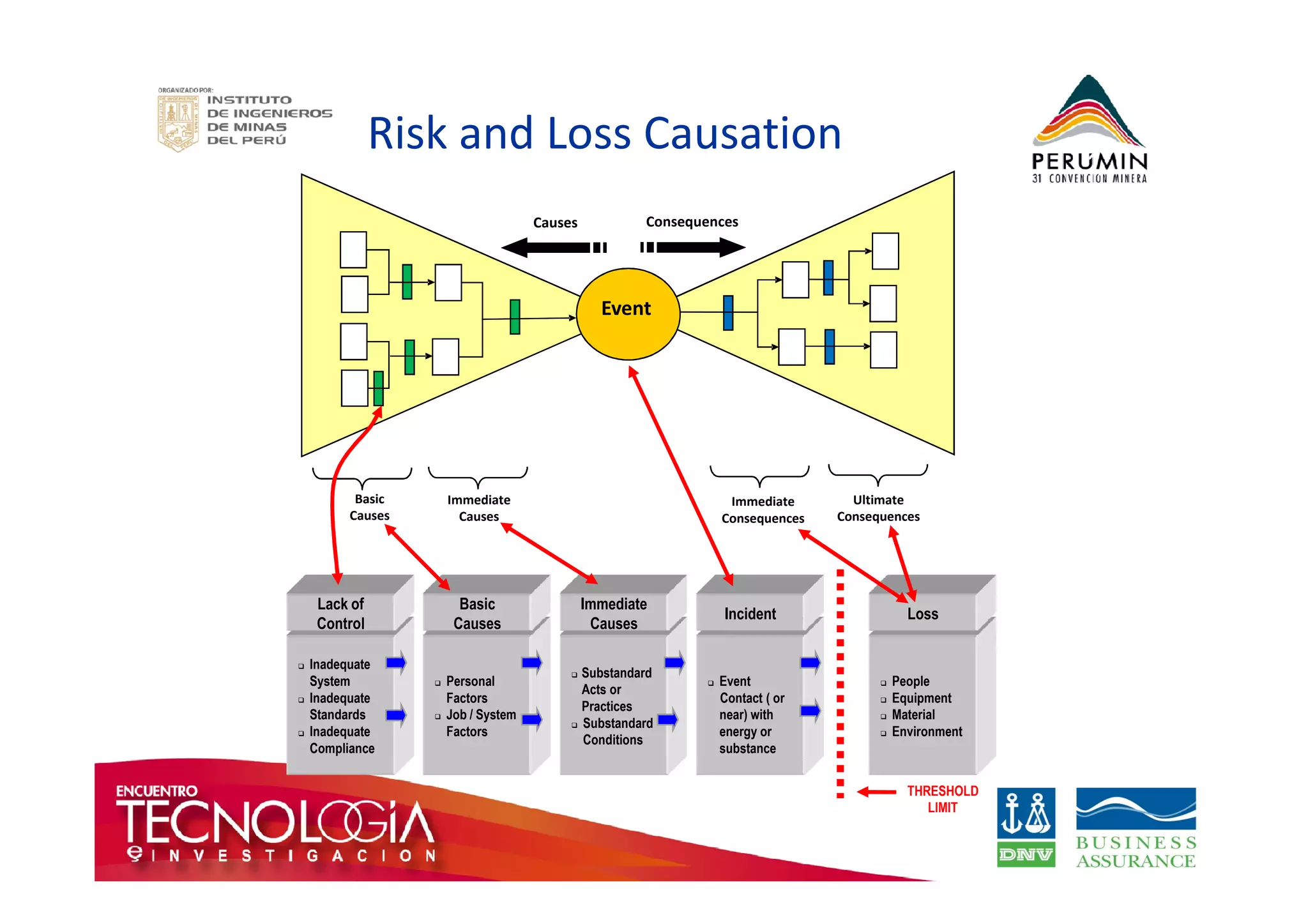
Risk and Loss Causation 
Consequences 
Event 
Major 
Event 
Causes 
Basic 
Causes 
Immediate 
Causes 
Immediate 
Consequences 
Ultimate 
Consequences 
Loss 
THRESHOLD 
LIMIT 
Lack of 
Control 
 Inadequate 
System 
 Inadequate 
Standards 
 Inadequate 
Compliance 
Basic 
Causes 
 Personal 
Factors 
 Job / System 
Factors 
Immediate 
Causes 
 Substandard 
Acts or 
Practices 
 Substandard 
Conditions 
Incident 
 Event 
Contact ( or 
near) with 
energy or 
substance 
 People 
 Equipment 
 Material 
 Environment
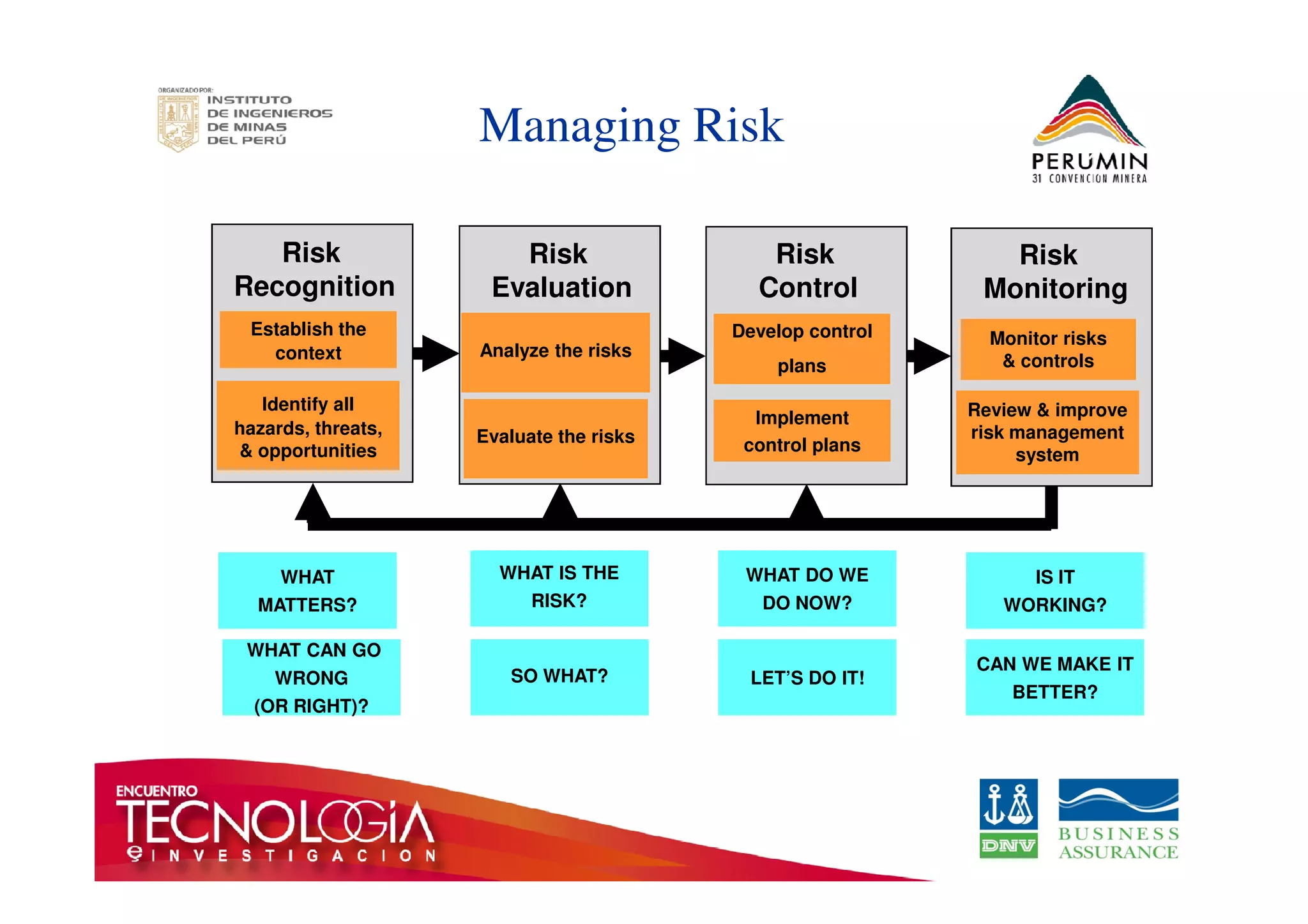
Managing Risk 
Risk 
Recognition 
Risk 
Evaluation 
Risk 
Control 
Risk 
Monitoring 
Establish the 
context 
Identify all 
hazards, threats, 
 opportunities 
Analyze the risks 
Evaluate the risks 
Develop control 
plans 
Implement 
control plans 
Monitor risks 
 controls 
Review  improve 
risk management 
system 
WHAT 
MATTERS? 
WHAT IS THE 
RISK? 
WHAT DO WE 
DO NOW? 
SO WHAT? LET’S DO IT! 
IS IT 
WORKING? 
CAN WE MAKE IT 
BETTER? 
WHAT CAN GO 
WRONG 
(OR RIGHT)?
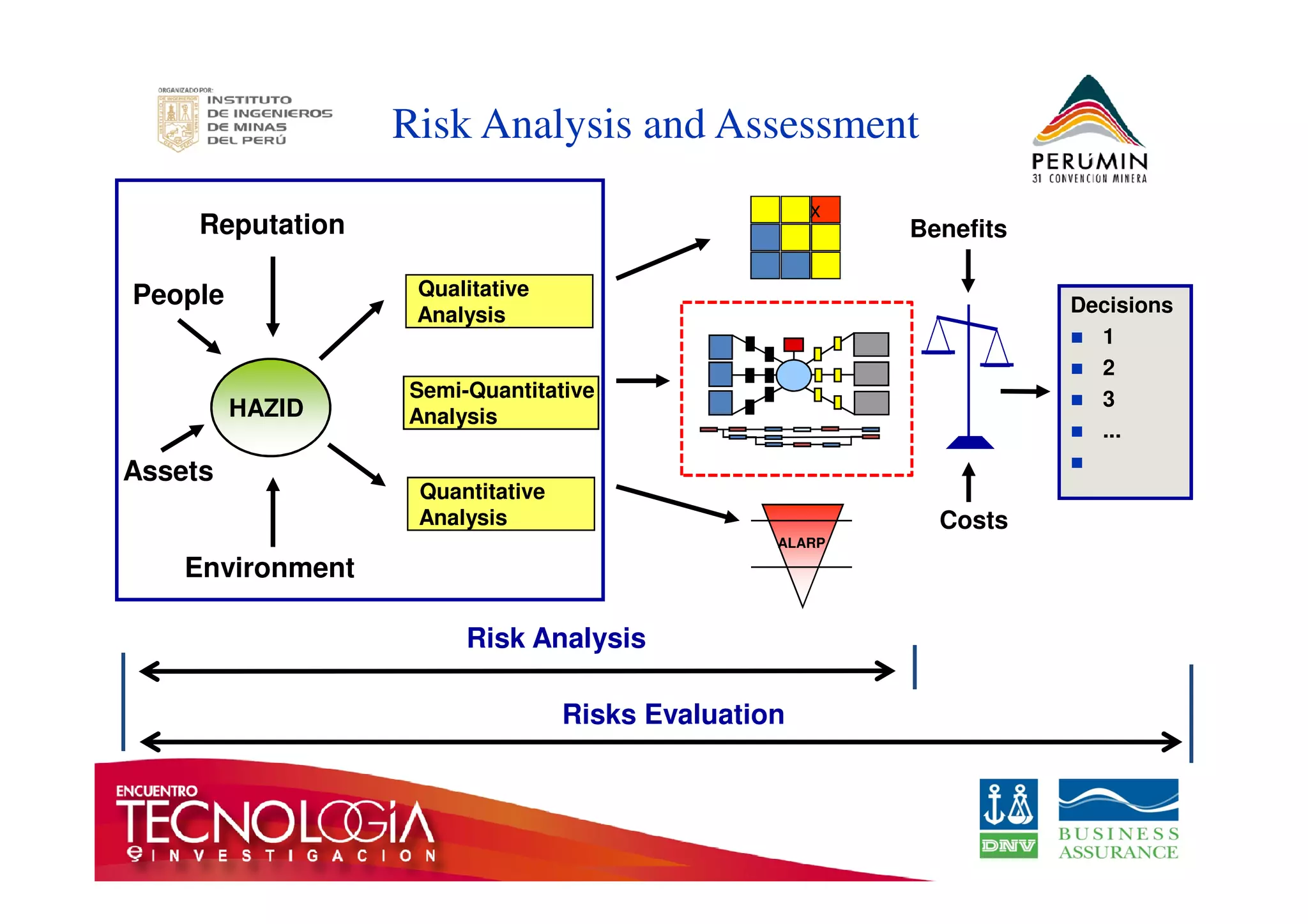
Risk Analysis and Assessment 
Decisions 
 1 
 2 
 3 
 ... 
 
HAZID 
People 
Assets 
Qualitative 
Analysis 
Reputation 
Semi-Quantitative 
Analysis 
x 
Benefits 
Environment 
Quantitative 
Analysis 
ALARP 
Costs 
Risk Analysis 
Risks Evaluation
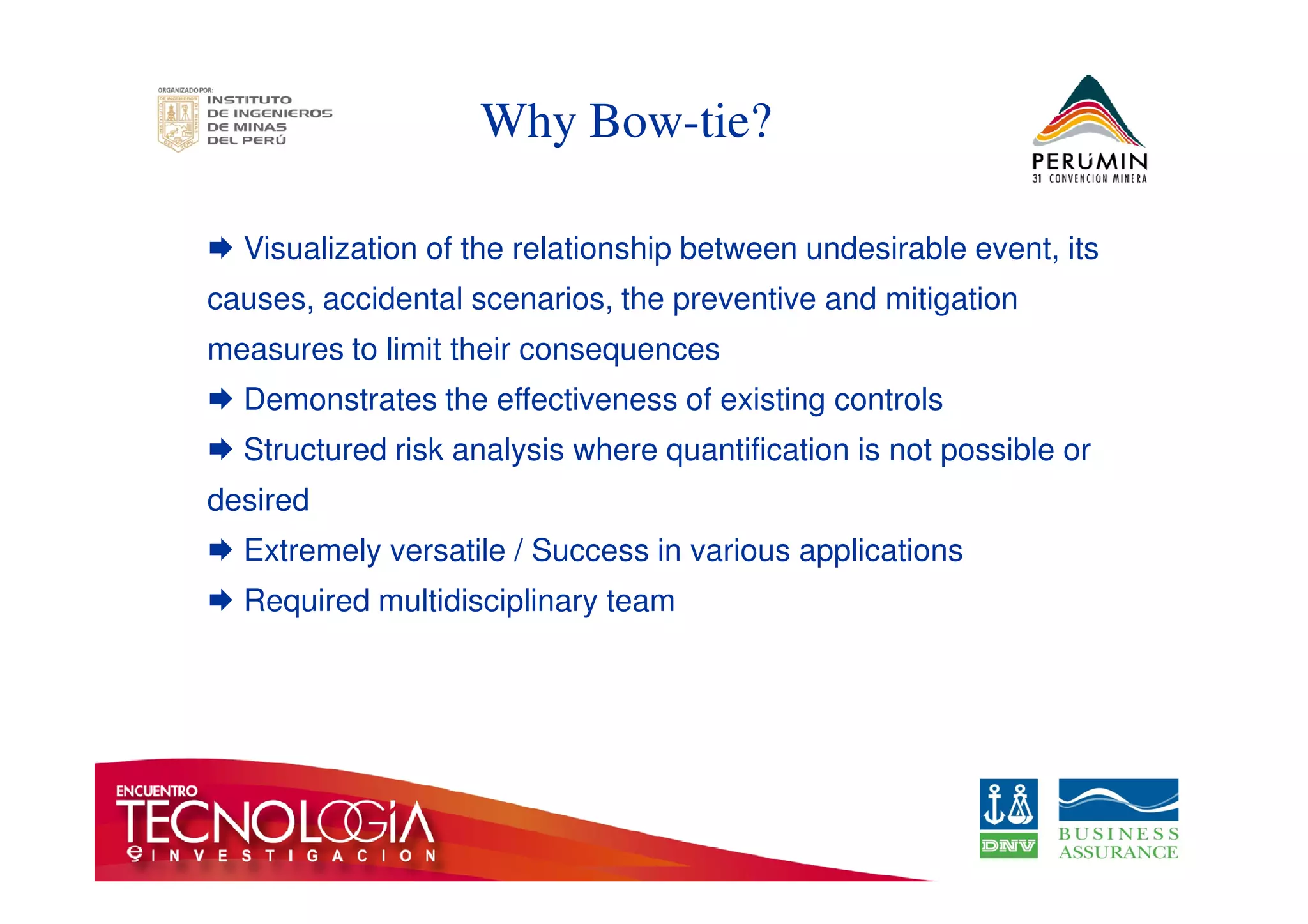
Why Bow-tie? 
 Visualization of the relationship between undesirable event, its 
causes, accidental scenarios, the preventive and mitigation 
measures to limit their consequences 
 Demonstrates the effectiveness of existing controls 
 Structured risk analysis where quantification is not possible or 
desired 
 Extremely versatile / Success in various applications 
 Required multidisciplinary team
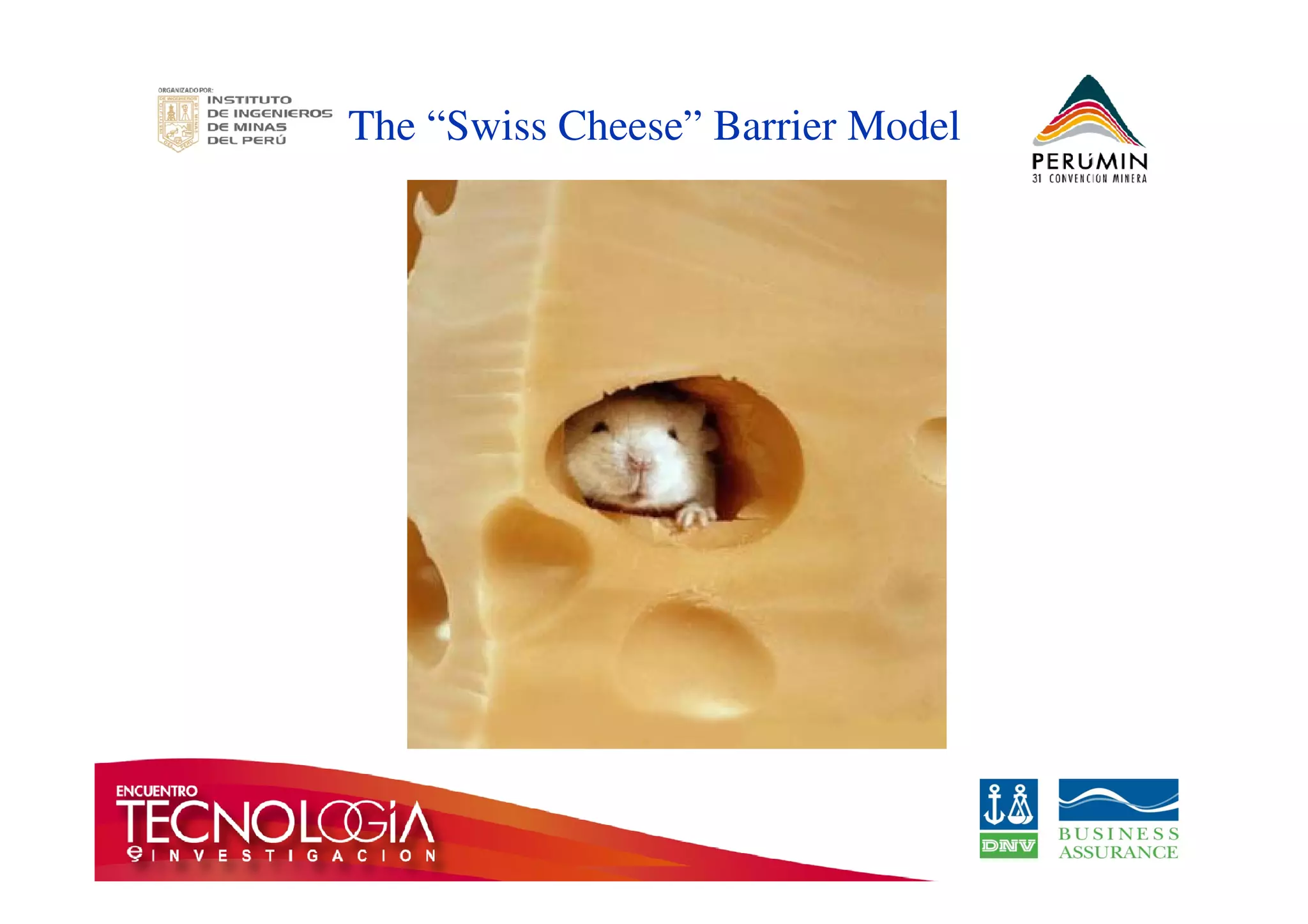
The “Swiss Cheese” Barrier Model
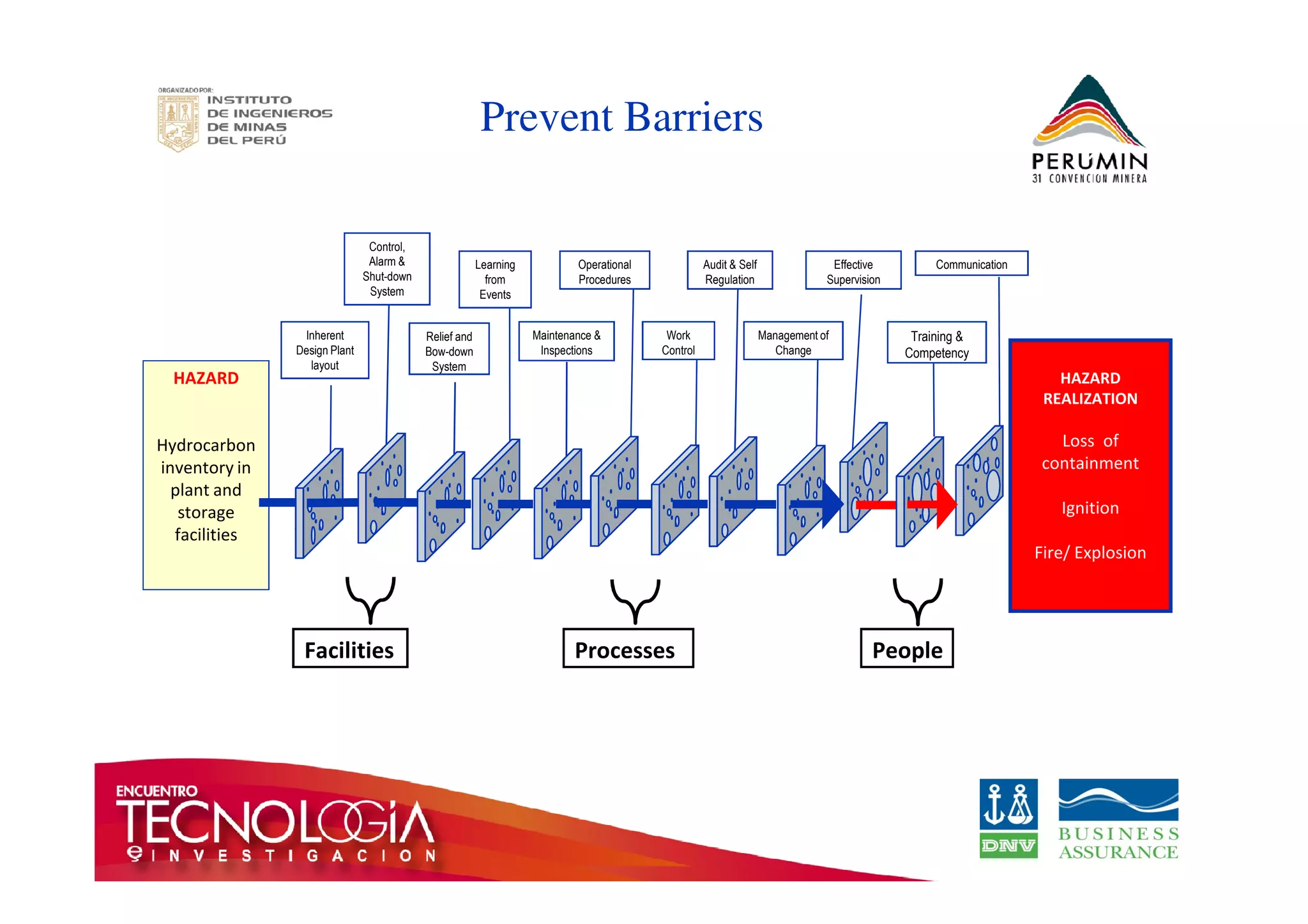
Prevent Barriers 
HAZARD 
Hydrocarbon 
inventory in 
HAZARD 
REALIZATION 
Loss of 
containment 
Inherent 
Design Plant 
layout 
Maintenance  
Inspections 
Learning 
from 
Events 
Operational 
Procedures 
Effective 
Supervision 
Work 
Control 
Relief and 
Bow-down 
System 
Audit  Self 
Regulation 
Management of 
Change 
Communication 
Training  
Competency 
Control, 
Alarm  
Shut-down 
System 
plant and 
storage 
facilities 
Ignition 
Fire/ Explosion 
Facilities Processes People
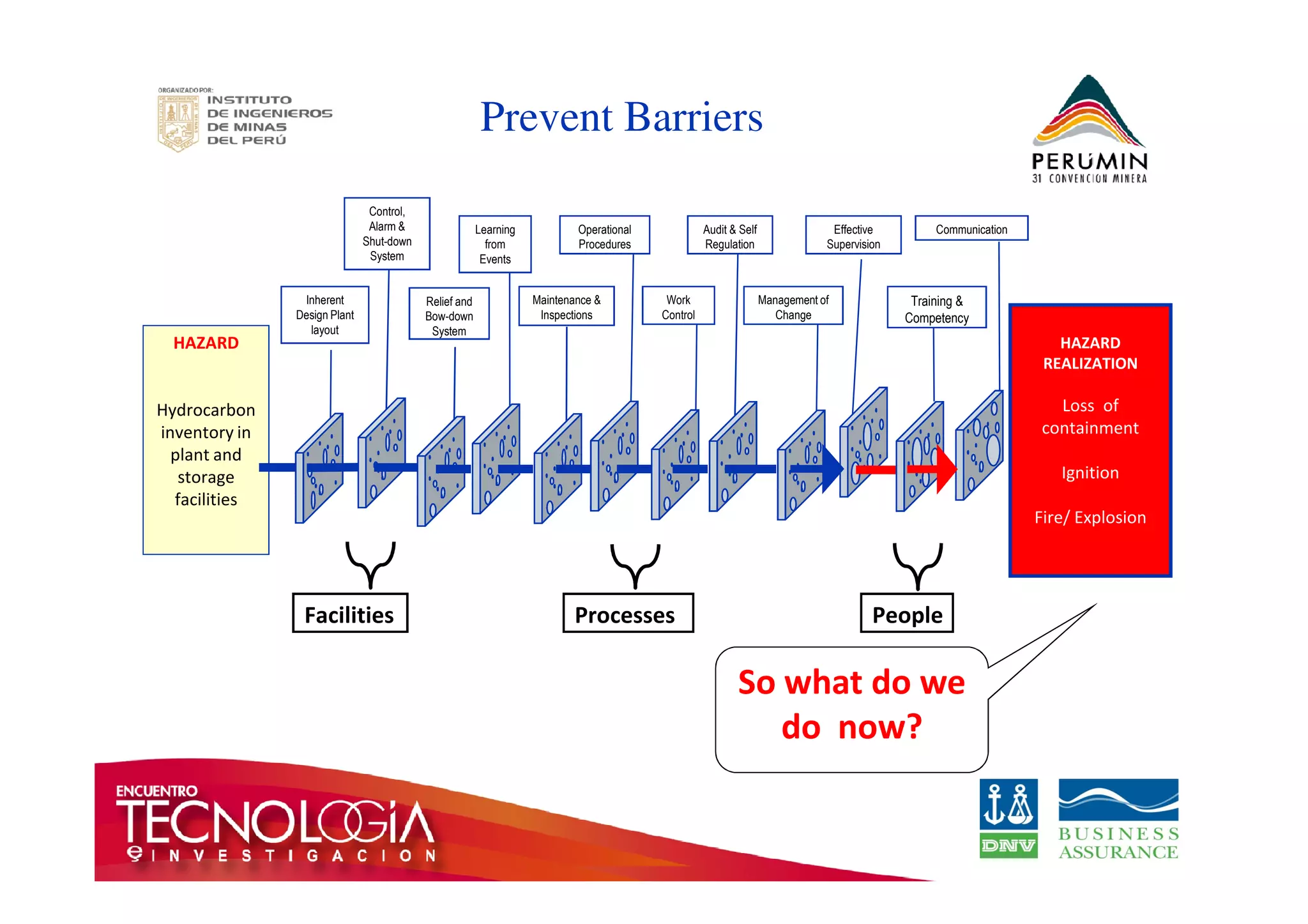
Prevent Barriers 
HAZARD 
Hydrocarbon 
inventory in 
plant and 
HAZARD 
REALIZATION 
Loss of 
containment 
Ignition 
Inherent 
Design Plant 
layout 
Maintenance  
Inspections 
Learning 
from 
Events 
Operational 
Procedures 
Effective 
Supervision 
Work 
Control 
Relief and 
Bow-down 
System 
Audit  Self 
Regulation 
Management of 
Change 
Communication 
Training  
Competency 
Control, 
Alarm  
Shut-down 
System 
storage 
facilities 
Fire/ Explosion 
Facilities Processes People 
So what do we 
do now?
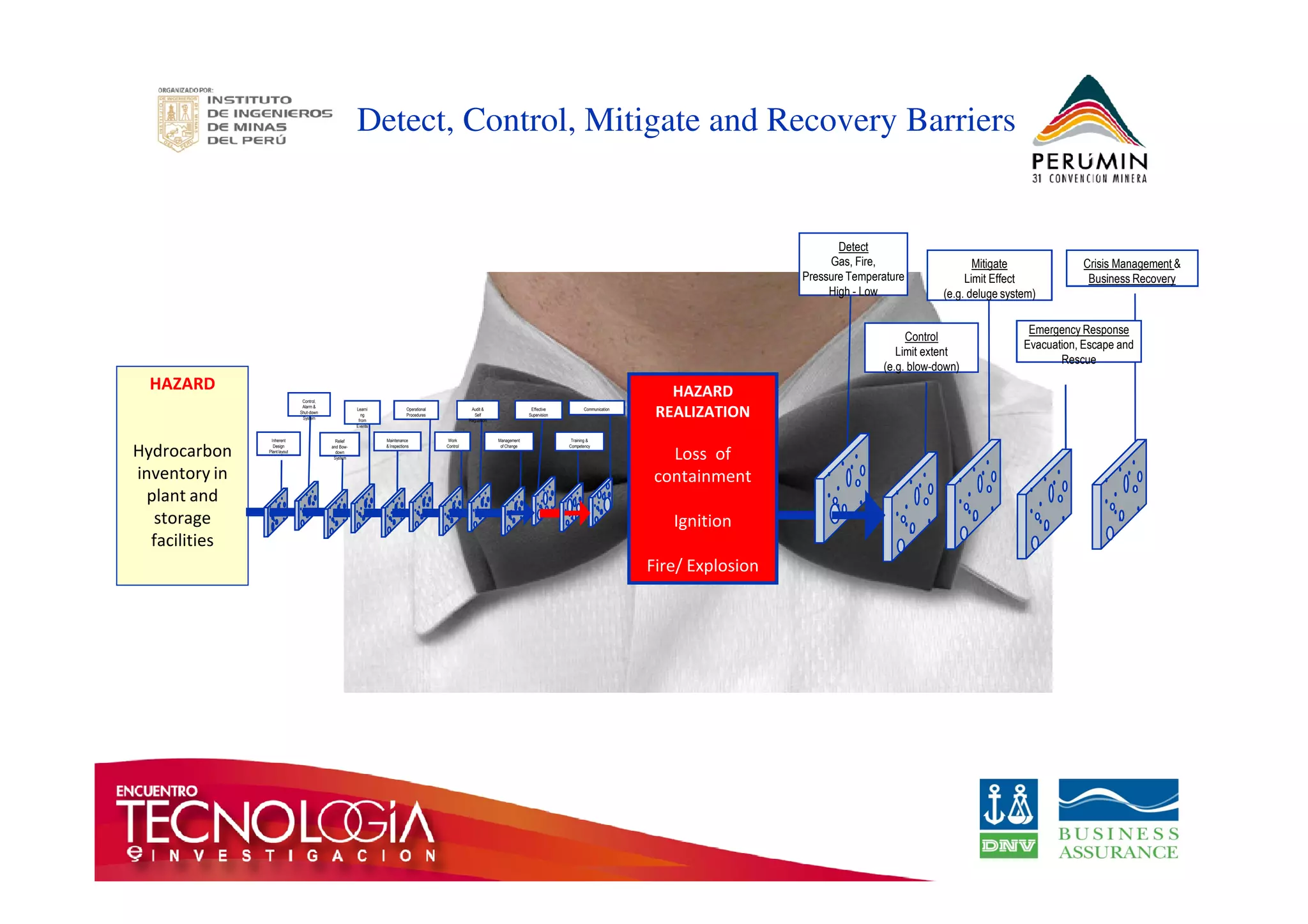
Detect, Control, Mitigate and Recovery Barriers 
Mitigate 
Limit Effect 
(e.g. deluge system) 
Control 
Limit extent 
(e.g. blow-down) 
Detect 
Gas, Fire, 
Pressure Temperature 
High - Low 
Crisis Management  
Business Recovery 
Emergency Response 
Evacuation, Escape and 
Rescue 
HAZARD 
Hydrocarbon 
inventory in 
HAZARD 
REALIZATION 
Loss of 
Inherent 
Design 
Plant layout 
Maintenance 
 Inspections 
Learni 
ng 
from 
Events 
Operational 
Procedures 
Effective 
Supervision 
Work 
Control 
Relief 
and Bow-down 
System 
Audit  
Self 
Regulation 
Management 
of Change 
Communication 
Training  
Competency 
Control, 
Alarm  
Shut-down 
System 
plant and 
storage 
facilities 
containment 
Ignition 
Fire/ Explosion
Bow-tie Diagram 
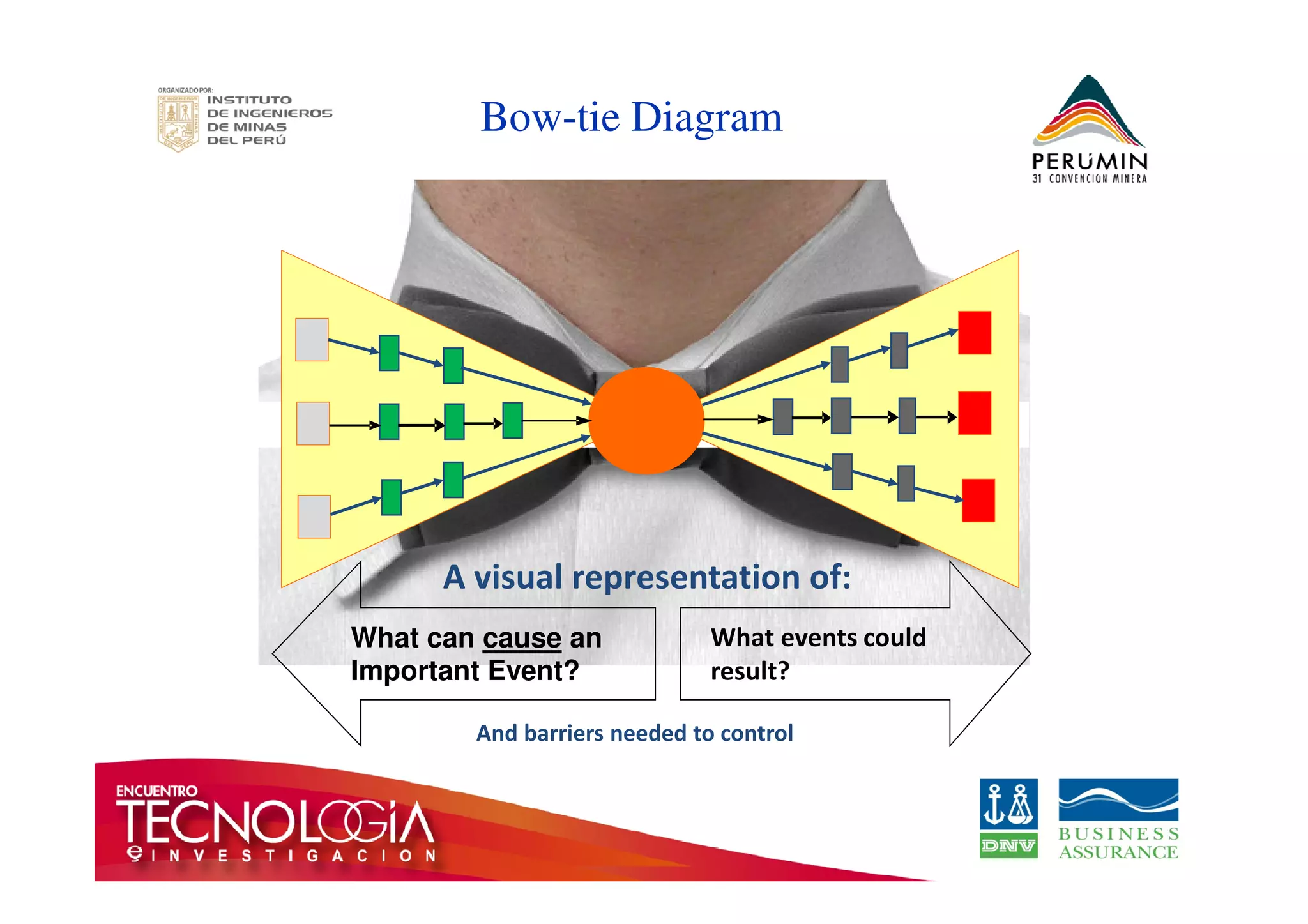
A visual representation of: 
What can cause an 
Important Event? 
What events could 
result? 
And barriers needed to control
Bow-tie Diagram 
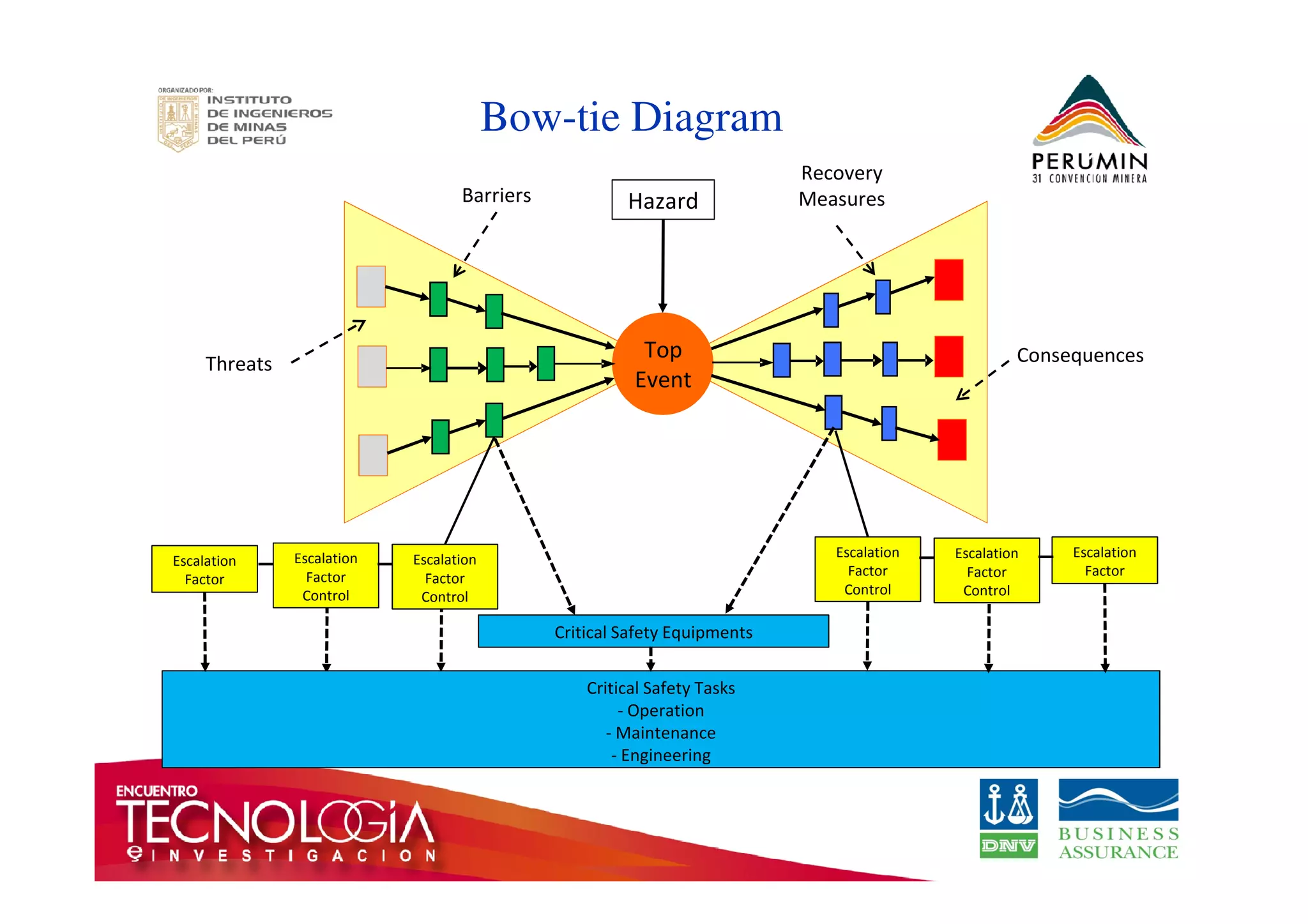
Hazard 
Top 
Event 
Threats 
Barriers 
Recovery 
Measures 
Consequences 
Escalation 
Factor 
Escalation 
Factor 
Control 
Escalation 
Factor 
Control 
Escalation 
Factor 
Control 
Escalation 
Factor 
Control 
Escalation 
Factor 
Critical Safety Equipments 
Critical Safety Tasks 
- Operation 
- Maintenance 
- Engineering
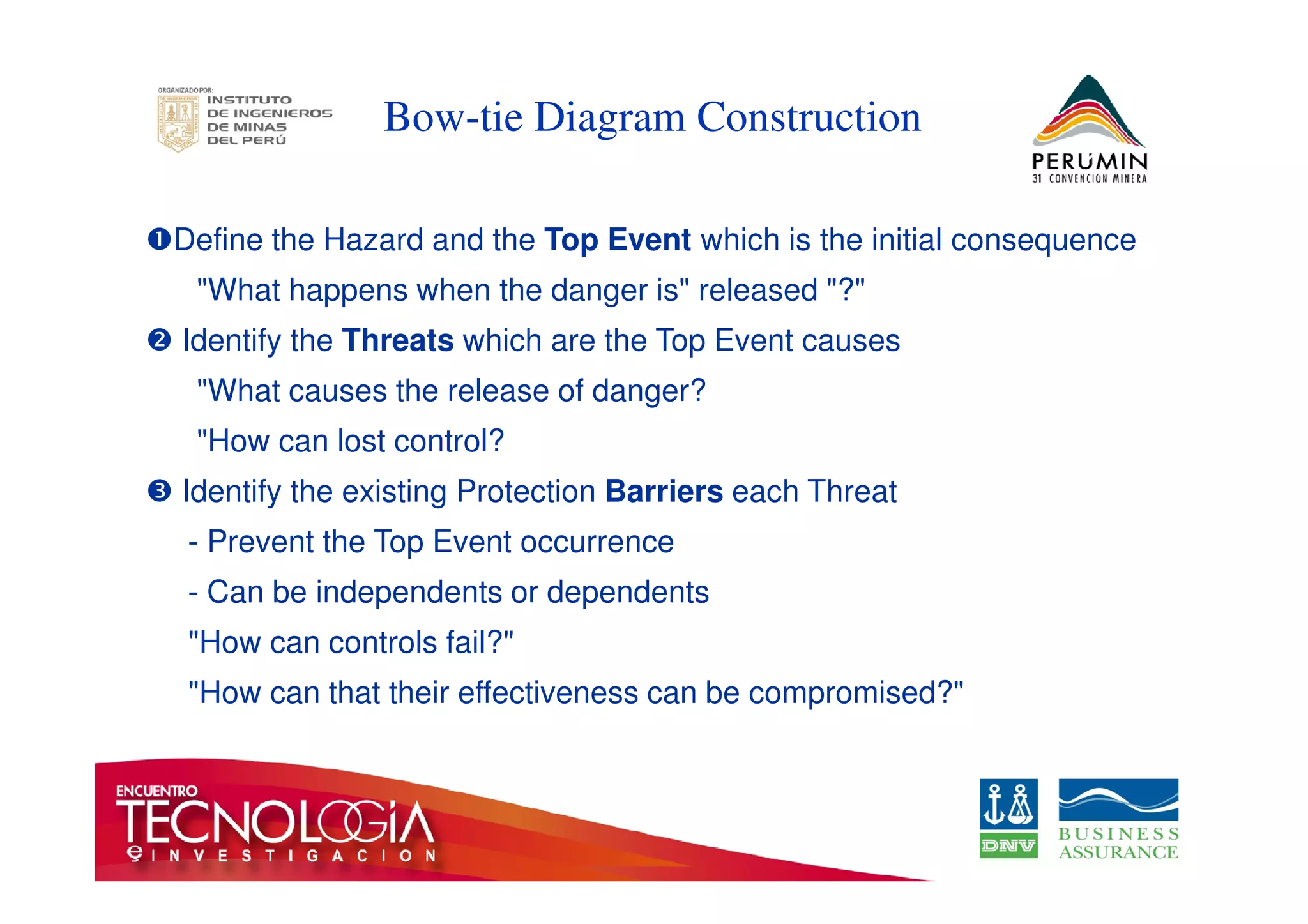
Bow-tie Diagram Construction 
Define the Hazard and the Top Event which is the initial consequence 
What happens when the danger is released ? 
 Identify the Threats which are the Top Event causes 
What causes the release of danger? 
How can lost control? 
 Identify the existing Protection Barriers each Threat 
- Prevent the Top Event occurrence 
- Can be independents or dependents 
How can controls fail? 
How can that their effectiveness can be compromised?
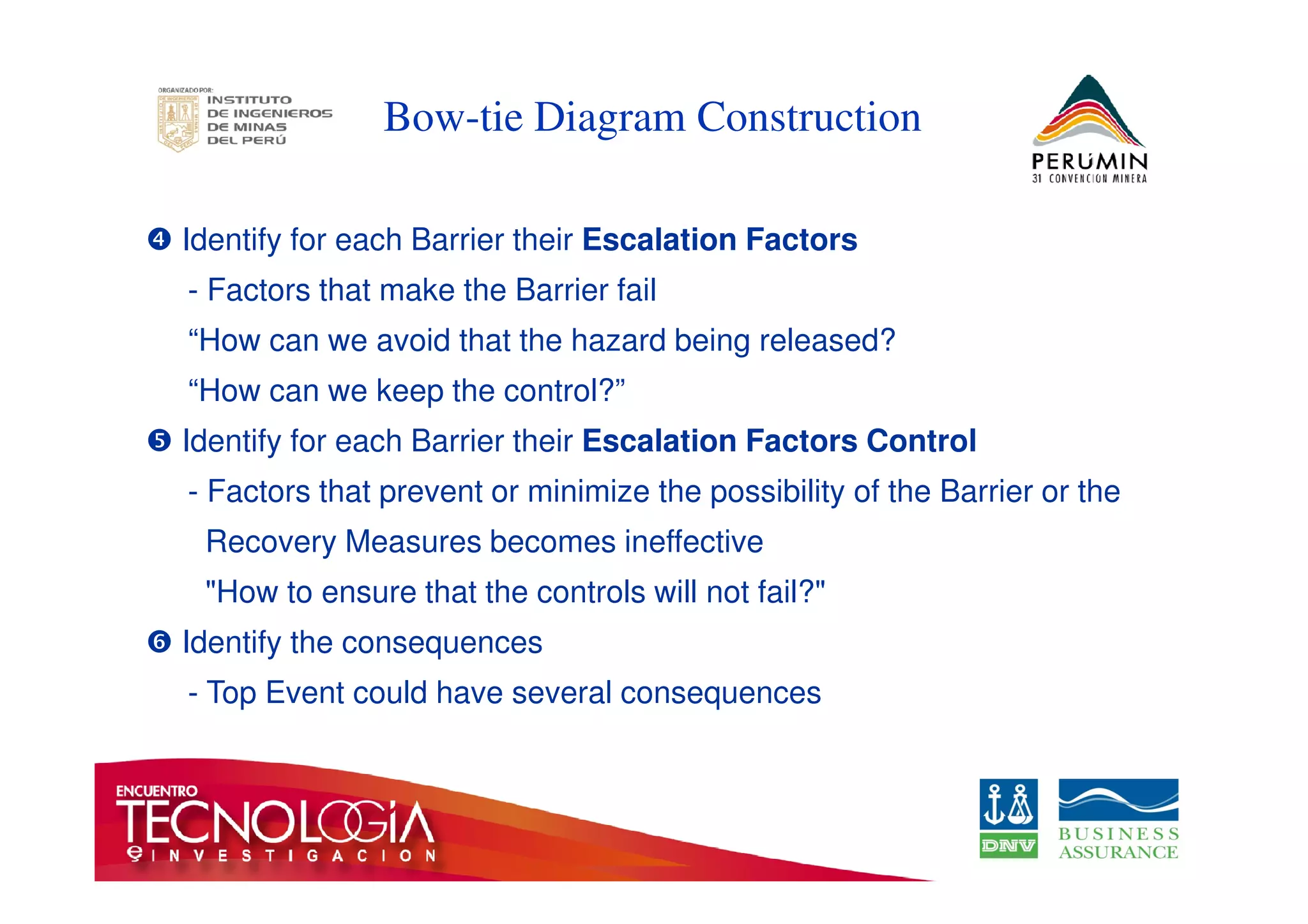
Bow-tie Diagram Construction 
 Identify for each Barrier their Escalation Factors 
- Factors that make the Barrier fail 
“How can we avoid that the hazard being released? 
“How can we keep the control?” 
 Identify for each Barrier their Escalation Factors Control 
- Factors that prevent or minimize the possibility of the Barrier or the 
Recovery Measures becomes ineffective 
How to ensure that the controls will not fail? 
 Identify the consequences 
- Top Event could have several consequences
Bow-tie Diagram Construction 
	 Identify the Recovery Measures 
- Factors that make the barriers fail 
How can we limit the severity of the event?” 
How can we minimize the effects? 

 Identify for each Recovery Measure their Escalation Factors and 
Escalation Factors Controls 
 For each Barrier, Recovery Measures and Escalation Factors Controls 
identify the Critical Safety Tasks
Bow-tie Diagram Construction 
Critical Safety Tasks 
Tasks prevent and/or minimize the possibility of the Barrier, the Escalation 
Factor Control or the Recovery Measures fails or becomes ineffective 
What tasks can be taken to ensure that the control is working? 
- Project engineering, operation, maintenance, management. 
How can we ensure that these tasks are done? 
Who do these tasks? 
How do you know when to do the tasks?? 
How do you know what to do?“ 
Is there a procedure, checklist, instruction?
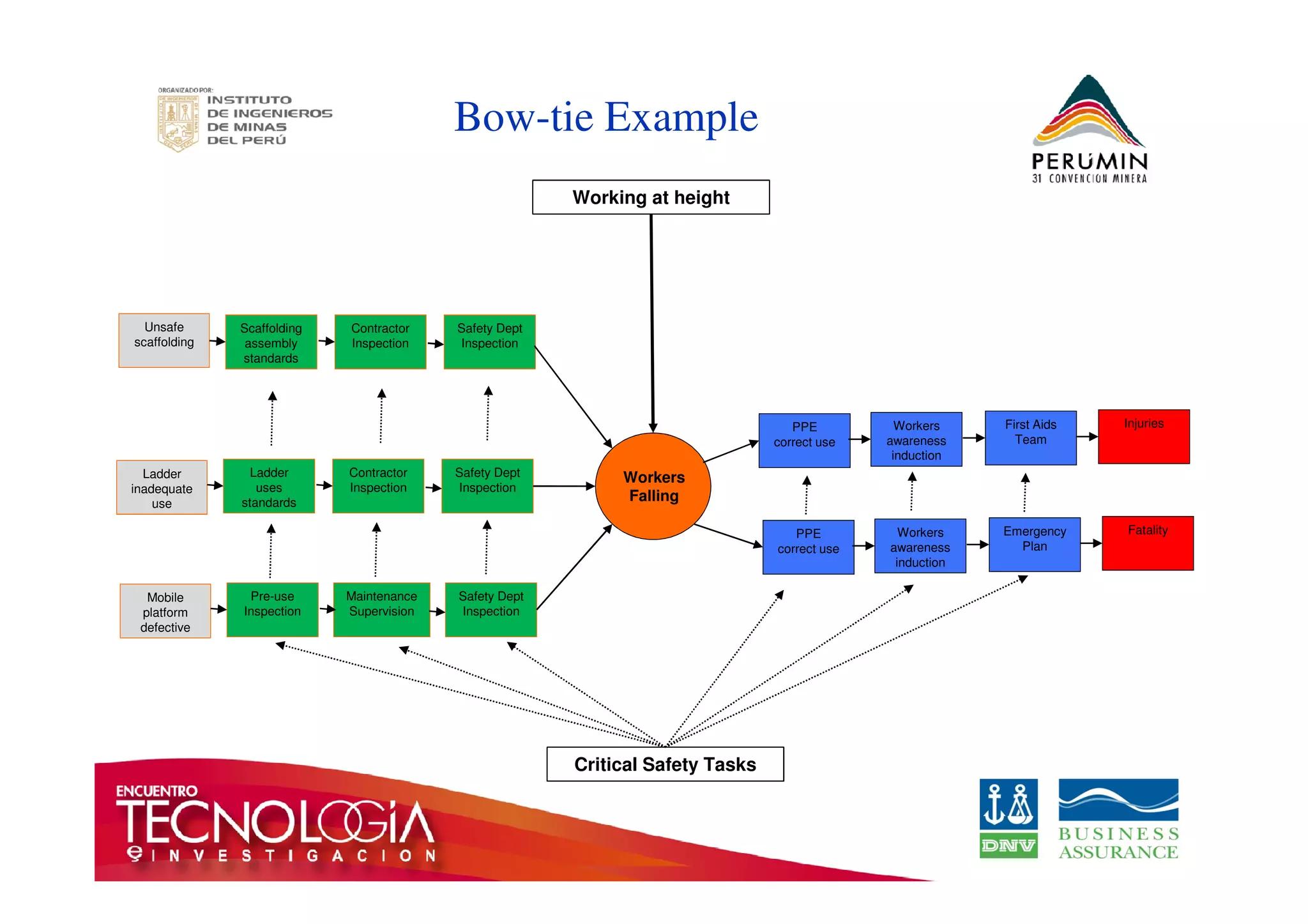
Bow-tie Example 
Unsafe 
scaffolding 
Scaffolding 
assembly 
standards 
Working at height 
Contractor 
Inspection 
Safety Dept 
Inspection 
PPE 
correct use 
Workers 
awareness 
induction 
First Aids 
Team 
Injuries 
Workers 
Falling 
Ladder 
inadequate 
use 
Ladder 
uses 
standards 
Contractor 
Inspection 
Safety Dept 
Inspection 
Mobile 
platform 
defective 
Pre-use 
Inspection 
Maintenance 
Supervision 
Safety Dept 
Inspection 
PPE 
correct use 
Workers 
awareness 
induction 
Emergency 
Plan 
Fatality 
Critical Safety Tasks
Safeguarding life, property 
and the environment 
www.dnv.com

PERUMIN 31: Bow-tie Risk Analysis

  • 1.
    Bow-tie Risk Analysis Paulo Rheinboldt Process and Industrial Safety Consultant Det Norske Veritas
  • 2.
    Objectives Presentationthe Bow-tie methodology basic concepts
  • 3.
    Risk Management RiskManagement is growing in importance because ... Increasing complexity and uncertainty in the work space Increasing opportunities Increasing stakeholders expectations Need to optimize management of Upside Risks Downside Risks Need to optimize management of Enterprise Risk Operational Risks
  • 4.
    Risk Causes Consequences Major Event Event Basic Causes Immediate Causes Immediate Consequences Ultimate Consequences Risk: The combination of a event probability and its consequences (ISO/IEC Guia 73). Risk Management: A process to ensure that all significant risks are identified, prioritized, and managed effectively(DNV).
  • 5.
    Risk and LossCausation Consequences Event Major Event Causes Basic Causes Immediate Causes Immediate Consequences Ultimate Consequences Loss THRESHOLD LIMIT Lack of Control Inadequate System Inadequate Standards Inadequate Compliance Basic Causes Personal Factors Job / System Factors Immediate Causes Substandard Acts or Practices Substandard Conditions Incident Event Contact ( or near) with energy or substance People Equipment Material Environment
  • 6.
    Managing Risk Risk Recognition Risk Evaluation Risk Control Risk Monitoring Establish the context Identify all hazards, threats, opportunities Analyze the risks Evaluate the risks Develop control plans Implement control plans Monitor risks controls Review improve risk management system WHAT MATTERS? WHAT IS THE RISK? WHAT DO WE DO NOW? SO WHAT? LET’S DO IT! IS IT WORKING? CAN WE MAKE IT BETTER? WHAT CAN GO WRONG (OR RIGHT)?
  • 7.
    Risk Analysis andAssessment Decisions 1 2 3 ... HAZID People Assets Qualitative Analysis Reputation Semi-Quantitative Analysis x Benefits Environment Quantitative Analysis ALARP Costs Risk Analysis Risks Evaluation
  • 8.
    Why Bow-tie? Visualization of the relationship between undesirable event, its causes, accidental scenarios, the preventive and mitigation measures to limit their consequences Demonstrates the effectiveness of existing controls Structured risk analysis where quantification is not possible or desired Extremely versatile / Success in various applications Required multidisciplinary team
  • 9.
  • 10.
    Prevent Barriers HAZARD Hydrocarbon inventory in HAZARD REALIZATION Loss of containment Inherent Design Plant layout Maintenance Inspections Learning from Events Operational Procedures Effective Supervision Work Control Relief and Bow-down System Audit Self Regulation Management of Change Communication Training Competency Control, Alarm Shut-down System plant and storage facilities Ignition Fire/ Explosion Facilities Processes People
  • 11.
    Prevent Barriers HAZARD Hydrocarbon inventory in plant and HAZARD REALIZATION Loss of containment Ignition Inherent Design Plant layout Maintenance Inspections Learning from Events Operational Procedures Effective Supervision Work Control Relief and Bow-down System Audit Self Regulation Management of Change Communication Training Competency Control, Alarm Shut-down System storage facilities Fire/ Explosion Facilities Processes People So what do we do now?
  • 12.
    Detect, Control, Mitigateand Recovery Barriers Mitigate Limit Effect (e.g. deluge system) Control Limit extent (e.g. blow-down) Detect Gas, Fire, Pressure Temperature High - Low Crisis Management Business Recovery Emergency Response Evacuation, Escape and Rescue HAZARD Hydrocarbon inventory in HAZARD REALIZATION Loss of Inherent Design Plant layout Maintenance Inspections Learni ng from Events Operational Procedures Effective Supervision Work Control Relief and Bow-down System Audit Self Regulation Management of Change Communication Training Competency Control, Alarm Shut-down System plant and storage facilities containment Ignition Fire/ Explosion
  • 13.
    Bow-tie Diagram Avisual representation of: What can cause an Important Event? What events could result? And barriers needed to control
  • 14.
    Bow-tie Diagram Hazard Top Event Threats Barriers Recovery Measures Consequences Escalation Factor Escalation Factor Control Escalation Factor Control Escalation Factor Control Escalation Factor Control Escalation Factor Critical Safety Equipments Critical Safety Tasks - Operation - Maintenance - Engineering
  • 15.
    Bow-tie Diagram Construction Define the Hazard and the Top Event which is the initial consequence What happens when the danger is released ? Identify the Threats which are the Top Event causes What causes the release of danger? How can lost control? Identify the existing Protection Barriers each Threat - Prevent the Top Event occurrence - Can be independents or dependents How can controls fail? How can that their effectiveness can be compromised?
  • 16.
    Bow-tie Diagram Construction Identify for each Barrier their Escalation Factors - Factors that make the Barrier fail “How can we avoid that the hazard being released? “How can we keep the control?” Identify for each Barrier their Escalation Factors Control - Factors that prevent or minimize the possibility of the Barrier or the Recovery Measures becomes ineffective How to ensure that the controls will not fail? Identify the consequences - Top Event could have several consequences
  • 17.
    Bow-tie Diagram Construction Identify the Recovery Measures - Factors that make the barriers fail How can we limit the severity of the event?” How can we minimize the effects? Identify for each Recovery Measure their Escalation Factors and Escalation Factors Controls For each Barrier, Recovery Measures and Escalation Factors Controls identify the Critical Safety Tasks
  • 18.
    Bow-tie Diagram Construction Critical Safety Tasks Tasks prevent and/or minimize the possibility of the Barrier, the Escalation Factor Control or the Recovery Measures fails or becomes ineffective What tasks can be taken to ensure that the control is working? - Project engineering, operation, maintenance, management. How can we ensure that these tasks are done? Who do these tasks? How do you know when to do the tasks?? How do you know what to do?“ Is there a procedure, checklist, instruction?
  • 19.
    Bow-tie Example Unsafe scaffolding Scaffolding assembly standards Working at height Contractor Inspection Safety Dept Inspection PPE correct use Workers awareness induction First Aids Team Injuries Workers Falling Ladder inadequate use Ladder uses standards Contractor Inspection Safety Dept Inspection Mobile platform defective Pre-use Inspection Maintenance Supervision Safety Dept Inspection PPE correct use Workers awareness induction Emergency Plan Fatality Critical Safety Tasks
  • 20.
    Safeguarding life, property and the environment www.dnv.com