HISTORY OF BOW-TIE METHOD
The Bow Tie method for risk analysis has its origins in the aviation and oil and
gas industries. It was developed to provide a systematic approach to
understanding, analyzing, and managing risks associated with complex and
potentially hazardous operations.
While the exact historical details may vary, here is a overview of the evolution
of the Bow Tie method:
 The company Imperial Chemical Industries, a British chemical company
that manufactured paints and chemical products, made bow tie diagrams
based on notes from the Hazan course given at the University of
Queensland - Australia in 1979.
 Royal Dutch / Shell Group adopted the Bowtie method as the company's
standard for the analysis and management of its risks - 1988.
 After Shell, Bowtie's method quickly gained support throughout the
industry, as Bowtie diagrams appeared to be a visual tool.
In the last decade Bowtie's method has also spread outside the oil and gas
industry to include aviation, mining, maritime, chemical and healthcare
sectors.
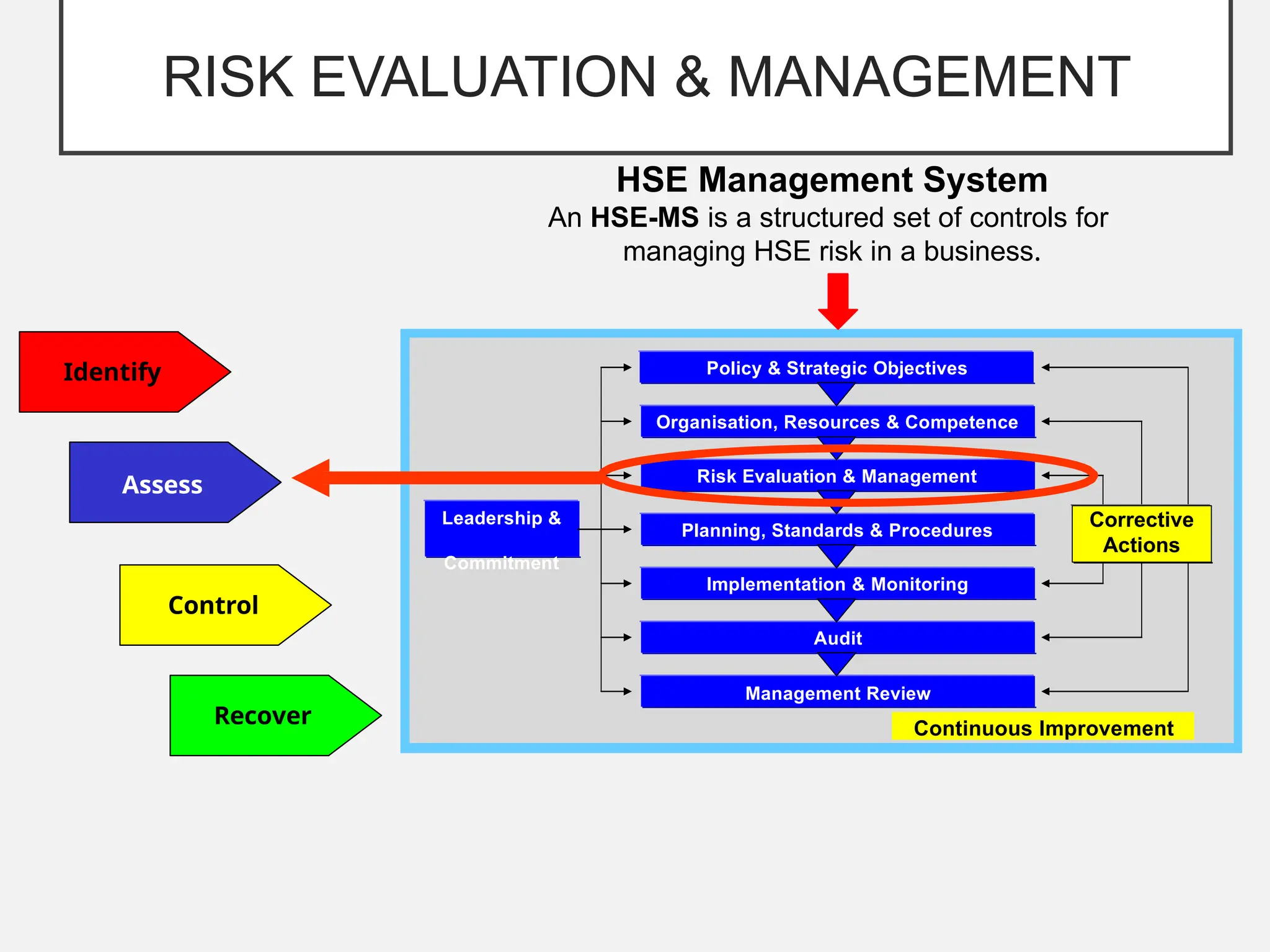
RISK EVALUATION & MANAGEMENT
Policy & Strategic Objectives
Organisation, Resources & Competence
Risk Evaluation & Management
Planning, Standards & Procedures
Implementation & Monitoring
Audit
Management Review
Leadership &
Commitment
Corrective
Actions
Continuous Improvement
HSE Management System
An HSE-MS is a structured set of controls for
managing HSE risk in a business.
Identify
Assess
Control
Recover
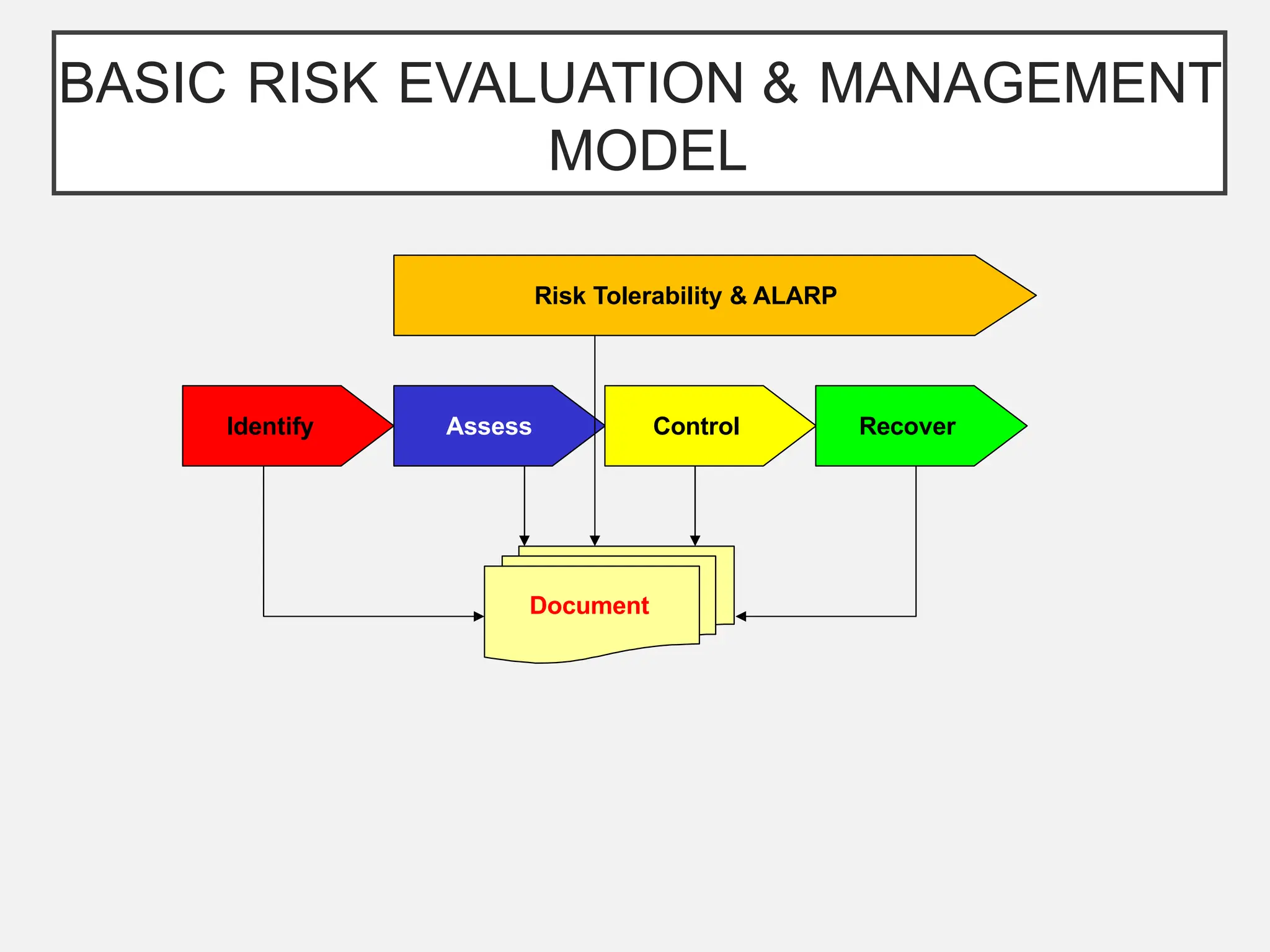
BASIC RISK EVALUATION & MANAGEMENT
MODEL
Identify Assess Control Recover
Risk Tolerability & ALARP
Document
LINK WITH HSE-MS
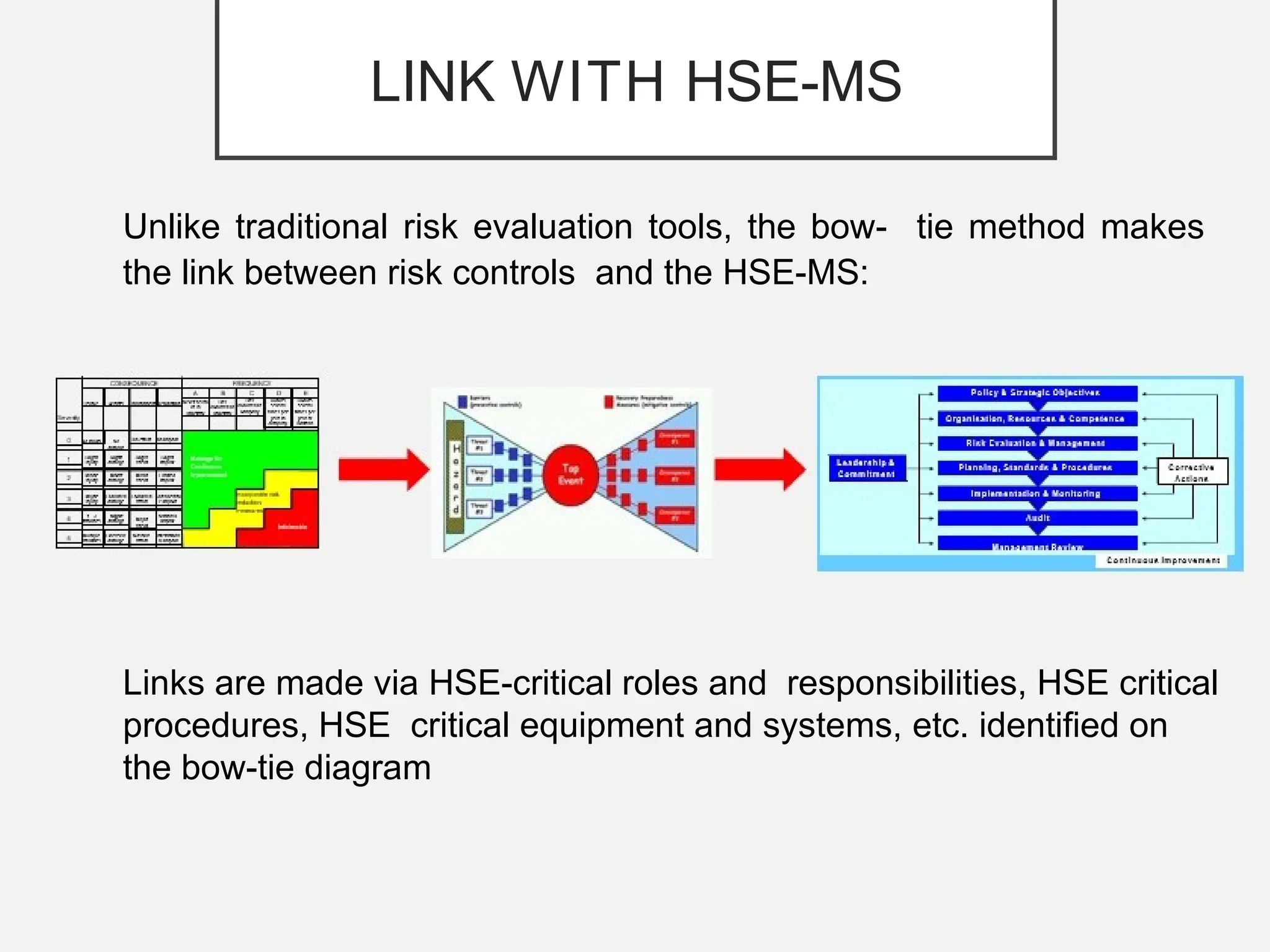
Unlike traditional risk evaluation tools, the bow- tie method makes
the link between risk controls and the HSE-MS:
Links are made via HSE-critical roles and responsibilities, HSE critical
procedures, HSE critical equipment and systems, etc. identified on
the bow-tie diagram
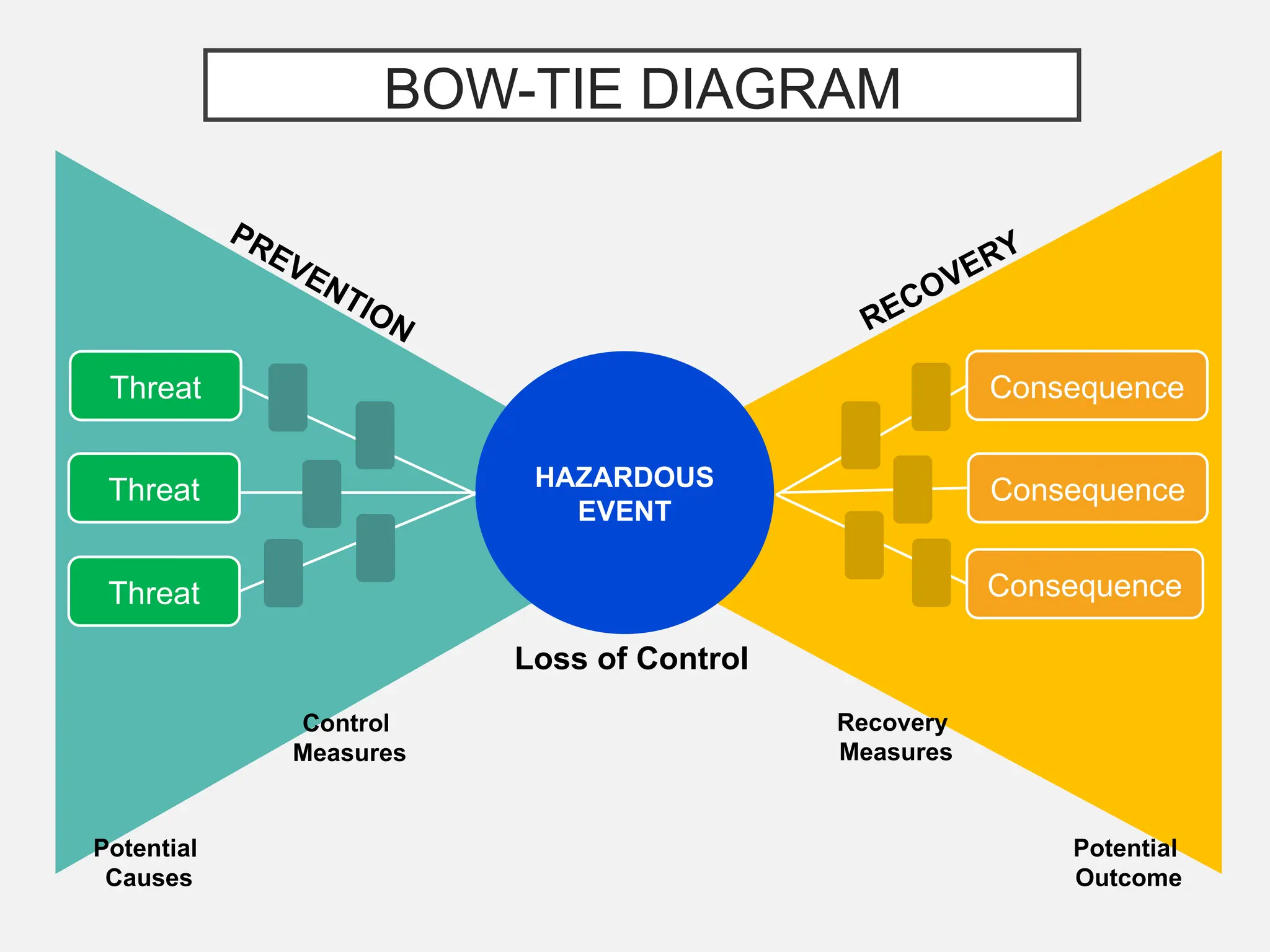
HAZARDOUS
EVENT
PREVENTION RECOVERY
Control
Measures
Potential
Causes
Recovery
Measures
Potential
Outcome
Threat
Threat
Threat
Consequence
Consequence
Consequence
BOW-TIE DIAGRAM
Loss of Control
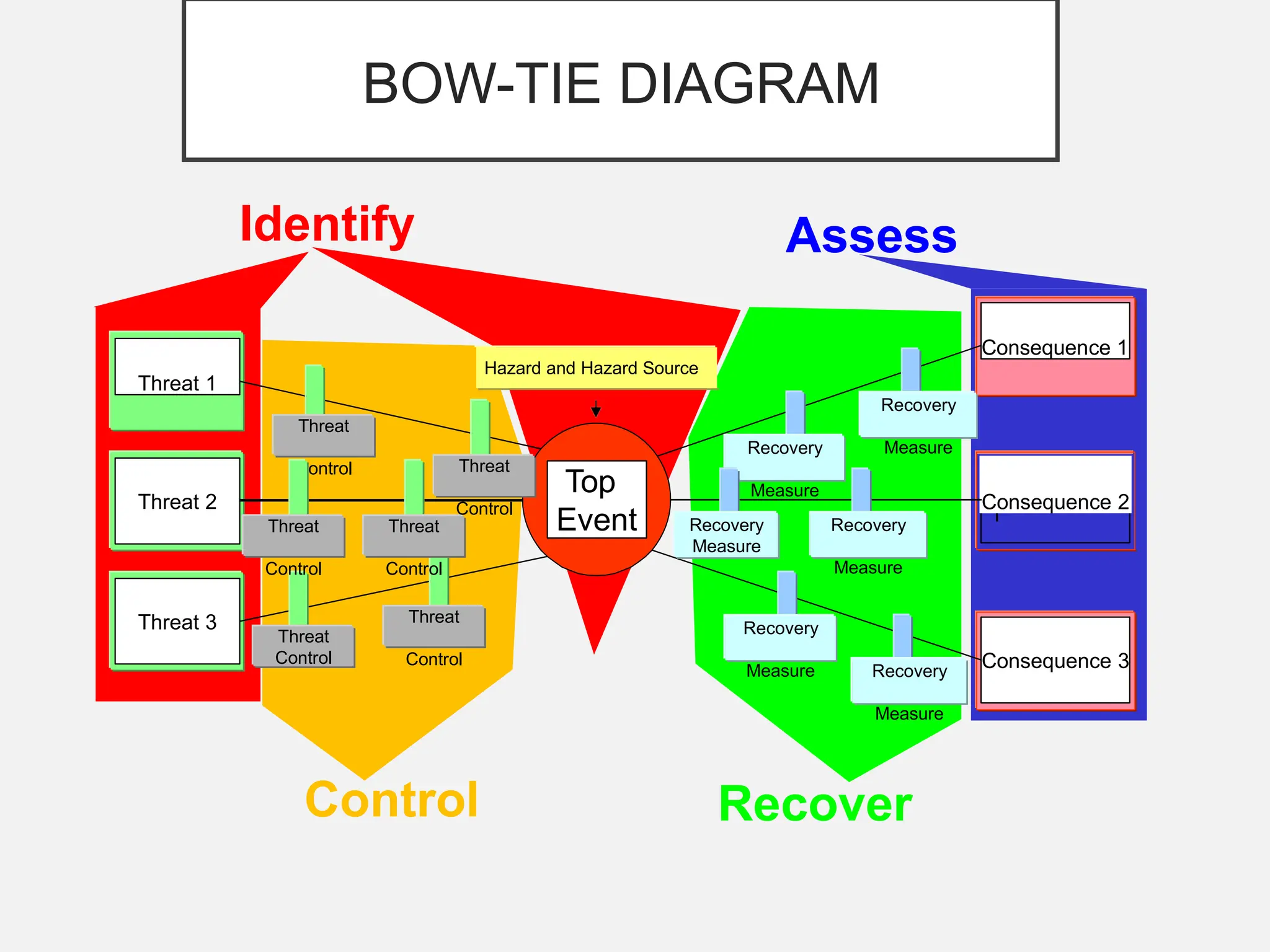
Recover
Control
Assess
Identify
BOW-TIE DIAGRAM
Hazard and Hazard Source
Consequence
1
Consequence 1
Consequence
1
Consequence 2
Consequence
1
Consequence 3
Threat 1
Threat 2
Threat 3
Top
Event
Threat
Control
Recovery
Measure
Recovery
Measure
Recovery
Measure
Recovery
Measure
Recovery
Measure Recovery
Measure
Threat
Control
Threat
Control
Threat
Control
Threat
Control
Threat
Control
uction to Bow-tie Method
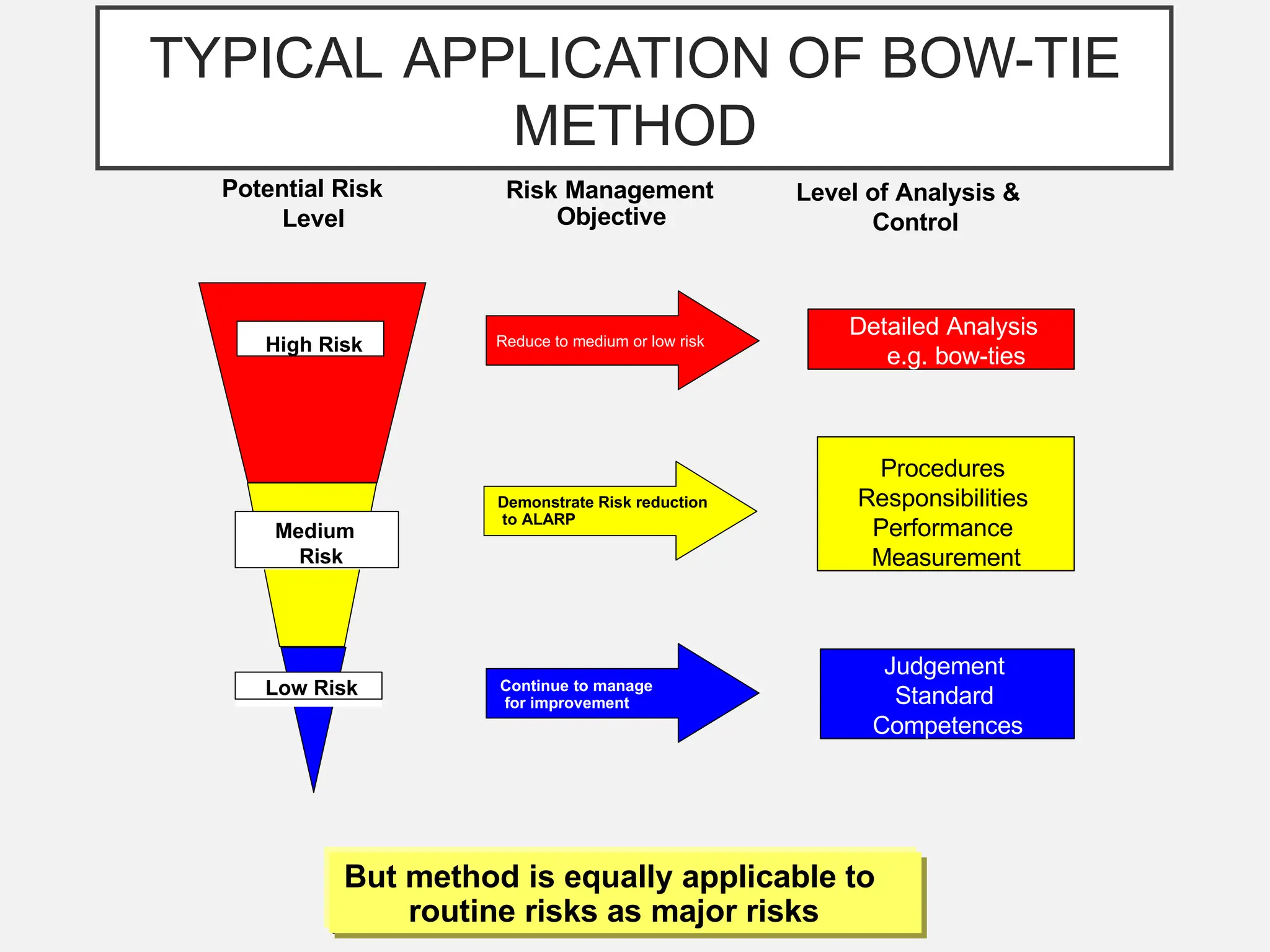
TYPICAL APPLICATION OF BOW-TIE
METHOD
Potential Risk
Level
Level of Analysis &
Control
But method is equally applicable to
routine risks as major risks
Judgement
Standard
Competences
Procedures
Responsibilities
Performance
Measurement
Detailed Analysis
e.g. bow-ties
High Risk
Medium
Risk
Low Risk
Reduce to medium or low risk
Demonstrate Risk reduction
to ALARP
Continue to manage
for improvement
Risk Management
Objective
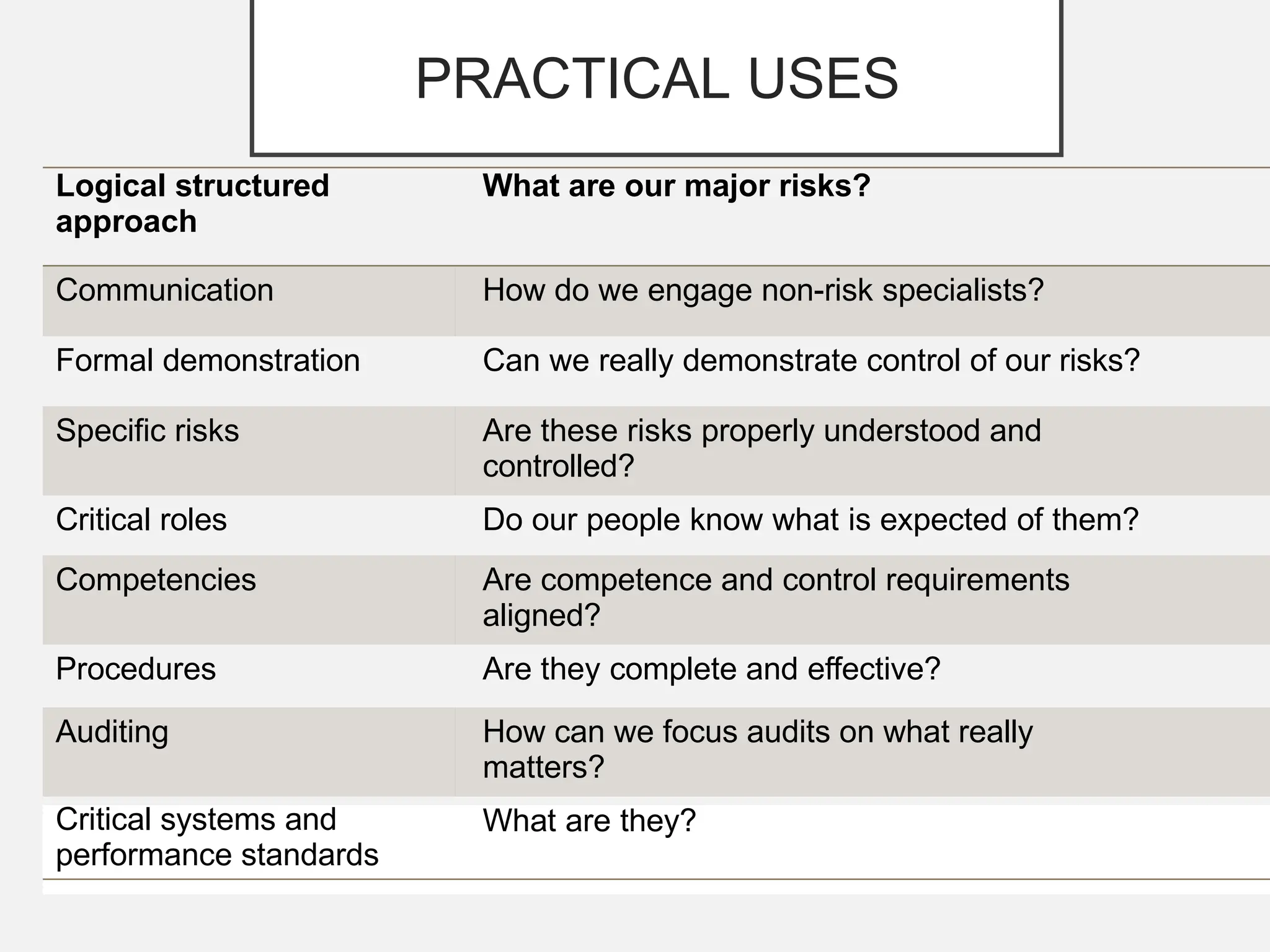
PRACTICAL USES
Logical structured
approach
What are our major risks?
Communication How do we engage non-risk specialists?
Formal demonstration Can we really demonstrate control of our risks?
Specific risks Are these risks properly understood and
controlled?
Critical roles Do our people know what is expected of them?
Competencies Are competence and control requirements
aligned?
Procedures Are they complete and effective?
Auditing How can we focus audits on what really
matters?
Critical systems and
performance standards
What are they?
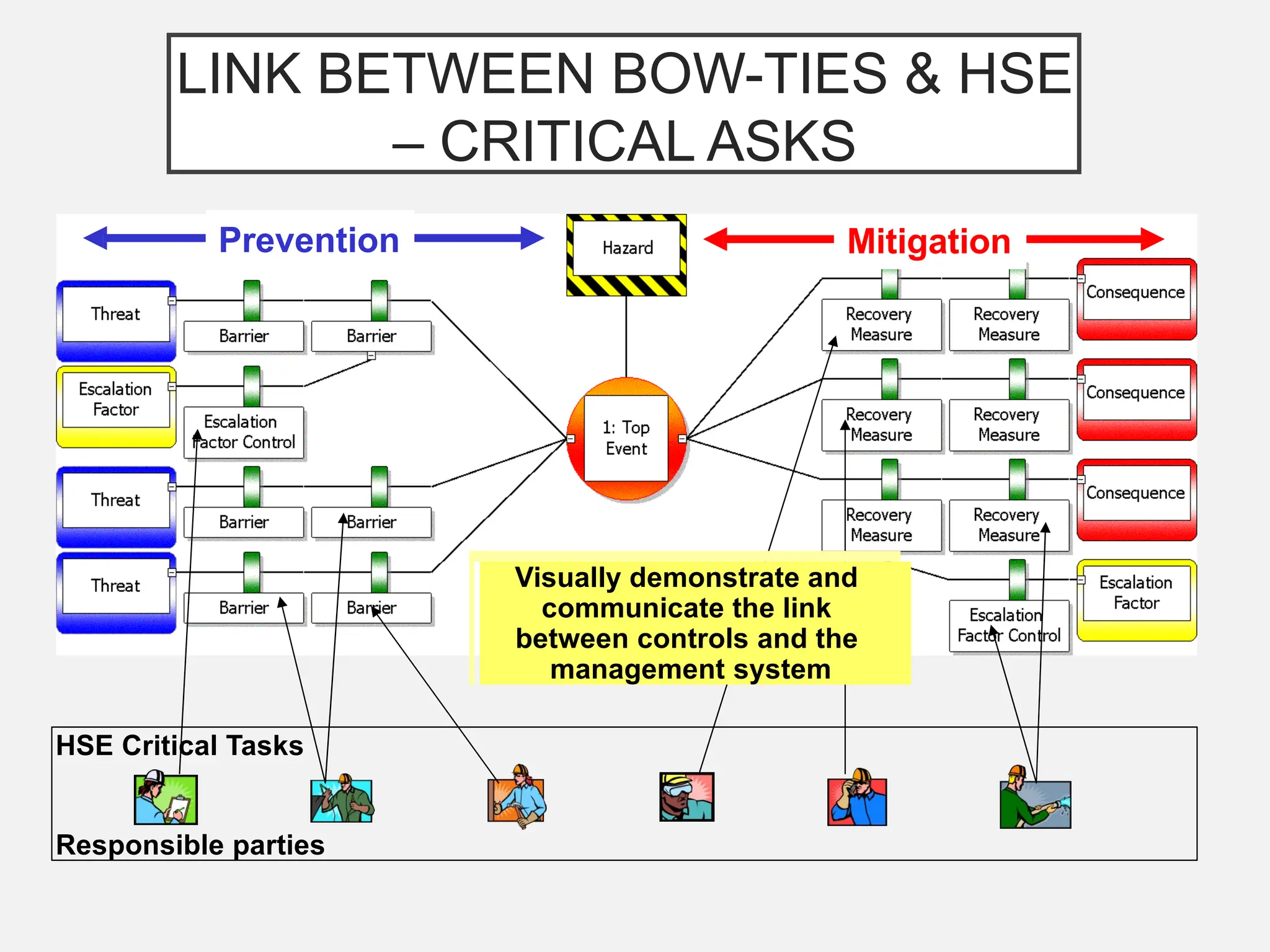
Prevention Mitigation
HSE Critical Tasks
Responsible parties
Visually demonstrate and
communicate the link
between controls and the
management system
LINK BETWEEN BOW-TIES & HSE
– CRITICAL ASKS
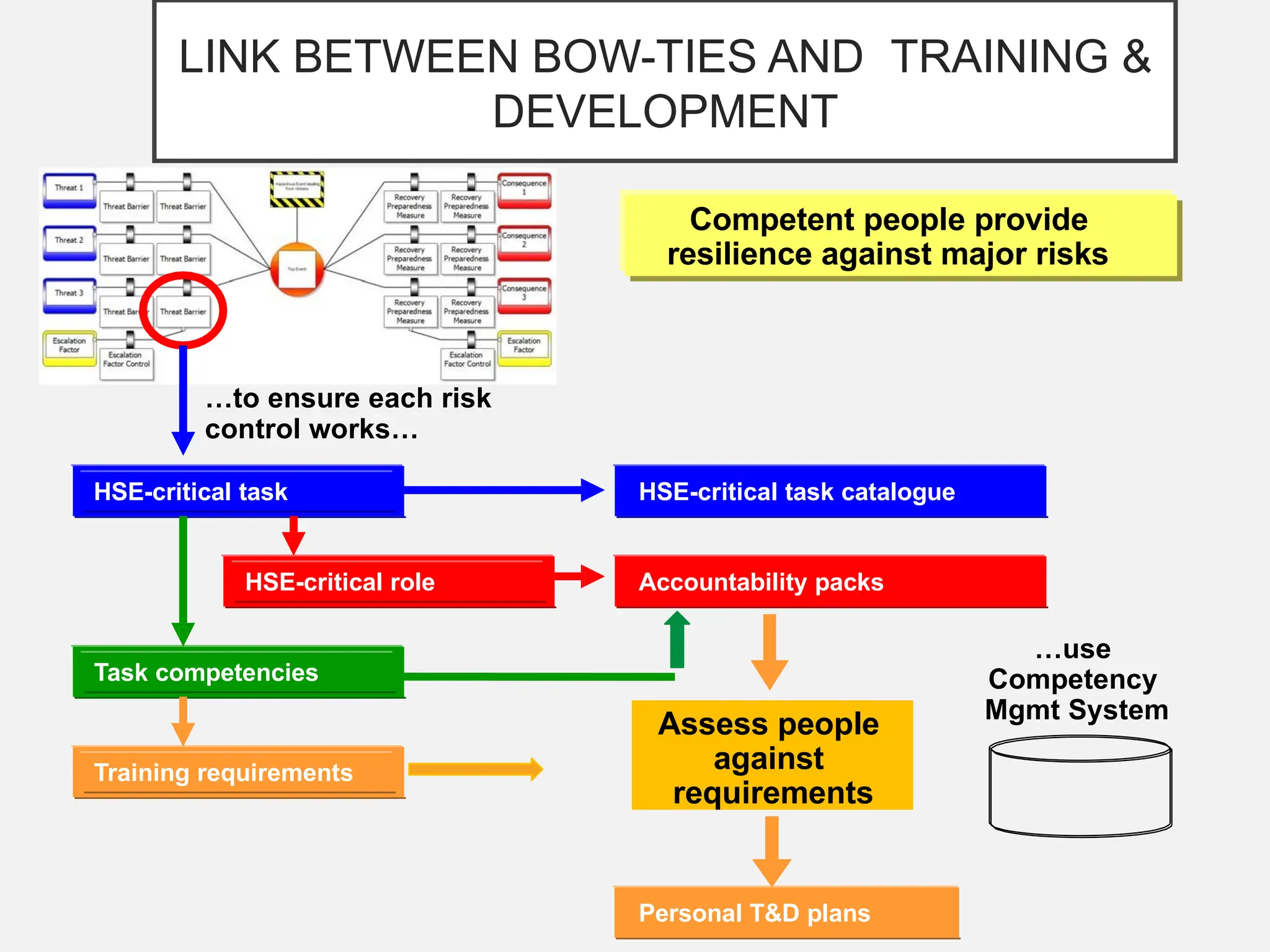
LINK BETWEEN BOW-TIES AND TRAINING &
DEVELOPMENT
Competent people provide
resilience against major risks
HSE-critical task
HSE-critical role
Task competencies
Training requirements
HSE-critical task catalogue
Accountability packs
…to ensure each risk
control works…
Assess people
against
requirements
Personal T&D plans
…use
Competency
Mgmt System
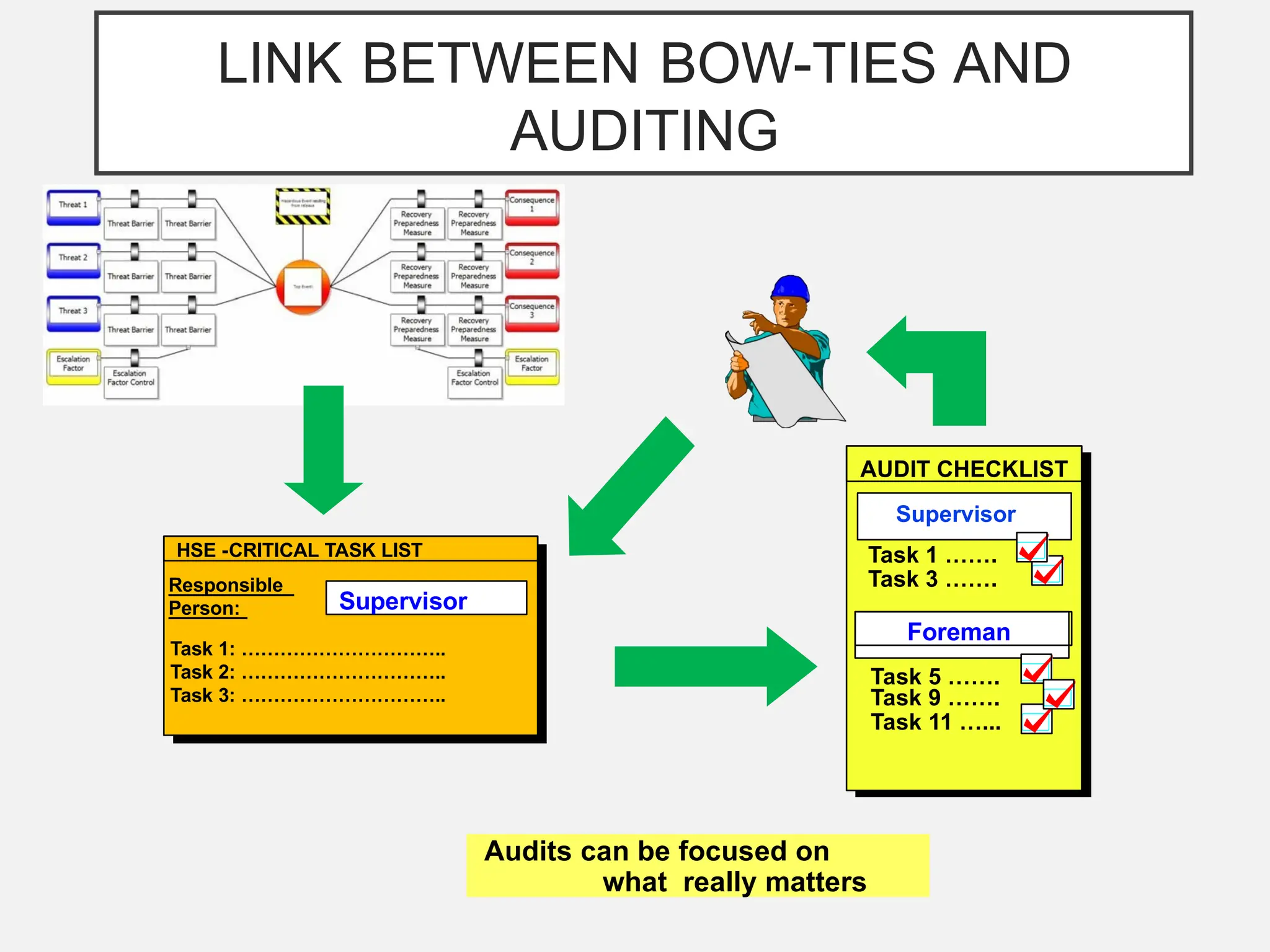
LINK BETWEEN BOW-TIES AND
AUDITING
HSE -CRITICAL TASK LIST
Task 1: …………………………..
Task 2: …………………………..
Task 3: …………………………..
Responsible
Person: Supervisor
AUDIT CHECKLIST
Task 1 …….
Task 3 …….
Foreman
Task 5 …….
Task 9 …….
Task 11 …...
Supervisor
Audits can be focused on
what really matters
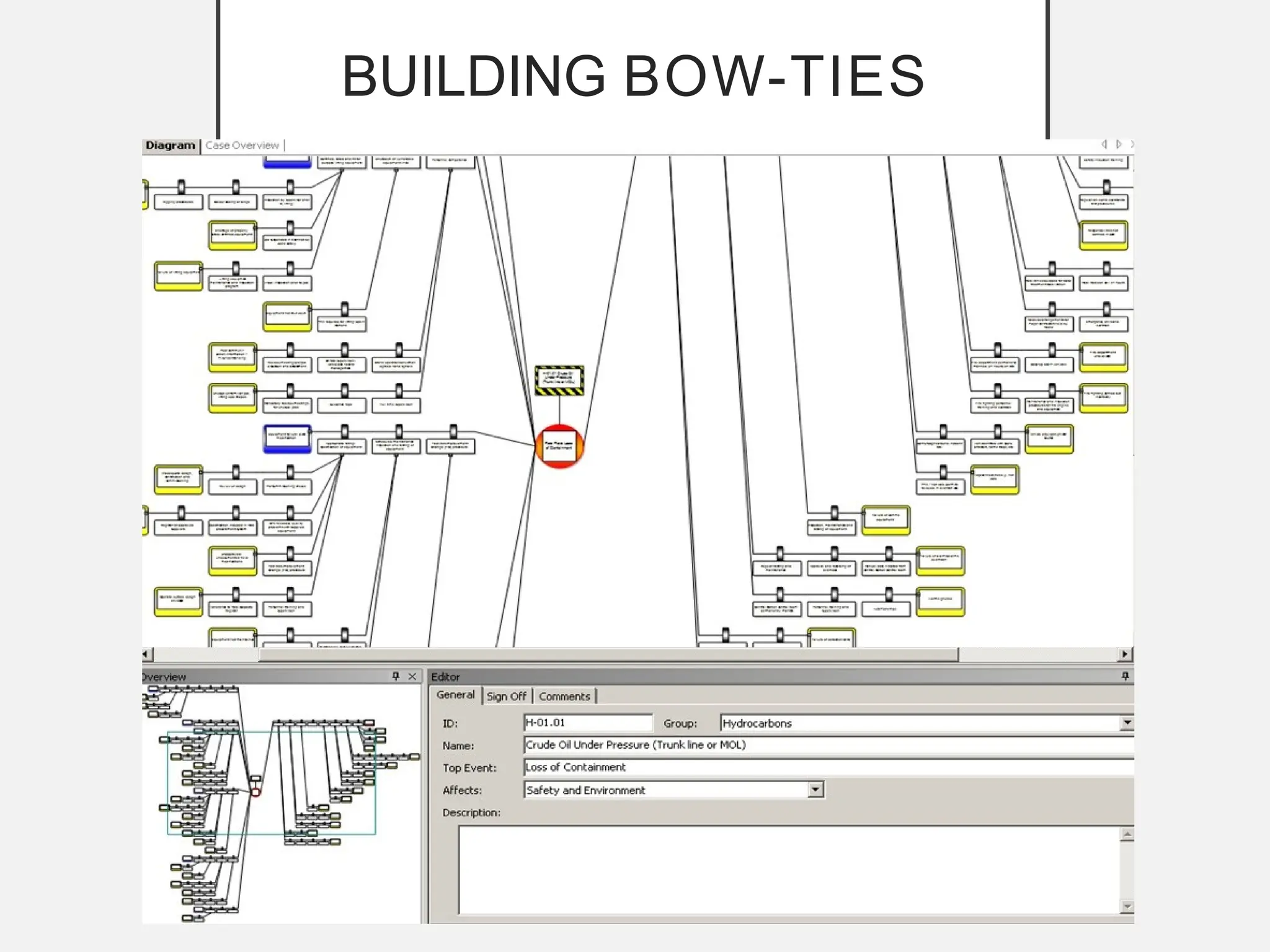
BUILDING BOW-TIES

Basic Analysis for Risk Management according to Bow Tie Method

  • 1.
    HISTORY OF BOW-TIEMETHOD The Bow Tie method for risk analysis has its origins in the aviation and oil and gas industries. It was developed to provide a systematic approach to understanding, analyzing, and managing risks associated with complex and potentially hazardous operations. While the exact historical details may vary, here is a overview of the evolution of the Bow Tie method:  The company Imperial Chemical Industries, a British chemical company that manufactured paints and chemical products, made bow tie diagrams based on notes from the Hazan course given at the University of Queensland - Australia in 1979.  Royal Dutch / Shell Group adopted the Bowtie method as the company's standard for the analysis and management of its risks - 1988.  After Shell, Bowtie's method quickly gained support throughout the industry, as Bowtie diagrams appeared to be a visual tool. In the last decade Bowtie's method has also spread outside the oil and gas industry to include aviation, mining, maritime, chemical and healthcare sectors.
  • 2.
    RISK EVALUATION &MANAGEMENT Policy & Strategic Objectives Organisation, Resources & Competence Risk Evaluation & Management Planning, Standards & Procedures Implementation & Monitoring Audit Management Review Leadership & Commitment Corrective Actions Continuous Improvement HSE Management System An HSE-MS is a structured set of controls for managing HSE risk in a business. Identify Assess Control Recover
  • 3.
    BASIC RISK EVALUATION& MANAGEMENT MODEL Identify Assess Control Recover Risk Tolerability & ALARP Document
  • 4.
    LINK WITH HSE-MS Unliketraditional risk evaluation tools, the bow- tie method makes the link between risk controls and the HSE-MS: Links are made via HSE-critical roles and responsibilities, HSE critical procedures, HSE critical equipment and systems, etc. identified on the bow-tie diagram
  • 5.
  • 6.
    Recover Control Assess Identify BOW-TIE DIAGRAM Hazard andHazard Source Consequence 1 Consequence 1 Consequence 1 Consequence 2 Consequence 1 Consequence 3 Threat 1 Threat 2 Threat 3 Top Event Threat Control Recovery Measure Recovery Measure Recovery Measure Recovery Measure Recovery Measure Recovery Measure Threat Control Threat Control Threat Control Threat Control Threat Control
  • 7.
    uction to Bow-tieMethod TYPICAL APPLICATION OF BOW-TIE METHOD Potential Risk Level Level of Analysis & Control But method is equally applicable to routine risks as major risks Judgement Standard Competences Procedures Responsibilities Performance Measurement Detailed Analysis e.g. bow-ties High Risk Medium Risk Low Risk Reduce to medium or low risk Demonstrate Risk reduction to ALARP Continue to manage for improvement Risk Management Objective
  • 8.
    PRACTICAL USES Logical structured approach Whatare our major risks? Communication How do we engage non-risk specialists? Formal demonstration Can we really demonstrate control of our risks? Specific risks Are these risks properly understood and controlled? Critical roles Do our people know what is expected of them? Competencies Are competence and control requirements aligned? Procedures Are they complete and effective? Auditing How can we focus audits on what really matters? Critical systems and performance standards What are they?
  • 9.
    Prevention Mitigation HSE CriticalTasks Responsible parties Visually demonstrate and communicate the link between controls and the management system LINK BETWEEN BOW-TIES & HSE – CRITICAL ASKS
  • 10.
    LINK BETWEEN BOW-TIESAND TRAINING & DEVELOPMENT Competent people provide resilience against major risks HSE-critical task HSE-critical role Task competencies Training requirements HSE-critical task catalogue Accountability packs …to ensure each risk control works… Assess people against requirements Personal T&D plans …use Competency Mgmt System
  • 11.
    LINK BETWEEN BOW-TIESAND AUDITING HSE -CRITICAL TASK LIST Task 1: ………………………….. Task 2: ………………………….. Task 3: ………………………….. Responsible Person: Supervisor AUDIT CHECKLIST Task 1 ……. Task 3 ……. Foreman Task 5 ……. Task 9 ……. Task 11 …... Supervisor Audits can be focused on what really matters
  • 12.