JOB SAFETY ANALYSIS
    PAKARAB FERTILIZERS LTD


                       By:
                       ADNAN MUAZZAM
DEFINITION OF JSA
 A job hazard analysis is a technique that focuses on job
  tasks as a way to identify and mitigate hazards before they
  occur.
 It focuses on the relationship between the worker, the task,
  the tools, and the work environment.
JSA
SELECTION OF JOBS
 Jobs with the highest injury or illness rates
 Jobs with the potential to cause severe or disabling
  injuries or illness, even if there is no history of
  previous accidents
 Jobs in which one simple human error could lead to
  a severe accident or injury
 Jobs that are new to your operation or have undergone
  changes in processes and procedures
 Jobs complex enough to require written instructions.
RISK MATRIX
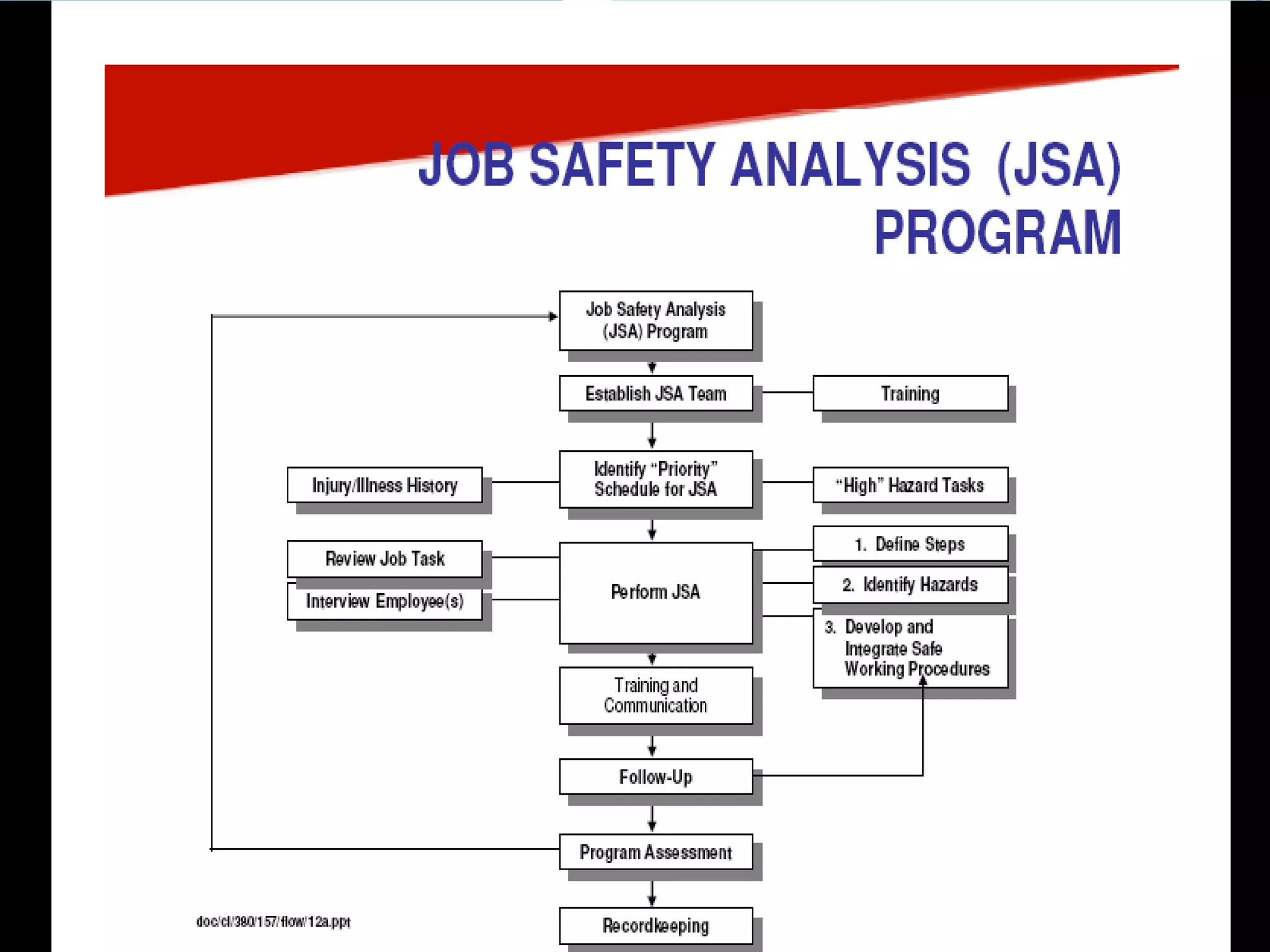
DEVELOPMENT PROCESS
JSA Team
        Who is involved in the JSA process?
    1.     Area In-charge / Section Head or appropriate trained
           designate – JSA Leader
    2.     Concerned Operation Engineer
    3.     Area Maintenance Engineer
    4.     Project Engineer (if required)
    5.     Maintenance Technicians (Contract / permanent)

        Completed prior to the start of any job/work
         task and discussed with personnel completing
         the work and personnel in the work area.
Survey The Job Site Conditions
   Slip, trip & fall hazards.      Moving machinery.
   Illumination.                   Noise.
   Work at elevations.             Chemicals.
   Airborne contaminants.          Electricity.
   PPE requirements.               Confined spaces.
                                    Material handling
Breakdown Job Into Steps
                    Order of occurrence.
                    Avoid too much detail.
                    Avoid generalizing or
                    combining steps.
Identify The Hazards
 List all possible hazards
  for each step.
 Do not omit possible
  hazards by
  rationalizing
  probability.
Develop Controls
     Engineering controls

     Administrative controls


     Work Practices


     Personal Protective Equipment
Engineering Controls
  Engineering controls eliminate exposure to the hazard by:


     Isolating the hazard from the employee.


     Improving (redesign) work area layout.


     Substituting less hazardous product.


     Modifying equipment.
Administrative Controls
   Administrative controls reduce employee exposure to a
   hazard by:


      Reducing the frequency of performing the hazardous
       task.


      Rotating employees to reduce exposure time.


      Training employees to recognize hazards and employ
       safety practices.
Work Practices
  Work practice controls include:
     Workplace rules

     Safe & healthful work practices

     Personal hygiene

     Housekeeping and maintenance

     Procedures for specific operations and maintenance
Personal Protective Equipment
    OSHA requires employers to provide PPE to reduce
    employee exposure to hazards when engineering and
    administrative controls are not feasible or effective
    PPE alone should not be relied on to protect against
    hazards; other uses include guards, engineering
    controls, and sound manufacturing practices.
JSA PROCEDURE SUMMARY
 STEP 1:
   Select the job
 STEP 2:
   Perform the Analysis
 STEP 3:
   IDENTIFY HAZARDS
 STEP 4:
   DEVELOP SOLUTIONS
 STEP 5:
   Conduct a Follow-up Analysis
 STEP 6:
   Use of the Job Safety Analysis
 STEP 7:
   Recordkeeping
THANK YOU
   QUESTION & ANSWERS

Job Safety Analysis Training

  • 1.
    JOB SAFETY ANALYSIS PAKARAB FERTILIZERS LTD By: ADNAN MUAZZAM
  • 2.
    DEFINITION OF JSA A job hazard analysis is a technique that focuses on job tasks as a way to identify and mitigate hazards before they occur.  It focuses on the relationship between the worker, the task, the tools, and the work environment.
  • 3.
  • 4.
    SELECTION OF JOBS Jobs with the highest injury or illness rates  Jobs with the potential to cause severe or disabling injuries or illness, even if there is no history of previous accidents  Jobs in which one simple human error could lead to a severe accident or injury  Jobs that are new to your operation or have undergone changes in processes and procedures  Jobs complex enough to require written instructions.
  • 5.
  • 7.
  • 9.
    JSA Team  Who is involved in the JSA process? 1. Area In-charge / Section Head or appropriate trained designate – JSA Leader 2. Concerned Operation Engineer 3. Area Maintenance Engineer 4. Project Engineer (if required) 5. Maintenance Technicians (Contract / permanent)  Completed prior to the start of any job/work task and discussed with personnel completing the work and personnel in the work area.
  • 10.
    Survey The JobSite Conditions  Slip, trip & fall hazards.  Moving machinery.  Illumination.  Noise.  Work at elevations.  Chemicals.  Airborne contaminants.  Electricity.  PPE requirements.  Confined spaces.  Material handling
  • 11.
    Breakdown Job IntoSteps  Order of occurrence.  Avoid too much detail.  Avoid generalizing or combining steps.
  • 12.
    Identify The Hazards List all possible hazards for each step.  Do not omit possible hazards by rationalizing probability.
  • 13.
    Develop Controls  Engineering controls  Administrative controls  Work Practices  Personal Protective Equipment
  • 14.
    Engineering Controls Engineering controls eliminate exposure to the hazard by:  Isolating the hazard from the employee.  Improving (redesign) work area layout.  Substituting less hazardous product.  Modifying equipment.
  • 15.
    Administrative Controls Administrative controls reduce employee exposure to a hazard by:  Reducing the frequency of performing the hazardous task.  Rotating employees to reduce exposure time.  Training employees to recognize hazards and employ safety practices.
  • 16.
    Work Practices Work practice controls include:  Workplace rules  Safe & healthful work practices  Personal hygiene  Housekeeping and maintenance  Procedures for specific operations and maintenance
  • 17.
    Personal Protective Equipment  OSHA requires employers to provide PPE to reduce employee exposure to hazards when engineering and administrative controls are not feasible or effective  PPE alone should not be relied on to protect against hazards; other uses include guards, engineering controls, and sound manufacturing practices.
  • 19.
    JSA PROCEDURE SUMMARY STEP 1:  Select the job  STEP 2:  Perform the Analysis  STEP 3:  IDENTIFY HAZARDS  STEP 4:  DEVELOP SOLUTIONS  STEP 5:  Conduct a Follow-up Analysis  STEP 6:  Use of the Job Safety Analysis  STEP 7:  Recordkeeping
  • 20.
    THANK YOU QUESTION & ANSWERS