Downloaded 787 times

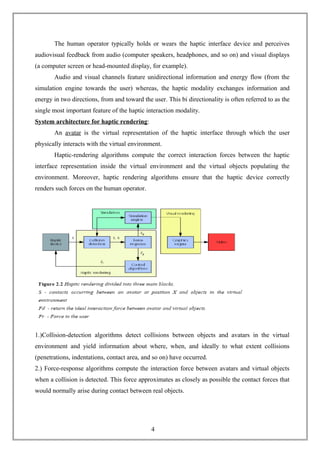


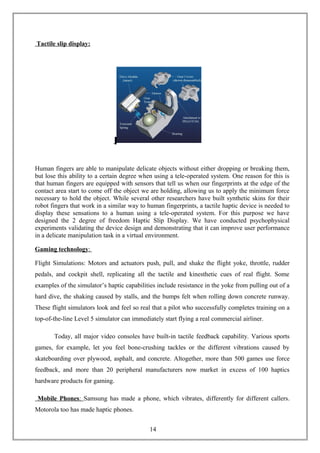


Haptic technology adds the sense of touch to virtual environments through haptic interfaces. This allows users to feel virtual objects on a computer through forces, vibrations, and motions. Haptic interfaces track user movements and apply forces through motors. Haptic rendering algorithms compute interaction forces between virtual objects and the user's movements in real-time. Applications include medical training simulations, remote robotics, virtual prototyping, and assisting those with disabilities.


