CONTENTS
 Introduction
 What are MANETs?
 MANET protocols
 Reactive vs. Proactive Ad Hoc routing protocols
 Reactive Routing Protocol
 Proactive Routing Protocol
 Comparision simulation
 Conclusion
 References
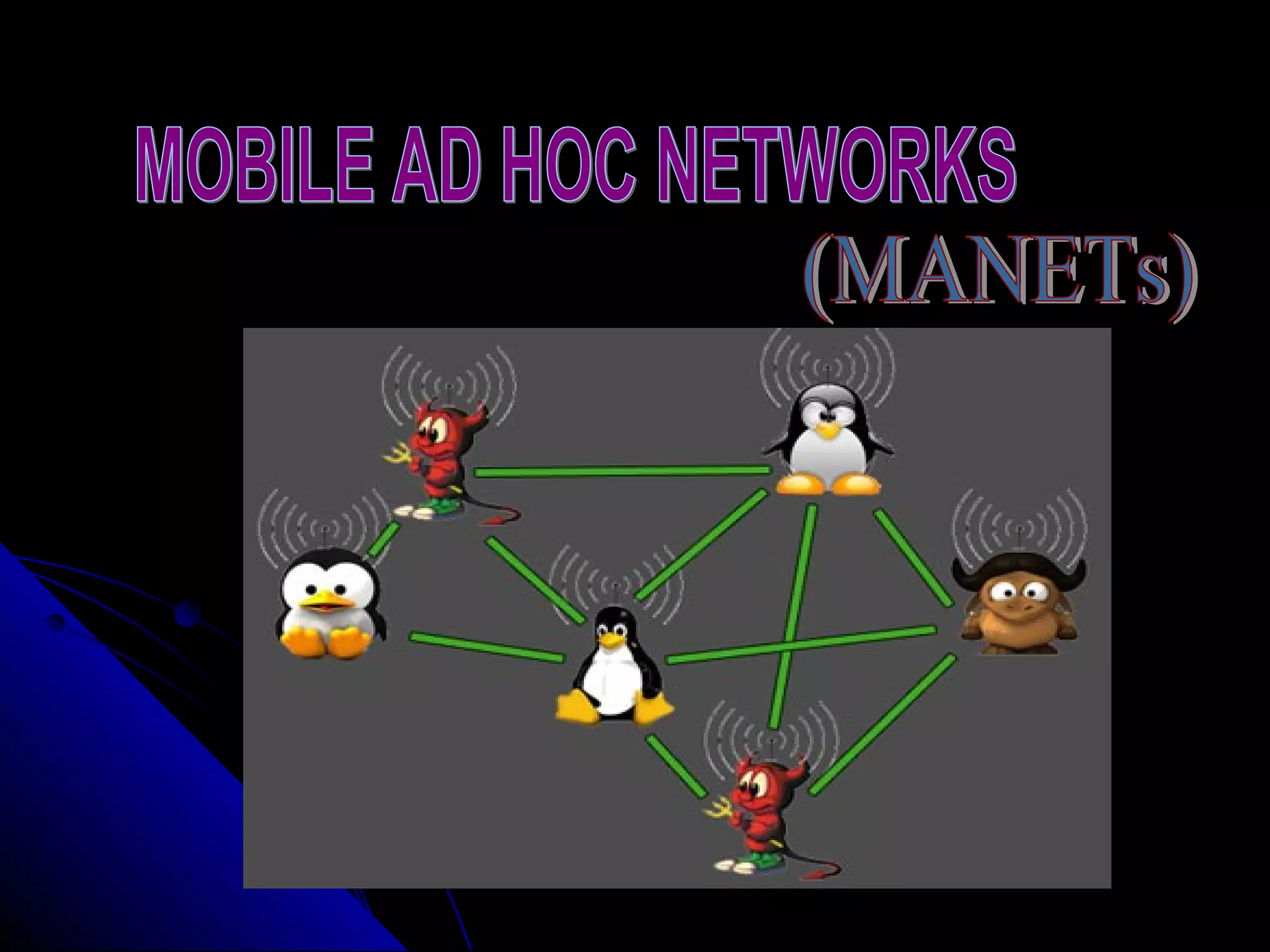
 An autonomous system of mobile routers connected by wireless
links.
 The routers are free to move randomly and organize
themselves arbitrarily.
 A MANET is a wireless mobile network that is self-forming, self
maintained, and self-healing.
 Nodes stay connected even as the network topology changes.
 Each node needs to act as a router to relay packets to nodes
out of direct communication range.
Introduction
Mobile Ad-Hoc Networks
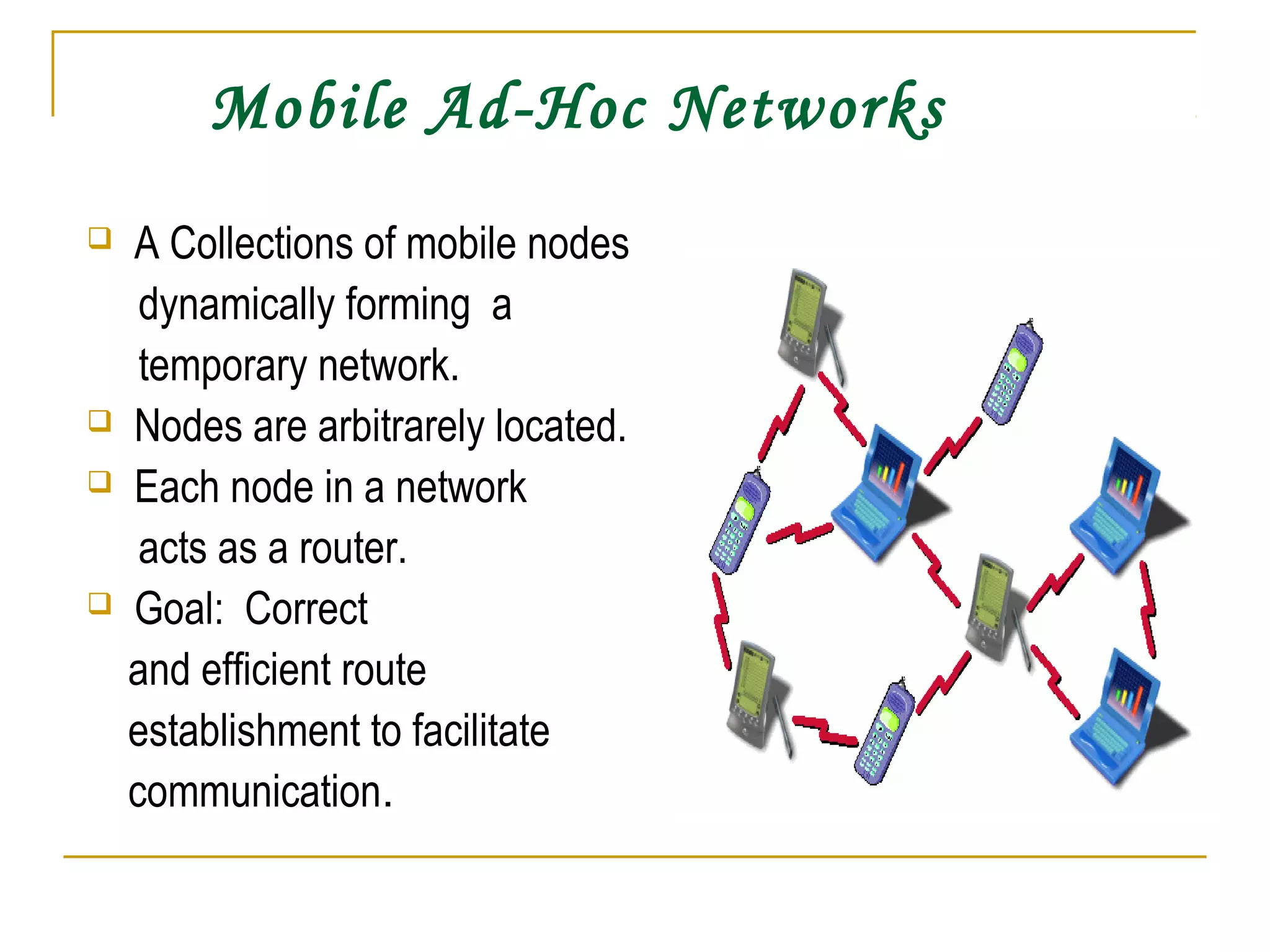
 A Collections of mobile nodes
dynamically forming a
temporary network.
 Nodes are arbitrarely located.
 Each node in a network
acts as a router.
 Goal: Correct
and efficient route
establishment to facilitate
communication.
Characteristic
s Dynamic topology.
 Variable capacity links.
 Energy-constrained mobile nodes.
 Weakened physical security.
Why traditional protocols are not suitable for
MANETs?
No pre-existing infrastructure.
Variable capacity links.
Dynamic topologies.
Limited physical security.
MANETs Use
 For military and rescue use.
 Internet / intranet hot spots in public transportation.
 Information distribution for meetings, seminars etc.
 New mobile devices are invented constantly and used
various ways.
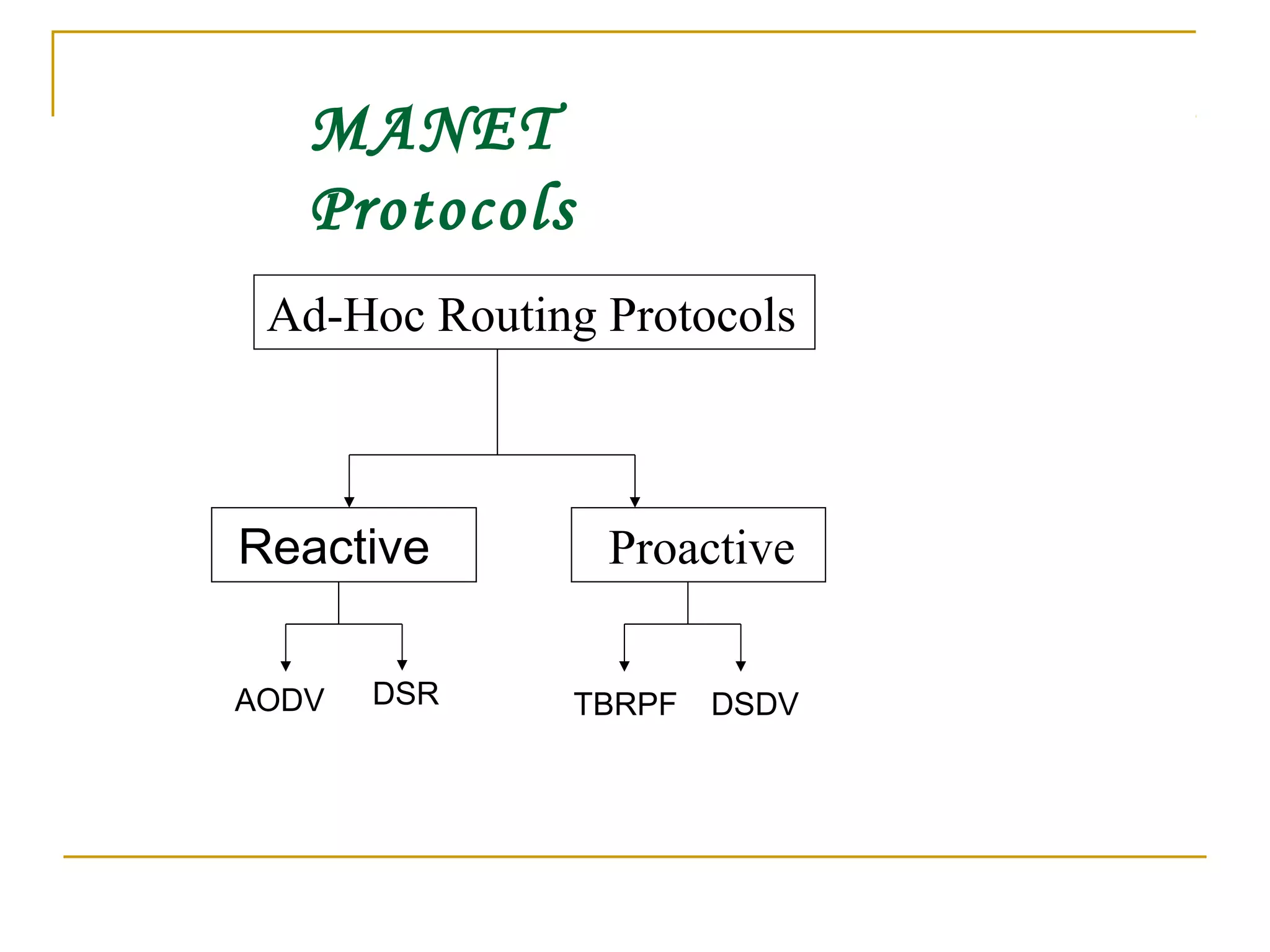
MANET
Protocols
Ad-Hoc Routing Protocols
Reactive Proactive
TBRPF DSDVAODV DSR
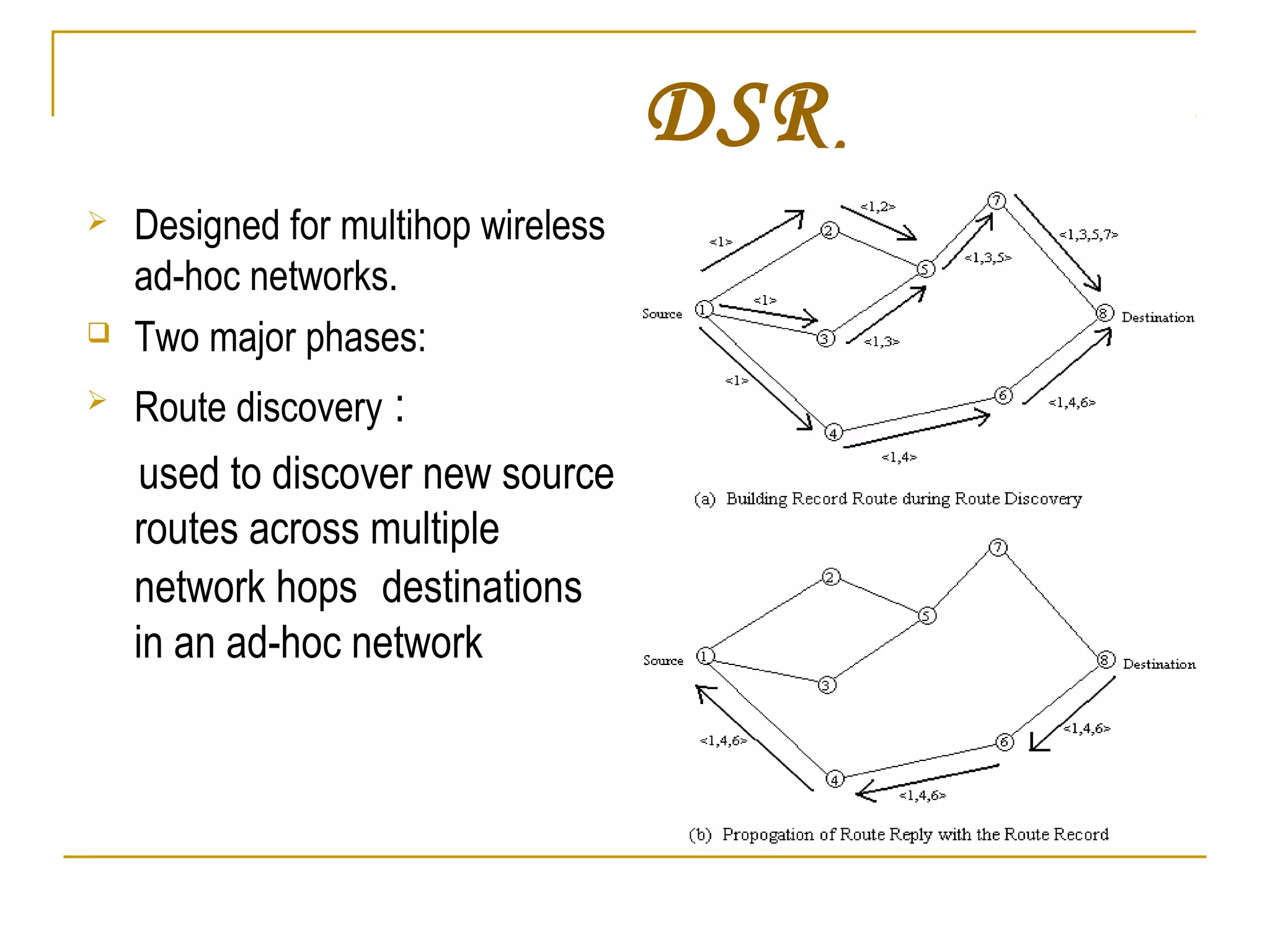
DSR
 Designed for multihop wireless
ad-hoc networks.
 Two major phases:
 Route discovery :
used to discover new source
routes across multiple
network hops destinations
in an ad-hoc network
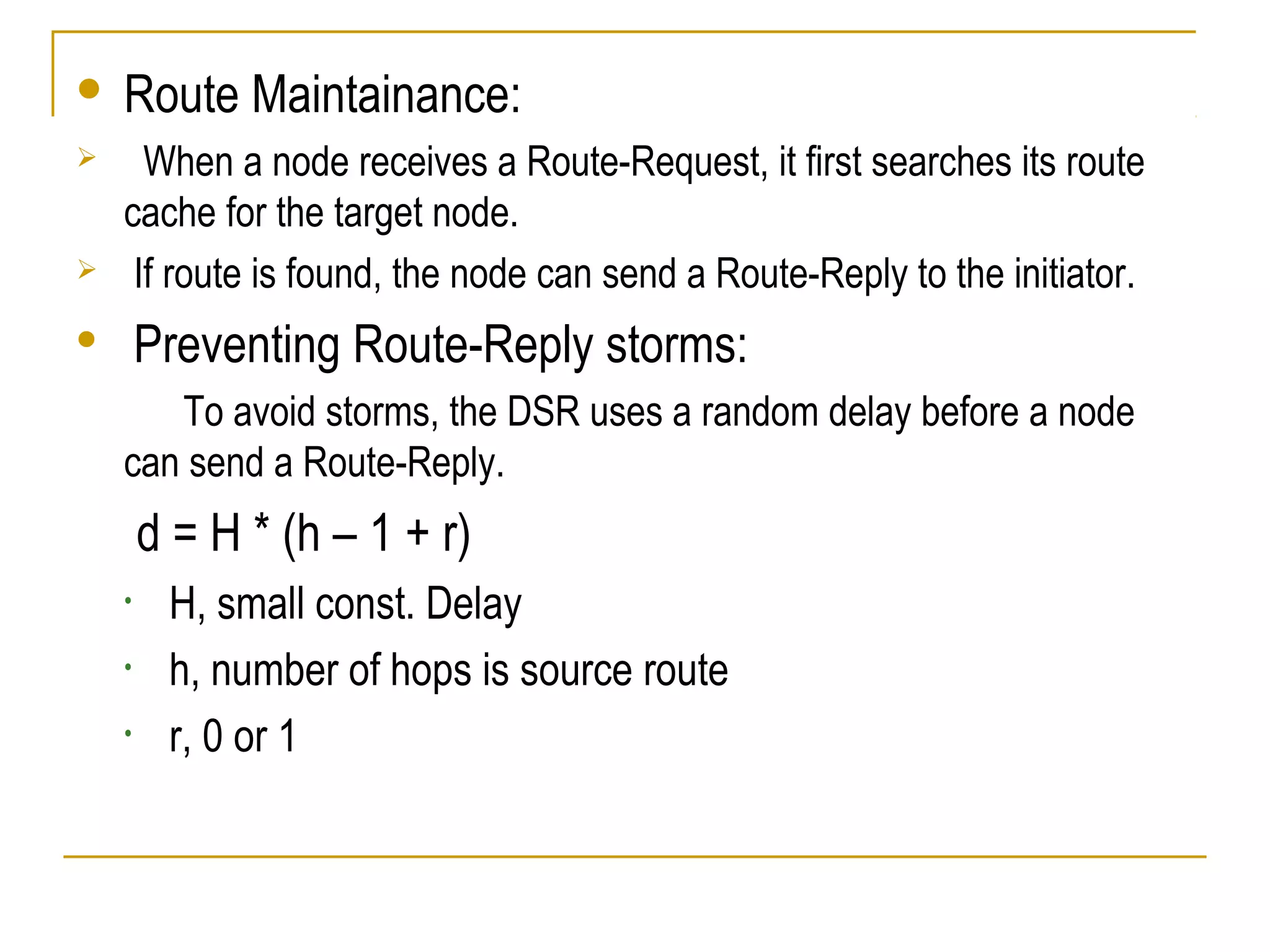
 Route Maintainance:
 When a node receives a Route-Request, it first searches its route
cache for the target node.
 If route is found, the node can send a Route-Reply to the initiator.
 Preventing Route-Reply storms:
To avoid storms, the DSR uses a random delay before a node
can send a Route-Reply.
d = H * (h – 1 + r)
• H, small const. Delay
• h, number of hops is source route
• r, 0 or 1
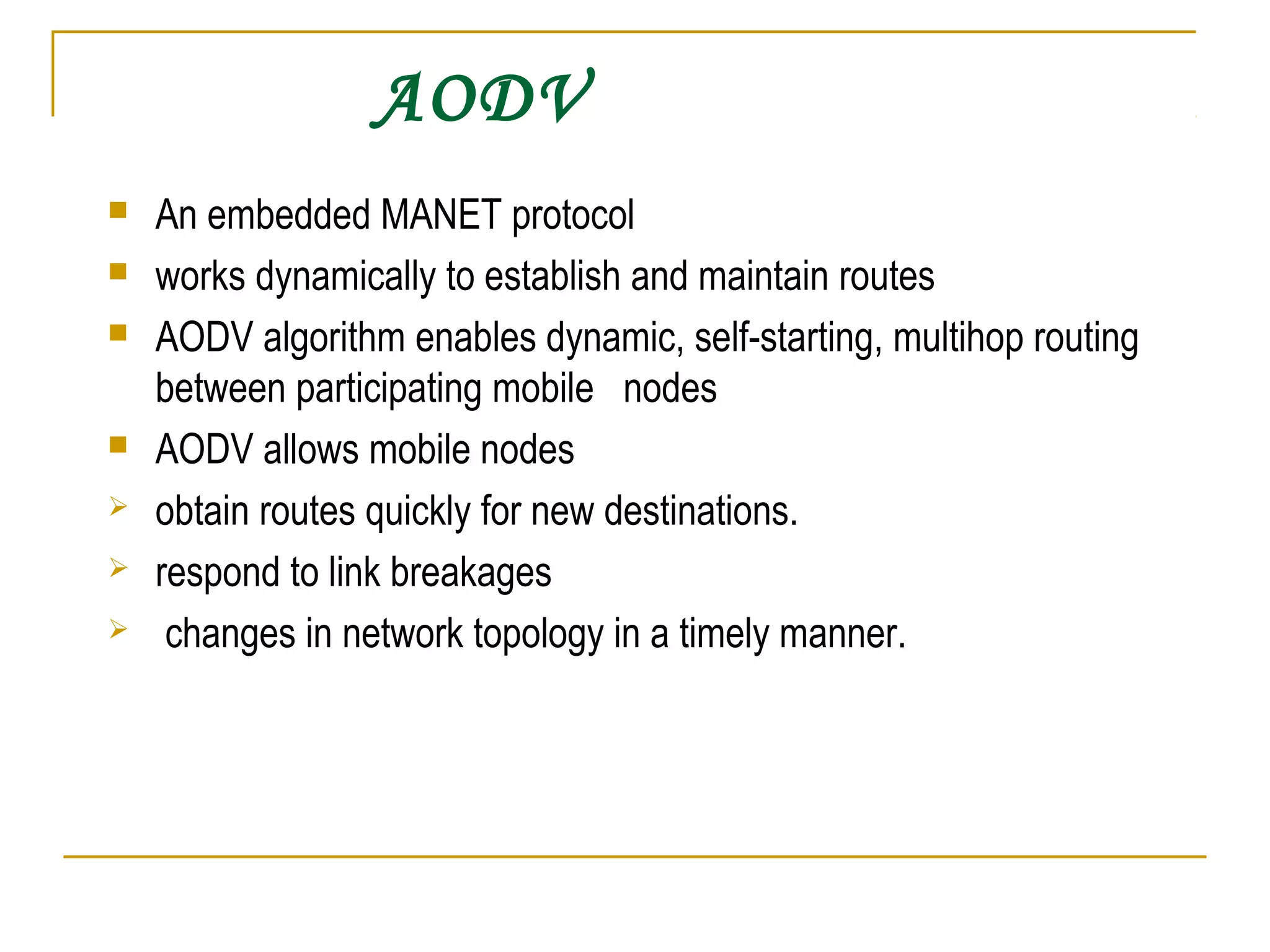
AODV
 An embedded MANET protocol
 works dynamically to establish and maintain routes
 AODV algorithm enables dynamic, self-starting, multihop routing
between participating mobile nodes
 AODV allows mobile nodes
 obtain routes quickly for new destinations.
 respond to link breakages
 changes in network topology in a timely manner.
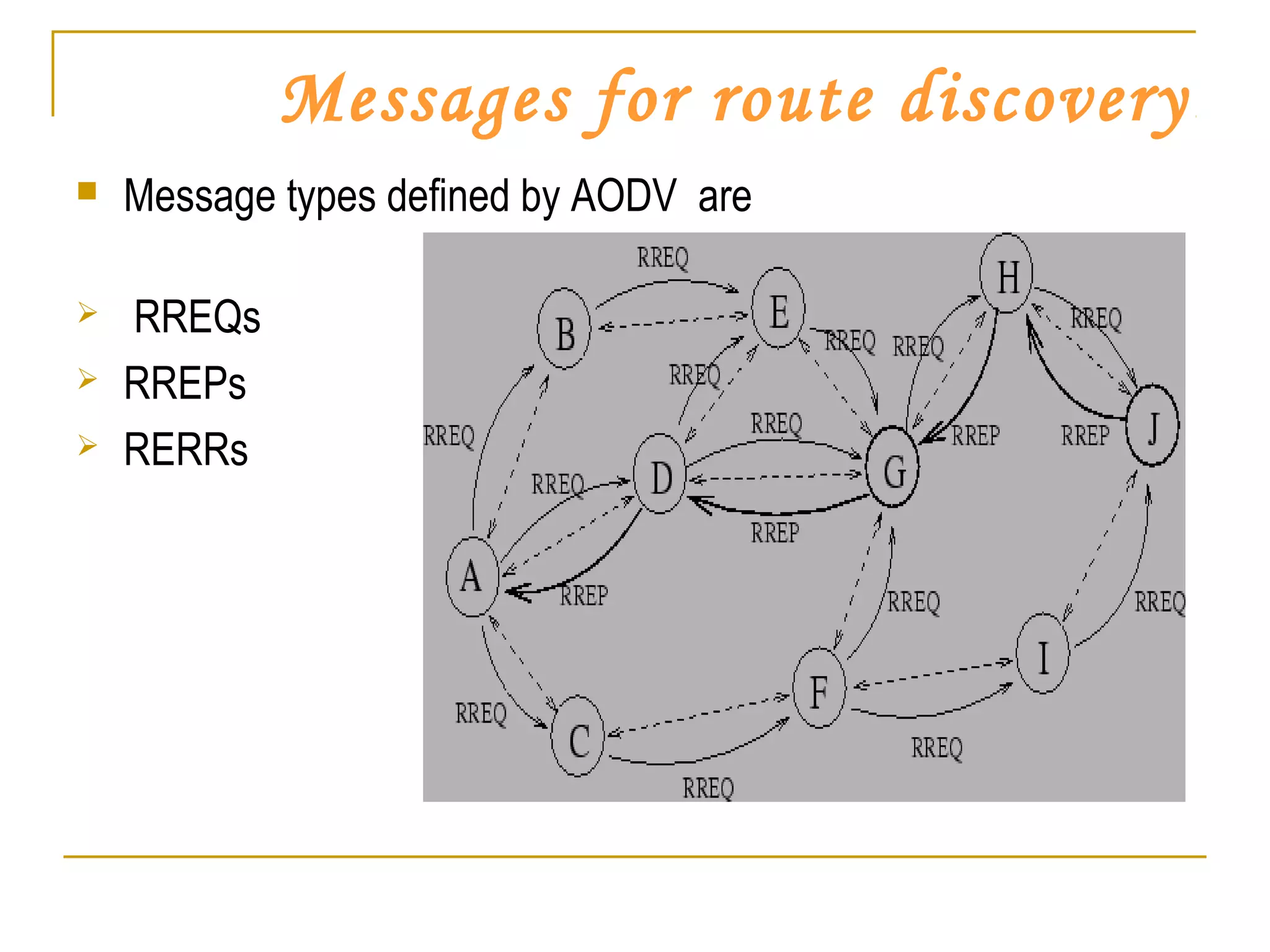
Messages for route discovery
 Message types defined by AODV are
 RREQs
 RREPs
 RERRs
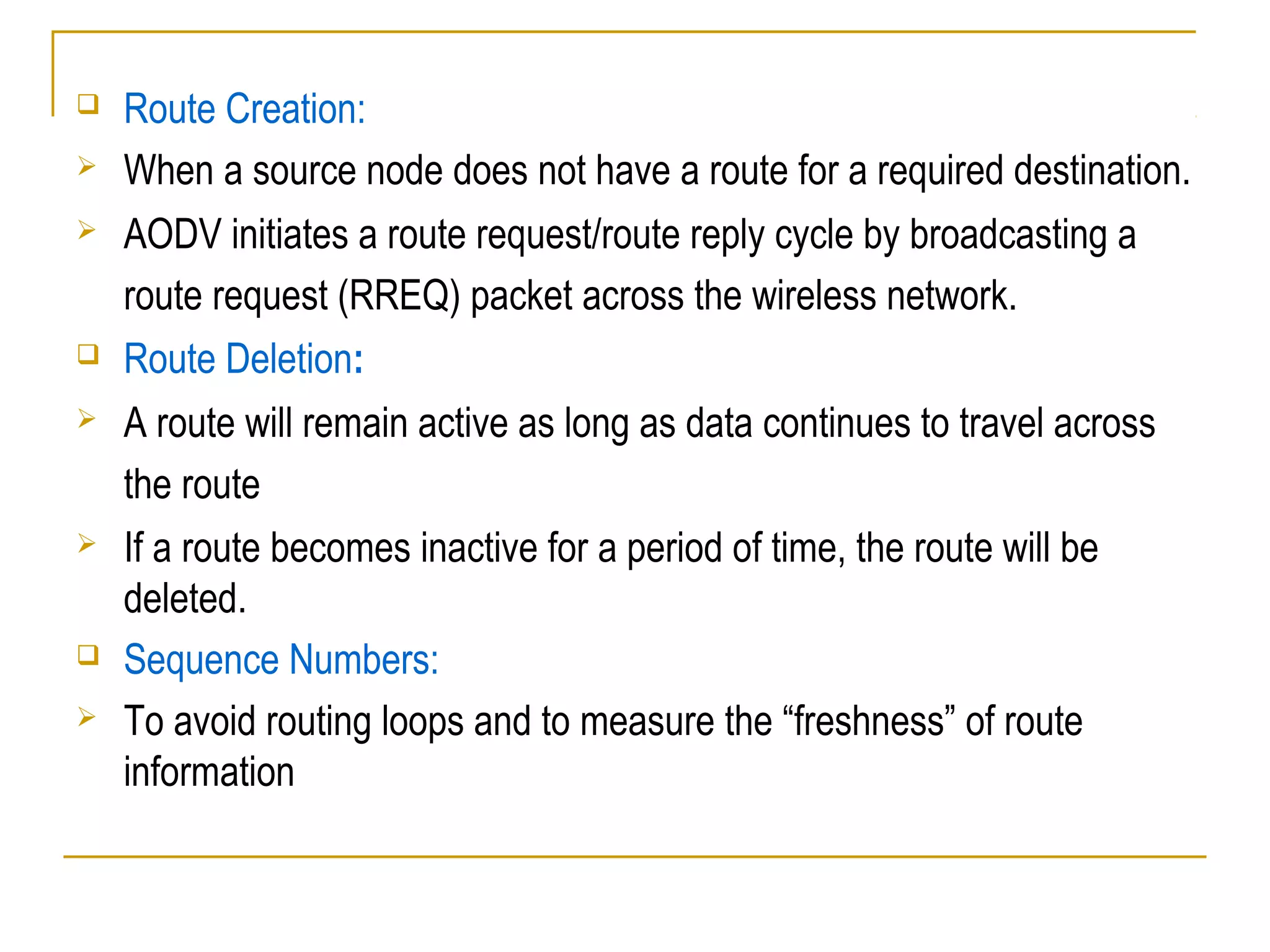
 Route Creation:
 When a source node does not have a route for a required destination.
 AODV initiates a route request/route reply cycle by broadcasting a
route request (RREQ) packet across the wireless network.
 Route Deletion:
 A route will remain active as long as data continues to travel across
the route
 If a route becomes inactive for a period of time, the route will be
deleted.
 Sequence Numbers:
 To avoid routing loops and to measure the “freshness” of route
information
DSDV
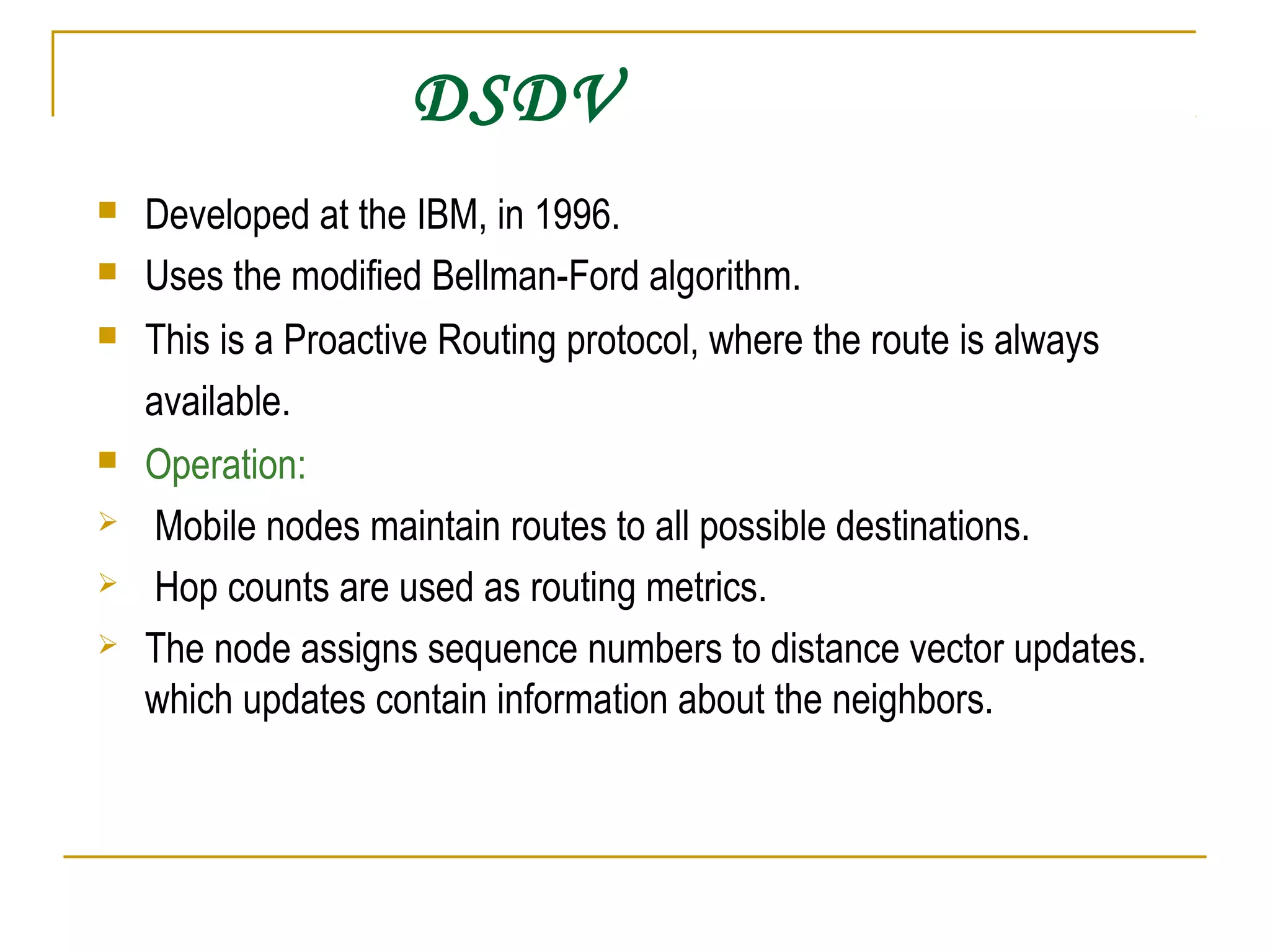
 Developed at the IBM, in 1996.
 Uses the modified Bellman-Ford algorithm.
 This is a Proactive Routing protocol, where the route is always
available.
 Operation:
 Mobile nodes maintain routes to all possible destinations.
 Hop counts are used as routing metrics.
 The node assigns sequence numbers to distance vector updates.
which updates contain information about the neighbors.
TBRPF
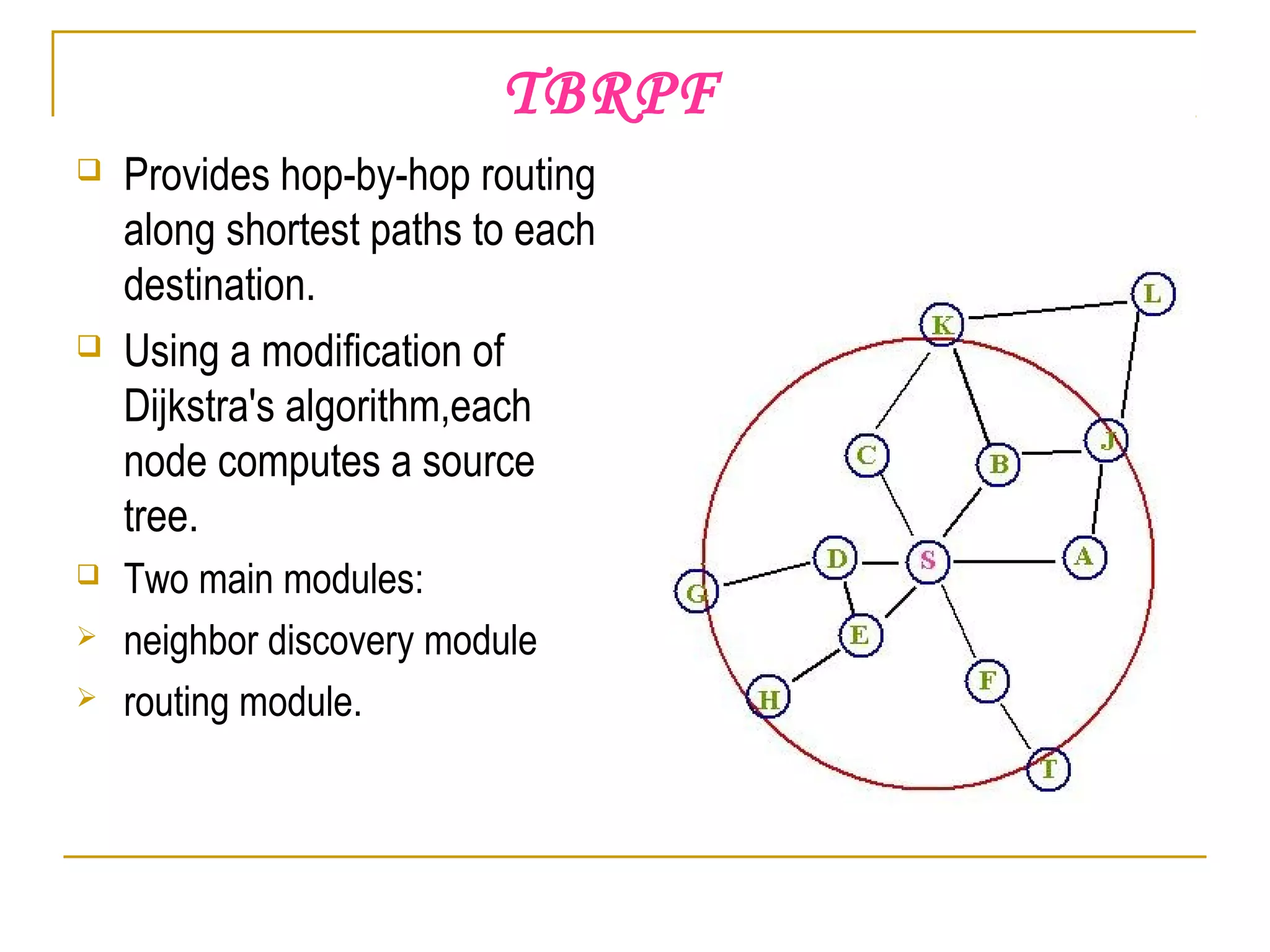
 Provides hop-by-hop routing
along shortest paths to each
destination.
 Using a modification of
Dijkstra's algorithm,each
node computes a source
tree.
 Two main modules:
 neighbor discovery module
 routing module.
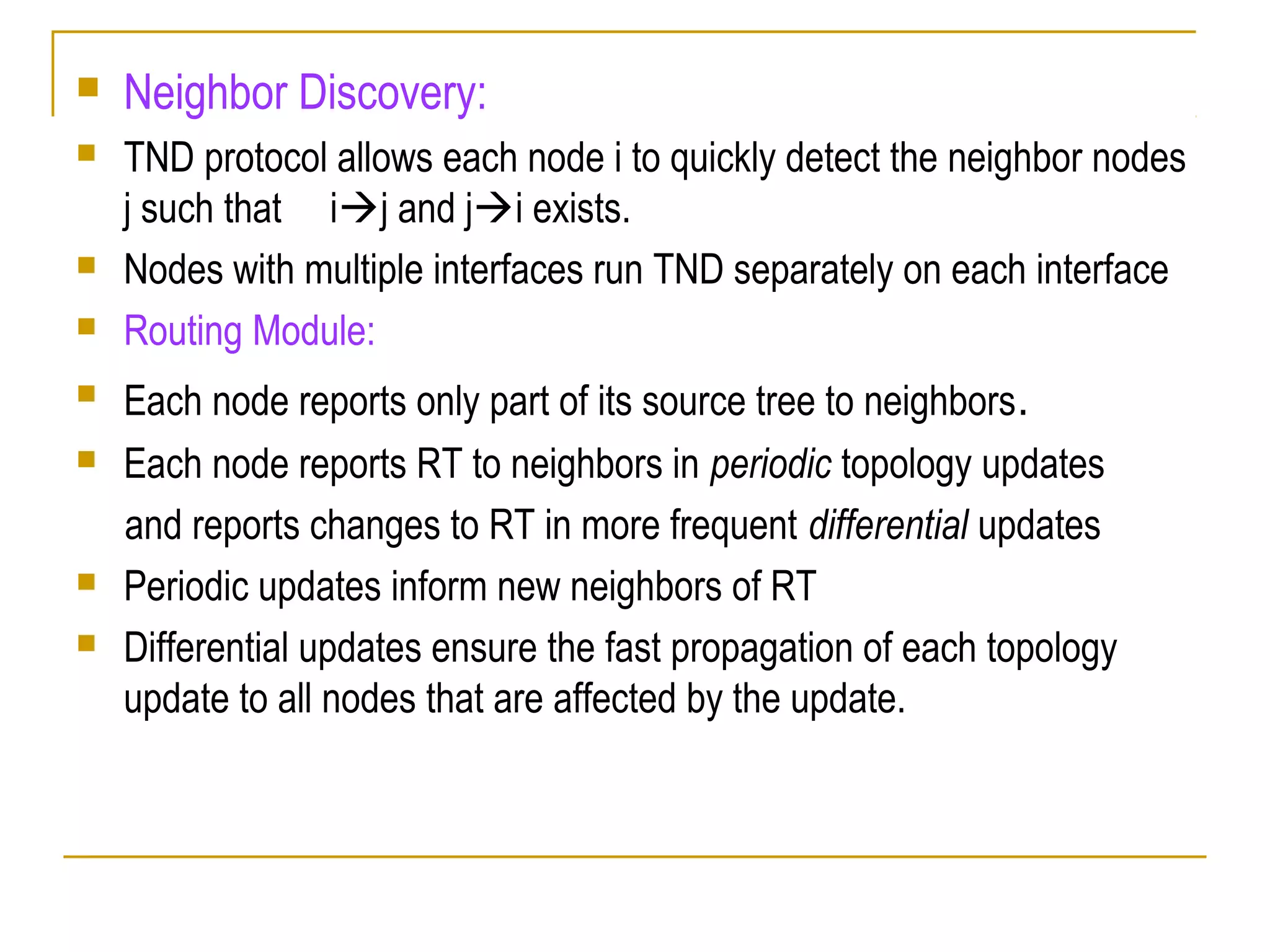
 Neighbor Discovery:
 TND protocol allows each node i to quickly detect the neighbor nodes
j such that ij and ji exists.
 Nodes with multiple interfaces run TND separately on each interface
 Routing Module:
 Each node reports only part of its source tree to neighbors.
 Each node reports RT to neighbors in periodic topology updates
and reports changes to RT in more frequent differential updates
 Periodic updates inform new neighbors of RT
 Differential updates ensure the fast propagation of each topology
update to all nodes that are affected by the update.
Comparison Simulations
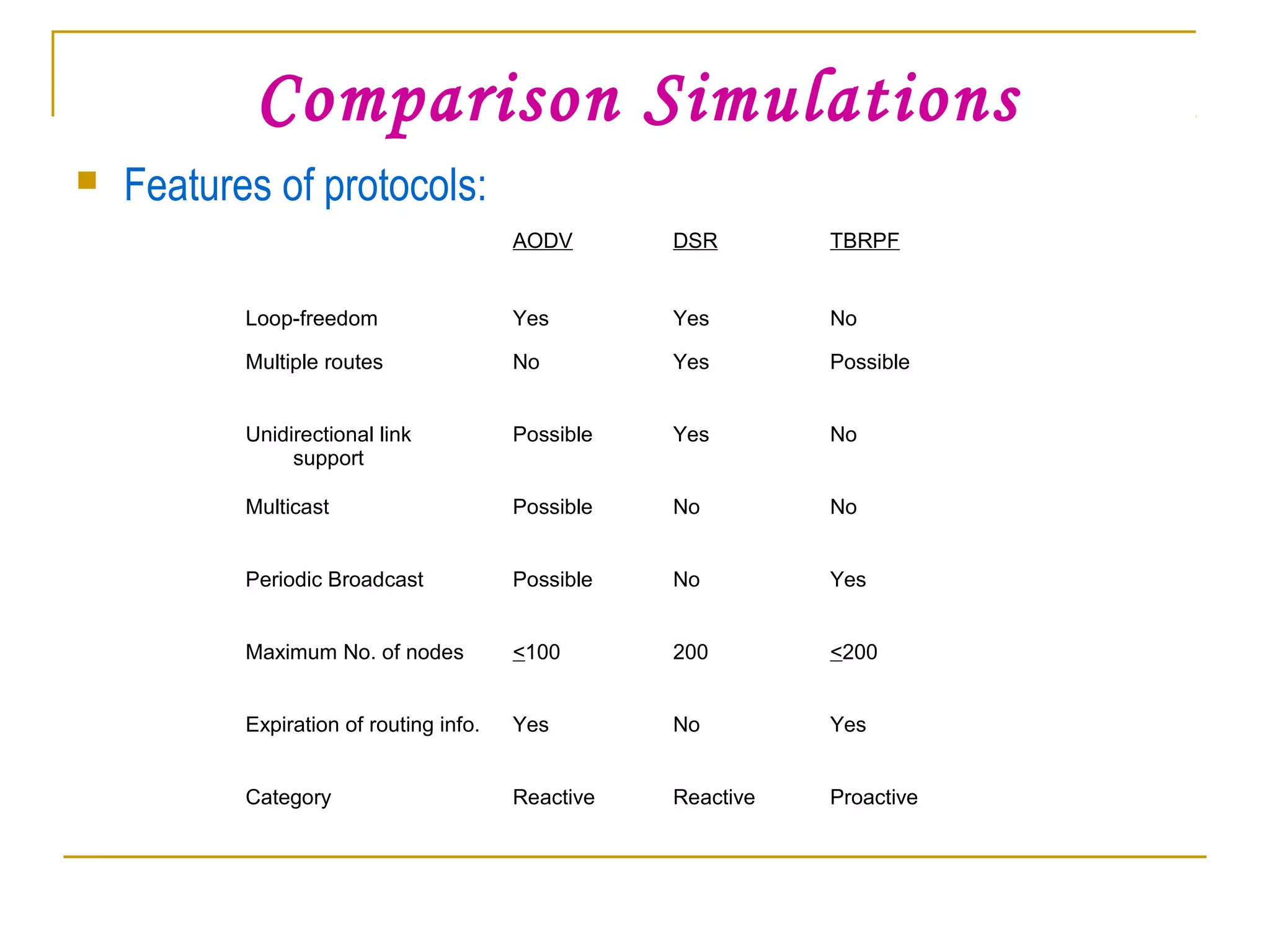
 Features of protocols:
AODV DSR TBRPF
Loop-freedom Yes Yes No
Multiple routes No Yes Possible
Unidirectional link
support
Possible Yes No
Multicast Possible No No
Periodic Broadcast Possible No Yes
Maximum No. of nodes <100 200 <200
Expiration of routing info. Yes No Yes
Category Reactive Reactive Proactive
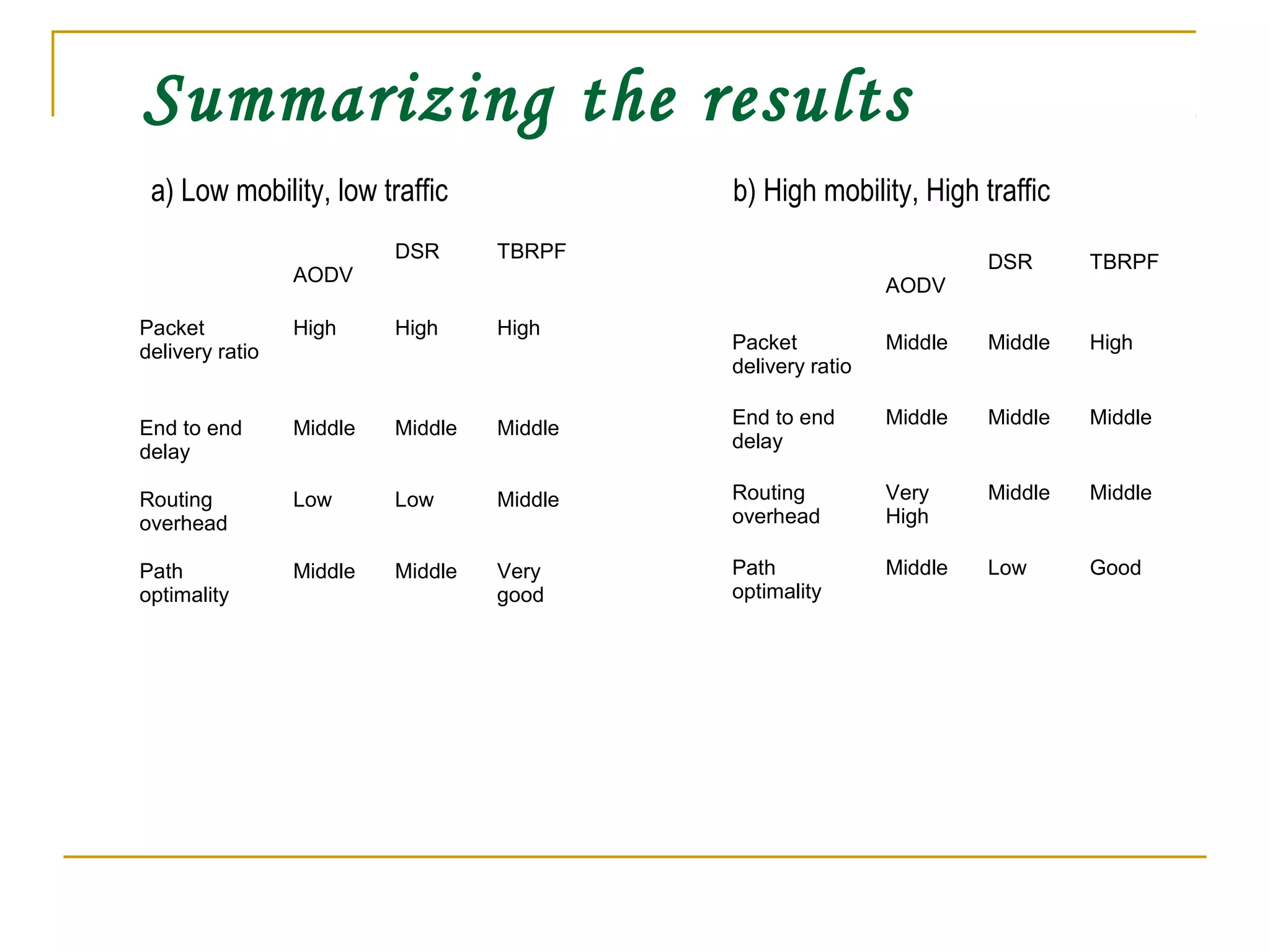
Summarizing the results
a) Low mobility, low traffic
AODV
DSR TBRPF
Packet
delivery ratio
High High High
End to end
delay
Middle Middle Middle
Routing
overhead
Low Low Middle
Path
optimality
Middle Middle Very
good
b) High mobility, High traffic
AODV
DSR TBRPF
Packet
delivery ratio
Middle Middle High
End to end
delay
Middle Middle Middle
Routing
overhead
Very
High
Middle Middle
Path
optimality
Middle Low Good
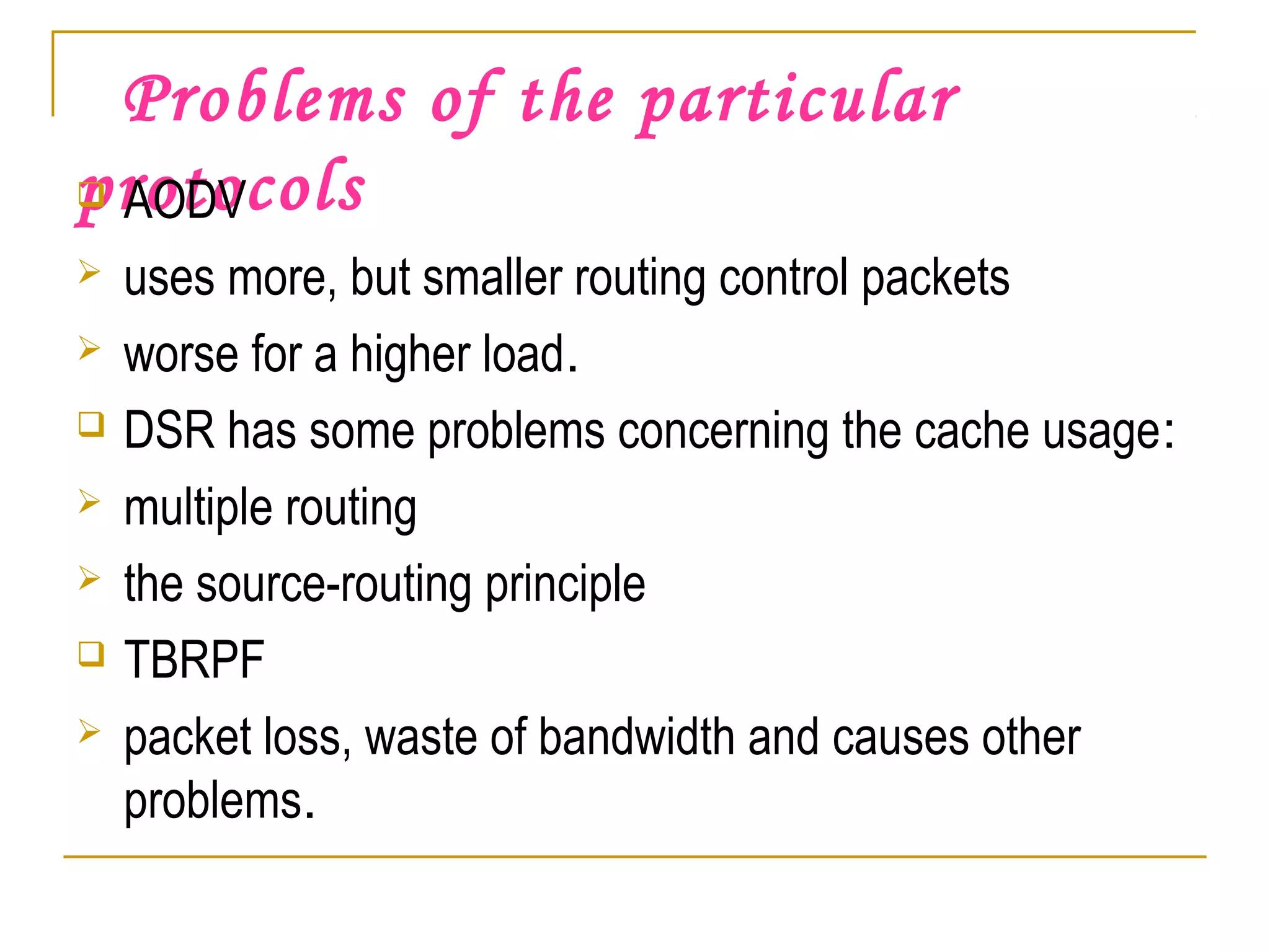
Problems of the particular
protocols AODV
 uses more, but smaller routing control packets
 worse for a higher load.
 DSR has some problems concerning the cache usage:
 multiple routing
 the source-routing principle
 TBRPF
 packet loss, waste of bandwidth and causes other
problems.
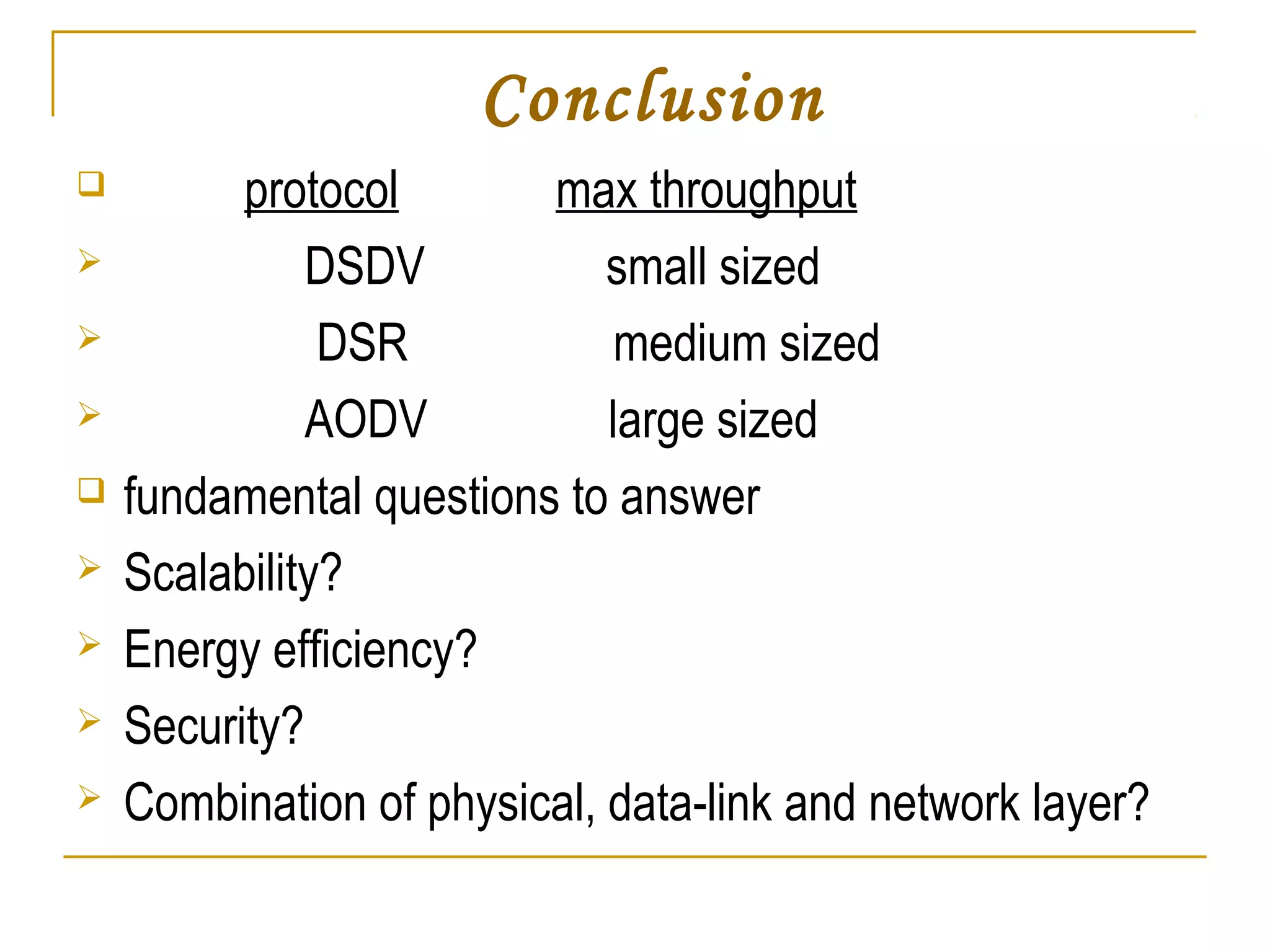
Conclusion
 protocol max throughput
 DSDV small sized
 DSR medium sized
 AODV large sized
 fundamental questions to answer
 Scalability?
 Energy efficiency?
 Security?
 Combination of physical, data-link and network layer?
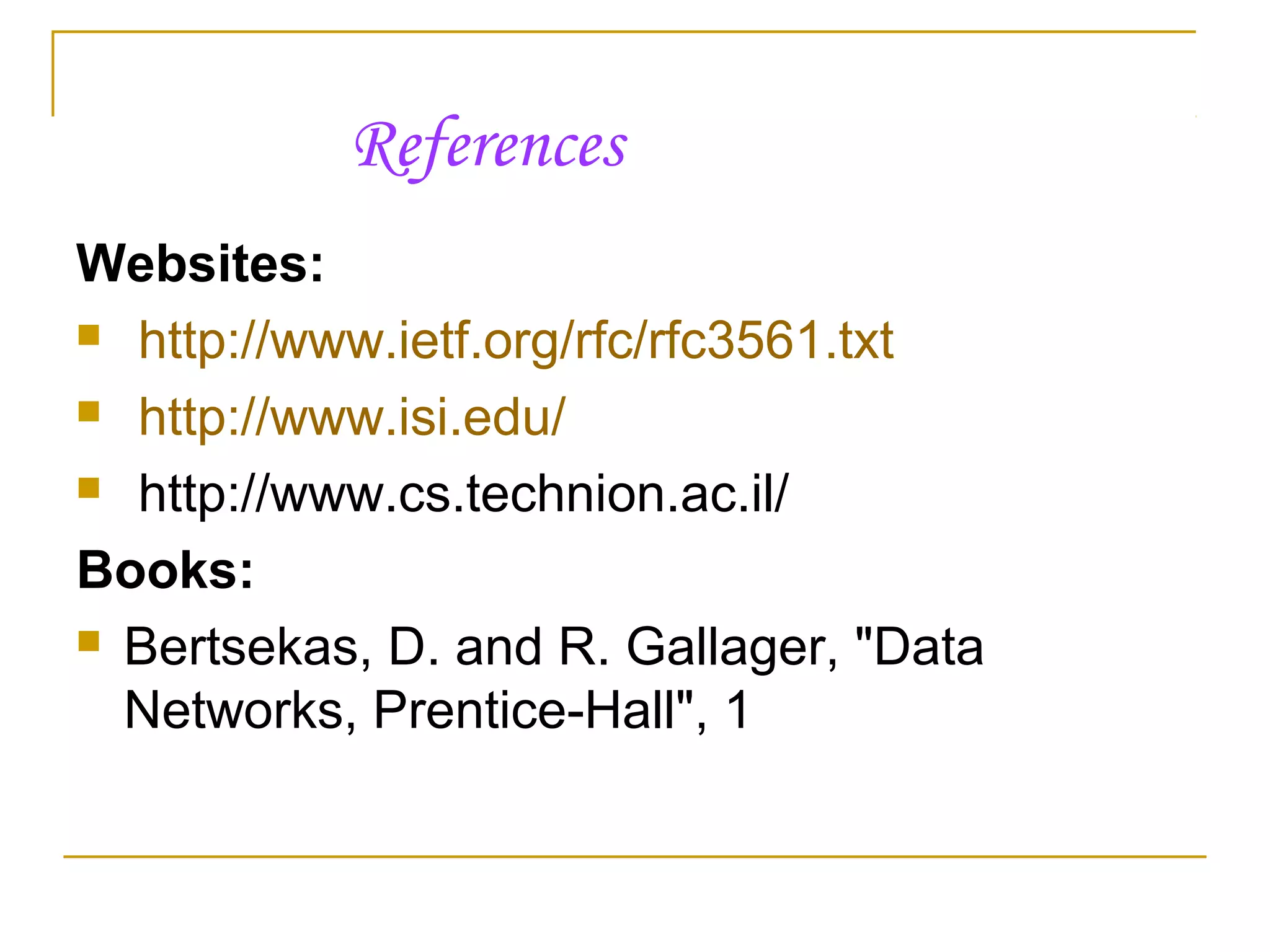
References
Websites:
 http://www.ietf.org/rfc/rfc3561.txt
 http://www.isi.edu/
 http://www.cs.technion.ac.il/
Books:
 Bertsekas, D. and R. Gallager, "Data
Networks, Prentice-Hall", 1
Ad hoc
Ad hoc

Ad hoc

  • 2.
    CONTENTS  Introduction  Whatare MANETs?  MANET protocols  Reactive vs. Proactive Ad Hoc routing protocols  Reactive Routing Protocol  Proactive Routing Protocol  Comparision simulation  Conclusion  References
  • 3.
     An autonomoussystem of mobile routers connected by wireless links.  The routers are free to move randomly and organize themselves arbitrarily.  A MANET is a wireless mobile network that is self-forming, self maintained, and self-healing.  Nodes stay connected even as the network topology changes.  Each node needs to act as a router to relay packets to nodes out of direct communication range. Introduction
  • 4.
    Mobile Ad-Hoc Networks A Collections of mobile nodes dynamically forming a temporary network.  Nodes are arbitrarely located.  Each node in a network acts as a router.  Goal: Correct and efficient route establishment to facilitate communication.
  • 5.
    Characteristic s Dynamic topology. Variable capacity links.  Energy-constrained mobile nodes.  Weakened physical security. Why traditional protocols are not suitable for MANETs? No pre-existing infrastructure. Variable capacity links. Dynamic topologies. Limited physical security.
  • 6.
    MANETs Use  Formilitary and rescue use.  Internet / intranet hot spots in public transportation.  Information distribution for meetings, seminars etc.  New mobile devices are invented constantly and used various ways.
  • 7.
  • 8.
    DSR  Designed formultihop wireless ad-hoc networks.  Two major phases:  Route discovery : used to discover new source routes across multiple network hops destinations in an ad-hoc network
  • 9.
     Route Maintainance: When a node receives a Route-Request, it first searches its route cache for the target node.  If route is found, the node can send a Route-Reply to the initiator.  Preventing Route-Reply storms: To avoid storms, the DSR uses a random delay before a node can send a Route-Reply. d = H * (h – 1 + r) • H, small const. Delay • h, number of hops is source route • r, 0 or 1
  • 10.
    AODV  An embeddedMANET protocol  works dynamically to establish and maintain routes  AODV algorithm enables dynamic, self-starting, multihop routing between participating mobile nodes  AODV allows mobile nodes  obtain routes quickly for new destinations.  respond to link breakages  changes in network topology in a timely manner.
  • 11.
    Messages for routediscovery  Message types defined by AODV are  RREQs  RREPs  RERRs
  • 12.
     Route Creation: When a source node does not have a route for a required destination.  AODV initiates a route request/route reply cycle by broadcasting a route request (RREQ) packet across the wireless network.  Route Deletion:  A route will remain active as long as data continues to travel across the route  If a route becomes inactive for a period of time, the route will be deleted.  Sequence Numbers:  To avoid routing loops and to measure the “freshness” of route information
  • 13.
    DSDV  Developed atthe IBM, in 1996.  Uses the modified Bellman-Ford algorithm.  This is a Proactive Routing protocol, where the route is always available.  Operation:  Mobile nodes maintain routes to all possible destinations.  Hop counts are used as routing metrics.  The node assigns sequence numbers to distance vector updates. which updates contain information about the neighbors.
  • 14.
    TBRPF  Provides hop-by-hoprouting along shortest paths to each destination.  Using a modification of Dijkstra's algorithm,each node computes a source tree.  Two main modules:  neighbor discovery module  routing module.
  • 15.
     Neighbor Discovery: TND protocol allows each node i to quickly detect the neighbor nodes j such that ij and ji exists.  Nodes with multiple interfaces run TND separately on each interface  Routing Module:  Each node reports only part of its source tree to neighbors.  Each node reports RT to neighbors in periodic topology updates and reports changes to RT in more frequent differential updates  Periodic updates inform new neighbors of RT  Differential updates ensure the fast propagation of each topology update to all nodes that are affected by the update.
  • 16.
    Comparison Simulations  Featuresof protocols: AODV DSR TBRPF Loop-freedom Yes Yes No Multiple routes No Yes Possible Unidirectional link support Possible Yes No Multicast Possible No No Periodic Broadcast Possible No Yes Maximum No. of nodes <100 200 <200 Expiration of routing info. Yes No Yes Category Reactive Reactive Proactive
  • 17.
    Summarizing the results a)Low mobility, low traffic AODV DSR TBRPF Packet delivery ratio High High High End to end delay Middle Middle Middle Routing overhead Low Low Middle Path optimality Middle Middle Very good b) High mobility, High traffic AODV DSR TBRPF Packet delivery ratio Middle Middle High End to end delay Middle Middle Middle Routing overhead Very High Middle Middle Path optimality Middle Low Good
  • 18.
    Problems of theparticular protocols AODV  uses more, but smaller routing control packets  worse for a higher load.  DSR has some problems concerning the cache usage:  multiple routing  the source-routing principle  TBRPF  packet loss, waste of bandwidth and causes other problems.
  • 19.
    Conclusion  protocol maxthroughput  DSDV small sized  DSR medium sized  AODV large sized  fundamental questions to answer  Scalability?  Energy efficiency?  Security?  Combination of physical, data-link and network layer?
  • 20.
    References Websites:  http://www.ietf.org/rfc/rfc3561.txt  http://www.isi.edu/ http://www.cs.technion.ac.il/ Books:  Bertsekas, D. and R. Gallager, "Data Networks, Prentice-Hall", 1