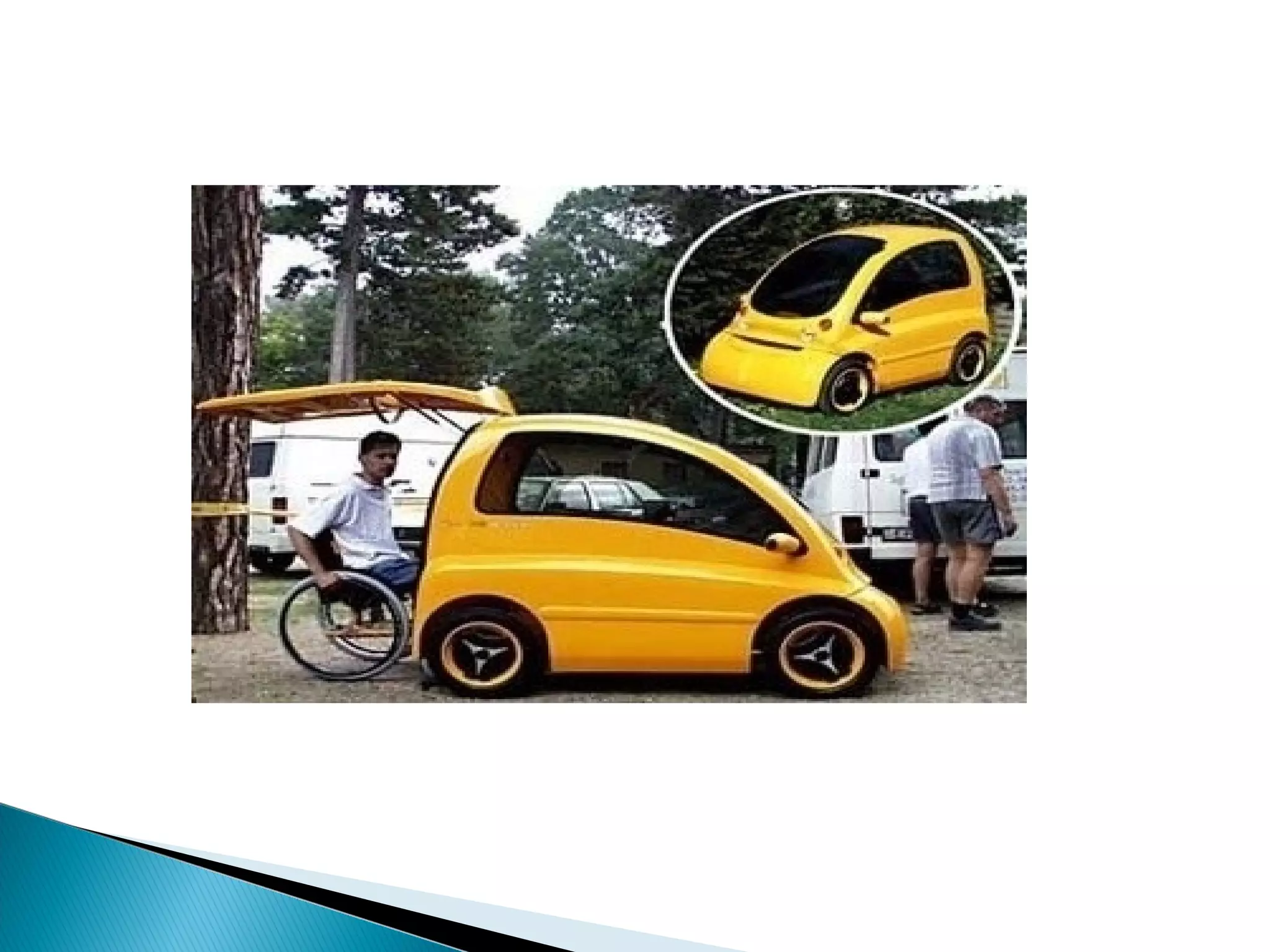
BRAIN CONTROLLED CAR FOR DISABLED
USING

ARTIFICIAL INTELLIGENCE

Ramya MK

ECE Department
Shirdi Sai Engineering College ,
Bangalore.
INTRODUCTION
•Brain-computer interface :Direct communication pathway between a
human or animal brain and an external device.

• The driver (disabled) nears the car.
•The security system of the car is activated.
• Images as well as thermo graphic results of the driver are previously
fed into the database of the computer.
• If the video images match with the database entries
security system advances to the next stage.

then

the

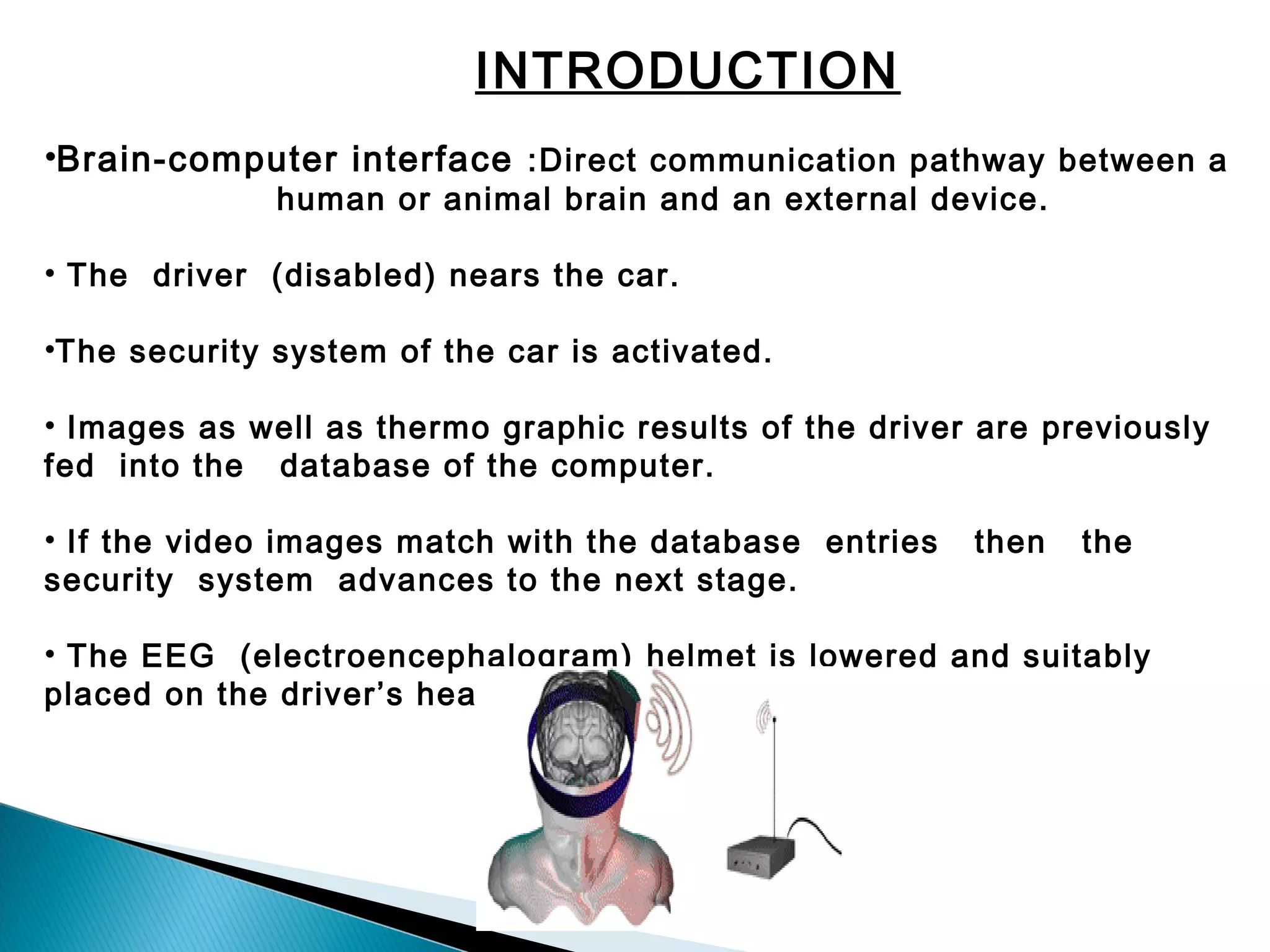
• The EEG (electroencephalogram) helmet is lowered and suitably
placed on the driver’s head.
BIOCONTROL SYSTEM

 
The bio-control system integrates signals from
various other systems and compares them with
originals in the database.
It comprises of the following systems:
1.Brain-computer interface
2.Automatic security system
3.Automatic navigation system
BRAIN – COMPUTER INTERFACE
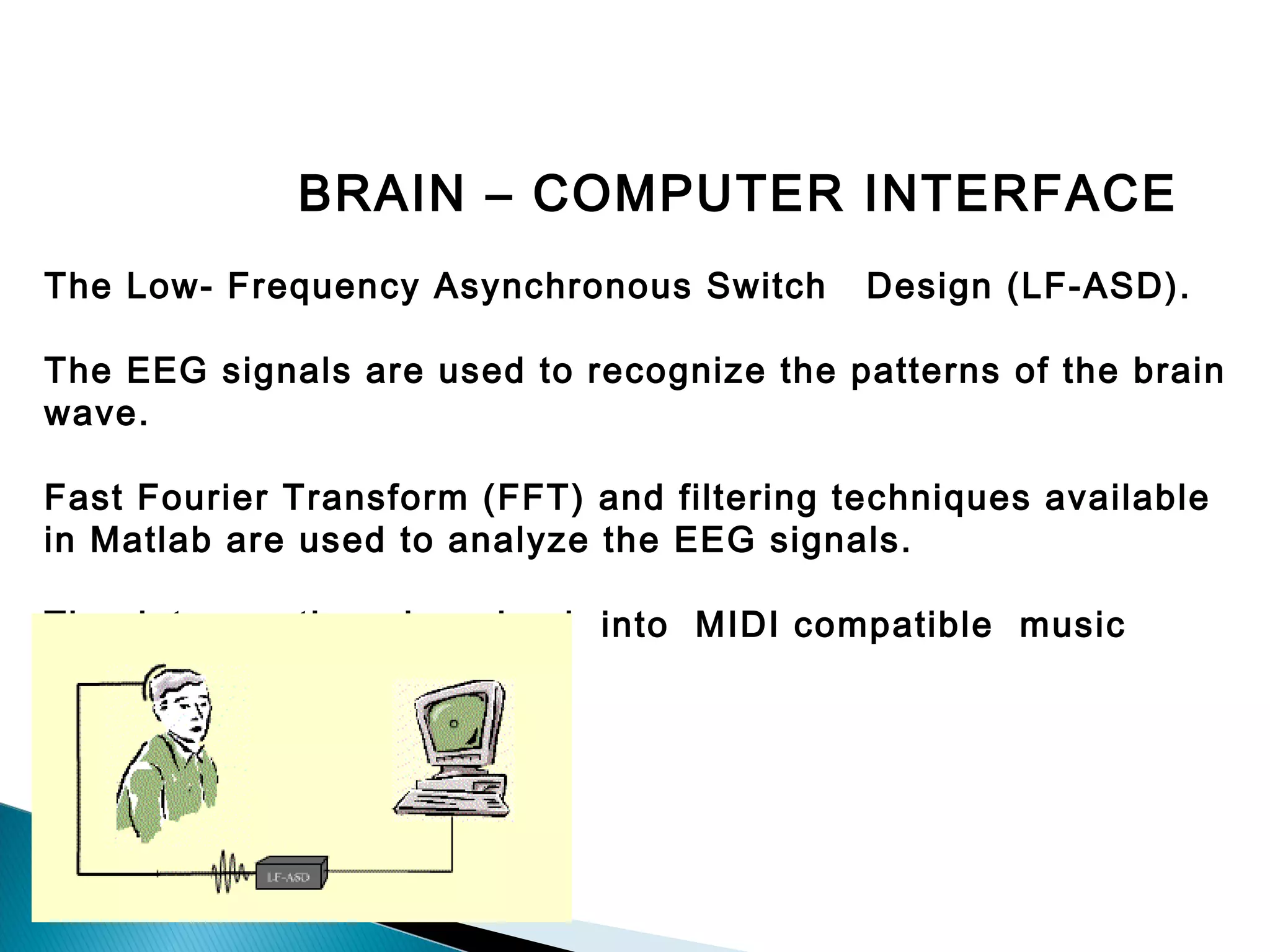
The Low- Frequency Asynchronous Switch

Design (LF-ASD).

The EEG signals are used to recognize the patterns of the brain
wave.
Fast Fourier Transform (FFT) and filtering techniques available
in Matlab are used to analyze the EEG signals.
The data can then be piped into MIDI compatible music
programs.
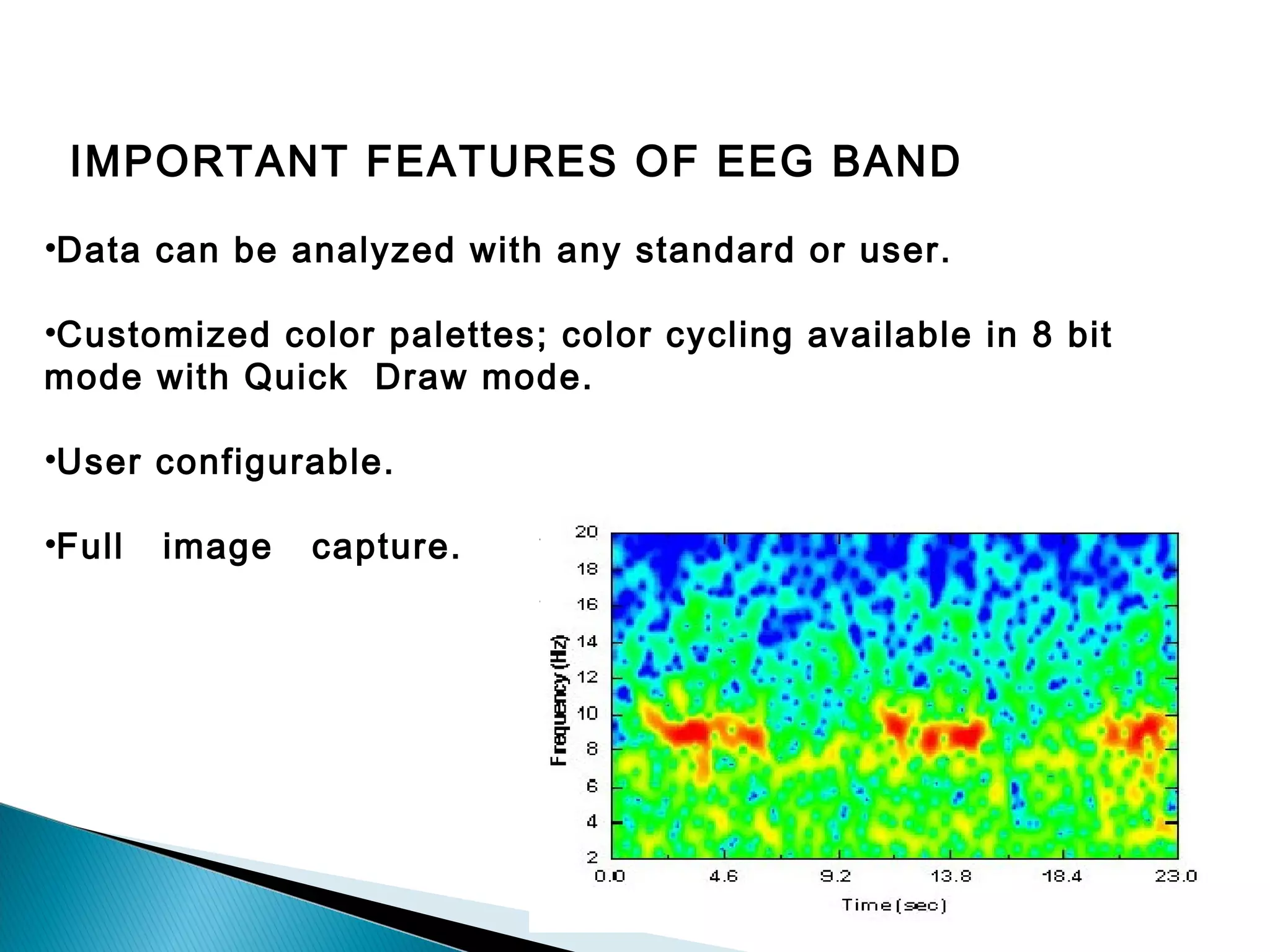
IMPORTANT FEATURES OF EEG BAND
•Data can be analyzed with any standard or user.
•Customized color palettes; color cycling available in 8 bit
mode with Quick Draw mode.
•User configurable.
•Full

image

capture.
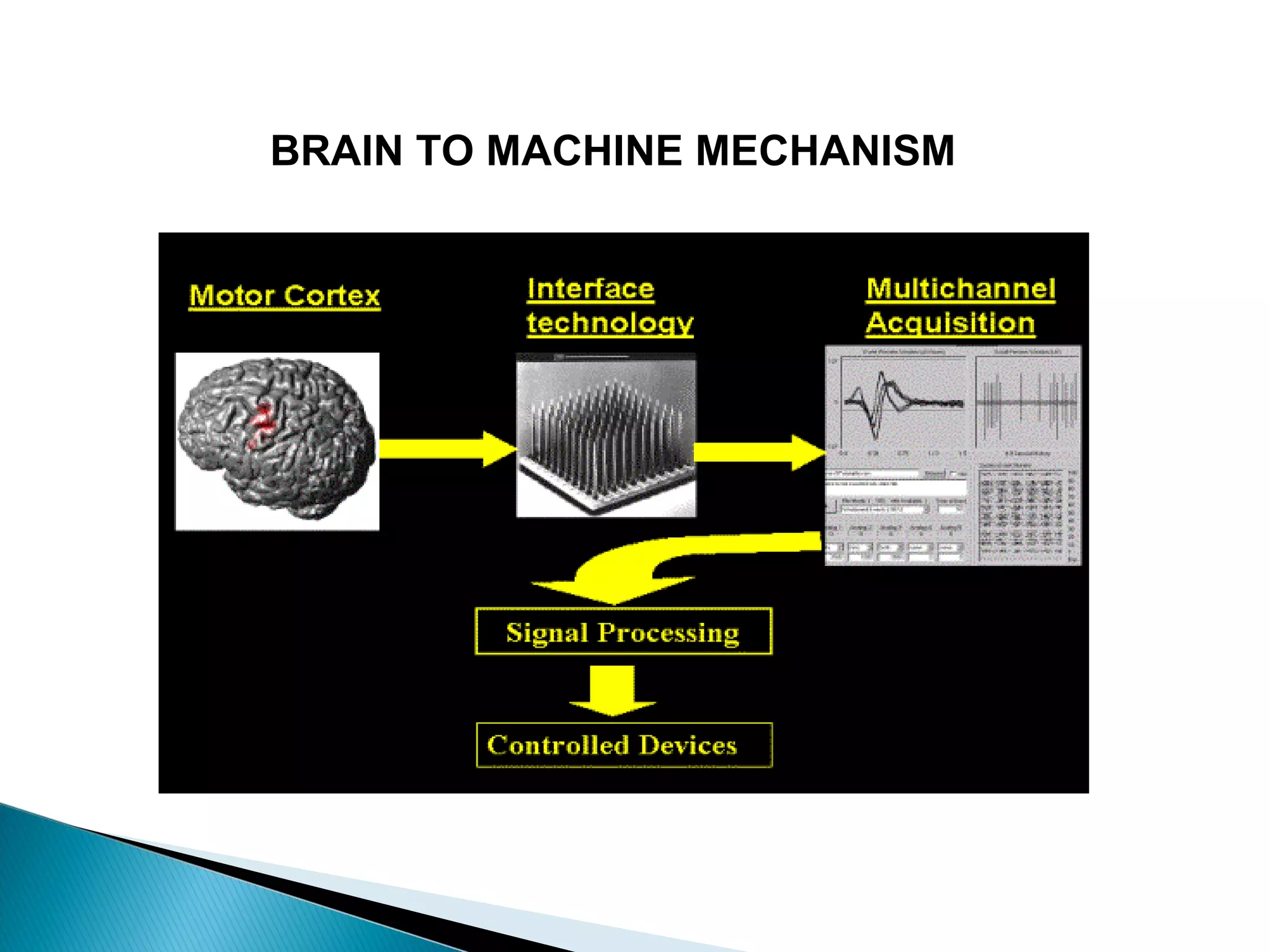
BRAIN TO MACHINE MECHANISM
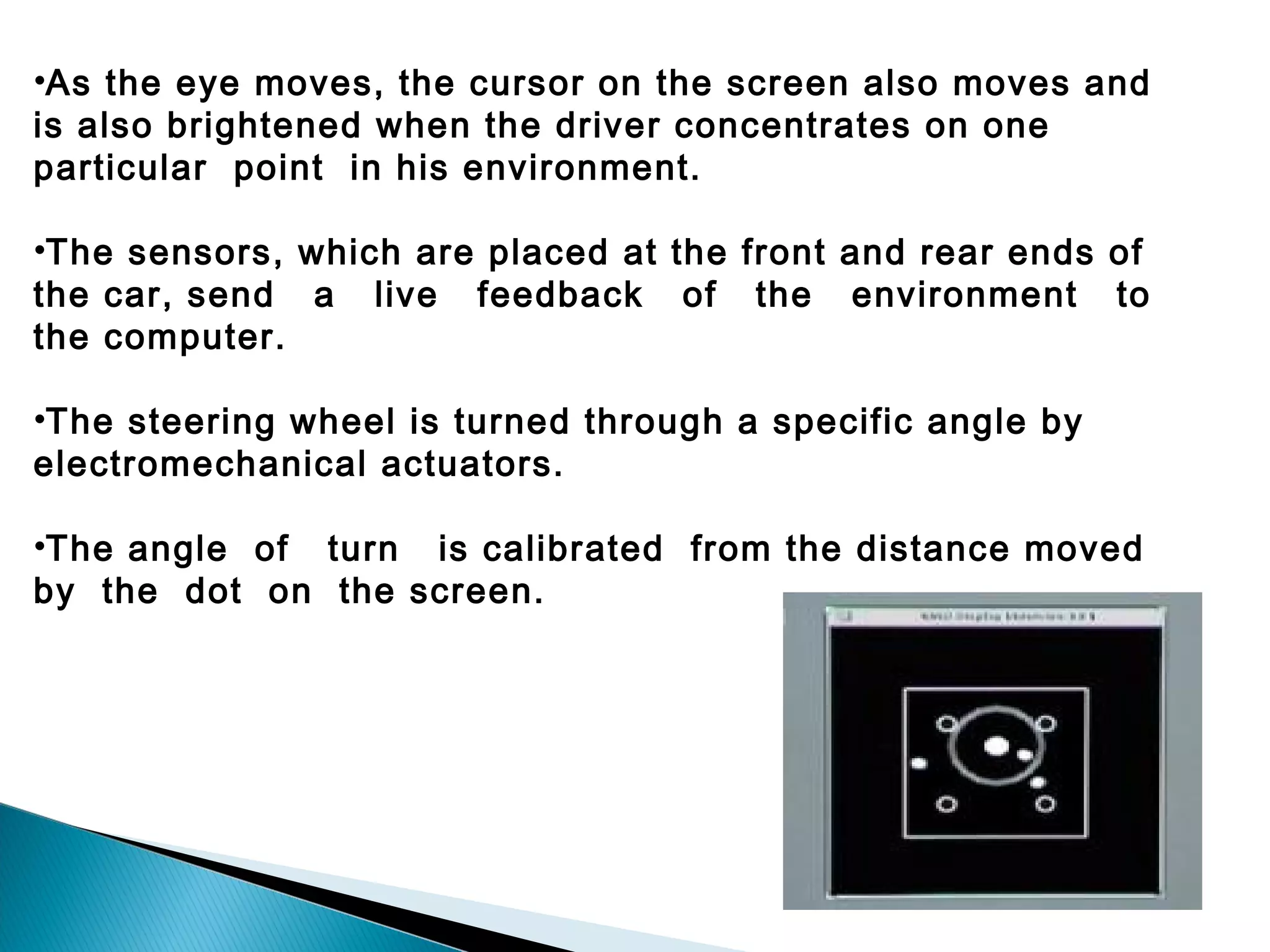
•As the eye moves, the cursor on the screen also moves and
is also brightened when the driver concentrates on one
particular point in his environment.
•The sensors, which are placed at the front and rear ends of
the car, send a live feedback of the environment to
the computer.
•The steering wheel is turned through a specific angle by
electromechanical actuators.
•The angle of turn is calibrated from the distance moved
by the dot on the screen.
AUTOMATIC SECURITY SYSTEM
The EEG of the driver is monitored continually.
When it drops less than 4 Hz then the driver is in
an unstable state.
A message is given to the driver for confirmation
and waits for sometime, to continue the drive.
A confirmed reply activates the program for
automatic drive.
CONCLUSION

 
When the above requirements are satisfied and if this car
becomes cost effective then we shall witness a
revolutionary change in the society where the
demarcation between the abled and the disabled vanishes.
Thus the integration of bioelectronics with automotive
systems is essential to develop efficient and futuristic
vehicles, which shall be witnessed soon helping the
disabled in every manner in the field of transportation.
Brain Controlled Car for Physically Challenged using Artificial Intelligence

Brain Controlled Car for Physically Challenged using Artificial Intelligence

  • 1.
    BRAIN CONTROLLED CARFOR DISABLED USING ARTIFICIAL INTELLIGENCE Ramya MK ECE Department Shirdi Sai Engineering College , Bangalore.
  • 3.
    INTRODUCTION •Brain-computer interface :Directcommunication pathway between a human or animal brain and an external device. • The driver (disabled) nears the car. •The security system of the car is activated. • Images as well as thermo graphic results of the driver are previously fed into the database of the computer. • If the video images match with the database entries security system advances to the next stage. then the • The EEG (electroencephalogram) helmet is lowered and suitably placed on the driver’s head.
  • 4.
    BIOCONTROL SYSTEM   The bio-controlsystem integrates signals from various other systems and compares them with originals in the database. It comprises of the following systems: 1.Brain-computer interface 2.Automatic security system 3.Automatic navigation system
  • 5.
    BRAIN – COMPUTERINTERFACE The Low- Frequency Asynchronous Switch Design (LF-ASD). The EEG signals are used to recognize the patterns of the brain wave. Fast Fourier Transform (FFT) and filtering techniques available in Matlab are used to analyze the EEG signals. The data can then be piped into MIDI compatible music programs.
  • 6.
    IMPORTANT FEATURES OFEEG BAND •Data can be analyzed with any standard or user. •Customized color palettes; color cycling available in 8 bit mode with Quick Draw mode. •User configurable. •Full image capture.
  • 7.
  • 8.
    •As the eyemoves, the cursor on the screen also moves and is also brightened when the driver concentrates on one particular point in his environment. •The sensors, which are placed at the front and rear ends of the car, send a live feedback of the environment to the computer. •The steering wheel is turned through a specific angle by electromechanical actuators. •The angle of turn is calibrated from the distance moved by the dot on the screen.
  • 9.
    AUTOMATIC SECURITY SYSTEM TheEEG of the driver is monitored continually. When it drops less than 4 Hz then the driver is in an unstable state. A message is given to the driver for confirmation and waits for sometime, to continue the drive. A confirmed reply activates the program for automatic drive.
  • 11.
    CONCLUSION   When the aboverequirements are satisfied and if this car becomes cost effective then we shall witness a revolutionary change in the society where the demarcation between the abled and the disabled vanishes. Thus the integration of bioelectronics with automotive systems is essential to develop efficient and futuristic vehicles, which shall be witnessed soon helping the disabled in every manner in the field of transportation.