CORYNEBACTERIUM
A Presentation By
G. Prashanth Kumar
Department of Microbiology & Parasitology,
Faculty of Medicine, International Medical & Technological University,
Dar-Es-Salaam, Tanzania.
INTRODUCTION
• Corynebacteria / “Coryneform bacteria” – a group
of non-spore forming, gram- positive bacilli, tend
to be clubbed or irregularly shaped; (coryne =
club)
• Corynebacterium diphtheriae the causative agent
of Diphtheria is the major pathogen in this group.
• Other pathogenic corynebacteria are:
• C. Ulcerans: Diphtheria like lessions.
• Corynebacteria Causing Superficial skin infections:
C. minutissimum and C. tenuis.
• Diphtheriods: Normal commensals in throat, skin
and conjunctiva.
HISTORY
• Hippocrates provided the first clinical description
of diphtheria in the 4th century B.C.
• Bretonneu (1821), a French army surgeon,
described the unique clinical characteristics of
the disease, and used the term ‘dipht`erie’ to
signify the tough leathery pseudomembrane that
occurs in oropharynx and some times in
nasopharynx;
(diphtheros = leather)
HISTORY
• The bacterium that caused diphtheria was first
described by Klebs in 1883, and was cultivated by
Loeffler in 1884, who applied Koch's postulates and
properly identified Corynebacterium diphtheriae as
the agent of the disease.
• In 1884, Loeffler concluded that C. diphtheriae
produced a soluble toxin, and thereby provided the
first description of a bacterial exotoxin.
• Roux and Yersin (1888) discovered the diphtheria
exotoxin and established its pathogenic effects.
• The antitoxin was described by von Behring(1890).
CORYNEBACTERIUM DIPHTHERIAE
MORPHOLOGY
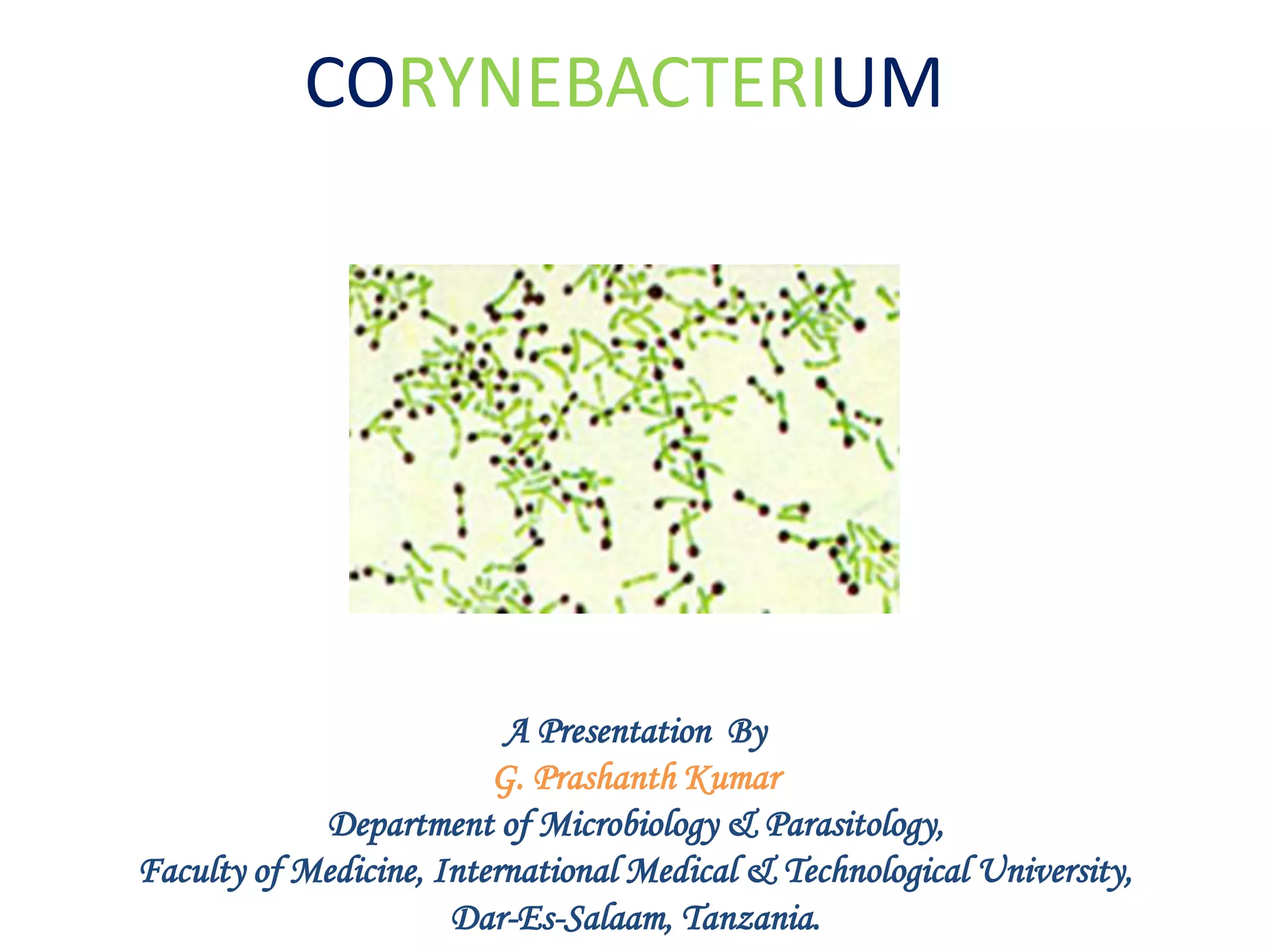
• Slender Gram-positive rods, pleomorphic; easily
decolousised;
• 0.6-0.8μ diameter and 3-6 μ length;
• Irregular swelling at one or both ends (‘club
shaped’);
• Non-capsulate, Non-sporing and nonmotile
• Granules containing polymetaphosphate are seen in
the cells;
• Take up bluish purple color against lightly stained
cytoplasm, when stained with Loeffler’s Methylene
Blue, and hence called ‘Metachromatic granules’;
• Also called, ‘volutin granules’ or ‘Babes Ernst
granules’;
• They are often situated at poles- ‘polar bodies’
MORPHOLOGY
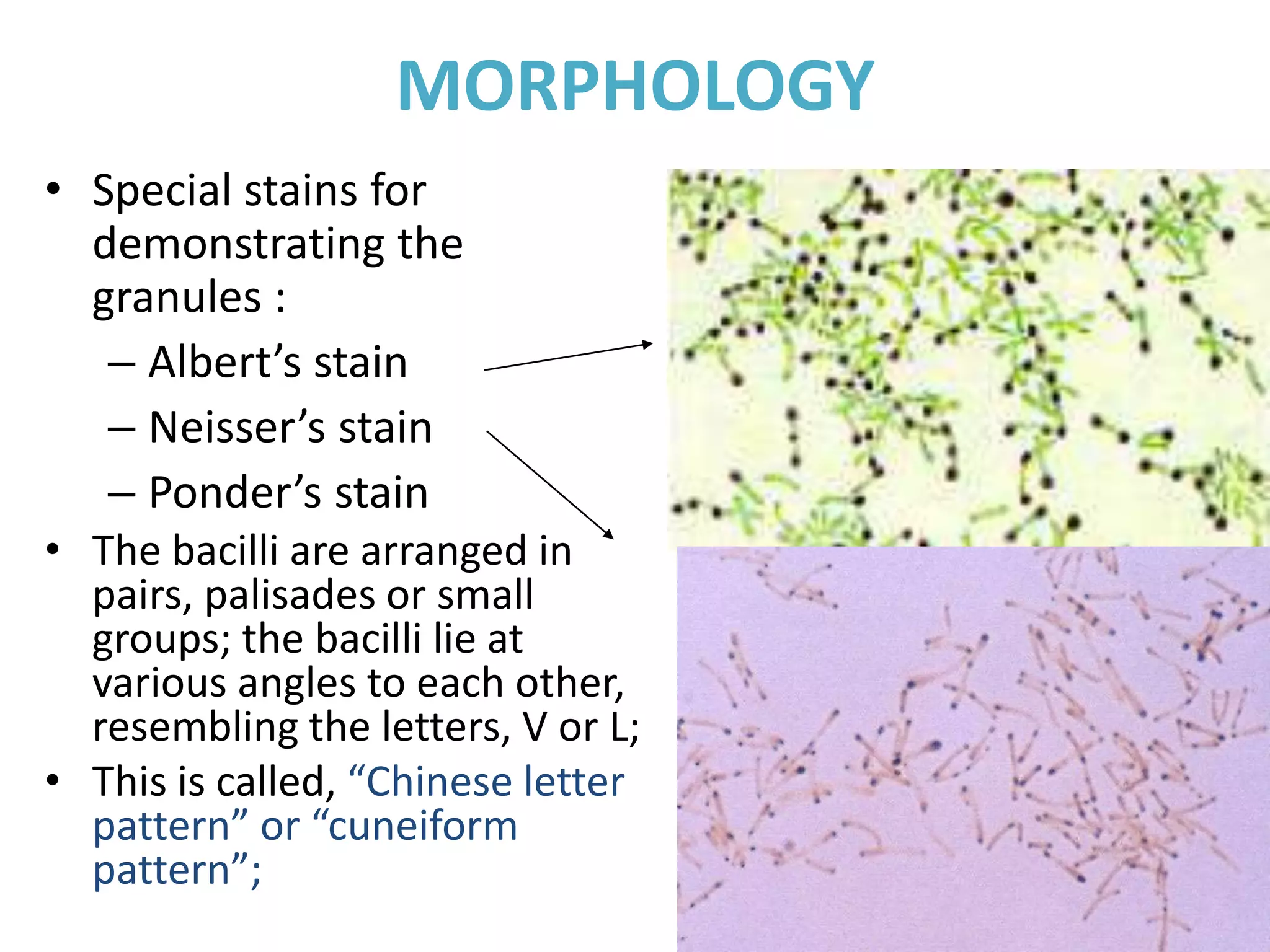
• Special stains for
demonstrating the
granules :
– Albert’s stain
– Neisser’s stain
– Ponder’s stain
• The bacilli are arranged in
pairs, palisades or small
groups; the bacilli lie at
various angles to each other,
resembling the letters, V or L;
• This is called, “Chinese letter
pattern” or “cuneiform
pattern”;
CULTURAL CHARACTERISTICS
• Aerobe and facultative anaerobe;
• Optimum temperature is 370C
• Growth scanty on ordinary media;
• Enrichment with: blood, serum or egg is
necessary for good growth;
• Potassium tellurite(0.04%) acts as a ‘selective
agent’, as it inhibits growth of most oral
commensals and retards the growth of Candida
albicans and S.aureus;
MEDIA FOR CULTIVATION
• Blood agar
• Loeffler’s serum slope
• Tellurite blood agar
• Hoyle’s tellurite lysed-blood agar
• Tinsdale’s medium (cystine added to tellurite
containing agar)
COLONY CHARACTERISTICS
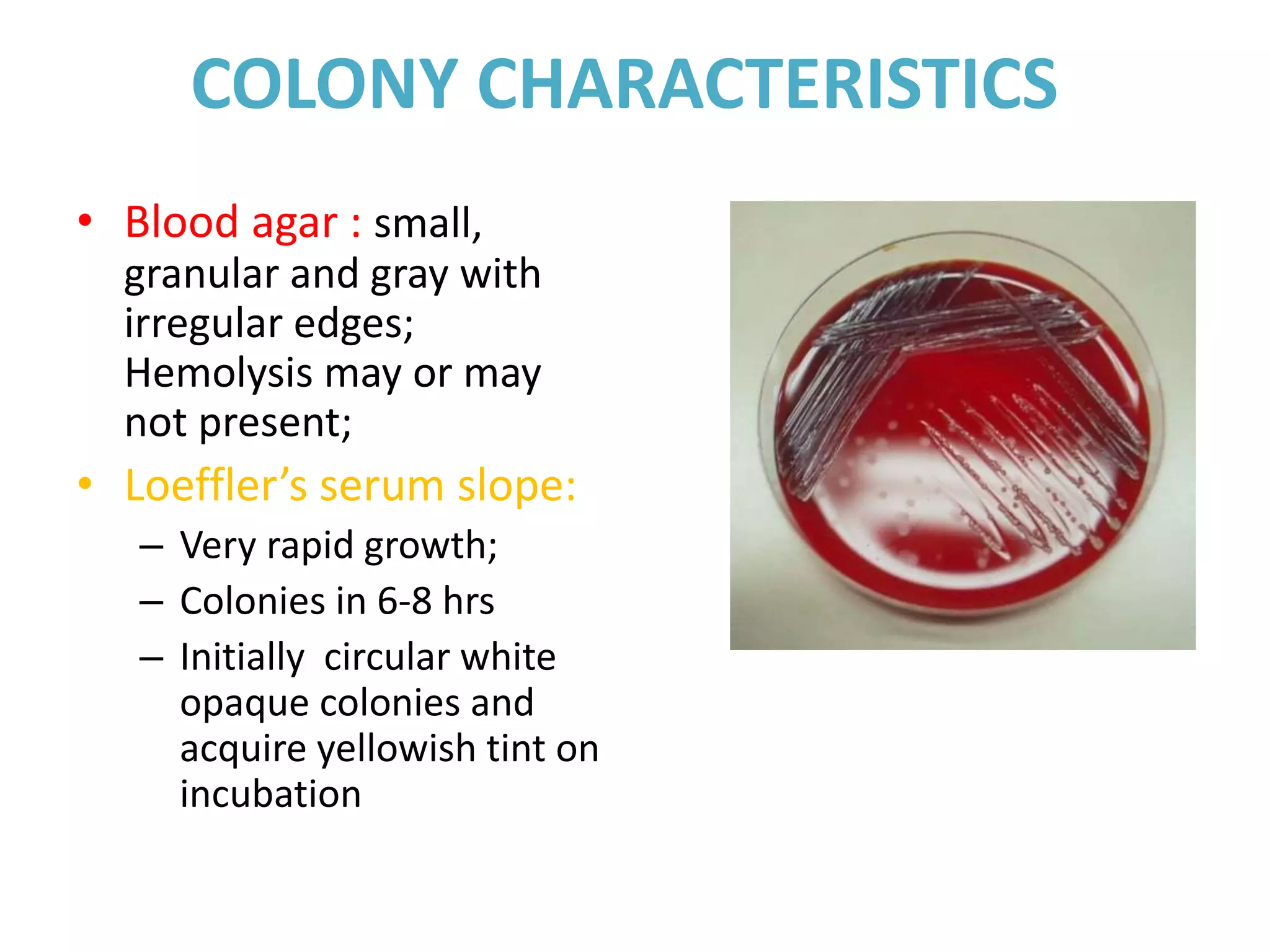
• Blood agar : small,
granular and gray with
irregular edges;
Hemolysis may or may
not present;
• Loeffler’s serum slope:
– Very rapid growth;
– Colonies in 6-8 hrs
– Initially circular white
opaque colonies and
acquire yellowish tint on
incubation
COLONY CHARACTERISTICS
• Tellurite blood agar:
– Growth slow; colonies seen after 48 hrs;
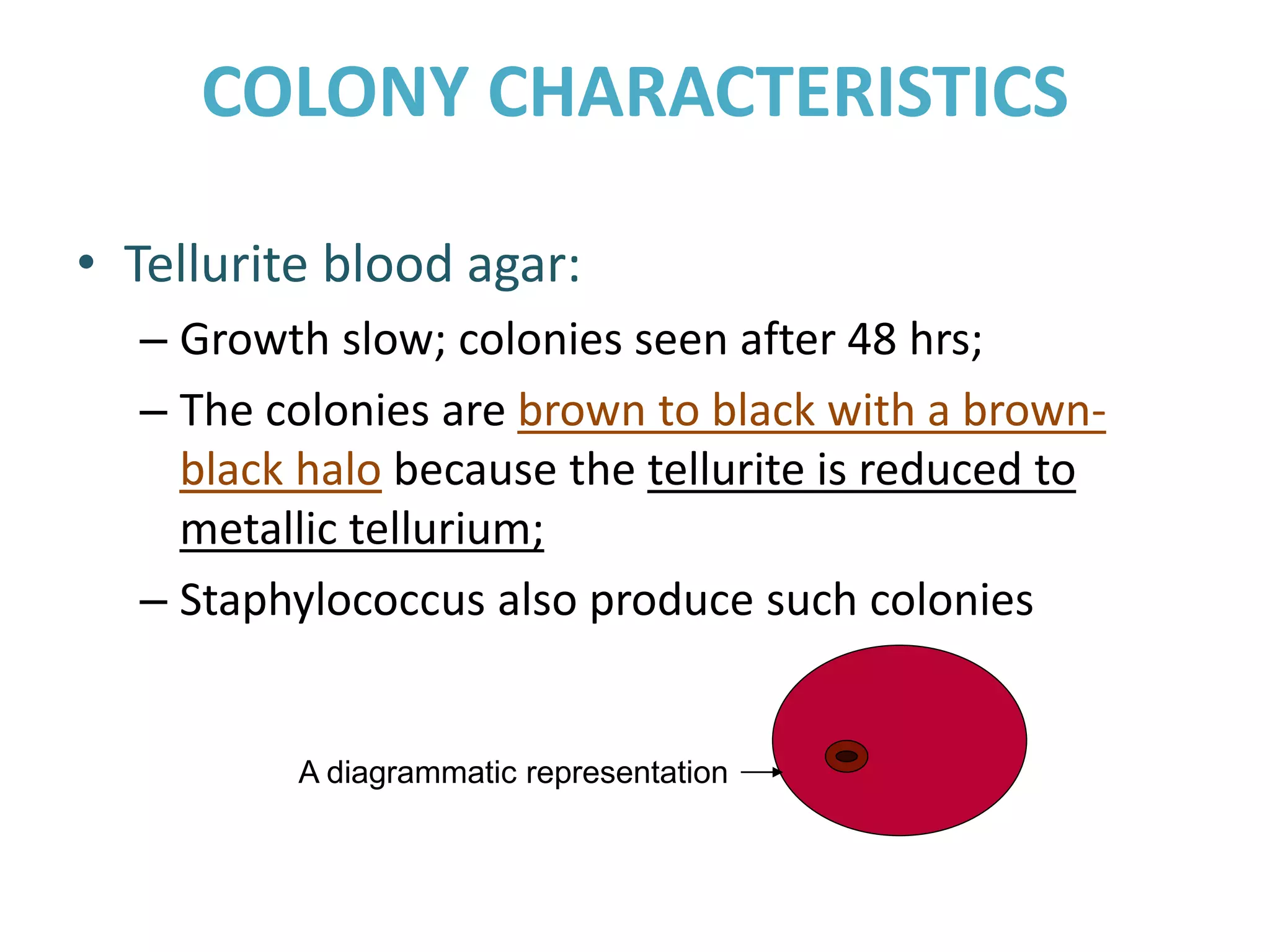
– The colonies are brown to black with a brown-
black halo because the tellurite is reduced to
metallic tellurium;
– Staphylococcus also produce such colonies
A diagrammatic representation
COLONY CHARACTERISTICS
• Tinsdale’s medium (also
contain cystine in
addition to tellurite):
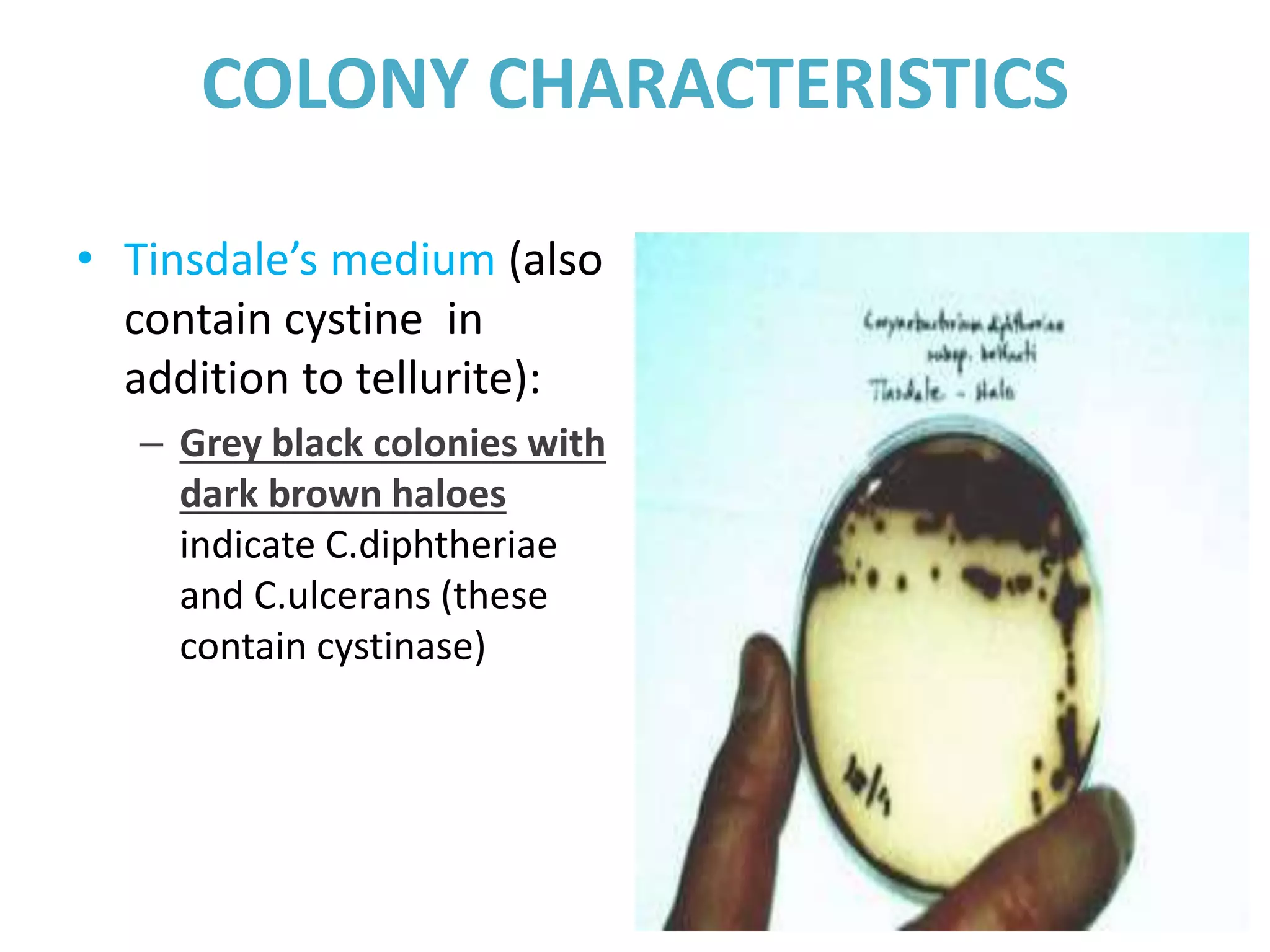
– Grey black colonies with
dark brown haloes
indicate C.diphtheriae
and C.ulcerans (these
contain cystinase)
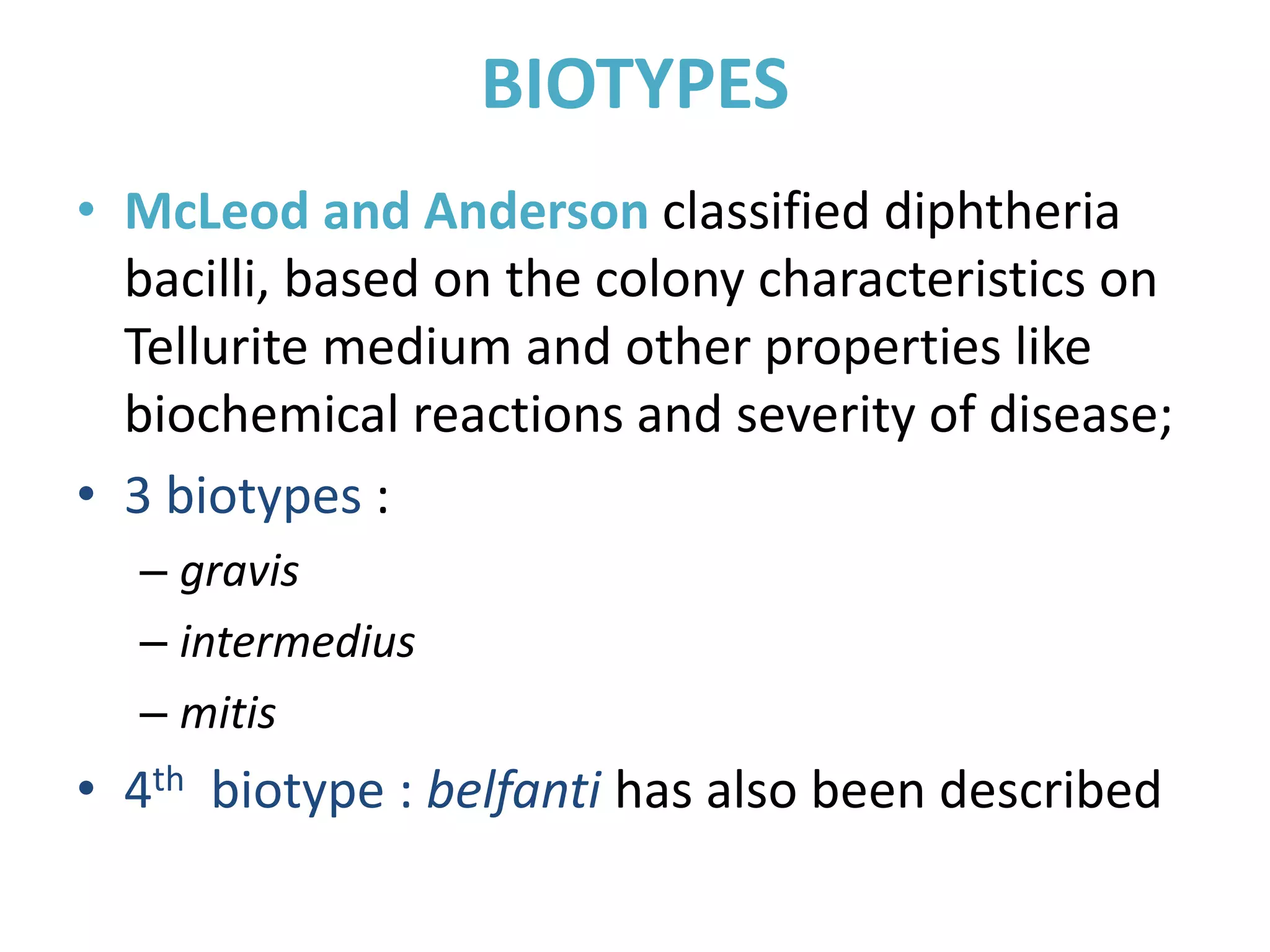
BIOTYPES
• McLeod and Anderson classified diphtheria
bacilli, based on the colony characteristics on
Tellurite medium and other properties like
biochemical reactions and severity of disease;
• 3 biotypes :
– gravis
– intermedius
– mitis
• 4th biotype : belfanti has also been described
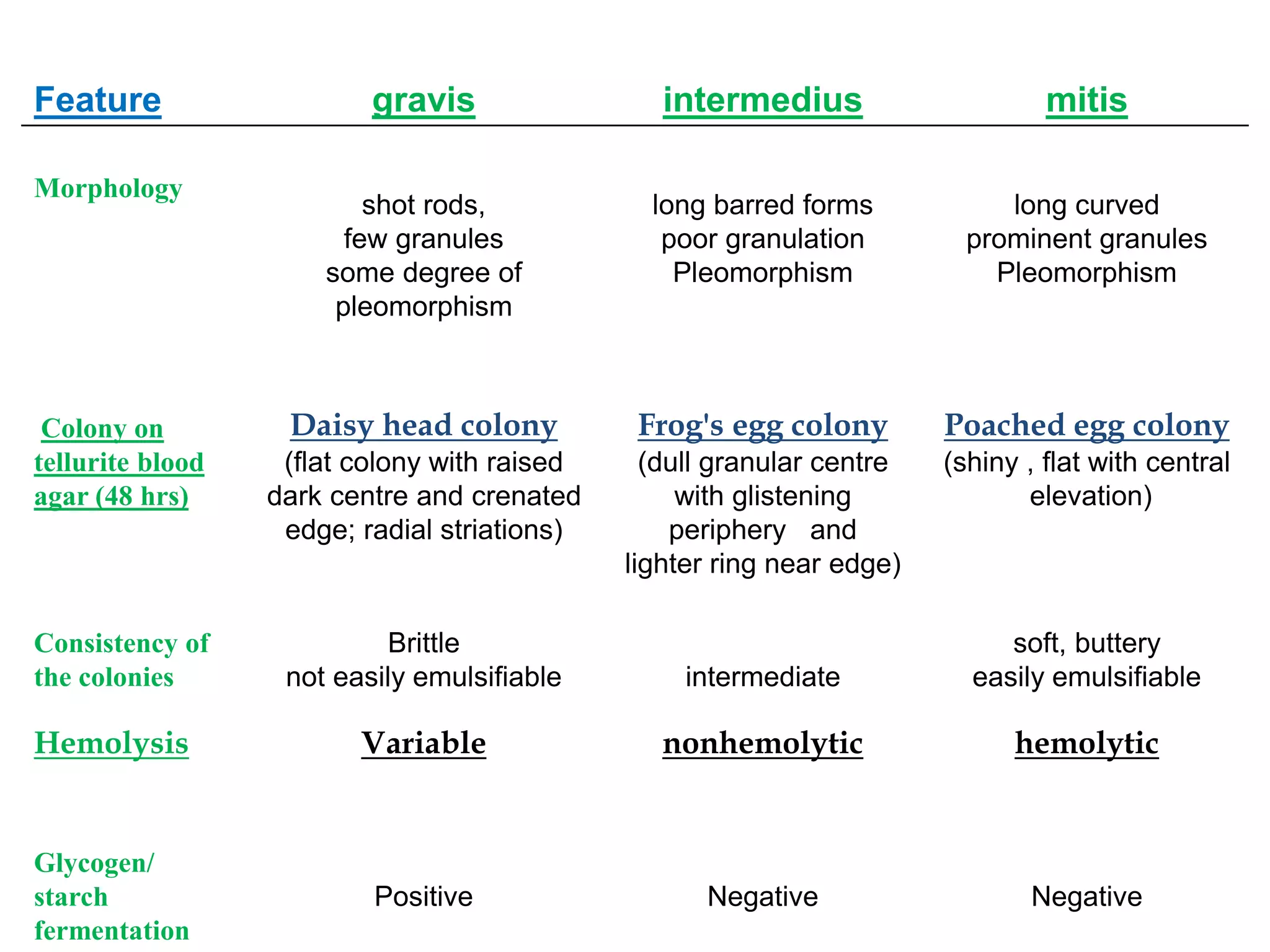
Feature gravis intermedius mitis
Morphology
shot rods,
few granules
some degree of
pleomorphism
long barred forms
poor granulation
Pleomorphism
long curved
prominent granules
Pleomorphism
Colony on
tellurite blood
agar (48 hrs)
Daisy head colony
(flat colony with raised
dark centre and crenated
edge; radial striations)
Frog's egg colony
(dull granular centre
with glistening
periphery and
lighter ring near edge)
Poached egg colony
(shiny , flat with central
elevation)
Consistency of
the colonies
Brittle
not easily emulsifiable intermediate
soft, buttery
easily emulsifiable
Hemolysis Variable nonhemolytic hemolytic
Glycogen/
starch
fermentation
Positive Negative Negative
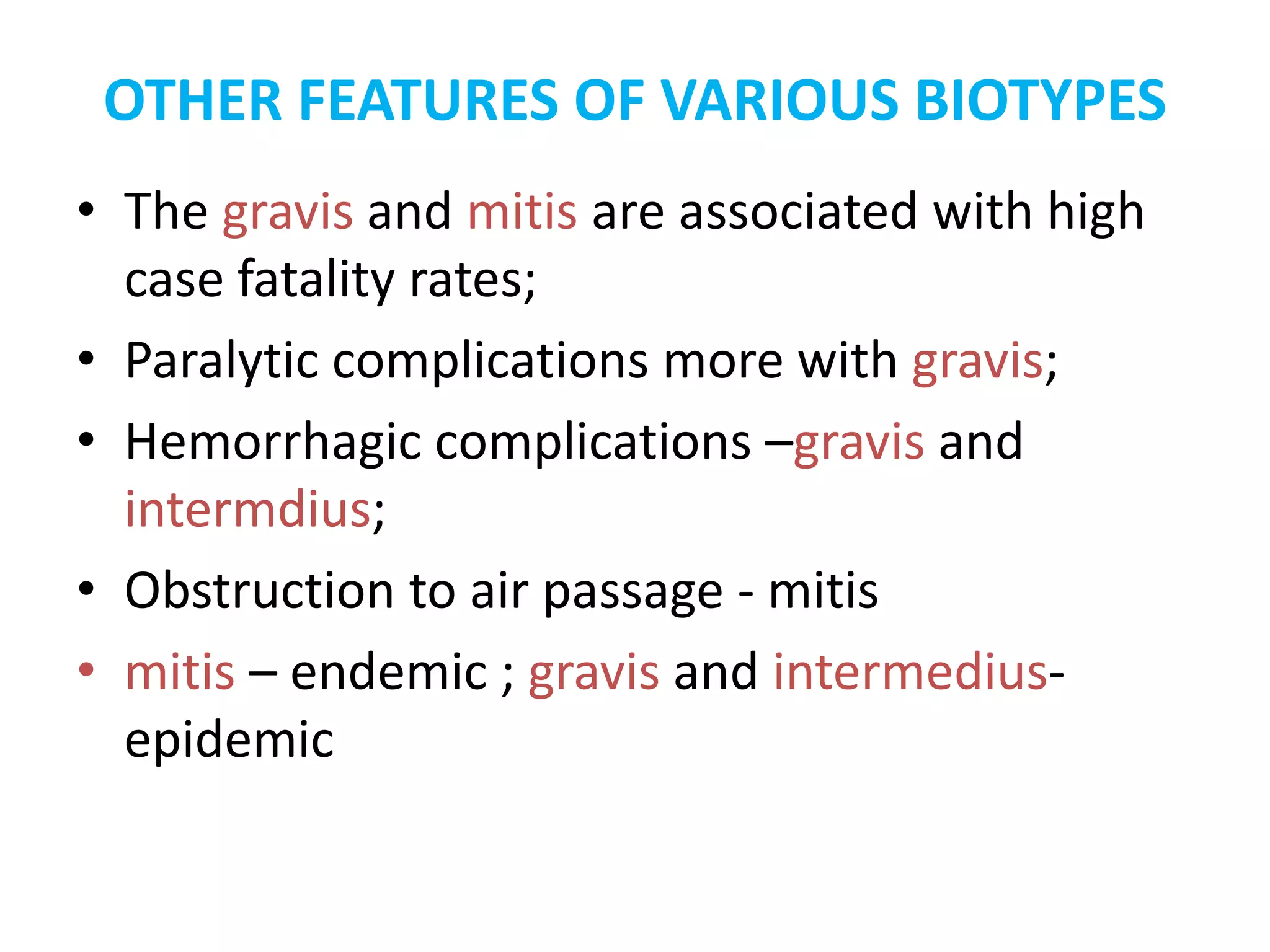
OTHER FEATURES OF VARIOUS BIOTYPES
• The gravis and mitis are associated with high
case fatality rates;
• Paralytic complications more with gravis;
• Hemorrhagic complications –gravis and
intermdius;
• Obstruction to air passage - mitis
• mitis – endemic ; gravis and intermedius-
epidemic
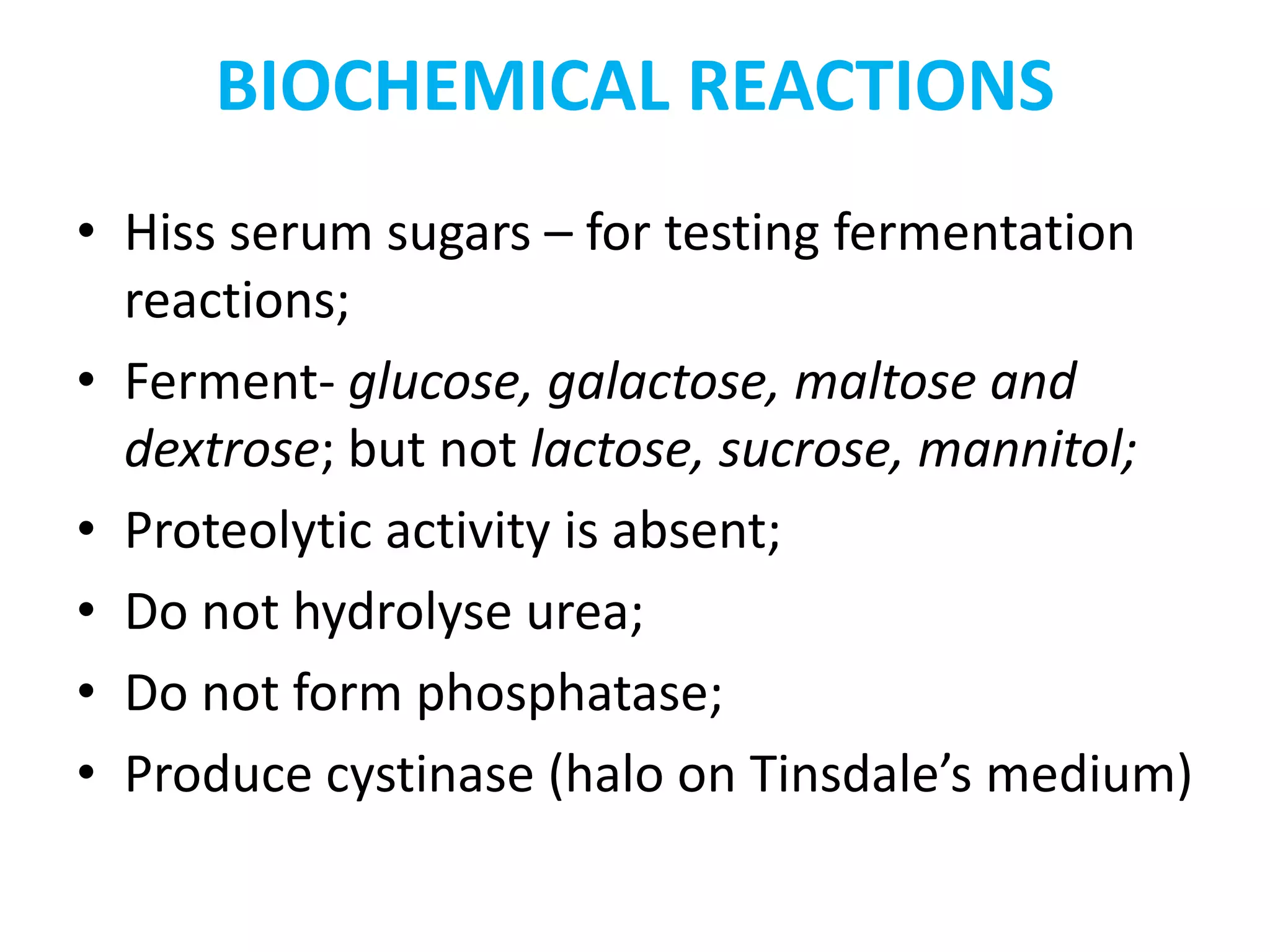
BIOCHEMICAL REACTIONS
• Hiss serum sugars – for testing fermentation
reactions;
• Ferment- glucose, galactose, maltose and
dextrose; but not lactose, sucrose, mannitol;
• Proteolytic activity is absent;
• Do not hydrolyse urea;
• Do not form phosphatase;
• Produce cystinase (halo on Tinsdale’s medium)
RESISTANCE
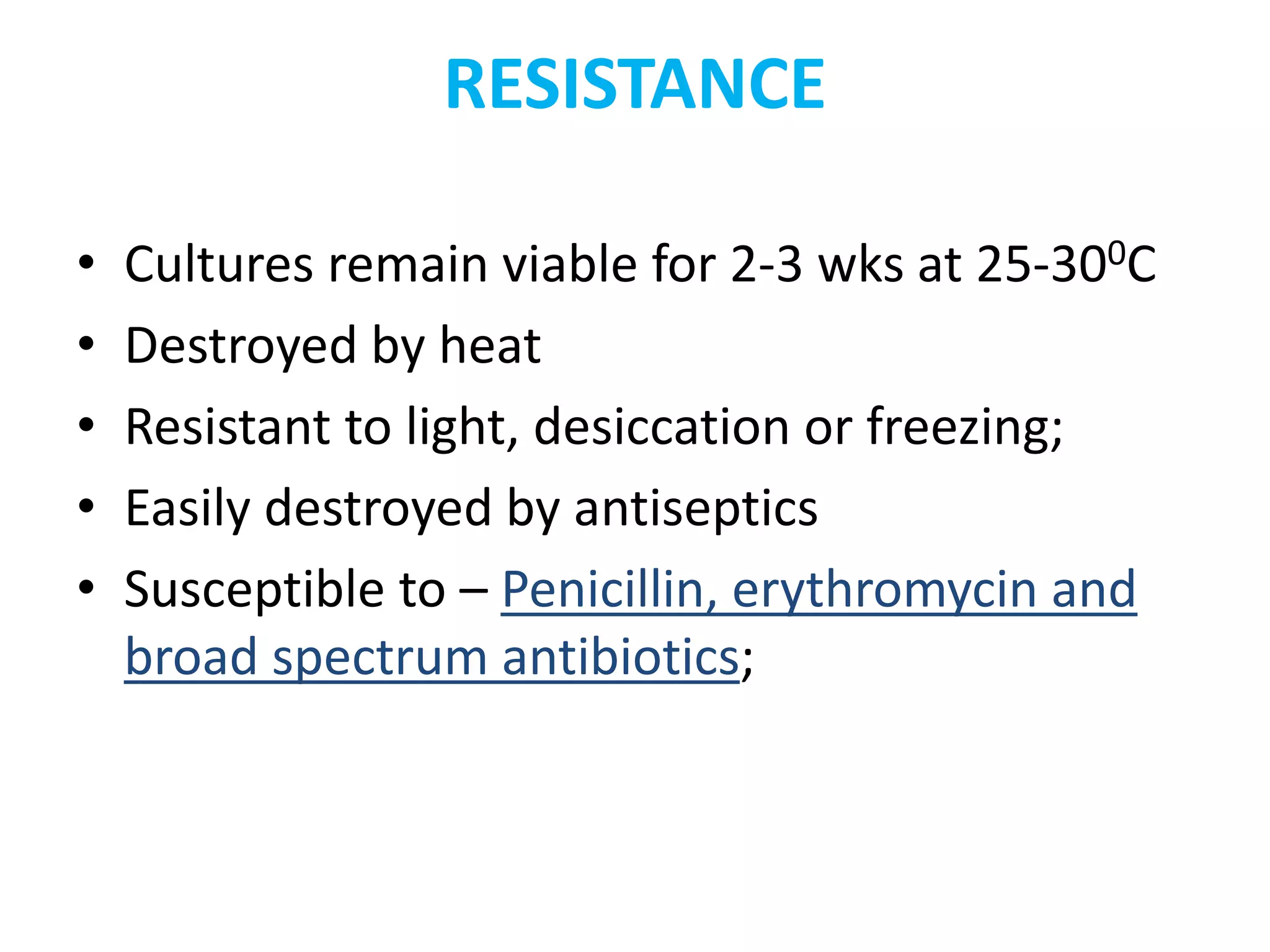
• Cultures remain viable for 2-3 wks at 25-300C
• Destroyed by heat
• Resistant to light, desiccation or freezing;
• Easily destroyed by antiseptics
• Susceptible to – Penicillin, erythromycin and
broad spectrum antibiotics;
ANTIGENIC STRUCTURE AND TYPING
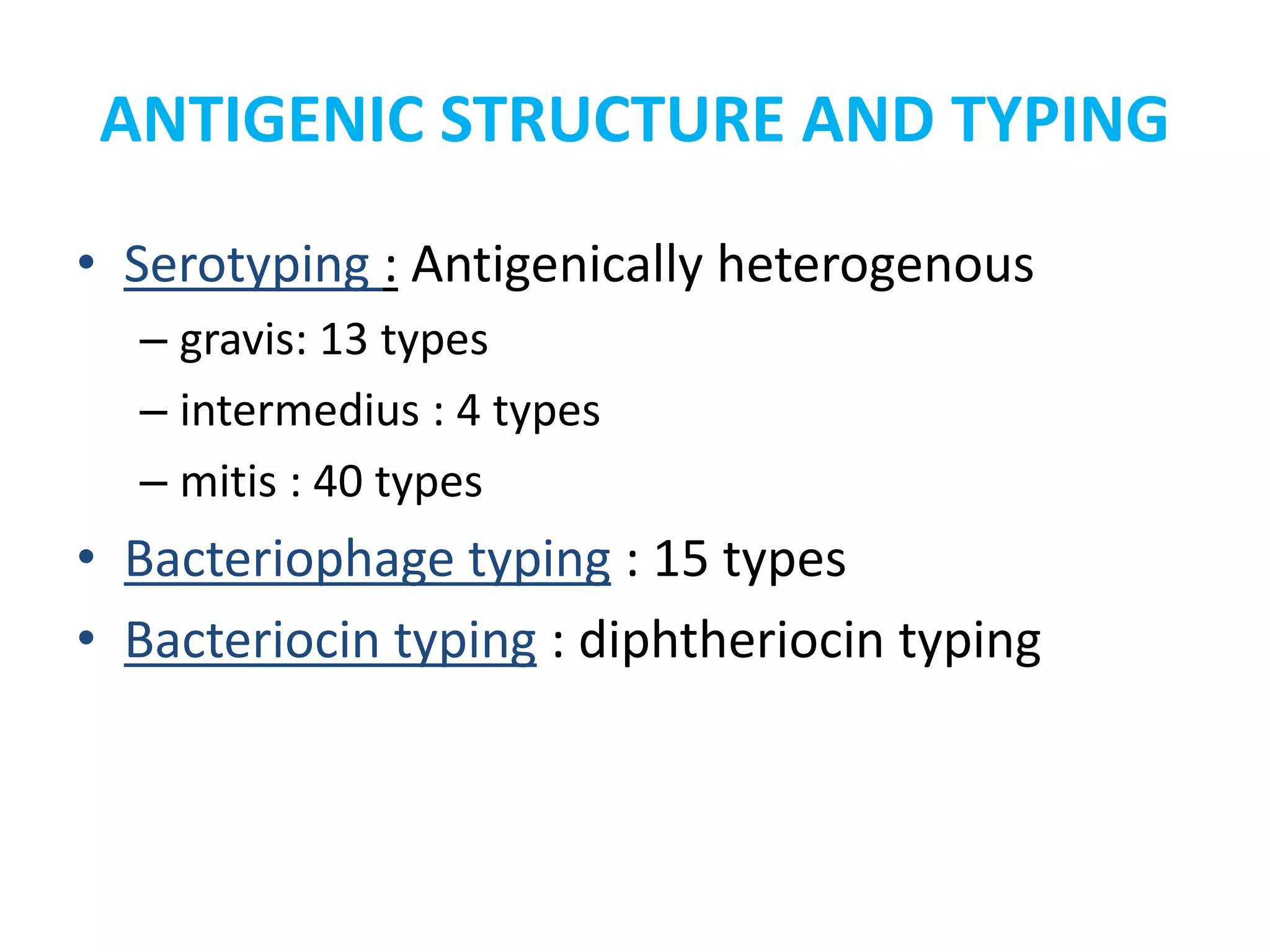
• Serotyping : Antigenically heterogenous
– gravis: 13 types
– intermedius : 4 types
– mitis : 40 types
• Bacteriophage typing : 15 types
• Bacteriocin typing : diphtheriocin typing
VIRULENCE FACTORS
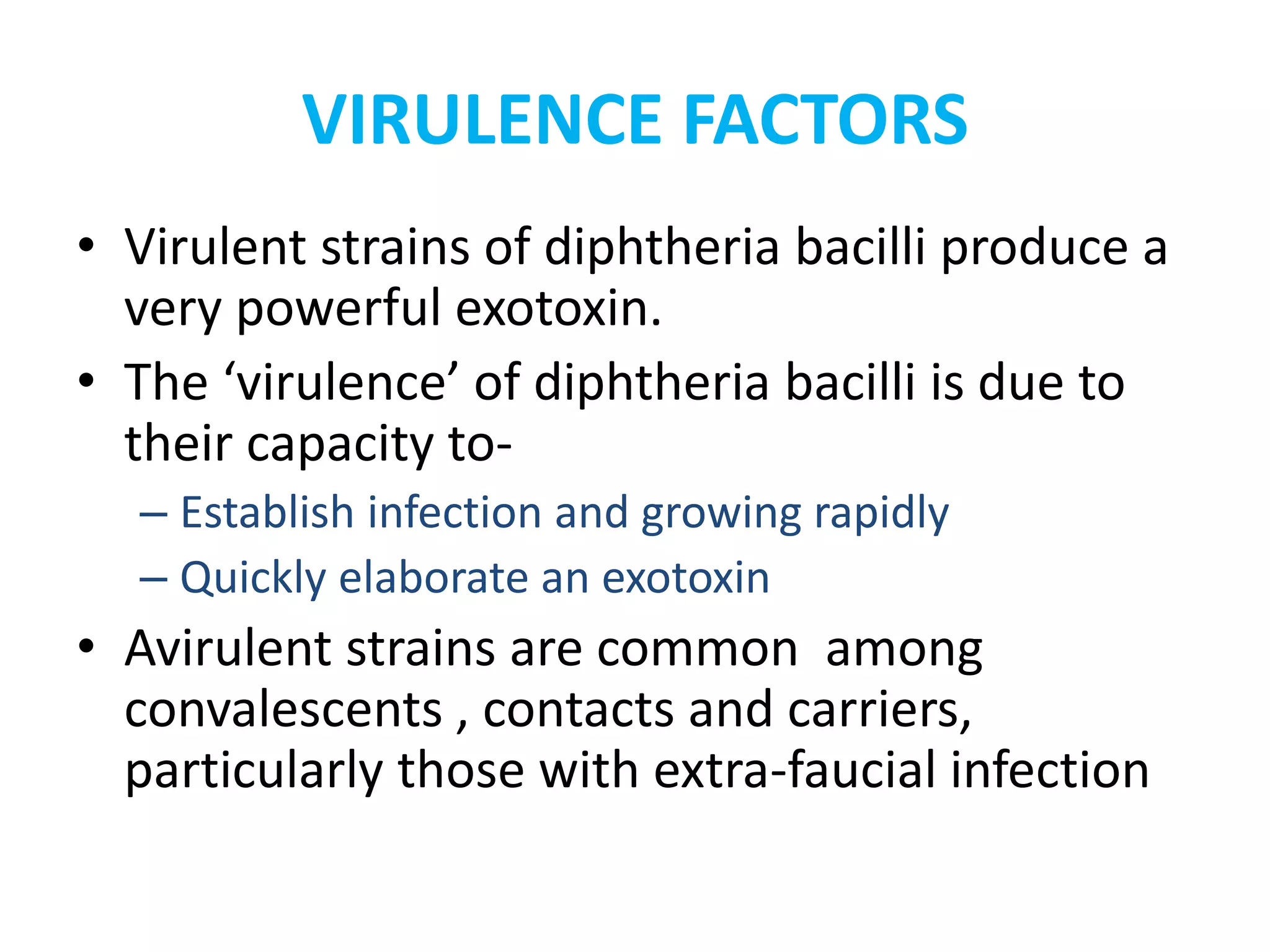
• Virulent strains of diphtheria bacilli produce a
very powerful exotoxin.
• The ‘virulence’ of diphtheria bacilli is due to
their capacity to-
– Establish infection and growing rapidly
– Quickly elaborate an exotoxin
• Avirulent strains are common among
convalescents , contacts and carriers,
particularly those with extra-faucial infection
DIPHTHERIA TOXIN
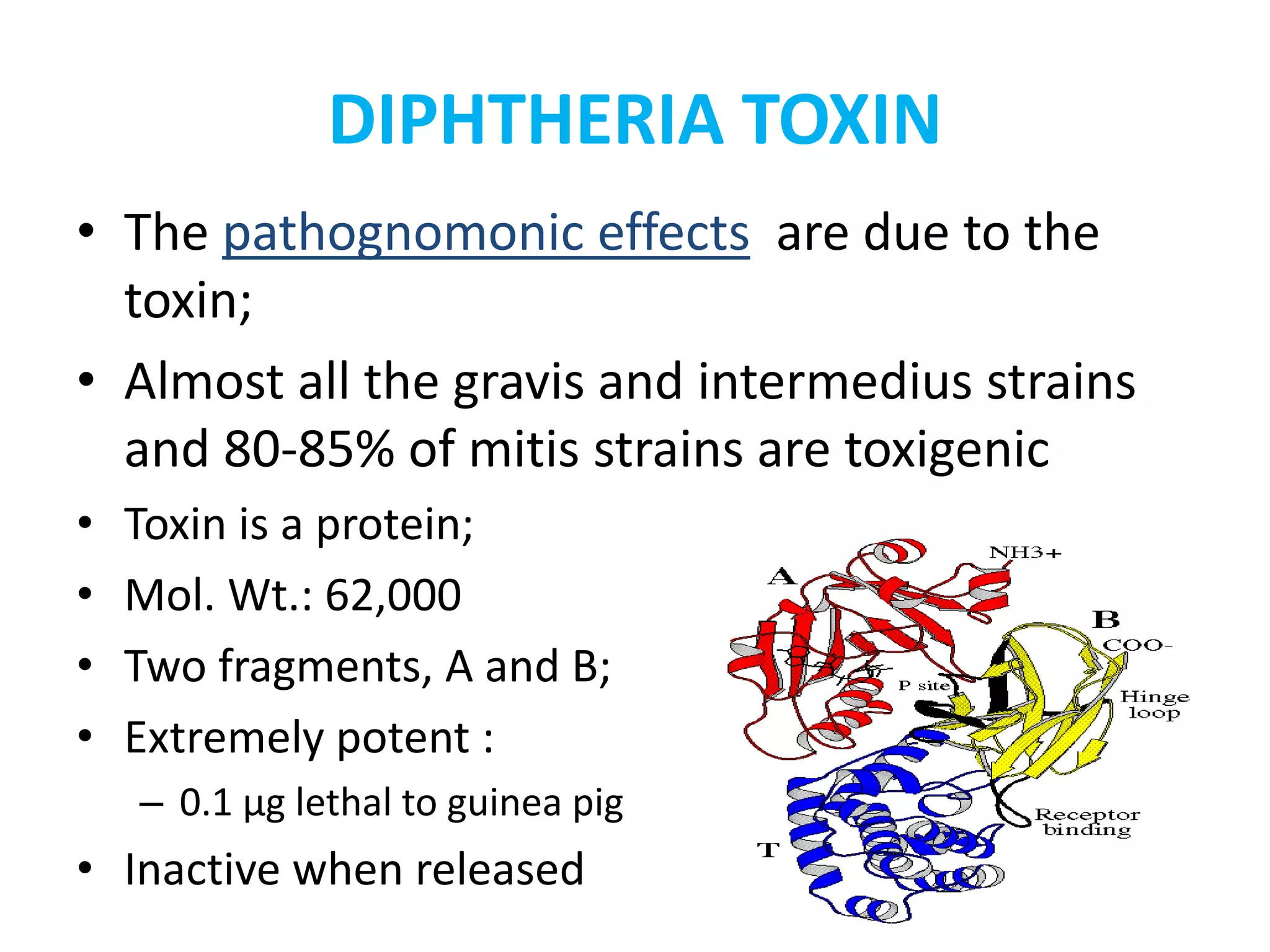
• The pathognomonic effects are due to the
toxin;
• Almost all the gravis and intermedius strains
and 80-85% of mitis strains are toxigenic
• Toxin is a protein;
• Mol. Wt.: 62,000
• Two fragments, A and B;
• Extremely potent :
– 0.1 μg lethal to guinea pig
• Inactive when released
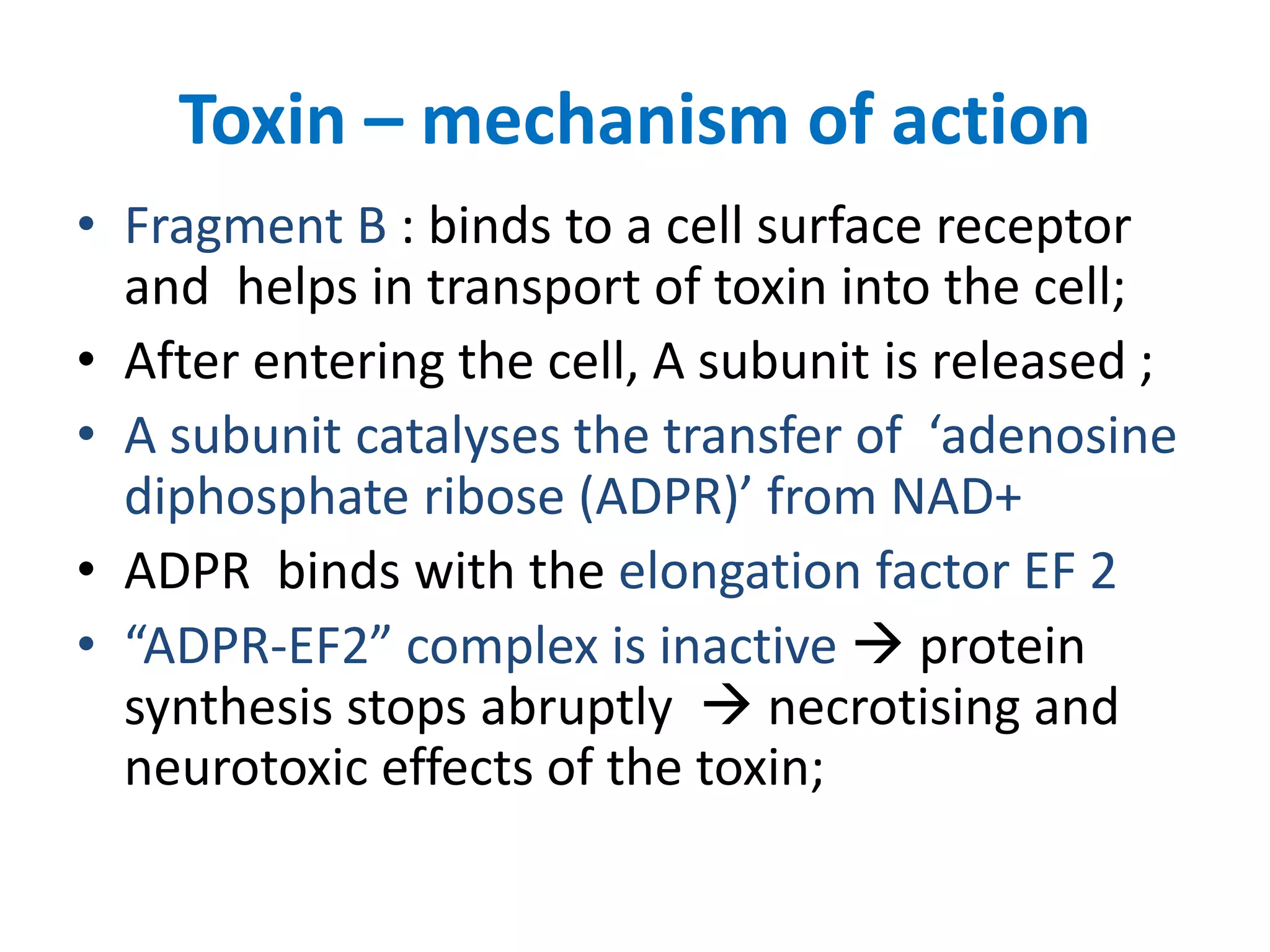
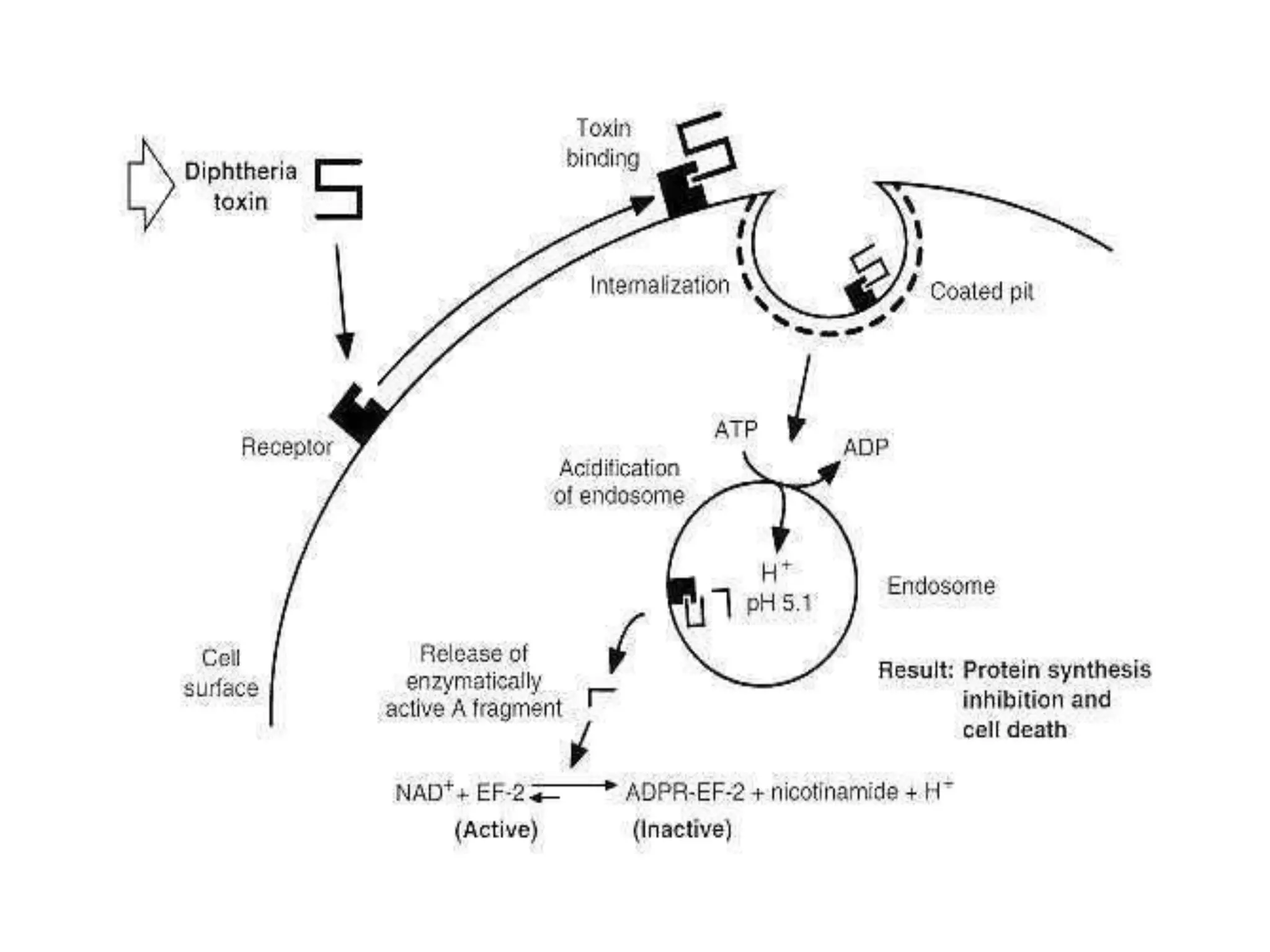
Toxin – mechanism of action
• Fragment B : binds to a cell surface receptor
and helps in transport of toxin into the cell;
• After entering the cell, A subunit is released ;
• A subunit catalyses the transfer of ‘adenosine
diphosphate ribose (ADPR)’ from NAD+
• ADPR binds with the elongation factor EF 2
• “ADPR-EF2” complex is inactive  protein
synthesis stops abruptly  necrotising and
neurotoxic effects of the toxin;
PATHOGENICITY
• Commonest site of infection: Upper respiratory
tract (fauces, larynx,nose)
• Ocassionally, other cutaneous or
mucocutaneous areas ( otitic/conjunctival/
genitovulval/vaginal/ prepucial/skin)
• Faucial diphtheria is the commonest type;
• Sore throat is frequently the presenting
symptom;
PATHOLOGY
• After infection, the bacilli multiply on the
mucous membrane or skin abrasion;
• The toxigenic strains start producing toxin;
• Diphtheria is a ‘toxemia’;
• The bacteria confine to the site of entry but
the exotoxin is absorbed into the mucus
membrane and causes destruction of
epithelium and a superficial inflammatory
response;
PATHOLOGY
• The toxin causes local necrotic changes;
• The resulting fibrinous exudate, together with
the epithelial cells, leucocytes, erythrocytes
and bacteria constitute : “pseudomembrane”
• Any effort to remove it will tear off capillaries
beneath it and cause bleeding;
• Mechanical complications are due to
pseudomembrane and systemic effects are
due to the toxin;
Toxin-systemic absorption
• The bacilli continue to produce the toxin;
• The toxin is absorbed systemically and damages
heart muscle, liver, adrenals etc.;
• The toxin also cause nerve damage, especially of
soft palate(palatine) and eye muscles (ciliary);
• Toxin absorption is negligible in case of skin
infection with toxigenic strains;
• Nontoxigenic strains can also produce local
disease but systemic effects are absent;
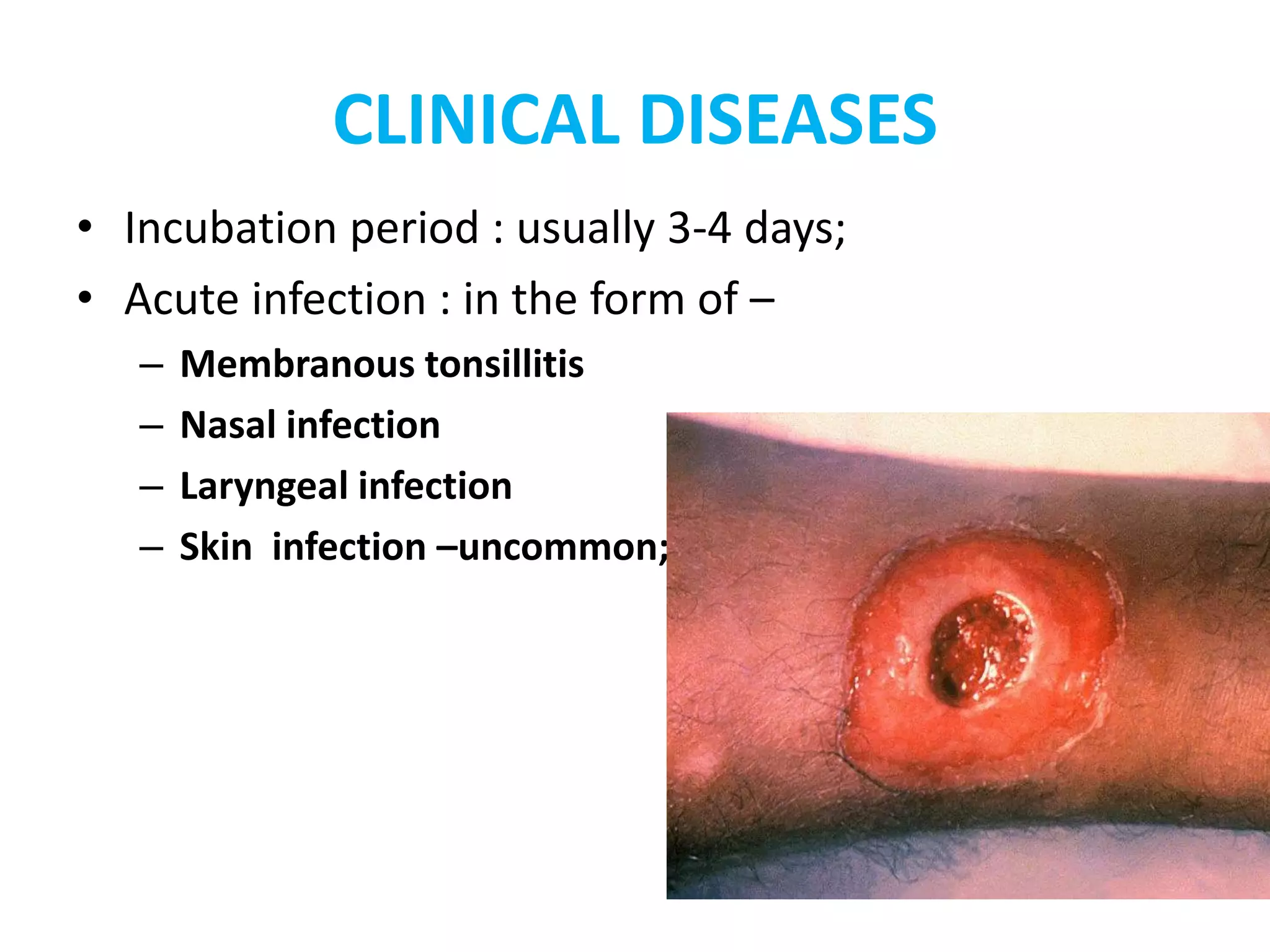
CLINICAL DISEASES
• Incubation period : usually 3-4 days;
• Acute infection : in the form of –
– Membranous tonsillitis
– Nasal infection
– Laryngeal infection
– Skin infection –uncommon;
CLINICAL DISEASES
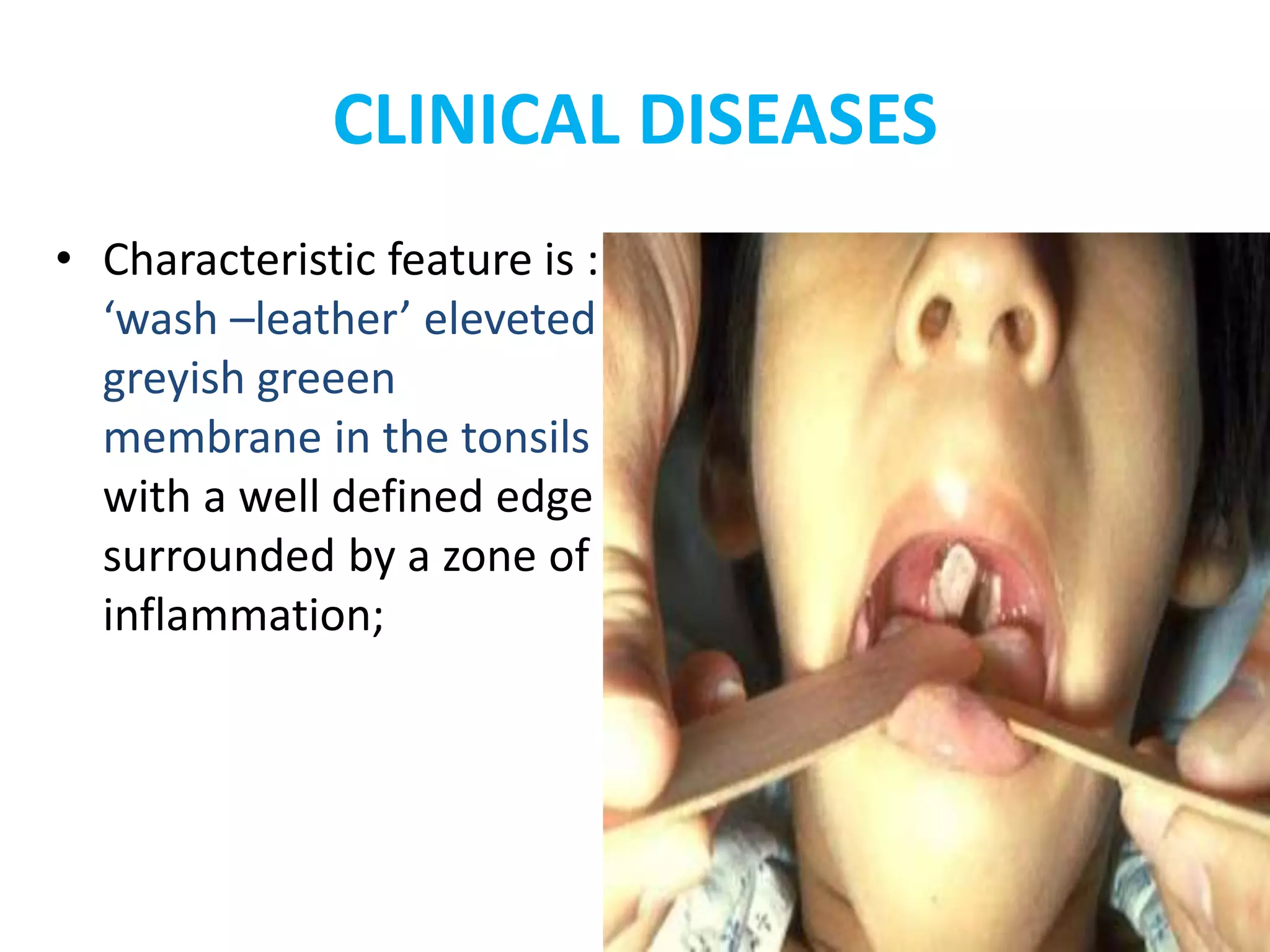
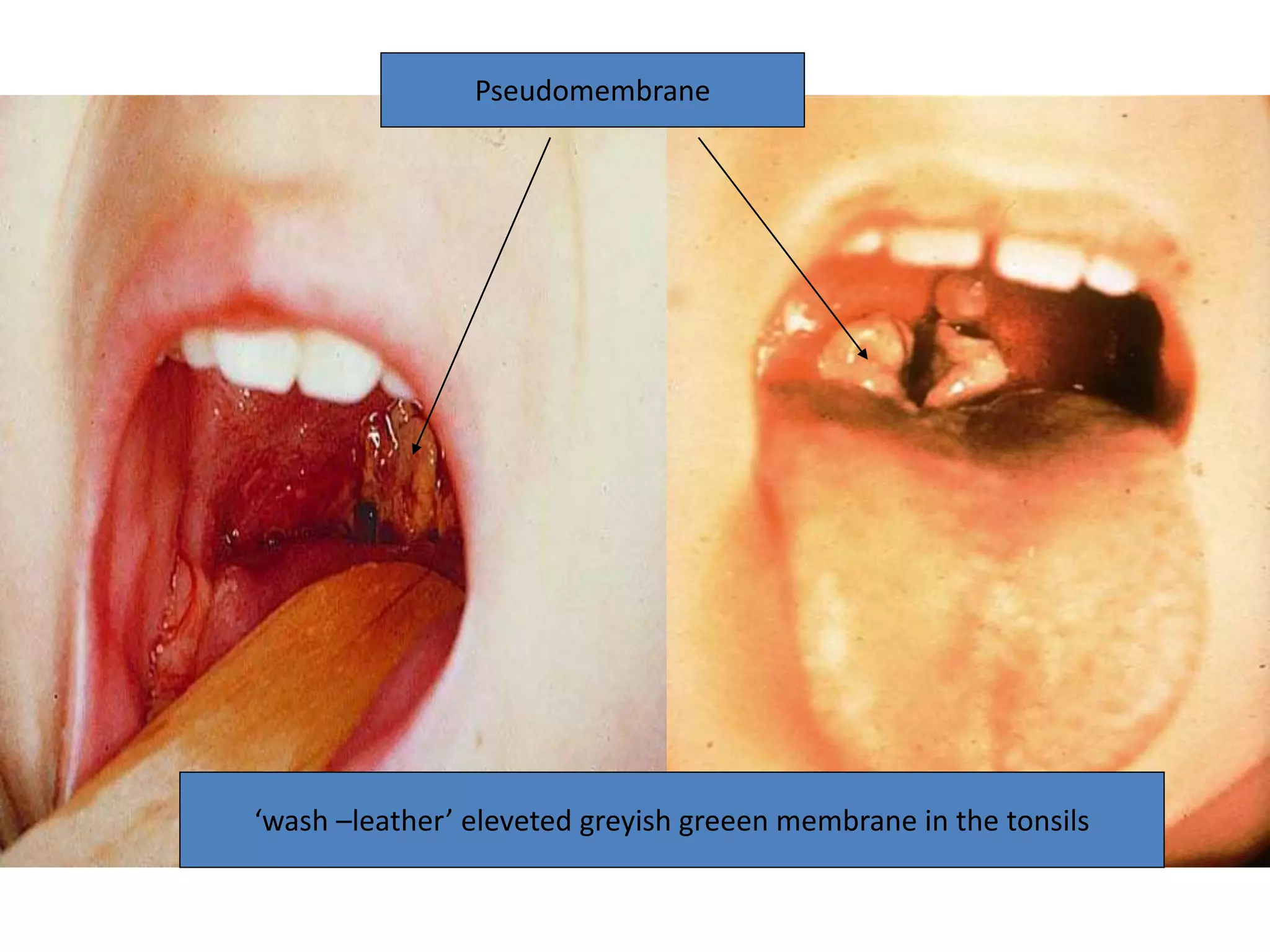
• Characteristic feature is :
‘wash –leather’ eleveted
greyish greeen
membrane in the tonsils
with a well defined edge
surrounded by a zone of
inflammation;
‘wash –leather’ eleveted greyish greeen membrane in the tonsils
Pseudomembrane
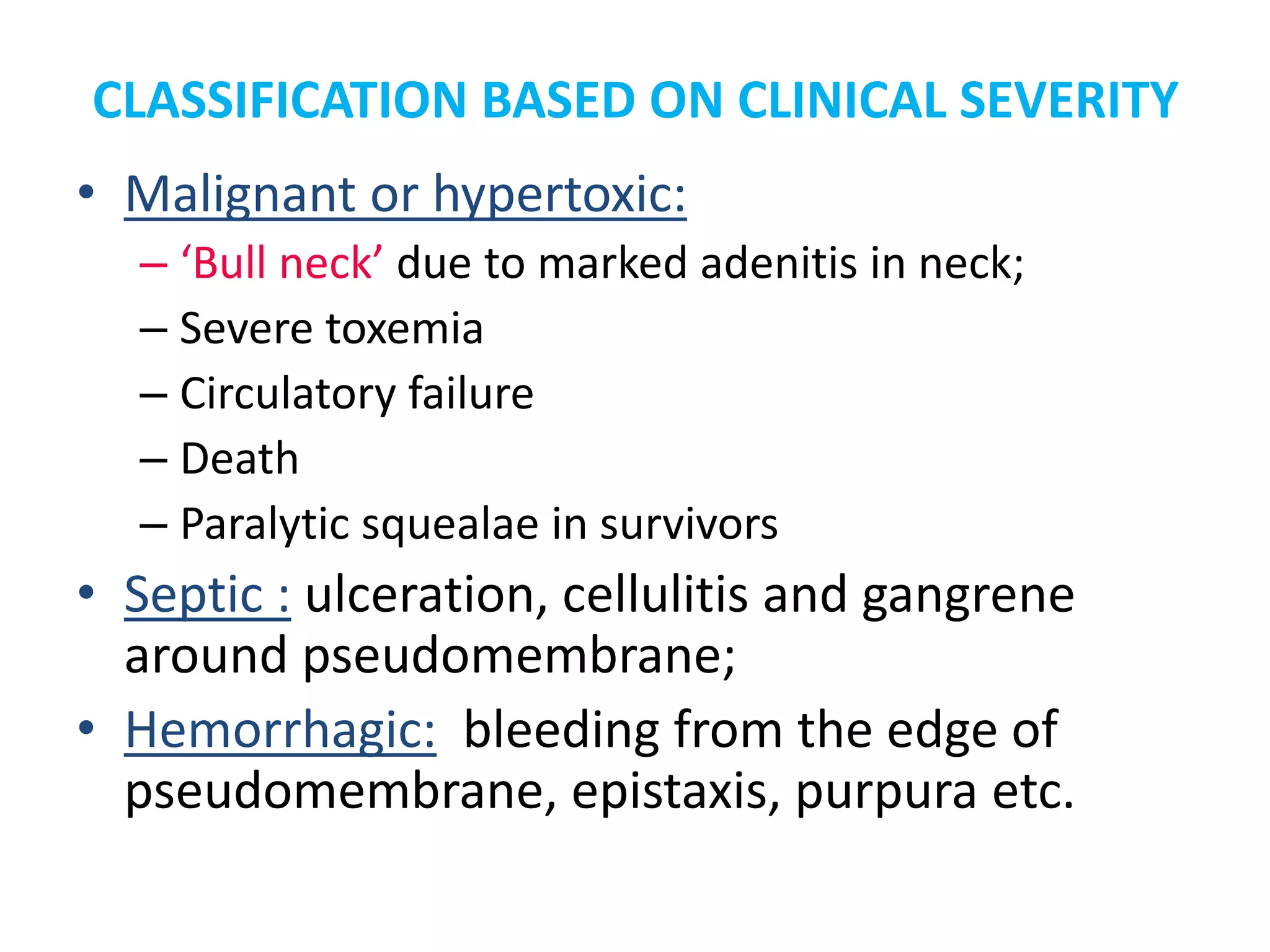
CLASSIFICATION BASED ON CLINICAL SEVERITY
• Malignant or hypertoxic:
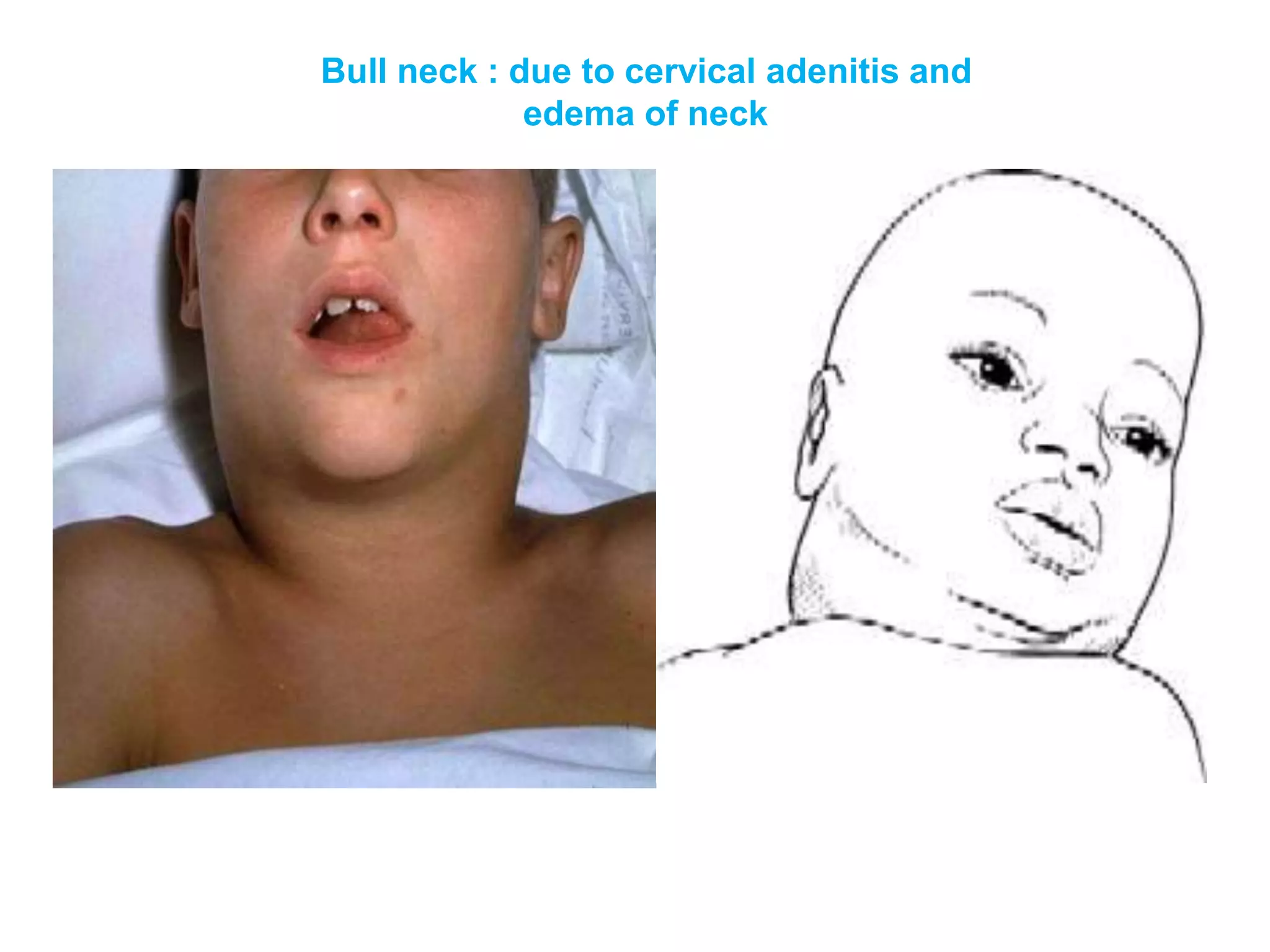
– ‘Bull neck’ due to marked adenitis in neck;
– Severe toxemia
– Circulatory failure
– Death
– Paralytic squealae in survivors
• Septic : ulceration, cellulitis and gangrene
around pseudomembrane;
• Hemorrhagic: bleeding from the edge of
pseudomembrane, epistaxis, purpura etc.
Bull neck : due to cervical adenitis and
edema of neck
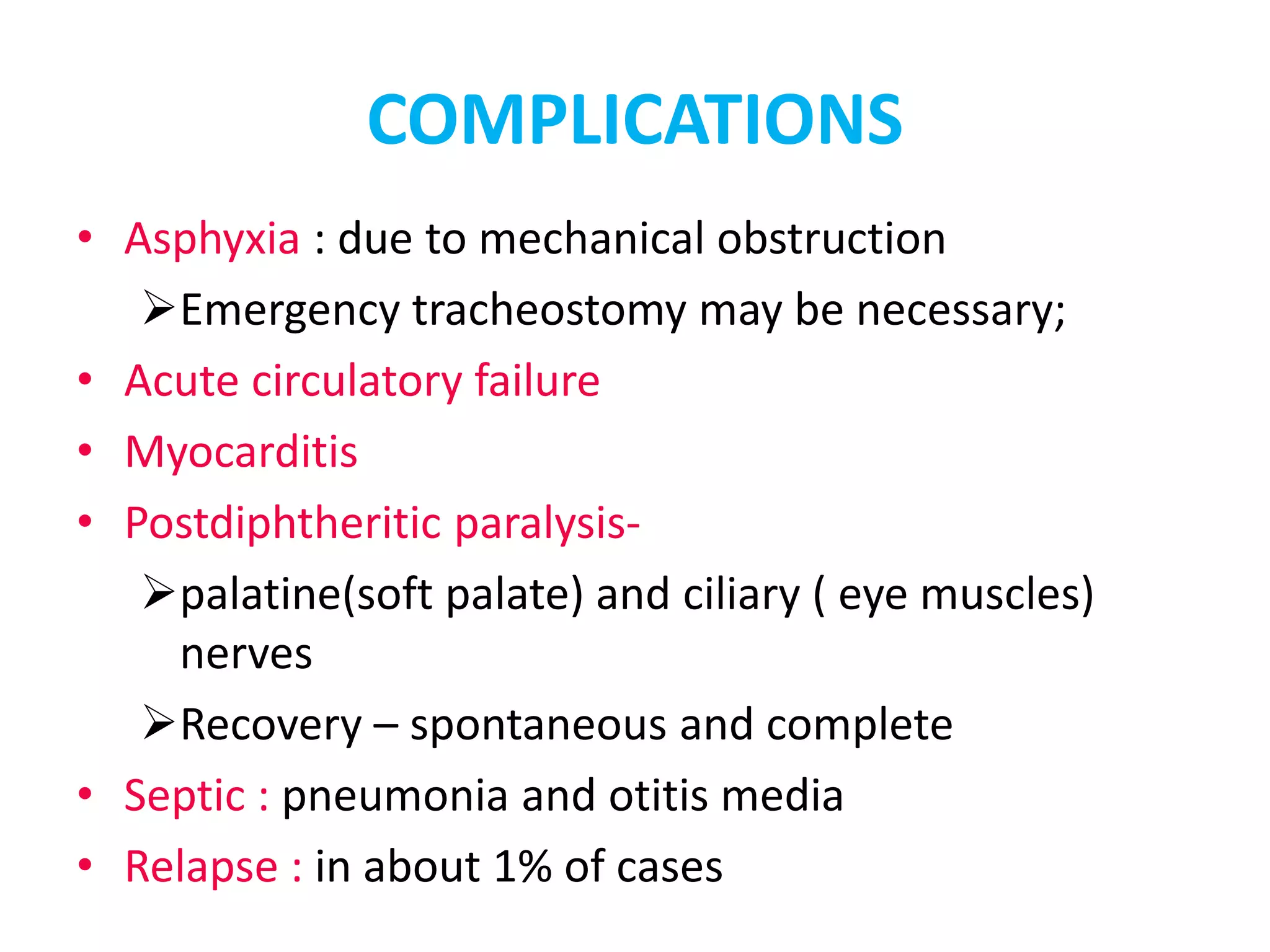
COMPLICATIONS
• Asphyxia : due to mechanical obstruction
Emergency tracheostomy may be necessary;
• Acute circulatory failure
• Myocarditis
• Postdiphtheritic paralysis-
palatine(soft palate) and ciliary ( eye muscles)
nerves
Recovery – spontaneous and complete
• Septic : pneumonia and otitis media
• Relapse : in about 1% of cases
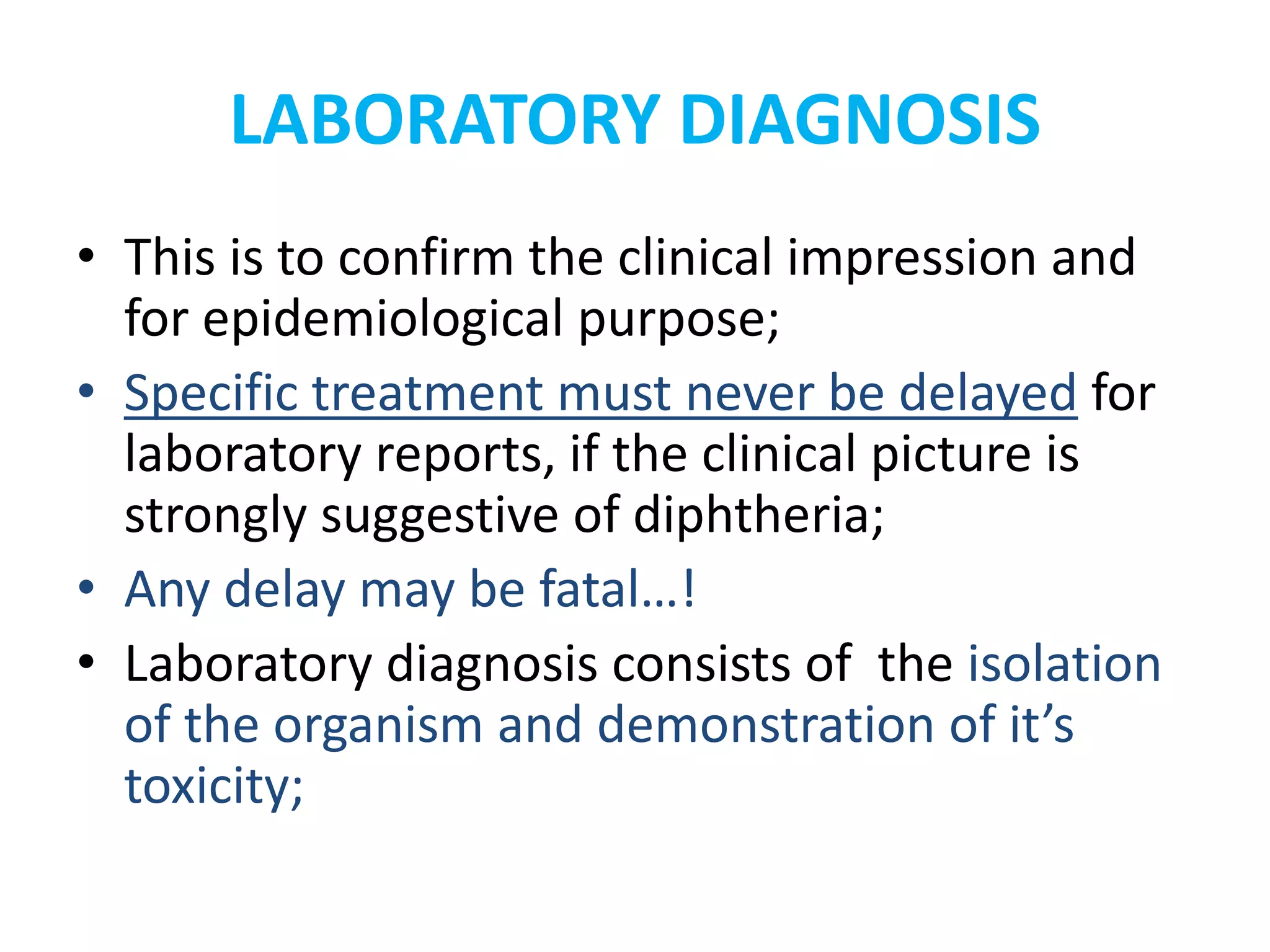
LABORATORY DIAGNOSIS
• This is to confirm the clinical impression and
for epidemiological purpose;
• Specific treatment must never be delayed for
laboratory reports, if the clinical picture is
strongly suggestive of diphtheria;
• Any delay may be fatal…!
• Laboratory diagnosis consists of the isolation
of the organism and demonstration of it’s
toxicity;
LABORATORY DIAGNOSIS
• Specimens :
– Swabs from – nose, throat or other suspected
lesions;
• Smear examination: Gram stain
– shows beaded rods in typical arrangement;
– Difficult to differentiate from some commensal
corynebacteria normally found in throat;
– Albert’s stain or Neisser’s stain is useful for
demonstrating the granules;
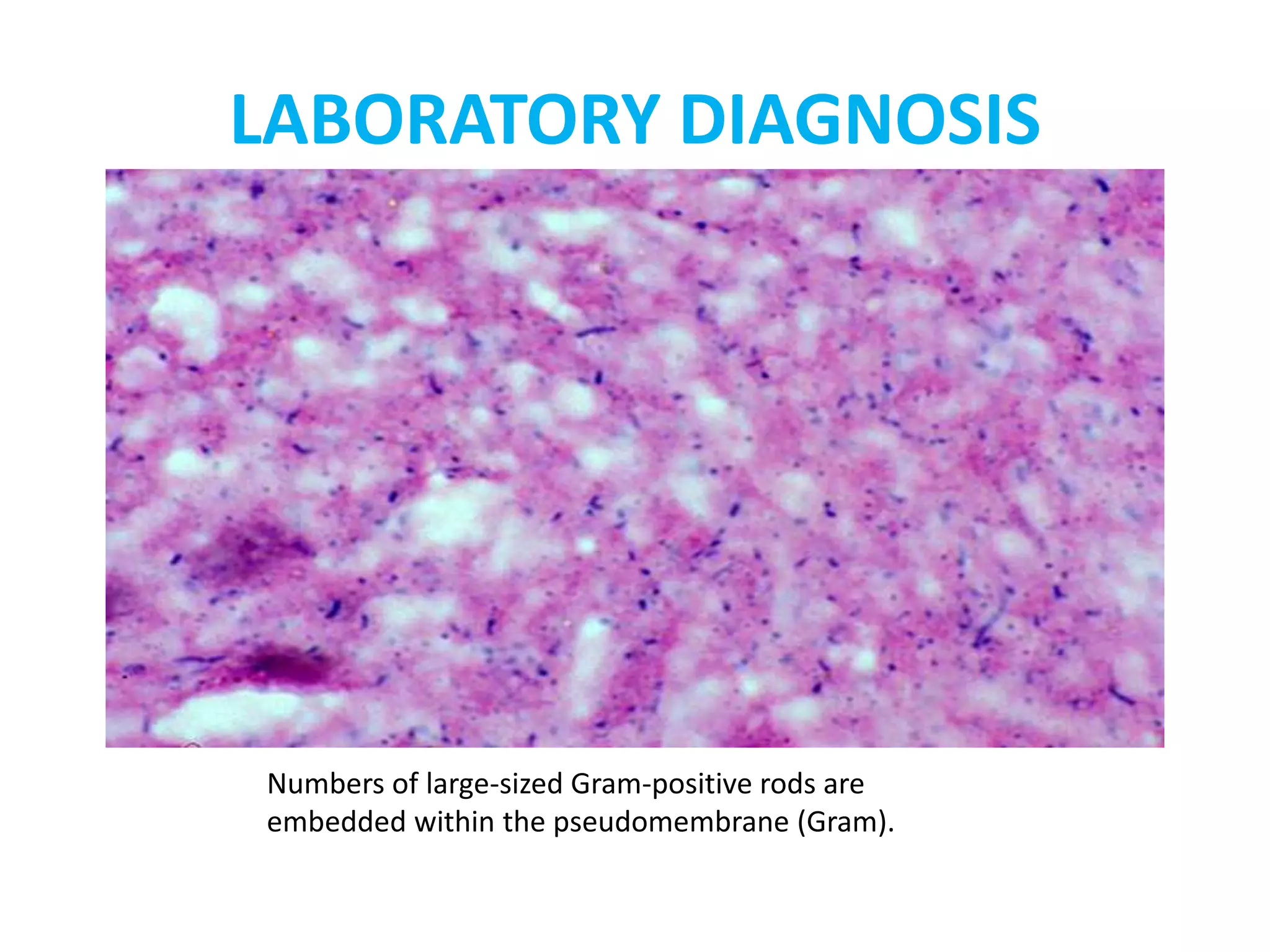
Numbers of large-sized Gram-positive rods are
embedded within the pseudomembrane (Gram).
LABORATORY DIAGNOSIS
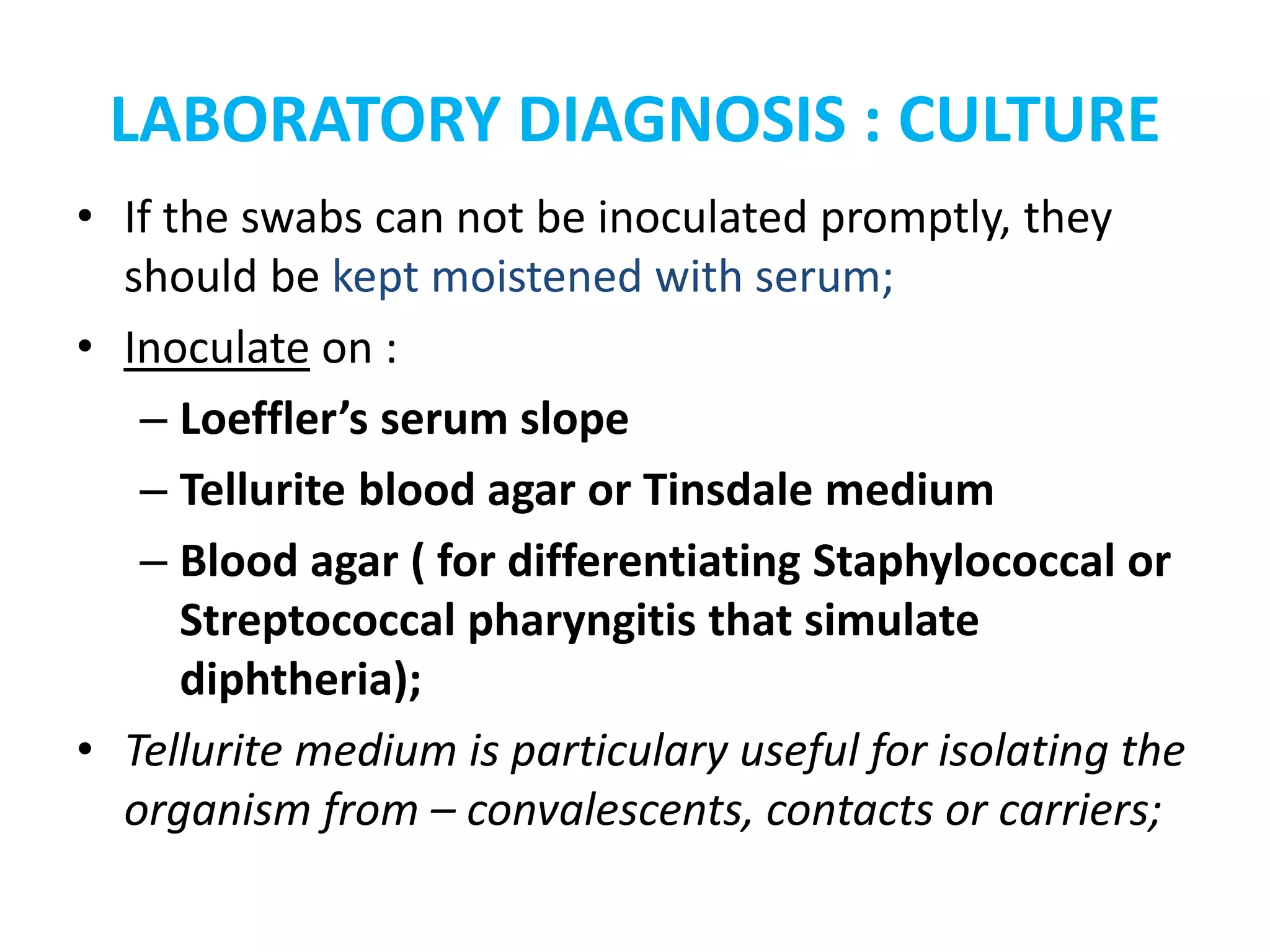
LABORATORY DIAGNOSIS : CULTURE
• If the swabs can not be inoculated promptly, they
should be kept moistened with serum;
• Inoculate on :
– Loeffler’s serum slope
– Tellurite blood agar or Tinsdale medium
– Blood agar ( for differentiating Staphylococcal or
Streptococcal pharyngitis that simulate
diphtheria);
• Tellurite medium is particulary useful for isolating the
organism from – convalescents, contacts or carriers;
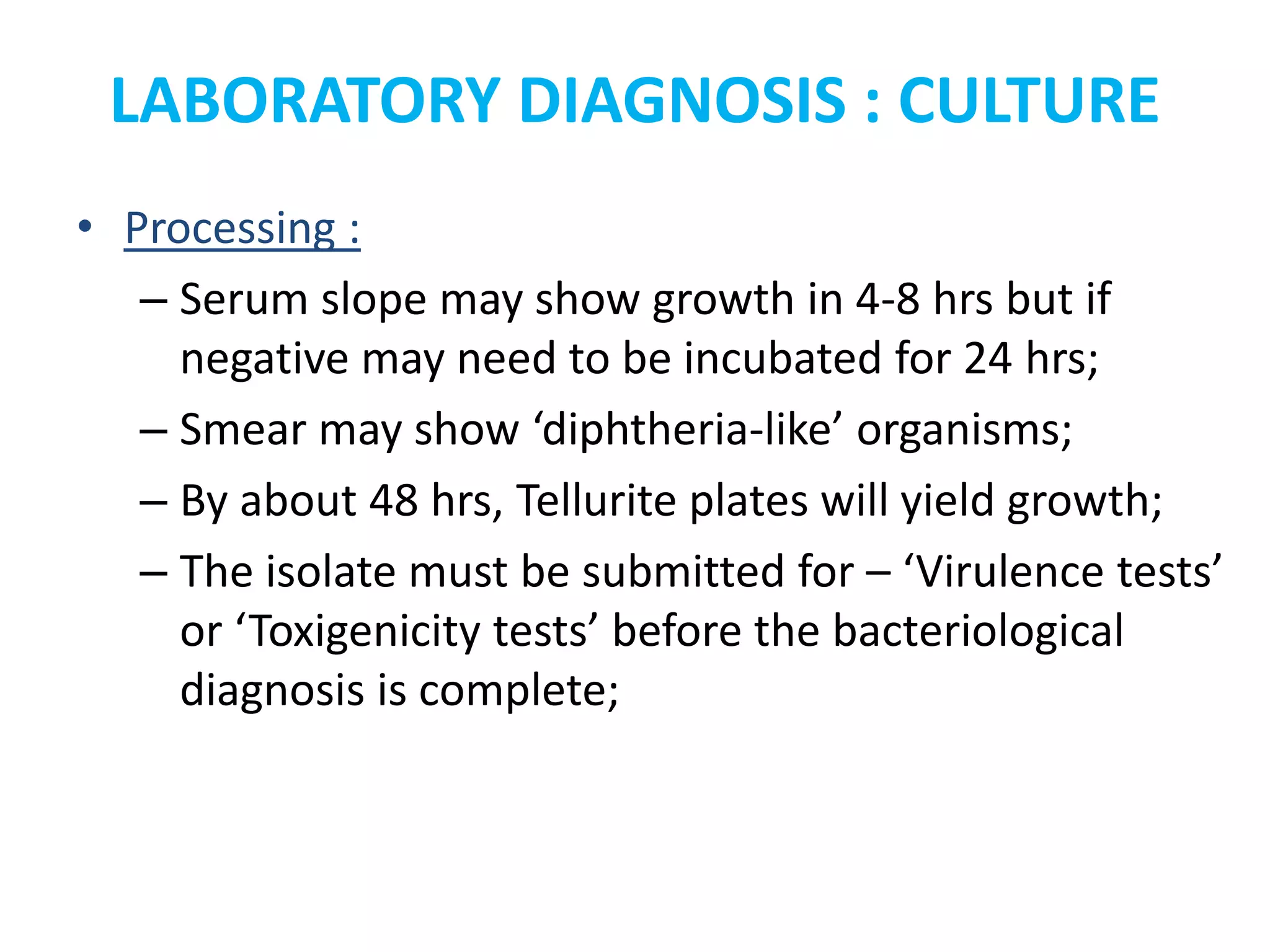
LABORATORY DIAGNOSIS : CULTURE
• Processing :
– Serum slope may show growth in 4-8 hrs but if
negative may need to be incubated for 24 hrs;
– Smear may show ‘diphtheria-like’ organisms;
– By about 48 hrs, Tellurite plates will yield growth;
– The isolate must be submitted for – ‘Virulence tests’
or ‘Toxigenicity tests’ before the bacteriological
diagnosis is complete;
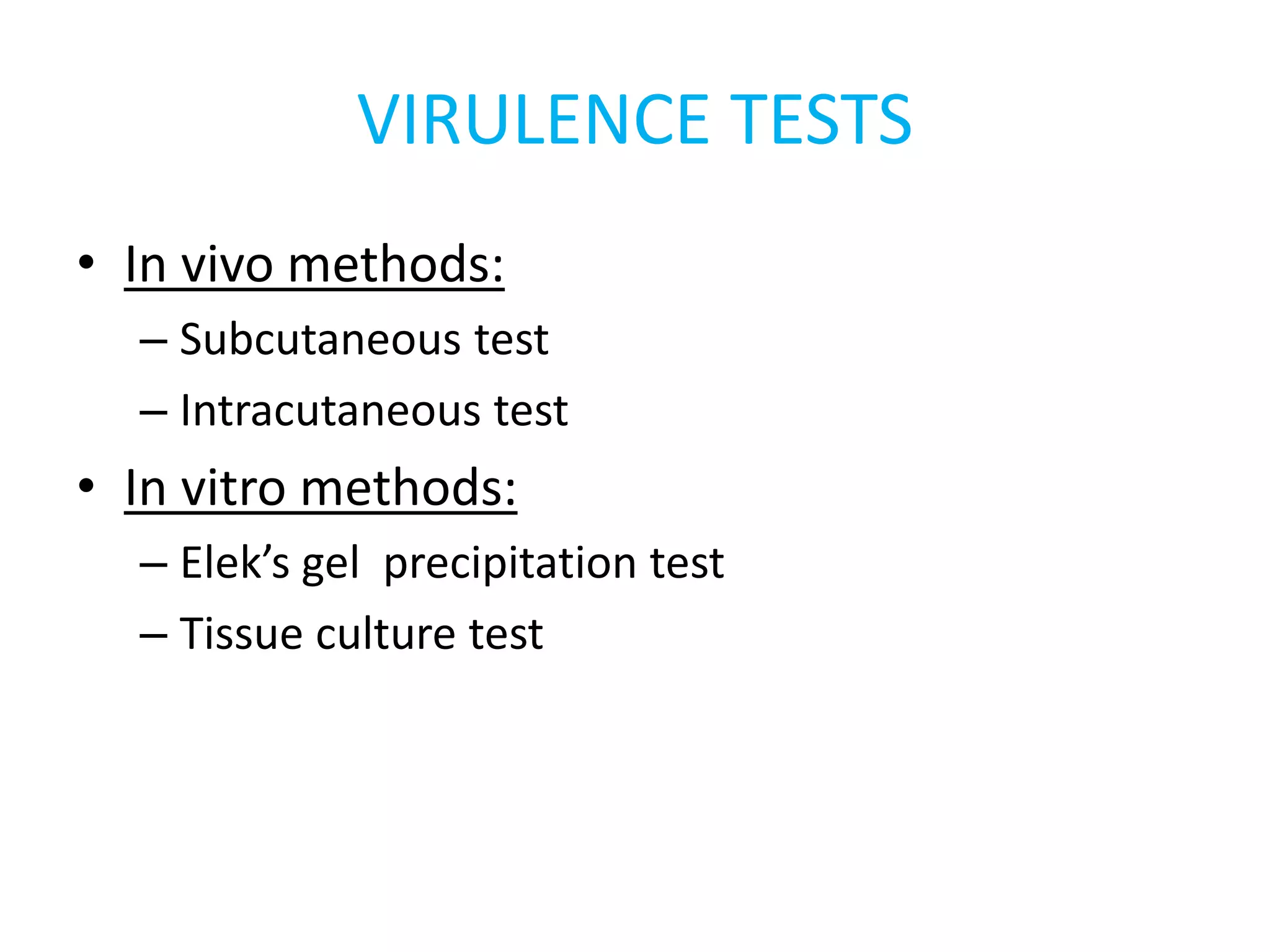
VIRULENCE TESTS
• In vivo methods:
– Subcutaneous test
– Intracutaneous test
• In vitro methods:
– Elek’s gel precipitation test
– Tissue culture test
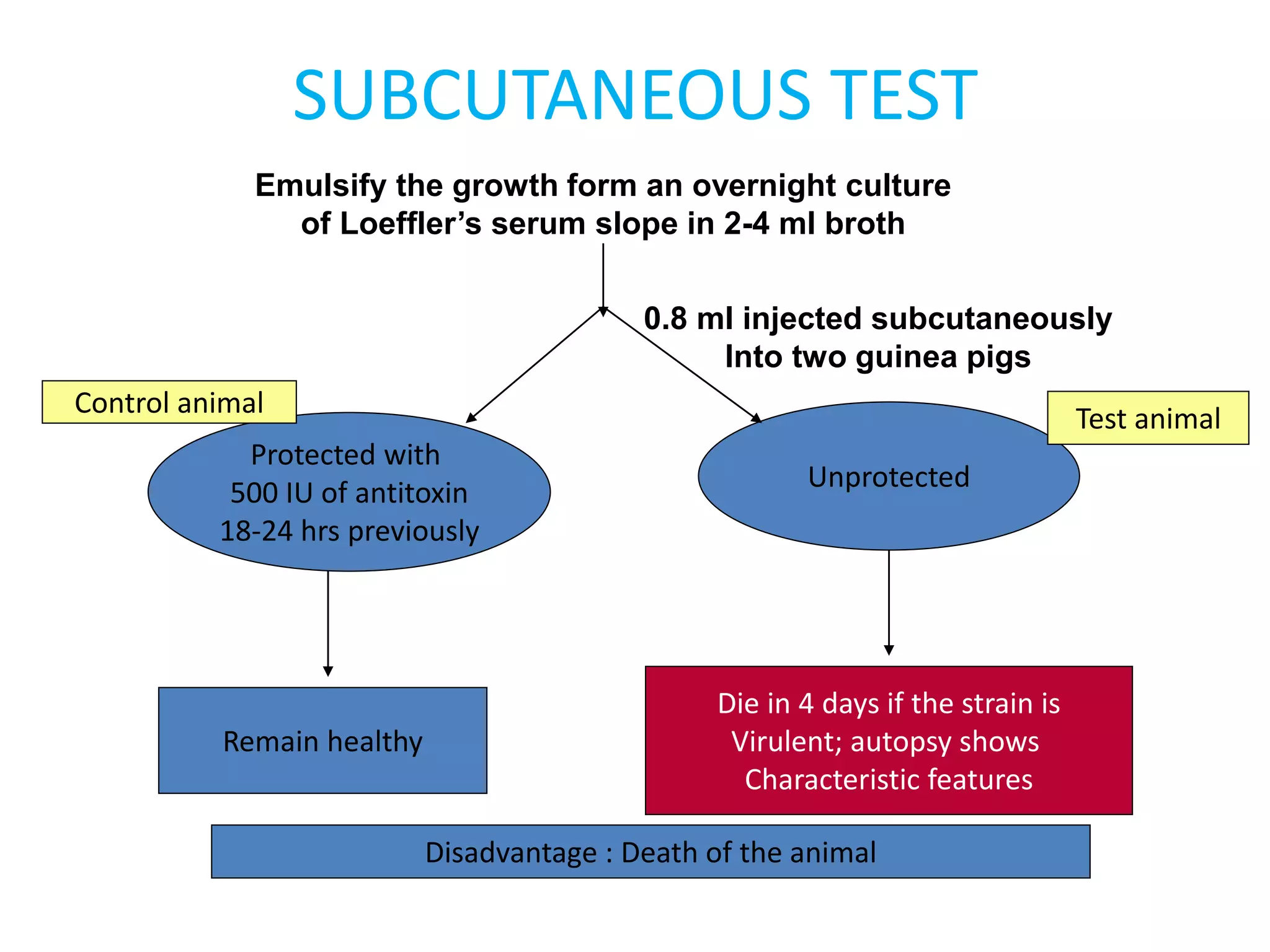
SUBCUTANEOUS TEST
Emulsify the growth form an overnight culture
of Loeffler’s serum slope in 2-4 ml broth
0.8 ml injected subcutaneously
Into two guinea pigs
Protected with
500 IU of antitoxin
18-24 hrs previously
Unprotected
Die in 4 days if the strain is
Virulent; autopsy shows
Characteristic features
Remain healthy
Disadvantage : Death of the animal
Control animal
Test animal
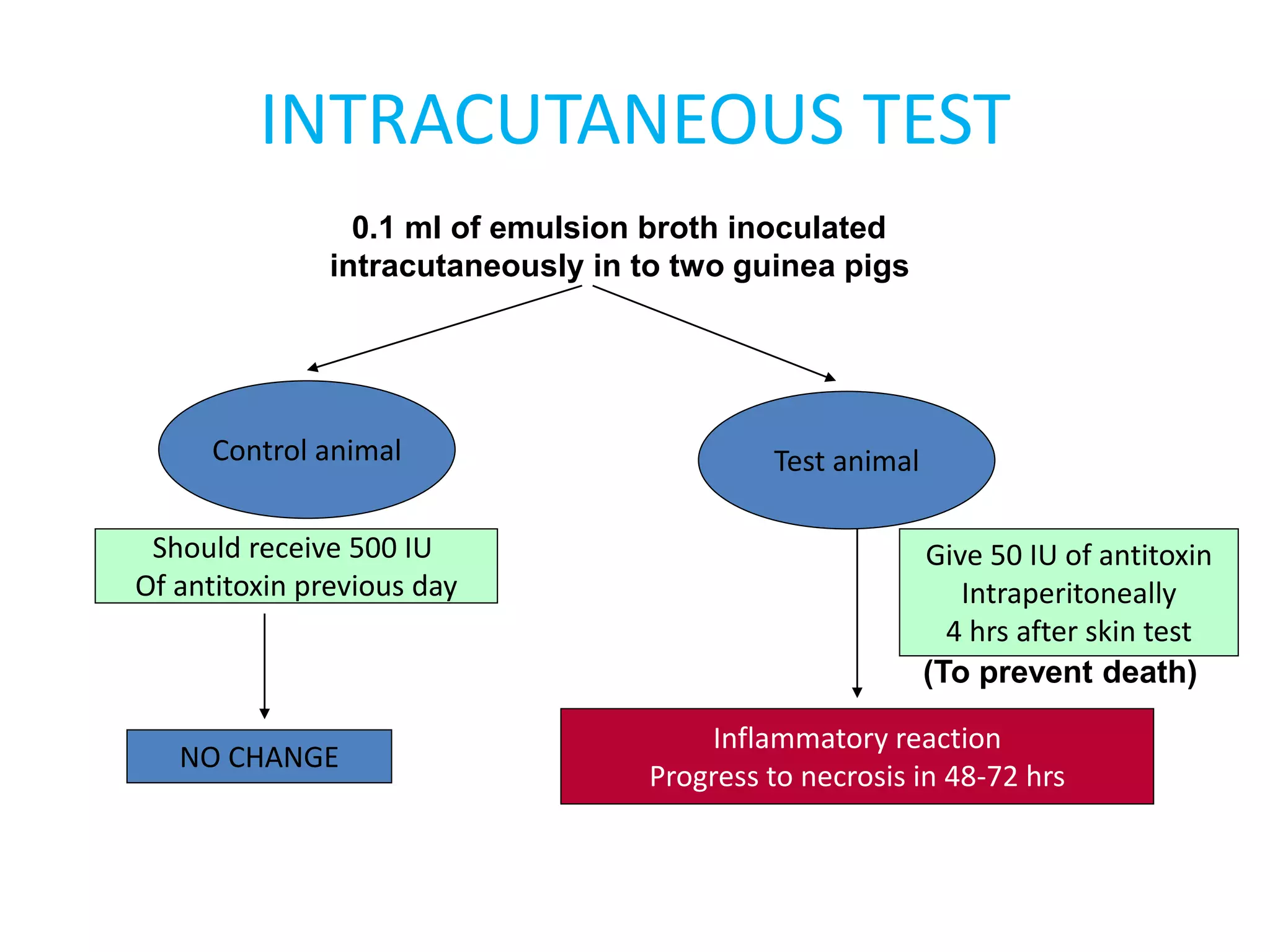
INTRACUTANEOUS TEST
0.1 ml of emulsion broth inoculated
intracutaneously in to two guinea pigs
Control animal Test animal
Should receive 500 IU
Of antitoxin previous day
Give 50 IU of antitoxin
Intraperitoneally
4 hrs after skin test
(To prevent death)
Inflammatory reaction
Progress to necrosis in 48-72 hrs
NO CHANGE
INTRACUTANEOUS TEST
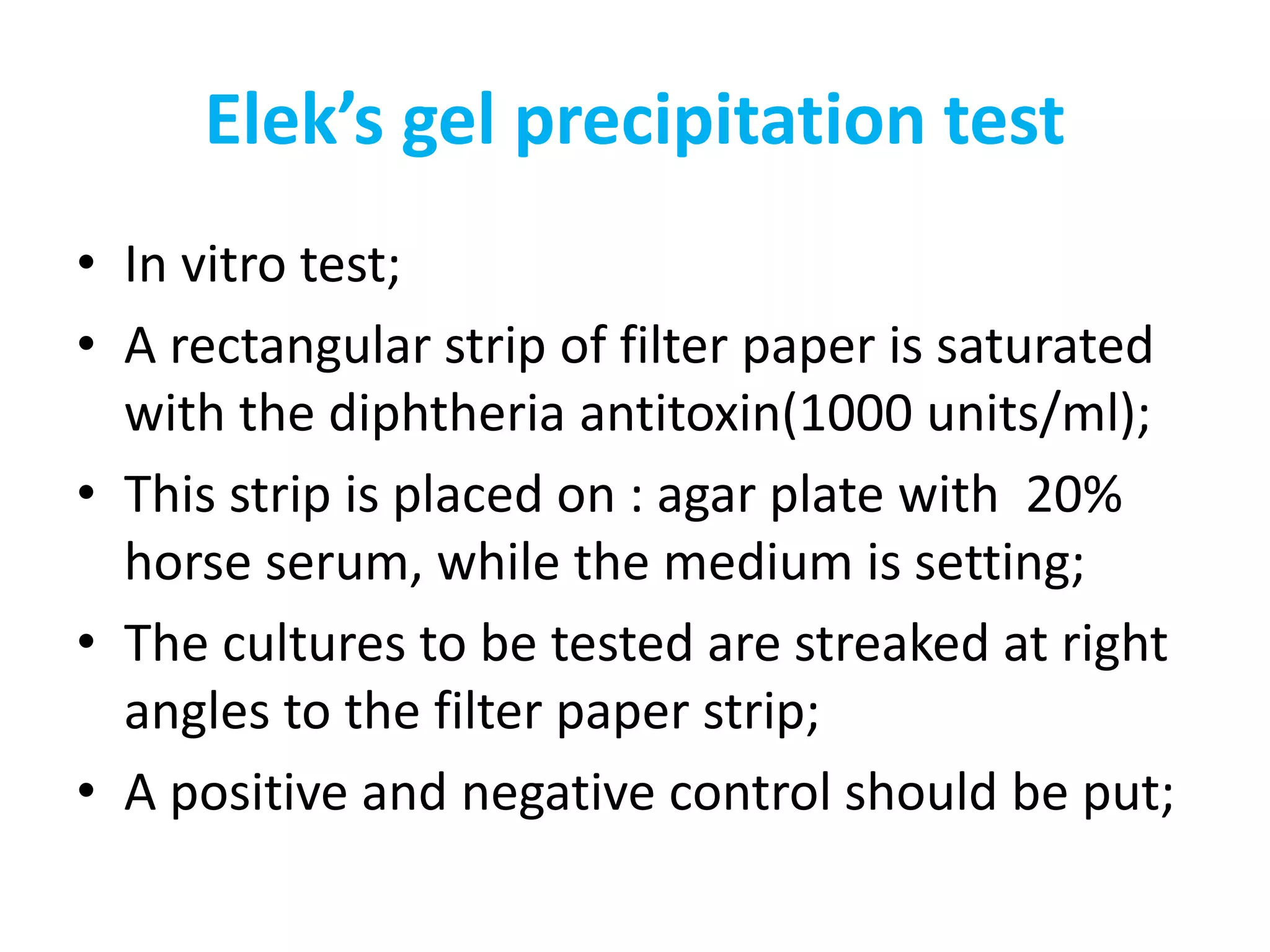
• Animal does not die;
• Rabbits may also be used;
• As many as 10 strains can be tested
simultaneously;
Elek’s gel precipitation test
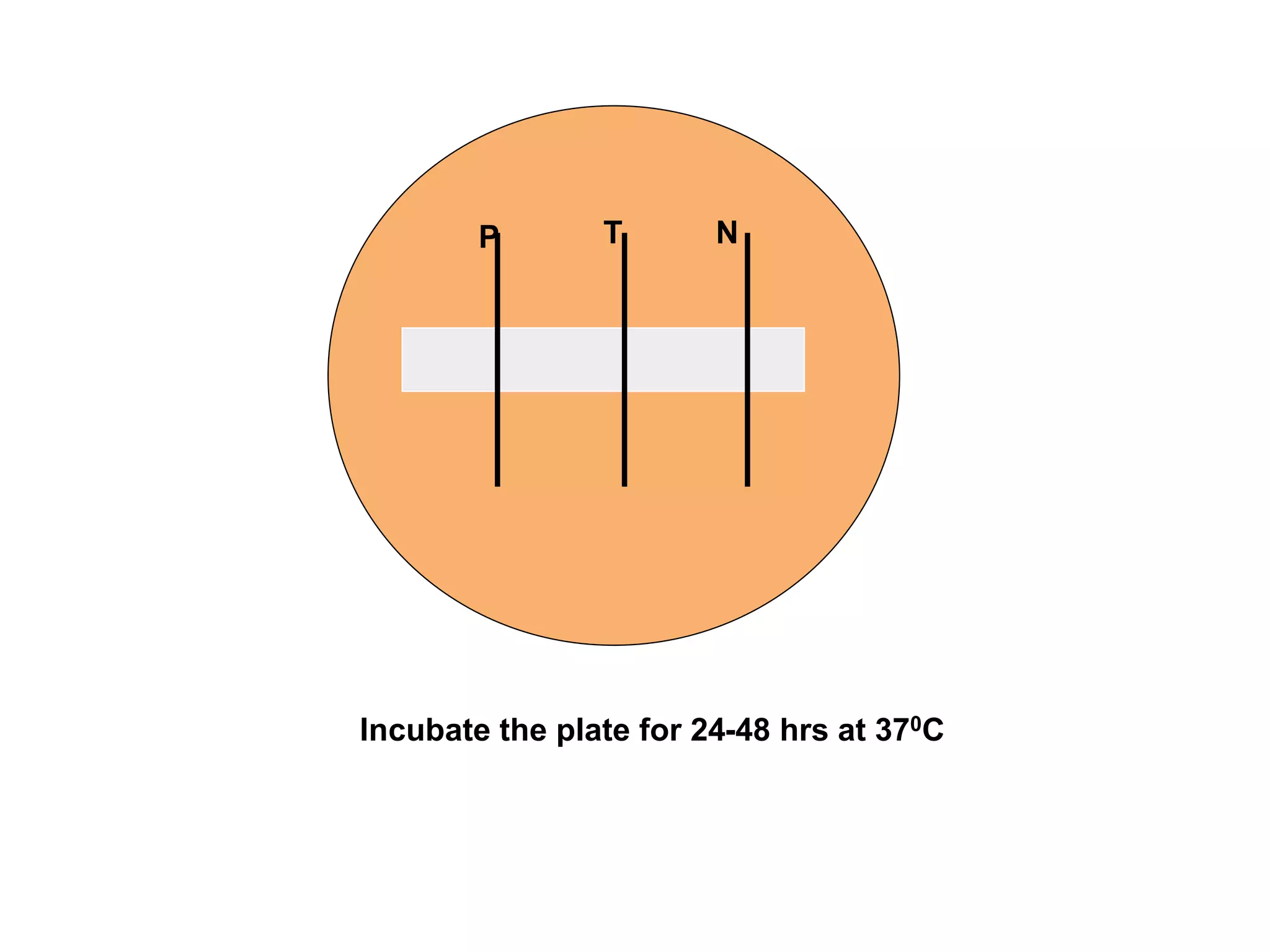
• In vitro test;
• A rectangular strip of filter paper is saturated
with the diphtheria antitoxin(1000 units/ml);
• This strip is placed on : agar plate with 20%
horse serum, while the medium is setting;
• The cultures to be tested are streaked at right
angles to the filter paper strip;
• A positive and negative control should be put;
Incubate the plate for 24-48 hrs at 370C
P T N
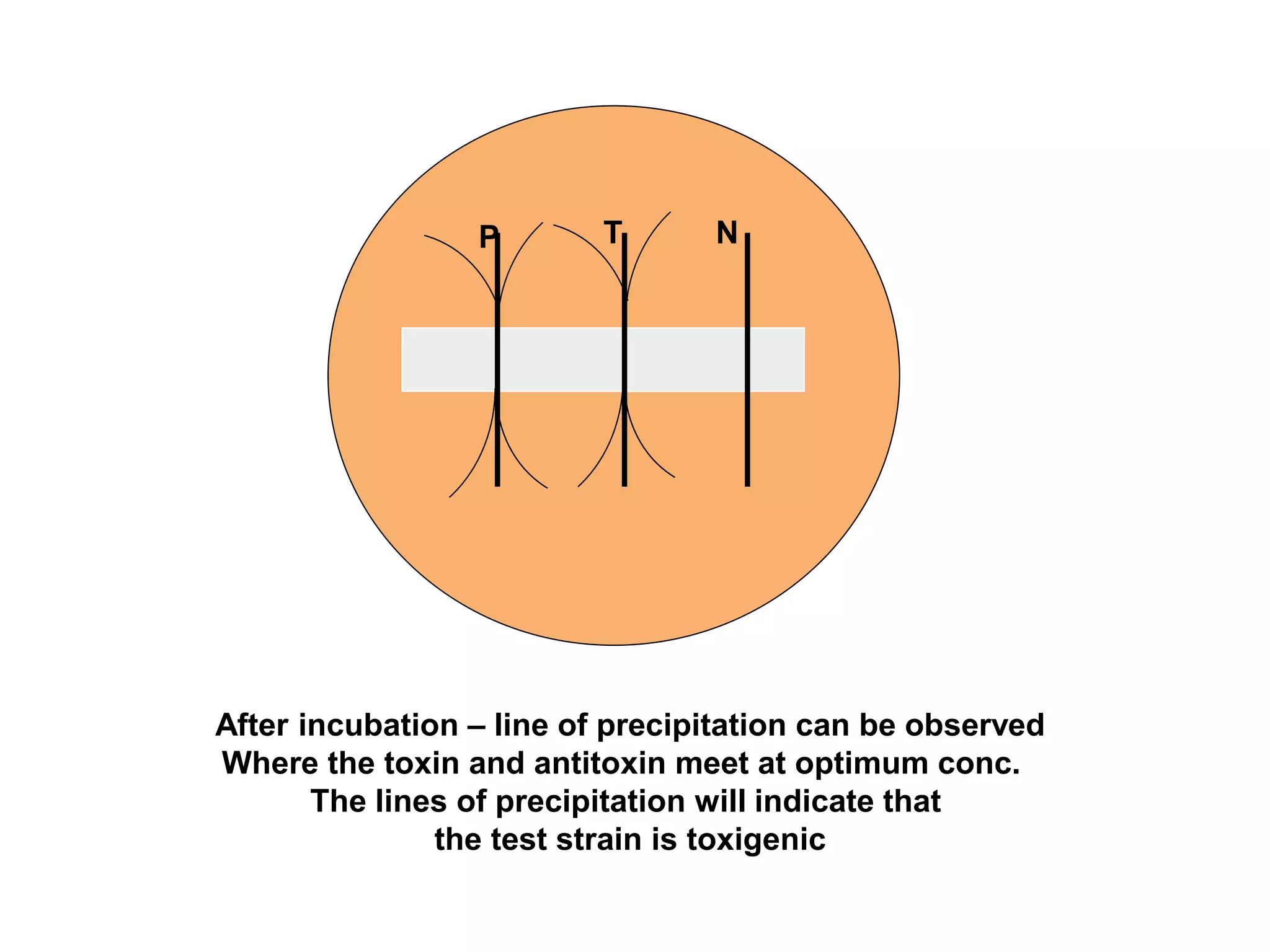
After incubation – line of precipitation can be observed
Where the toxin and antitoxin meet at optimum conc.
The lines of precipitation will indicate that
the test strain is toxigenic
P T N
Tissue culture test
• Bacteria incorporated into an agar overlay of
cell culture monolayers;
• The toxin, if produced, diffuses into the cells
below and kills them;
EPIDEMIOLOGY
• Mainly a disease of childhood(pediatrics) in endemic
areas – uncommon below 1st year; peaks at 5.
• In nature, C.diphtheriae occurs in the respiratory
tract, in the wounds or in the skin of the infected
persons or carriers;
• Transmission is by-
– Droplet dissemination from cases or carriers
– Direct contact
– Occasionally, fomites;
• Nasopharyngeal or cutaneous carriage of toxigenic or
nontoxigenic strains can persist for life in healthy
people;
PROPHYLAXIS
• Diphtheria can be controlled by immunisation;
• Types of immunisation available for
diphtheria:
– Active
– Passive
– combined
• The objective of immunisation is to increase
protective levels of antitoxin in circulation;
Active immunisation
• Emil von Behring initiated immunisation for
diphtheria in children in 1913 using toxin –antitoxin
mixtures; (TAT)
• These preparations were hazardous;
• Danysz phenomenon: if the equivalent amounts of
toxin and antitoxin were mixed all at once, the final
preperation was nontoxic. But, if the same amount of
toxin was added in instalments, the resultant mixture
was toxic;
• In 1929, Ramon introduced ‘toxoid’.
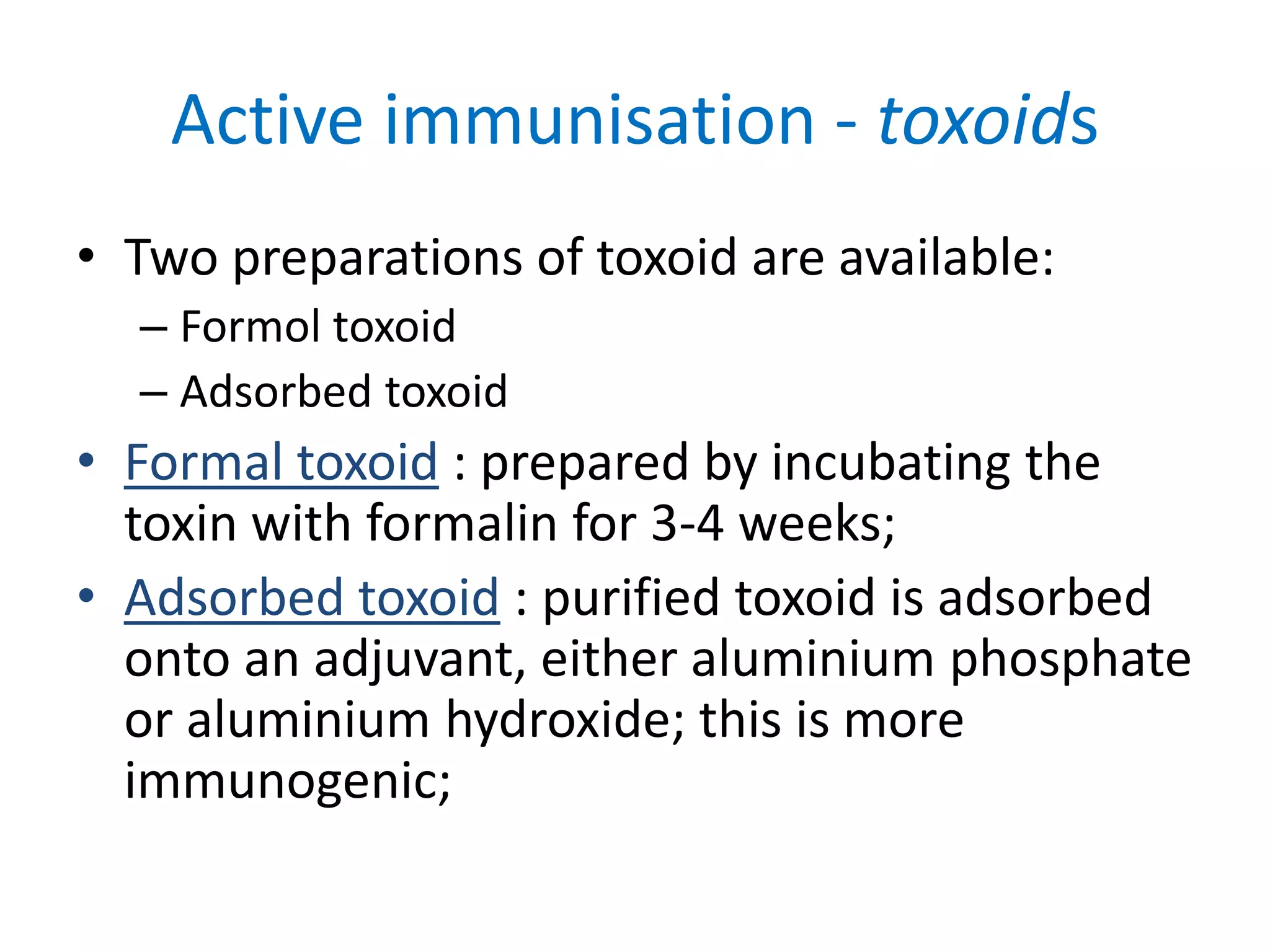
Active immunisation - toxoids
• Two preparations of toxoid are available:
– Formol toxoid
– Adsorbed toxoid
• Formal toxoid : prepared by incubating the
toxin with formalin for 3-4 weeks;
• Adsorbed toxoid : purified toxoid is adsorbed
onto an adjuvant, either aluminium phosphate
or aluminium hydroxide; this is more
immunogenic;
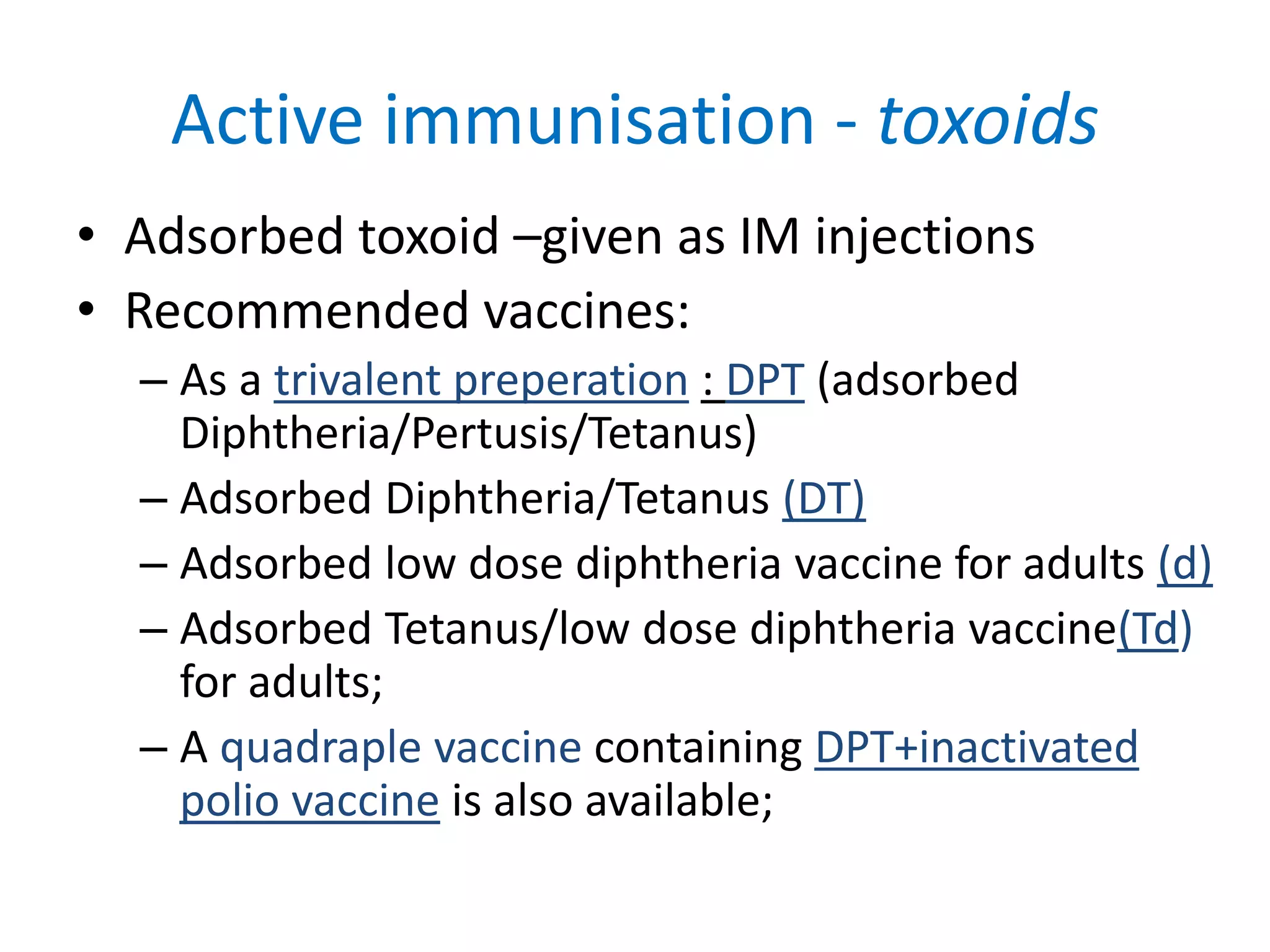
Active immunisation - toxoids
• Adsorbed toxoid –given as IM injections
• Recommended vaccines:
– As a trivalent preperation : DPT (adsorbed
Diphtheria/Pertusis/Tetanus)
– Adsorbed Diphtheria/Tetanus (DT)
– Adsorbed low dose diphtheria vaccine for adults (d)
– Adsorbed Tetanus/low dose diphtheria vaccine(Td)
for adults;
– A quadraple vaccine containing DPT+inactivated
polio vaccine is also available;
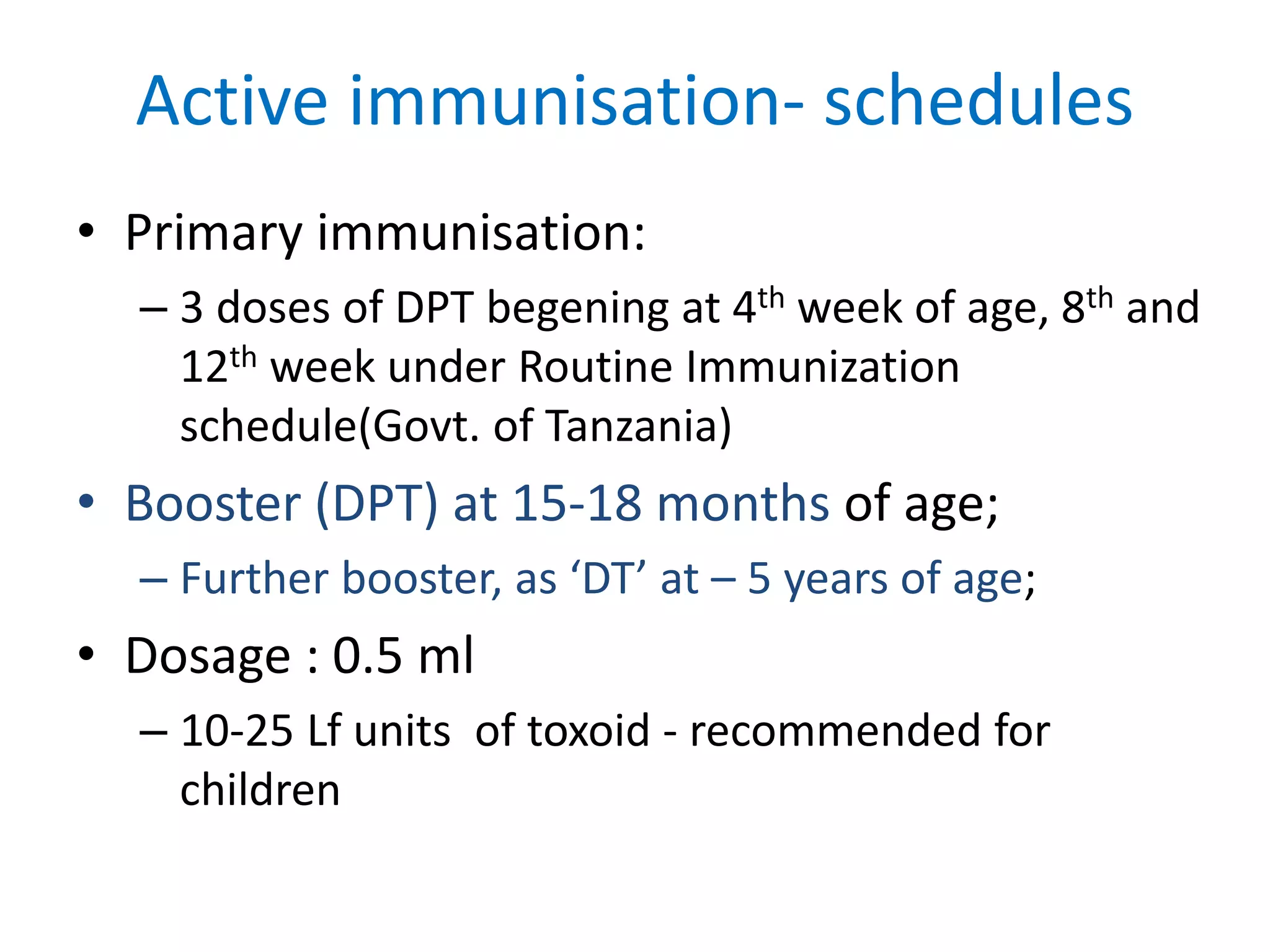
Active immunisation- schedules
• Primary immunisation:
– 3 doses of DPT begening at 4th week of age, 8th and
12th week under Routine Immunization
schedule(Govt. of Tanzania)
• Booster (DPT) at 15-18 months of age;
– Further booster, as ‘DT’ at – 5 years of age;
• Dosage : 0.5 ml
– 10-25 Lf units of toxoid - recommended for
children
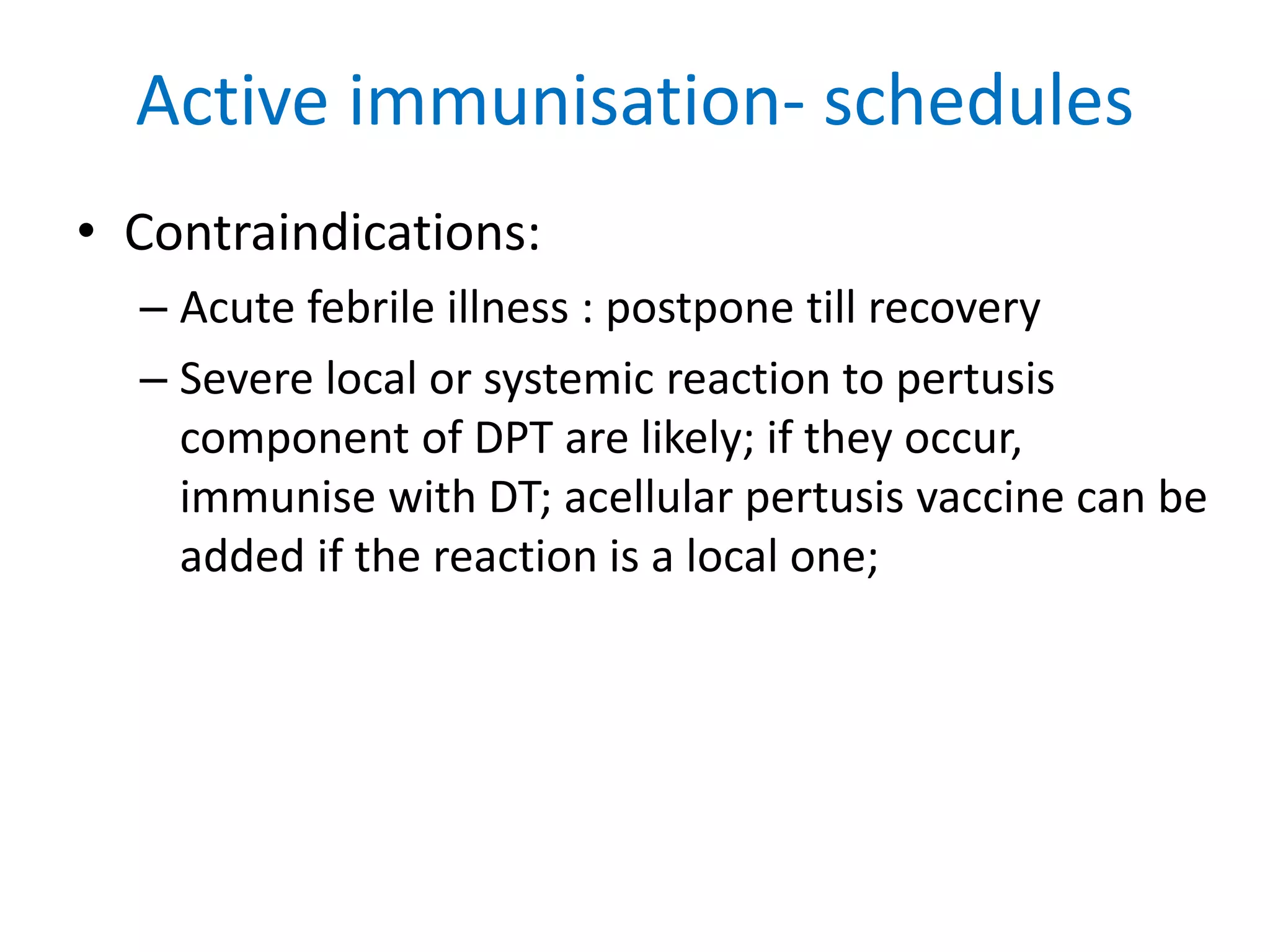
Active immunisation- schedules
• Contraindications:
– Acute febrile illness : postpone till recovery
– Severe local or systemic reaction to pertusis
component of DPT are likely; if they occur,
immunise with DT; acellular pertusis vaccine can be
added if the reaction is a local one;
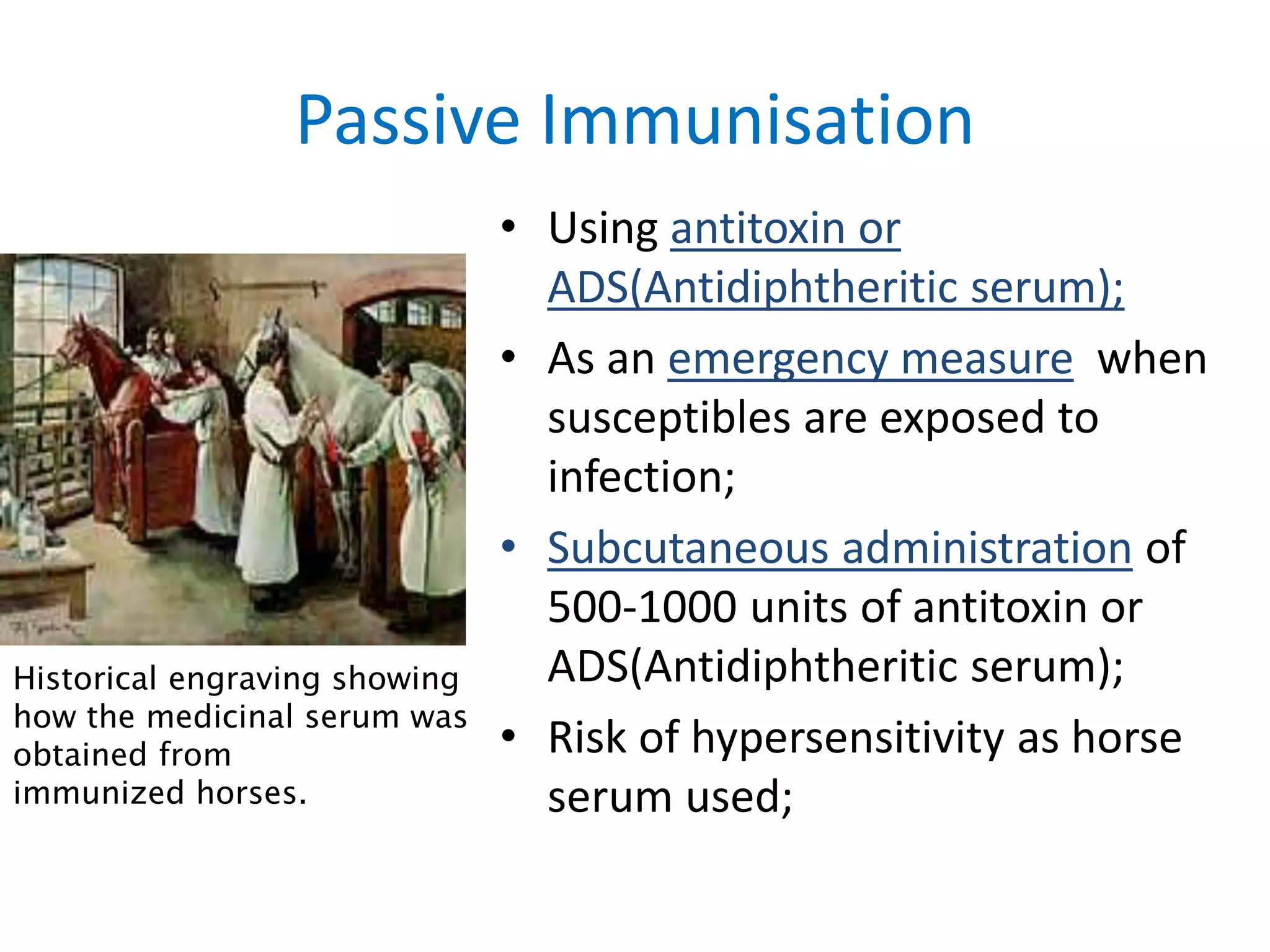
Passive Immunisation
• Using antitoxin or
ADS(Antidiphtheritic serum);
• As an emergency measure when
susceptibles are exposed to
infection;
• Subcutaneous administration of
500-1000 units of antitoxin or
ADS(Antidiphtheritic serum);
• Risk of hypersensitivity as horse
serum used;
Historical engraving showing
how the medicinal serum was
obtained from
immunized horses.
Combined immunisation
• Administration of first dose of toxoid on one
arm, while ADS is given on the other arm, to
be continued by full course of active
immunisation;
• All cases that received prophylactic ADS
should receive combined immunisation;
TREATMENT
• Specific measure : prompt administration of antitoxin
to neutralize the circulating toxin;
– Dose: 20,000-1,00,000 units
– Half the dose given IV
– Antitoxin treatment is generally not indicated for
cutaneous diphtheria
• Antibiotics : Penicillin or Erythromycin for 14 days;
• Complete bed rest;
• Supportive therapy and treatment of complications
• Erythromycin: for treatment of carriers.
OTHER CORYNEBACTERIA
C.ULCERANS
–Resembles gravis biotype of C.diphtheriae
–Liquify gelatin, ferment trehalose slowly,
does not reduce nitrates;
–Produce two types of toxins;
–Guinea pigs: lesions similar to those of
C.diphtheirae;
–Cause infection in cows;
–Human infections may be transmitted
through cow’s milk;
–Diphtheria antitoxin is protective;
OTHER CORYNEBACTERIA
• Arcanobacterium(C.hemolyticum):
– pharyngitis and skin ulcers
• C.jakeium:
– cutaneous and blood stream infections in
immunocompromised; multi resistant;
• C.pseudotuberculosis: Preisz Nocord bacillus
– Pseudotubeculosis in sheep and lymphadenitis in
horses;
• C.minutissimum:
– Erythrasma, affecting axilla and groin
• C.tenuis: pigmented nodules around axillary and pubic
hair shafts.
• C.parvum: an immunomodulator agent
DIPHTHEROIDS
• Resemble C.diphtheriae and mistaken for them;
• Common commensals of nose, throat, nasopharynx,
skin, urinary tract and conjunctiva
• Produce no exotoxin;
• Stain more uniformly, few or no metachromatic
granules and tend to be arranged in palisades;
• Can produce disease in immunocompromised;
• Have been isolated in infections such as endocarditis
of prosthetic valves, lung abscess and UTI;
• Sensitive to Vancomycin;
• Ex. C.pseudodiphtheriticum – throat
• C.xerosus : conjunctival sac
Corynebacterium

Corynebacterium

  • 1.
    CORYNEBACTERIUM A Presentation By G.Prashanth Kumar Department of Microbiology & Parasitology, Faculty of Medicine, International Medical & Technological University, Dar-Es-Salaam, Tanzania.
  • 2.
    INTRODUCTION • Corynebacteria /“Coryneform bacteria” – a group of non-spore forming, gram- positive bacilli, tend to be clubbed or irregularly shaped; (coryne = club) • Corynebacterium diphtheriae the causative agent of Diphtheria is the major pathogen in this group. • Other pathogenic corynebacteria are: • C. Ulcerans: Diphtheria like lessions. • Corynebacteria Causing Superficial skin infections: C. minutissimum and C. tenuis. • Diphtheriods: Normal commensals in throat, skin and conjunctiva.
  • 3.
    HISTORY • Hippocrates providedthe first clinical description of diphtheria in the 4th century B.C. • Bretonneu (1821), a French army surgeon, described the unique clinical characteristics of the disease, and used the term ‘dipht`erie’ to signify the tough leathery pseudomembrane that occurs in oropharynx and some times in nasopharynx; (diphtheros = leather)
  • 4.
    HISTORY • The bacteriumthat caused diphtheria was first described by Klebs in 1883, and was cultivated by Loeffler in 1884, who applied Koch's postulates and properly identified Corynebacterium diphtheriae as the agent of the disease. • In 1884, Loeffler concluded that C. diphtheriae produced a soluble toxin, and thereby provided the first description of a bacterial exotoxin. • Roux and Yersin (1888) discovered the diphtheria exotoxin and established its pathogenic effects. • The antitoxin was described by von Behring(1890).
  • 5.
  • 6.
    MORPHOLOGY • Slender Gram-positiverods, pleomorphic; easily decolousised; • 0.6-0.8μ diameter and 3-6 μ length; • Irregular swelling at one or both ends (‘club shaped’); • Non-capsulate, Non-sporing and nonmotile • Granules containing polymetaphosphate are seen in the cells; • Take up bluish purple color against lightly stained cytoplasm, when stained with Loeffler’s Methylene Blue, and hence called ‘Metachromatic granules’; • Also called, ‘volutin granules’ or ‘Babes Ernst granules’; • They are often situated at poles- ‘polar bodies’
  • 7.
    MORPHOLOGY • Special stainsfor demonstrating the granules : – Albert’s stain – Neisser’s stain – Ponder’s stain • The bacilli are arranged in pairs, palisades or small groups; the bacilli lie at various angles to each other, resembling the letters, V or L; • This is called, “Chinese letter pattern” or “cuneiform pattern”;
  • 8.
    CULTURAL CHARACTERISTICS • Aerobeand facultative anaerobe; • Optimum temperature is 370C • Growth scanty on ordinary media; • Enrichment with: blood, serum or egg is necessary for good growth; • Potassium tellurite(0.04%) acts as a ‘selective agent’, as it inhibits growth of most oral commensals and retards the growth of Candida albicans and S.aureus;
  • 9.
    MEDIA FOR CULTIVATION •Blood agar • Loeffler’s serum slope • Tellurite blood agar • Hoyle’s tellurite lysed-blood agar • Tinsdale’s medium (cystine added to tellurite containing agar)
  • 10.
    COLONY CHARACTERISTICS • Bloodagar : small, granular and gray with irregular edges; Hemolysis may or may not present; • Loeffler’s serum slope: – Very rapid growth; – Colonies in 6-8 hrs – Initially circular white opaque colonies and acquire yellowish tint on incubation
  • 11.
    COLONY CHARACTERISTICS • Telluriteblood agar: – Growth slow; colonies seen after 48 hrs; – The colonies are brown to black with a brown- black halo because the tellurite is reduced to metallic tellurium; – Staphylococcus also produce such colonies A diagrammatic representation
  • 12.
    COLONY CHARACTERISTICS • Tinsdale’smedium (also contain cystine in addition to tellurite): – Grey black colonies with dark brown haloes indicate C.diphtheriae and C.ulcerans (these contain cystinase)
  • 13.
    BIOTYPES • McLeod andAnderson classified diphtheria bacilli, based on the colony characteristics on Tellurite medium and other properties like biochemical reactions and severity of disease; • 3 biotypes : – gravis – intermedius – mitis • 4th biotype : belfanti has also been described
  • 14.
    Feature gravis intermediusmitis Morphology shot rods, few granules some degree of pleomorphism long barred forms poor granulation Pleomorphism long curved prominent granules Pleomorphism Colony on tellurite blood agar (48 hrs) Daisy head colony (flat colony with raised dark centre and crenated edge; radial striations) Frog's egg colony (dull granular centre with glistening periphery and lighter ring near edge) Poached egg colony (shiny , flat with central elevation) Consistency of the colonies Brittle not easily emulsifiable intermediate soft, buttery easily emulsifiable Hemolysis Variable nonhemolytic hemolytic Glycogen/ starch fermentation Positive Negative Negative
  • 15.
    OTHER FEATURES OFVARIOUS BIOTYPES • The gravis and mitis are associated with high case fatality rates; • Paralytic complications more with gravis; • Hemorrhagic complications –gravis and intermdius; • Obstruction to air passage - mitis • mitis – endemic ; gravis and intermedius- epidemic
  • 16.
    BIOCHEMICAL REACTIONS • Hissserum sugars – for testing fermentation reactions; • Ferment- glucose, galactose, maltose and dextrose; but not lactose, sucrose, mannitol; • Proteolytic activity is absent; • Do not hydrolyse urea; • Do not form phosphatase; • Produce cystinase (halo on Tinsdale’s medium)
  • 17.
    RESISTANCE • Cultures remainviable for 2-3 wks at 25-300C • Destroyed by heat • Resistant to light, desiccation or freezing; • Easily destroyed by antiseptics • Susceptible to – Penicillin, erythromycin and broad spectrum antibiotics;
  • 18.
    ANTIGENIC STRUCTURE ANDTYPING • Serotyping : Antigenically heterogenous – gravis: 13 types – intermedius : 4 types – mitis : 40 types • Bacteriophage typing : 15 types • Bacteriocin typing : diphtheriocin typing
  • 19.
    VIRULENCE FACTORS • Virulentstrains of diphtheria bacilli produce a very powerful exotoxin. • The ‘virulence’ of diphtheria bacilli is due to their capacity to- – Establish infection and growing rapidly – Quickly elaborate an exotoxin • Avirulent strains are common among convalescents , contacts and carriers, particularly those with extra-faucial infection
  • 20.
    DIPHTHERIA TOXIN • Thepathognomonic effects are due to the toxin; • Almost all the gravis and intermedius strains and 80-85% of mitis strains are toxigenic • Toxin is a protein; • Mol. Wt.: 62,000 • Two fragments, A and B; • Extremely potent : – 0.1 μg lethal to guinea pig • Inactive when released
  • 21.
    Toxin – mechanismof action • Fragment B : binds to a cell surface receptor and helps in transport of toxin into the cell; • After entering the cell, A subunit is released ; • A subunit catalyses the transfer of ‘adenosine diphosphate ribose (ADPR)’ from NAD+ • ADPR binds with the elongation factor EF 2 • “ADPR-EF2” complex is inactive  protein synthesis stops abruptly  necrotising and neurotoxic effects of the toxin;
  • 23.
    PATHOGENICITY • Commonest siteof infection: Upper respiratory tract (fauces, larynx,nose) • Ocassionally, other cutaneous or mucocutaneous areas ( otitic/conjunctival/ genitovulval/vaginal/ prepucial/skin) • Faucial diphtheria is the commonest type; • Sore throat is frequently the presenting symptom;
  • 24.
    PATHOLOGY • After infection,the bacilli multiply on the mucous membrane or skin abrasion; • The toxigenic strains start producing toxin; • Diphtheria is a ‘toxemia’; • The bacteria confine to the site of entry but the exotoxin is absorbed into the mucus membrane and causes destruction of epithelium and a superficial inflammatory response;
  • 25.
    PATHOLOGY • The toxincauses local necrotic changes; • The resulting fibrinous exudate, together with the epithelial cells, leucocytes, erythrocytes and bacteria constitute : “pseudomembrane” • Any effort to remove it will tear off capillaries beneath it and cause bleeding; • Mechanical complications are due to pseudomembrane and systemic effects are due to the toxin;
  • 26.
    Toxin-systemic absorption • Thebacilli continue to produce the toxin; • The toxin is absorbed systemically and damages heart muscle, liver, adrenals etc.; • The toxin also cause nerve damage, especially of soft palate(palatine) and eye muscles (ciliary); • Toxin absorption is negligible in case of skin infection with toxigenic strains; • Nontoxigenic strains can also produce local disease but systemic effects are absent;
  • 27.
    CLINICAL DISEASES • Incubationperiod : usually 3-4 days; • Acute infection : in the form of – – Membranous tonsillitis – Nasal infection – Laryngeal infection – Skin infection –uncommon;
  • 28.
    CLINICAL DISEASES • Characteristicfeature is : ‘wash –leather’ eleveted greyish greeen membrane in the tonsils with a well defined edge surrounded by a zone of inflammation;
  • 29.
    ‘wash –leather’ elevetedgreyish greeen membrane in the tonsils Pseudomembrane
  • 30.
    CLASSIFICATION BASED ONCLINICAL SEVERITY • Malignant or hypertoxic: – ‘Bull neck’ due to marked adenitis in neck; – Severe toxemia – Circulatory failure – Death – Paralytic squealae in survivors • Septic : ulceration, cellulitis and gangrene around pseudomembrane; • Hemorrhagic: bleeding from the edge of pseudomembrane, epistaxis, purpura etc.
  • 31.
    Bull neck :due to cervical adenitis and edema of neck
  • 32.
    COMPLICATIONS • Asphyxia :due to mechanical obstruction Emergency tracheostomy may be necessary; • Acute circulatory failure • Myocarditis • Postdiphtheritic paralysis- palatine(soft palate) and ciliary ( eye muscles) nerves Recovery – spontaneous and complete • Septic : pneumonia and otitis media • Relapse : in about 1% of cases
  • 33.
    LABORATORY DIAGNOSIS • Thisis to confirm the clinical impression and for epidemiological purpose; • Specific treatment must never be delayed for laboratory reports, if the clinical picture is strongly suggestive of diphtheria; • Any delay may be fatal…! • Laboratory diagnosis consists of the isolation of the organism and demonstration of it’s toxicity;
  • 34.
    LABORATORY DIAGNOSIS • Specimens: – Swabs from – nose, throat or other suspected lesions; • Smear examination: Gram stain – shows beaded rods in typical arrangement; – Difficult to differentiate from some commensal corynebacteria normally found in throat; – Albert’s stain or Neisser’s stain is useful for demonstrating the granules;
  • 35.
    Numbers of large-sizedGram-positive rods are embedded within the pseudomembrane (Gram). LABORATORY DIAGNOSIS
  • 36.
    LABORATORY DIAGNOSIS :CULTURE • If the swabs can not be inoculated promptly, they should be kept moistened with serum; • Inoculate on : – Loeffler’s serum slope – Tellurite blood agar or Tinsdale medium – Blood agar ( for differentiating Staphylococcal or Streptococcal pharyngitis that simulate diphtheria); • Tellurite medium is particulary useful for isolating the organism from – convalescents, contacts or carriers;
  • 37.
    LABORATORY DIAGNOSIS :CULTURE • Processing : – Serum slope may show growth in 4-8 hrs but if negative may need to be incubated for 24 hrs; – Smear may show ‘diphtheria-like’ organisms; – By about 48 hrs, Tellurite plates will yield growth; – The isolate must be submitted for – ‘Virulence tests’ or ‘Toxigenicity tests’ before the bacteriological diagnosis is complete;
  • 38.
    VIRULENCE TESTS • Invivo methods: – Subcutaneous test – Intracutaneous test • In vitro methods: – Elek’s gel precipitation test – Tissue culture test
  • 39.
    SUBCUTANEOUS TEST Emulsify thegrowth form an overnight culture of Loeffler’s serum slope in 2-4 ml broth 0.8 ml injected subcutaneously Into two guinea pigs Protected with 500 IU of antitoxin 18-24 hrs previously Unprotected Die in 4 days if the strain is Virulent; autopsy shows Characteristic features Remain healthy Disadvantage : Death of the animal Control animal Test animal
  • 40.
    INTRACUTANEOUS TEST 0.1 mlof emulsion broth inoculated intracutaneously in to two guinea pigs Control animal Test animal Should receive 500 IU Of antitoxin previous day Give 50 IU of antitoxin Intraperitoneally 4 hrs after skin test (To prevent death) Inflammatory reaction Progress to necrosis in 48-72 hrs NO CHANGE
  • 41.
    INTRACUTANEOUS TEST • Animaldoes not die; • Rabbits may also be used; • As many as 10 strains can be tested simultaneously;
  • 42.
    Elek’s gel precipitationtest • In vitro test; • A rectangular strip of filter paper is saturated with the diphtheria antitoxin(1000 units/ml); • This strip is placed on : agar plate with 20% horse serum, while the medium is setting; • The cultures to be tested are streaked at right angles to the filter paper strip; • A positive and negative control should be put;
  • 43.
    Incubate the platefor 24-48 hrs at 370C P T N
  • 44.
    After incubation –line of precipitation can be observed Where the toxin and antitoxin meet at optimum conc. The lines of precipitation will indicate that the test strain is toxigenic P T N
  • 45.
    Tissue culture test •Bacteria incorporated into an agar overlay of cell culture monolayers; • The toxin, if produced, diffuses into the cells below and kills them;
  • 46.
    EPIDEMIOLOGY • Mainly adisease of childhood(pediatrics) in endemic areas – uncommon below 1st year; peaks at 5. • In nature, C.diphtheriae occurs in the respiratory tract, in the wounds or in the skin of the infected persons or carriers; • Transmission is by- – Droplet dissemination from cases or carriers – Direct contact – Occasionally, fomites; • Nasopharyngeal or cutaneous carriage of toxigenic or nontoxigenic strains can persist for life in healthy people;
  • 47.
    PROPHYLAXIS • Diphtheria canbe controlled by immunisation; • Types of immunisation available for diphtheria: – Active – Passive – combined • The objective of immunisation is to increase protective levels of antitoxin in circulation;
  • 48.
    Active immunisation • Emilvon Behring initiated immunisation for diphtheria in children in 1913 using toxin –antitoxin mixtures; (TAT) • These preparations were hazardous; • Danysz phenomenon: if the equivalent amounts of toxin and antitoxin were mixed all at once, the final preperation was nontoxic. But, if the same amount of toxin was added in instalments, the resultant mixture was toxic; • In 1929, Ramon introduced ‘toxoid’.
  • 49.
    Active immunisation -toxoids • Two preparations of toxoid are available: – Formol toxoid – Adsorbed toxoid • Formal toxoid : prepared by incubating the toxin with formalin for 3-4 weeks; • Adsorbed toxoid : purified toxoid is adsorbed onto an adjuvant, either aluminium phosphate or aluminium hydroxide; this is more immunogenic;
  • 50.
    Active immunisation -toxoids • Adsorbed toxoid –given as IM injections • Recommended vaccines: – As a trivalent preperation : DPT (adsorbed Diphtheria/Pertusis/Tetanus) – Adsorbed Diphtheria/Tetanus (DT) – Adsorbed low dose diphtheria vaccine for adults (d) – Adsorbed Tetanus/low dose diphtheria vaccine(Td) for adults; – A quadraple vaccine containing DPT+inactivated polio vaccine is also available;
  • 51.
    Active immunisation- schedules •Primary immunisation: – 3 doses of DPT begening at 4th week of age, 8th and 12th week under Routine Immunization schedule(Govt. of Tanzania) • Booster (DPT) at 15-18 months of age; – Further booster, as ‘DT’ at – 5 years of age; • Dosage : 0.5 ml – 10-25 Lf units of toxoid - recommended for children
  • 52.
    Active immunisation- schedules •Contraindications: – Acute febrile illness : postpone till recovery – Severe local or systemic reaction to pertusis component of DPT are likely; if they occur, immunise with DT; acellular pertusis vaccine can be added if the reaction is a local one;
  • 53.
    Passive Immunisation • Usingantitoxin or ADS(Antidiphtheritic serum); • As an emergency measure when susceptibles are exposed to infection; • Subcutaneous administration of 500-1000 units of antitoxin or ADS(Antidiphtheritic serum); • Risk of hypersensitivity as horse serum used; Historical engraving showing how the medicinal serum was obtained from immunized horses.
  • 54.
    Combined immunisation • Administrationof first dose of toxoid on one arm, while ADS is given on the other arm, to be continued by full course of active immunisation; • All cases that received prophylactic ADS should receive combined immunisation;
  • 55.
    TREATMENT • Specific measure: prompt administration of antitoxin to neutralize the circulating toxin; – Dose: 20,000-1,00,000 units – Half the dose given IV – Antitoxin treatment is generally not indicated for cutaneous diphtheria • Antibiotics : Penicillin or Erythromycin for 14 days; • Complete bed rest; • Supportive therapy and treatment of complications • Erythromycin: for treatment of carriers.
  • 56.
  • 57.
    C.ULCERANS –Resembles gravis biotypeof C.diphtheriae –Liquify gelatin, ferment trehalose slowly, does not reduce nitrates; –Produce two types of toxins; –Guinea pigs: lesions similar to those of C.diphtheirae; –Cause infection in cows; –Human infections may be transmitted through cow’s milk; –Diphtheria antitoxin is protective;
  • 58.
    OTHER CORYNEBACTERIA • Arcanobacterium(C.hemolyticum): –pharyngitis and skin ulcers • C.jakeium: – cutaneous and blood stream infections in immunocompromised; multi resistant; • C.pseudotuberculosis: Preisz Nocord bacillus – Pseudotubeculosis in sheep and lymphadenitis in horses; • C.minutissimum: – Erythrasma, affecting axilla and groin • C.tenuis: pigmented nodules around axillary and pubic hair shafts. • C.parvum: an immunomodulator agent
  • 59.
    DIPHTHEROIDS • Resemble C.diphtheriaeand mistaken for them; • Common commensals of nose, throat, nasopharynx, skin, urinary tract and conjunctiva • Produce no exotoxin; • Stain more uniformly, few or no metachromatic granules and tend to be arranged in palisades; • Can produce disease in immunocompromised; • Have been isolated in infections such as endocarditis of prosthetic valves, lung abscess and UTI; • Sensitive to Vancomycin; • Ex. C.pseudodiphtheriticum – throat • C.xerosus : conjunctival sac