e-   governance
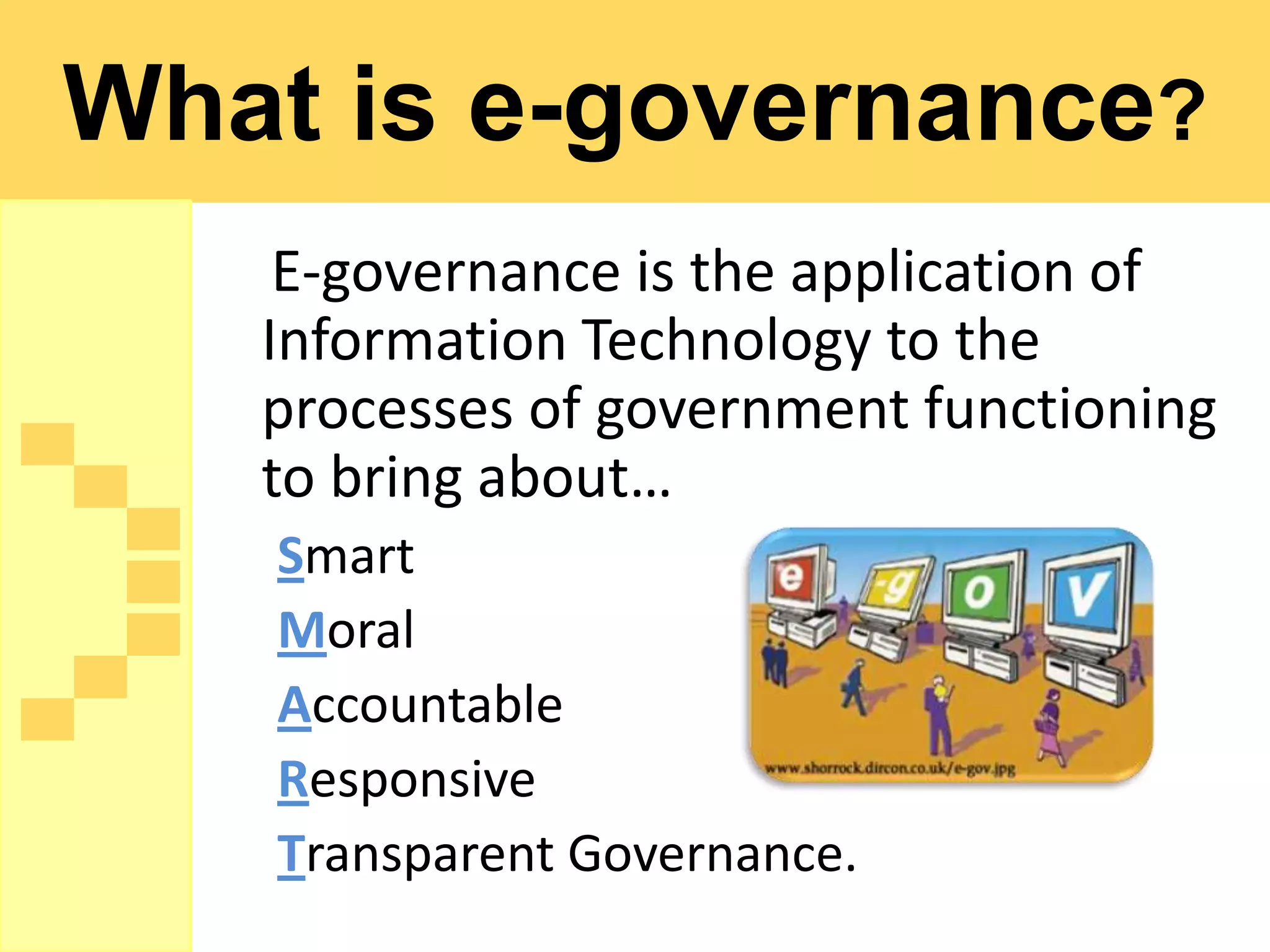
What is e-governance?
    E-governance is the application of
   Information Technology to the
   processes of government functioning
   to bring about…
   Smart
   Moral
   Accountable
   Responsive
   Transparent Governance.
How it was introduced in THE WORLD ?

       The United States of America
       was especially driven by the
       1998 Government Paperwork
       Elimination Act, introduced by
       former President Mr. Bill
       Clinton on December
       17, 1999.
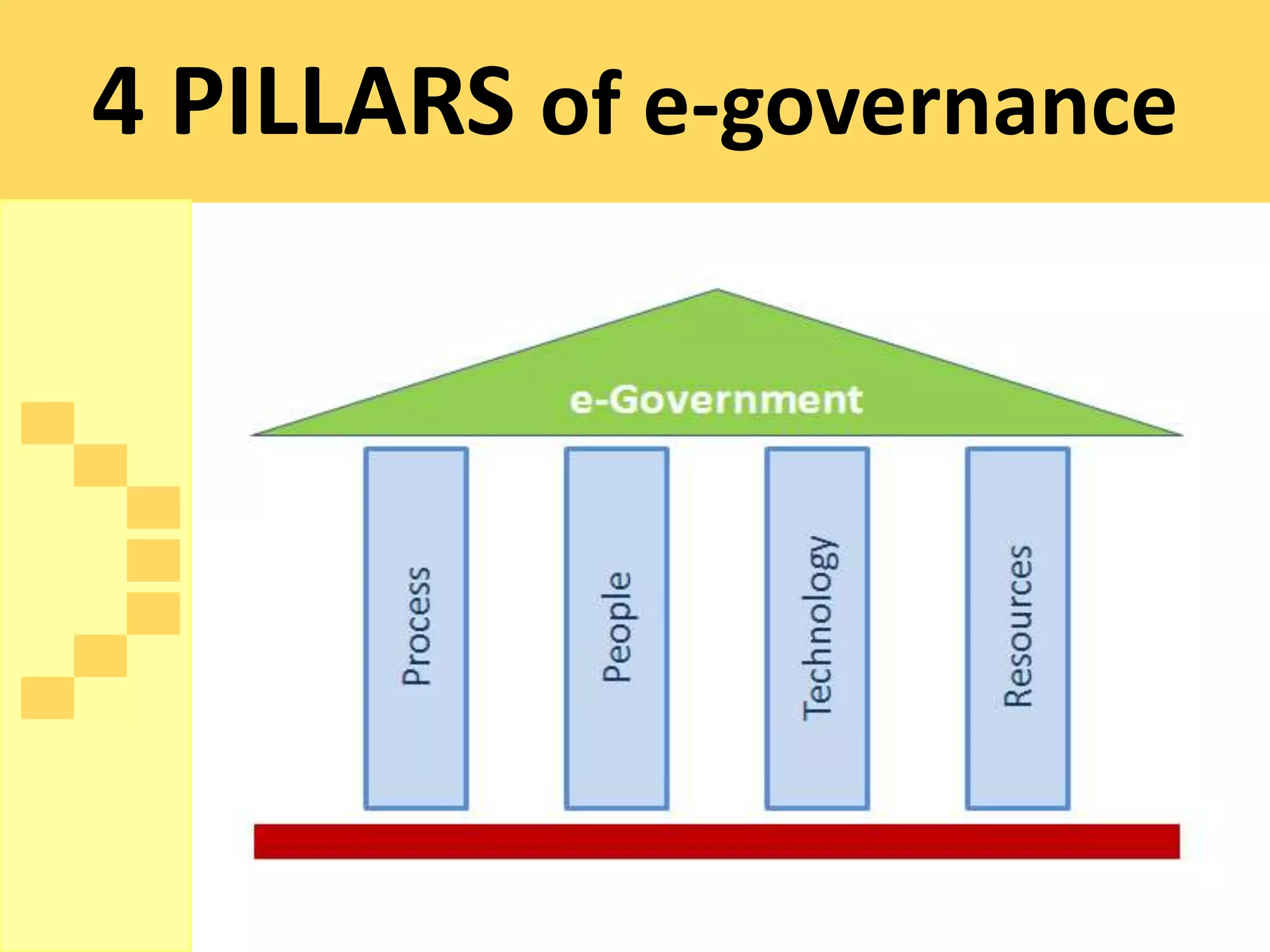
4 PILLARS of e-governance
BENEFITS of e-governance
   Cost effective
   Speed, efficiency & convenient
   Minimum use of hardcopy

    [ENVIRONMENTAL BONUS]
   Increases interest of citizens
   Easily accessible
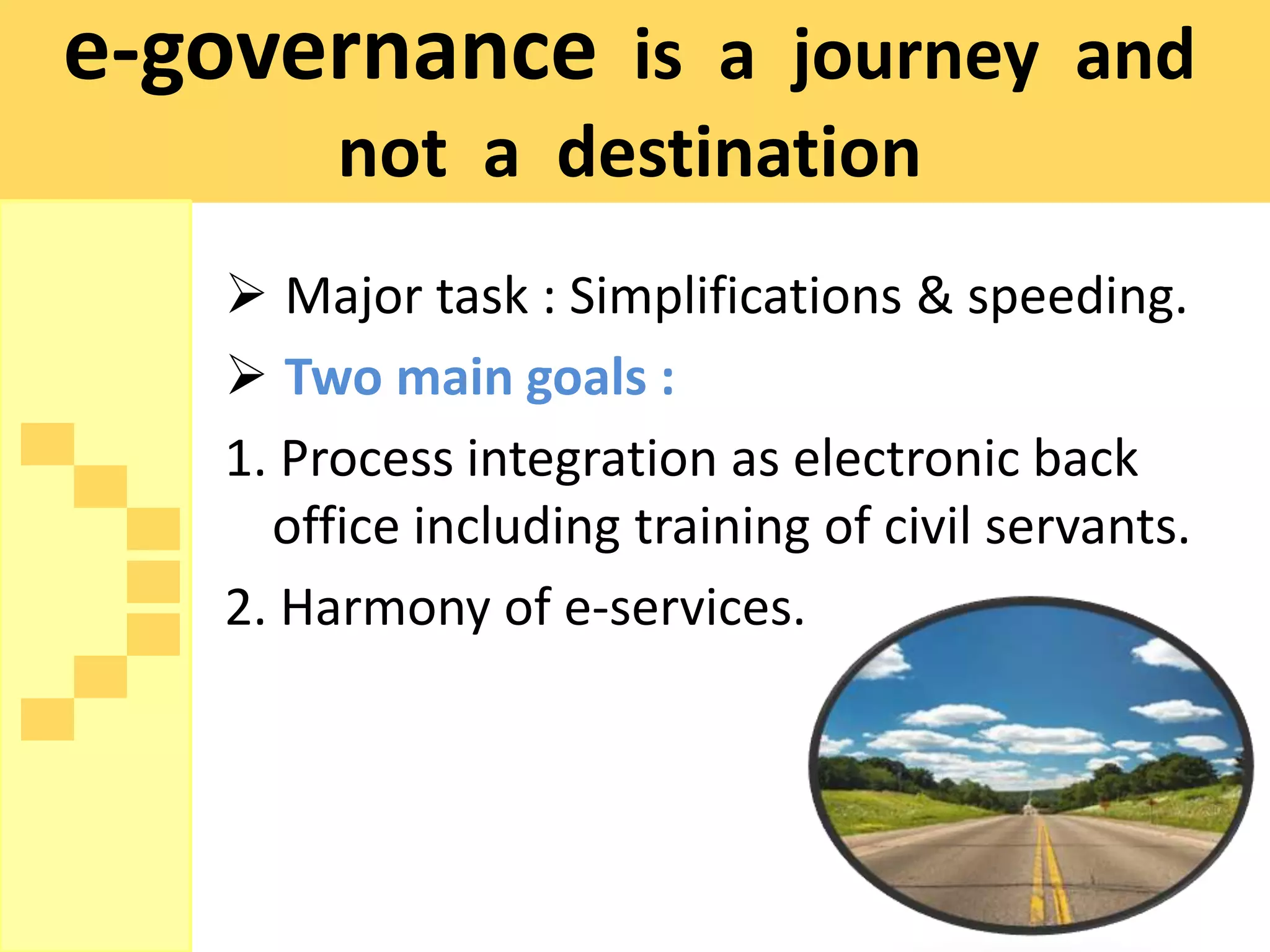
e-governance is a journey and
         not a destination
     Major task : Simplifications & speeding.
     Two main goals :
    1. Process integration as electronic back
      office including training of civil servants.
    2. Harmony of e-services.
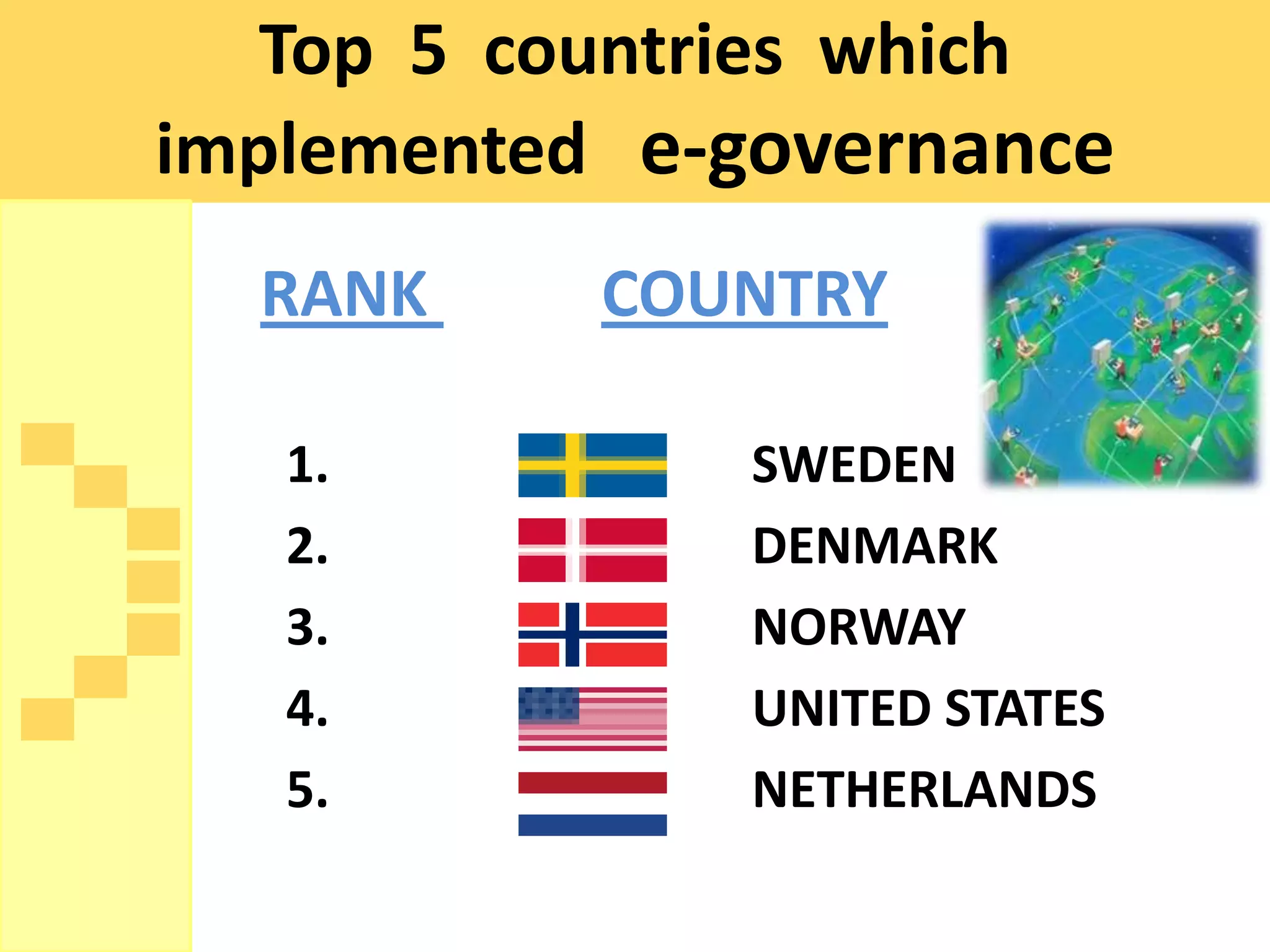
Top 5 countries which
implemented e-governance
  RANK     COUNTRY

   1.         SWEDEN
   2.         DENMARK
   3.         NORWAY
   4.         UNITED STATES
   5.         NETHERLANDS
India's initiative towards
        e-governance
 Mission 2007 : Connected Villages
  through wireless services.
 E- Suvidha : Provide services like BIRTH
   CERTFICATE, MARRIAGE CERTFICATE &
   INFORMATION relating to
   AGRICULUTURE.
 NATIONAL TAX INFORMATION
   EXCHANGE SYSTEM PROJECT.
Result of Indian projects of
       e-governance


              15%
       35%             Successful projects

                       Failure of projects


             50%       Partly failure
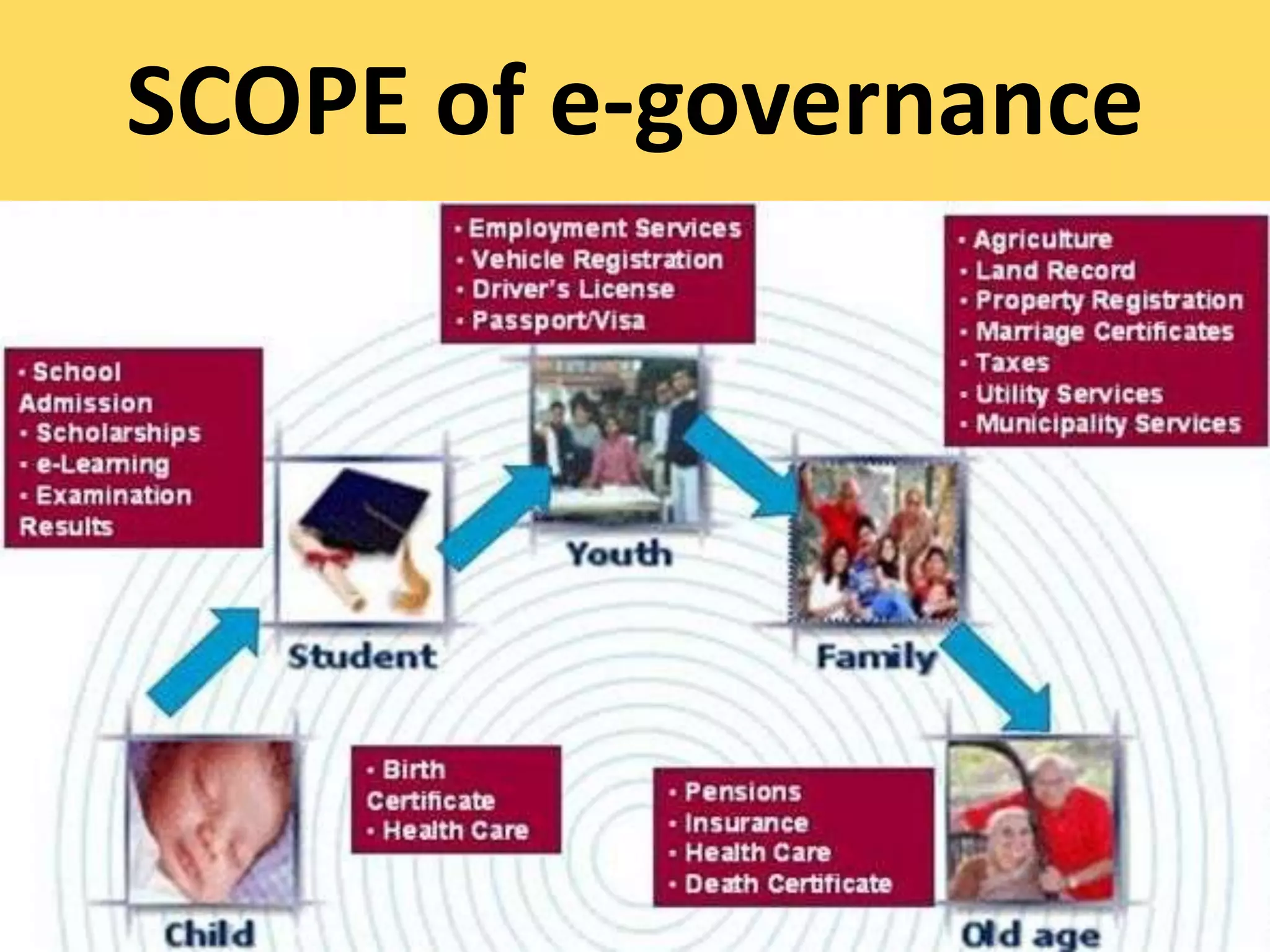
SCOPE of e-governance
Major implementation areas
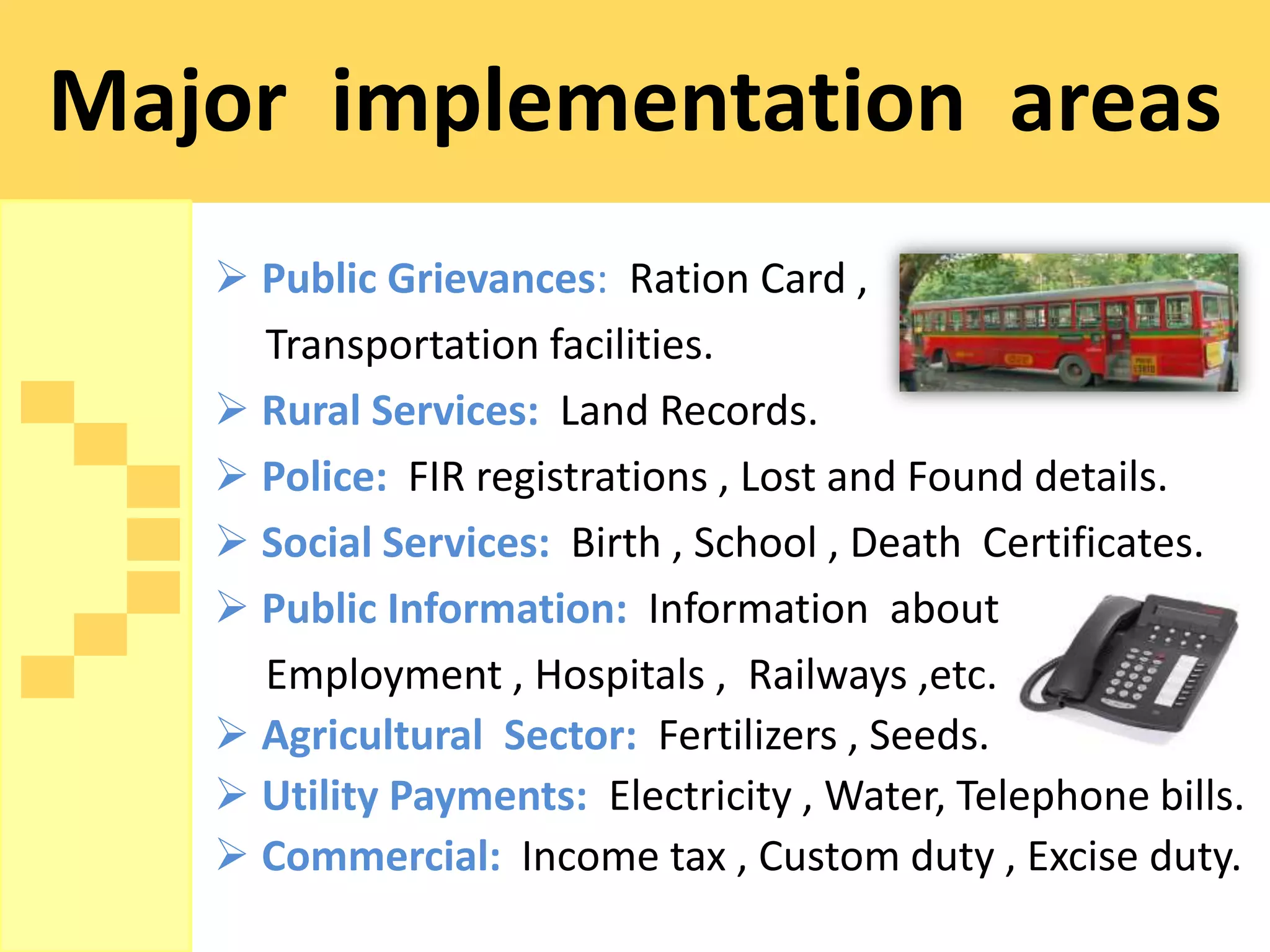
    Public Grievances: Ration Card ,
     Transportation facilities.
    Rural Services: Land Records.
    Police: FIR registrations , Lost and Found details.
    Social Services: Birth , School , Death Certificates.
    Public Information: Information about
     Employment , Hospitals , Railways ,etc.
    Agricultural Sector: Fertilizers , Seeds.
    Utility Payments: Electricity , Water, Telephone bills.
    Commercial: Income tax , Custom duty , Excise duty.
IMPORTANCE of e-governance
   Building strong and effective information
    chain.
   To bridge the gap between India and
    developed countries.
   Effective utilization of resources.
   Reduction in delays, Red tape and
    corruption.
LIMITATIONS of e-governance
    Budget.
    Poor IT literacy.
    Lack of electricity in rural areas.
    Corruption.
    Privacy problems.
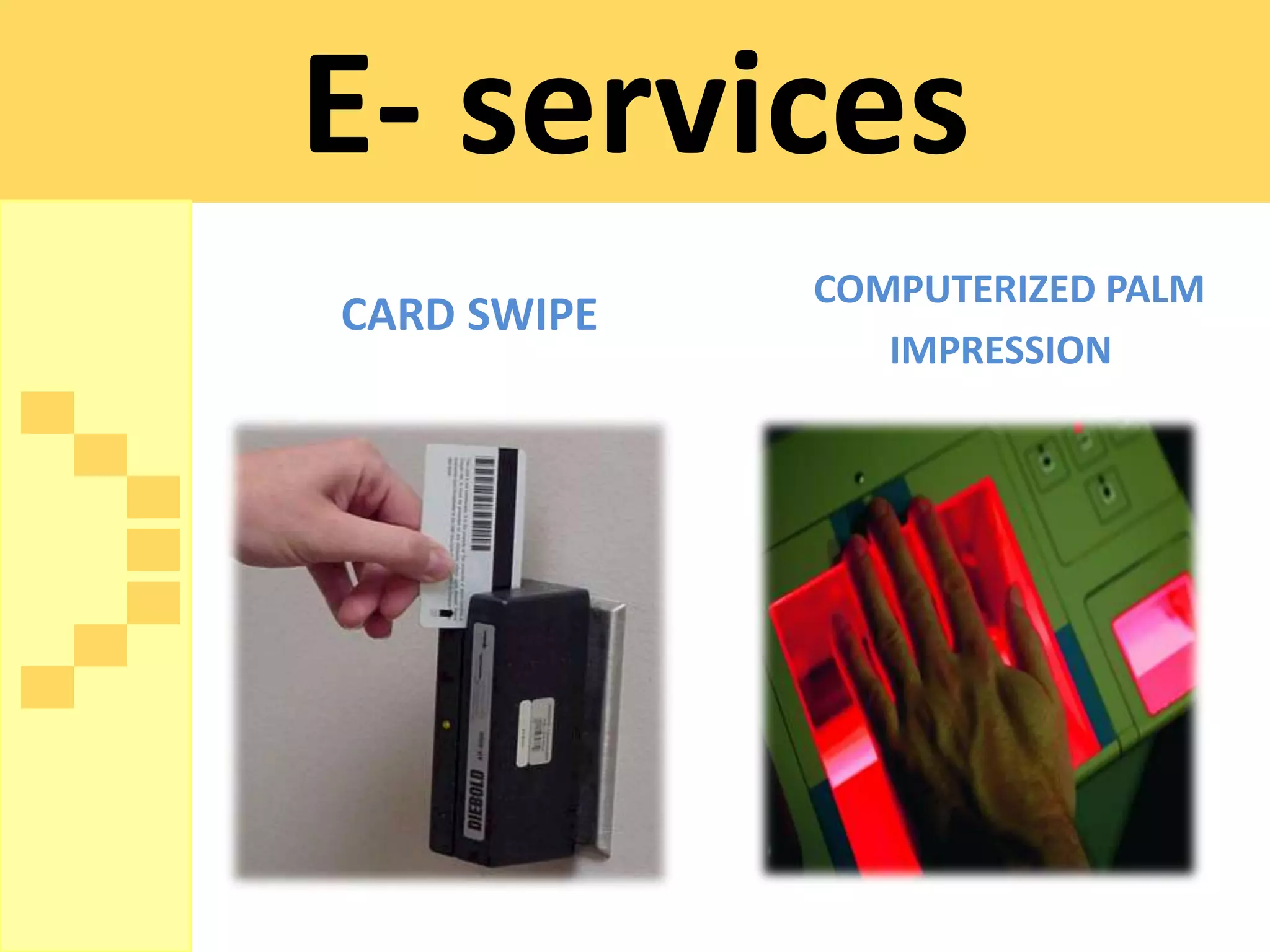
E- services
             COMPUTERIZED PALM
CARD SWIPE
                IMPRESSION
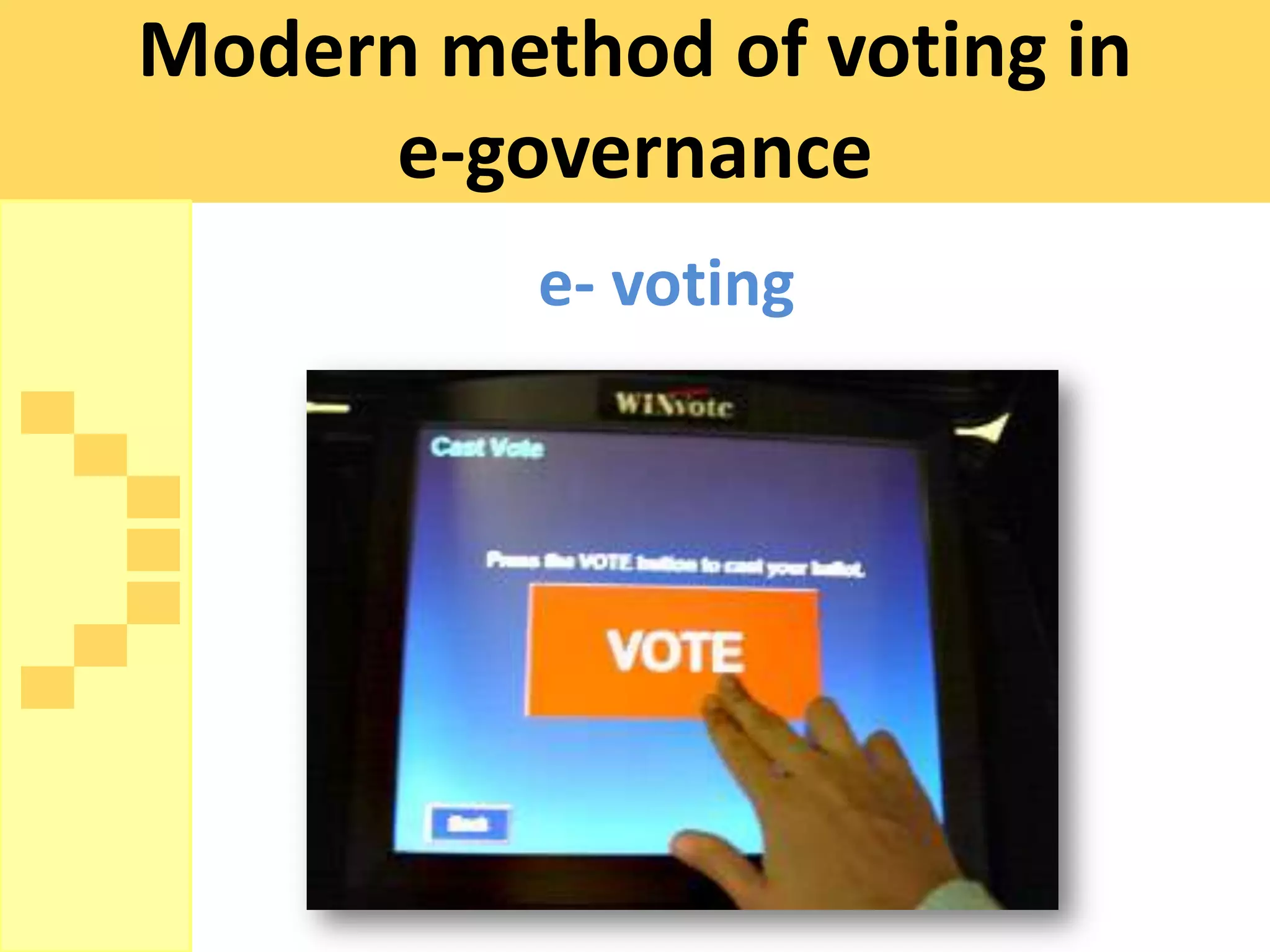
Modern method of voting in
     e-governance
          e- voting
CHALLENGES of e-governance
    Lack of Integrated services
    Lack of KEY PERSONS
    Population
    Lack of communication between
     different departments
    Different Languages
Conclusion
The goal of e-governance is the ability
 to access & interact with the world.
Developing countries have many
 opportunities to better themselves
 through e-governance.


WALK WITH THE WORLD.
Recommendations
Create awareness about positive role, the
 Government can play in ECONOMIC and
 SOCIAL development.
E- governance makes an impact on the
 KNOWLEDGE OF SOCIETY as well as on the
 LITERACY LEVEL of society.
 Reduce CORRUPTION in delivery of public
 services.
E- govt. benefits only the URBAN PEOPLE.
E governance

E governance

  • 1.
    e- governance
  • 2.
    What is e-governance? E-governance is the application of Information Technology to the processes of government functioning to bring about… Smart Moral Accountable Responsive Transparent Governance.
  • 3.
    How it wasintroduced in THE WORLD ? The United States of America was especially driven by the 1998 Government Paperwork Elimination Act, introduced by former President Mr. Bill Clinton on December 17, 1999.
  • 4.
    4 PILLARS ofe-governance
  • 5.
    BENEFITS of e-governance Cost effective Speed, efficiency & convenient Minimum use of hardcopy [ENVIRONMENTAL BONUS] Increases interest of citizens Easily accessible
  • 6.
    e-governance is ajourney and not a destination  Major task : Simplifications & speeding.  Two main goals : 1. Process integration as electronic back office including training of civil servants. 2. Harmony of e-services.
  • 7.
    Top 5 countrieswhich implemented e-governance RANK COUNTRY 1. SWEDEN 2. DENMARK 3. NORWAY 4. UNITED STATES 5. NETHERLANDS
  • 8.
    India's initiative towards e-governance Mission 2007 : Connected Villages through wireless services. E- Suvidha : Provide services like BIRTH CERTFICATE, MARRIAGE CERTFICATE & INFORMATION relating to AGRICULUTURE. NATIONAL TAX INFORMATION EXCHANGE SYSTEM PROJECT.
  • 9.
    Result of Indianprojects of e-governance 15% 35% Successful projects Failure of projects 50% Partly failure
  • 10.
  • 11.
    Major implementation areas  Public Grievances: Ration Card , Transportation facilities.  Rural Services: Land Records.  Police: FIR registrations , Lost and Found details.  Social Services: Birth , School , Death Certificates.  Public Information: Information about Employment , Hospitals , Railways ,etc.  Agricultural Sector: Fertilizers , Seeds.  Utility Payments: Electricity , Water, Telephone bills.  Commercial: Income tax , Custom duty , Excise duty.
  • 12.
    IMPORTANCE of e-governance Building strong and effective information chain. To bridge the gap between India and developed countries. Effective utilization of resources. Reduction in delays, Red tape and corruption.
  • 13.
    LIMITATIONS of e-governance Budget. Poor IT literacy. Lack of electricity in rural areas. Corruption. Privacy problems.
  • 14.
    E- services COMPUTERIZED PALM CARD SWIPE IMPRESSION
  • 15.
    Modern method ofvoting in e-governance e- voting
  • 16.
    CHALLENGES of e-governance Lack of Integrated services Lack of KEY PERSONS Population Lack of communication between different departments Different Languages
  • 17.
    Conclusion The goal ofe-governance is the ability to access & interact with the world. Developing countries have many opportunities to better themselves through e-governance. WALK WITH THE WORLD.
  • 18.
    Recommendations Create awareness aboutpositive role, the Government can play in ECONOMIC and SOCIAL development. E- governance makes an impact on the KNOWLEDGE OF SOCIETY as well as on the LITERACY LEVEL of society.  Reduce CORRUPTION in delivery of public services. E- govt. benefits only the URBAN PEOPLE.