Market Segmentation Raymund Sanchez
Content of the Lesson Definition of segmentation Purpose of segmentation Types of segmentation Segmentation process Levels of segmentation
Definition A  market segment  is a subgroup of people or organizations sharing one or more characteristics that cause them to have similar product needs.  it is distinct from other segments (heterogeneity across segments) it is homogeneous within the segment (exhibits common attributes) it responds similarly to a market stimuli it can be reached by a market intervention
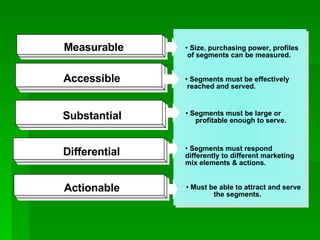
Size, purchasing power, profiles  of segments can be measured.  Segments must be effectively reached and served. Segments must be large or  profitable enough to serve. Measurable Accessible Substantial Differential Actionable Segments must respond  differently to different marketing mix elements & actions. Must be able to attract and serve  the segments.
Purpose Increase marketing efficiency by focusing marketing efforts to a particular group Maximize scarce marketing resources Find a market with limited competition Select the most profitable segment
Segmentation Criteria Geographic  variables  region  of the world or country, East, West, South, North, Central, coastal, hilly, etc.  country  size/country size : Metropolitan Cities, small cities, towns.  Density of Area  Urban, Semi-urban, Rural.  climate  Hot, Cold, Humid, Rainy.
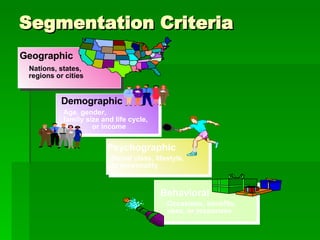
Segmentation Criteria Geographic Demographic Age, gender,  family size and life cycle,  or income  Psychographic Social class, lifestyle,  or personality Behavioral Occasions, benefits, uses, or responses Nations, states,  regions or cities
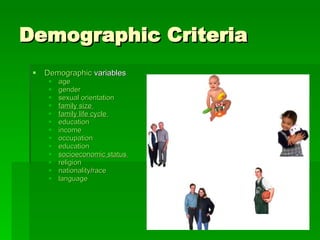
Demographic Criteria Demographic  variables  age   gender   sexual orientation   family  size  family life cycle  education income   occupation   education   socioeconomic   status  religion   nationality / race   language
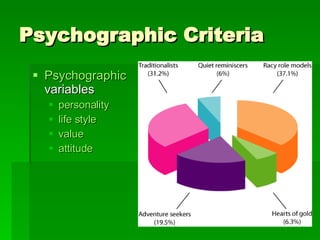
Psychographic Criteria Psychographic  variables  personality   life style   value   attitude
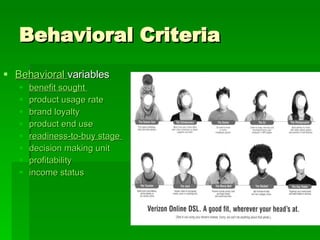
Behavioral Criteria Behavioral   variables  benefit sought  product usage rate   brand loyalty   product end use   readiness-to-buy  stage  decision making unit   profitability   income status
Market Segmentation Process Determine the characteristics of segments in the target market & separate these segments in the market based on these characteristics.  Verify the market segments size if adequate enough to support the organization's product.  Develop a marketing strategy to target this market.
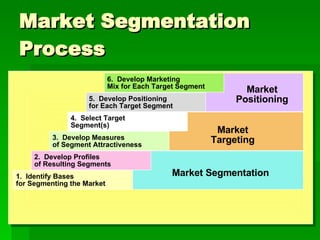
Market Segmentation Process 1.  Identify Bases for Segmenting the Market 2.  Develop Profiles of Resulting Segments 3.  Develop Measures of Segment Attractiveness 4.  Select Target Segment(s) 5.  Develop Positioning for Each Target Segment 6.  Develop Marketing Mix for Each Target Segment Market Positioning Market Targeting Market Segmentation
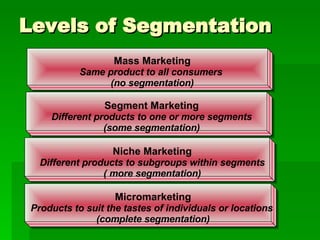
Levels of Segmentation Mass Marketing Same product to all consumers  (no segmentation) Segment Marketing Different products to one or more segments (some segmentation) Micromarketing Products to suit the tastes of individuals or locations  (complete segmentation) Niche Marketing Different products to subgroups within segments ( more segmentation)
- END -

Introduction to Market Segmentation

  • 1.
  • 2.
    Content of theLesson Definition of segmentation Purpose of segmentation Types of segmentation Segmentation process Levels of segmentation
  • 3.
    Definition A market segment is a subgroup of people or organizations sharing one or more characteristics that cause them to have similar product needs. it is distinct from other segments (heterogeneity across segments) it is homogeneous within the segment (exhibits common attributes) it responds similarly to a market stimuli it can be reached by a market intervention
  • 4.
    Size, purchasing power,profiles of segments can be measured. Segments must be effectively reached and served. Segments must be large or profitable enough to serve. Measurable Accessible Substantial Differential Actionable Segments must respond differently to different marketing mix elements & actions. Must be able to attract and serve the segments.
  • 5.
    Purpose Increase marketingefficiency by focusing marketing efforts to a particular group Maximize scarce marketing resources Find a market with limited competition Select the most profitable segment
  • 6.
    Segmentation Criteria Geographic variables region of the world or country, East, West, South, North, Central, coastal, hilly, etc. country size/country size : Metropolitan Cities, small cities, towns. Density of Area Urban, Semi-urban, Rural. climate Hot, Cold, Humid, Rainy.
  • 7.
    Segmentation Criteria GeographicDemographic Age, gender, family size and life cycle, or income Psychographic Social class, lifestyle, or personality Behavioral Occasions, benefits, uses, or responses Nations, states, regions or cities
  • 8.
    Demographic Criteria Demographic variables age gender sexual orientation family size family life cycle education income occupation education socioeconomic status religion nationality / race language
  • 9.
    Psychographic Criteria Psychographic variables personality life style value attitude
  • 10.
    Behavioral Criteria Behavioral variables benefit sought product usage rate brand loyalty product end use readiness-to-buy stage decision making unit profitability income status
  • 11.
    Market Segmentation ProcessDetermine the characteristics of segments in the target market & separate these segments in the market based on these characteristics. Verify the market segments size if adequate enough to support the organization's product. Develop a marketing strategy to target this market.
  • 12.
    Market Segmentation Process1. Identify Bases for Segmenting the Market 2. Develop Profiles of Resulting Segments 3. Develop Measures of Segment Attractiveness 4. Select Target Segment(s) 5. Develop Positioning for Each Target Segment 6. Develop Marketing Mix for Each Target Segment Market Positioning Market Targeting Market Segmentation
  • 13.
    Levels of SegmentationMass Marketing Same product to all consumers (no segmentation) Segment Marketing Different products to one or more segments (some segmentation) Micromarketing Products to suit the tastes of individuals or locations (complete segmentation) Niche Marketing Different products to subgroups within segments ( more segmentation)
  • 14.