is an assortment of items
which the consumer may
perceive as substitute for
each other.


-is the process by which a
retail business is managed
with
the
objective
of
maximizing the sales and
profits of a category.


- is a distributor/supplier process
of managing categories as
strategic
business
units,
producing
enhanced
business results by focusing on
delivering consumer value


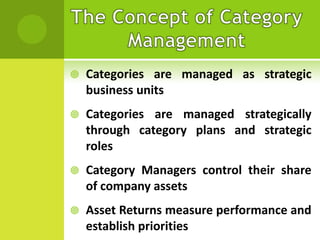
Categories are managed as strategic
business units



Categories are managed strategically
through category plans and strategic
roles



Category Managers control their share
of company assets



Asset Returns measure performance and
establish priorities


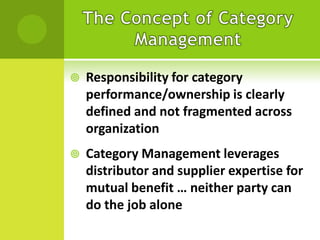
Responsibility for category
performance/ownership is clearly
defined and not fragmented across
organization



Category Management leverages
distributor and supplier expertise for
mutual benefit … neither party can
do the job alone


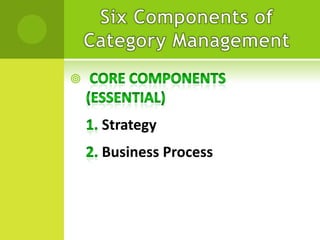
Strategy

Business Process
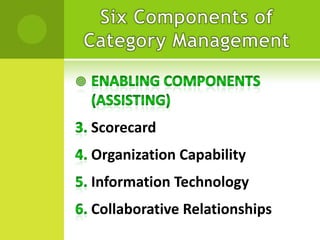
Scorecard
Organization Capability
Information Technology
Collaborative Relationships


Categories are strategic business
units



Overall company strategies provide a
infrastructure for category level
strategies



Strategies must be clearly
understood throughout the Retailer’s
organization


A formal, disciplined set of activities
designed to produce a specified
output


Development and implementation
of Written Category Business
Plans


A tools that defines, measures
and monitors the progress of
Category Business Plans


Development of the
organization’s core competency


Through organizational
structure



Roles/Responsibilities



Skill/Knowledge development



Reward Systems


Critical elements of the
Category Business Planning
Process


Need data-driven, fact-based
analysis and performance
measurement


Relationships with suppliers
who acquire unique
perspectives, resources and
skills



Common objective -- delivering
superior consumer value more
profitability
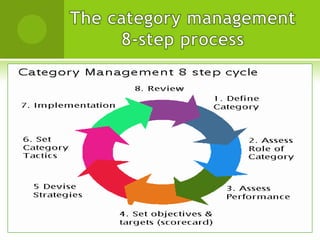
- Category Management is underpinned
by a structured process which provides
a framework for retailer & supplier to
work together strategically. A formal 8step category management process was
developed just over a decade ago by
the Partnering Group.


Category Definition is the 1st step in the
procedure. The definition of the category
has a significant impact on the
subsequent steps. A category definition
ought to be based on how the customer
buys, and not on how the retailer buys.



The trading partners need to define the
new category with a name


What is it?



What are the sub-categories?


The distributor (with supplier input) would
define the overall role the selected category
is going to play in the distributor’s total
business





How important is the category?
How to leverage the importance?

The category role determines the priority and
the importance of the numerous categories in
the overall enterprise. These aids in resource
allocation. Traditionally, four categories have
been identified. They are:



To be the primary category provider and
help define the retailer as the store of
choice by delivering consistent, superior
target consumer value



To be one of the preferred category
providers and help develop the retailer as
the store of choice by delivering
consistent, competitive target consumer
value




To be a major category provider, help
reinforce the retailer as the store of
choice
by
delivering
frequent, competitive target consumer
value



To be a category provider and help
reinforce the retailer as the store of
choice by delivering good target
consumer value


Category Assessment: In this step, the existing
performance of the category is evaluated with respect
to the turnover, profits and return on asses in the
category. It involves an assessment of the buyers, the
marketplace, the retailer and the suppliers.



The process of Category Assessment



Consumer Assessment



Market Assessment



Retailer Assessment



Supplier Assessment


Establishment of the performance measures
by which the category manager will measure
the quality of the execution of the plan





What are the goals & objectives?

How is the progress?

The development of category performance
measures involves the setting of measurable
targets in terms of sales, margins and Gross
Margin Returns on Investment (GMROI).


Typical Category performance
measures include:



Good performance measures
are characterized by:



Sales





Profits

A balanced Architecture of
Measurement



Total system



Allow for comparison of
Performance Over time



Timely, Accurate, Understanda
ble Measures



Related to Corporate Strategy



Market Share



Inventory Turnover



Changes in the Assortment



Consumer Transactions


Assignment of specific strategies to key elements of
the overall category





What is the business plan?
How will it achieve the role & scorecard?

The purpose of this step is to help the retailer and
supplier to develop methods that capitalize on
category opportunities by means of creative and
efficient use of the resources that are accessible to
the category. Category strategies can be aimed at
developing traffic or transactions, generating
cash, generating profit, enhancing the image or
developing excitement.


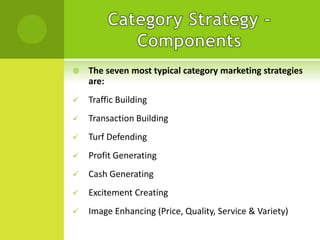
The seven most typical category marketing strategies
are:



Traffic Building



Transaction Building



Turf Defending



Profit Generating



Cash Generating



Excitement Creating



Image Enhancing (Price, Quality, Service & Variety)


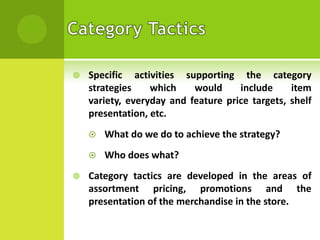
Specific activities supporting the category
strategies
which
would
include
item
variety, everyday and feature price targets, shelf
presentation, etc.





What do we do to achieve the strategy?
Who does what?

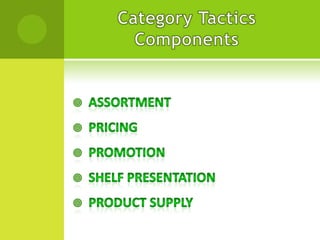
Category tactics are developed in the areas of
assortment pricing, promotions and the
presentation of the merchandise in the store.


A specific implementation schedule
is developed and responsibilities are
assigned. Accurate implementation
is the key to the success of the
Category Management.


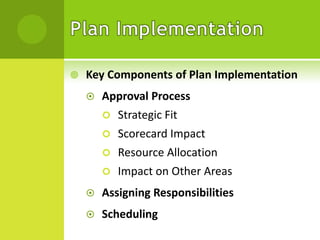
Key Components of Plan Implementation


Approval Process


Strategic Fit



Scorecard Impact



Resource Allocation



Impact on Other Areas



Assigning Responsibilities



Scheduling


Ongoing review and measurement
of the progress of the plan toward
the category role and scorecard, and
modification of the plan when
appropriate


Category captains is a supplier who forms an alliance
with the retailer to enable the latter to develop
consumer insight , satisfy consumers and improve
performances and profit across the entire category.



Category captains receive downstream data for all
SKUs, including competitor products, in the category
they manage. The category captain advises the
retailer on the best way to price, display, and
promote all products in a category, including those of
competitors. While this arrangement ensures retail
efficiency, it does raise concerns about possible
misuse of power by the category captain.


The grocery industry is in a major
state of transition. This change is a
function of a complex mix of
consumer,
technological
and
market factors.



Category Management represents a
business oriented approach to
achieving business results -- both
for distributors and suppliers
Category Management

Category Management

  • 2.
    is an assortmentof items which the consumer may perceive as substitute for each other.
  • 3.
     -is the processby which a retail business is managed with the objective of maximizing the sales and profits of a category.
  • 4.
     - is adistributor/supplier process of managing categories as strategic business units, producing enhanced business results by focusing on delivering consumer value
  • 5.
     Categories are managedas strategic business units  Categories are managed strategically through category plans and strategic roles  Category Managers control their share of company assets  Asset Returns measure performance and establish priorities
  • 6.
     Responsibility for category performance/ownershipis clearly defined and not fragmented across organization  Category Management leverages distributor and supplier expertise for mutual benefit … neither party can do the job alone
  • 7.
  • 8.
  • 9.
     Categories are strategicbusiness units  Overall company strategies provide a infrastructure for category level strategies  Strategies must be clearly understood throughout the Retailer’s organization
  • 11.
     A formal, disciplinedset of activities designed to produce a specified output  Development and implementation of Written Category Business Plans
  • 12.
     A tools thatdefines, measures and monitors the progress of Category Business Plans
  • 13.
     Development of the organization’score competency  Through organizational structure  Roles/Responsibilities  Skill/Knowledge development  Reward Systems
  • 14.
     Critical elements ofthe Category Business Planning Process  Need data-driven, fact-based analysis and performance measurement
  • 15.
     Relationships with suppliers whoacquire unique perspectives, resources and skills  Common objective -- delivering superior consumer value more profitability
  • 16.
    - Category Managementis underpinned by a structured process which provides a framework for retailer & supplier to work together strategically. A formal 8step category management process was developed just over a decade ago by the Partnering Group.
  • 18.
     Category Definition isthe 1st step in the procedure. The definition of the category has a significant impact on the subsequent steps. A category definition ought to be based on how the customer buys, and not on how the retailer buys.  The trading partners need to define the new category with a name  What is it?  What are the sub-categories?
  • 19.
     The distributor (withsupplier input) would define the overall role the selected category is going to play in the distributor’s total business    How important is the category? How to leverage the importance? The category role determines the priority and the importance of the numerous categories in the overall enterprise. These aids in resource allocation. Traditionally, four categories have been identified. They are:
  • 20.
      To be theprimary category provider and help define the retailer as the store of choice by delivering consistent, superior target consumer value  To be one of the preferred category providers and help develop the retailer as the store of choice by delivering consistent, competitive target consumer value 
  • 21.
     To be amajor category provider, help reinforce the retailer as the store of choice by delivering frequent, competitive target consumer value  To be a category provider and help reinforce the retailer as the store of choice by delivering good target consumer value
  • 22.
     Category Assessment: Inthis step, the existing performance of the category is evaluated with respect to the turnover, profits and return on asses in the category. It involves an assessment of the buyers, the marketplace, the retailer and the suppliers.  The process of Category Assessment  Consumer Assessment  Market Assessment  Retailer Assessment  Supplier Assessment
  • 23.
     Establishment of theperformance measures by which the category manager will measure the quality of the execution of the plan    What are the goals & objectives? How is the progress? The development of category performance measures involves the setting of measurable targets in terms of sales, margins and Gross Margin Returns on Investment (GMROI).
  • 24.
     Typical Category performance measuresinclude:  Good performance measures are characterized by:  Sales   Profits A balanced Architecture of Measurement  Total system  Allow for comparison of Performance Over time  Timely, Accurate, Understanda ble Measures  Related to Corporate Strategy  Market Share  Inventory Turnover  Changes in the Assortment  Consumer Transactions
  • 25.
     Assignment of specificstrategies to key elements of the overall category    What is the business plan? How will it achieve the role & scorecard? The purpose of this step is to help the retailer and supplier to develop methods that capitalize on category opportunities by means of creative and efficient use of the resources that are accessible to the category. Category strategies can be aimed at developing traffic or transactions, generating cash, generating profit, enhancing the image or developing excitement.
  • 26.
     The seven mosttypical category marketing strategies are:  Traffic Building  Transaction Building  Turf Defending  Profit Generating  Cash Generating  Excitement Creating  Image Enhancing (Price, Quality, Service & Variety)
  • 27.
     Specific activities supportingthe category strategies which would include item variety, everyday and feature price targets, shelf presentation, etc.    What do we do to achieve the strategy? Who does what? Category tactics are developed in the areas of assortment pricing, promotions and the presentation of the merchandise in the store.
  • 29.
     A specific implementationschedule is developed and responsibilities are assigned. Accurate implementation is the key to the success of the Category Management.
  • 30.
     Key Components ofPlan Implementation  Approval Process  Strategic Fit  Scorecard Impact  Resource Allocation  Impact on Other Areas  Assigning Responsibilities  Scheduling
  • 31.
     Ongoing review andmeasurement of the progress of the plan toward the category role and scorecard, and modification of the plan when appropriate
  • 32.
     Category captains isa supplier who forms an alliance with the retailer to enable the latter to develop consumer insight , satisfy consumers and improve performances and profit across the entire category.  Category captains receive downstream data for all SKUs, including competitor products, in the category they manage. The category captain advises the retailer on the best way to price, display, and promote all products in a category, including those of competitors. While this arrangement ensures retail efficiency, it does raise concerns about possible misuse of power by the category captain.
  • 34.
     The grocery industryis in a major state of transition. This change is a function of a complex mix of consumer, technological and market factors.  Category Management represents a business oriented approach to achieving business results -- both for distributors and suppliers