Recombinant DNA Technology 
By -: Lovnish Thakur (IBT-1ST Sem) 
Enrollment NO. –ASU2014010100099 
Course code -: 105 (biotechnology)
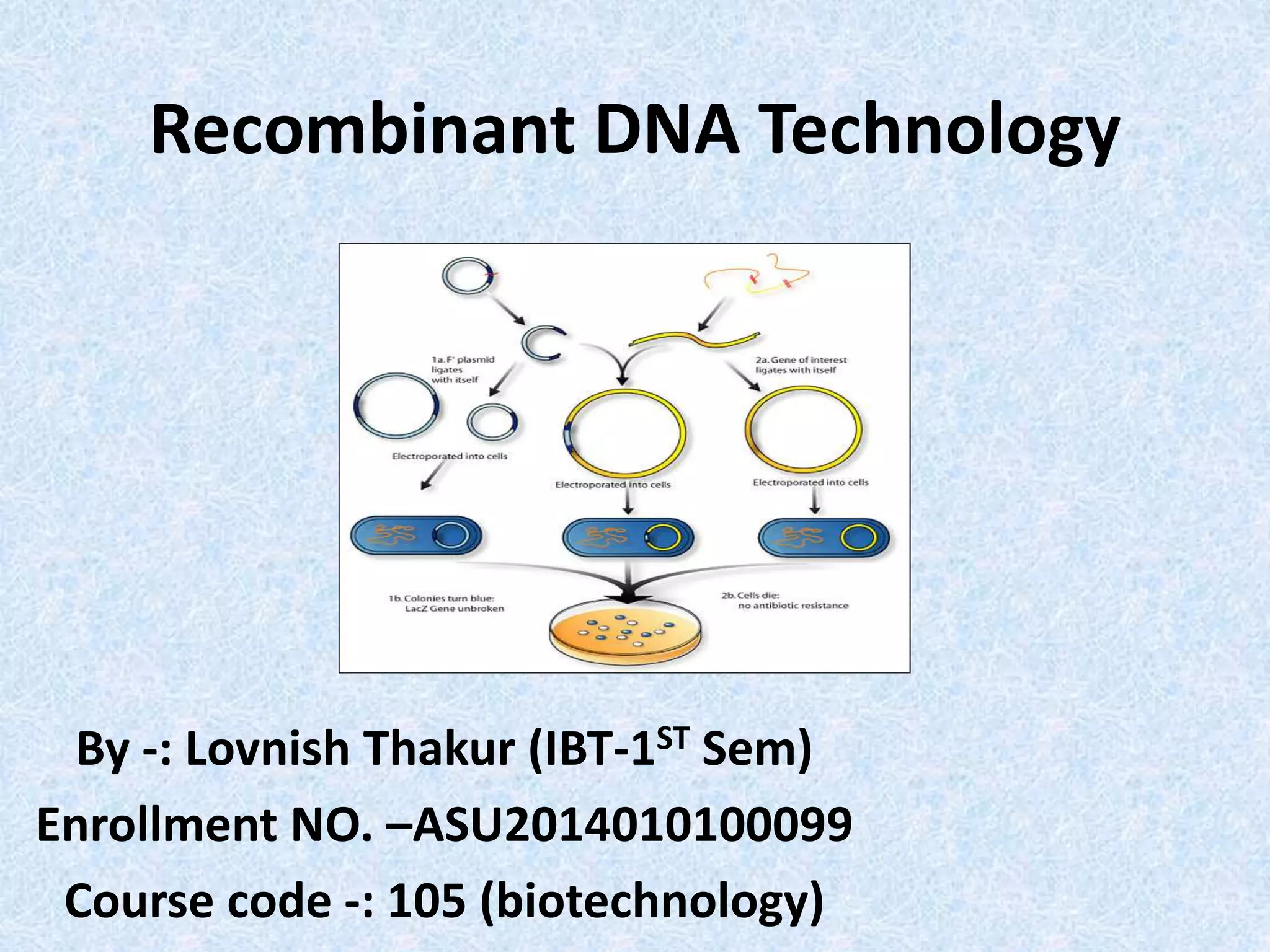
Recombinant DNA Technology 
• Recombinant DNA technology procedures by 
which DNA from different species can be 
isolated, cut and spliced together -- new 
"recombinant " molecules are then multiplied 
in quantity in populations of rapidly dividing 
cells (e.g. bacteria, yeast).
The Role of Recombinant DNA 
Technology in Biotechnology 
 Recombinant DNA Technology 
–Intentional modification of organisms’ genomes for practical purposes 
 Three goals 
•Eliminate undesirable phenotypic traits 
•Combine beneficial traits of two or more organisms 
•Create organisms that synthesize products humans need
Key tool for RDT 
• Restriction Enzyme 
• Ligases 
• Polymerase enzyme 
• Host 
• Vector 
• Gene library
Restriction Enzymes 
• Restriction enzymes belong to a larger class of 
enzymes called nucleases. 
• These are of two kinds; exonucleases and 
endonucleases. 
• Exonucleases remove nucleotides from the 
ends of the DNA whereas, 
• endonucleases make cuts at specific positions 
within the DNA
restriction endonuclease functions 
 Restriction endonuclease functions by ‘inspecting’ the 
length of a DNA sequence. Once it finds its specific 
recognition sequence, it will bind to the DNA and cut each 
of the two strands of the double helix at specific points in 
their sugar -phosphate backbones 
 Each restriction endonuclease recognises a specific 
palindromic nucleotide sequences in the DNA. 
 The palindrome in DNA is a sequence of base pairs that 
reads same on the two strands when orientation of reading 
is kept the same. For example, the following sequences read 
the same on the two strands in 5' à 3' direction. 
 This is also true if read in the 3' à 5' direction. 
5' —— GAATTC —— 3' 
3' —— CTTAAG —— 5'
Origin and function 
 Bacterial origin = enzymes that cleave foreign DNA 
 Named after the organism from which they were derived 
 For e.g - : EcoRI from Escherichia coli 
 Protect bacteria from bacteriophage infection 
–Restricts viral replication 
-Bacterium protects it’s own DNA by methylating those specific 
sequence .
www.scq.ubc.ca
ncertbooks.prashanthellina.com/class_12.Biology.Biology/
Classes 
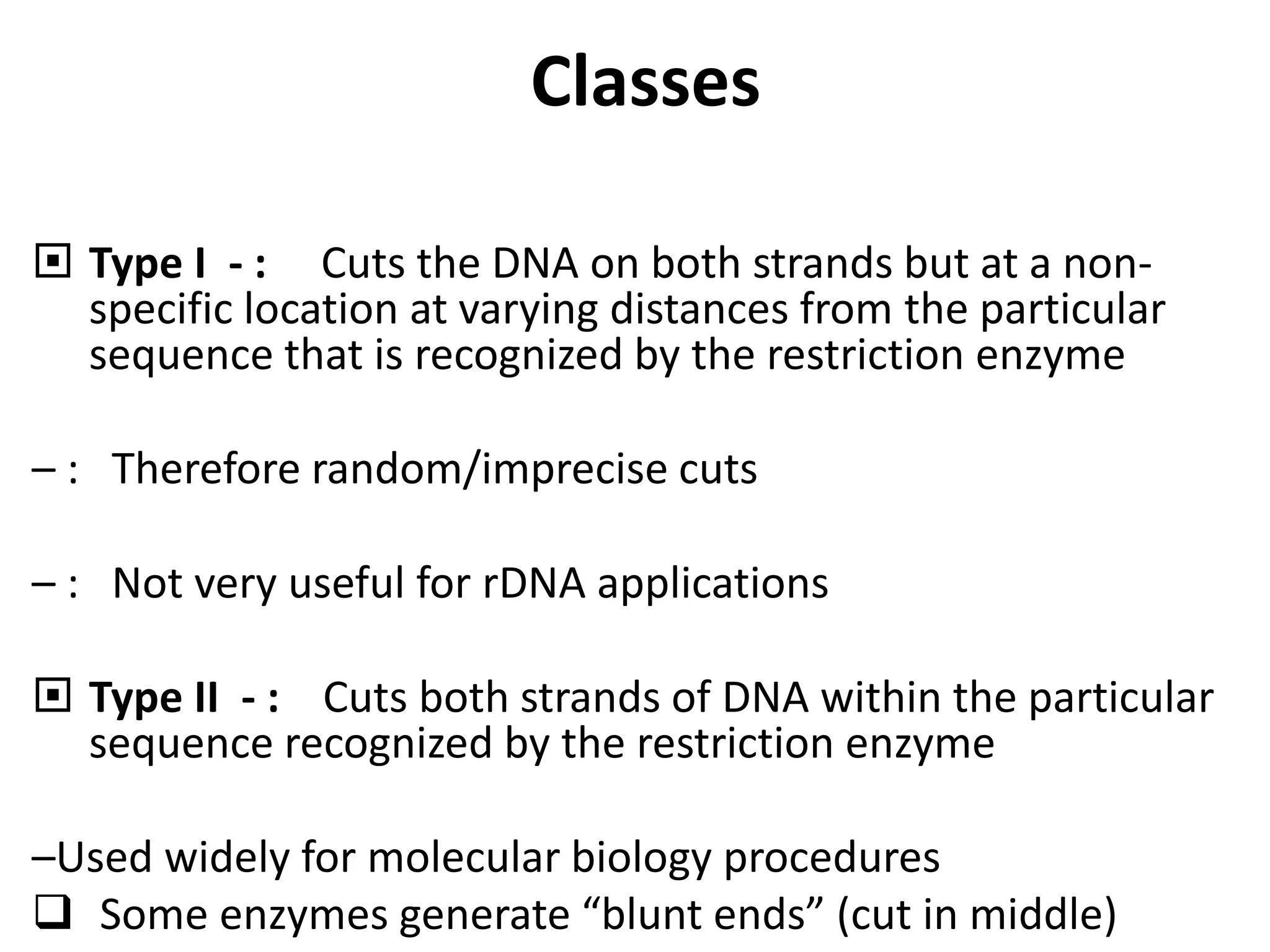
 Type I - : Cuts the DNA on both strands but at a non-specific 
location at varying distances from the particular 
sequence that is recognized by the restriction enzyme 
– : Therefore random/imprecise cuts 
– : Not very useful for rDNA applications 
 Type II - : Cuts both strands of DNA within the particular 
sequence recognized by the restriction enzyme 
–Used widely for molecular biology procedures 
 Some enzymes generate “blunt ends” (cut in middle)
ligases 
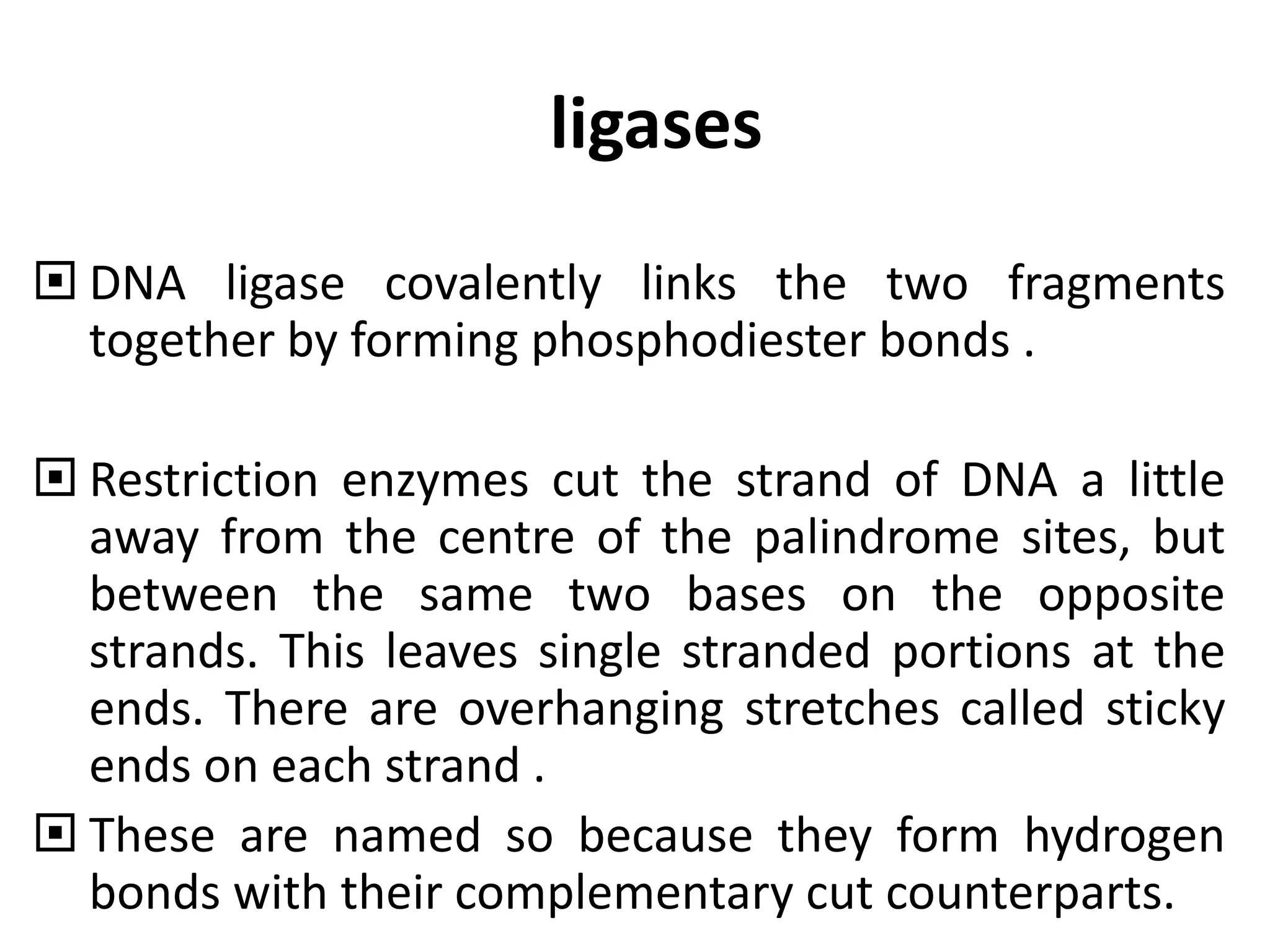
 DNA ligase covalently links the two fragments 
together by forming phosphodiester bonds . 
 Restriction enzymes cut the strand of DNA a little 
away from the centre of the palindrome sites, but 
between the same two bases on the opposite 
strands. This leaves single stranded portions at the 
ends. There are overhanging stretches called sticky 
ends on each strand . 
 These are named so because they form hydrogen 
bonds with their complementary cut counterparts.
Action of ligases 
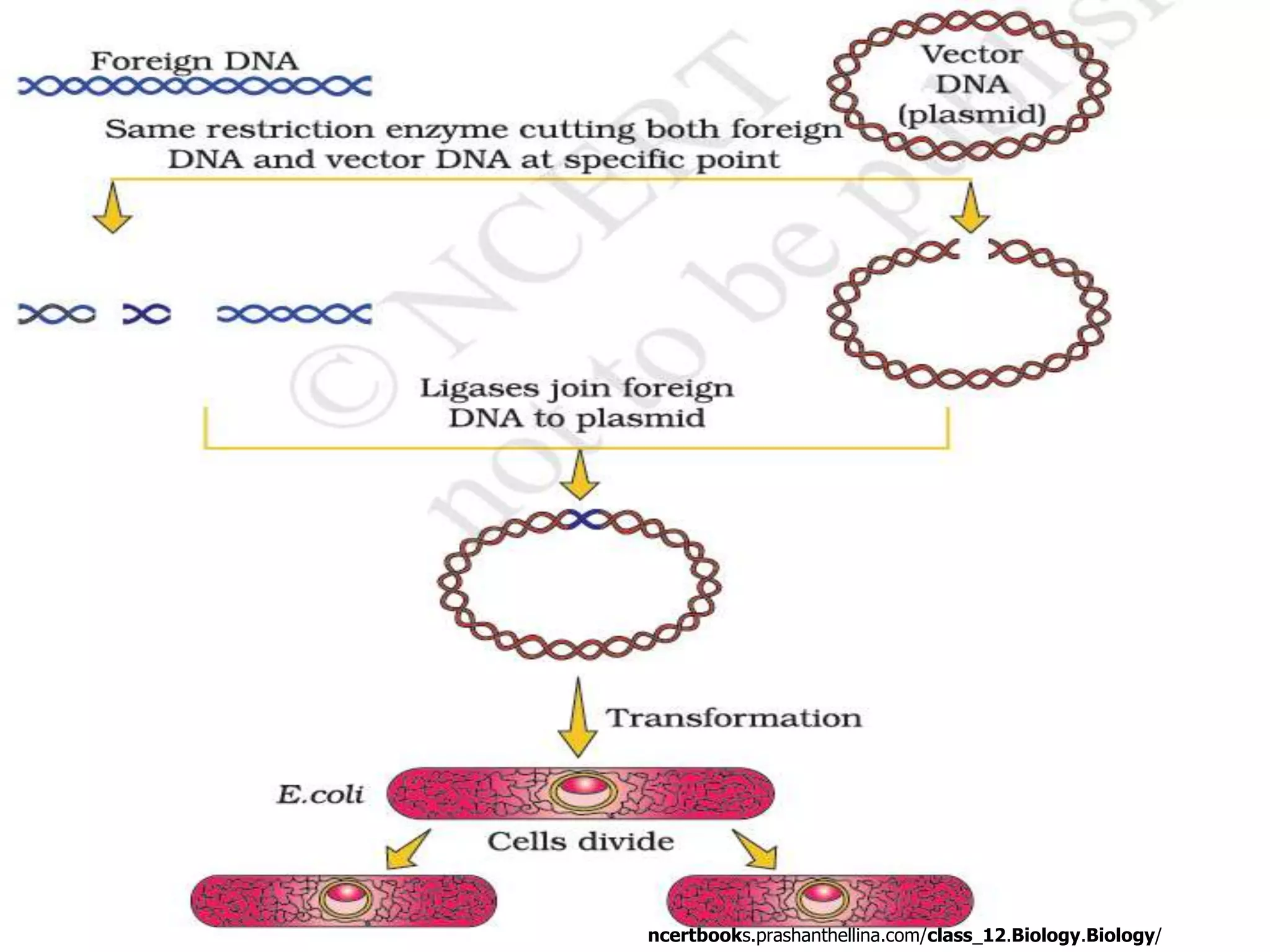
• When cut by the same restriction enzyme, the 
resultant DNA fragments have the same kind 
of ‘sticky-ends’ and, these can be joined 
together. 
• (end-to-end) using DNA ligases
ncertbooks.prashanthellina.com/class_12.Biology.Biology/
Separation and isolation of DNA 
fragments 
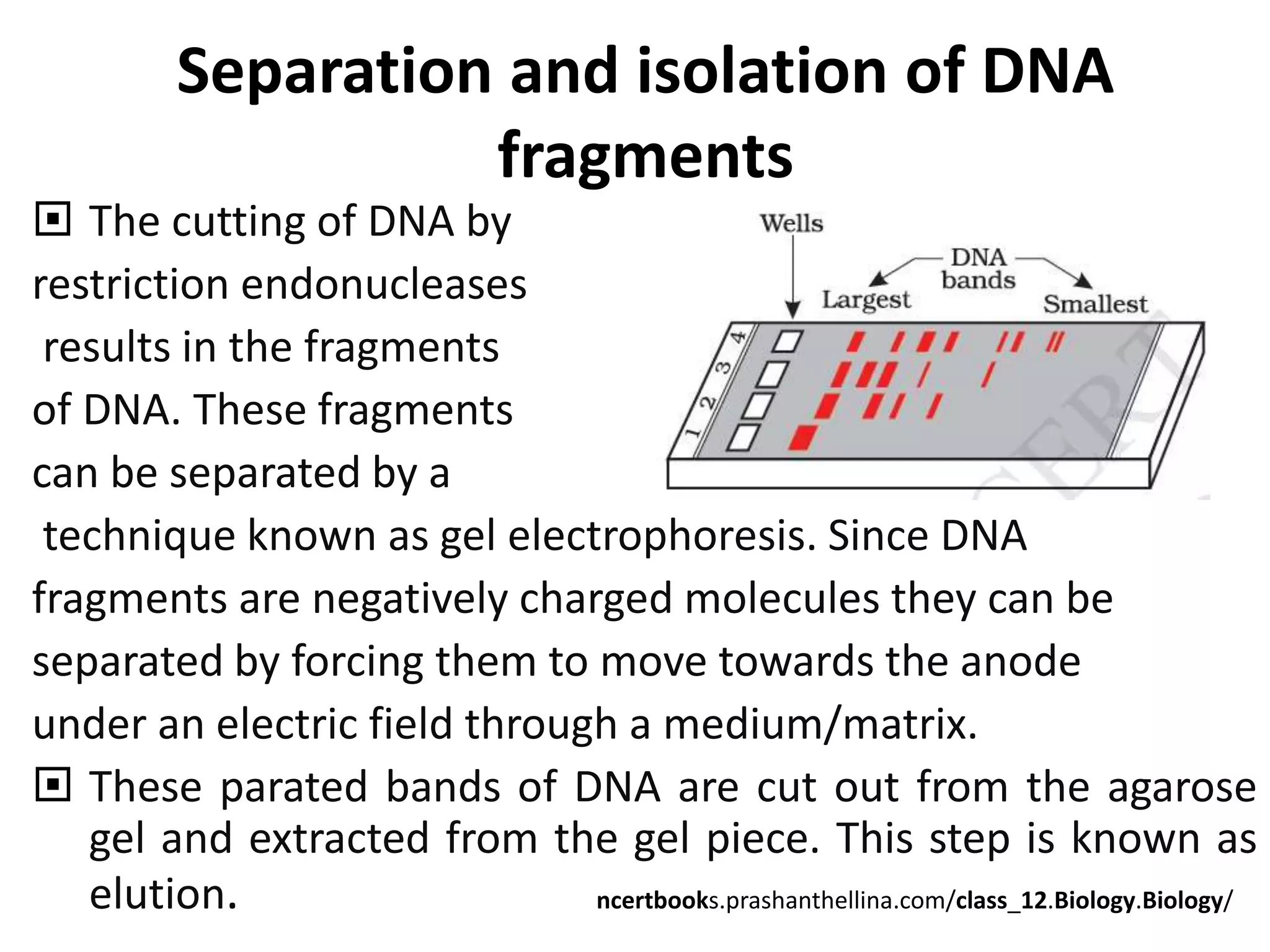
 The cutting of DNA by 
restriction endonucleases 
results in the fragments 
of DNA. These fragments 
can be separated by a 
technique known as gel electrophoresis. Since DNA 
fragments are negatively charged molecules they can be 
separated by forcing them to move towards the anode 
under an electric field through a medium/matrix. 
 These parated bands of DNA are cut out from the agarose 
gel and extracted from the gel piece. This step is known as 
elution. ncertbooks.prashanthellina.com/class_12.Biology.Biology/
Vectors 
 Nucleic acid molecules that deliver a gene into a cell 
–: Useful properties 
•Small enough to manipulate in a lab 
•Survive inside cells 
•Contain recognizable genetic marker 
•Ensure genetic expression of gene 
 Include viral genomes, transposons, and plasmids
www.genscript.com
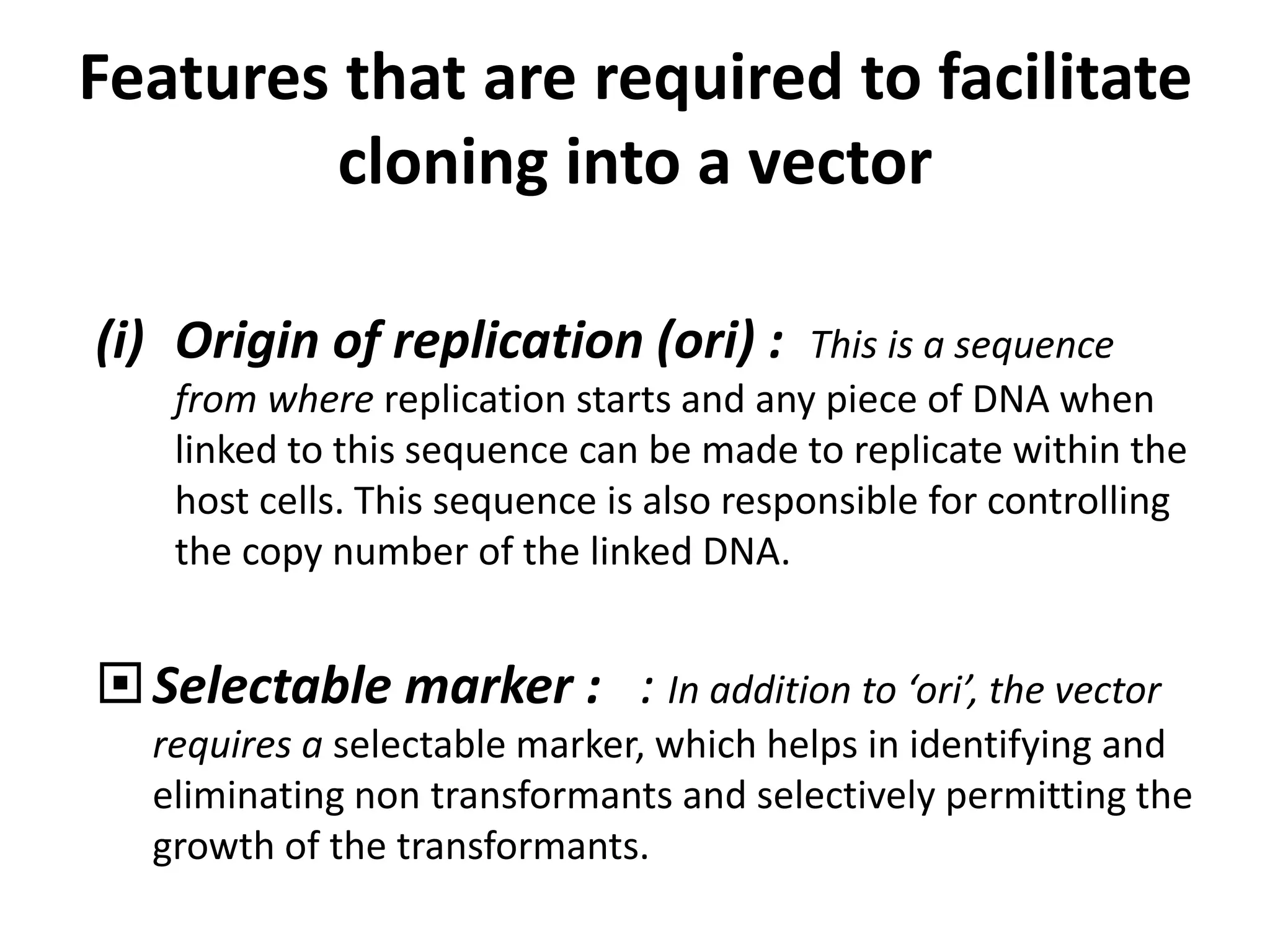
Features that are required to facilitate 
cloning into a vector 
(i) Origin of replication (ori) : This is a sequence 
from where replication starts and any piece of DNA when 
linked to this sequence can be made to replicate within the 
host cells. This sequence is also responsible for controlling 
the copy number of the linked DNA. 
 Selectable marker : : In addition to ‘ori’, the vector 
requires a selectable marker, which helps in identifying and 
eliminating non transformants and selectively permitting the 
growth of the transformants.
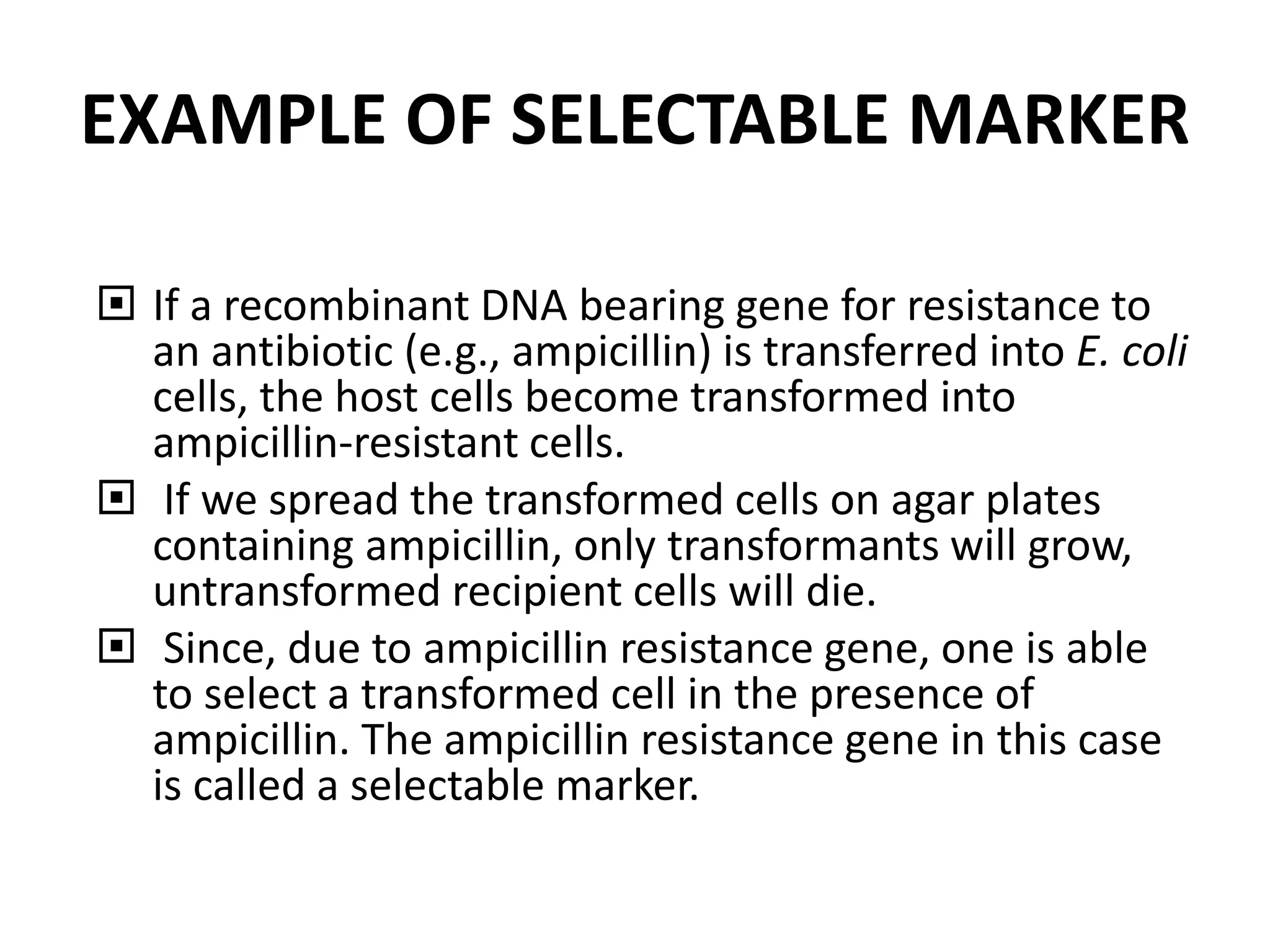
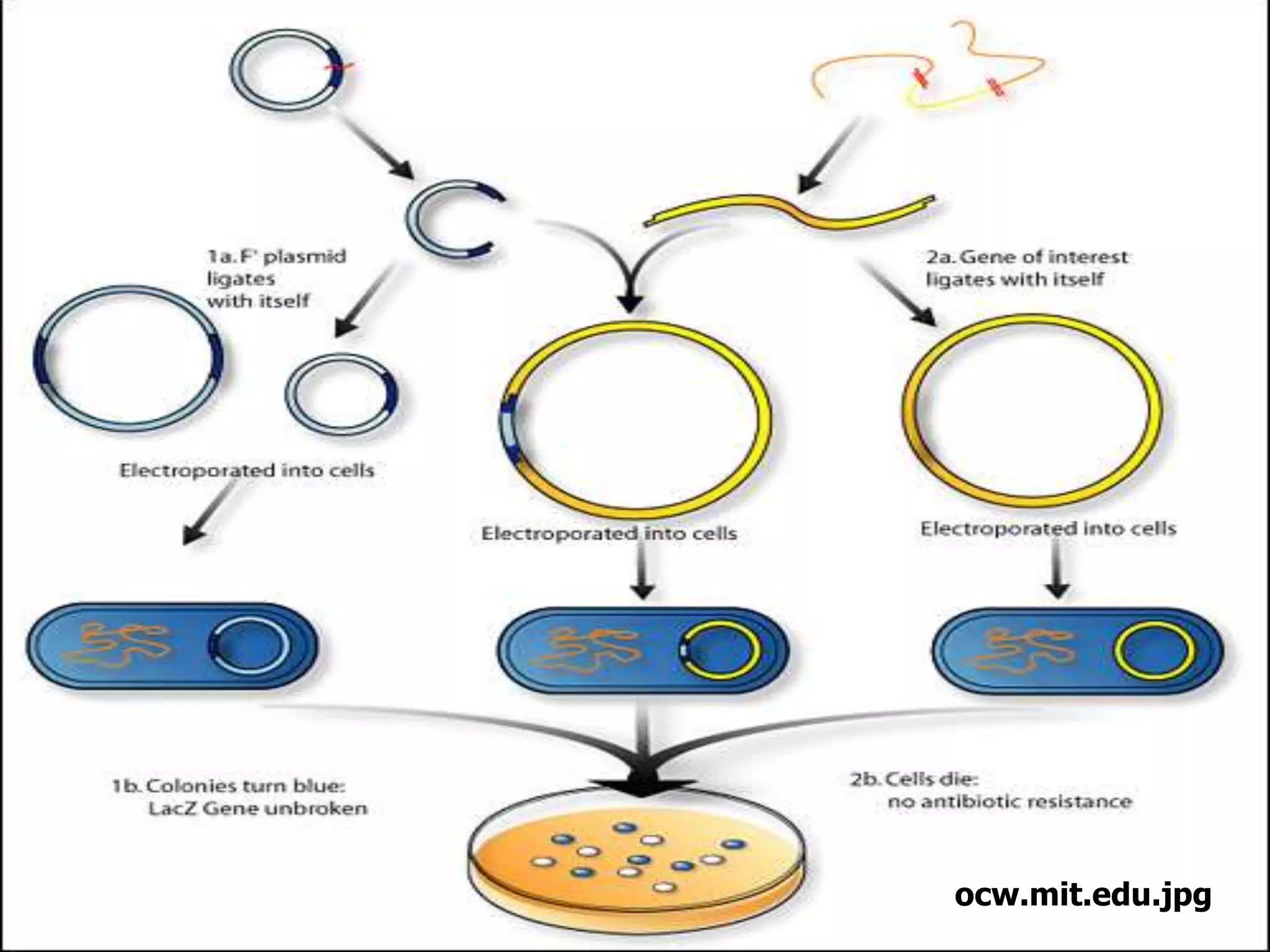
EXAMPLE OF SELECTABLE MARKER 
 If a recombinant DNA bearing gene for resistance to 
an antibiotic (e.g., ampicillin) is transferred into E. coli 
cells, the host cells become transformed into 
ampicillin-resistant cells. 
 If we spread the transformed cells on agar plates 
containing ampicillin, only transformants will grow, 
untransformed recipient cells will die. 
 Since, due to ampicillin resistance gene, one is able 
to select a transformed cell in the presence of 
ampicillin. The ampicillin resistance gene in this case 
is called a selectable marker.
ocw.mit.edu.jpg
(iii) Cloning sites: In order to link the alien DNA, the vector 
needs to have very few, preferably single, recognition sites for 
the commonly used restriction enzymes. 
Main types of vectors 
Plasmid, bacteriophage, cosmid, bacterial artificial 
chromosome (BAC), yeast artificial chromosome (YAC), yeast 2 
micron plasmid, retrovirus, baculovirus vector .
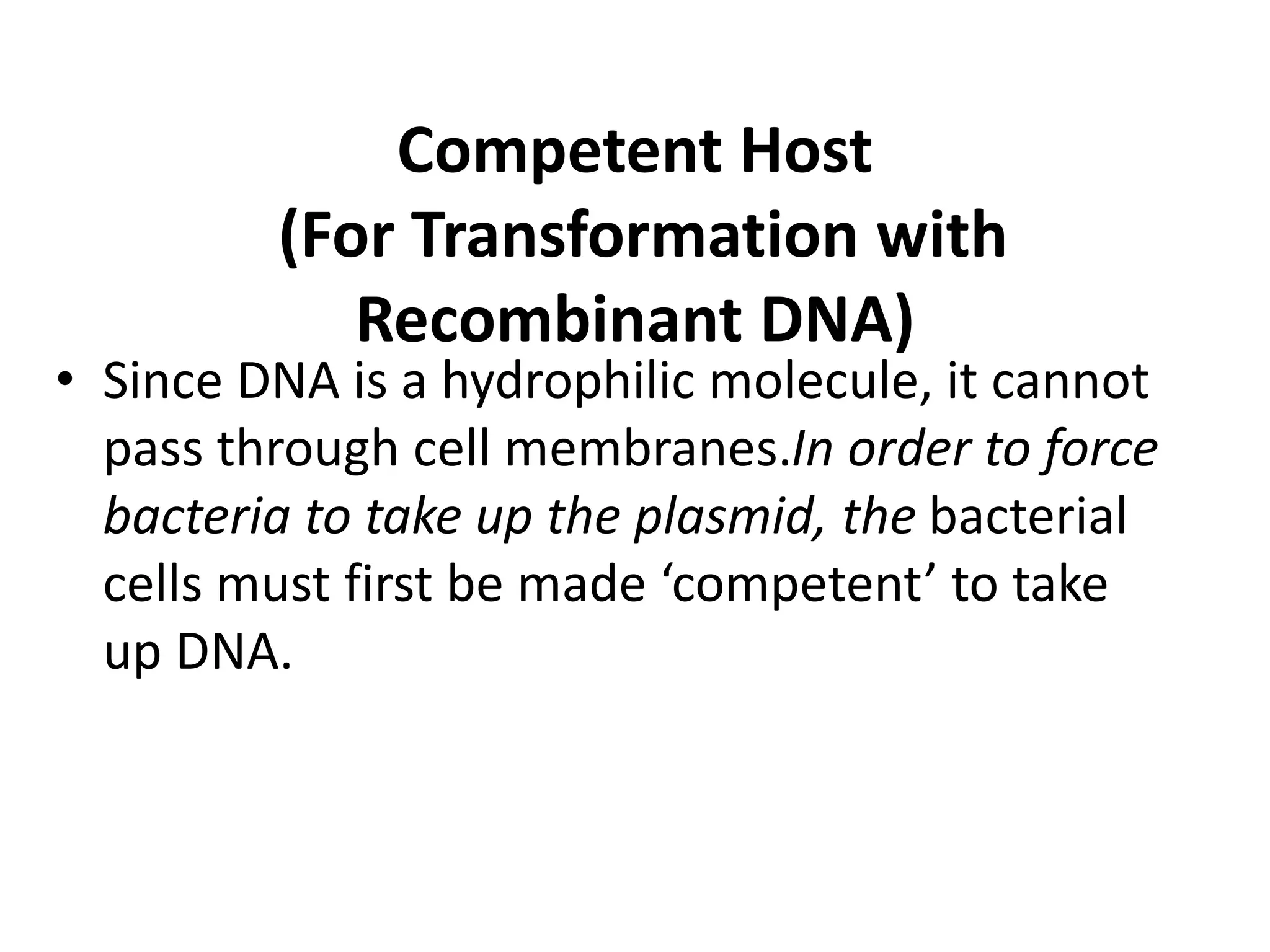
Competent Host 
(For Transformation with 
Recombinant DNA) 
• Since DNA is a hydrophilic molecule, it cannot 
pass through cell membranes.In order to force 
bacteria to take up the plasmid, the bacterial 
cells must first be made ‘competent’ to take 
up DNA.
Methods 
 Electroporation -: This is done by treating them with 
a specific concentration of a divalent cation, such as 
calcium, which increases the efficiency with which 
DNA enter the bacterium through pores in its cell wall. 
Recombinant DNA can then be forced into such cells 
by incubating the cells with recombinant DNA on ice, 
followed by placing them briefly at 420C (heat shock), 
and then putting them back on ice. This enables the 
bacteria to take up the recombinant DNA. 
 Micro-injection -: recombinant DNA is directly 
injected into the nucleus of an animal cell.
 In another method, suitable for plants, cells 
are bombarded with high velocity micro-particles 
of gold or tungsten coated with 
DNA in a method known as biolistics or gene 
gun. 
 Disarmed pathogen vectors -: which when 
allowed to infect the cell, transfer the 
recombinant DNA into the host
PROCESSES OF RECOMBINANT DNA 
TECHNOLOGY 
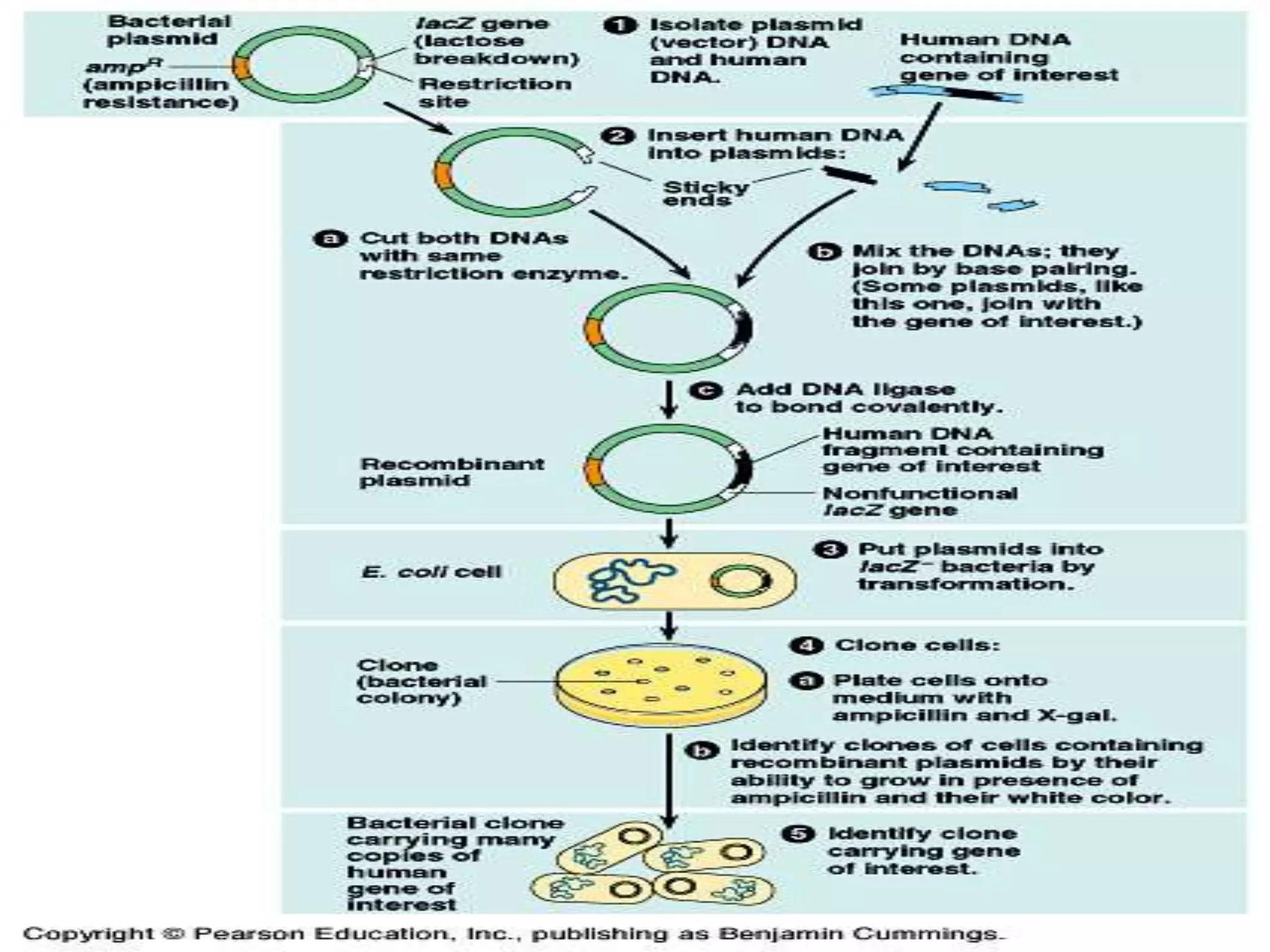
 Recombinant DNA technology involves several 
steps in specific sequence such as -: 
 isolation of DNA 
 fragmentation of DNA by restriction 
endonucleases 
 isolation of a desired DNA fragment, 
 ligation of the DNA fragment into a vector 
 transferring the recombinant DNA into the host, 
 culturing the host cells in a medium at large 
scale and extraction of the desired product
Amplification of Gene of Interest 
using PCR 
 PCR stands for Polymerase Chain Reaction -: 
 In this reaction, multiple copies of the gene of interest is 
synthesised in vitro using two sets of primers and the 
enzyme DNA polymerase. 
 The enzyme extends the primers using the nucleotides 
provided in the reaction and the genomic DNA as template. 
 Repeated amplification is achieved by the use of a 
thermostable DNA polymerase (isolated from a bacterium, 
Thermus aquaticus), which remain active during the high 
temperature induced denaturation of double stranded DNA. 
 The amplified fragment if desired can now be used to ligate 
with a vector for further cloning
en.wikipedia.org
Obtaining the Foreign Gene Product 
 When you insert a piece of alien DNA into a 
cloning vector and transfer it into a bacterial, 
plant or animal cell, the alien DNA gets 
multiplied. 
 In almost all recombinant technologies, the 
ultimate aim is to produce a desirable protein 
 If any protein encoding gene is expressed in a 
heterologous host, it is called a recombinant 
protein.
Methods of culturing 
• The cells harbouring cloned genes of interest may be grown on 
a small scale in the laboratory. The cultures may be used for 
extracting the desired protein and then purifying it by using 
different separation techniques. 
• The cells can also be multiplied in a continuous culture system 
wherein the used medium is drained out from one side while 
fresh medium is added from the other to maintain the cells in 
their physiologically most active phase. This type of culturing 
method produces a larger biomass leading to higher yields of 
desired protein 
scienceaid.co.uk.png
Downstream Processing 
 After completion of the biosynthetic stage, the 
product has to be subjected through a series of 
processes before it is ready for marketing as a 
finished product. 
 The processes include separation and purification, 
which are collectively referred to as downstream 
processing. The product has to be formulated with 
suitable preservatives. Such formulation has to 
undergo thorough clinical trials as in case of drugs. 
 Strict quality control testing for each product is also 
required. The downstream processing and quality 
control testing vary from product to product.
APPLICATIONS OF RECOMBINANT 
DNA TECHNOLOGY 
• Recombinant DNA technology has a wide 
range of application in industries, medical 
science, and agriculture as "well as molecular 
biology. 
 Molecular diagnosis of diseases 
 Gene therapy 
 DNA finger printing 
 Production of vaccines 
 Commercial and pharmaceutical products
References 
• ncertbooks.prashanthellina.com/class_12.Biol 
ogy.Biology/ 
• www.slideshare.net/Cooksinto/chapter-3- 
recombinant-dna-technology

Recombinant DNA Technology

  • 1.
    Recombinant DNA Technology By -: Lovnish Thakur (IBT-1ST Sem) Enrollment NO. –ASU2014010100099 Course code -: 105 (biotechnology)
  • 2.
    Recombinant DNA Technology • Recombinant DNA technology procedures by which DNA from different species can be isolated, cut and spliced together -- new "recombinant " molecules are then multiplied in quantity in populations of rapidly dividing cells (e.g. bacteria, yeast).
  • 3.
    The Role ofRecombinant DNA Technology in Biotechnology  Recombinant DNA Technology –Intentional modification of organisms’ genomes for practical purposes  Three goals •Eliminate undesirable phenotypic traits •Combine beneficial traits of two or more organisms •Create organisms that synthesize products humans need
  • 5.
    Key tool forRDT • Restriction Enzyme • Ligases • Polymerase enzyme • Host • Vector • Gene library
  • 6.
    Restriction Enzymes •Restriction enzymes belong to a larger class of enzymes called nucleases. • These are of two kinds; exonucleases and endonucleases. • Exonucleases remove nucleotides from the ends of the DNA whereas, • endonucleases make cuts at specific positions within the DNA
  • 7.
    restriction endonuclease functions  Restriction endonuclease functions by ‘inspecting’ the length of a DNA sequence. Once it finds its specific recognition sequence, it will bind to the DNA and cut each of the two strands of the double helix at specific points in their sugar -phosphate backbones  Each restriction endonuclease recognises a specific palindromic nucleotide sequences in the DNA.  The palindrome in DNA is a sequence of base pairs that reads same on the two strands when orientation of reading is kept the same. For example, the following sequences read the same on the two strands in 5' à 3' direction.  This is also true if read in the 3' à 5' direction. 5' —— GAATTC —— 3' 3' —— CTTAAG —— 5'
  • 8.
    Origin and function  Bacterial origin = enzymes that cleave foreign DNA  Named after the organism from which they were derived  For e.g - : EcoRI from Escherichia coli  Protect bacteria from bacteriophage infection –Restricts viral replication -Bacterium protects it’s own DNA by methylating those specific sequence .
  • 9.
  • 10.
  • 11.
    Classes  TypeI - : Cuts the DNA on both strands but at a non-specific location at varying distances from the particular sequence that is recognized by the restriction enzyme – : Therefore random/imprecise cuts – : Not very useful for rDNA applications  Type II - : Cuts both strands of DNA within the particular sequence recognized by the restriction enzyme –Used widely for molecular biology procedures  Some enzymes generate “blunt ends” (cut in middle)
  • 12.
    ligases  DNAligase covalently links the two fragments together by forming phosphodiester bonds .  Restriction enzymes cut the strand of DNA a little away from the centre of the palindrome sites, but between the same two bases on the opposite strands. This leaves single stranded portions at the ends. There are overhanging stretches called sticky ends on each strand .  These are named so because they form hydrogen bonds with their complementary cut counterparts.
  • 13.
    Action of ligases • When cut by the same restriction enzyme, the resultant DNA fragments have the same kind of ‘sticky-ends’ and, these can be joined together. • (end-to-end) using DNA ligases
  • 14.
  • 15.
    Separation and isolationof DNA fragments  The cutting of DNA by restriction endonucleases results in the fragments of DNA. These fragments can be separated by a technique known as gel electrophoresis. Since DNA fragments are negatively charged molecules they can be separated by forcing them to move towards the anode under an electric field through a medium/matrix.  These parated bands of DNA are cut out from the agarose gel and extracted from the gel piece. This step is known as elution. ncertbooks.prashanthellina.com/class_12.Biology.Biology/
  • 16.
    Vectors  Nucleicacid molecules that deliver a gene into a cell –: Useful properties •Small enough to manipulate in a lab •Survive inside cells •Contain recognizable genetic marker •Ensure genetic expression of gene  Include viral genomes, transposons, and plasmids
  • 17.
  • 18.
    Features that arerequired to facilitate cloning into a vector (i) Origin of replication (ori) : This is a sequence from where replication starts and any piece of DNA when linked to this sequence can be made to replicate within the host cells. This sequence is also responsible for controlling the copy number of the linked DNA.  Selectable marker : : In addition to ‘ori’, the vector requires a selectable marker, which helps in identifying and eliminating non transformants and selectively permitting the growth of the transformants.
  • 19.
    EXAMPLE OF SELECTABLEMARKER  If a recombinant DNA bearing gene for resistance to an antibiotic (e.g., ampicillin) is transferred into E. coli cells, the host cells become transformed into ampicillin-resistant cells.  If we spread the transformed cells on agar plates containing ampicillin, only transformants will grow, untransformed recipient cells will die.  Since, due to ampicillin resistance gene, one is able to select a transformed cell in the presence of ampicillin. The ampicillin resistance gene in this case is called a selectable marker.
  • 20.
  • 21.
    (iii) Cloning sites:In order to link the alien DNA, the vector needs to have very few, preferably single, recognition sites for the commonly used restriction enzymes. Main types of vectors Plasmid, bacteriophage, cosmid, bacterial artificial chromosome (BAC), yeast artificial chromosome (YAC), yeast 2 micron plasmid, retrovirus, baculovirus vector .
  • 22.
    Competent Host (ForTransformation with Recombinant DNA) • Since DNA is a hydrophilic molecule, it cannot pass through cell membranes.In order to force bacteria to take up the plasmid, the bacterial cells must first be made ‘competent’ to take up DNA.
  • 23.
    Methods  Electroporation-: This is done by treating them with a specific concentration of a divalent cation, such as calcium, which increases the efficiency with which DNA enter the bacterium through pores in its cell wall. Recombinant DNA can then be forced into such cells by incubating the cells with recombinant DNA on ice, followed by placing them briefly at 420C (heat shock), and then putting them back on ice. This enables the bacteria to take up the recombinant DNA.  Micro-injection -: recombinant DNA is directly injected into the nucleus of an animal cell.
  • 24.
     In anothermethod, suitable for plants, cells are bombarded with high velocity micro-particles of gold or tungsten coated with DNA in a method known as biolistics or gene gun.  Disarmed pathogen vectors -: which when allowed to infect the cell, transfer the recombinant DNA into the host
  • 25.
    PROCESSES OF RECOMBINANTDNA TECHNOLOGY  Recombinant DNA technology involves several steps in specific sequence such as -:  isolation of DNA  fragmentation of DNA by restriction endonucleases  isolation of a desired DNA fragment,  ligation of the DNA fragment into a vector  transferring the recombinant DNA into the host,  culturing the host cells in a medium at large scale and extraction of the desired product
  • 26.
    Amplification of Geneof Interest using PCR  PCR stands for Polymerase Chain Reaction -:  In this reaction, multiple copies of the gene of interest is synthesised in vitro using two sets of primers and the enzyme DNA polymerase.  The enzyme extends the primers using the nucleotides provided in the reaction and the genomic DNA as template.  Repeated amplification is achieved by the use of a thermostable DNA polymerase (isolated from a bacterium, Thermus aquaticus), which remain active during the high temperature induced denaturation of double stranded DNA.  The amplified fragment if desired can now be used to ligate with a vector for further cloning
  • 27.
  • 28.
    Obtaining the ForeignGene Product  When you insert a piece of alien DNA into a cloning vector and transfer it into a bacterial, plant or animal cell, the alien DNA gets multiplied.  In almost all recombinant technologies, the ultimate aim is to produce a desirable protein  If any protein encoding gene is expressed in a heterologous host, it is called a recombinant protein.
  • 29.
    Methods of culturing • The cells harbouring cloned genes of interest may be grown on a small scale in the laboratory. The cultures may be used for extracting the desired protein and then purifying it by using different separation techniques. • The cells can also be multiplied in a continuous culture system wherein the used medium is drained out from one side while fresh medium is added from the other to maintain the cells in their physiologically most active phase. This type of culturing method produces a larger biomass leading to higher yields of desired protein scienceaid.co.uk.png
  • 30.
    Downstream Processing After completion of the biosynthetic stage, the product has to be subjected through a series of processes before it is ready for marketing as a finished product.  The processes include separation and purification, which are collectively referred to as downstream processing. The product has to be formulated with suitable preservatives. Such formulation has to undergo thorough clinical trials as in case of drugs.  Strict quality control testing for each product is also required. The downstream processing and quality control testing vary from product to product.
  • 31.
    APPLICATIONS OF RECOMBINANT DNA TECHNOLOGY • Recombinant DNA technology has a wide range of application in industries, medical science, and agriculture as "well as molecular biology.  Molecular diagnosis of diseases  Gene therapy  DNA finger printing  Production of vaccines  Commercial and pharmaceutical products
  • 32.
    References • ncertbooks.prashanthellina.com/class_12.Biol ogy.Biology/ • www.slideshare.net/Cooksinto/chapter-3- recombinant-dna-technology