Basic approach to chest X-ray
interpretation
Lecture 5
Dr. Kosar kamal ahmed
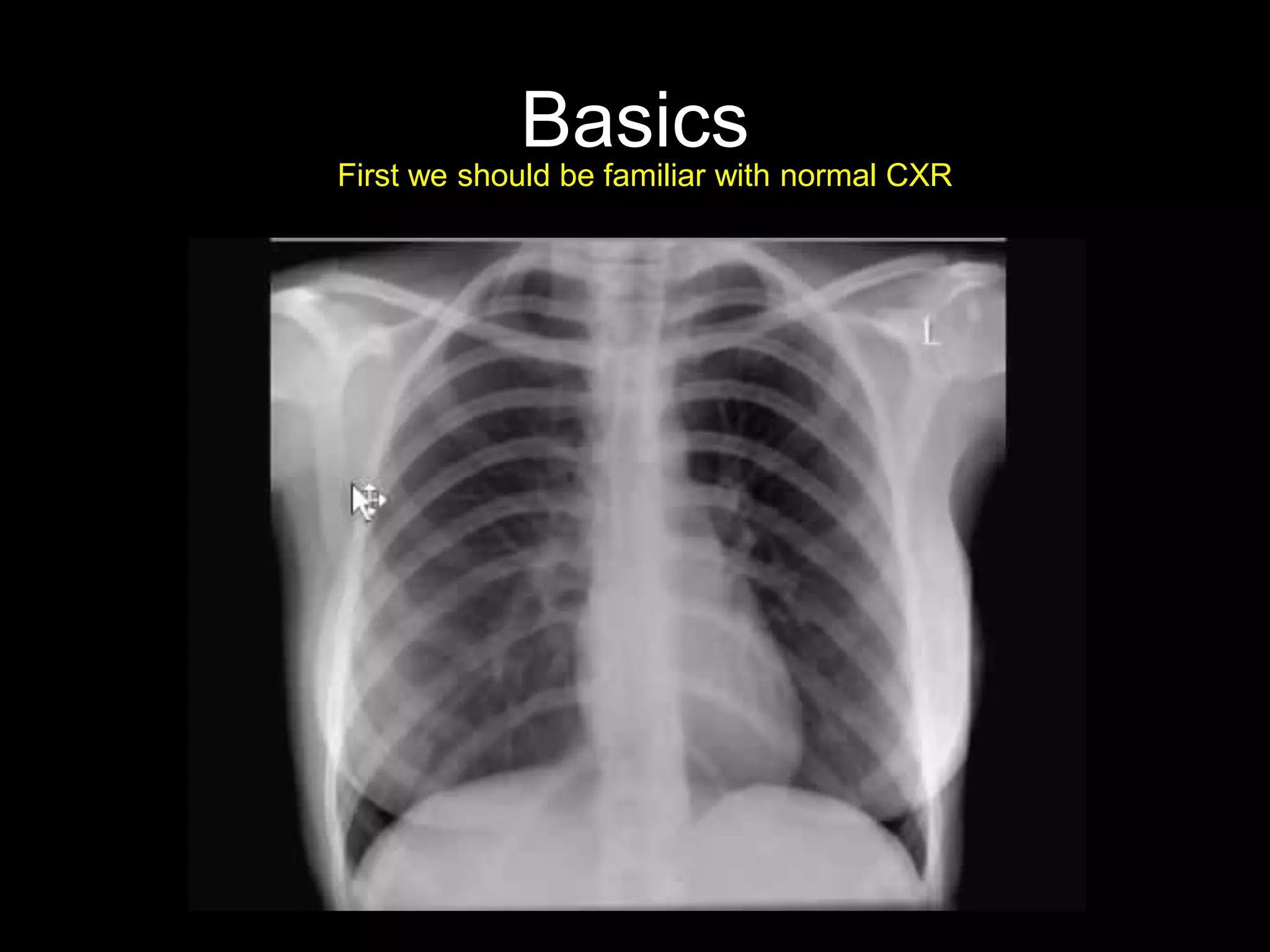
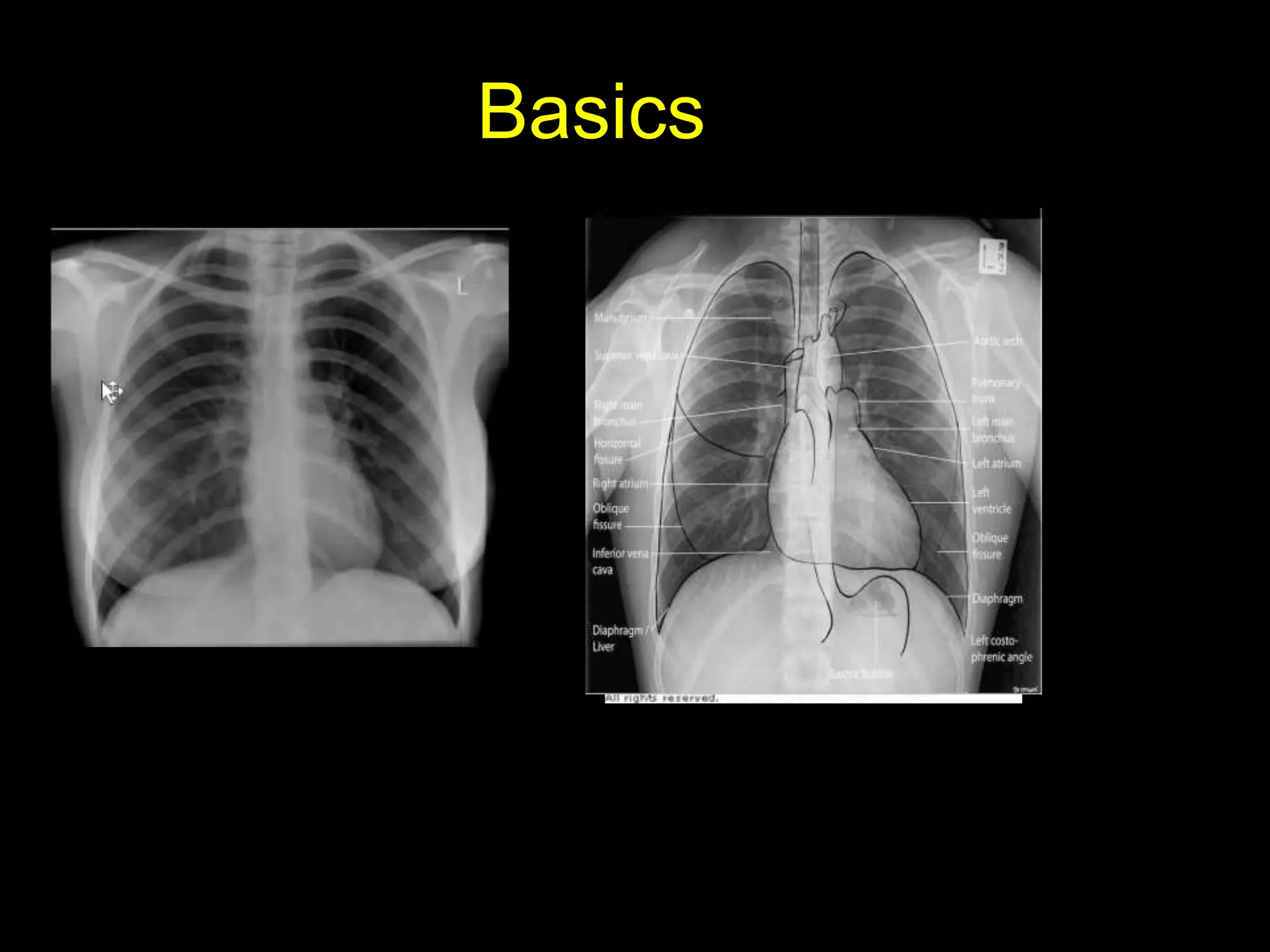
Basics
First we should be familiar with normal CXR
Basics
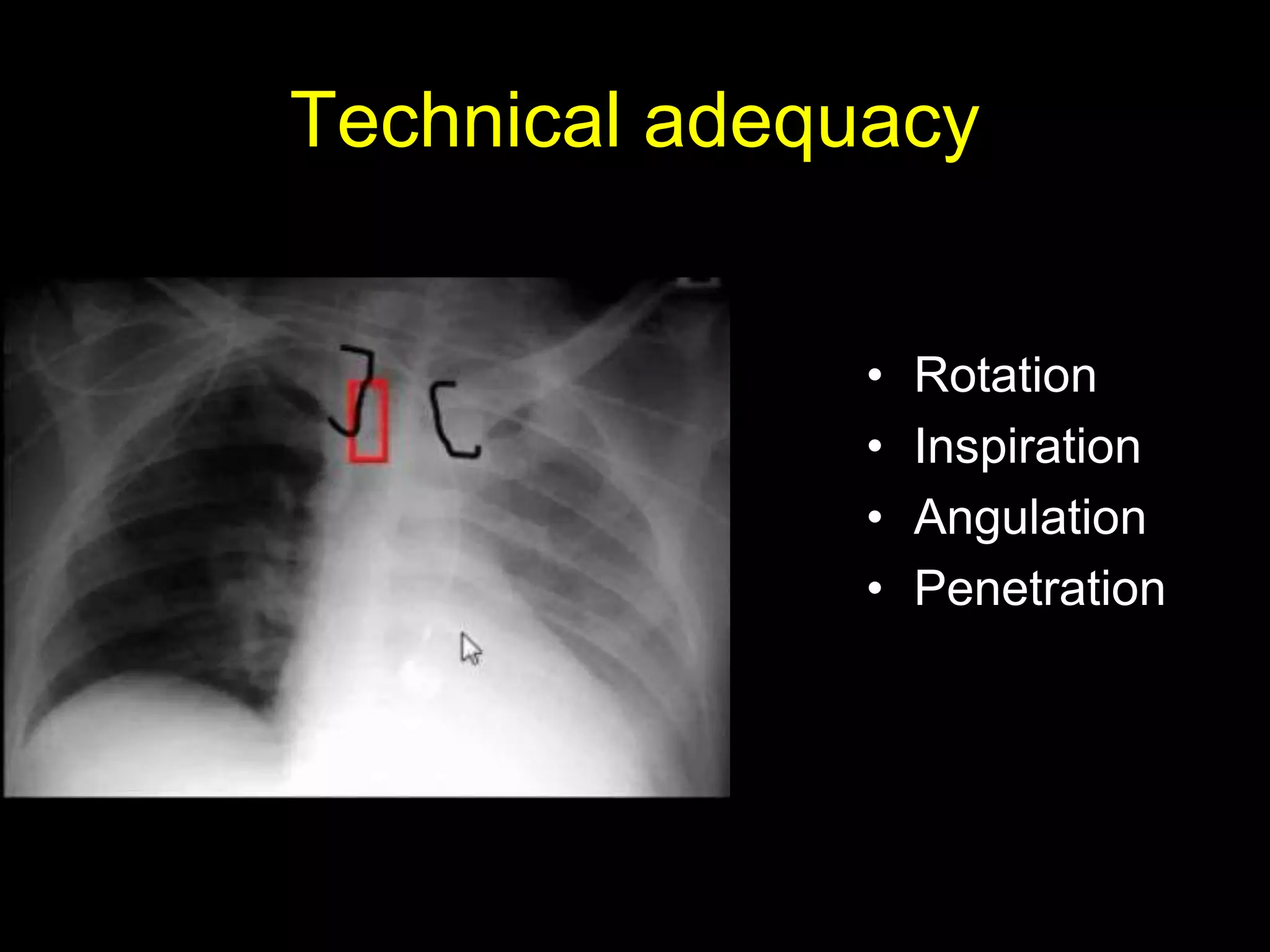
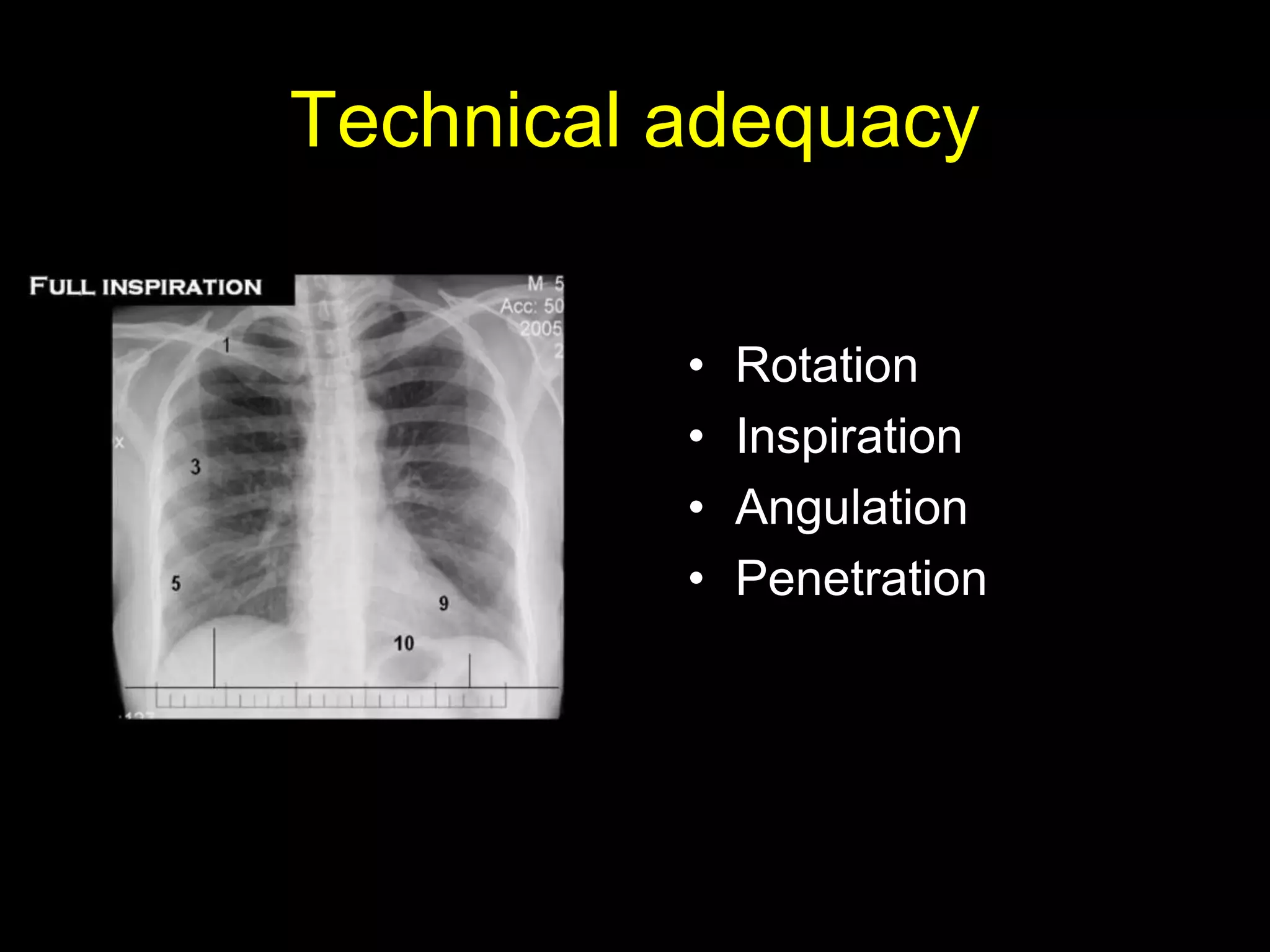
Technical adequacy
• Rotation
• Inspiration
• Angulation
• Penetration
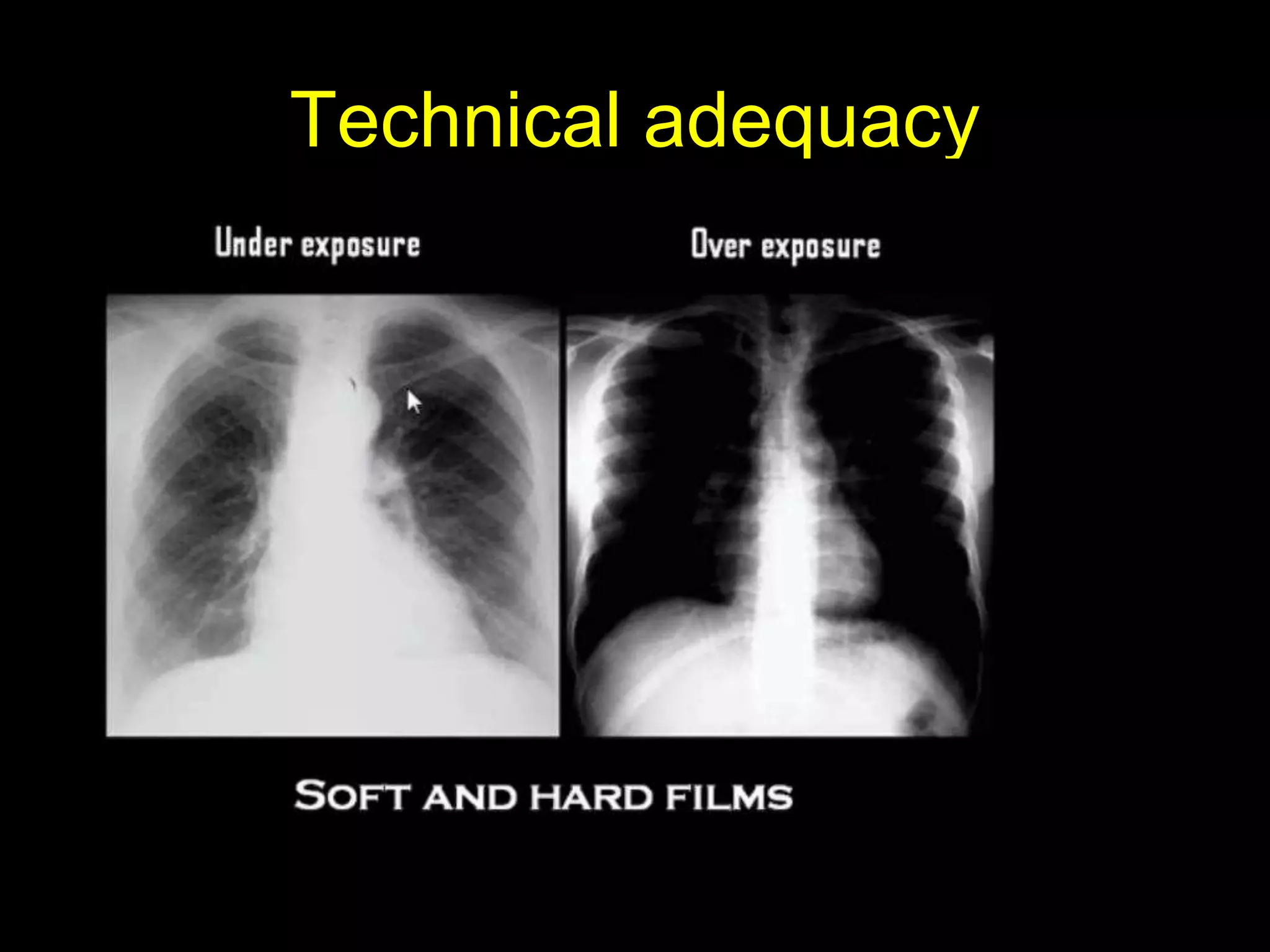
Technical adequacy
• Rotation
• Inspiration
• Angulation
• Penetration
Technical adequacy
• Rotation
• Inspiration
• Penetration
• Angulation
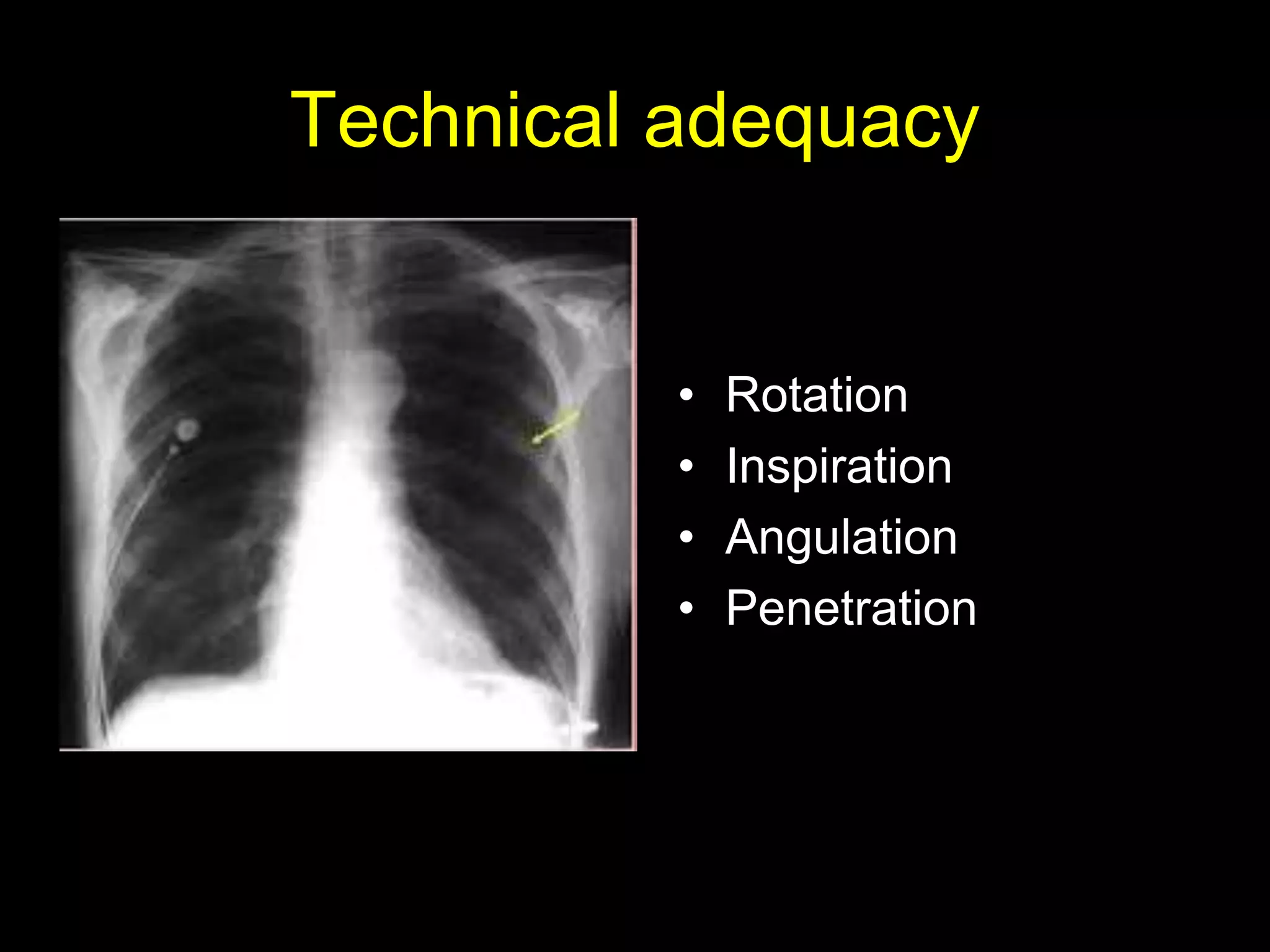
Technical adequacy
• Rotation
• Inspiration
• Angulation
• Penetration
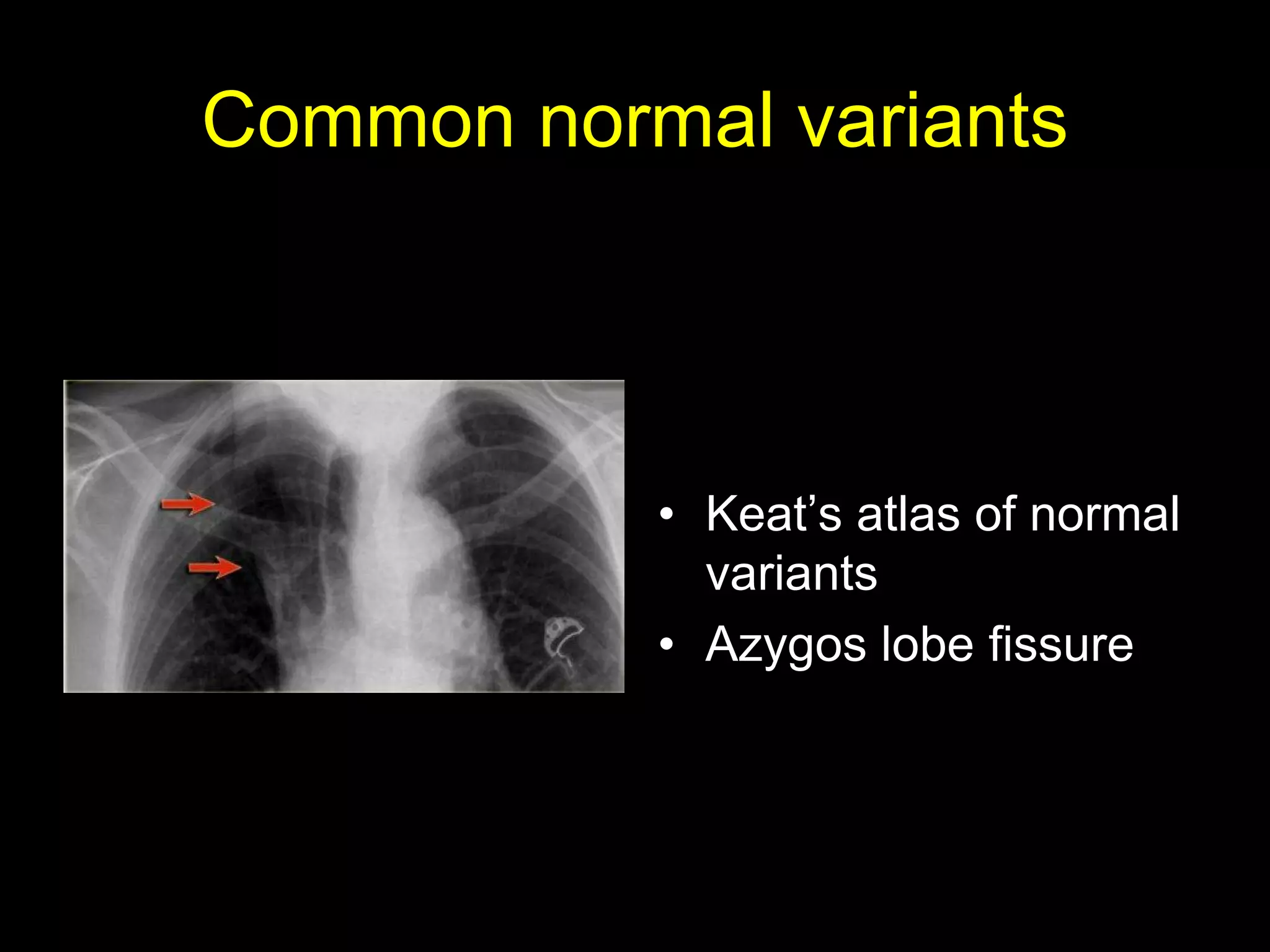
Common normal variants
• Keat’s atlas of normal
variants
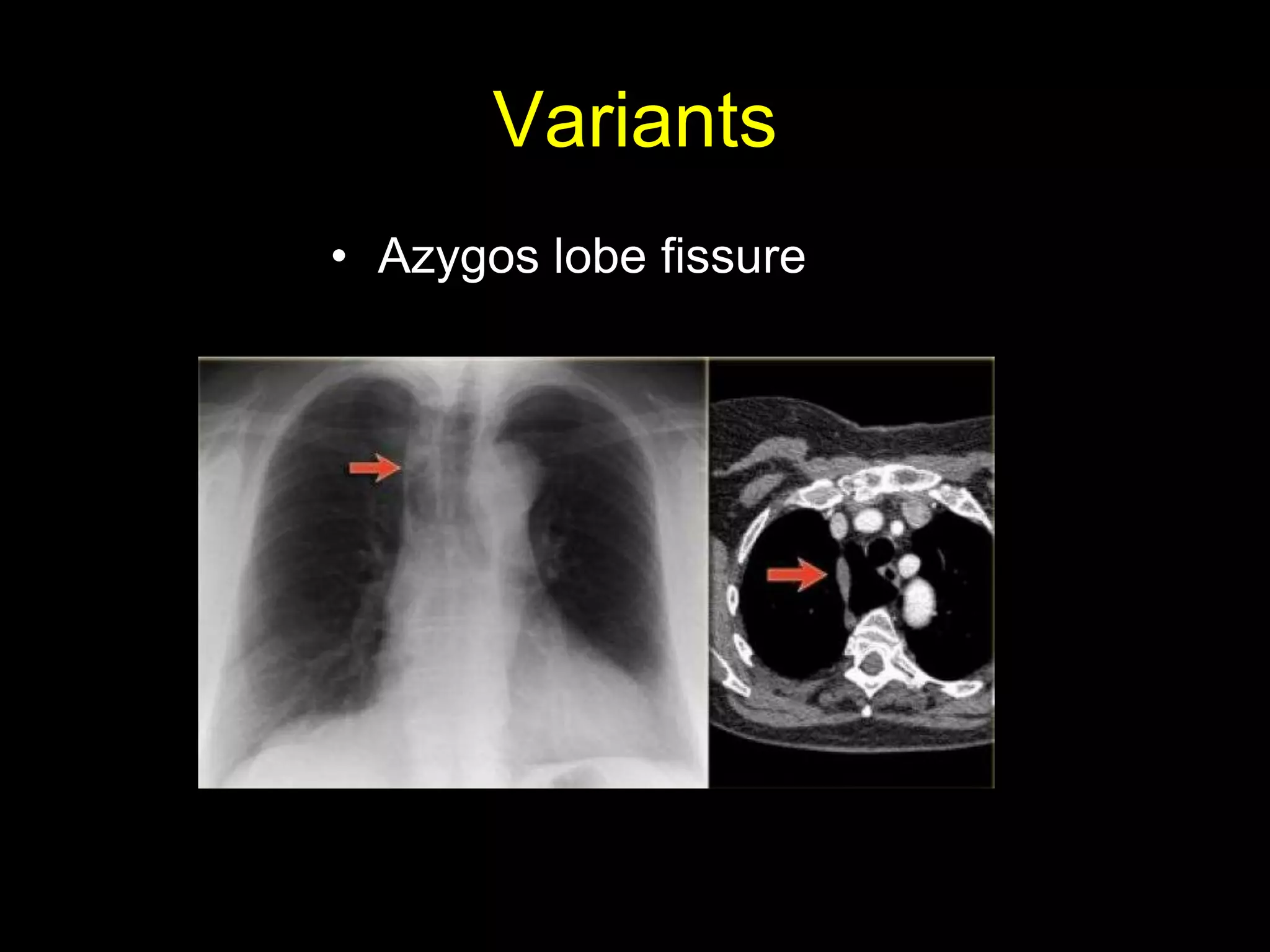
• Azygos lobe fissure
Variants
• Azygos lobe fissure
Variants
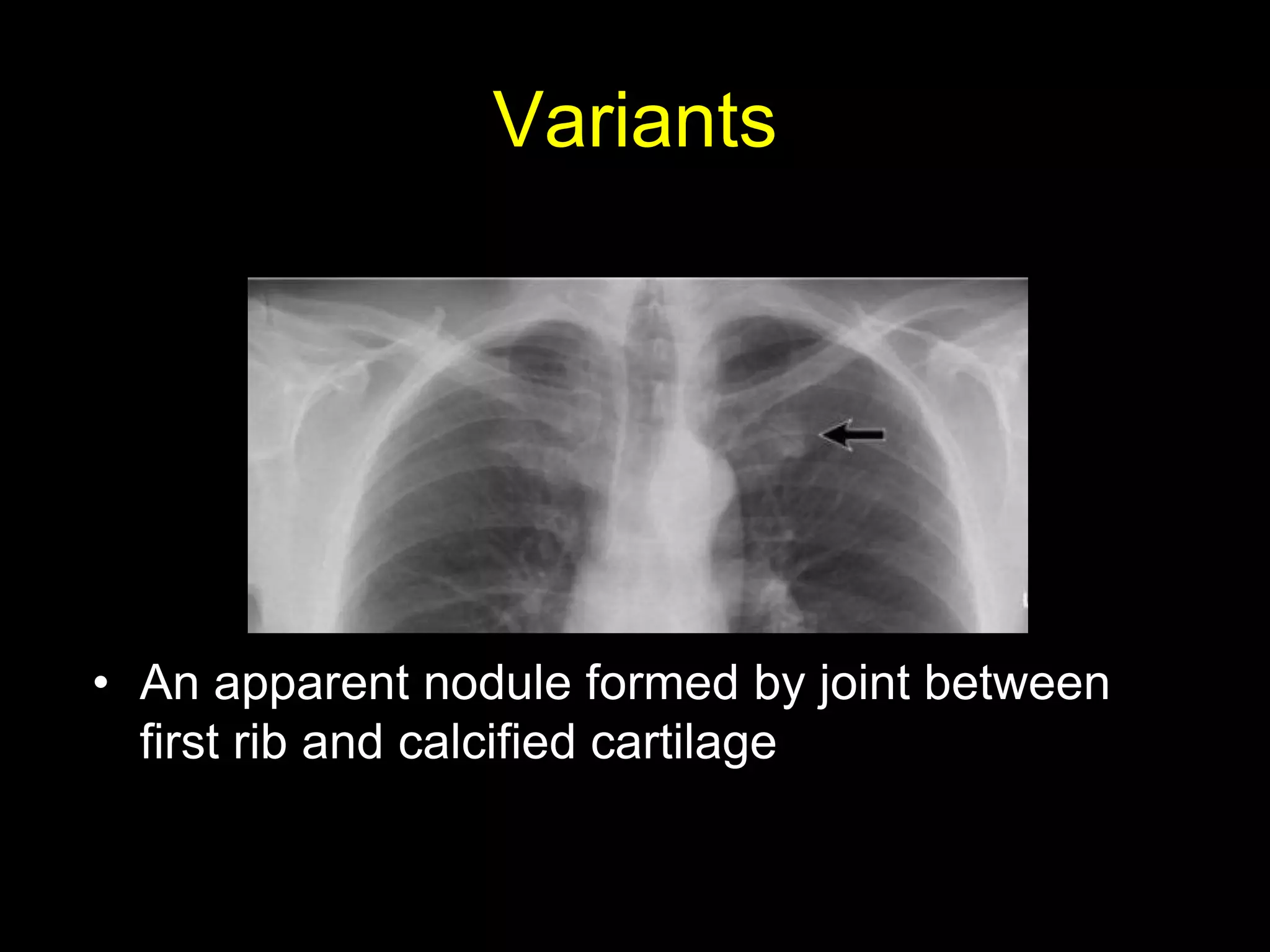
• An apparent nodule formed by joint between
first rib and calcified cartilage
Variants
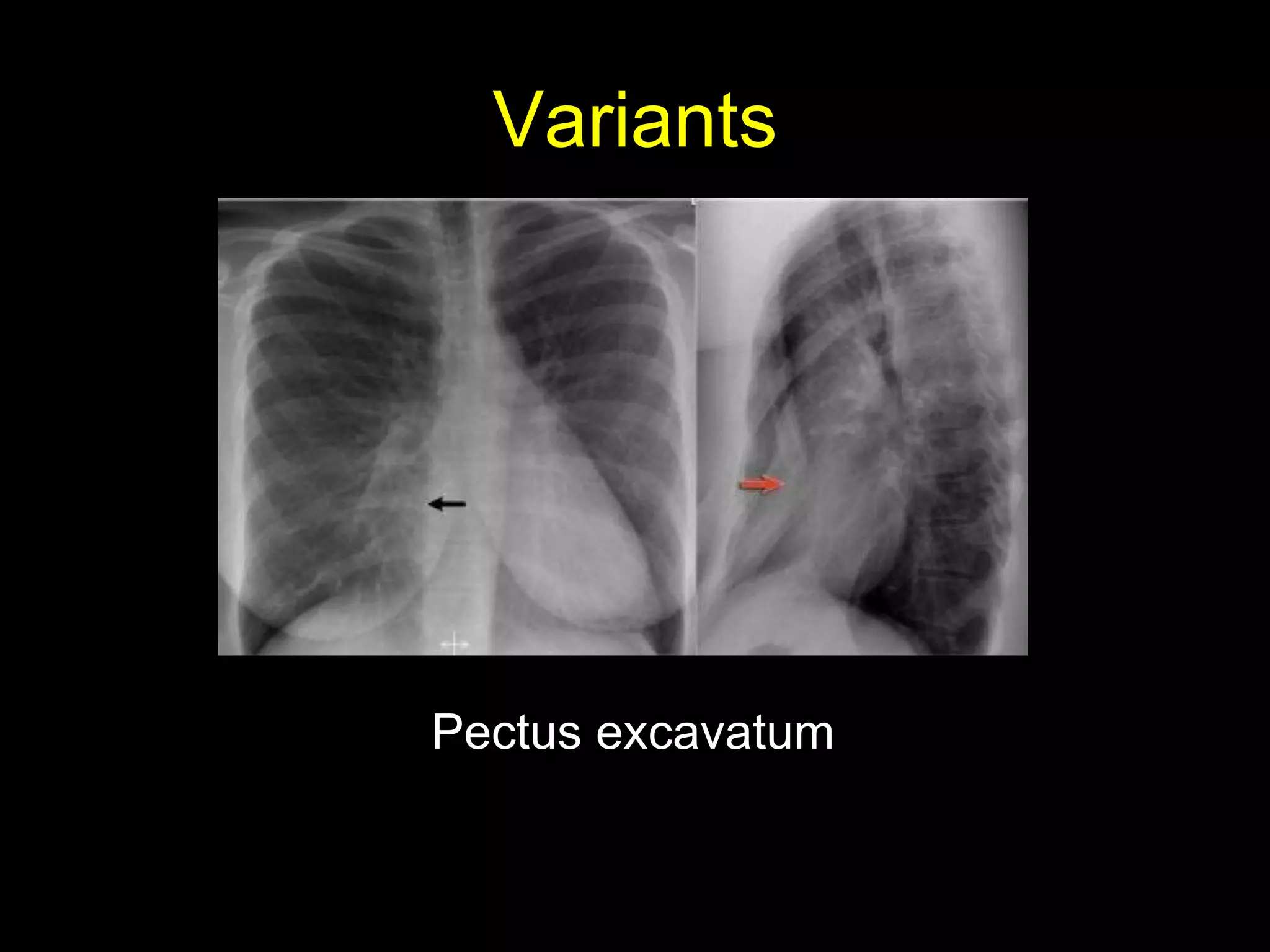
Pectus excavatum
How to interpret a CXR ?
• Heart failure
• Interstitial lung
disease
• Pulmonary mass
• Pulmonary abscess
• Pleural effusion
• Diaphragmatic hernia
• Hilar pathology
• LAP
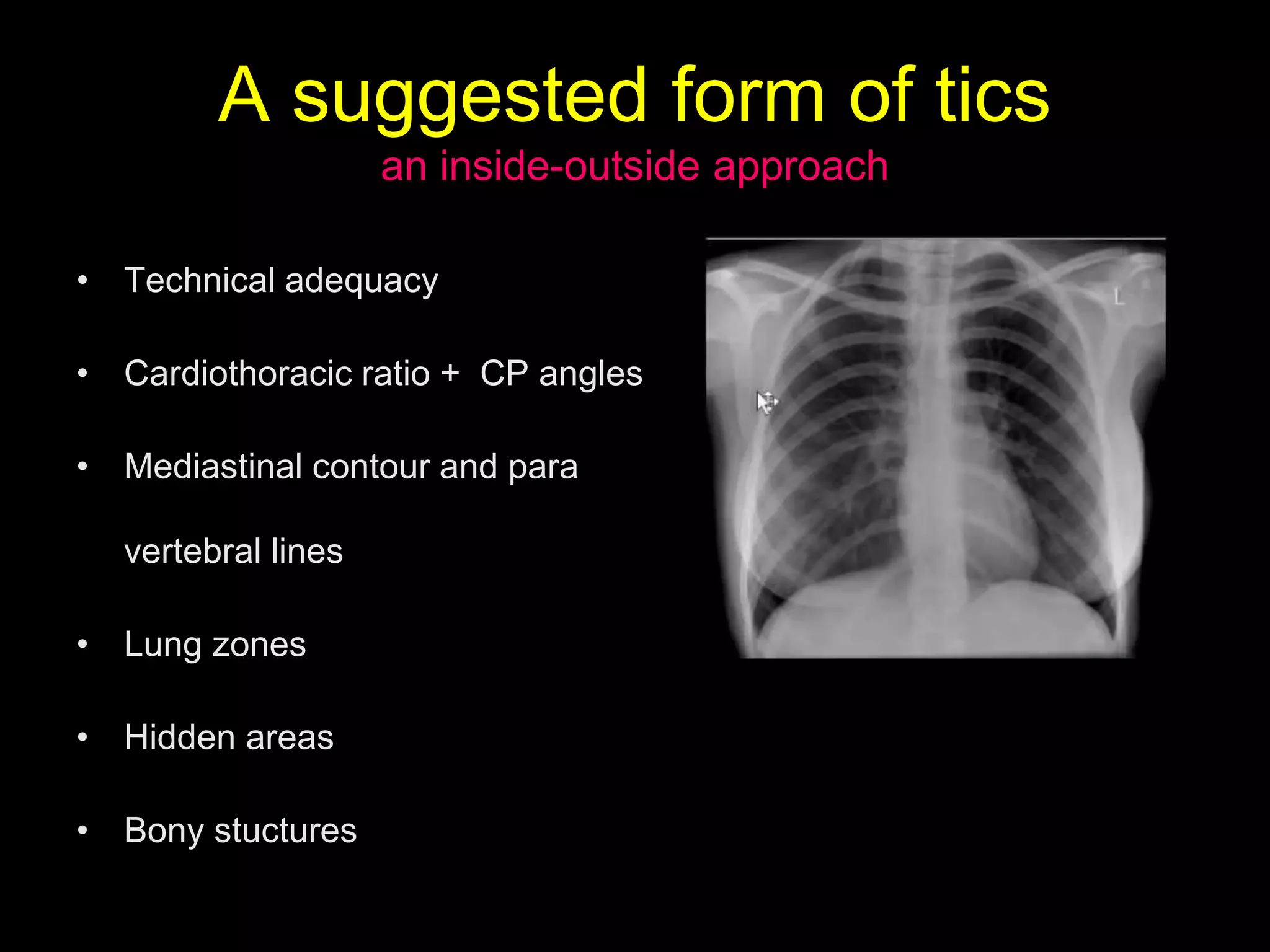
A suggested form of tics
an inside-outside approach
• Technical adequacy
• Cardiothoracic ratio + CP angles
• Mediastinal contour and para
vertebral lines
• Lung zones
• Hidden areas
• Bony stuctures
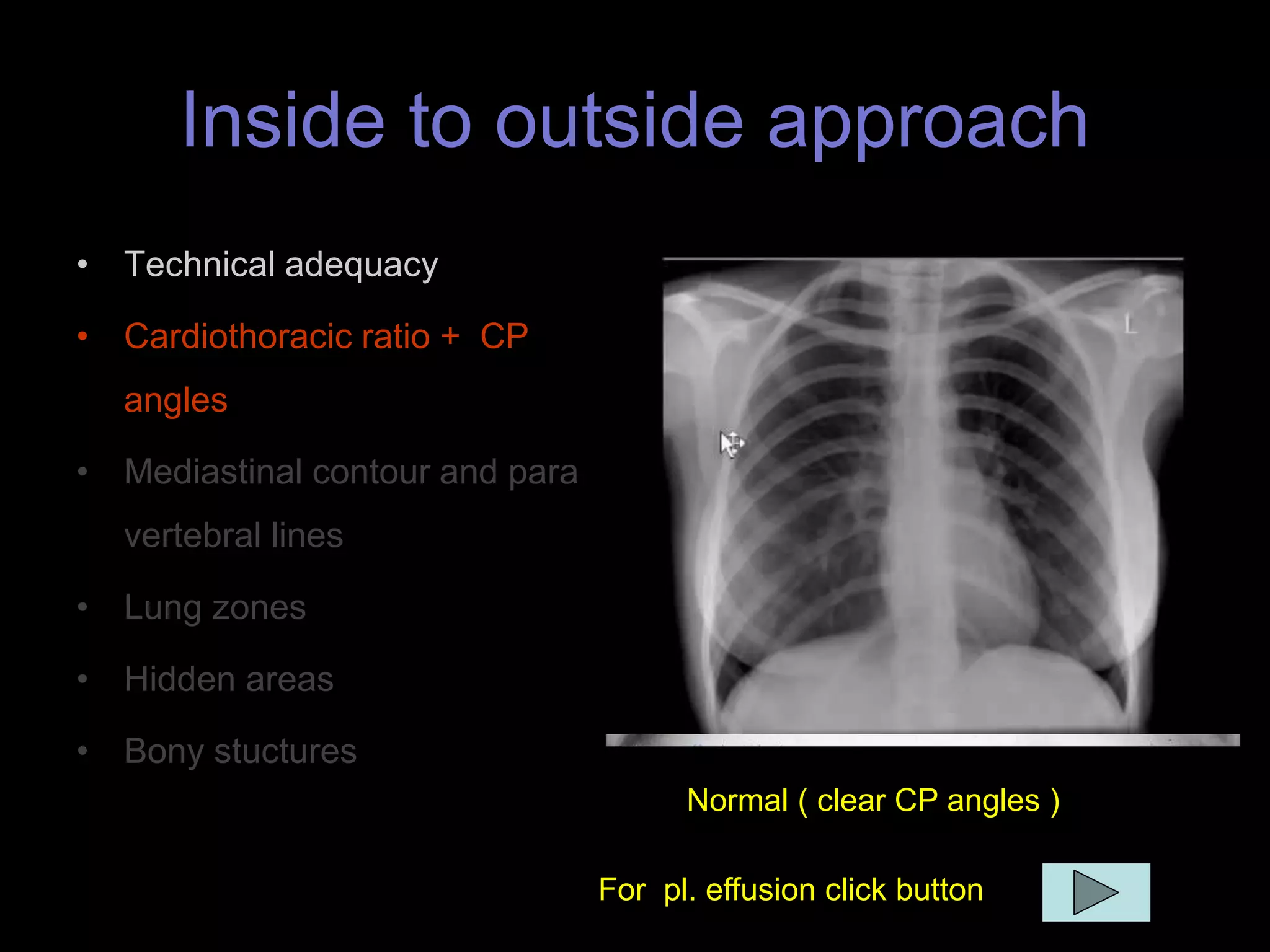
Inside to outside approach
• Technical adequacy
• Cardiothoracic ratio + CP
angles
• Mediastinal contour and para
vertebral lines
• Lung zones
• Hidden areas
• Bony stuctures
Normal ( clear CP angles )
For pl. effusion click button
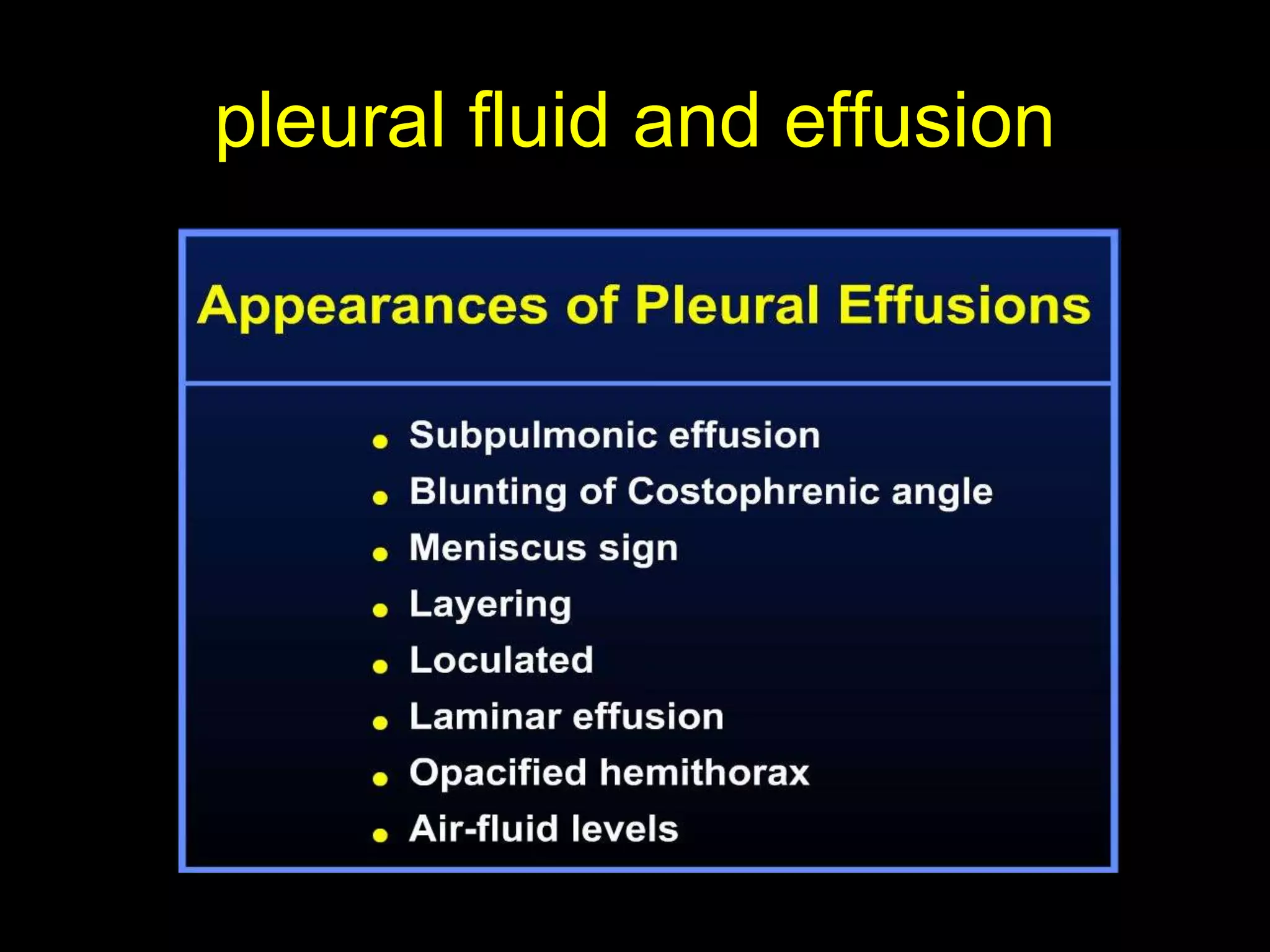
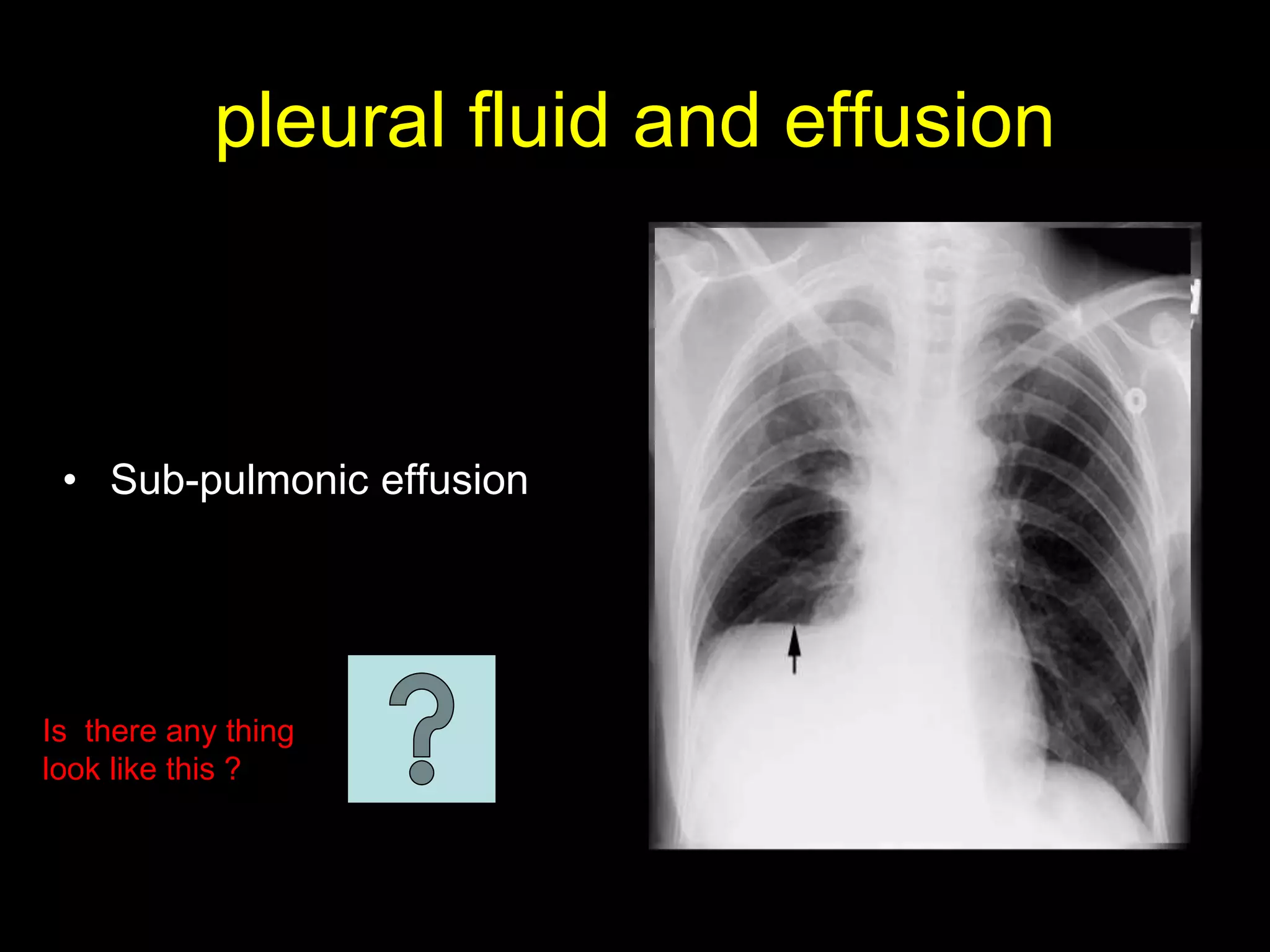
pleural fluid and effusion
• Sub-pulmonic effusion
Is there any thing
look like this ?
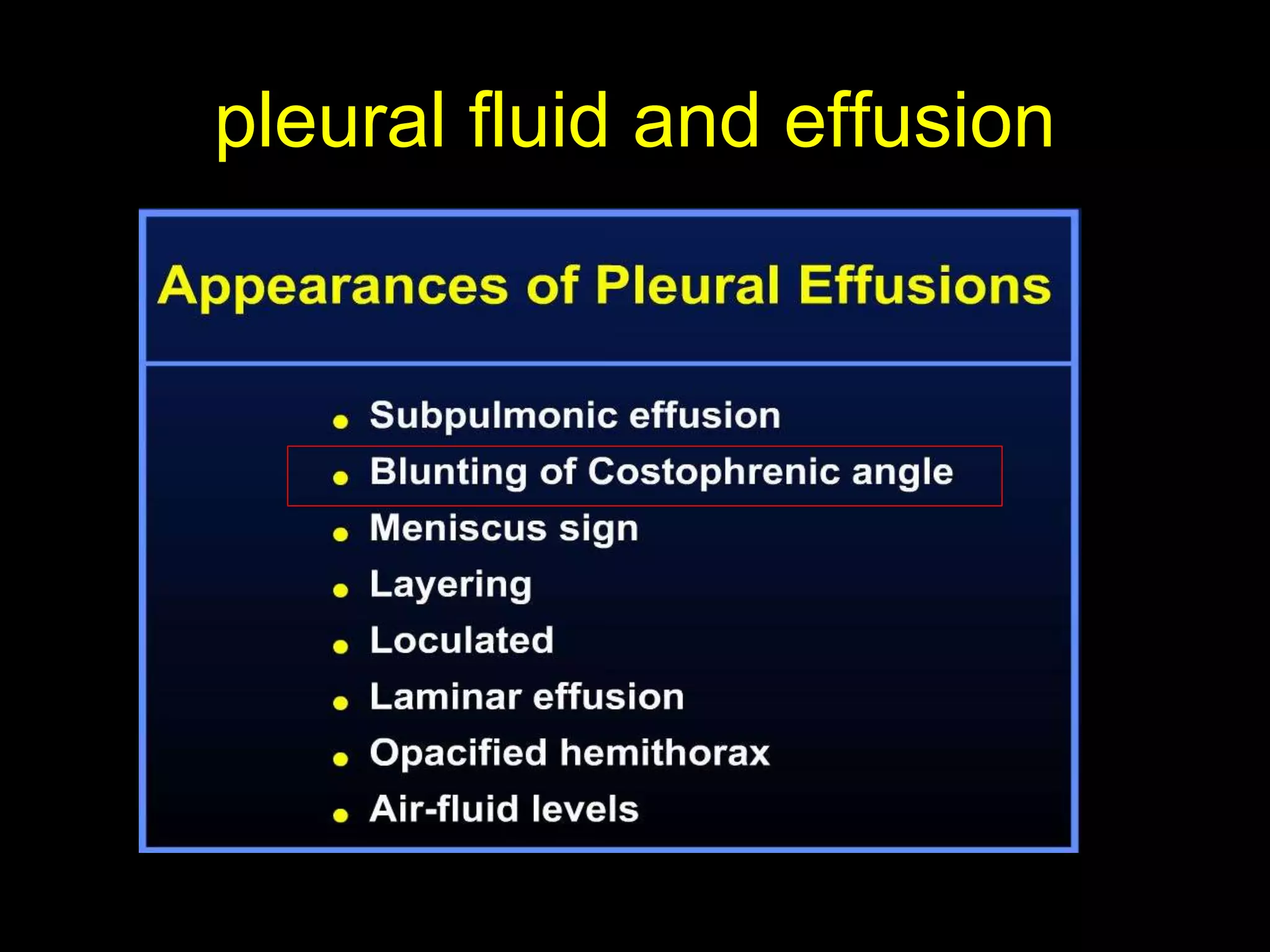
Eventration of the diaphragm or paralysis of
hemidiaphragm
Eventration of the diaphragm and D. paralysis
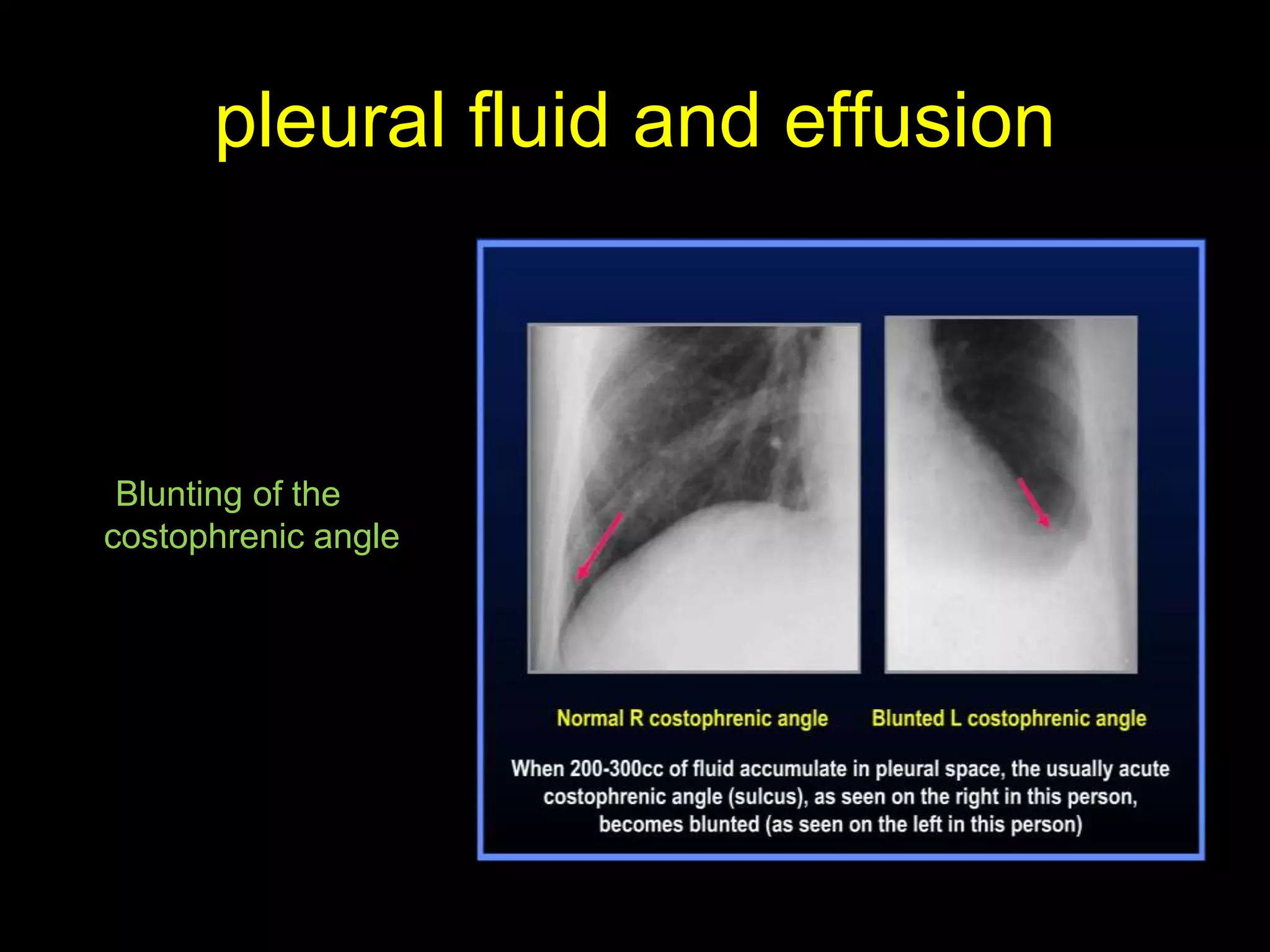
pleural fluid and effusion
Blunting of the
costophrenic angle
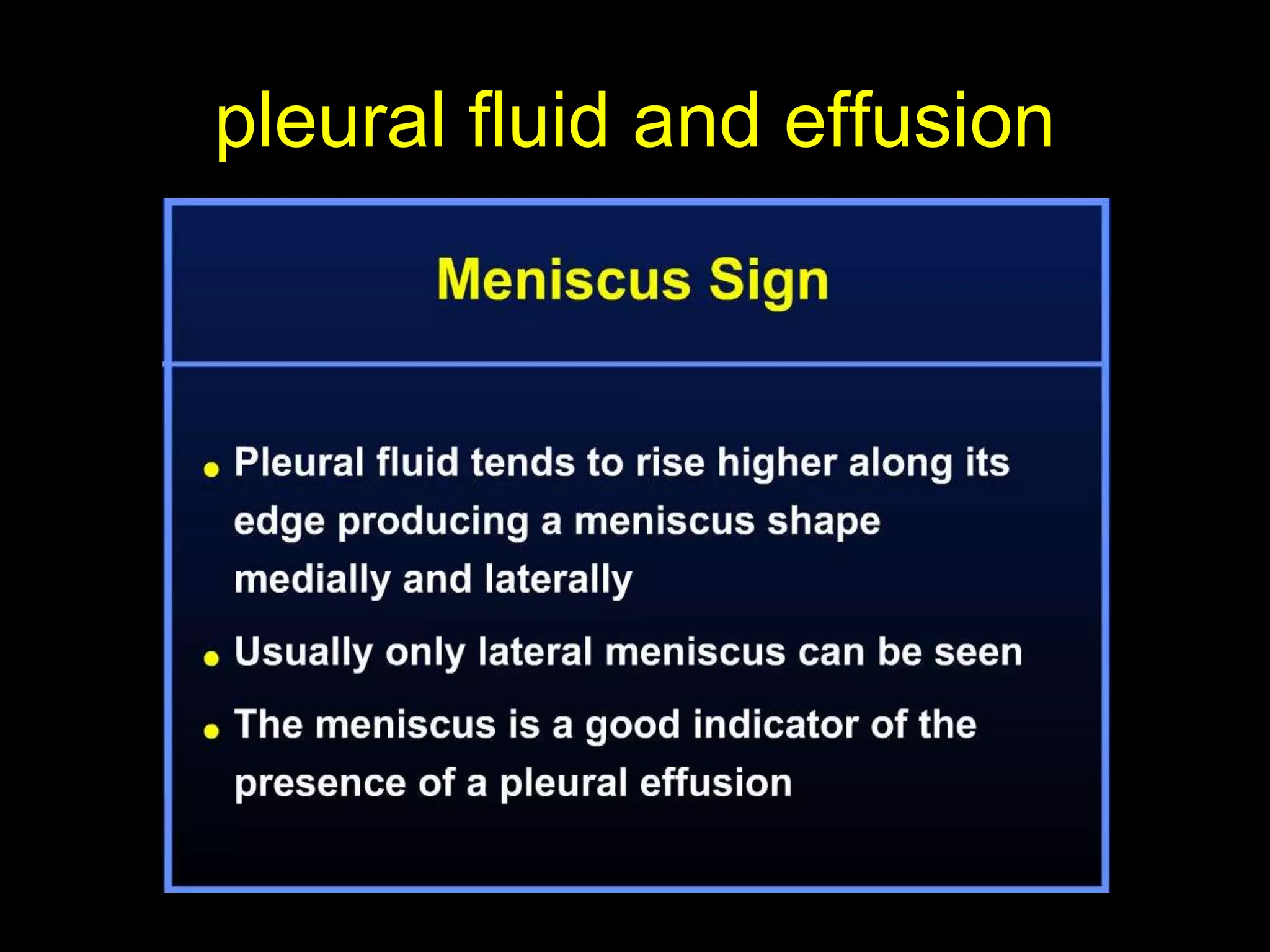
pleural fluid and effusion
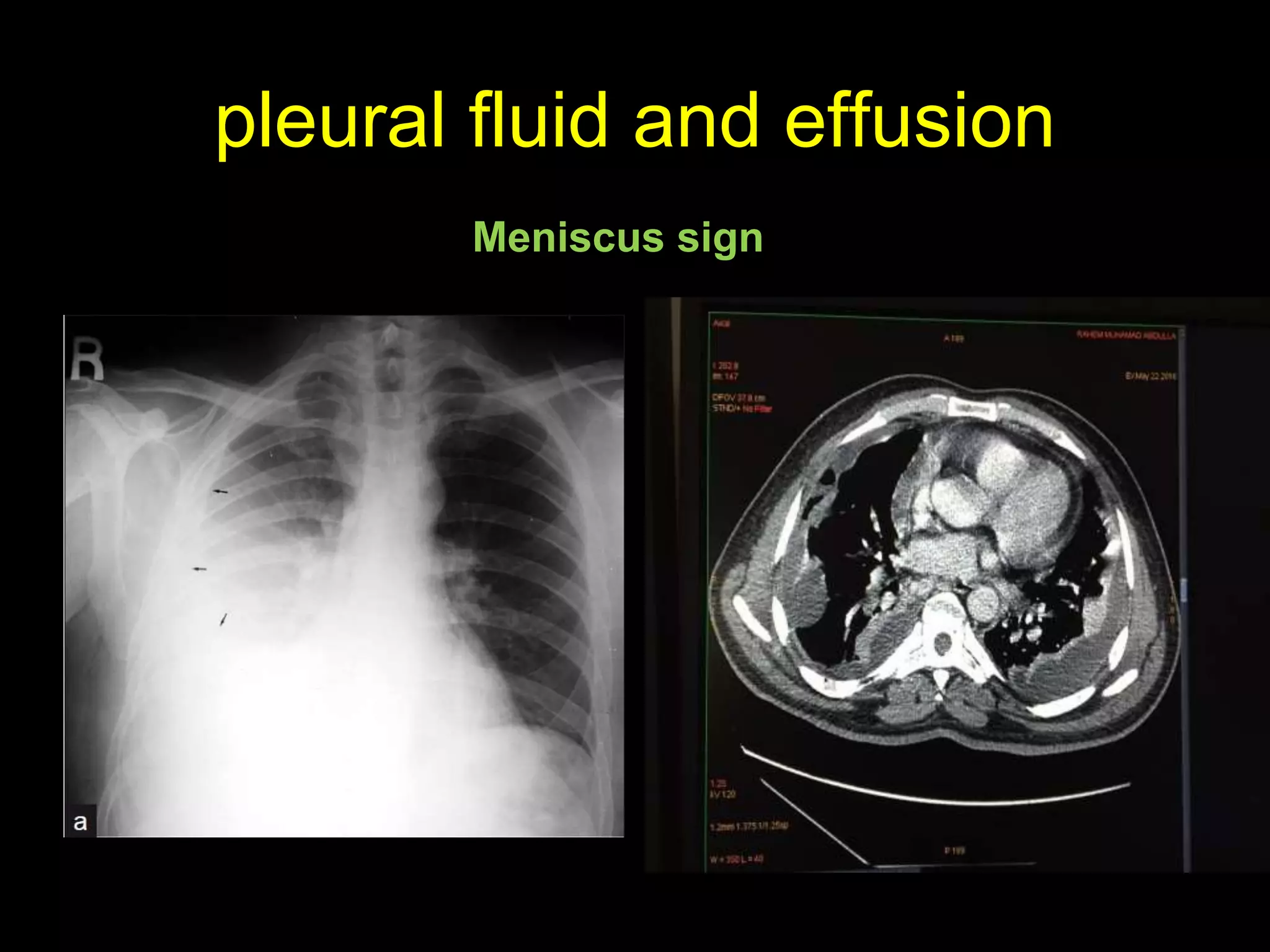
Meniscus sign
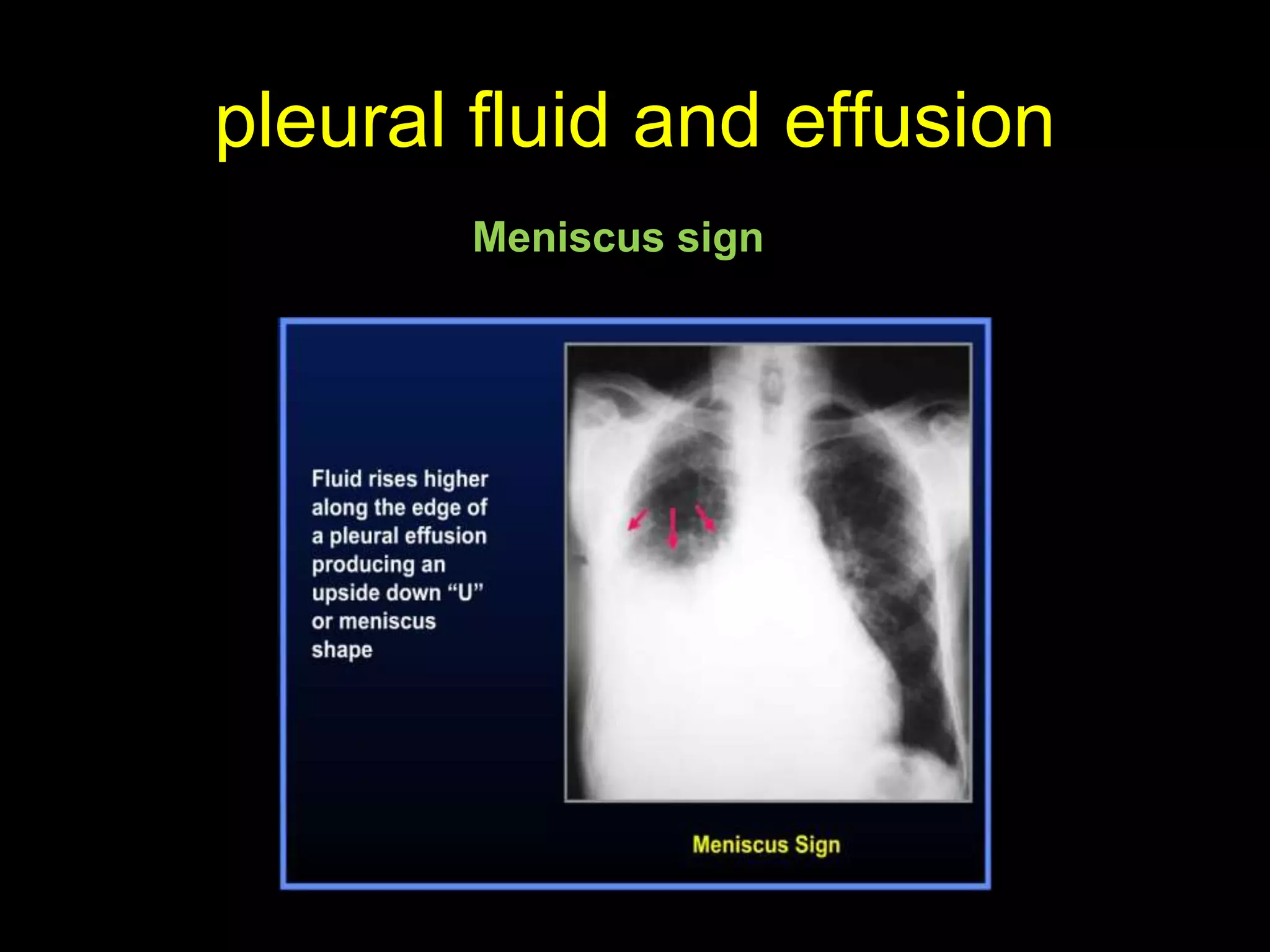
pleural fluid and effusion
Meniscus sign
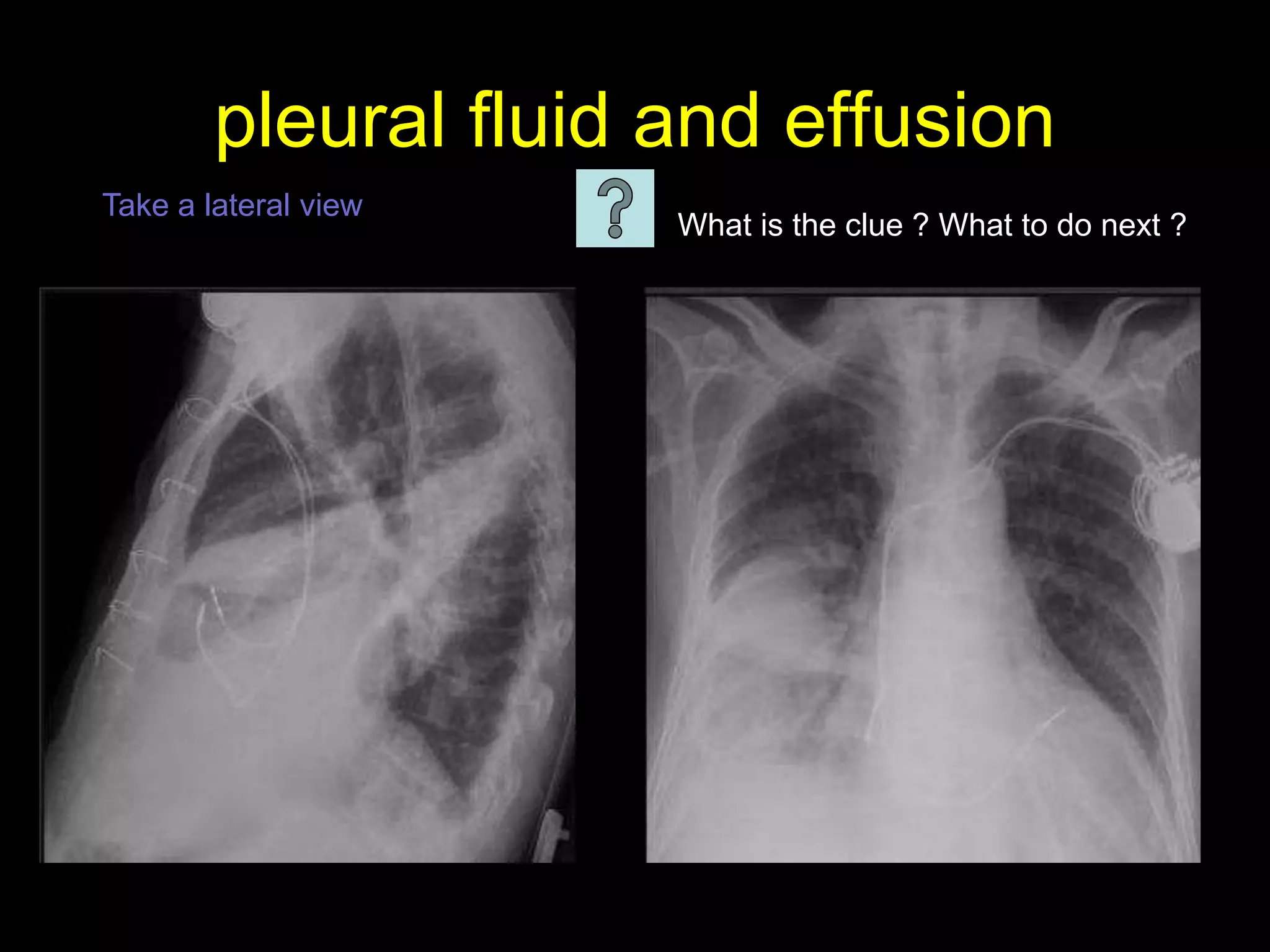
pleural fluid and effusion
• Layering effusion
• Lamellated effusion
• Loculated effusion ( vanishing
tumor )
What is the clue ? What to do next ?
Take a lateral view
Lateral view CXR ( our best friend )
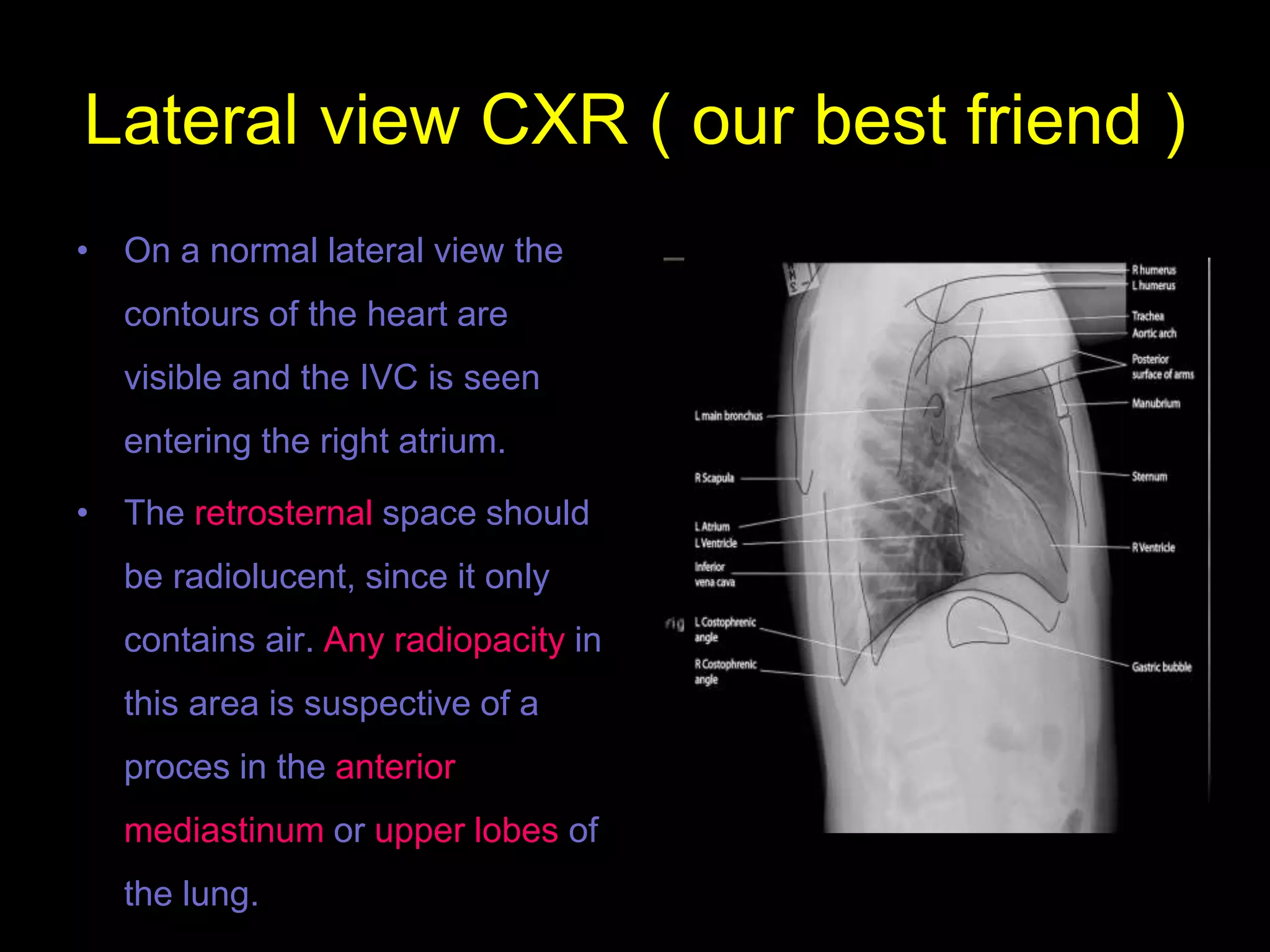
• On a normal lateral view the
contours of the heart are
visible and the IVC is seen
entering the right atrium.
• The retrosternal space should
be radiolucent, since it only
contains air. Any radiopacity in
this area is suspective of a
proces in the anterior
mediastinum or upper lobes of
the lung.
Lateral view CXR ( our best friend )
• As you go from superior to
inferior over the vertebral
bodies they should get darker,
because usually there will be
less soft tissue and more
radiolucent lung tissue (red
arrow).
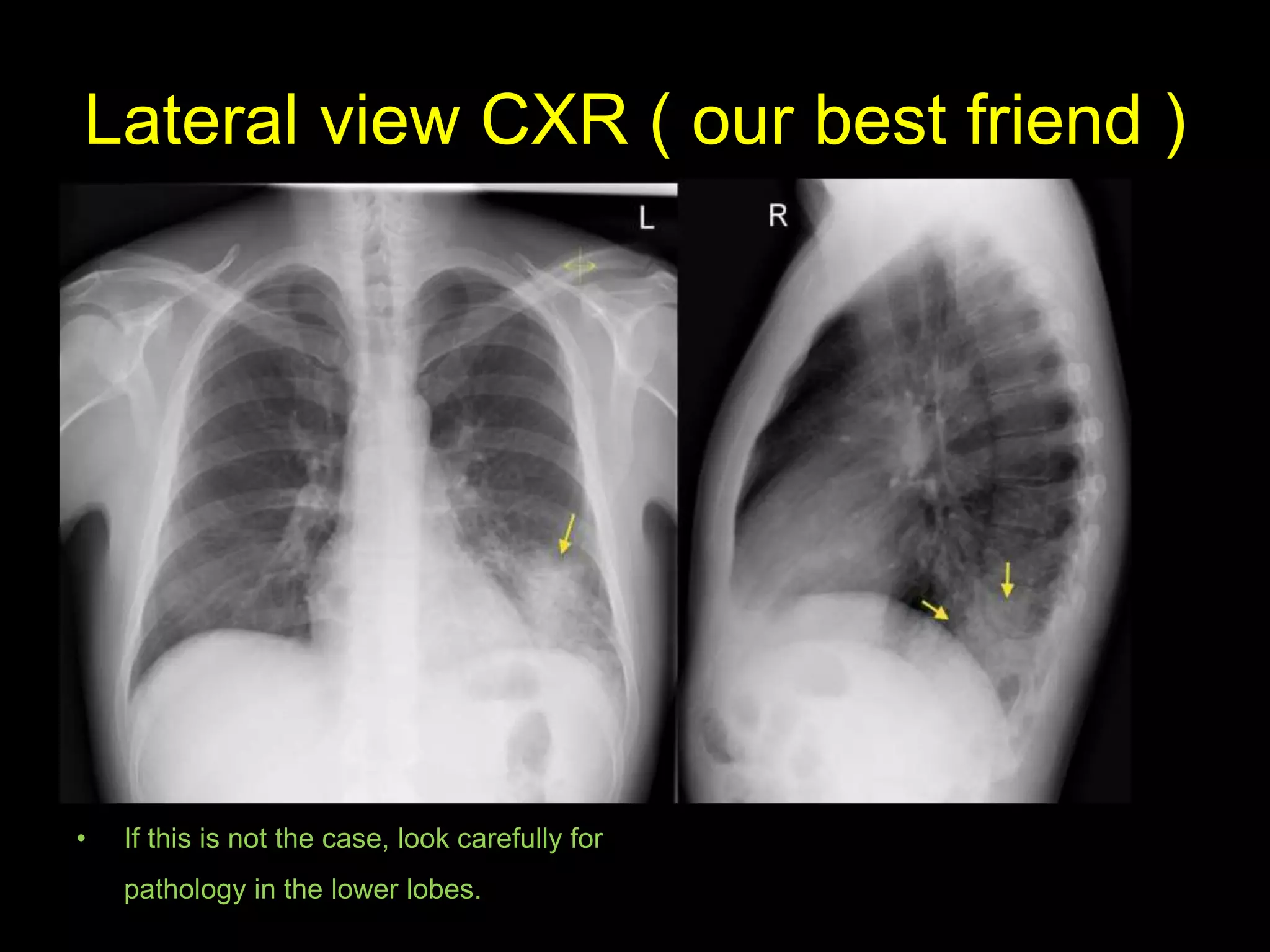
• If this is not the case, look carefully for
pathology in the lower lobes.
Lateral view CXR ( our best friend )
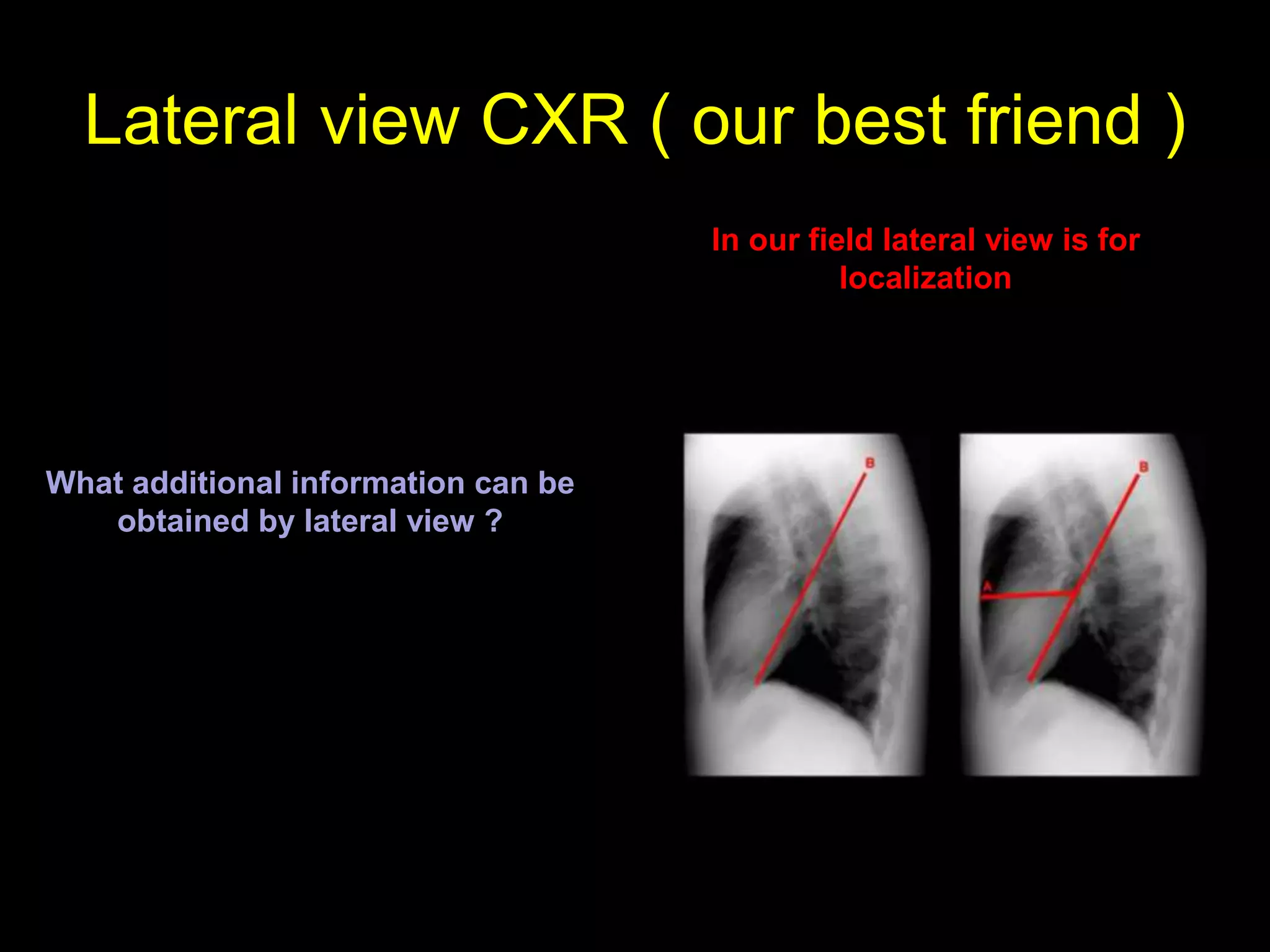
What additional information can be
obtained by lateral view ?
In our field lateral view is for
localization
Lateral view CXR ( our best friend )
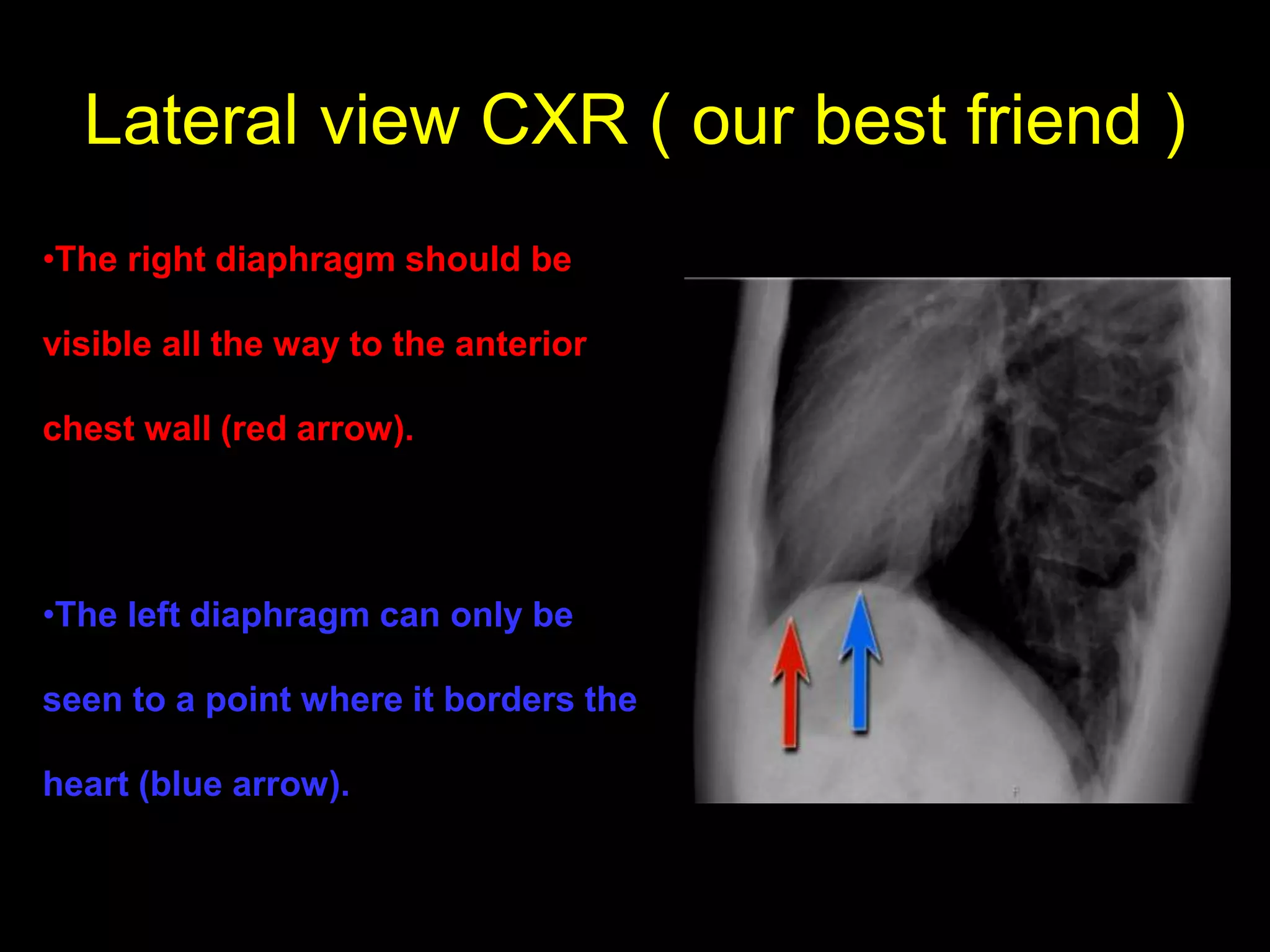
•The right diaphragm should be
visible all the way to the anterior
chest wall (red arrow).
•The left diaphragm can only be
seen to a point where it borders the
heart (blue arrow).
Lateral view CXR ( our best friend )
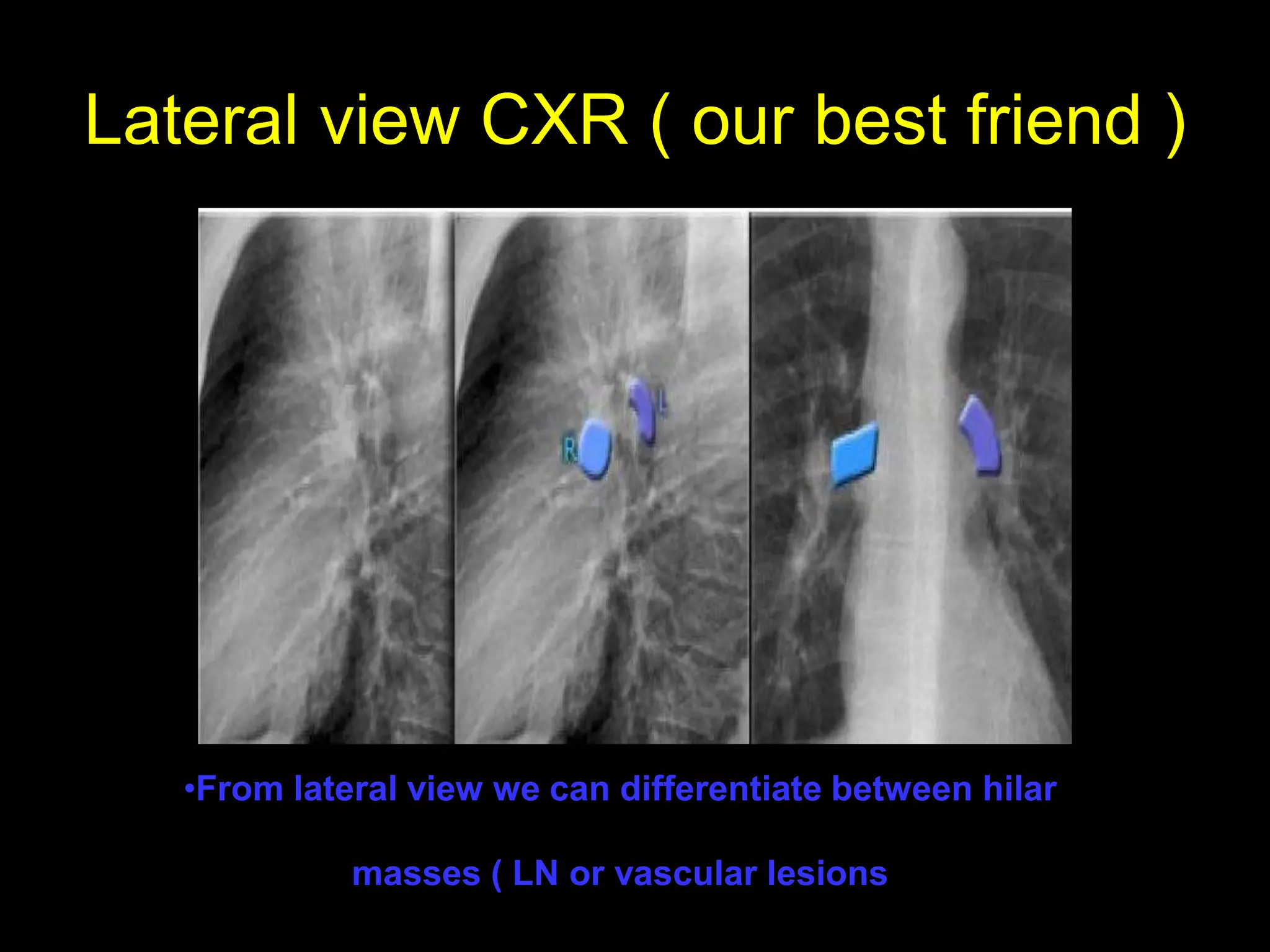
•From lateral view we can differentiate between hilar
masses ( LN or vascular lesions
Lateral view CXR ( our best friend )
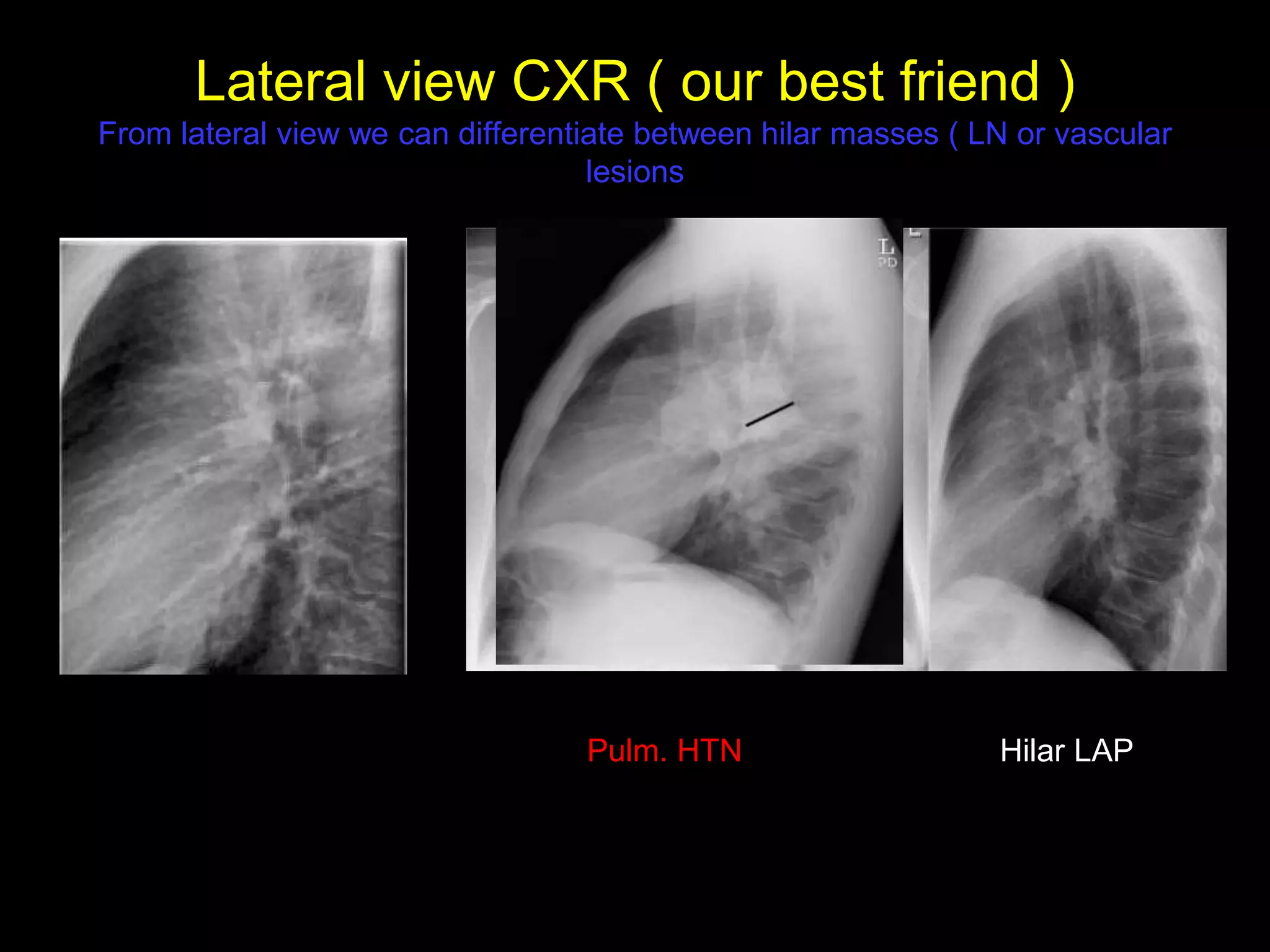
From lateral view we can differentiate between hilar masses ( LN or vascular
lesions
Hilar LAPPulm. HTN
Lateral view CXR ( our best friend )
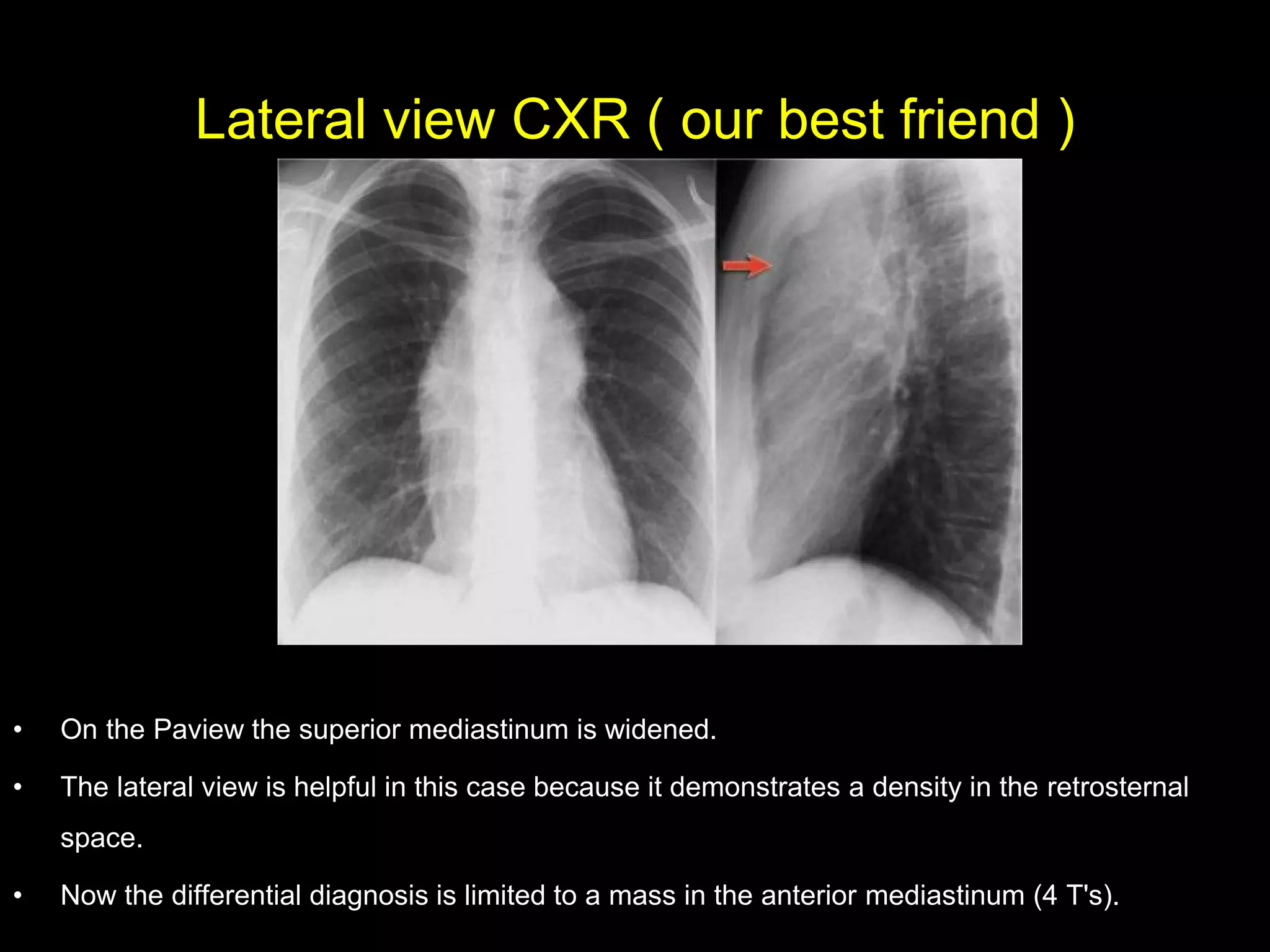
• On the Paview the superior mediastinum is widened.
• The lateral view is helpful in this case because it demonstrates a density in the retrosternal
space.
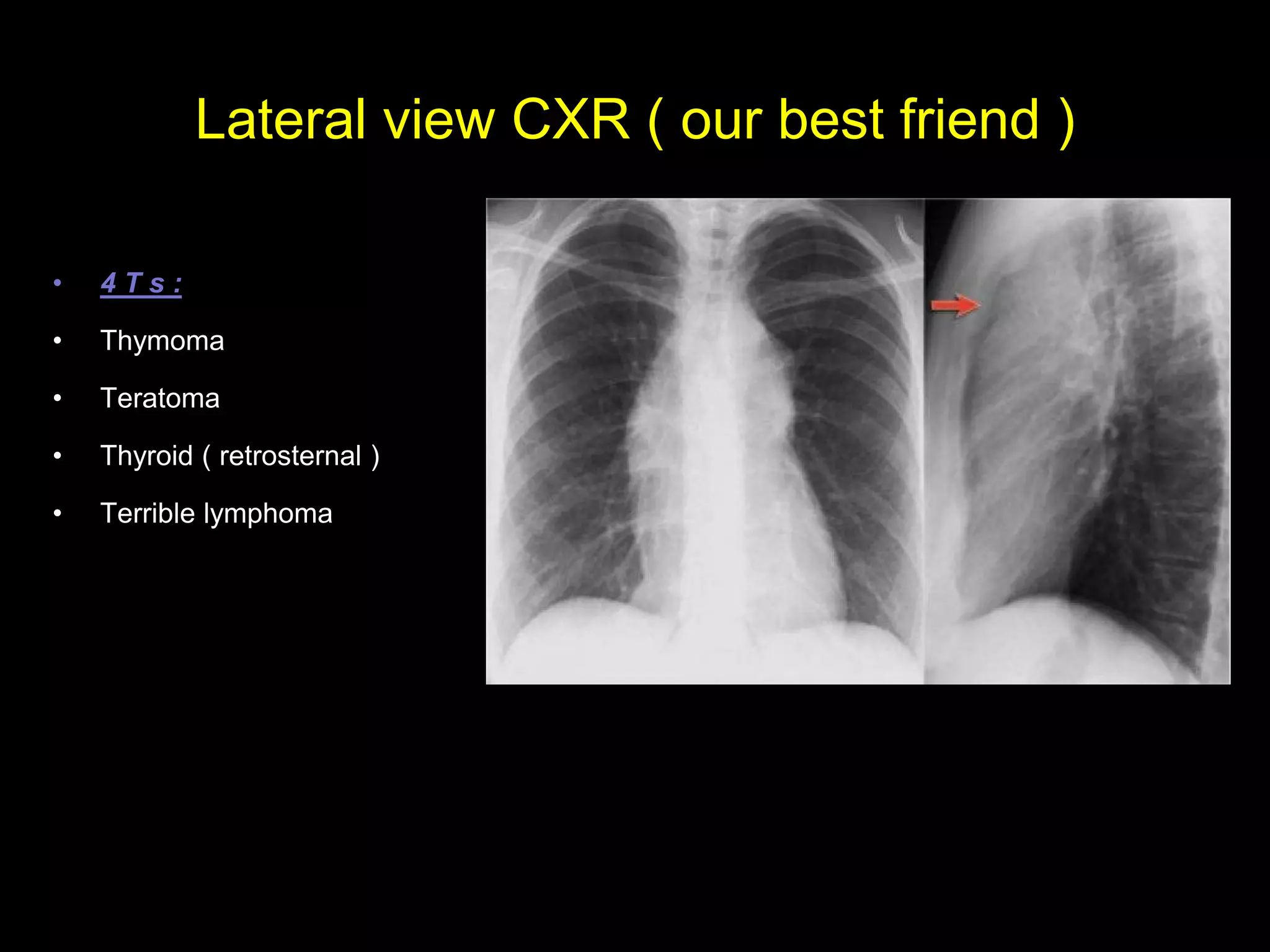
• Now the differential diagnosis is limited to a mass in the anterior mediastinum (4 T's).
Lateral view CXR ( our best friend )
• 4 T s :
• Thymoma
• Teratoma
• Thyroid ( retrosternal )
• Terrible lymphoma
Let’s go back to where we skipped
• Technical adequacy
• Cardiothoracic ratio + CP angles
• Mediastinal contour and para
vertebral lines
• Lung zones
• Hidden areas
• Bony stuctures
End of part one
Thank you for your attension

basic approach for CXR interpretation

  • 1.
    Basic approach tochest X-ray interpretation Lecture 5 Dr. Kosar kamal ahmed
  • 2.
    Basics First we shouldbe familiar with normal CXR
  • 3.
  • 4.
    Technical adequacy • Rotation •Inspiration • Angulation • Penetration
  • 5.
    Technical adequacy • Rotation •Inspiration • Angulation • Penetration
  • 6.
    Technical adequacy • Rotation •Inspiration • Penetration • Angulation
  • 7.
    Technical adequacy • Rotation •Inspiration • Angulation • Penetration
  • 8.
    Common normal variants •Keat’s atlas of normal variants • Azygos lobe fissure
  • 9.
  • 10.
    Variants • An apparentnodule formed by joint between first rib and calcified cartilage
  • 11.
  • 12.
    How to interpreta CXR ? • Heart failure • Interstitial lung disease • Pulmonary mass • Pulmonary abscess • Pleural effusion • Diaphragmatic hernia • Hilar pathology • LAP
  • 13.
    A suggested formof tics an inside-outside approach • Technical adequacy • Cardiothoracic ratio + CP angles • Mediastinal contour and para vertebral lines • Lung zones • Hidden areas • Bony stuctures
  • 14.
    Inside to outsideapproach • Technical adequacy • Cardiothoracic ratio + CP angles • Mediastinal contour and para vertebral lines • Lung zones • Hidden areas • Bony stuctures Normal ( clear CP angles ) For pl. effusion click button
  • 15.
  • 16.
    pleural fluid andeffusion • Sub-pulmonic effusion Is there any thing look like this ?
  • 17.
    Eventration of thediaphragm or paralysis of hemidiaphragm
  • 18.
    Eventration of thediaphragm and D. paralysis
  • 19.
  • 20.
    pleural fluid andeffusion Blunting of the costophrenic angle
  • 21.
  • 22.
    pleural fluid andeffusion Meniscus sign
  • 23.
    pleural fluid andeffusion Meniscus sign
  • 24.
    pleural fluid andeffusion • Layering effusion • Lamellated effusion • Loculated effusion ( vanishing tumor ) What is the clue ? What to do next ? Take a lateral view
  • 25.
    Lateral view CXR( our best friend ) • On a normal lateral view the contours of the heart are visible and the IVC is seen entering the right atrium. • The retrosternal space should be radiolucent, since it only contains air. Any radiopacity in this area is suspective of a proces in the anterior mediastinum or upper lobes of the lung.
  • 26.
    Lateral view CXR( our best friend ) • As you go from superior to inferior over the vertebral bodies they should get darker, because usually there will be less soft tissue and more radiolucent lung tissue (red arrow). • If this is not the case, look carefully for pathology in the lower lobes.
  • 27.
    Lateral view CXR( our best friend ) What additional information can be obtained by lateral view ? In our field lateral view is for localization
  • 28.
    Lateral view CXR( our best friend ) •The right diaphragm should be visible all the way to the anterior chest wall (red arrow). •The left diaphragm can only be seen to a point where it borders the heart (blue arrow).
  • 29.
    Lateral view CXR( our best friend ) •From lateral view we can differentiate between hilar masses ( LN or vascular lesions
  • 30.
    Lateral view CXR( our best friend ) From lateral view we can differentiate between hilar masses ( LN or vascular lesions Hilar LAPPulm. HTN
  • 31.
    Lateral view CXR( our best friend ) • On the Paview the superior mediastinum is widened. • The lateral view is helpful in this case because it demonstrates a density in the retrosternal space. • Now the differential diagnosis is limited to a mass in the anterior mediastinum (4 T's).
  • 32.
    Lateral view CXR( our best friend ) • 4 T s : • Thymoma • Teratoma • Thyroid ( retrosternal ) • Terrible lymphoma
  • 33.
    Let’s go backto where we skipped • Technical adequacy • Cardiothoracic ratio + CP angles • Mediastinal contour and para vertebral lines • Lung zones • Hidden areas • Bony stuctures
  • 34.
    End of partone Thank you for your attension