Overview of Body Systems
Body Systems 
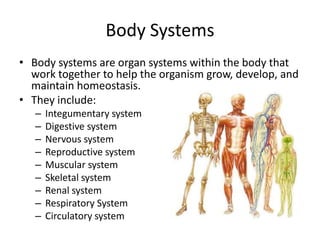
• Body systems are organ systems within the body that 
work together to help the organism grow, develop, and 
maintain homeostasis. 
• They include: 
– Integumentary system 
– Digestive system 
– Nervous system 
– Reproductive system 
– Muscular system 
– Skeletal system 
– Renal system 
– Respiratory System 
– Circulatory system
Integumentary system 
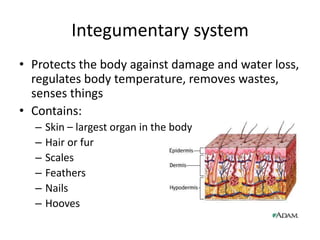
• Protects the body against damage and water loss, 
regulates body temperature, removes wastes, 
senses things 
• Contains: 
– Skin – largest organ in the body 
– Hair or fur 
– Scales 
– Feathers 
– Nails 
– Hooves
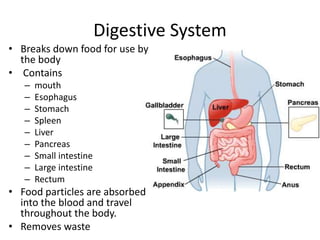
Digestive System 
• Breaks down food for use by 
the body 
• Contains 
– mouth 
– Esophagus 
– Stomach 
– Spleen 
– Liver 
– Pancreas 
– Small intestine 
– Large intestine 
– Rectum 
• Food particles are absorbed 
into the blood and travel 
throughout the body. 
• Removes waste
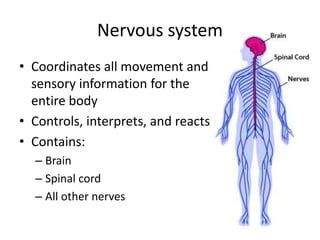
Nervous system 
• Coordinates all movement and 
sensory information for the 
entire body 
• Controls, interprets, and reacts 
• Contains: 
– Brain 
– Spinal cord 
– All other nerves
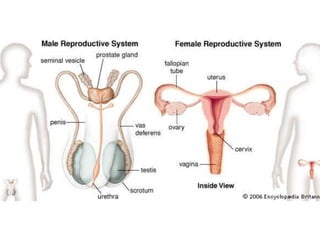
Reproductive System 
• Contains sex organs and glands that influence 
gender, reproduction, maturity, and all 
changes that happen in the body during 
adolescence. 
• Female – ovaries, fallopian tubes, uterus, 
vagina 
• Male – testes, penis, urethra, prostate
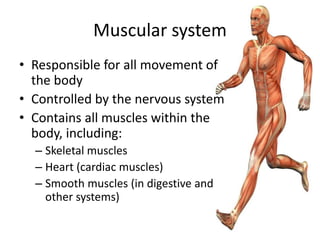
Muscular system 
• Responsible for all movement of 
the body 
• Controlled by the nervous system 
• Contains all muscles within the 
body, including: 
– Skeletal muscles 
– Heart (cardiac muscles) 
– Smooth muscles (in digestive and 
other systems)
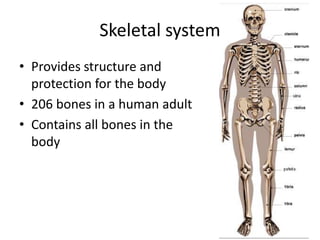
Skeletal system 
• Provides structure and 
protection for the body 
• 206 bones in a human adult 
• Contains all bones in the 
body
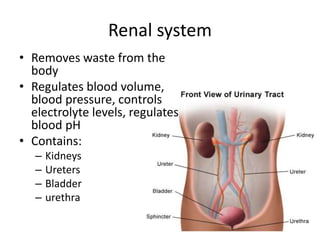
Renal system 
• Removes waste from the 
body 
• Regulates blood volume, 
blood pressure, controls 
electrolyte levels, regulates 
blood pH 
• Contains: 
– Kidneys 
– Ureters 
– Bladder 
– urethra
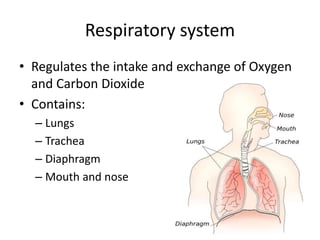
Respiratory system 
• Regulates the intake and exchange of Oxygen 
and Carbon Dioxide 
• Contains: 
– Lungs 
– Trachea 
– Diaphragm 
– Mouth and nose
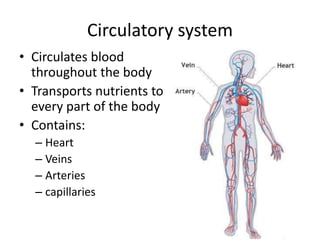
Circulatory system 
• Circulates blood 
throughout the body 
• Transports nutrients to 
every part of the body 
• Contains: 
– Heart 
– Veins 
– Arteries 
– capillaries

Overview of body systems

  • 1.
  • 2.
    Body Systems •Body systems are organ systems within the body that work together to help the organism grow, develop, and maintain homeostasis. • They include: – Integumentary system – Digestive system – Nervous system – Reproductive system – Muscular system – Skeletal system – Renal system – Respiratory System – Circulatory system
  • 3.
    Integumentary system •Protects the body against damage and water loss, regulates body temperature, removes wastes, senses things • Contains: – Skin – largest organ in the body – Hair or fur – Scales – Feathers – Nails – Hooves
  • 4.
    Digestive System •Breaks down food for use by the body • Contains – mouth – Esophagus – Stomach – Spleen – Liver – Pancreas – Small intestine – Large intestine – Rectum • Food particles are absorbed into the blood and travel throughout the body. • Removes waste
  • 5.
    Nervous system •Coordinates all movement and sensory information for the entire body • Controls, interprets, and reacts • Contains: – Brain – Spinal cord – All other nerves
  • 6.
    Reproductive System •Contains sex organs and glands that influence gender, reproduction, maturity, and all changes that happen in the body during adolescence. • Female – ovaries, fallopian tubes, uterus, vagina • Male – testes, penis, urethra, prostate
  • 8.
    Muscular system •Responsible for all movement of the body • Controlled by the nervous system • Contains all muscles within the body, including: – Skeletal muscles – Heart (cardiac muscles) – Smooth muscles (in digestive and other systems)
  • 9.
    Skeletal system •Provides structure and protection for the body • 206 bones in a human adult • Contains all bones in the body
  • 10.
    Renal system •Removes waste from the body • Regulates blood volume, blood pressure, controls electrolyte levels, regulates blood pH • Contains: – Kidneys – Ureters – Bladder – urethra
  • 11.
    Respiratory system •Regulates the intake and exchange of Oxygen and Carbon Dioxide • Contains: – Lungs – Trachea – Diaphragm – Mouth and nose
  • 12.
    Circulatory system •Circulates blood throughout the body • Transports nutrients to every part of the body • Contains: – Heart – Veins – Arteries – capillaries