APPROACHES TO CURRICULUM
ORGANIZATION
Arrangement of the syllabus/ curriculum is
called Curriculum organization
Curriculum – Latin – currere- path
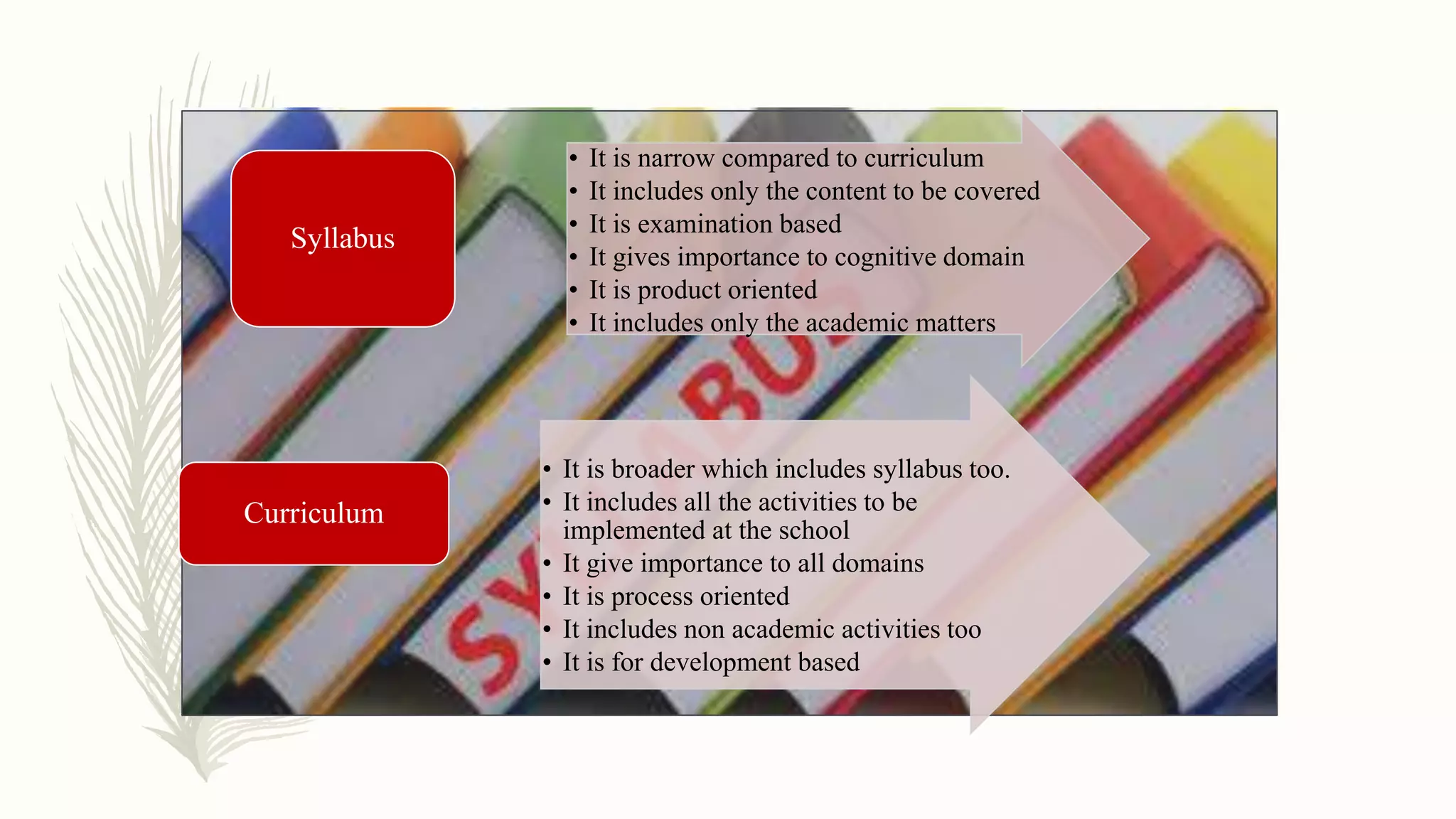
• It is narrow compared to curriculum
• It includes only the content to be covered
• It is examination based
• It gives importance to cognitive domain
• It is product oriented
• It includes only the academic matters
Syllabus
• It is broader which includes syllabus too.
• It includes all the activities to be
implemented at the school
• It give importance to all domains
• It is process oriented
• It includes non academic activities too
• It is for development based
Curriculum
Meaning
It is a comprehensive frame work which
includes all the experiences , academic as
well as non academic , which are proposed
to be provided to the learners during the
school hours.
Definition
Curriculum is a tool in the hands of an artists ( teacher) to mould his
material(pupils) according to his ideals (objectives) in his studio(school).
-Arthur Cunningham
Curriculum is that which the pupil is taught. It involves more than the act of
learning and quiet study. It involves occupations, Productions, Achievement,
Exercise and activity.
Curriculum Approaches
The following are the approaches of curriculum
1. Logical approach
2. Psychological approach
3. Concentric Approach
4. Spiral Approach
5. Modular approach
Logical Approach
 Based on logic and principles
 Simple to complex .
 Known to unknown
 Demonstration to practical
 Concrete to abstract
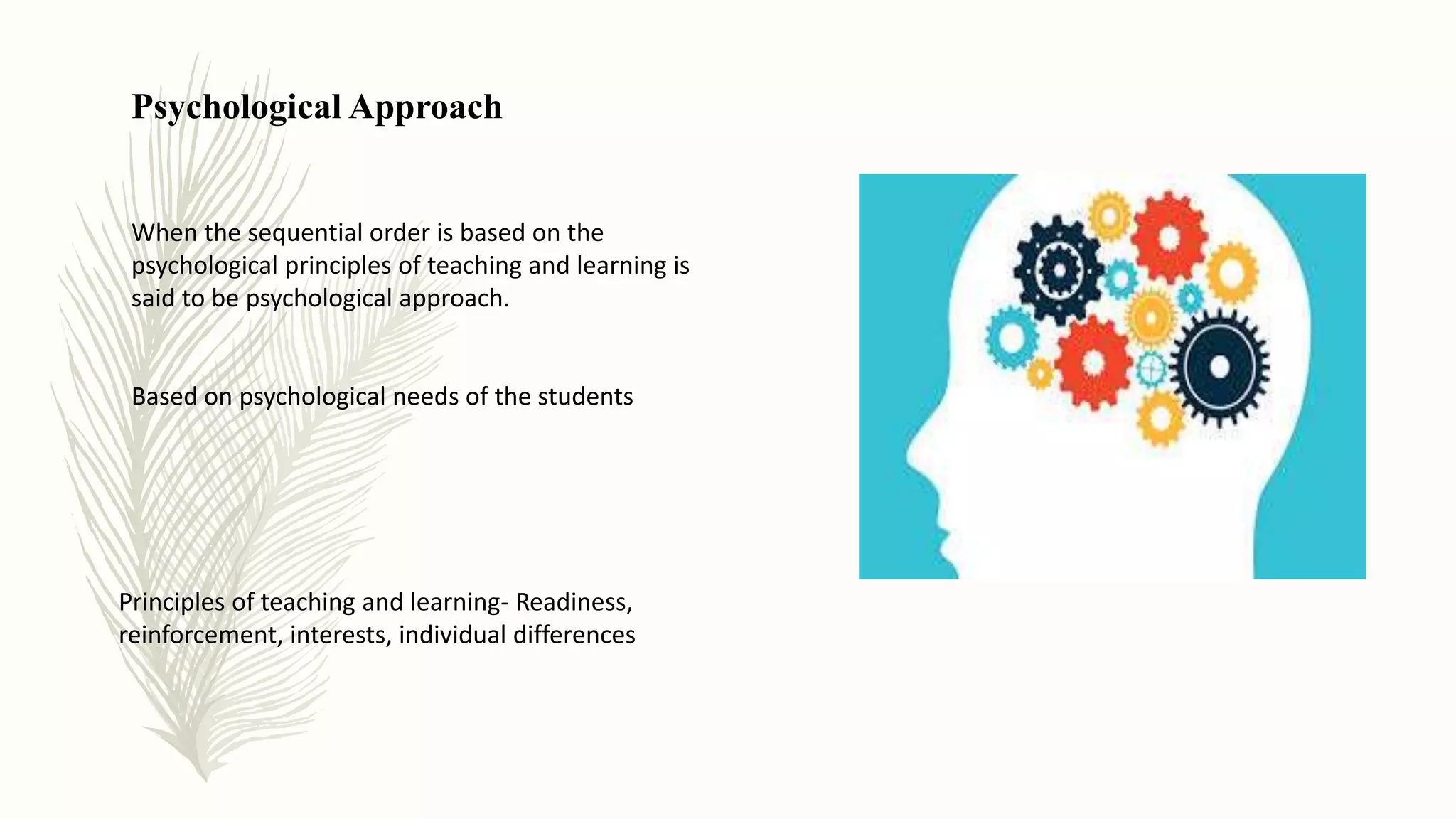
Psychological Approach
When the sequential order is based on the
psychological principles of teaching and learning is
said to be psychological approach.
Based on psychological needs of the students
Principles of teaching and learning- Readiness,
reinforcement, interests, individual differences
Approaches for curriculum organization

Approaches for curriculum organization

  • 1.
  • 2.
    Arrangement of thesyllabus/ curriculum is called Curriculum organization Curriculum – Latin – currere- path
  • 3.
    • It isnarrow compared to curriculum • It includes only the content to be covered • It is examination based • It gives importance to cognitive domain • It is product oriented • It includes only the academic matters Syllabus • It is broader which includes syllabus too. • It includes all the activities to be implemented at the school • It give importance to all domains • It is process oriented • It includes non academic activities too • It is for development based Curriculum
  • 4.
    Meaning It is acomprehensive frame work which includes all the experiences , academic as well as non academic , which are proposed to be provided to the learners during the school hours.
  • 5.
    Definition Curriculum is atool in the hands of an artists ( teacher) to mould his material(pupils) according to his ideals (objectives) in his studio(school). -Arthur Cunningham Curriculum is that which the pupil is taught. It involves more than the act of learning and quiet study. It involves occupations, Productions, Achievement, Exercise and activity.
  • 6.
    Curriculum Approaches The followingare the approaches of curriculum 1. Logical approach 2. Psychological approach 3. Concentric Approach 4. Spiral Approach 5. Modular approach
  • 7.
    Logical Approach  Basedon logic and principles  Simple to complex .  Known to unknown  Demonstration to practical  Concrete to abstract
  • 8.
    Psychological Approach When thesequential order is based on the psychological principles of teaching and learning is said to be psychological approach. Based on psychological needs of the students Principles of teaching and learning- Readiness, reinforcement, interests, individual differences