Powerpoint Presentation © Pitsford Hall weather station
        Northamptonshire Grammar School
        Abridged version without video clips
What is weather?
 Weather describes the
 state of the atmosphere
 at any particular time.
 Weather can be
 described in terms of
 temperature,
 precipitation (snow, rain
 & hail), wind speed and
 direction, visibility and
 cloud amounts.
What is Climate?
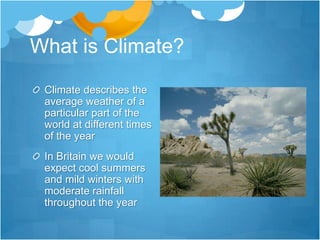
 Climate describes the
 average weather of a
 particular part of the
 world at different times
 of the year
 In Britain we would
 expect cool summers
 and mild winters with
 moderate rainfall
 throughout the year
The Weather Station

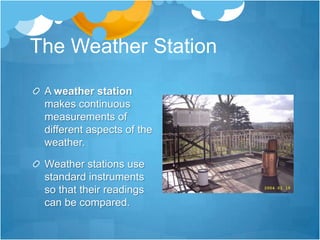
 A weather station
 makes continuous
 measurements of
 different aspects of the
 weather.

 Weather stations use
 standard instruments
 so that their readings
 can be compared.
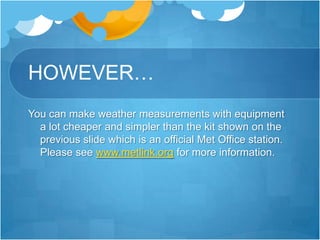
HOWEVER…
You can make weather measurements with equipment
  a lot cheaper and simpler than the kit shown on the
  previous slide which is an official Met Office station.
  Please see www.metlink.org for more information.
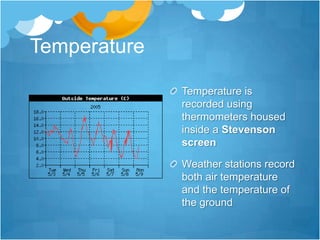
Temperature

              Temperature is
              recorded using
              thermometers housed
              inside a Stevenson
              screen

              Weather stations record
              both air temperature
              and the temperature of
              the ground
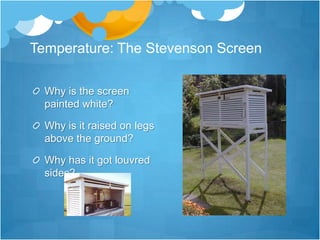
Temperature: The Stevenson Screen

  Why is the screen
  painted white?

  Why is it raised on legs
  above the ground?

  Why has it got louvred
  sides?
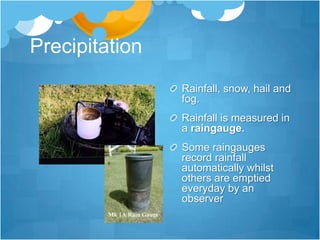
Precipitation
                Rainfall, snow, hail and
                fog.
                Rainfall is measured in
                a raingauge.
                Some raingauges
                record rainfall
                automatically whilst
                others are emptied
                everyday by an
                observer
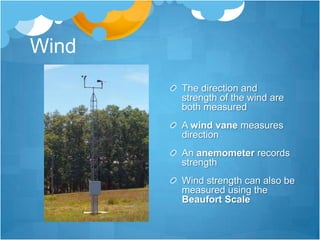
Wind
       The direction and
       strength of the wind are
       both measured
       A wind vane measures
       direction
       An anemometer records
       strength
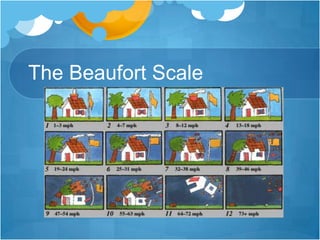
       Wind strength can also be
       measured using the
       Beaufort Scale
The Beaufort Scale
Pressure
 Pressure is the weight of
 the atmosphere
 When air rises pressure
 falls
 When air sinks pressure
 increases
 Pressure controls the
 type of weather
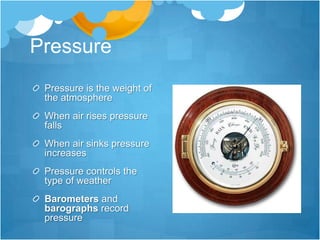
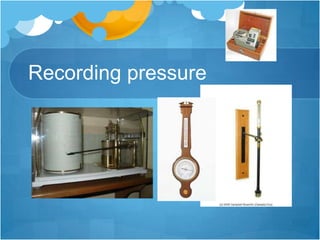
 Barometers and
 barographs record
 pressure
Recording pressure
Sunshine

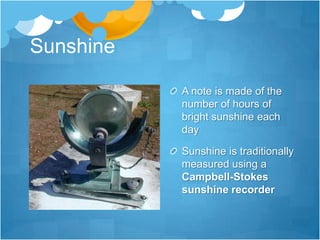
           A note is made of the
           number of hours of
           bright sunshine each
           day

           Sunshine is traditionally
           measured using a
           Campbell-Stokes
           sunshine recorder
Cloud
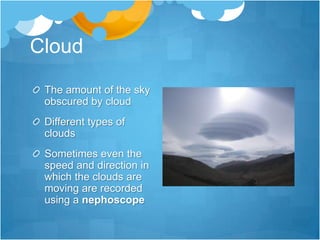
 The amount of the sky
 obscured by cloud
 Different types of
 clouds
 Sometimes even the
 speed and direction in
 which the clouds are
 moving are recorded
 using a nephoscope
Cloud Types -
Cumulonimbus
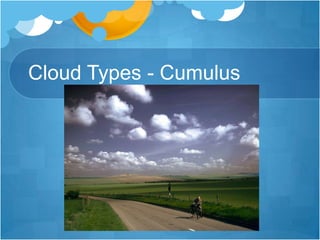
Cloud Types - Cumulus
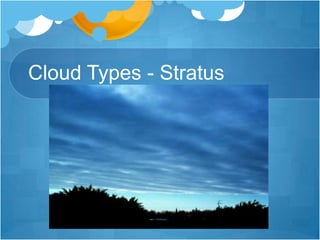
Cloud Types - Stratus
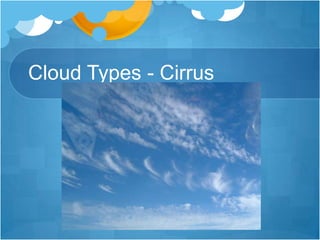
Cloud Types - Cirrus
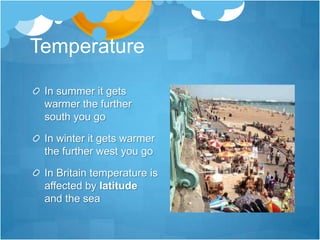
Temperature

 In summer it gets
 warmer the further
 south you go

 In winter it gets warmer
 the further west you go

 In Britain temperature is
 affected by latitude
 and the sea
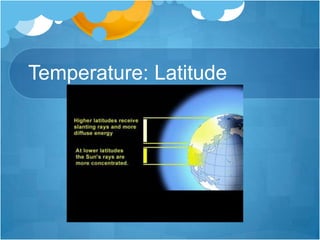
Temperature: Latitude
Temperature: Summer &
Winter
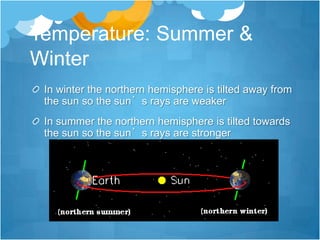
 In winter the northern hemisphere is tilted away from
 the sun so the sun’s rays are weaker
 In summer the northern hemisphere is tilted towards
 the sun so the sun’s rays are stronger
Temperature: Summer &
Winter
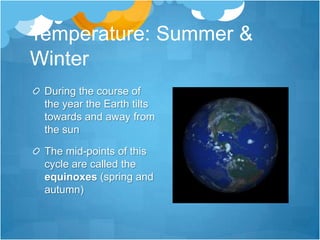
 During the course of
 the year the Earth tilts
 towards and away from
 the sun

 The mid-points of this
 cycle are called the
 equinoxes (spring and
 autumn)
Temperature: The Sea
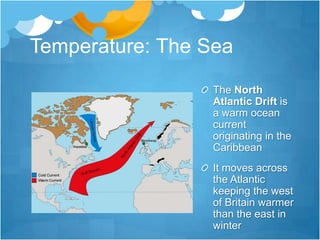
                  The North
                  Atlantic Drift is
                  a warm ocean
                  current
                  originating in the
                  Caribbean
                  It moves across
                  the Atlantic
                  keeping the west
                  of Britain warmer
                  than the east in
                  winter
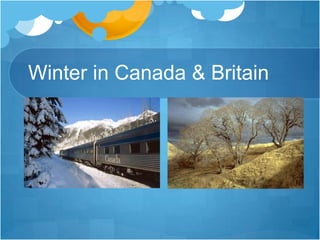
Winter in Canada & Britain
Rainfall
           In Britain it rains the
           most in the west and in
           mountainous areas
           Rain is brought across
           Britain from weather
           systems called
           depressions
           In summer showers
           result from convection
           on warm days
How it rains
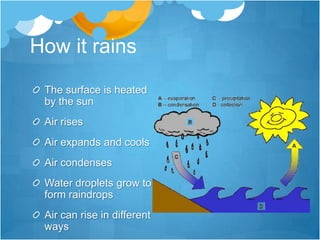
 The surface is heated
 by the sun
 Air rises
 Air expands and cools
 Air condenses
 Water droplets grow to
 form raindrops
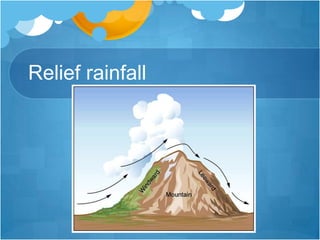
 Air can rise in different
 ways
Relief rainfall
Cyclonic Rainfall
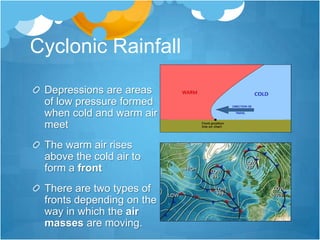
 Depressions are areas
 of low pressure formed
 when cold and warm air
 meet
 The warm air rises
 above the cold air to
 form a front
 There are two types of
 fronts depending on the
 way in which the air
 masses are moving.
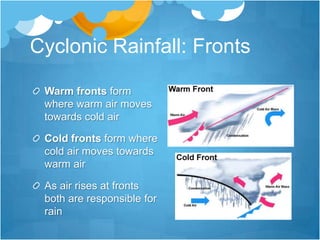
Cyclonic Rainfall: Fronts

 Warm fronts form
 where warm air moves
 towards cold air

 Cold fronts form where
 cold air moves towards
 warm air

 As air rises at fronts
 both are responsible for
 rain
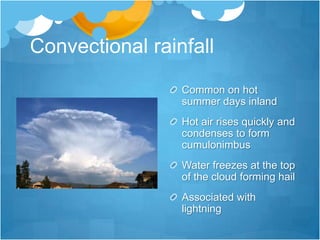
Convectional rainfall
                 Common on hot
                 summer days inland
                 Hot air rises quickly and
                 condenses to form
                 cumulonimbus
                 Water freezes at the top
                 of the cloud forming hail
                 Associated with
                 lightning
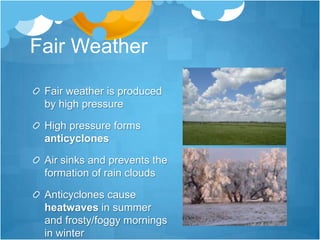
Fair Weather

 Fair weather is produced
 by high pressure

 High pressure forms
 anticyclones

 Air sinks and prevents the
 formation of rain clouds

 Anticyclones cause
 heatwaves in summer
 and frosty/foggy mornings
 in winter
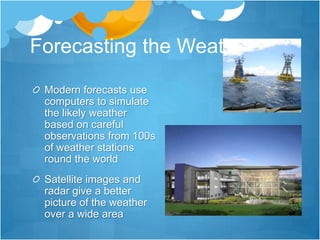
Forecasting the Weather
 Modern forecasts use
 computers to simulate
 the likely weather
 based on careful
 observations from 100s
 of weather stations
 round the world
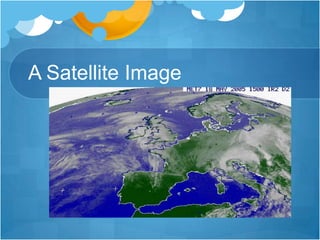
 Satellite images and
 radar give a better
 picture of the weather
 over a wide area
A Satellite Image
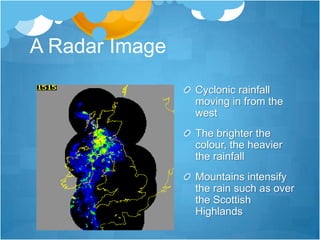
A Radar Image
                Cyclonic rainfall
                moving in from the
                west
                The brighter the
                colour, the heavier
                the rainfall
                Mountains intensify
                the rain such as over
                the Scottish
                Highlands
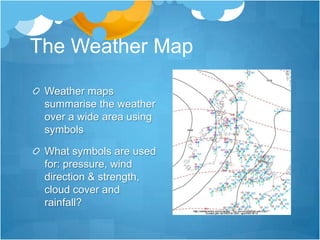
The Weather Map

 Weather maps
 summarise the weather
 over a wide area using
 symbols

 What symbols are used
 for: pressure, wind
 direction & strength,
 cloud cover and
 rainfall?
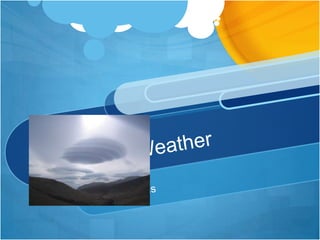
Weather
 This Powerpoint presentation was produced
 specially for the Department of Geography &
 Geology at Northamptonshire Grammar School


 May 2005

 © M J Lewis

weather and climate ppt for students..

  • 2.
    Powerpoint Presentation ©Pitsford Hall weather station Northamptonshire Grammar School Abridged version without video clips
  • 3.
    What is weather? Weather describes the state of the atmosphere at any particular time. Weather can be described in terms of temperature, precipitation (snow, rain & hail), wind speed and direction, visibility and cloud amounts.
  • 4.
    What is Climate? Climate describes the average weather of a particular part of the world at different times of the year In Britain we would expect cool summers and mild winters with moderate rainfall throughout the year
  • 5.
    The Weather Station A weather station makes continuous measurements of different aspects of the weather. Weather stations use standard instruments so that their readings can be compared.
  • 6.
    HOWEVER… You can makeweather measurements with equipment a lot cheaper and simpler than the kit shown on the previous slide which is an official Met Office station. Please see www.metlink.org for more information.
  • 7.
    Temperature Temperature is recorded using thermometers housed inside a Stevenson screen Weather stations record both air temperature and the temperature of the ground
  • 8.
    Temperature: The StevensonScreen Why is the screen painted white? Why is it raised on legs above the ground? Why has it got louvred sides?
  • 9.
    Precipitation Rainfall, snow, hail and fog. Rainfall is measured in a raingauge. Some raingauges record rainfall automatically whilst others are emptied everyday by an observer
  • 10.
    Wind The direction and strength of the wind are both measured A wind vane measures direction An anemometer records strength Wind strength can also be measured using the Beaufort Scale
  • 11.
  • 12.
    Pressure Pressure isthe weight of the atmosphere When air rises pressure falls When air sinks pressure increases Pressure controls the type of weather Barometers and barographs record pressure
  • 13.
  • 14.
    Sunshine A note is made of the number of hours of bright sunshine each day Sunshine is traditionally measured using a Campbell-Stokes sunshine recorder
  • 15.
    Cloud The amountof the sky obscured by cloud Different types of clouds Sometimes even the speed and direction in which the clouds are moving are recorded using a nephoscope
  • 16.
  • 17.
  • 18.
  • 19.
  • 21.
    Temperature In summerit gets warmer the further south you go In winter it gets warmer the further west you go In Britain temperature is affected by latitude and the sea
  • 22.
  • 23.
    Temperature: Summer & Winter In winter the northern hemisphere is tilted away from the sun so the sun’s rays are weaker In summer the northern hemisphere is tilted towards the sun so the sun’s rays are stronger
  • 24.
    Temperature: Summer & Winter During the course of the year the Earth tilts towards and away from the sun The mid-points of this cycle are called the equinoxes (spring and autumn)
  • 25.
    Temperature: The Sea The North Atlantic Drift is a warm ocean current originating in the Caribbean It moves across the Atlantic keeping the west of Britain warmer than the east in winter
  • 26.
  • 27.
    Rainfall In Britain it rains the most in the west and in mountainous areas Rain is brought across Britain from weather systems called depressions In summer showers result from convection on warm days
  • 28.
    How it rains The surface is heated by the sun Air rises Air expands and cools Air condenses Water droplets grow to form raindrops Air can rise in different ways
  • 29.
  • 30.
    Cyclonic Rainfall Depressionsare areas of low pressure formed when cold and warm air meet The warm air rises above the cold air to form a front There are two types of fronts depending on the way in which the air masses are moving.
  • 31.
    Cyclonic Rainfall: Fronts Warm fronts form where warm air moves towards cold air Cold fronts form where cold air moves towards warm air As air rises at fronts both are responsible for rain
  • 32.
    Convectional rainfall Common on hot summer days inland Hot air rises quickly and condenses to form cumulonimbus Water freezes at the top of the cloud forming hail Associated with lightning
  • 33.
    Fair Weather Fairweather is produced by high pressure High pressure forms anticyclones Air sinks and prevents the formation of rain clouds Anticyclones cause heatwaves in summer and frosty/foggy mornings in winter
  • 34.
    Forecasting the Weather Modern forecasts use computers to simulate the likely weather based on careful observations from 100s of weather stations round the world Satellite images and radar give a better picture of the weather over a wide area
  • 35.
  • 36.
    A Radar Image Cyclonic rainfall moving in from the west The brighter the colour, the heavier the rainfall Mountains intensify the rain such as over the Scottish Highlands
  • 37.
    The Weather Map Weather maps summarise the weather over a wide area using symbols What symbols are used for: pressure, wind direction & strength, cloud cover and rainfall?
  • 38.
    Weather This Powerpointpresentation was produced specially for the Department of Geography & Geology at Northamptonshire Grammar School May 2005 © M J Lewis