Amphetamine-Related
Presentations to ED
Colleen Taylor CME 15th May 2014
What we will cover
A little bit of history
A little bit of epidemiology
Case study
Acute and chronic complications of amphetamine
use
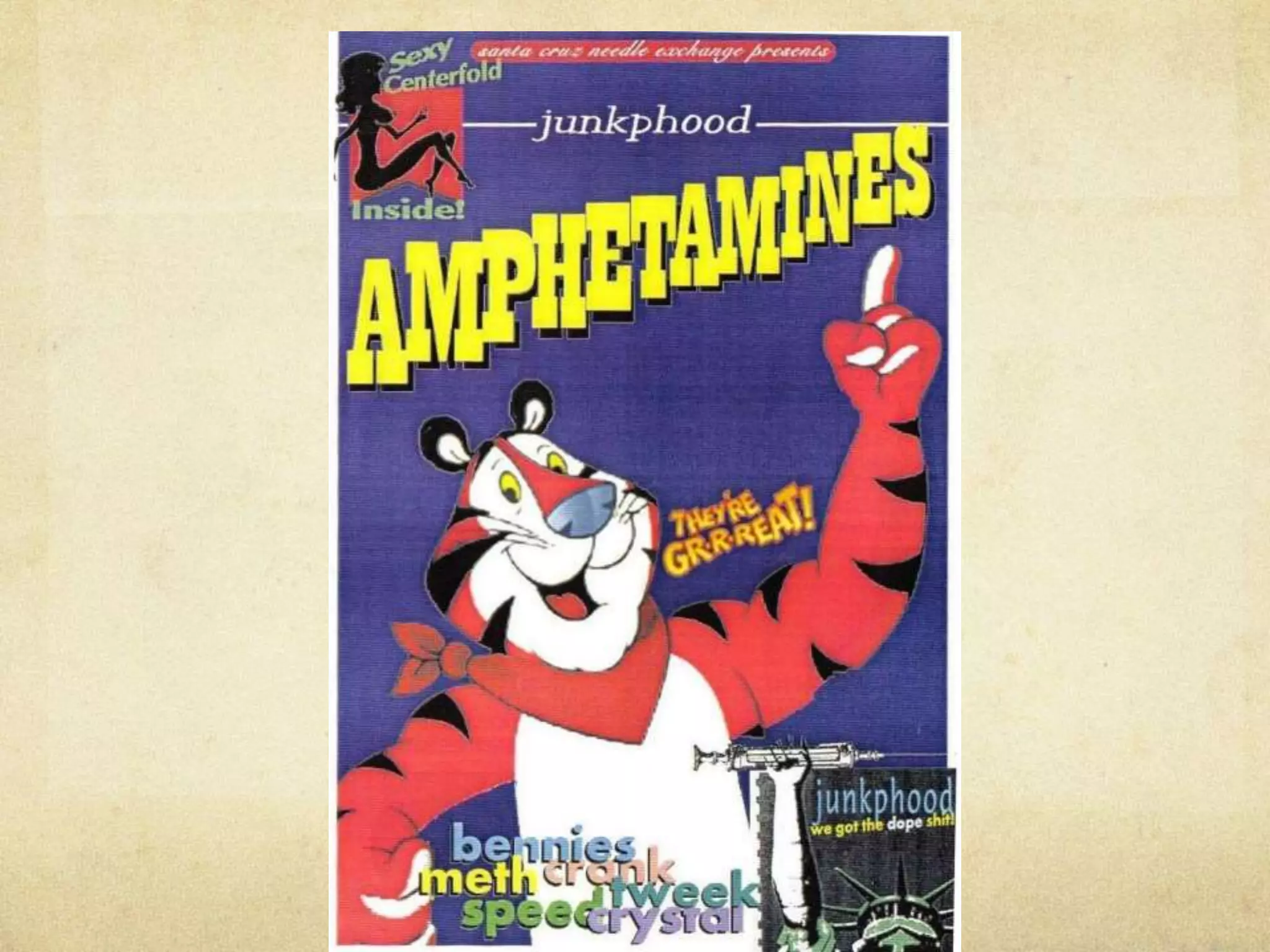
What are Amphetamines?
Synthetic psychoactive drug
Phenylethylamine derivative
Stimulates the release of catacholamines and
inhibits reuptake of monoamines. Increase in
central + peripheral NA, DA and 5HT
Prescription formulations e.g. dexamphetamines,
methylphenidate (Ritalin)
Or illegal formulations: Ice, speed, tablets
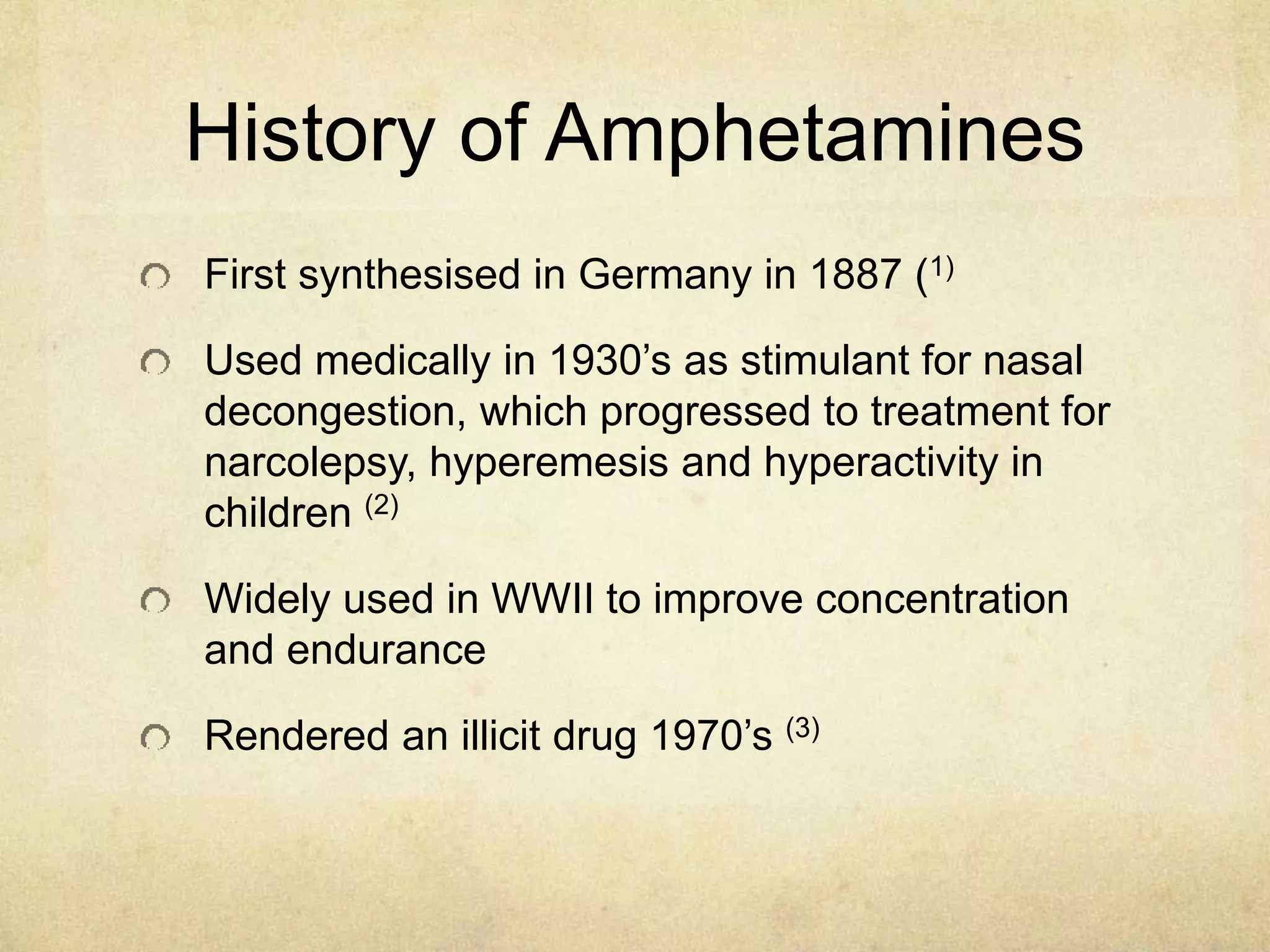
History of Amphetamines
First synthesised in Germany in 1887 (1)
Used medically in 1930’s as stimulant for nasal
decongestion, which progressed to treatment for
narcolepsy, hyperemesis and hyperactivity in
children (2)
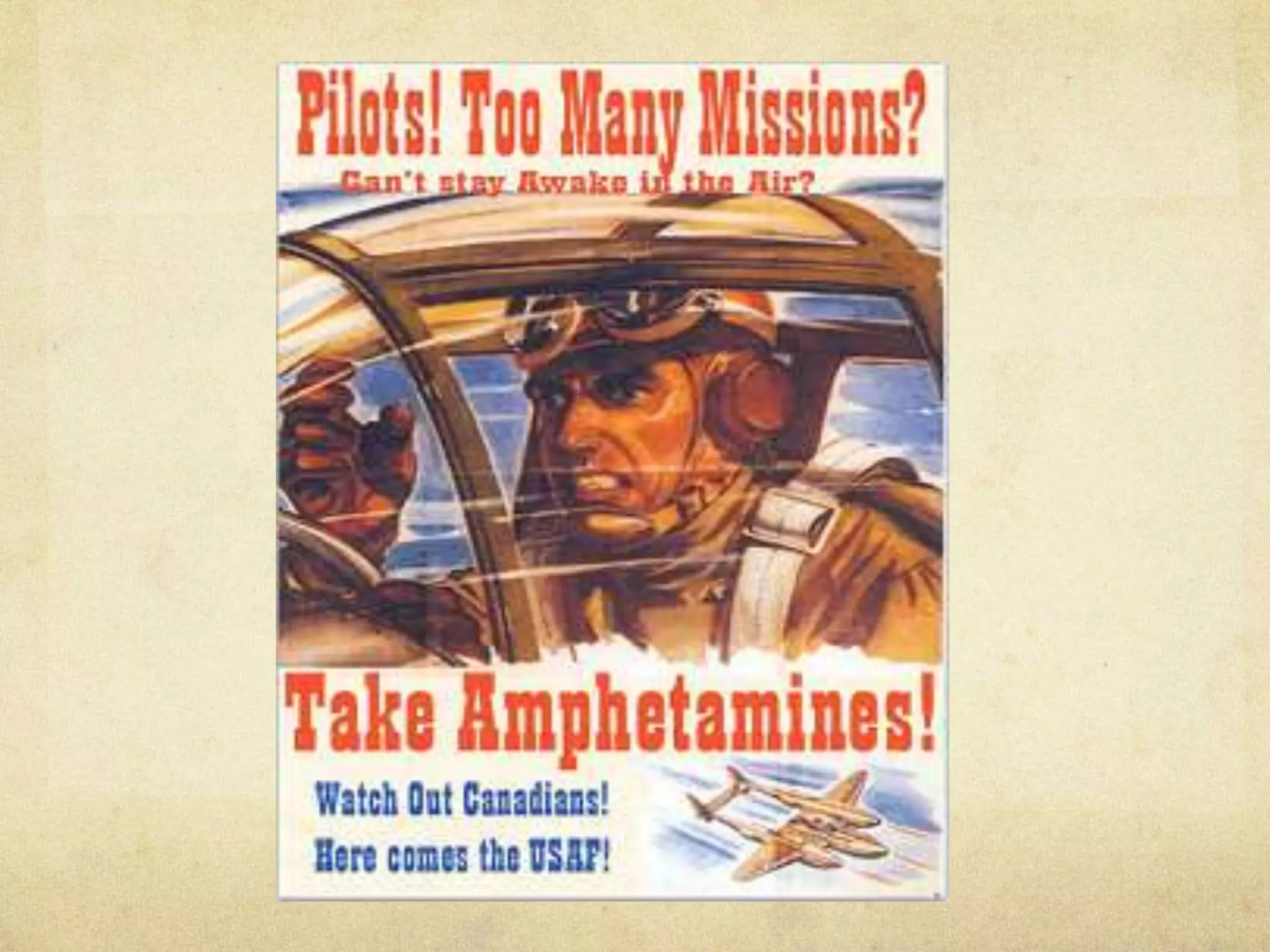
Widely used in WWII to improve concentration
and endurance
Rendered an illicit drug 1970’s (3)
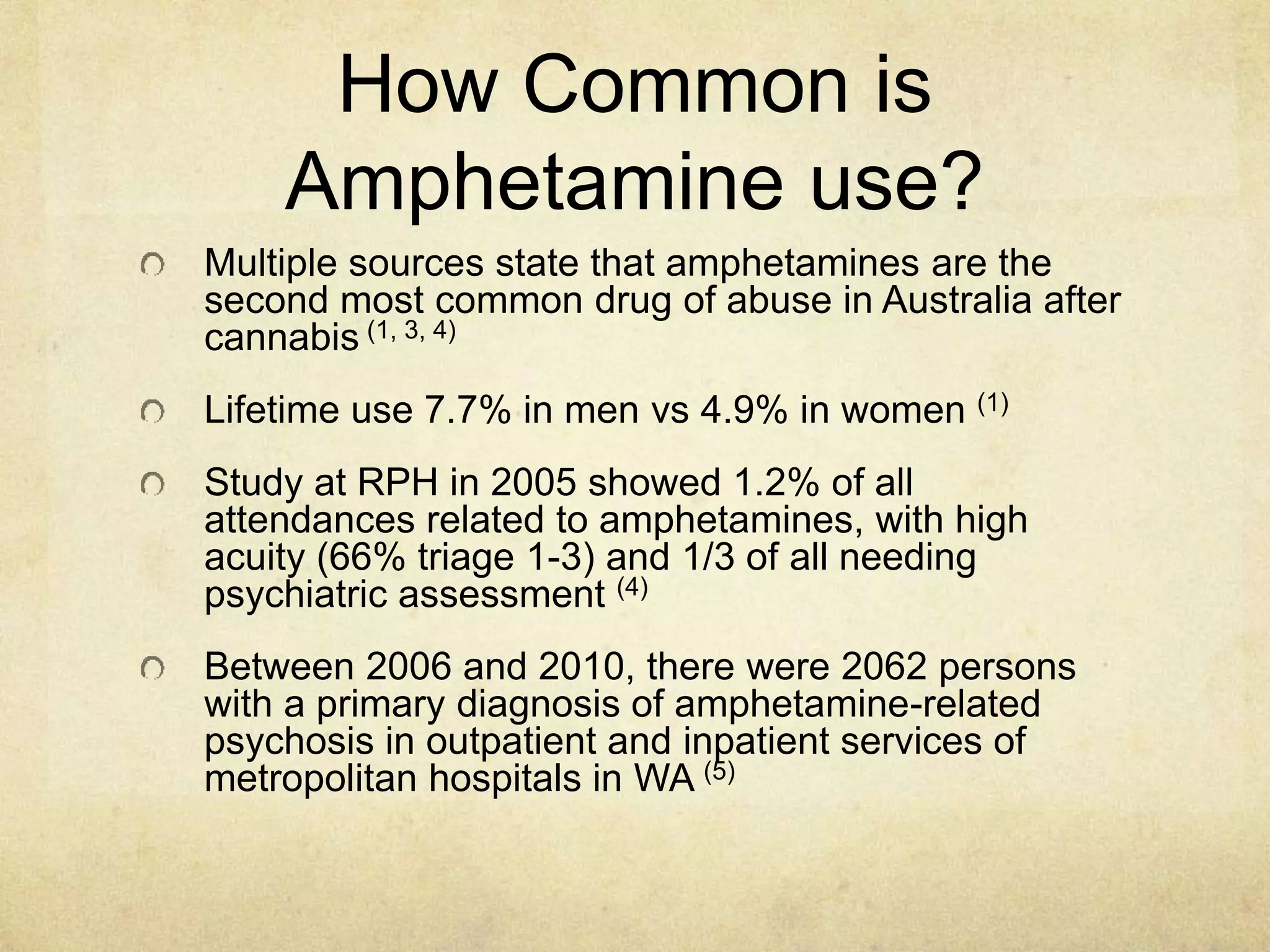
How Common is
Amphetamine use?
Multiple sources state that amphetamines are the
second most common drug of abuse in Australia after
cannabis (1, 3, 4)
Lifetime use 7.7% in men vs 4.9% in women (1)
Study at RPH in 2005 showed 1.2% of all
attendances related to amphetamines, with high
acuity (66% triage 1-3) and 1/3 of all needing
psychiatric assessment (4)
Between 2006 and 2010, there were 2062 persons
with a primary diagnosis of amphetamine-related
psychosis in outpatient and inpatient services of
metropolitan hospitals in WA (5)
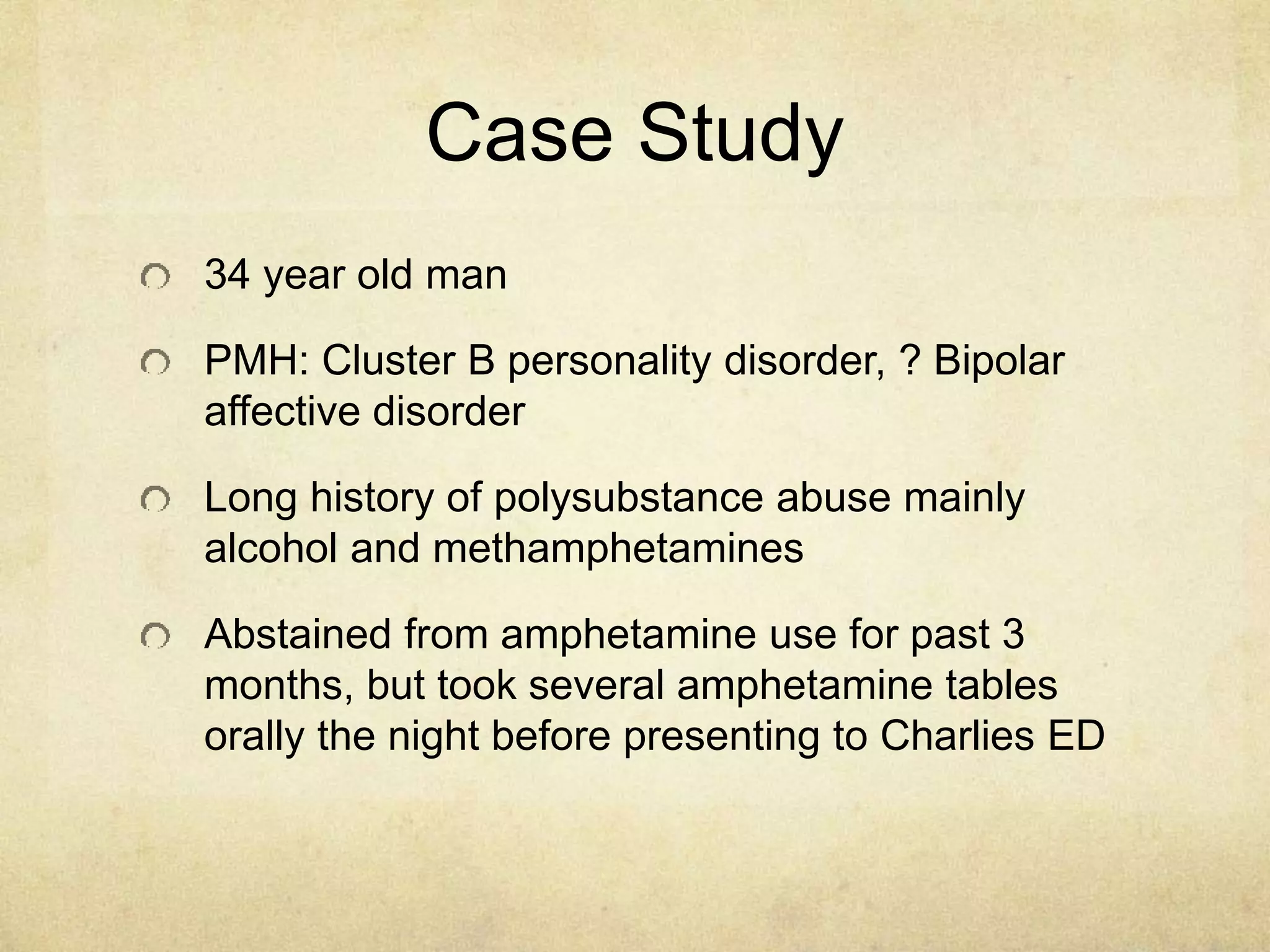
Case Study
34 year old man
PMH: Cluster B personality disorder, ? Bipolar
affective disorder
Long history of polysubstance abuse mainly
alcohol and methamphetamines
Abstained from amphetamine use for past 3
months, but took several amphetamine tables
orally the night before presenting to Charlies ED
Case Study
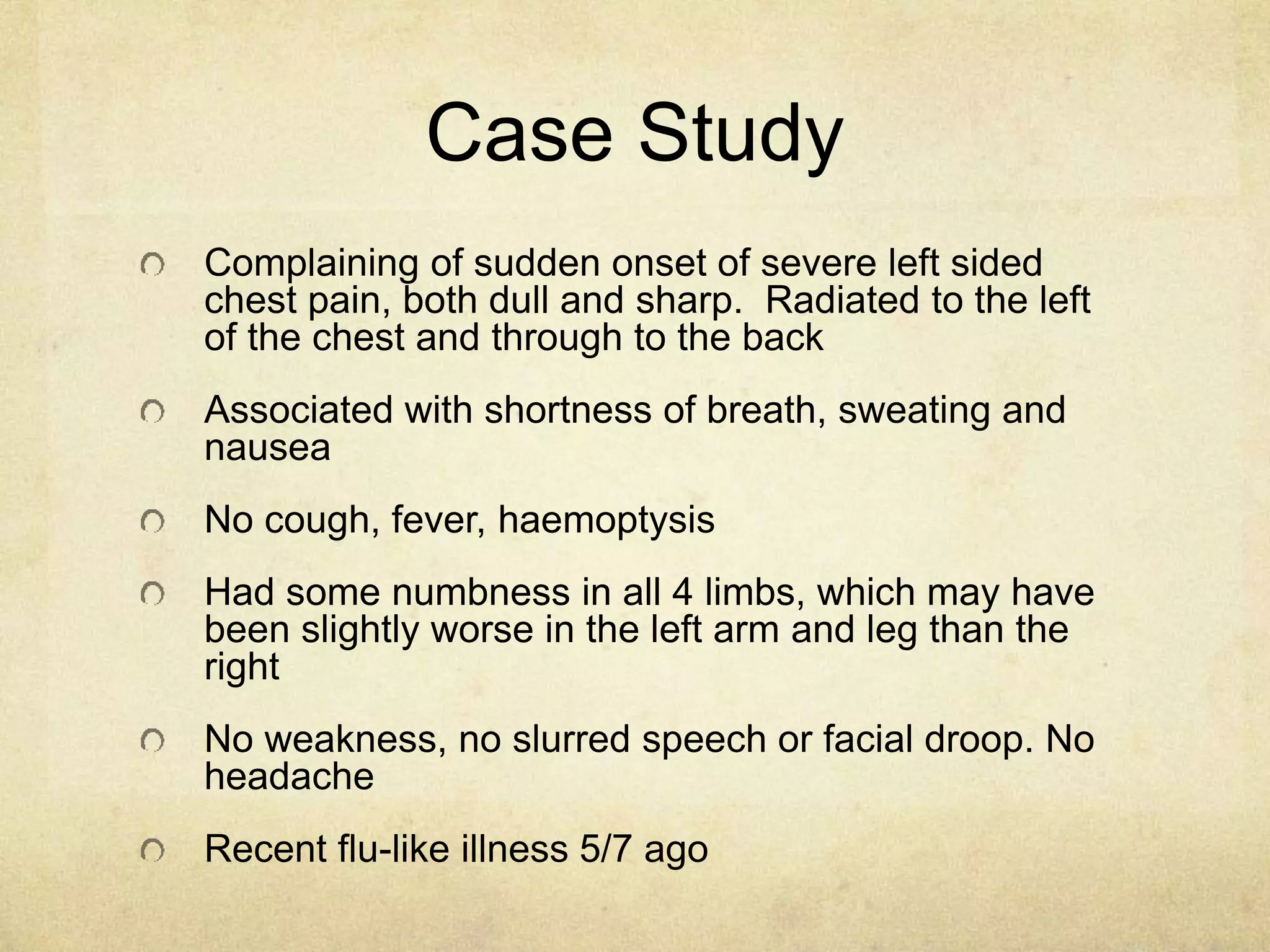
Complaining of sudden onset of severe left sided
chest pain, both dull and sharp. Radiated to the left
of the chest and through to the back
Associated with shortness of breath, sweating and
nausea
No cough, fever, haemoptysis
Had some numbness in all 4 limbs, which may have
been slightly worse in the left arm and leg than the
right
No weakness, no slurred speech or facial droop. No
headache
Recent flu-like illness 5/7 ago
Case Study
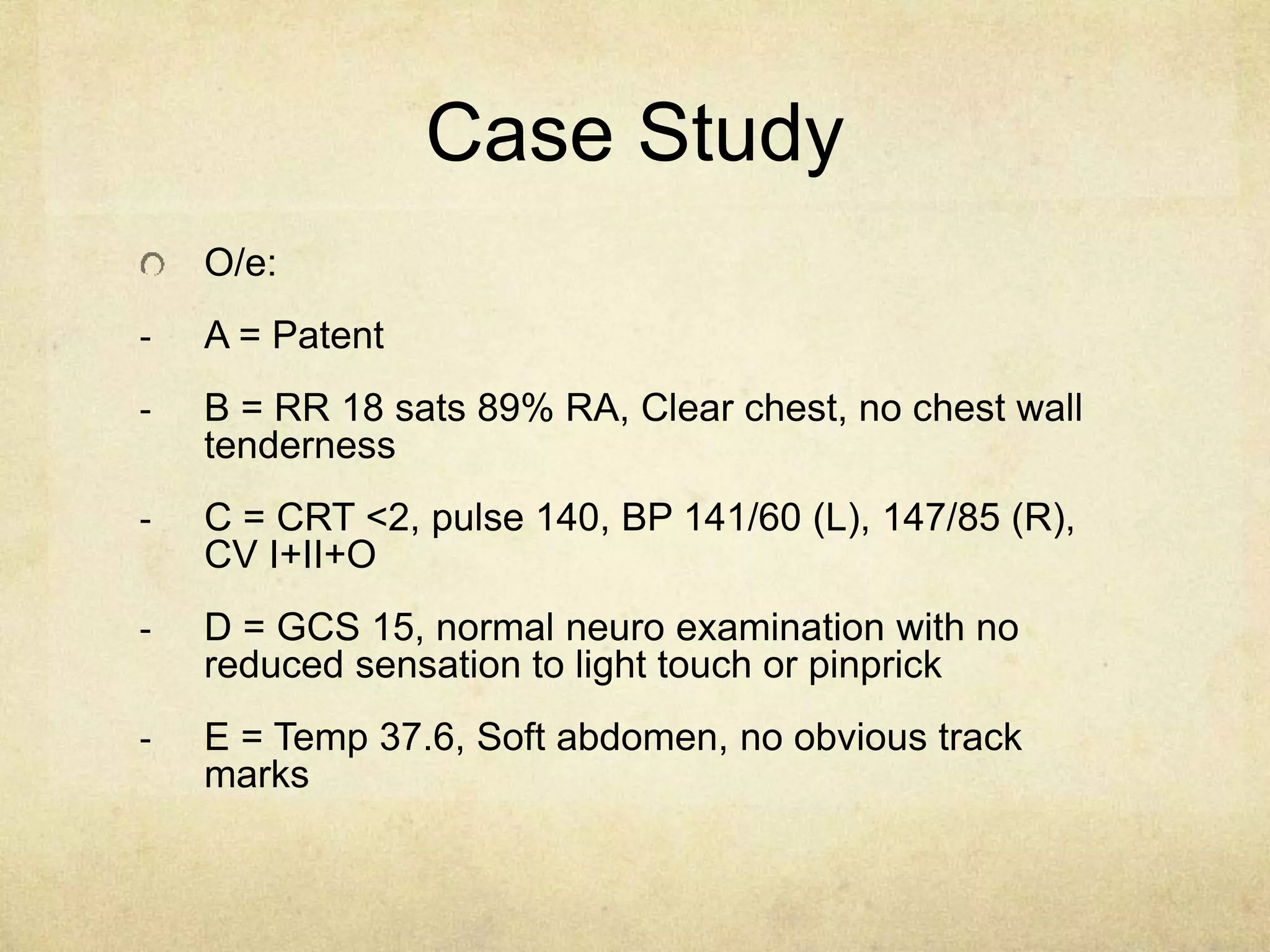
O/e:
- A = Patent
- B = RR 18 sats 89% RA, Clear chest, no chest wall
tenderness
- C = CRT <2, pulse 140, BP 141/60 (L), 147/85 (R),
CV I+II+O
- D = GCS 15, normal neuro examination with no
reduced sensation to light touch or pinprick
- E = Temp 37.6, Soft abdomen, no obvious track
marks
Case Study
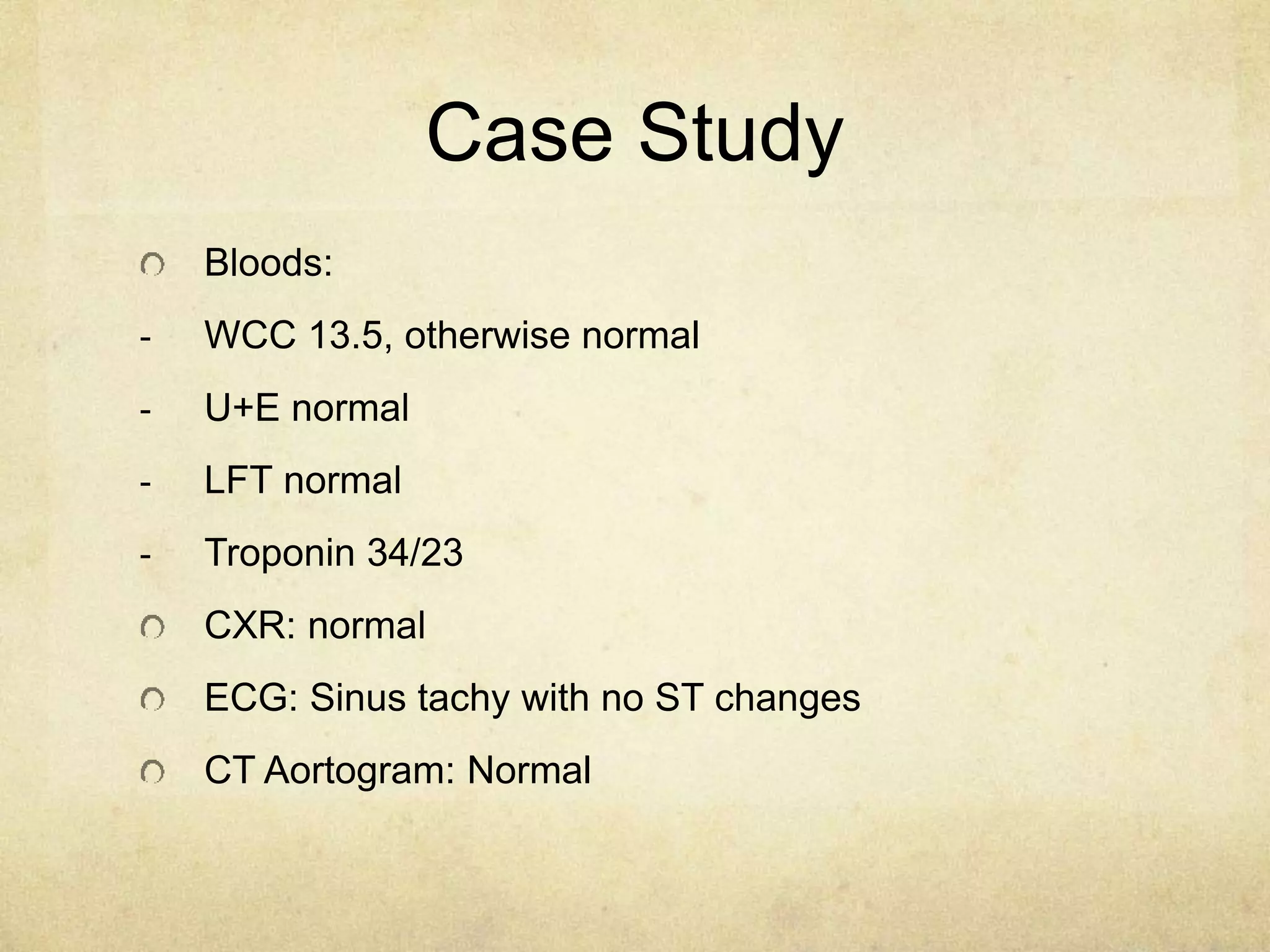
Bloods:
- WCC 13.5, otherwise normal
- U+E normal
- LFT normal
- Troponin 34/23
CXR: normal
ECG: Sinus tachy with no ST changes
CT Aortogram: Normal
Case Study
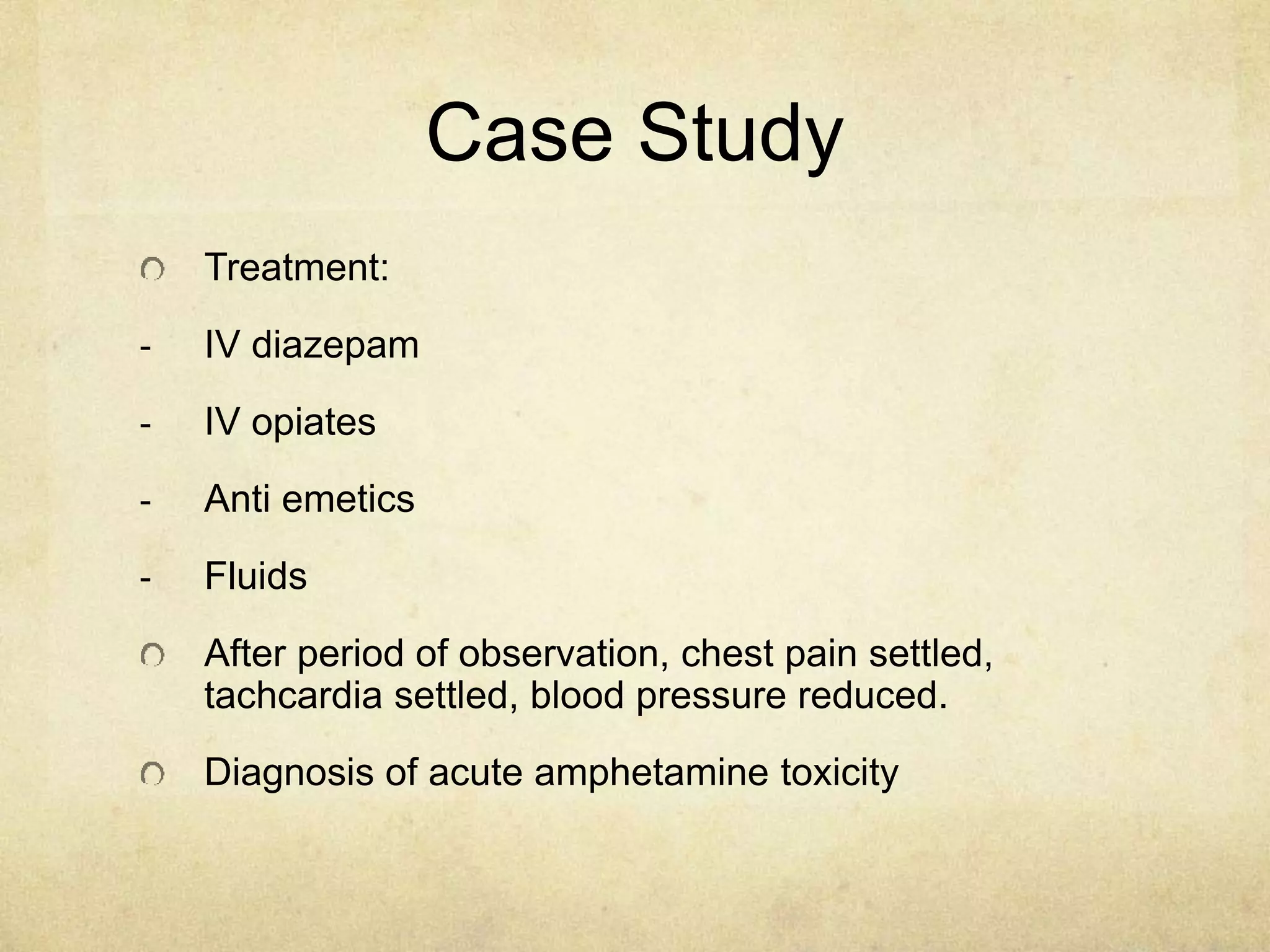
Treatment:
- IV diazepam
- IV opiates
- Anti emetics
- Fluids
After period of observation, chest pain settled,
tachcardia settled, blood pressure reduced.
Diagnosis of acute amphetamine toxicity
Acute complications - CVS
Tachycardia
HTN
Dysrhythmias
Acute coronary syndrome
Acute cardiomyopathy
Acute pulmonary oedema
Acute Complications - CVS
Tachycardia and HTN
- Use titrated doses (2.5 -5mg) of IV
benzodiazepines
- If unresponsive, consider use of nitrites
- Beta-blockers are contra-indicated
Dysrhythmia's:
- Treat with benzodiazepines and conventional
measures
- Correct hypoxia, acidosis, electrolyte
disturbances
Acute Complications - CVS
Acute Coronary Syndrome
- Mechanism may be increased myocardial oxygen demand,
coronary artery spasm, platelet aggregation, and thrombus
formation secondary to elevated catacholamine levels (9)
- ACS diagnosed in 25% of patients presenting to the ED
with chest pain after methamphetamine use (6)
- The population attributable risk suggests that amphetamine
abuse is responsible for 0.2% of acute myocardial
infarction (6)
- Manage ACS conventionally but consider CT brain should
be performed prior to anticoagulation or angiography if
headache is a feature
Acute complications - CVS
Aortic dissection
- Amphetamine abuse is significantly associated
with aortic dissection. In one study odds ratio =
3.33, 95% CI = 2.37-4.69, P < .0001 (7)
- Another study suggests 20% of all patients with
aortic dissection under the age of 50 years are
due to amphetamine misuse (8)
Acute Complications -
Neurological
Agitation/Aggressive behaviour
Psychosis
Movement disorders
Seizures
Intra-cerebral haemorrhage
Acute Complications -
Neurological
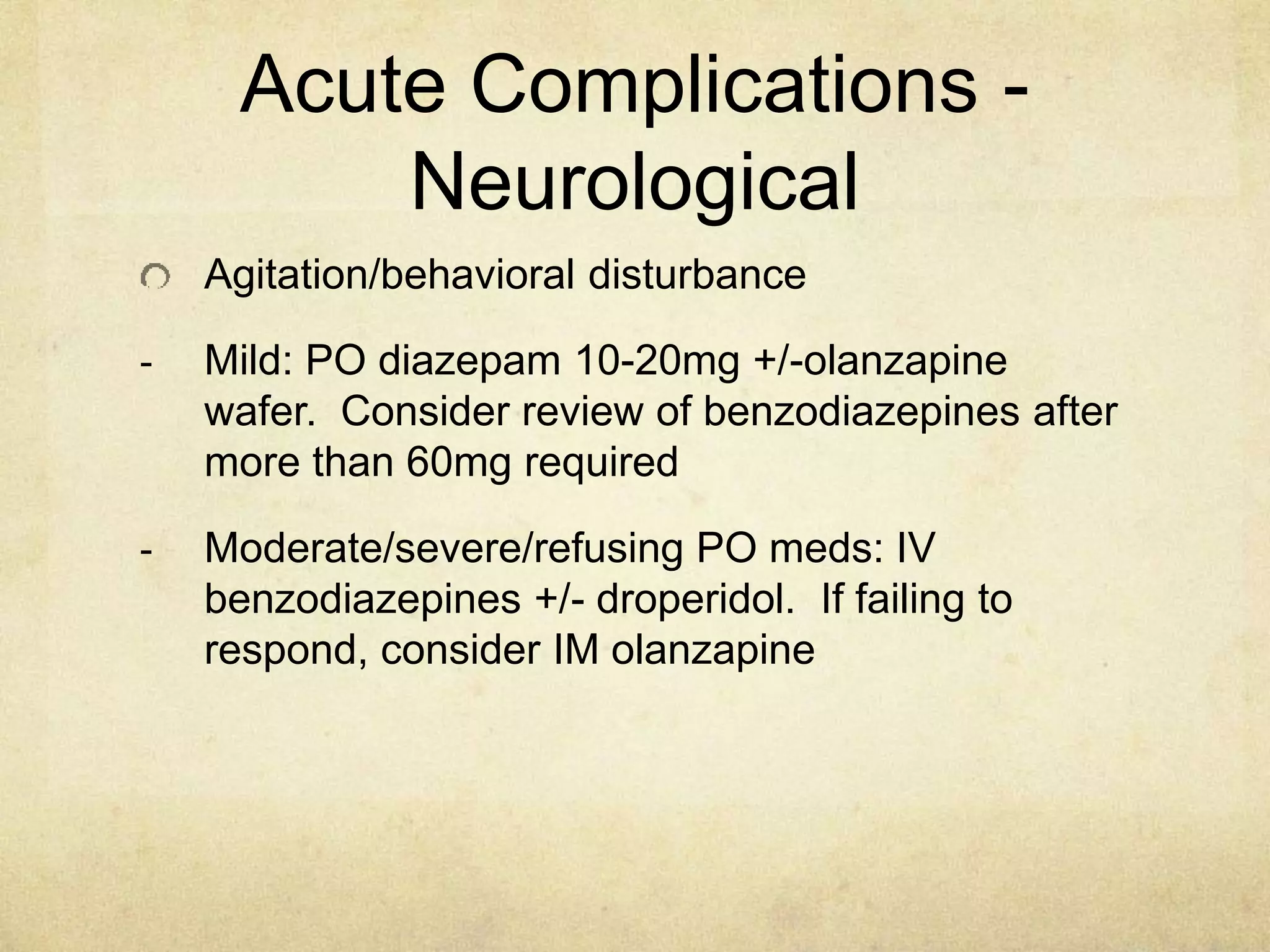
Agitation/behavioral disturbance
- Mild: PO diazepam 10-20mg +/-olanzapine
wafer. Consider review of benzodiazepines after
more than 60mg required
- Moderate/severe/refusing PO meds: IV
benzodiazepines +/- droperidol. If failing to
respond, consider IM olanzapine
Acute Complications -
Neurological
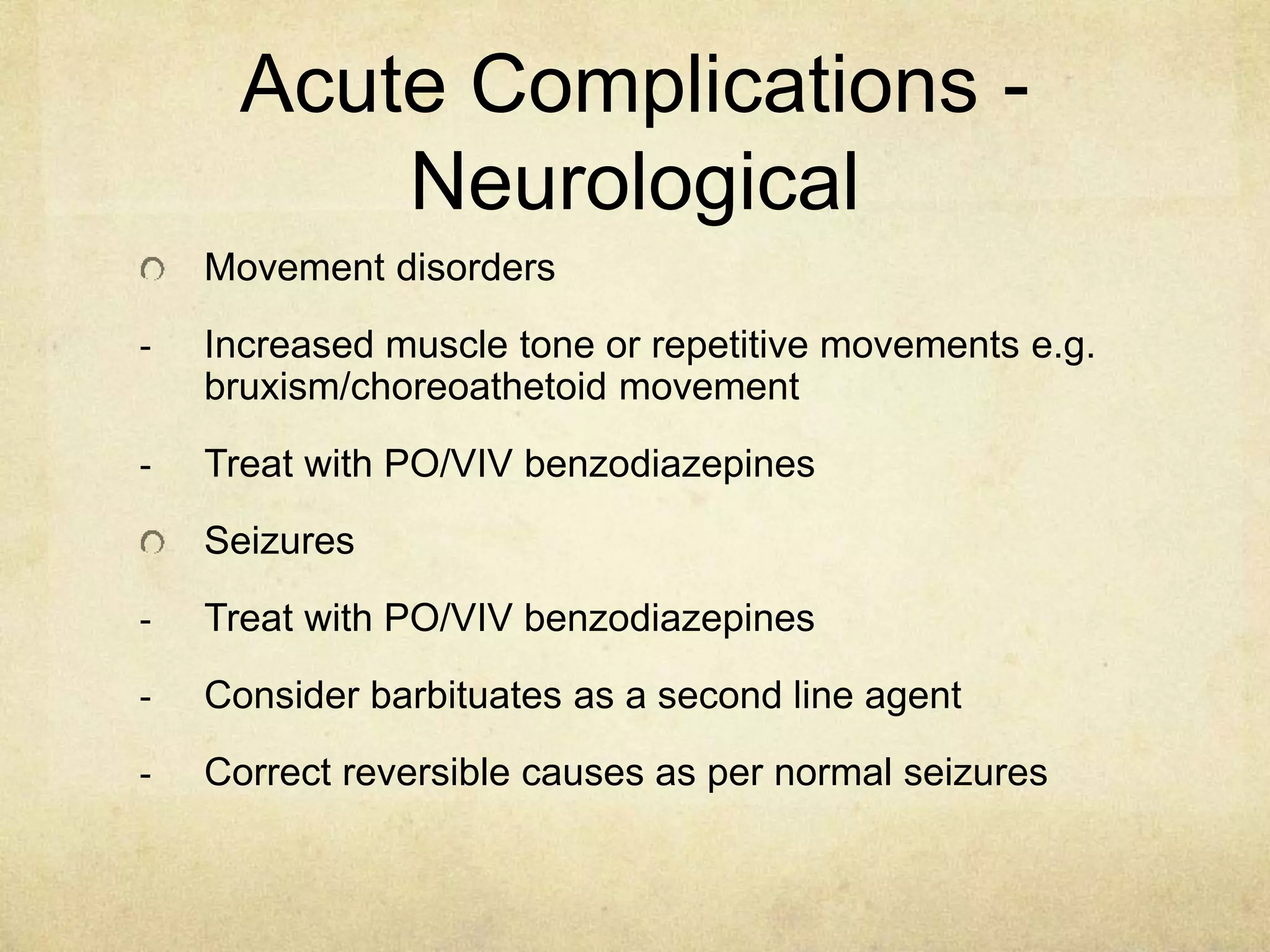
Movement disorders
- Increased muscle tone or repetitive movements e.g.
bruxism/choreoathetoid movement
- Treat with PO/VIV benzodiazepines
Seizures
- Treat with PO/VIV benzodiazepines
- Consider barbituates as a second line agent
- Correct reversible causes as per normal seizures
Acute Complications -
Neurological
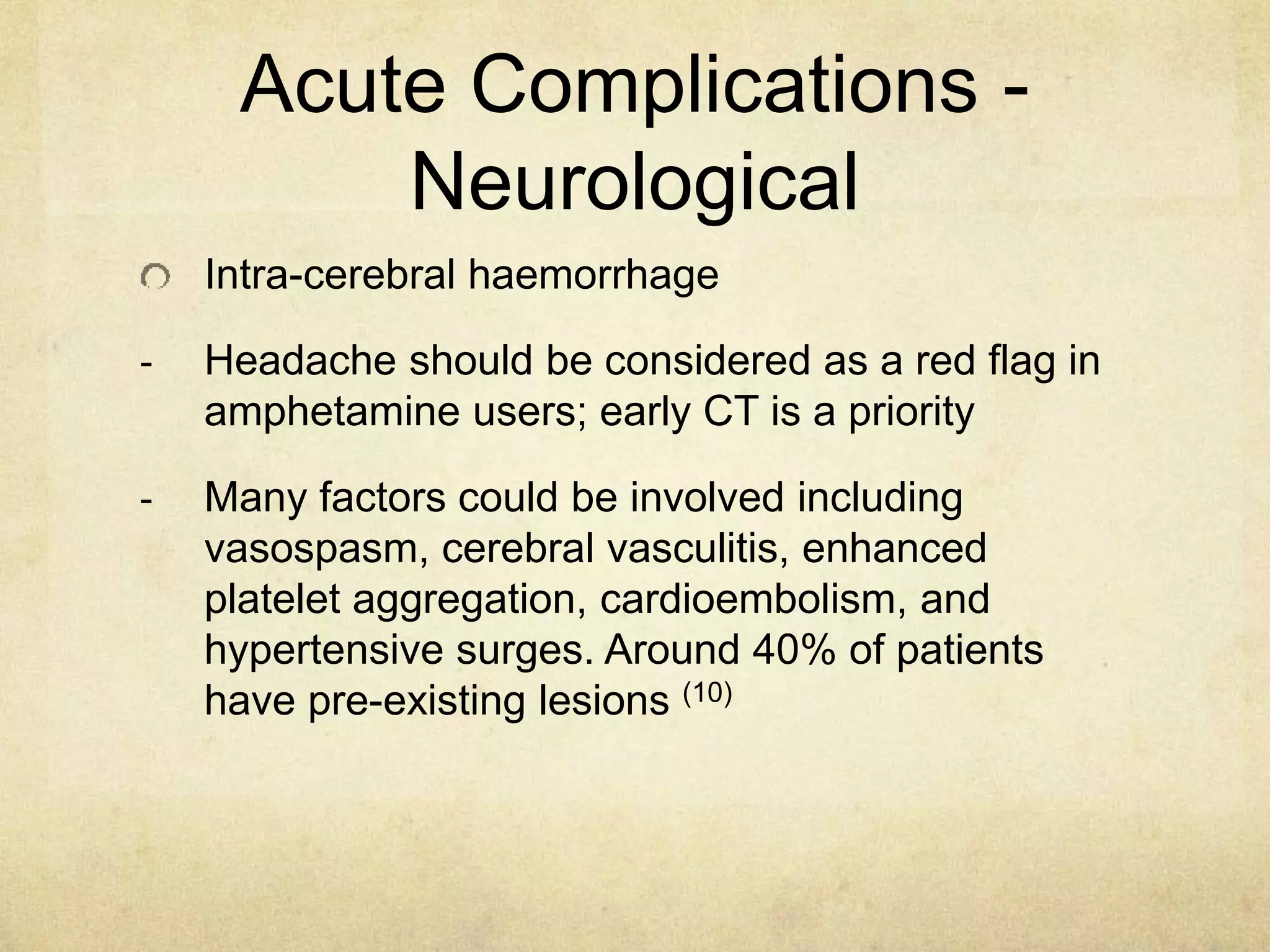
Intra-cerebral haemorrhage
- Headache should be considered as a red flag in
amphetamine users; early CT is a priority
- Many factors could be involved including
vasospasm, cerebral vasculitis, enhanced
platelet aggregation, cardioembolism, and
hypertensive surges. Around 40% of patients
have pre-existing lesions (10)
Acute Complications -
Other
Hyperthermia
- Temperature >38.5°C: continuous core-temperature
monitoring, IV benzodiazepines and passive cooling with
tepid sponging/cool spray/fluids
- Temperature >39.5°C: Consider intubation and ventilation
for rapid active cooling. Paralysis if intubated.
Hyponatraemia
- If >120mmol, no seizures/change in GCS, manage
conservatively with fluid restriction. If any of above,
consider 3% hypertonic saline
- Think about glucose and K+ abnormalities
Acute Complications -
Others
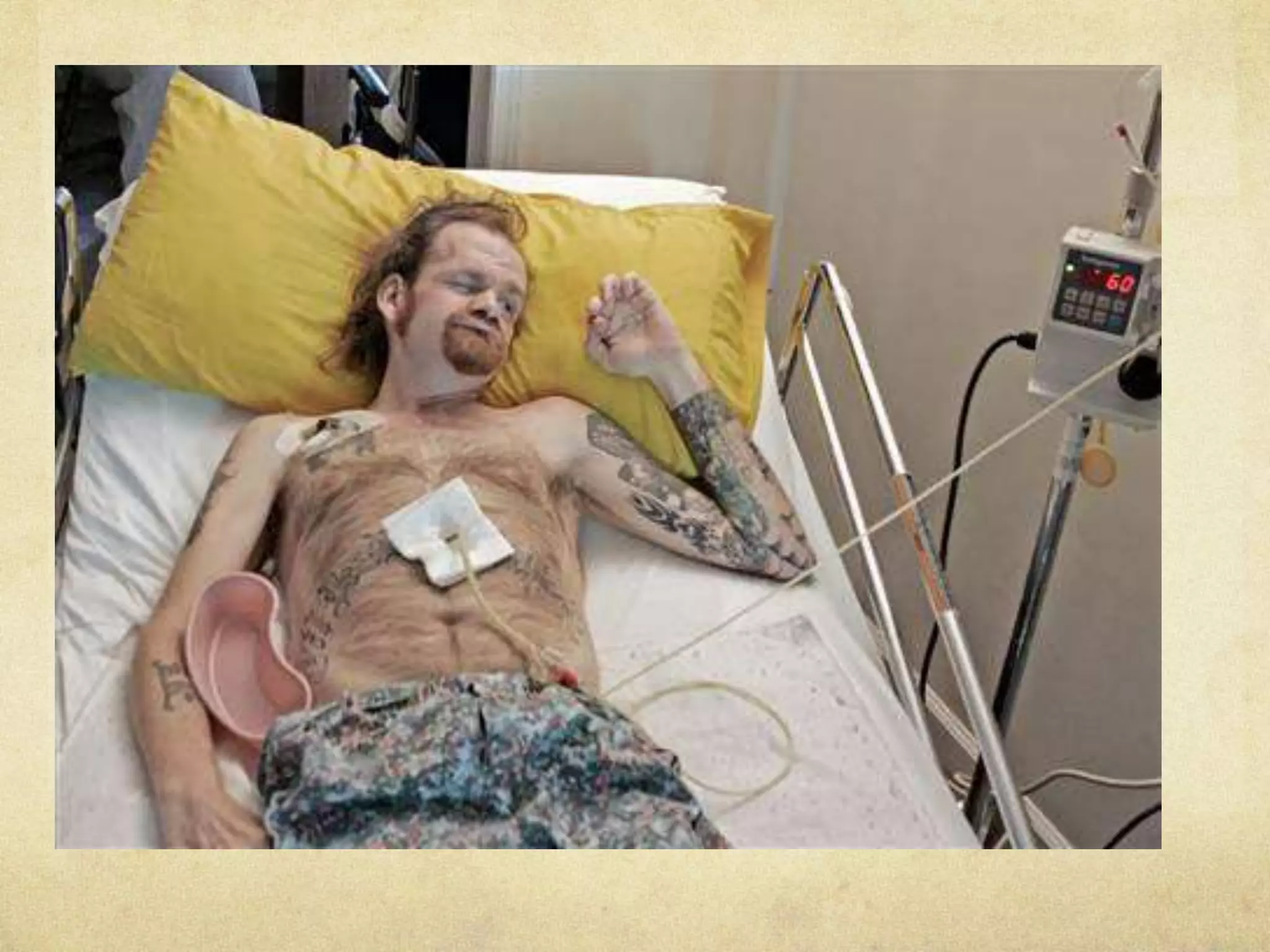
Rhabdomyolysis
Dirty hit
Foreign body embolus
Chronic complications
Increased risk of septic emboli e.g. endocarditis,
lung/brain abscesses
Increased risk of stroke
Increased risk of cardiovascular disease
including cardiomyopathy
Increased mental health issues
Poor socioeconomic outcomes
Conclusions
Amphetamine use is common
Look for features of amphetamine toxicity
including tachycardia, HTN, sweating and
agitation
Headache, chest pain and hyperthermia are all
red flags and should be thoroughly assessed and
managed
If in doubt, give benzodiazepines!
References
1. Greene, SL, Kerr F and Braitberg, G. Review article:
Amphetamines and related drugs of abuse. EMA 2008; 20:
391-402
2. http://www.cesar.umd.edu/cesar/drugs/amphetamines.pd.
Accessed 14/05/2014.
3. Ellatt EC, Montgomery S, Nemiki T, Noguchi T.
Misrepresention of stimulant street drugs: a decade of
experience in an analysis program. J. Toxicol. Clin. Toxicol
1986; 24: 441–50.
4. Gray SD, Fatovich, DM, McCoubrie DL and Daly, FF.
Amphetamine-related presentations to an inner-city tertiary
emergency department: a prospective evaluation. Med J Aust
2007; 186 (7): 336-339
5. http://drugaware.com.au/Drug-
Information/Amphetamines/Amphets-And-The-Ed.aspx.
Accessed 14/05/2014.
6. Turnipseed SD, Richards JR, Kirk JD,Diercks DB, Amsterdam EA.
Frequency of acute coronary syndrome in patients presenting to the
emergency department with chest pain after methamphetamine use.
J Emerg Med. 2003;24(4):369-373.
7. Westover AN and Nakonezny PA. Aortic dissection in young adults
who abuse amphetamines. Am Heart J. 2010 Aug; 160(2):315-21.
doi: 10.1016/j.ahj.2010.05.021.
8. Wako, E., LeDoux, D., Mitsumori, L. and Aldea, G. S. (2007), The
Emerging Epidemic of Methamphetamine-Induced Aortic Dissections.
Journal of Cardiac Surgery, 22: 390–393. doi: 10.1111/j.1540-
8191.2007.00432.x
9. Nolan J and Ghuran A. The cardiac complications of recreational
drug use. West J Med. Dec 2000; 173(6): 412–415.
10. Pozzi M, Roccataglitan D and Sterzi R. Drug abuse and intracranial
haemorrhage, Neurol Sc. 2008; 29 (issue 2): 269-270

Amphetamine related presentations to the ED

  • 1.
  • 3.
    What we willcover A little bit of history A little bit of epidemiology Case study Acute and chronic complications of amphetamine use
  • 4.
    What are Amphetamines? Syntheticpsychoactive drug Phenylethylamine derivative Stimulates the release of catacholamines and inhibits reuptake of monoamines. Increase in central + peripheral NA, DA and 5HT Prescription formulations e.g. dexamphetamines, methylphenidate (Ritalin) Or illegal formulations: Ice, speed, tablets
  • 6.
    History of Amphetamines Firstsynthesised in Germany in 1887 (1) Used medically in 1930’s as stimulant for nasal decongestion, which progressed to treatment for narcolepsy, hyperemesis and hyperactivity in children (2) Widely used in WWII to improve concentration and endurance Rendered an illicit drug 1970’s (3)
  • 8.
    How Common is Amphetamineuse? Multiple sources state that amphetamines are the second most common drug of abuse in Australia after cannabis (1, 3, 4) Lifetime use 7.7% in men vs 4.9% in women (1) Study at RPH in 2005 showed 1.2% of all attendances related to amphetamines, with high acuity (66% triage 1-3) and 1/3 of all needing psychiatric assessment (4) Between 2006 and 2010, there were 2062 persons with a primary diagnosis of amphetamine-related psychosis in outpatient and inpatient services of metropolitan hospitals in WA (5)
  • 9.
    Case Study 34 yearold man PMH: Cluster B personality disorder, ? Bipolar affective disorder Long history of polysubstance abuse mainly alcohol and methamphetamines Abstained from amphetamine use for past 3 months, but took several amphetamine tables orally the night before presenting to Charlies ED
  • 10.
    Case Study Complaining ofsudden onset of severe left sided chest pain, both dull and sharp. Radiated to the left of the chest and through to the back Associated with shortness of breath, sweating and nausea No cough, fever, haemoptysis Had some numbness in all 4 limbs, which may have been slightly worse in the left arm and leg than the right No weakness, no slurred speech or facial droop. No headache Recent flu-like illness 5/7 ago
  • 11.
    Case Study O/e: - A= Patent - B = RR 18 sats 89% RA, Clear chest, no chest wall tenderness - C = CRT <2, pulse 140, BP 141/60 (L), 147/85 (R), CV I+II+O - D = GCS 15, normal neuro examination with no reduced sensation to light touch or pinprick - E = Temp 37.6, Soft abdomen, no obvious track marks
  • 12.
    Case Study Bloods: - WCC13.5, otherwise normal - U+E normal - LFT normal - Troponin 34/23 CXR: normal ECG: Sinus tachy with no ST changes CT Aortogram: Normal
  • 13.
    Case Study Treatment: - IVdiazepam - IV opiates - Anti emetics - Fluids After period of observation, chest pain settled, tachcardia settled, blood pressure reduced. Diagnosis of acute amphetamine toxicity
  • 14.
    Acute complications -CVS Tachycardia HTN Dysrhythmias Acute coronary syndrome Acute cardiomyopathy Acute pulmonary oedema
  • 15.
    Acute Complications -CVS Tachycardia and HTN - Use titrated doses (2.5 -5mg) of IV benzodiazepines - If unresponsive, consider use of nitrites - Beta-blockers are contra-indicated Dysrhythmia's: - Treat with benzodiazepines and conventional measures - Correct hypoxia, acidosis, electrolyte disturbances
  • 16.
    Acute Complications -CVS Acute Coronary Syndrome - Mechanism may be increased myocardial oxygen demand, coronary artery spasm, platelet aggregation, and thrombus formation secondary to elevated catacholamine levels (9) - ACS diagnosed in 25% of patients presenting to the ED with chest pain after methamphetamine use (6) - The population attributable risk suggests that amphetamine abuse is responsible for 0.2% of acute myocardial infarction (6) - Manage ACS conventionally but consider CT brain should be performed prior to anticoagulation or angiography if headache is a feature
  • 17.
    Acute complications -CVS Aortic dissection - Amphetamine abuse is significantly associated with aortic dissection. In one study odds ratio = 3.33, 95% CI = 2.37-4.69, P < .0001 (7) - Another study suggests 20% of all patients with aortic dissection under the age of 50 years are due to amphetamine misuse (8)
  • 18.
    Acute Complications - Neurological Agitation/Aggressivebehaviour Psychosis Movement disorders Seizures Intra-cerebral haemorrhage
  • 19.
    Acute Complications - Neurological Agitation/behavioraldisturbance - Mild: PO diazepam 10-20mg +/-olanzapine wafer. Consider review of benzodiazepines after more than 60mg required - Moderate/severe/refusing PO meds: IV benzodiazepines +/- droperidol. If failing to respond, consider IM olanzapine
  • 20.
    Acute Complications - Neurological Movementdisorders - Increased muscle tone or repetitive movements e.g. bruxism/choreoathetoid movement - Treat with PO/VIV benzodiazepines Seizures - Treat with PO/VIV benzodiazepines - Consider barbituates as a second line agent - Correct reversible causes as per normal seizures
  • 21.
    Acute Complications - Neurological Intra-cerebralhaemorrhage - Headache should be considered as a red flag in amphetamine users; early CT is a priority - Many factors could be involved including vasospasm, cerebral vasculitis, enhanced platelet aggregation, cardioembolism, and hypertensive surges. Around 40% of patients have pre-existing lesions (10)
  • 22.
    Acute Complications - Other Hyperthermia -Temperature >38.5°C: continuous core-temperature monitoring, IV benzodiazepines and passive cooling with tepid sponging/cool spray/fluids - Temperature >39.5°C: Consider intubation and ventilation for rapid active cooling. Paralysis if intubated. Hyponatraemia - If >120mmol, no seizures/change in GCS, manage conservatively with fluid restriction. If any of above, consider 3% hypertonic saline - Think about glucose and K+ abnormalities
  • 23.
  • 25.
    Chronic complications Increased riskof septic emboli e.g. endocarditis, lung/brain abscesses Increased risk of stroke Increased risk of cardiovascular disease including cardiomyopathy Increased mental health issues Poor socioeconomic outcomes
  • 26.
    Conclusions Amphetamine use iscommon Look for features of amphetamine toxicity including tachycardia, HTN, sweating and agitation Headache, chest pain and hyperthermia are all red flags and should be thoroughly assessed and managed If in doubt, give benzodiazepines!
  • 27.
    References 1. Greene, SL,Kerr F and Braitberg, G. Review article: Amphetamines and related drugs of abuse. EMA 2008; 20: 391-402 2. http://www.cesar.umd.edu/cesar/drugs/amphetamines.pd. Accessed 14/05/2014. 3. Ellatt EC, Montgomery S, Nemiki T, Noguchi T. Misrepresention of stimulant street drugs: a decade of experience in an analysis program. J. Toxicol. Clin. Toxicol 1986; 24: 441–50. 4. Gray SD, Fatovich, DM, McCoubrie DL and Daly, FF. Amphetamine-related presentations to an inner-city tertiary emergency department: a prospective evaluation. Med J Aust 2007; 186 (7): 336-339 5. http://drugaware.com.au/Drug- Information/Amphetamines/Amphets-And-The-Ed.aspx. Accessed 14/05/2014.
  • 28.
    6. Turnipseed SD,Richards JR, Kirk JD,Diercks DB, Amsterdam EA. Frequency of acute coronary syndrome in patients presenting to the emergency department with chest pain after methamphetamine use. J Emerg Med. 2003;24(4):369-373. 7. Westover AN and Nakonezny PA. Aortic dissection in young adults who abuse amphetamines. Am Heart J. 2010 Aug; 160(2):315-21. doi: 10.1016/j.ahj.2010.05.021. 8. Wako, E., LeDoux, D., Mitsumori, L. and Aldea, G. S. (2007), The Emerging Epidemic of Methamphetamine-Induced Aortic Dissections. Journal of Cardiac Surgery, 22: 390–393. doi: 10.1111/j.1540- 8191.2007.00432.x 9. Nolan J and Ghuran A. The cardiac complications of recreational drug use. West J Med. Dec 2000; 173(6): 412–415. 10. Pozzi M, Roccataglitan D and Sterzi R. Drug abuse and intracranial haemorrhage, Neurol Sc. 2008; 29 (issue 2): 269-270