Receptors, Neurons, Systems
Anxiolytic and Hypnotic Clinical Effects
 Mechanisms of Sleep and Wakefulness
     Selective and Nonselective Agents
                        Adverse Effects
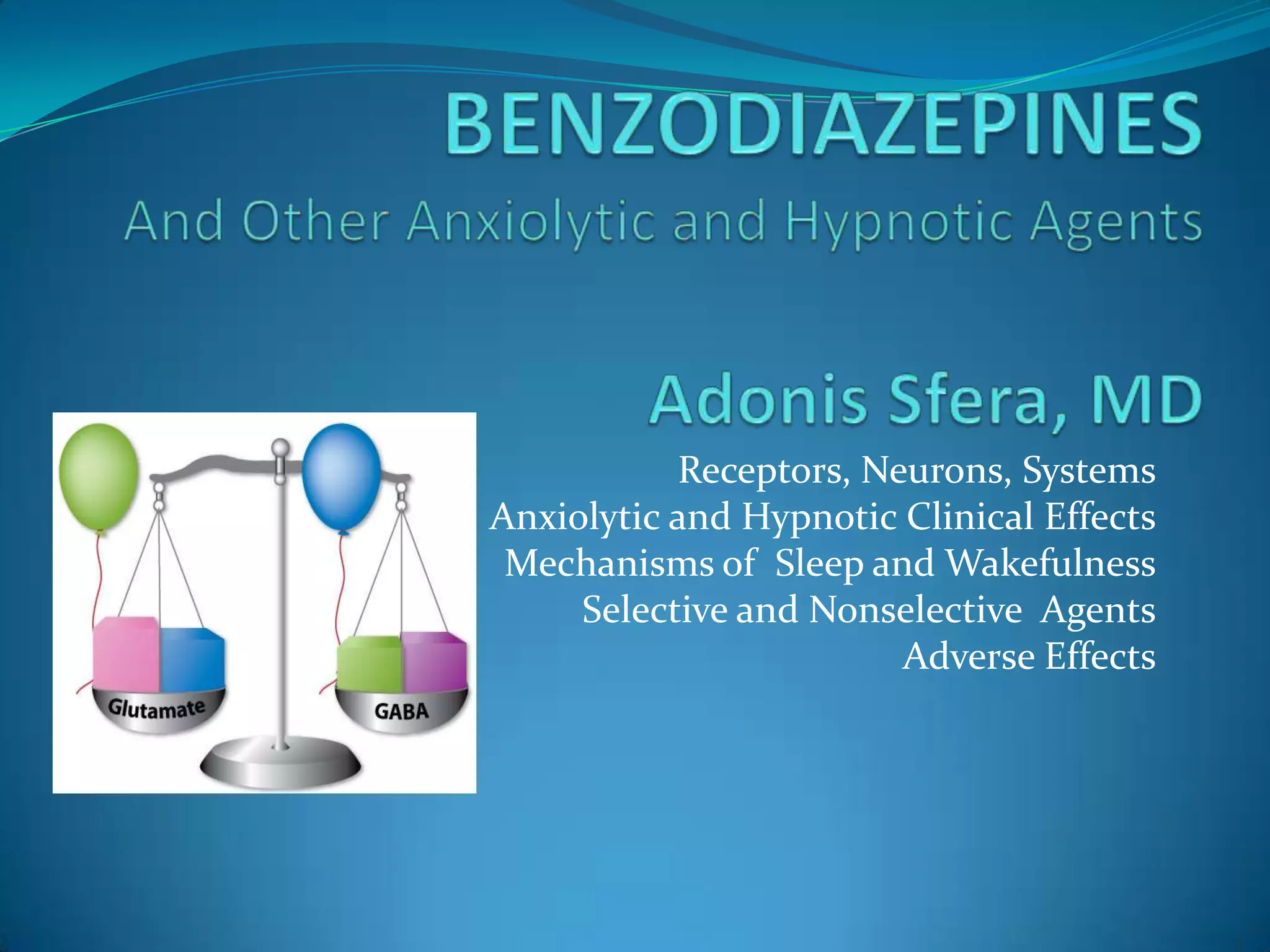
Benzodiazepines Augment the Effects of GABA

*GABA is the main inhibitory neurotransmitter
in the brain.

*GABA neurons are inter-neurons.

*Benzodiazepines augment the effect of GABA.

*They exert their action only in the presence of
 GABA – for this reason they are
called positive allosteric modulators (PAMs).
Benzodiazepines are Positive Allosteric
Modulators(PAMs) of GABA-A Receptors
Allosteric sites are all receptor sites where GABA itself does
not bind.
Allosteric modulators can be positive or negative.
GABA Cells are Inter-neurons
Cortical and limbic GABA Inter-Neurons are Implicated in
Neurodevelopmental Disorders (schizophrenia, autism, and
epilepsy).
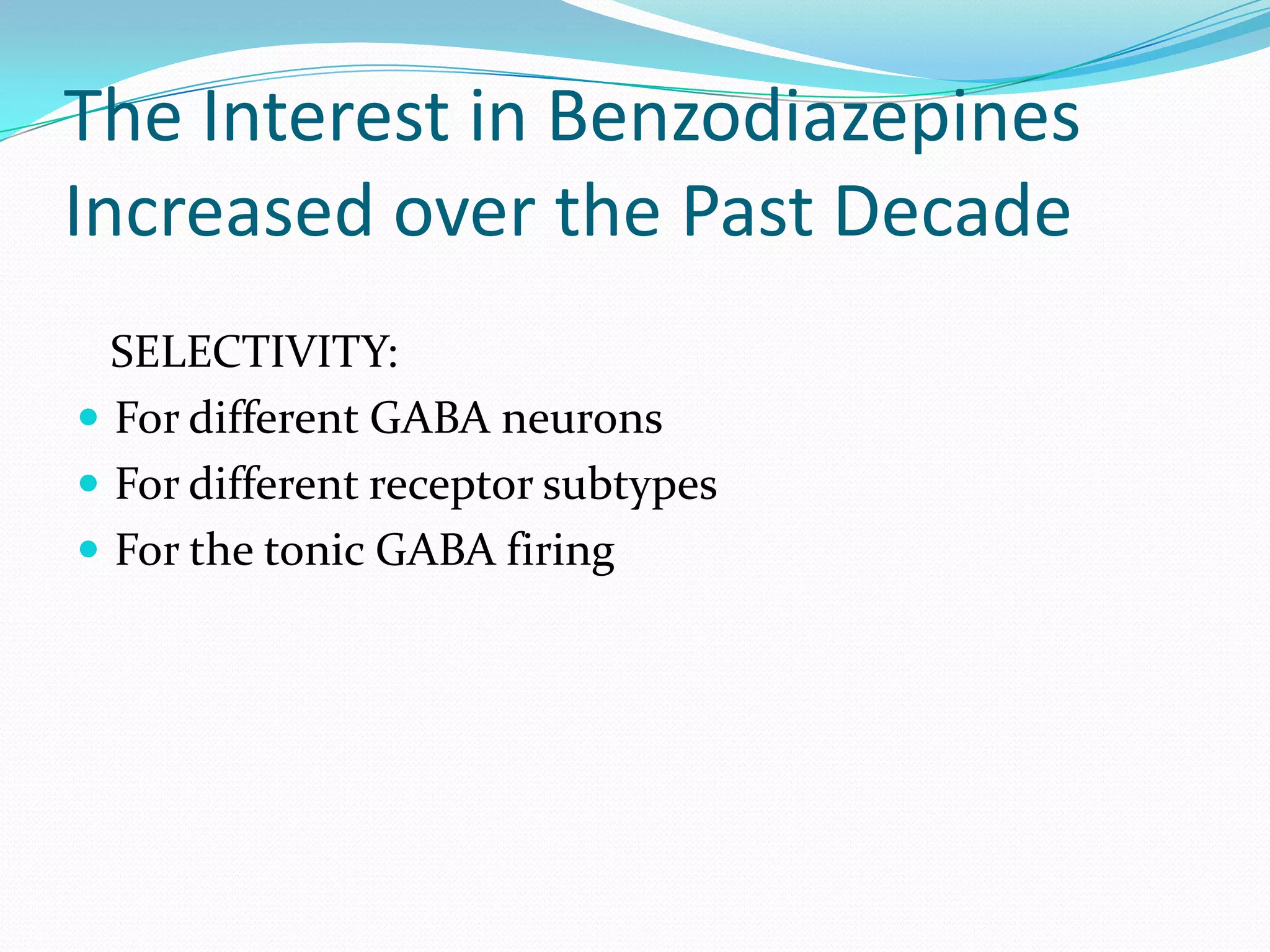
The Interest in Benzodiazepines
Increased over the Past Decade
  SELECTIVITY:
 For different GABA neurons
 For different receptor subtypes
 For the tonic GABA firing
Selectivity for GAB-A Receptor Subunits
GABA A receptors containing        GABA A receptors containing
alpha 1 subunits are involved in   alpha 2 or alpha 3 subunits are
sleep.                             involved in anxiety.
Alpha 1 Selective Hypnotics - Zaleplon and
Zolpidem
 The hypnotics zaleplon and zolpidem bind selectively to GABA-A receptors that contain
  the alpha 1 subunit (sleep). This subunit is important for sedation and possibly for
  anticonvulsant and amnesic actions.
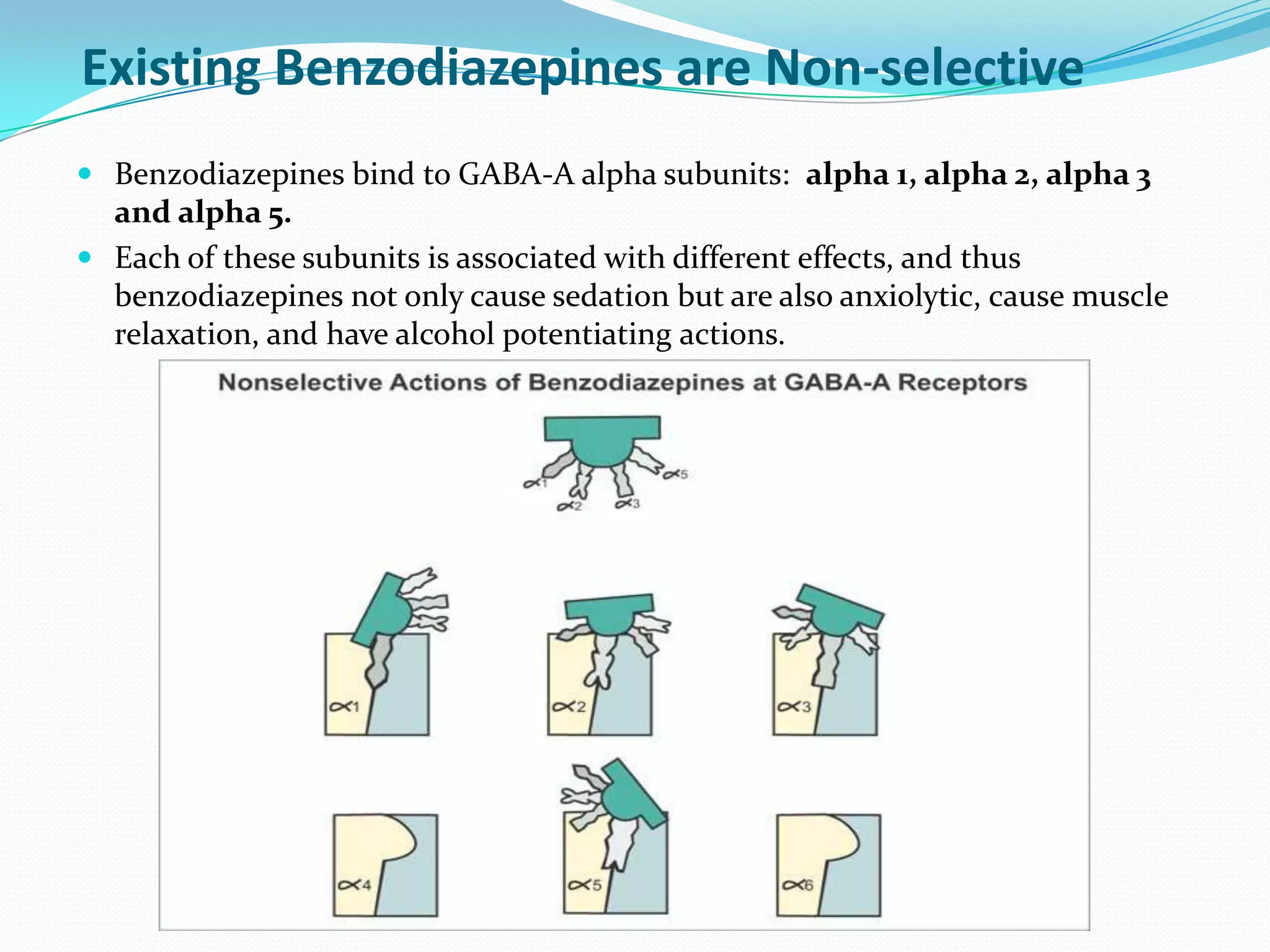
Existing Benzodiazepines are Non-selective
 Benzodiazepines bind to GABA-A alpha subunits: alpha 1, alpha 2, alpha 3
  and alpha 5.
 Each of these subunits is associated with different effects, and thus
  benzodiazepines not only cause sedation but are also anxiolytic, cause muscle
  relaxation, and have alcohol potentiating actions.
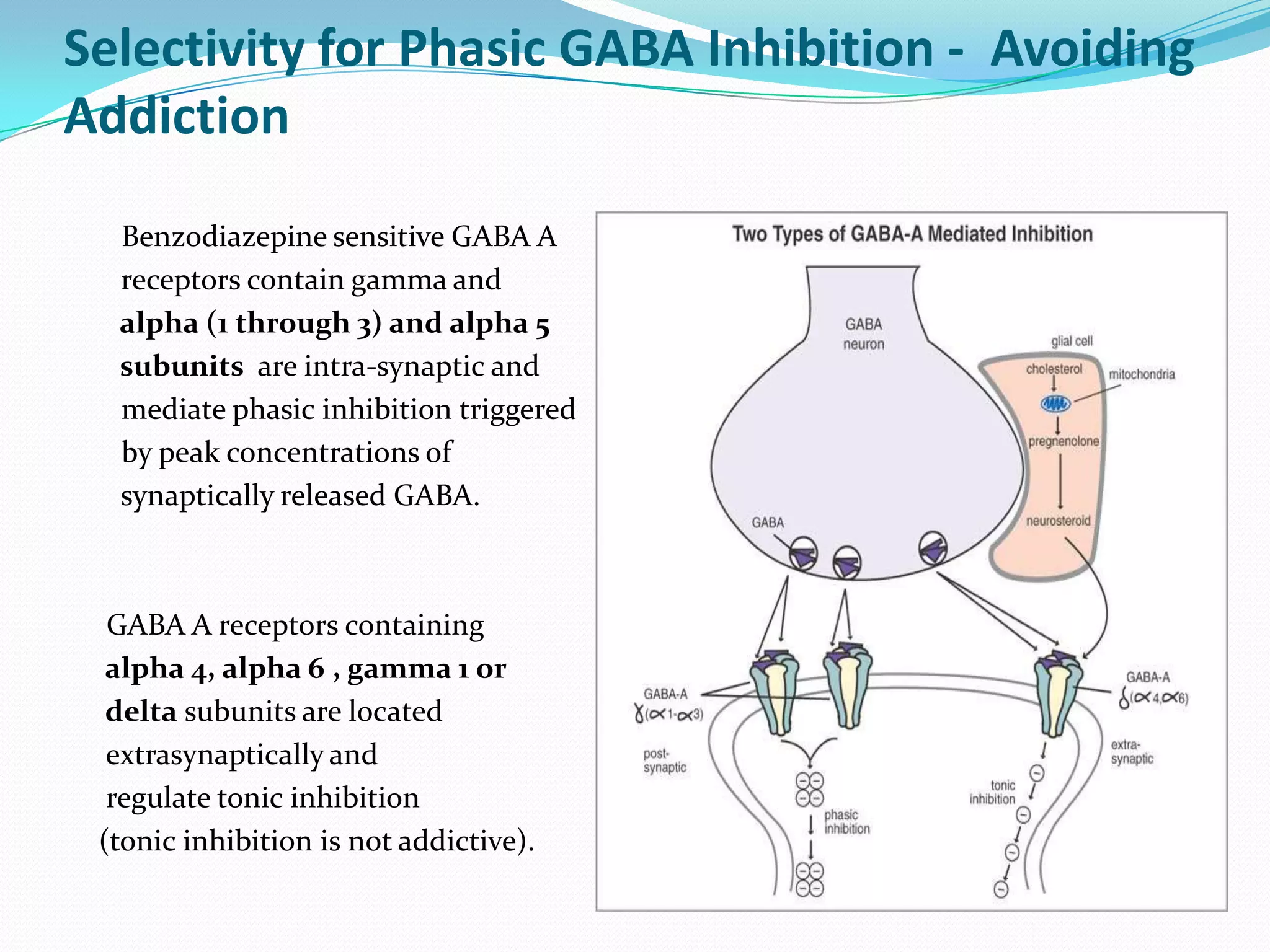
Selectivity for Phasic GABA Inhibition - Avoiding
Addiction
  Benzodiazepine sensitive GABA A
  receptors contain gamma and
  alpha (1 through 3) and alpha 5
  subunits are intra-synaptic and
  mediate phasic inhibition triggered
  by peak concentrations of
  synaptically released GABA.


  GABA A receptors containing
  alpha 4, alpha 6 , gamma 1 or
  delta subunits are located
  extrasynaptically and
  regulate tonic inhibition
 (tonic inhibition is not addictive).
Benzodiazepines are Anxolytic as
     well as Hypnotic Drugs

 ANXIOLYTIC EFFECT: Benzodiazepines inhibit the activation of
  amygdala, by binding at GABA- A receptors in the amygdala.

 HYPNOTIC EFFECT: Benzodiazepines promote sleep by binding at
  GABA-A receptors in the VLPO, causing sleepiness.
Activation of the Amygdala by the
   Environment


Monoamines from the locus coeruleus
activate amygdala causing anxiety, panic
attacks, tremors, sweating, tachicardia,
hyperarousal and nightmares.

Benzodiazepines inhibit activation of
amygdala (silence the shout of amygdala).
Shout of Amygdala
Reexperiencing - Activation of the
   Amygdala by Inner Cues
 Traumatic memories stored in the hippocampus can activate the amygdala,
  causing the amygdala in turn to activate the hippocampus and generate a fear
  response, REEXPERIENCING(PTSD).
Reexperiencing - Activation of the
Amygdala by the Hippocampus


                        Fear activated amygdala.
Hypnotic Effect of Benzodiazepines
 Benzodiazepines are also hypnotic drugs.
 The hypothalamus contains
 the sleep and wakefulness
 promoters:

 VLPO (sleep promoter)
 TMN (wakefulness promoter).
Arousal Spectrum
   The state of arousal is more complex than “awake” or “asleep”.
   Arousal exists as if on a dimmer switch, with many phases along the spectrum.
What Keeps Us Awake?

Histamine keeps the
brain awake.

HISTAMINE
  (TMN)

Histamine promotes the CALM
wakefulness that helps problem
solving, creativity and cognition
(unlike the monoamines ).
Creative Wakefulness - Histamine
Tuberomammilary Nucleus (TMN) of Hypothalamus is the
Wakefulness Promoter (the coffee- house of the brain)

 TMN of hypothalamus contains histamine producing neurons that are
  activated by glutamate and inhibited by GABA and Benzodiazepines.
 These neurons are the wakefulness promoter.


                                                 *Lateral hypothalamus
                                                 contains
                                                 orexin/hypocretin
                                                 neurons that promote
                                                 weight loss in addition
                                                 to wakefulness.
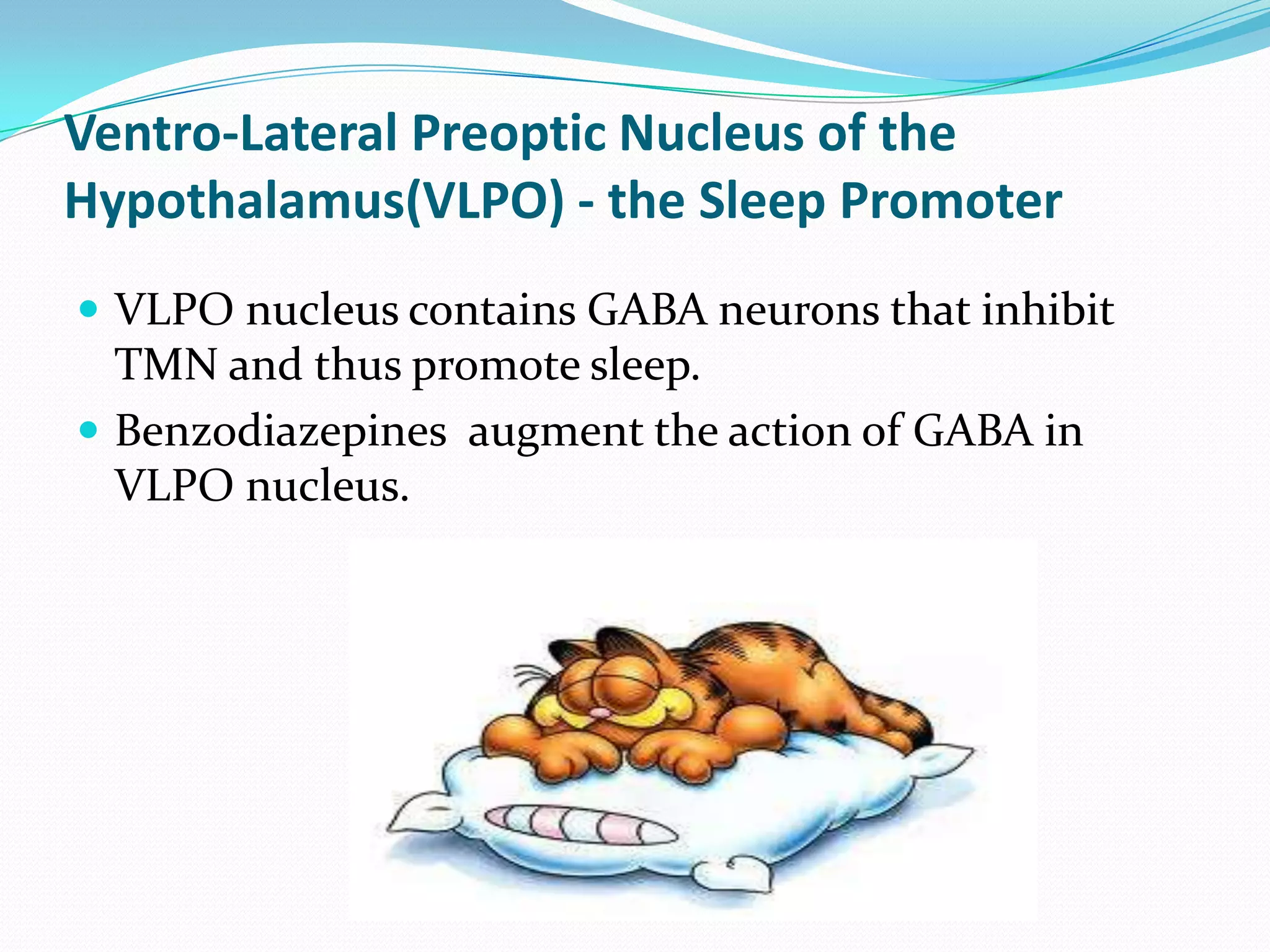
Ventro-Lateral Preoptic Nucleus of the
Hypothalamus(VLPO) - the Sleep Promoter
 VLPO nucleus contains GABA neurons that inhibit
  TMN and thus promote sleep.
 Benzodiazepines augment the action of GABA in
  VLPO nucleus.
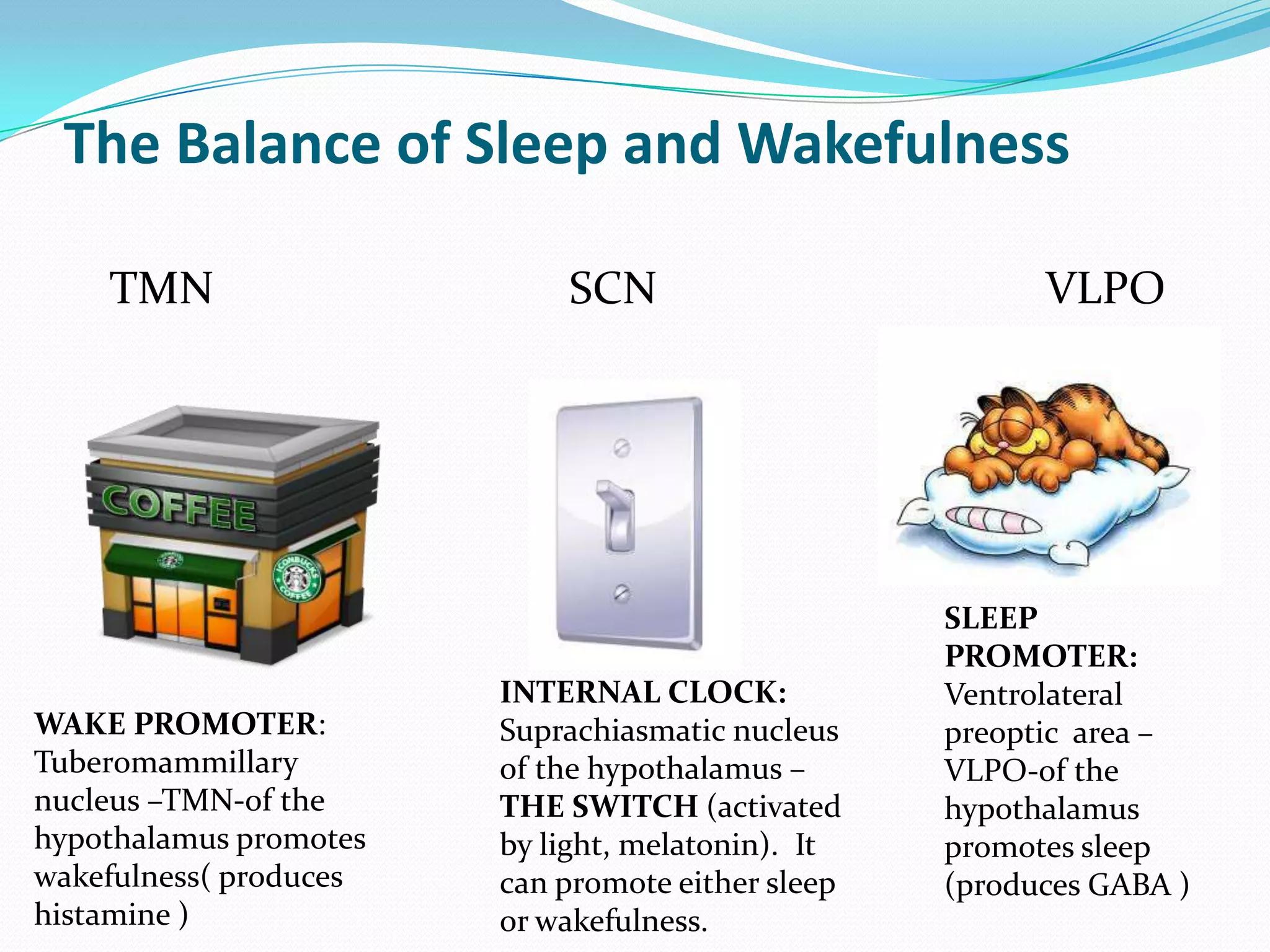
The Balance of Sleep and Wakefulness

    TMN                     SCN                          VLPO


                                                   SLEEP
                                                   PROMOTER:
                        INTERNAL CLOCK:            Ventrolateral
WAKE PROMOTER:          Suprachiasmatic nucleus    preoptic area –
Tuberomammillary        of the hypothalamus –      VLPO-of the
nucleus –TMN-of the     THE SWITCH (activated      hypothalamus
hypothalamus promotes   by light, melatonin). It   promotes sleep
wakefulness( produces   can promote either sleep   (produces GABA )
histamine )             or wakefulness.
My Next Cup of Coffee

 Skinny Histamine Macchiato with orexin sprinkles
Exogenous GABA Does Not Cross the Blood Brain
Barrier(BBB)
 GABA is produced in the GABA-ergic neurons from the excitatory
  neurotransmitter glutamate by the enzyme GAD (glutamic acid
  decarboxilase).


                                                                   SALE:
                                                                   $12.99
Benzodiazepines – FDA Indications
 In addition to anxiety, benzodiazepines are indicated
 for muscle tension, insomnia, status
 epilepticus(diazepam), myoclonic
 epilepsy(clonazepam), preoperative anesthesia, and
 alcohol witdhrawal.

 Two benzodiazepines: alprazolam and lorazepam
 have FDA indication for anxiety associated with
 depression.

 Clonazepam and Alprazolam are indicated in the
 treatment of panic disorder.
Benzodiazepines – Adverse Effects
   Sedation
   Lethargy
   Dependency/Withdrawal
   Respiratory depression
   Possible cognitive impairment.

 Safe in overdose: up to 30 times the normal daily dose. Usual
    symptoms of overdose include sedation, drowsiness, ataxia, and
    slurred speech. May result in respiratory depression in
    combination with other CNS depressants. Management
    includes gastric lavage, forced emesis, and assisted ventilation.

 Drug interactions:
    1. drugs that increase benzodiazepine levels include P4503A4
    inhibitors, ketoconazole, fluconazole, nefazodone.
    2. drugs that decrease benzodiazepine levels include P4503A4
    inducers such as carbamazepine.
What are Pro-Drugs?

 Three benzodiazepines are pro-drugs,(they are
 inactive, but form active metabolites in the body):

 prazepam,
 clorazepate
 halazepam
Oxcarbazepine(pro-drug) is Converted to
Licarbazepine (active drug)
Lisdexamfetamine( Vyvanse) - a Pro-Drug

Lisdexamfetamine (a pro-drug) is converted in the
intestin to d-amphetamine (active form).

 *Lisdexamphetamine is the only   drug that has FDA approval for
 adult ADHD.
Benzodiazepines - Subclasses
 2-keto (chlordiazepoxide, clonazepam, clorazepate, diazepam,
 halazepam, prazepam, and flurazepam).
 The 2-keto drugs and their active metabolites are oxidized in the liver,
 and because this process is relatively slow, these compounds have
 relatively long half-lives.

 3-hydroxy(lorazepam, oxazepam, temazepam)
 The 3-hydroxy compounds are metabolized via direct conjugation with
 a glucuronide radical, a process that is more rapid than oxidation
 and does not involve the formation of active metabolites.

 Triazolo (alprazolam, adinazolam, estazolam, and triazolam)
 The triazolo compounds are also oxidized, however they have a more
 limited active metabolites and thus shorter half-lives.
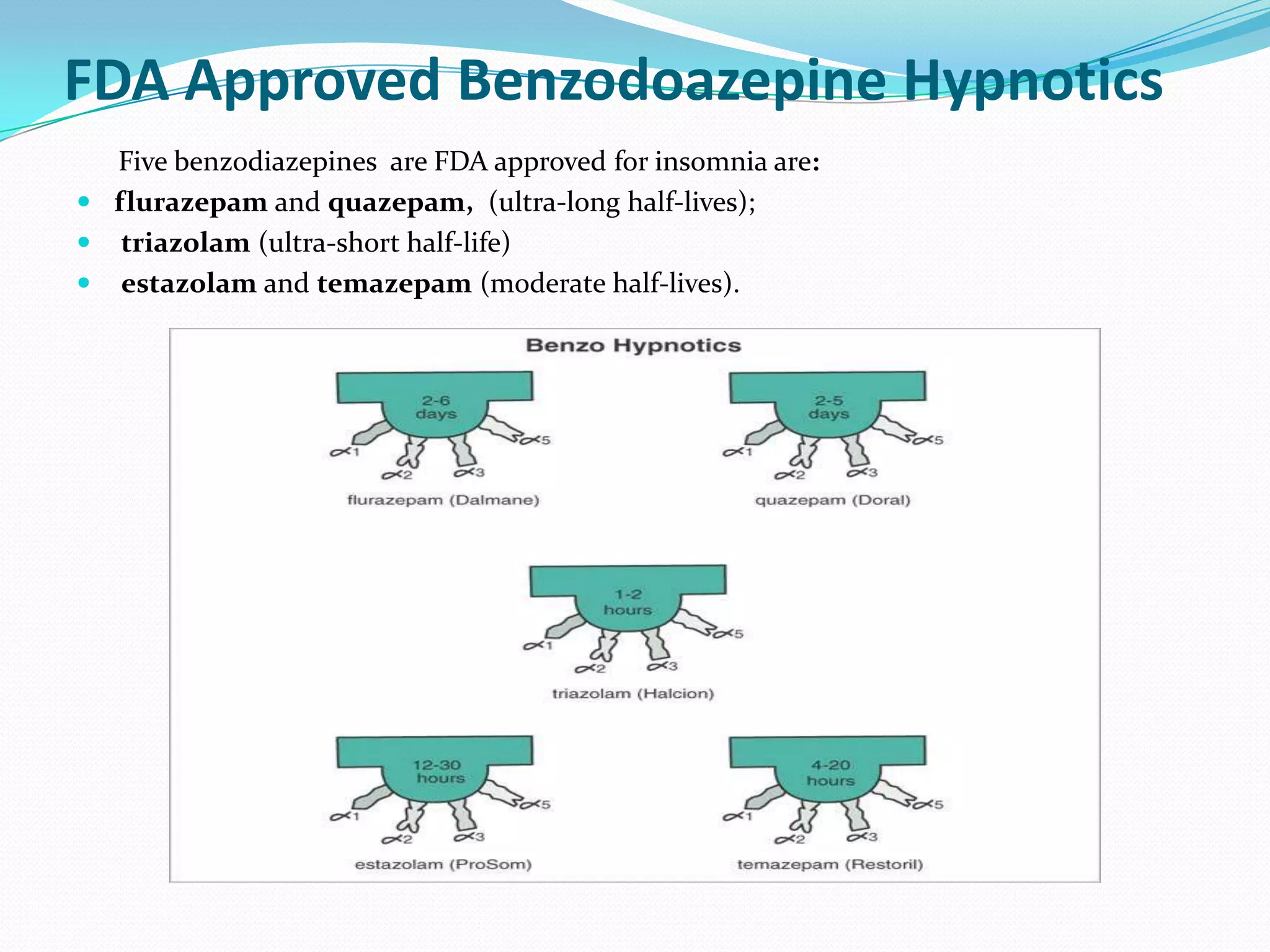
FDA Approved Benzodoazepine Hypnotics
  Five benzodiazepines are FDA approved for insomnia are:
 flurazepam and quazepam, (ultra-long half-lives);
 triazolam (ultra-short half-life)
 estazolam and temazepam (moderate half-lives).
Benzodiazepine Properties
  The effects of benzodiazepines depend on their
  properties:

 1. half-life
 2. liposolubility
 3. receptor affinity
Liposolubility
 Highly lipophilic benzodiazepines such as diazepam
 enter the brain more quickly, “turning on” the effect
 promptly, but “turning off” the effect more quickly as
 well as they disappear into body fat.

 Less lipophilic compounds such as lorazepam produce
 clinical effects more slowly, but may provide more
 sustained relief in spite of shorter half life.
Relative Receptor Affinity
 The higher their affinity for GABA-A receptors, the
 more intense withdrawal symptoms they cause.

 High potency benzodiazepines such as lorazepam and
 alprazolam have high receptor affinity – intense
 withdrawal symptoms.

 Oxazepam has low receptor affinity – fewer
 withdrawal symptoms.
Memory Impairment (fact or myth)
 Lucki et al. (1986) conducted a study on long-term
  benzodiazepine treatment. It failed to show significant
  cognitive impairment on psychometric tests.

 The most recent controlled study in this area failed to find
  significant long-term cognitive effects for alprazolam XR in
  panic disorder patients (Gladsjo et al. 2001).

 In spite of these studies some investigators believe that
  cognitive impairment can occur, particularly in elderly
  patients.
Benzodiazepines Might Cause
Memory Impairment in Elderly
How Addictive are Benzodiazepines?
 How long does one have to take a benzodiazepine before
  withdrawal is seen with discontinuation?

 Studies in animals have indicated that benzodiazepines can
  reinforce use and can produce physical dependence and
  tolerance.

 Available data seem to reveal that benzodiazepines are
  rarely sought after or craved in the sense that heroin or
  cocaine are. Rather, they are used as part of a polysubstance
  abuse pattern to modulate the effects of primary drug of
  abuse(e.g. cocaine) or as a backup drug when more
  euphoriant drugs are not available.
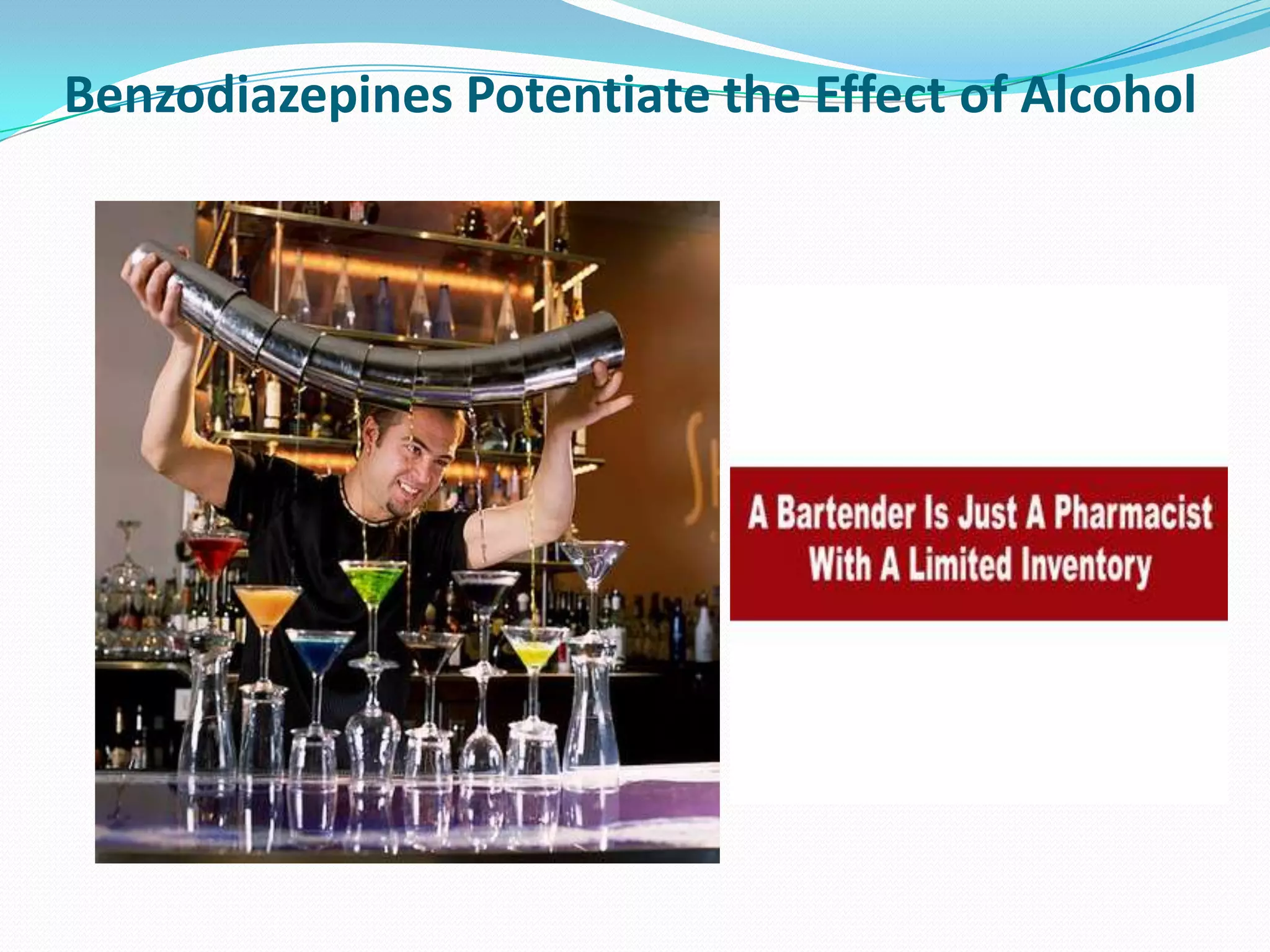
Benzodiazepines Potentiate the Effect of Alcohol
Tapering off Benzodiazepines
 Recommended reduction rate: no more than 10% per day.

 Common symptoms of withdrawal include jitteriness,
  anxiety, palpitations, clamminess, sweating, nausea,
  confusion and heightened sensitivity to light and
  sound.

 Seizures represent the most worrisome of withdrawal
  reactions, but fortunately they are rare.

 Seizures with abrupt diazepam withdrawal occur about 5-7
  days after the drug is stopped.

 With shorter acting drugs (e.g. lorazepam, alprazolam)
  withdrawal symptoms emerge more rapidly- 2 or 3 days.
Difficult Withdrawal

 Factors that make benzodiazepine withdrawal more
 difficult include higher daily dose, shorter half-life,
 longer duration of prior benzodiazepine therapy,
 and more rapid taper.

 At the patient level, a diagnosis of panic disorder,
 higher pretaper levels of anxiety or depression,
 more personality disorder, and concomitant
 alcohol or substance abuse make tapering more
 difficult
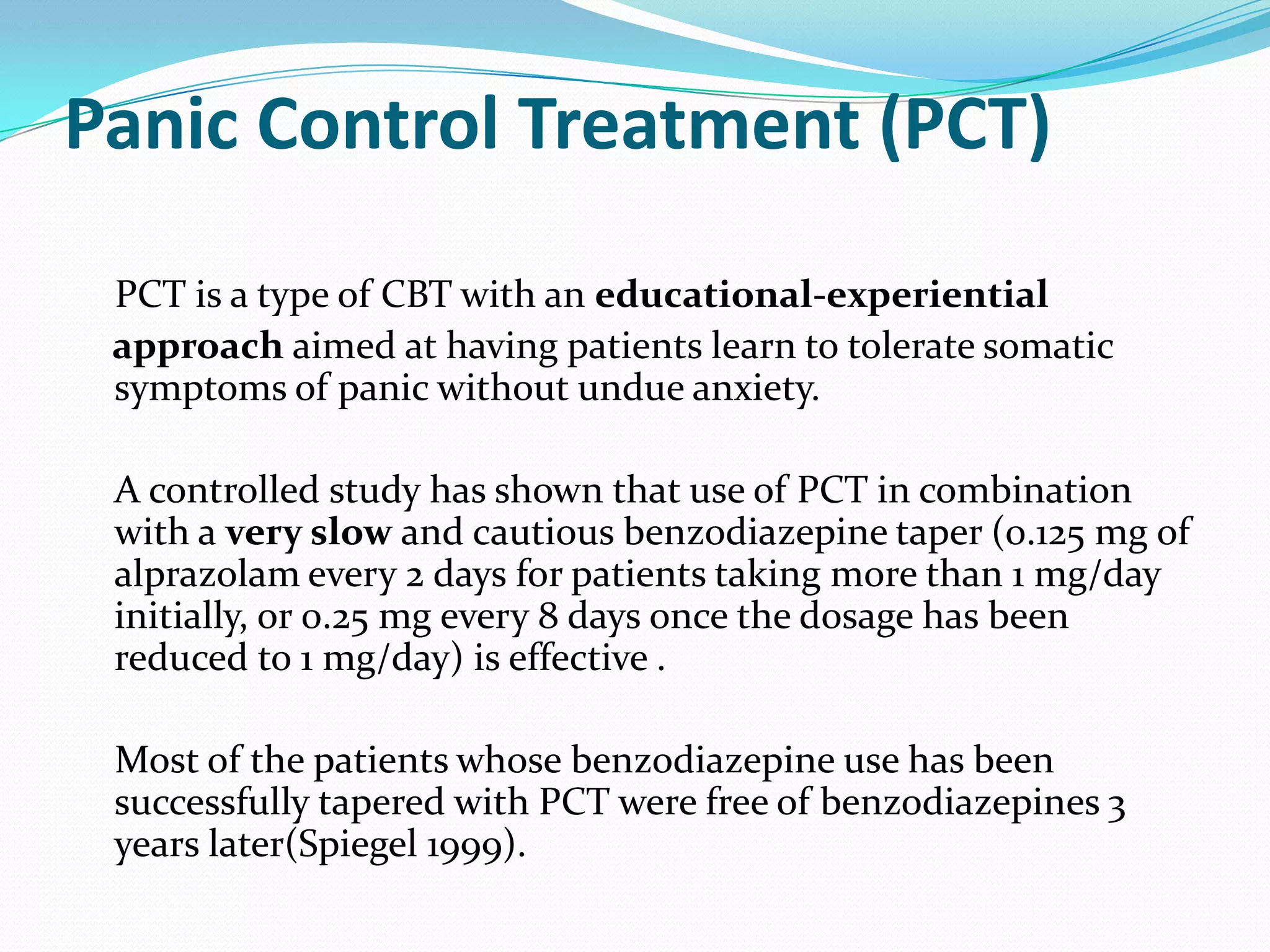
Panic Control Treatment (PCT)
 PCT is a type of CBT with an educational-experiential
 approach aimed at having patients learn to tolerate somatic
 symptoms of panic without undue anxiety.

 A controlled study has shown that use of PCT in combination
 with a very slow and cautious benzodiazepine taper (0.125 mg of
 alprazolam every 2 days for patients taking more than 1 mg/day
 initially, or 0.25 mg every 8 days once the dosage has been
 reduced to 1 mg/day) is effective .

 Most of the patients whose benzodiazepine use has been
 successfully tapered with PCT were free of benzodiazepines 3
 years later(Spiegel 1999).
Panic Control Treatment (CBT + very slow taper)
Novel GABA-A Anxiolytic Drugs

 Partial agonists that are selective for the alpha 2 or 3
  subunits of the GABA-A receptors - anxiolytic without
  causing sedation and without causing dependence.

 Inhibition of the GABA transporter (GAT) has been
  shown to provide anxiolytic effects (like the anticonvulsant
  TIAGABINE).

 It is possible that GABA-B receptors may have a role in
  anxiety, thus positive modulators of those receptors are
  potential therapeutic agents (the only GABA-B agents we
  use today are Baclofen and sodium oxybate).
Happy Thaksgiving
    Upon a day apart,
    To praise the Lord with feast and song
    In thankfulness of heart.
    ~Arthur Guiterman, The First Thanksgiving

Benzodiazepines

  • 1.
    Receptors, Neurons, Systems Anxiolyticand Hypnotic Clinical Effects Mechanisms of Sleep and Wakefulness Selective and Nonselective Agents Adverse Effects
  • 2.
    Benzodiazepines Augment theEffects of GABA *GABA is the main inhibitory neurotransmitter in the brain. *GABA neurons are inter-neurons. *Benzodiazepines augment the effect of GABA. *They exert their action only in the presence of GABA – for this reason they are called positive allosteric modulators (PAMs).
  • 3.
    Benzodiazepines are PositiveAllosteric Modulators(PAMs) of GABA-A Receptors Allosteric sites are all receptor sites where GABA itself does not bind. Allosteric modulators can be positive or negative.
  • 4.
    GABA Cells areInter-neurons
  • 5.
    Cortical and limbicGABA Inter-Neurons are Implicated in Neurodevelopmental Disorders (schizophrenia, autism, and epilepsy).
  • 6.
    The Interest inBenzodiazepines Increased over the Past Decade SELECTIVITY:  For different GABA neurons  For different receptor subtypes  For the tonic GABA firing
  • 7.
    Selectivity for GAB-AReceptor Subunits GABA A receptors containing GABA A receptors containing alpha 1 subunits are involved in alpha 2 or alpha 3 subunits are sleep. involved in anxiety.
  • 8.
    Alpha 1 SelectiveHypnotics - Zaleplon and Zolpidem  The hypnotics zaleplon and zolpidem bind selectively to GABA-A receptors that contain the alpha 1 subunit (sleep). This subunit is important for sedation and possibly for anticonvulsant and amnesic actions.
  • 9.
    Existing Benzodiazepines areNon-selective  Benzodiazepines bind to GABA-A alpha subunits: alpha 1, alpha 2, alpha 3 and alpha 5.  Each of these subunits is associated with different effects, and thus benzodiazepines not only cause sedation but are also anxiolytic, cause muscle relaxation, and have alcohol potentiating actions.
  • 10.
    Selectivity for PhasicGABA Inhibition - Avoiding Addiction Benzodiazepine sensitive GABA A receptors contain gamma and alpha (1 through 3) and alpha 5 subunits are intra-synaptic and mediate phasic inhibition triggered by peak concentrations of synaptically released GABA. GABA A receptors containing alpha 4, alpha 6 , gamma 1 or delta subunits are located extrasynaptically and regulate tonic inhibition (tonic inhibition is not addictive).
  • 11.
    Benzodiazepines are Anxolyticas well as Hypnotic Drugs  ANXIOLYTIC EFFECT: Benzodiazepines inhibit the activation of amygdala, by binding at GABA- A receptors in the amygdala.  HYPNOTIC EFFECT: Benzodiazepines promote sleep by binding at GABA-A receptors in the VLPO, causing sleepiness.
  • 12.
    Activation of theAmygdala by the Environment Monoamines from the locus coeruleus activate amygdala causing anxiety, panic attacks, tremors, sweating, tachicardia, hyperarousal and nightmares. Benzodiazepines inhibit activation of amygdala (silence the shout of amygdala).
  • 13.
  • 14.
    Reexperiencing - Activationof the Amygdala by Inner Cues  Traumatic memories stored in the hippocampus can activate the amygdala, causing the amygdala in turn to activate the hippocampus and generate a fear response, REEXPERIENCING(PTSD).
  • 15.
    Reexperiencing - Activationof the Amygdala by the Hippocampus Fear activated amygdala.
  • 16.
    Hypnotic Effect ofBenzodiazepines Benzodiazepines are also hypnotic drugs. The hypothalamus contains the sleep and wakefulness promoters: VLPO (sleep promoter) TMN (wakefulness promoter).
  • 17.
    Arousal Spectrum  The state of arousal is more complex than “awake” or “asleep”.  Arousal exists as if on a dimmer switch, with many phases along the spectrum.
  • 18.
    What Keeps UsAwake? Histamine keeps the brain awake. HISTAMINE (TMN) Histamine promotes the CALM wakefulness that helps problem solving, creativity and cognition (unlike the monoamines ).
  • 19.
  • 20.
    Tuberomammilary Nucleus (TMN)of Hypothalamus is the Wakefulness Promoter (the coffee- house of the brain)  TMN of hypothalamus contains histamine producing neurons that are activated by glutamate and inhibited by GABA and Benzodiazepines.  These neurons are the wakefulness promoter. *Lateral hypothalamus contains orexin/hypocretin neurons that promote weight loss in addition to wakefulness.
  • 21.
    Ventro-Lateral Preoptic Nucleusof the Hypothalamus(VLPO) - the Sleep Promoter  VLPO nucleus contains GABA neurons that inhibit TMN and thus promote sleep.  Benzodiazepines augment the action of GABA in VLPO nucleus.
  • 22.
    The Balance ofSleep and Wakefulness TMN SCN VLPO SLEEP PROMOTER: INTERNAL CLOCK: Ventrolateral WAKE PROMOTER: Suprachiasmatic nucleus preoptic area – Tuberomammillary of the hypothalamus – VLPO-of the nucleus –TMN-of the THE SWITCH (activated hypothalamus hypothalamus promotes by light, melatonin). It promotes sleep wakefulness( produces can promote either sleep (produces GABA ) histamine ) or wakefulness.
  • 23.
    My Next Cupof Coffee  Skinny Histamine Macchiato with orexin sprinkles
  • 24.
    Exogenous GABA DoesNot Cross the Blood Brain Barrier(BBB)  GABA is produced in the GABA-ergic neurons from the excitatory neurotransmitter glutamate by the enzyme GAD (glutamic acid decarboxilase). SALE: $12.99
  • 25.
    Benzodiazepines – FDAIndications  In addition to anxiety, benzodiazepines are indicated for muscle tension, insomnia, status epilepticus(diazepam), myoclonic epilepsy(clonazepam), preoperative anesthesia, and alcohol witdhrawal.  Two benzodiazepines: alprazolam and lorazepam have FDA indication for anxiety associated with depression.  Clonazepam and Alprazolam are indicated in the treatment of panic disorder.
  • 26.
    Benzodiazepines – AdverseEffects  Sedation  Lethargy  Dependency/Withdrawal  Respiratory depression  Possible cognitive impairment.  Safe in overdose: up to 30 times the normal daily dose. Usual symptoms of overdose include sedation, drowsiness, ataxia, and slurred speech. May result in respiratory depression in combination with other CNS depressants. Management includes gastric lavage, forced emesis, and assisted ventilation.  Drug interactions: 1. drugs that increase benzodiazepine levels include P4503A4 inhibitors, ketoconazole, fluconazole, nefazodone. 2. drugs that decrease benzodiazepine levels include P4503A4 inducers such as carbamazepine.
  • 27.
    What are Pro-Drugs? Three benzodiazepines are pro-drugs,(they are inactive, but form active metabolites in the body):  prazepam,  clorazepate  halazepam
  • 28.
    Oxcarbazepine(pro-drug) is Convertedto Licarbazepine (active drug)
  • 29.
    Lisdexamfetamine( Vyvanse) -a Pro-Drug Lisdexamfetamine (a pro-drug) is converted in the intestin to d-amphetamine (active form). *Lisdexamphetamine is the only drug that has FDA approval for adult ADHD.
  • 30.
    Benzodiazepines - Subclasses 2-keto (chlordiazepoxide, clonazepam, clorazepate, diazepam, halazepam, prazepam, and flurazepam). The 2-keto drugs and their active metabolites are oxidized in the liver, and because this process is relatively slow, these compounds have relatively long half-lives. 3-hydroxy(lorazepam, oxazepam, temazepam) The 3-hydroxy compounds are metabolized via direct conjugation with a glucuronide radical, a process that is more rapid than oxidation and does not involve the formation of active metabolites. Triazolo (alprazolam, adinazolam, estazolam, and triazolam) The triazolo compounds are also oxidized, however they have a more limited active metabolites and thus shorter half-lives.
  • 31.
    FDA Approved BenzodoazepineHypnotics Five benzodiazepines are FDA approved for insomnia are:  flurazepam and quazepam, (ultra-long half-lives);  triazolam (ultra-short half-life)  estazolam and temazepam (moderate half-lives).
  • 32.
    Benzodiazepine Properties The effects of benzodiazepines depend on their properties:  1. half-life  2. liposolubility  3. receptor affinity
  • 33.
    Liposolubility  Highly lipophilicbenzodiazepines such as diazepam enter the brain more quickly, “turning on” the effect promptly, but “turning off” the effect more quickly as well as they disappear into body fat.  Less lipophilic compounds such as lorazepam produce clinical effects more slowly, but may provide more sustained relief in spite of shorter half life.
  • 34.
    Relative Receptor Affinity The higher their affinity for GABA-A receptors, the more intense withdrawal symptoms they cause.  High potency benzodiazepines such as lorazepam and alprazolam have high receptor affinity – intense withdrawal symptoms.  Oxazepam has low receptor affinity – fewer withdrawal symptoms.
  • 35.
    Memory Impairment (factor myth)  Lucki et al. (1986) conducted a study on long-term benzodiazepine treatment. It failed to show significant cognitive impairment on psychometric tests.  The most recent controlled study in this area failed to find significant long-term cognitive effects for alprazolam XR in panic disorder patients (Gladsjo et al. 2001).  In spite of these studies some investigators believe that cognitive impairment can occur, particularly in elderly patients.
  • 36.
  • 37.
    How Addictive areBenzodiazepines?  How long does one have to take a benzodiazepine before withdrawal is seen with discontinuation?  Studies in animals have indicated that benzodiazepines can reinforce use and can produce physical dependence and tolerance.  Available data seem to reveal that benzodiazepines are rarely sought after or craved in the sense that heroin or cocaine are. Rather, they are used as part of a polysubstance abuse pattern to modulate the effects of primary drug of abuse(e.g. cocaine) or as a backup drug when more euphoriant drugs are not available.
  • 38.
  • 39.
    Tapering off Benzodiazepines Recommended reduction rate: no more than 10% per day.  Common symptoms of withdrawal include jitteriness, anxiety, palpitations, clamminess, sweating, nausea, confusion and heightened sensitivity to light and sound.  Seizures represent the most worrisome of withdrawal reactions, but fortunately they are rare.  Seizures with abrupt diazepam withdrawal occur about 5-7 days after the drug is stopped.  With shorter acting drugs (e.g. lorazepam, alprazolam) withdrawal symptoms emerge more rapidly- 2 or 3 days.
  • 40.
    Difficult Withdrawal  Factorsthat make benzodiazepine withdrawal more difficult include higher daily dose, shorter half-life, longer duration of prior benzodiazepine therapy, and more rapid taper.  At the patient level, a diagnosis of panic disorder, higher pretaper levels of anxiety or depression, more personality disorder, and concomitant alcohol or substance abuse make tapering more difficult
  • 41.
    Panic Control Treatment(PCT) PCT is a type of CBT with an educational-experiential approach aimed at having patients learn to tolerate somatic symptoms of panic without undue anxiety. A controlled study has shown that use of PCT in combination with a very slow and cautious benzodiazepine taper (0.125 mg of alprazolam every 2 days for patients taking more than 1 mg/day initially, or 0.25 mg every 8 days once the dosage has been reduced to 1 mg/day) is effective . Most of the patients whose benzodiazepine use has been successfully tapered with PCT were free of benzodiazepines 3 years later(Spiegel 1999).
  • 42.
    Panic Control Treatment(CBT + very slow taper)
  • 43.
    Novel GABA-A AnxiolyticDrugs  Partial agonists that are selective for the alpha 2 or 3 subunits of the GABA-A receptors - anxiolytic without causing sedation and without causing dependence.  Inhibition of the GABA transporter (GAT) has been shown to provide anxiolytic effects (like the anticonvulsant TIAGABINE).  It is possible that GABA-B receptors may have a role in anxiety, thus positive modulators of those receptors are potential therapeutic agents (the only GABA-B agents we use today are Baclofen and sodium oxybate).
  • 44.
    Happy Thaksgiving Upon a day apart, To praise the Lord with feast and song In thankfulness of heart. ~Arthur Guiterman, The First Thanksgiving