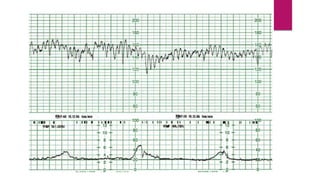
ABNORMAL CTG
Rosshini Jagatheswaran
Foetal Tachycardia
Baseline heart rate >160 bpm
Causes:
 Chorioamnionitis – if maternal fever also present
 Thyrotoxicosis
 Increased foetal activity
 Drugs (tocolytic drugs, Vistaril, etc.)
 Foetal cardiac arryhthmias
Foetal Bradycardia
 indicates severe hypoxia
 Causes are:
 Prolonged cord compression
 Cord prolapse
 Epidural and spinal anaesthesia
 Maternal seizures
 Post-date gestation
 Occiput posterior or transverse
presentations
► <80bpm  OMNIOUS sign
Baseline heart rate < 120bpm
`
Early Deceleration
 Physiological
 Starts when uterine contraction begins
 Recover when uterine contraction stops
 Periodic slowing of the fetal heartbeat, synchronized with the
contractions.
 Can be due to fetal head compression within the birth canal
Late Decelerations
 Begin at the beginning of uterine contraction
 Recover after the contraction ends
 Significantly non-reassuring
 Indicates there is insufficient blood flow through the
uterus & placenta, causing foetal hypoxia & acidosis.
 Fresh blood resupplies the intervillous space after the
contraction
Variable Deceleration
 Abrupt, visually apparent decreases in FHR below the
baseline FHR
 Start before, during or after uterine contraction starts
 Seen during labour and in patients with oligohydramnios
 Caused by umbilical cord compression
 Corrected by change in maternal position and
amniofusion
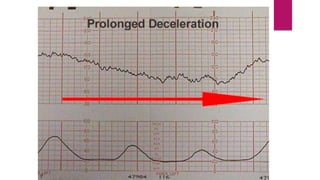
Prolonged Decelerations
 ≥15 bpm, lasting ≥2 minutes, but ≤10 minutes from
onset to return to baseline
 Causes:
 Maternal hypotension
 Cord prolapse
 Cord compression
 Maternal seizure
Reduced Variability
Caused by:
 Deep foetal sleep - this should last no longer than 40
minutes – most common cause
 Foetal acidosis (due to hypoxia)
 Foetal tachycardia
 Drugs – opiates, benzodiazipines, methyldopa,
magnesium sulphate
 Prematurity – variability is reduced at earlier gestation
(<28 weeks)
Normal variability Reduced variability
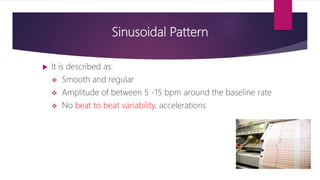
Sinusoidal Pattern
 It is described as:
 Smooth and regular
 Amplitude of between 5 -15 bpm around the baseline rate
 No beat to beat variability, accelerations
Management of Abnormal CTG
 District Hospital
Refer to hospital if CTG tracing non-reassuring and pathological. Reassure hydration,
patient in lateral position and oxygen
 Hospital with O&G Specialist
 Non-reassuring/Suspicious CTG –
Interpretation : Physiological or early chronic hypoxaemia
Action: Inform medical officer in-charge
 Abnormal/pathological CTG
Interpretation : Late chronic hypoxaemia or anaemia acute hypoxaemia (abruptio
placenta)
Action: Inform specialist in-charge. Prepare for urgent delivery
Abnormal CTG

Abnormal CTG

  • 1.
  • 2.
    Foetal Tachycardia Baseline heartrate >160 bpm Causes:  Chorioamnionitis – if maternal fever also present  Thyrotoxicosis  Increased foetal activity  Drugs (tocolytic drugs, Vistaril, etc.)  Foetal cardiac arryhthmias
  • 4.
    Foetal Bradycardia  indicatessevere hypoxia  Causes are:  Prolonged cord compression  Cord prolapse  Epidural and spinal anaesthesia  Maternal seizures  Post-date gestation  Occiput posterior or transverse presentations ► <80bpm  OMNIOUS sign Baseline heart rate < 120bpm `
  • 6.
    Early Deceleration  Physiological Starts when uterine contraction begins  Recover when uterine contraction stops  Periodic slowing of the fetal heartbeat, synchronized with the contractions.  Can be due to fetal head compression within the birth canal
  • 8.
    Late Decelerations  Beginat the beginning of uterine contraction  Recover after the contraction ends  Significantly non-reassuring  Indicates there is insufficient blood flow through the uterus & placenta, causing foetal hypoxia & acidosis.  Fresh blood resupplies the intervillous space after the contraction
  • 10.
    Variable Deceleration  Abrupt,visually apparent decreases in FHR below the baseline FHR  Start before, during or after uterine contraction starts  Seen during labour and in patients with oligohydramnios  Caused by umbilical cord compression  Corrected by change in maternal position and amniofusion
  • 12.
    Prolonged Decelerations  ≥15bpm, lasting ≥2 minutes, but ≤10 minutes from onset to return to baseline  Causes:  Maternal hypotension  Cord prolapse  Cord compression  Maternal seizure
  • 15.
    Reduced Variability Caused by: Deep foetal sleep - this should last no longer than 40 minutes – most common cause  Foetal acidosis (due to hypoxia)  Foetal tachycardia  Drugs – opiates, benzodiazipines, methyldopa, magnesium sulphate  Prematurity – variability is reduced at earlier gestation (<28 weeks)
  • 17.
  • 18.
    Sinusoidal Pattern  Itis described as:  Smooth and regular  Amplitude of between 5 -15 bpm around the baseline rate  No beat to beat variability, accelerations
  • 20.
    Management of AbnormalCTG  District Hospital Refer to hospital if CTG tracing non-reassuring and pathological. Reassure hydration, patient in lateral position and oxygen  Hospital with O&G Specialist  Non-reassuring/Suspicious CTG – Interpretation : Physiological or early chronic hypoxaemia Action: Inform medical officer in-charge  Abnormal/pathological CTG Interpretation : Late chronic hypoxaemia or anaemia acute hypoxaemia (abruptio placenta) Action: Inform specialist in-charge. Prepare for urgent delivery

Editor's Notes

  • #9  The presence of late decelerations is taken seriously & foetal blood sampling for pH is indicated If foetal blood pH is acidotic it indicates significant foetal hypoxia & the need for emergency C-section
  • #13 Prolonged decelerations can be caused by any mechanism which normally may lead to periodic or episodic decelerations, but the return to baseline is delayed because the stimulus or mechanism causing the deceleration is not reversed. This often is associated with hypoxia. A FHR above 100 beats/min with good variability is tolerable, but a prolonged deceleration below 100 beats/min calls for immediate efforts at resolution and a drop below 60 beats/min becomes an obstetric emergency since it is almost always associated with fetal hypoxia.