

PBL Session 3
Rosshini Jagatheswaran
Describe the
PATHOGENESIS of
bronchial asthma
MUST KNOW
Learning Outcome
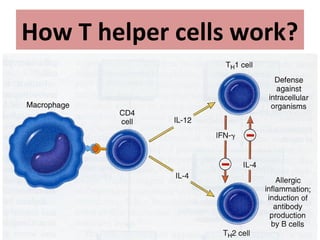
How T helper cells work?
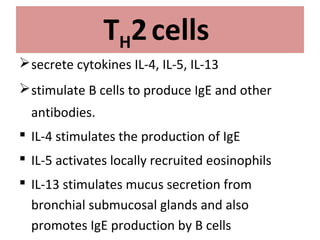
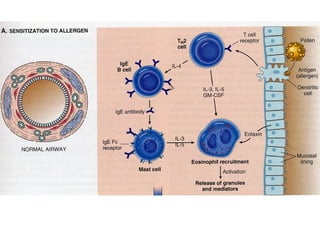
TH2cells
secrete cytokines IL-4, IL-5, IL-13
stimulate B cells to produce IgE and other
antibodies.
 IL-4 stimulates the production of IgE
 IL-5 activates locally recruited eosinophils
 IL-13 stimulates mucus secretion from
bronchial submucosal glands and also
promotes IgE production by B cells
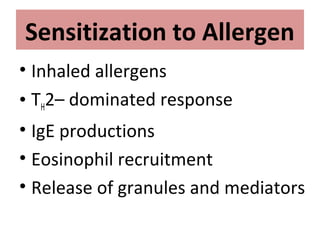
Sensitization to Allergen
• Inhaled allergens
• TH2– dominated response
• IgE productions
• Eosinophil recruitment
• Release of granules and mediators
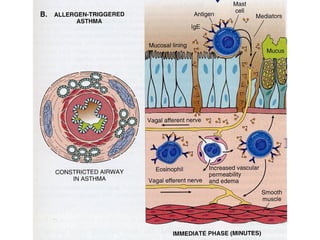
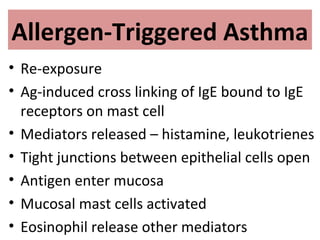
Allergen-Triggered Asthma
• Re-exposure
• Ag-induced cross linking of IgE bound to IgE
receptors on mast cell
• Mediators released – histamine, leukotrienes
• Tight junctions between epithelial cells open
• Antigen enter mucosa
• Mucosal mast cells activated
• Eosinophil release other mediators
• Leukotrienes
- constriction of bronchi  bronchospasm
- increased mucus production  mucosal
accumulation
• Histamine
- increased vascular permeability  swelling &
redness  edema
- increased mucus production  mucosal
accumulation
• Eosinophilic chemotactic factor
- Chemotaxis of eosinophils accumulation of
eosinophils
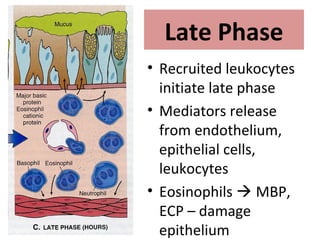
Late Phase
• Recruited leukocytes
initiate late phase
• Mediators release
from endothelium,
epithelial cells,
leukocytes
• Eosinophils  MBP,
ECP – damage
epithelium
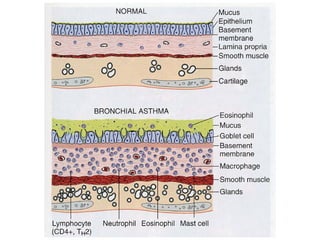
Comparison of a normal bronchiole
with that in a patient with asthma
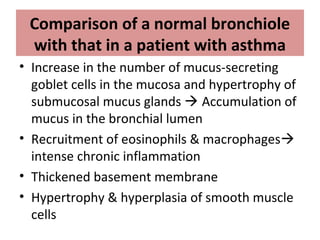
• Increase in the number of mucus-secreting
goblet cells in the mucosa and hypertrophy of
submucosal mucus glands  Accumulation of
mucus in the bronchial lumen
• Recruitment of eosinophils & macrophages
intense chronic inflammation
• Thickened basement membrane
• Hypertrophy & hyperplasia of smooth muscle
cells
POP-QUIZ
Which T Helper Cell plays an important
role in bronchial asthma?
What happens after IgE binds to the
mast cell in the first phase-sensitization
phase?
Leukotrienes causes …?
Upon re-exposure of Ag, what happens
after binding of IgE?
Some factors released by eosinophils in
the late phase causes damage to the
epithelium. Give 2 examples of the
factors.
Give 2 differences of a normal
bronchiole and bronchiole of an
asthmatic patient.
THANK YOU

Pathogenesis of bronchial asthma

  • 1.
  • 2.
    Describe the PATHOGENESIS of bronchialasthma MUST KNOW Learning Outcome
  • 3.
    How T helpercells work?
  • 4.
    TH2cells secrete cytokines IL-4,IL-5, IL-13 stimulate B cells to produce IgE and other antibodies.  IL-4 stimulates the production of IgE  IL-5 activates locally recruited eosinophils  IL-13 stimulates mucus secretion from bronchial submucosal glands and also promotes IgE production by B cells
  • 6.
    Sensitization to Allergen •Inhaled allergens • TH2– dominated response • IgE productions • Eosinophil recruitment • Release of granules and mediators
  • 8.
    Allergen-Triggered Asthma • Re-exposure •Ag-induced cross linking of IgE bound to IgE receptors on mast cell • Mediators released – histamine, leukotrienes • Tight junctions between epithelial cells open • Antigen enter mucosa • Mucosal mast cells activated • Eosinophil release other mediators
  • 9.
    • Leukotrienes - constrictionof bronchi  bronchospasm - increased mucus production  mucosal accumulation • Histamine - increased vascular permeability  swelling & redness  edema - increased mucus production  mucosal accumulation • Eosinophilic chemotactic factor - Chemotaxis of eosinophils accumulation of eosinophils
  • 10.
    Late Phase • Recruitedleukocytes initiate late phase • Mediators release from endothelium, epithelial cells, leukocytes • Eosinophils  MBP, ECP – damage epithelium
  • 12.
    Comparison of anormal bronchiole with that in a patient with asthma • Increase in the number of mucus-secreting goblet cells in the mucosa and hypertrophy of submucosal mucus glands  Accumulation of mucus in the bronchial lumen • Recruitment of eosinophils & macrophages intense chronic inflammation • Thickened basement membrane • Hypertrophy & hyperplasia of smooth muscle cells
  • 13.
    POP-QUIZ Which T HelperCell plays an important role in bronchial asthma? What happens after IgE binds to the mast cell in the first phase-sensitization phase? Leukotrienes causes …? Upon re-exposure of Ag, what happens after binding of IgE?
  • 14.
    Some factors releasedby eosinophils in the late phase causes damage to the epithelium. Give 2 examples of the factors. Give 2 differences of a normal bronchiole and bronchiole of an asthmatic patient.
  • 15.