JOB ANALYSIS
WHAT IS J.A?
The systematic process of collecting
information about all parameters of the
job.
◦ Responsibilities
◦ Skills
◦ Physical & mental requirement
◦ Job description
◦ Job specification
JOB SPECIFICATION
What is job specification?
Outlines in detail of specific
knowledge, skill, abilities (refer to
KSAS’s)
Right person for the right position.
HOW HRM AFFECT J.A?
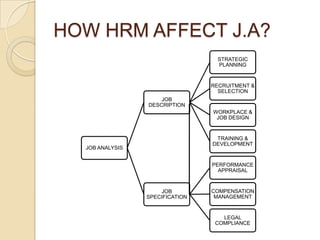
JOB ANALYSIS
JOB
DESCRIPTION
STRATEGIC
PLANNING
RECRUITMENT &
SELECTION
WORKPLACE &
JOB DESIGN
TRAINING &
DEVELOPMENT
JOB
SPECIFICATION
PERFORMANCE
APPRAISAL
COMPENSATION
MANAGEMENT
LEGAL
COMPLIANCE
HRM AFFECT’S
DESCRIPTION
1) STRATEGIC PLANNING
◦ Mission, vision and purpose of the
organization.
◦ As a guideline during for company done
their activities.
◦ Know the organization needed.
2) RECRUITMENT & SELECTION
◦ Information provided from J.A plays an
essential role in the recruiting function.
◦ Do the job advertisement for the
applicants.
3) WORKPLACE & JOB DESIGN
◦ Used to analyze the company’s work
process.
4) TRAINING & DEVELOPMENT
◦ Any discrepancies between the
knowledge, skills and abilities
demonstrated by job holder.
◦ Give clue to the job holder about training
that they may face.
5) PERFOMANCE APPRAISAL
◦ Provide the criteria for evaluating people
who do the work
◦ Identify the good performance vs. poor
performance
6) COMPENSATION MANAGEMENT
◦ It helps HR manager figure out the
relative worth of position
◦ Identify it and make it fair and equitable
7) LEGAL COMPLIANCE
◦ Ensure the job duties match with job
description
◦ Avoid any discriminating against the
members
SOURCES OF DATA
COLLECTION
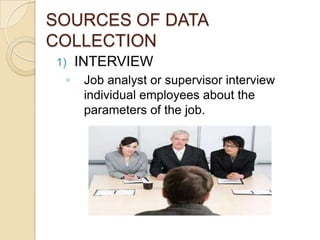
1) INTERVIEW
◦ Job analyst or supervisor interview
individual employees about the
parameters of the job.
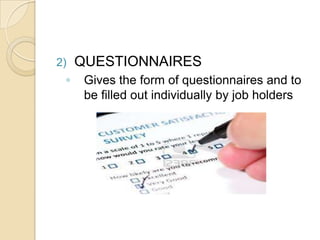
2) QUESTIONNAIRES
◦ Gives the form of questionnaires and to
be filled out individually by job holders
3) OBSERVATION
◦ Job analyst or supervisor get data by
observing and records the activities.
4) DIARIES/ LOGS
◦ Jobholder write a diaries for their entire
work activities
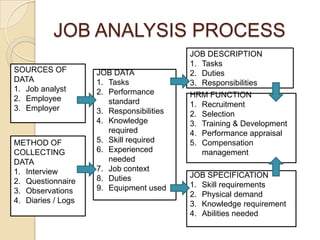
JOB ANALYSIS PROCESS
SOURCES OF
DATA
1. Job analyst
2. Employee
3. Employer
METHOD OF
COLLECTING
DATA
1. Interview
2. Questionnaire
3. Observations
4. Diaries / Logs
JOB DATA
1. Tasks
2. Performance
standard
3. Responsibilities
4. Knowledge
required
5. Skill required
6. Experienced
needed
7. Job context
8. Duties
9. Equipment used
JOB DESCRIPTION
1. Tasks
2. Duties
3. Responsibilities
HRM FUNCTION
1. Recruitment
2. Selection
3. Training & Development
4. Performance appraisal
5. Compensation
management
JOB SPECIFICATION
1. Skill requirements
2. Physical demand
3. Knowledge requirement
4. Abilities needed
HOW TO PERFORM J.A?
1) Select the job
2) Identify data that need to be collect
3) What source that we will get the data
4) Method of data collection
5) Evaluate the data
6) Record the J.A
JOB DESCRIPTION
What is the job description?
Written statement about the overall
tasks, duties and responsibilities of
the job.
ELEMENTS IN JOB
DESCRIPTION
 Job title
 Job identify
 Job significant
 Job duties
 Job specification
JOB DESIGN
What is job design?
Outgrowth of job analysis which is
more focus to restructured the job to
capture.
◦ Worker talent
◦ Improve more satisfaction
◦ Improve organization performance
ELEMENTS IN JOB DESIGN
1) Job enlargement
◦ Expand the scope of the job
◦ One person able to do more than one
job
◦ Example: cashier can be cleaner or
store keeper
2) Job rotation
◦ Shifting people in the organization
◦ Rotate in & out of the different job.
3) Job enrichment
◦ Adding meaningful value to a job for
work satisfaction.
◦ Example: a customer service worker
used the experience that he have to
solve the problem by himself without
refer his manager.
CHARACTERISTIC OF THE
JOB
1) Skilled variety
2) Task identity - whole process done
by one employee
3) Task significant - impact job on other
4) Autonomy - employer give authority
to the employee
5) Feedback
THANK YOU

Hrm job analysis

  • 1.
  • 2.
    WHAT IS J.A? Thesystematic process of collecting information about all parameters of the job. ◦ Responsibilities ◦ Skills ◦ Physical & mental requirement ◦ Job description ◦ Job specification
  • 3.
    JOB SPECIFICATION What isjob specification? Outlines in detail of specific knowledge, skill, abilities (refer to KSAS’s) Right person for the right position.
  • 4.
    HOW HRM AFFECTJ.A? JOB ANALYSIS JOB DESCRIPTION STRATEGIC PLANNING RECRUITMENT & SELECTION WORKPLACE & JOB DESIGN TRAINING & DEVELOPMENT JOB SPECIFICATION PERFORMANCE APPRAISAL COMPENSATION MANAGEMENT LEGAL COMPLIANCE
  • 5.
    HRM AFFECT’S DESCRIPTION 1) STRATEGICPLANNING ◦ Mission, vision and purpose of the organization. ◦ As a guideline during for company done their activities. ◦ Know the organization needed.
  • 6.
    2) RECRUITMENT &SELECTION ◦ Information provided from J.A plays an essential role in the recruiting function. ◦ Do the job advertisement for the applicants. 3) WORKPLACE & JOB DESIGN ◦ Used to analyze the company’s work process.
  • 7.
    4) TRAINING &DEVELOPMENT ◦ Any discrepancies between the knowledge, skills and abilities demonstrated by job holder. ◦ Give clue to the job holder about training that they may face. 5) PERFOMANCE APPRAISAL ◦ Provide the criteria for evaluating people who do the work ◦ Identify the good performance vs. poor performance
  • 8.
    6) COMPENSATION MANAGEMENT ◦It helps HR manager figure out the relative worth of position ◦ Identify it and make it fair and equitable 7) LEGAL COMPLIANCE ◦ Ensure the job duties match with job description ◦ Avoid any discriminating against the members
  • 9.
    SOURCES OF DATA COLLECTION 1)INTERVIEW ◦ Job analyst or supervisor interview individual employees about the parameters of the job.
  • 10.
    2) QUESTIONNAIRES ◦ Givesthe form of questionnaires and to be filled out individually by job holders
  • 11.
    3) OBSERVATION ◦ Jobanalyst or supervisor get data by observing and records the activities. 4) DIARIES/ LOGS ◦ Jobholder write a diaries for their entire work activities
  • 12.
    JOB ANALYSIS PROCESS SOURCESOF DATA 1. Job analyst 2. Employee 3. Employer METHOD OF COLLECTING DATA 1. Interview 2. Questionnaire 3. Observations 4. Diaries / Logs JOB DATA 1. Tasks 2. Performance standard 3. Responsibilities 4. Knowledge required 5. Skill required 6. Experienced needed 7. Job context 8. Duties 9. Equipment used JOB DESCRIPTION 1. Tasks 2. Duties 3. Responsibilities HRM FUNCTION 1. Recruitment 2. Selection 3. Training & Development 4. Performance appraisal 5. Compensation management JOB SPECIFICATION 1. Skill requirements 2. Physical demand 3. Knowledge requirement 4. Abilities needed
  • 13.
    HOW TO PERFORMJ.A? 1) Select the job 2) Identify data that need to be collect 3) What source that we will get the data 4) Method of data collection 5) Evaluate the data 6) Record the J.A
  • 14.
    JOB DESCRIPTION What isthe job description? Written statement about the overall tasks, duties and responsibilities of the job.
  • 15.
    ELEMENTS IN JOB DESCRIPTION Job title  Job identify  Job significant  Job duties  Job specification
  • 16.
    JOB DESIGN What isjob design? Outgrowth of job analysis which is more focus to restructured the job to capture. ◦ Worker talent ◦ Improve more satisfaction ◦ Improve organization performance
  • 17.
    ELEMENTS IN JOBDESIGN 1) Job enlargement ◦ Expand the scope of the job ◦ One person able to do more than one job ◦ Example: cashier can be cleaner or store keeper 2) Job rotation ◦ Shifting people in the organization ◦ Rotate in & out of the different job.
  • 18.
    3) Job enrichment ◦Adding meaningful value to a job for work satisfaction. ◦ Example: a customer service worker used the experience that he have to solve the problem by himself without refer his manager.
  • 19.
    CHARACTERISTIC OF THE JOB 1)Skilled variety 2) Task identity - whole process done by one employee 3) Task significant - impact job on other 4) Autonomy - employer give authority to the employee 5) Feedback
  • 20.