
JOB ANALYSIS 
1 
Dr. Karam Gomaa Zaki 
2014
Question from the previous lecture. 
What does Human Resource 
Planning mean? 
2
Systematic process of matching internal and 
external supply of people with job openings 
anticipated in the organization over a 
specified period of time . 
3
Lecture Highlights: 
 What is Job Analysis? 
 Job analysis information hierarchy 
 Job analysis components 
 Job analysis process 
 Purpose of job analysis 
 Job description Vs. Job specification 
Workshops 
 Job evaluation 
 Methods of Job analysis 
4
Job Analysis 
Job Analysis is a systematic 
exploration of the activities within a 
job. 
It defines and documents the duties, 
responsibilities and accountabilities 
of a job and the conditions under 
which a job is performed. 
• The documentation includes the major 
responsibilities, duties, and tasks of a 
job, as well as the kinds of knowledge, 
skills, and abilities needed to perform 
the job. 
5
What is Job 
Analysis? 
Job Analysis is 
the process of 
getting detailed 
information 
about jobs 
6
It is a technical procedure used to 
define the duties, responsibilities, 
and accountabilities of a job. 
7
Job Analysis 
This analysis “involves the 
identification and description of what is 
happening on the job . . . accurately and 
precisely identifying the required tasks, 
the knowledge, and the skills necessary 
for performing them, and the conditions 
under which they must be performed. 
8
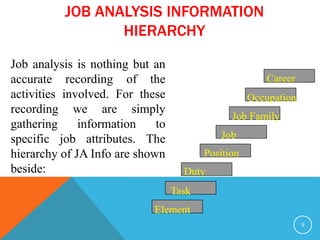
JOB ANALYSIS INFORMATION 
HIERARCHY 
9 
Duty 
Task 
Element 
Career 
Job Family 
Job 
Position 
Occupation 
Job analysis is nothing but an 
accurate recording of the 
activities involved. For these 
recording we are simply 
gathering information to 
specific job attributes. The 
hierarchy of JA Info are shown 
beside:
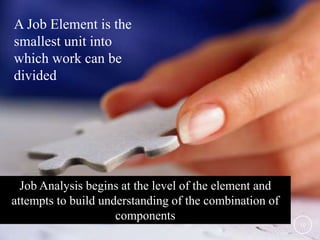
Job Analysis begins at the level of the element and 
attempts to build understanding of the combination of 
components 
4–10 
A Job Element is the 
smallest unit into 
which work can be 
divided 
10
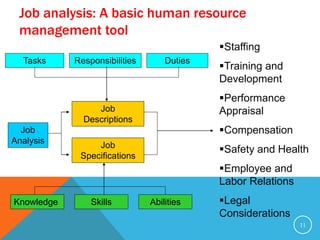
Job analysis: A basic human resource 
management tool 
Tasks Responsibilities Duties 
Job 
Analysis 
Job 
Descriptions 
Job 
Specifications 
Knowledge Skills Abilities 
Staffing 
Training and 
Development 
Performance 
Appraisal 
Compensation 
Safety and Health 
Employee and 
Labor Relations 
Legal 
Considerations 
11
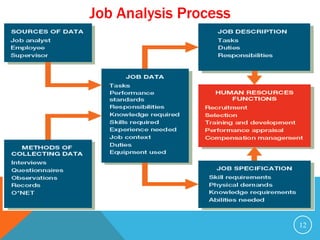
Job Analysis Process 
12
Purpose of Job Analysis 
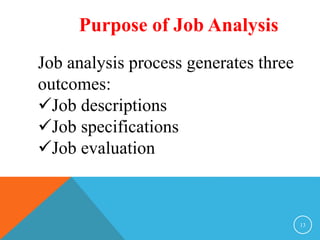
Job analysis process generates three 
outcomes: 
Job descriptions 
Job specifications 
Job evaluation 
13
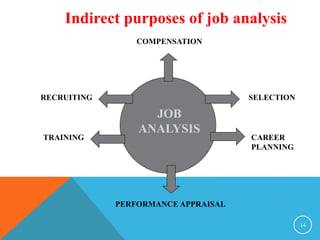
Indirect purposes of job analysis 
14 
RECRUITING SELECTION 
JOB 
ANALYSIS 
TRAINING CAREER 
PLANNING 
COMPENSATION 
PERFORMANCE APPRAISAL
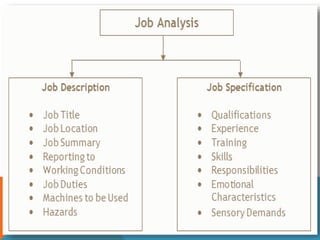
Job Description. 
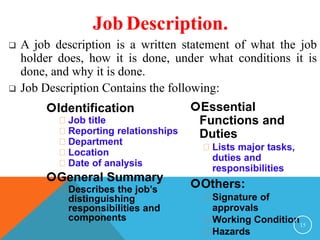
 A job description is a written statement of what the job 
holder does, how it is done, under what conditions it is 
done, and why it is done. 
Identification 
Job title 
Reporting relationships 
Department 
Location 
Date of analysis 
General Summary 
Describes the job’s 
distinguishing 
responsibilities and 
components 
Essential 
Functions and 
Duties 
Lists major tasks, 
duties and 
responsibilities 
Others: 
Signature of 
approvals 
Working Condition 
Hazards 
15 
 Job Description Contains the following:
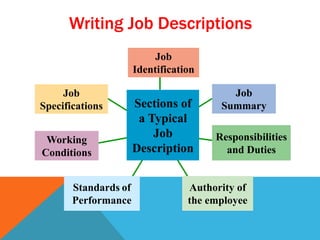
Writing Job Descriptions 
Job 
Identification 
Job 
Summary 
Responsibilities 
and Duties 
Specifications Sections of 
Authority of 
the employee 
Job 
Working 
Conditions 
Standards of 
Performance 
a Typical 
Job 
Description
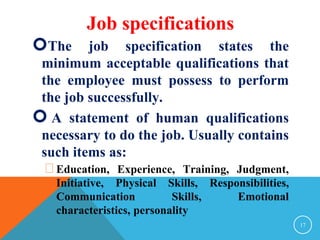
The job specification states the 
minimum acceptable qualifications that 
the employee must possess to perform 
the job successfully. 
 A statement of human qualifications 
necessary to do the job. Usually contains 
such items as: 
Education, Experience, Training, Judgment, 
Initiative, Physical Skills, Responsibilities, 
Communication Skills, Emotional 
characteristics, personality 
17 
Job specifications
18
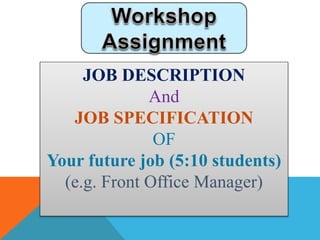
JOB DESCRIPTION 
And 
JOB SPECIFICATION 
OF 
Your future job (5:10 students) 
(e.g. Front Office Manager)
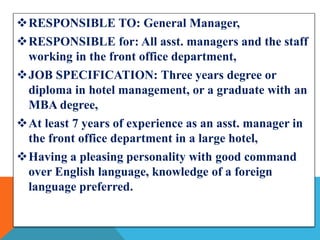
RESPONSIBLE TO: General Manager, 
RESPONSIBLE for: All asst. managers and the staff 
working in the front office department, 
JOB SPECIFICATION: Three years degree or 
diploma in hotel management, or a graduate with an 
MBA degree, 
At least 7 years of experience as an asst. manager in 
the front office department in a large hotel, 
Having a pleasing personality with good command 
over English language, knowledge of a foreign 
language preferred.
DUT IES & RESPONS IBI LITIES 
He directs and coordinates the activities of the front 
office department, which includes dept. like, front 
desk, lobby, reservation, bell desk, telephones, 
He is responsible to ensure the proper upkeep, staff 
cleanness, punctuality and efficiency by his staff in 
his department, 
Ensures that each and every guest is provided with 
smooth, efficient, courteous and personalized service 
by his staff, 
He prepares the duty chart for his staff and also 
sanctions weekly offs, an leaves to his subordinates,
Job Evaluations 
Job analysis is also valuable in providing the 
information that makes comparison of jobs 
possible. If an organization is to have an equitable 
compensation program, jobs that have similar 
demands in terms of skills, knowledge, and abilities 
should be placed in common compensation groups. 
Job evaluation contributes towards that end by 
specifying the relative value of each job in the 
organization. Job evaluation, therefore, is an 
important part of compensation administration. 
22
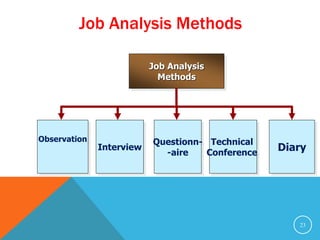
Job Analysis Methods 
23 
Observation 
Diary 
Job Analysis 
Methods 
Interview 
Questionn- 
-aire 
Technical 
Conference
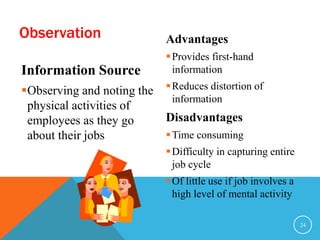
Observation 
Information Source 
Observing and noting the 
physical activities of 
employees as they go 
about their jobs 
Advantages 
 Provides first-hand 
information 
Reduces distortion of 
information 
Disadvantages 
Time consuming 
 Difficulty in capturing entire 
job cycle 
Of little use if job involves a 
high level of mental activity 
24
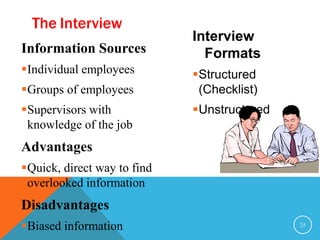
The Interview 
Information Sources 
Individual employees 
Groups of employees 
Supervisors with 
knowledge of the job 
Advantages 
Quick, direct way to find 
overlooked information 
Disadvantages 
Biased information 
Interview 
Formats 
Structured 
(Checklist) 
Unstructured 
25
Questionnaires 
Information Source 
Have employees fill out 
questionnaires to 
describe their job-related 
duties and 
responsibilities 
Questionnaire 
Formats 
Structured checklists 
Open-ended questions 
Advantages 
Quick and efficient way 
to gather information 
from large numbers of 
employees 
Disadvantages 
Expense and time 
consumed in preparing 
and testing the 
questionnaire 
26
27 
Technical Conference Method: 
The technical conference method uses supervisors 
with extensive knowledge of the job. Here, 
specific job characteristics are obtained from the 
“experts.” Although a good data-gathering 
method, it often overlooks the workers’ 
perceptions about what they do on their job.
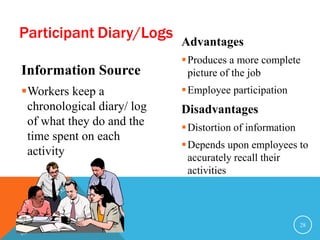
Participant Diary/Logs 
Information Source 
Workers keep a 
chronological diary/ log 
of what they do and the 
time spent on each 
activity 
Advantages 
Produces a more complete 
picture of the job 
Employee participation 
Disadvantages 
Distortion of information 
Depends upon employees to 
accurately recall their 
activities 
28
29

Job Analysis

  • 1.
    JOB ANALYSIS 1 Dr. Karam Gomaa Zaki 2014
  • 2.
    Question from theprevious lecture. What does Human Resource Planning mean? 2
  • 3.
    Systematic process ofmatching internal and external supply of people with job openings anticipated in the organization over a specified period of time . 3
  • 4.
    Lecture Highlights: What is Job Analysis?  Job analysis information hierarchy  Job analysis components  Job analysis process  Purpose of job analysis  Job description Vs. Job specification Workshops  Job evaluation  Methods of Job analysis 4
  • 5.
    Job Analysis JobAnalysis is a systematic exploration of the activities within a job. It defines and documents the duties, responsibilities and accountabilities of a job and the conditions under which a job is performed. • The documentation includes the major responsibilities, duties, and tasks of a job, as well as the kinds of knowledge, skills, and abilities needed to perform the job. 5
  • 6.
    What is Job Analysis? Job Analysis is the process of getting detailed information about jobs 6
  • 7.
    It is atechnical procedure used to define the duties, responsibilities, and accountabilities of a job. 7
  • 8.
    Job Analysis Thisanalysis “involves the identification and description of what is happening on the job . . . accurately and precisely identifying the required tasks, the knowledge, and the skills necessary for performing them, and the conditions under which they must be performed. 8
  • 9.
    JOB ANALYSIS INFORMATION HIERARCHY 9 Duty Task Element Career Job Family Job Position Occupation Job analysis is nothing but an accurate recording of the activities involved. For these recording we are simply gathering information to specific job attributes. The hierarchy of JA Info are shown beside:
  • 10.
    Job Analysis beginsat the level of the element and attempts to build understanding of the combination of components 4–10 A Job Element is the smallest unit into which work can be divided 10
  • 11.
    Job analysis: Abasic human resource management tool Tasks Responsibilities Duties Job Analysis Job Descriptions Job Specifications Knowledge Skills Abilities Staffing Training and Development Performance Appraisal Compensation Safety and Health Employee and Labor Relations Legal Considerations 11
  • 12.
  • 13.
    Purpose of JobAnalysis Job analysis process generates three outcomes: Job descriptions Job specifications Job evaluation 13
  • 14.
    Indirect purposes ofjob analysis 14 RECRUITING SELECTION JOB ANALYSIS TRAINING CAREER PLANNING COMPENSATION PERFORMANCE APPRAISAL
  • 15.
    Job Description. A job description is a written statement of what the job holder does, how it is done, under what conditions it is done, and why it is done. Identification Job title Reporting relationships Department Location Date of analysis General Summary Describes the job’s distinguishing responsibilities and components Essential Functions and Duties Lists major tasks, duties and responsibilities Others: Signature of approvals Working Condition Hazards 15  Job Description Contains the following:
  • 16.
    Writing Job Descriptions Job Identification Job Summary Responsibilities and Duties Specifications Sections of Authority of the employee Job Working Conditions Standards of Performance a Typical Job Description
  • 17.
    The job specificationstates the minimum acceptable qualifications that the employee must possess to perform the job successfully.  A statement of human qualifications necessary to do the job. Usually contains such items as: Education, Experience, Training, Judgment, Initiative, Physical Skills, Responsibilities, Communication Skills, Emotional characteristics, personality 17 Job specifications
  • 18.
  • 19.
    JOB DESCRIPTION And JOB SPECIFICATION OF Your future job (5:10 students) (e.g. Front Office Manager)
  • 20.
    RESPONSIBLE TO: GeneralManager, RESPONSIBLE for: All asst. managers and the staff working in the front office department, JOB SPECIFICATION: Three years degree or diploma in hotel management, or a graduate with an MBA degree, At least 7 years of experience as an asst. manager in the front office department in a large hotel, Having a pleasing personality with good command over English language, knowledge of a foreign language preferred.
  • 21.
    DUT IES &RESPONS IBI LITIES He directs and coordinates the activities of the front office department, which includes dept. like, front desk, lobby, reservation, bell desk, telephones, He is responsible to ensure the proper upkeep, staff cleanness, punctuality and efficiency by his staff in his department, Ensures that each and every guest is provided with smooth, efficient, courteous and personalized service by his staff, He prepares the duty chart for his staff and also sanctions weekly offs, an leaves to his subordinates,
  • 22.
    Job Evaluations Jobanalysis is also valuable in providing the information that makes comparison of jobs possible. If an organization is to have an equitable compensation program, jobs that have similar demands in terms of skills, knowledge, and abilities should be placed in common compensation groups. Job evaluation contributes towards that end by specifying the relative value of each job in the organization. Job evaluation, therefore, is an important part of compensation administration. 22
  • 23.
    Job Analysis Methods 23 Observation Diary Job Analysis Methods Interview Questionn- -aire Technical Conference
  • 24.
    Observation Information Source Observing and noting the physical activities of employees as they go about their jobs Advantages  Provides first-hand information Reduces distortion of information Disadvantages Time consuming  Difficulty in capturing entire job cycle Of little use if job involves a high level of mental activity 24
  • 25.
    The Interview InformationSources Individual employees Groups of employees Supervisors with knowledge of the job Advantages Quick, direct way to find overlooked information Disadvantages Biased information Interview Formats Structured (Checklist) Unstructured 25
  • 26.
    Questionnaires Information Source Have employees fill out questionnaires to describe their job-related duties and responsibilities Questionnaire Formats Structured checklists Open-ended questions Advantages Quick and efficient way to gather information from large numbers of employees Disadvantages Expense and time consumed in preparing and testing the questionnaire 26
  • 27.
    27 Technical ConferenceMethod: The technical conference method uses supervisors with extensive knowledge of the job. Here, specific job characteristics are obtained from the “experts.” Although a good data-gathering method, it often overlooks the workers’ perceptions about what they do on their job.
  • 28.
    Participant Diary/Logs InformationSource Workers keep a chronological diary/ log of what they do and the time spent on each activity Advantages Produces a more complete picture of the job Employee participation Disadvantages Distortion of information Depends upon employees to accurately recall their activities 28
  • 29.