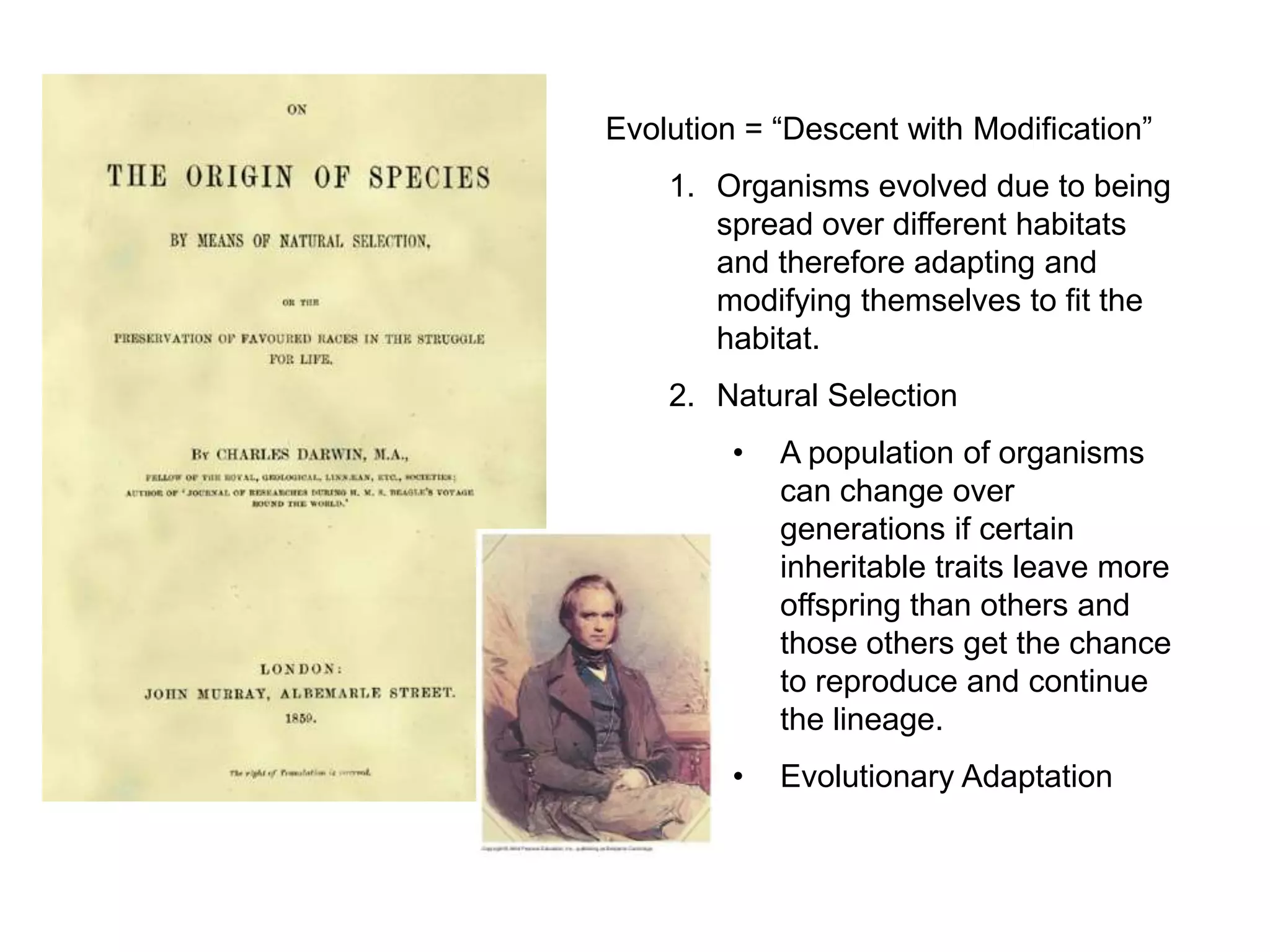
Evolution = “Descent with Modification”
    1. Organisms evolved due to being
       spread over different habitats
       and therefore adapting and
       modifying themselves to fit the
       habitat.
    2. Natural Selection
         •   A population of organisms
             can change over
             generations if certain
             inheritable traits leave more
             offspring than others and
             those others get the chance
             to reproduce and continue
             the lineage.
         •   Evolutionary Adaptation
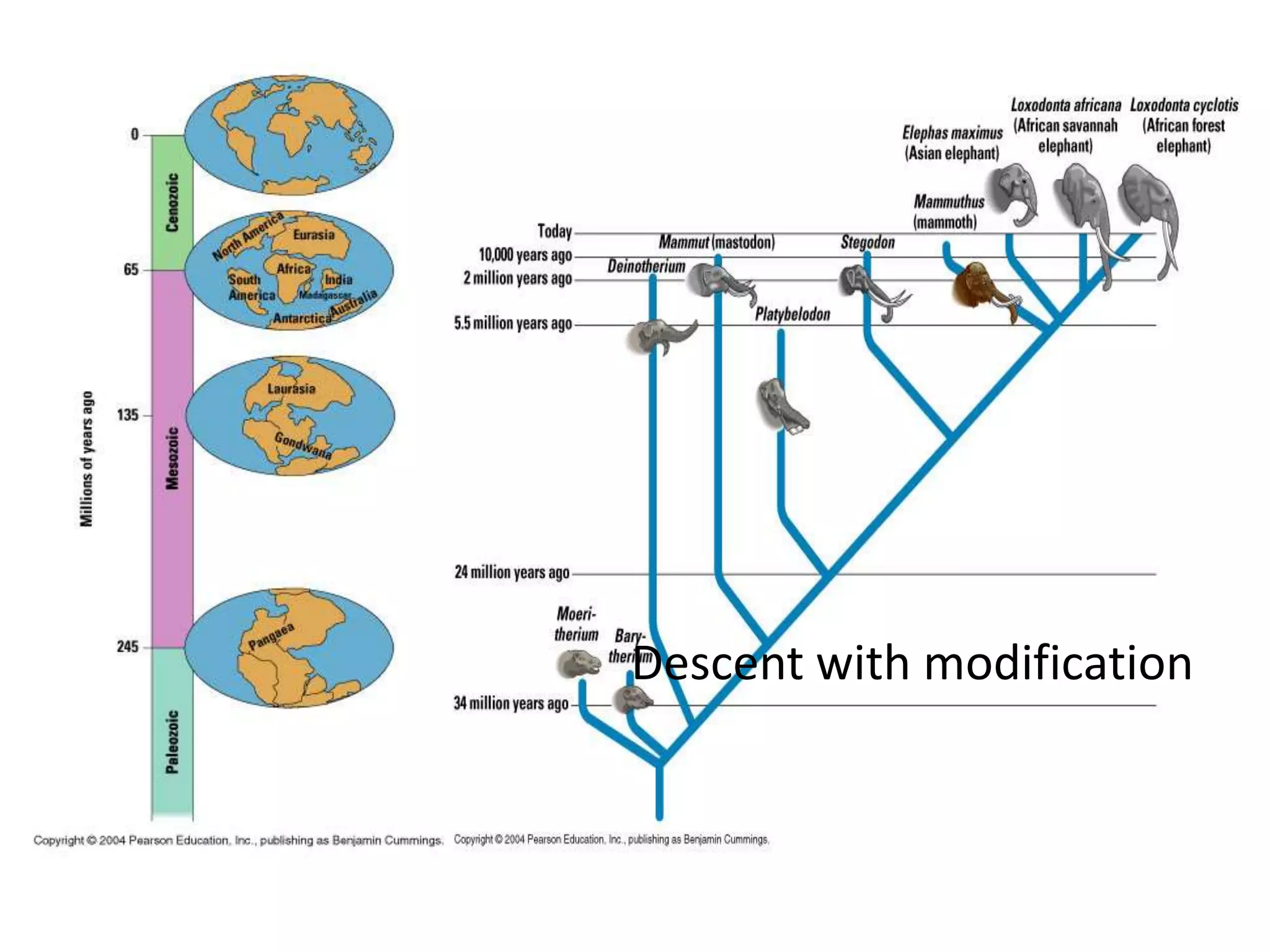
Descent with modification
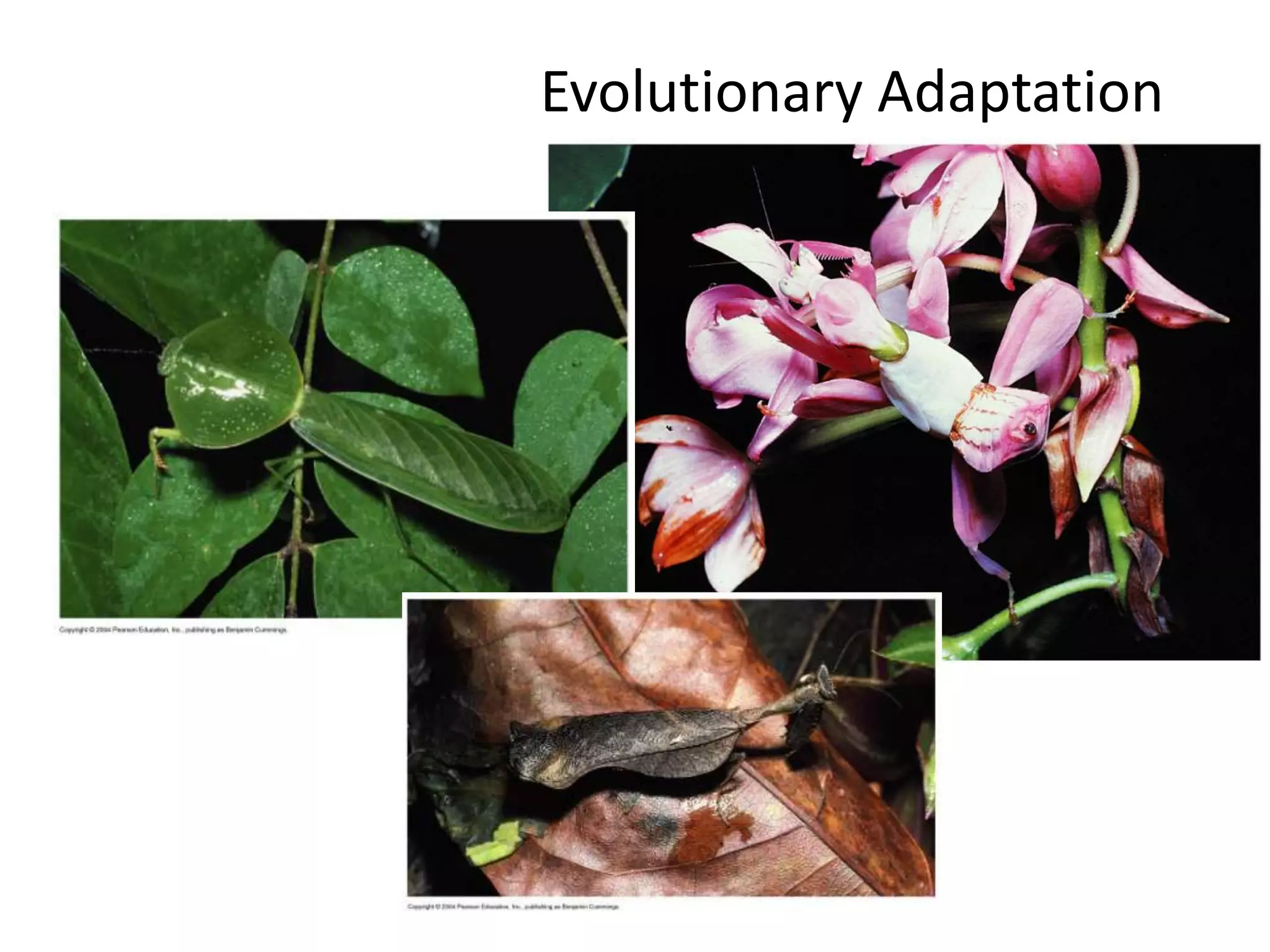
Evolutionary Adaptation
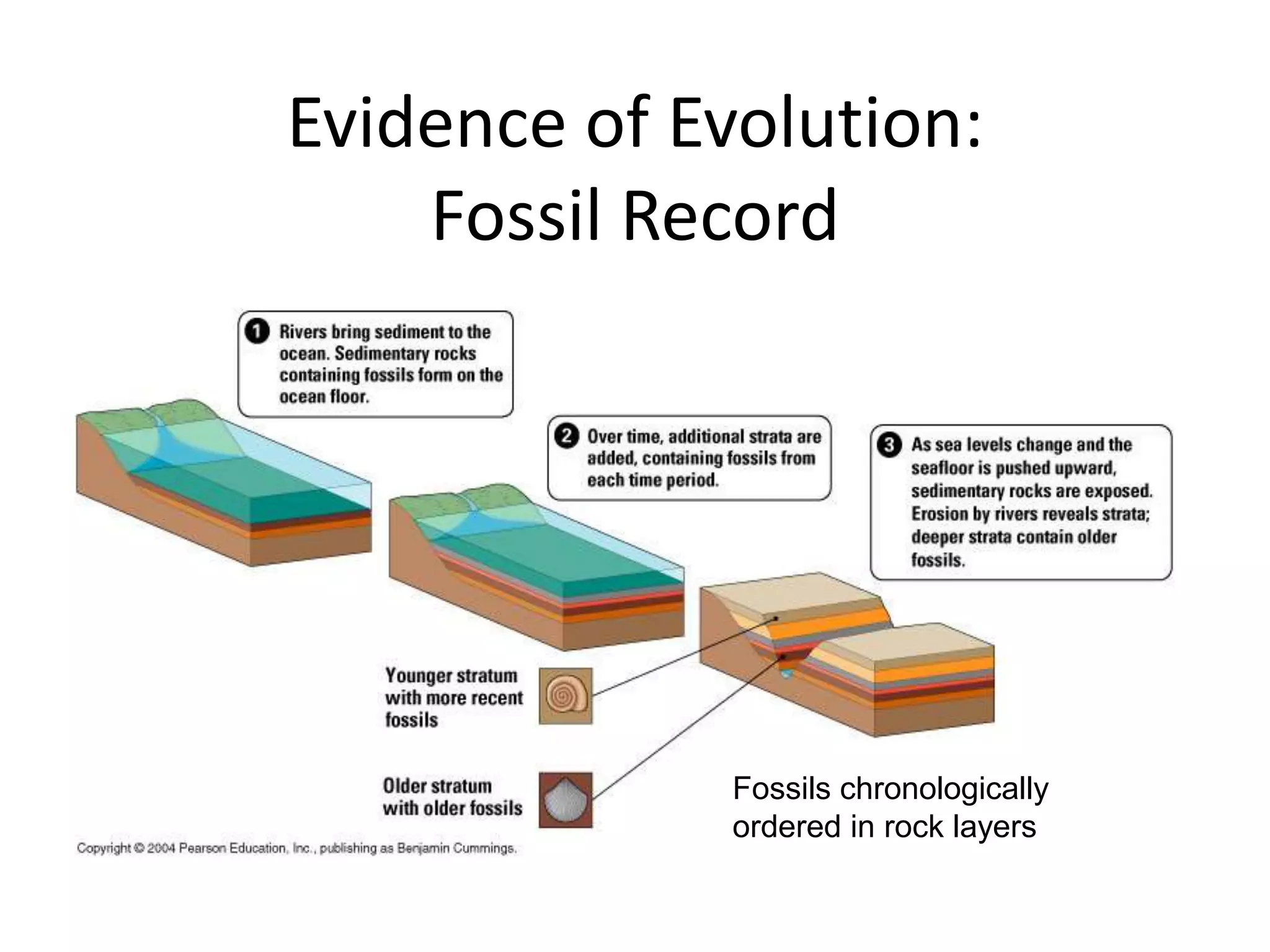
Evidence of Evolution:
    Fossil Record


              Fossils chronologically
              ordered in rock layers
Evidence of Evolution:
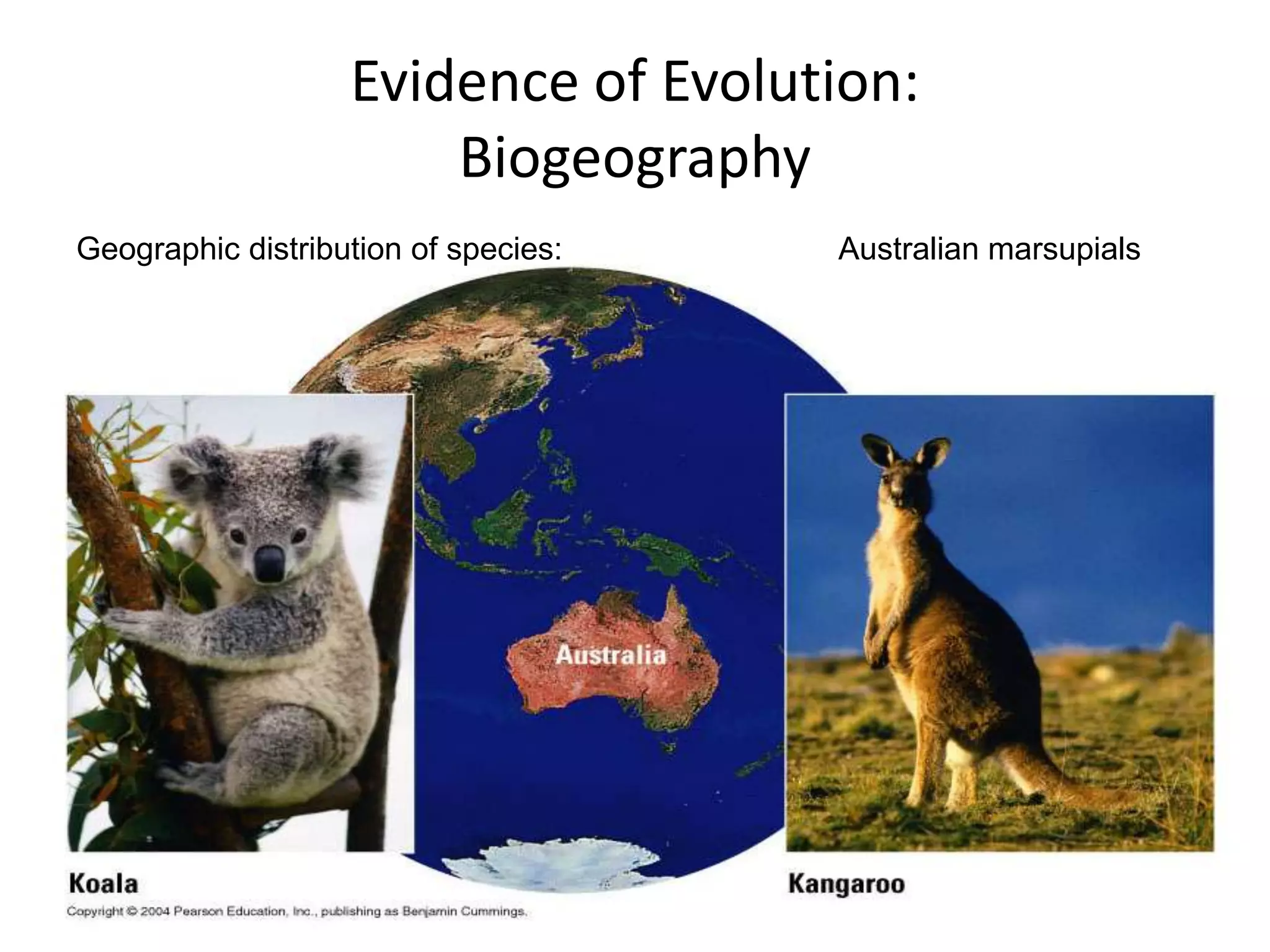
                       Biogeography
Geographic distribution of species:   Australian marsupials
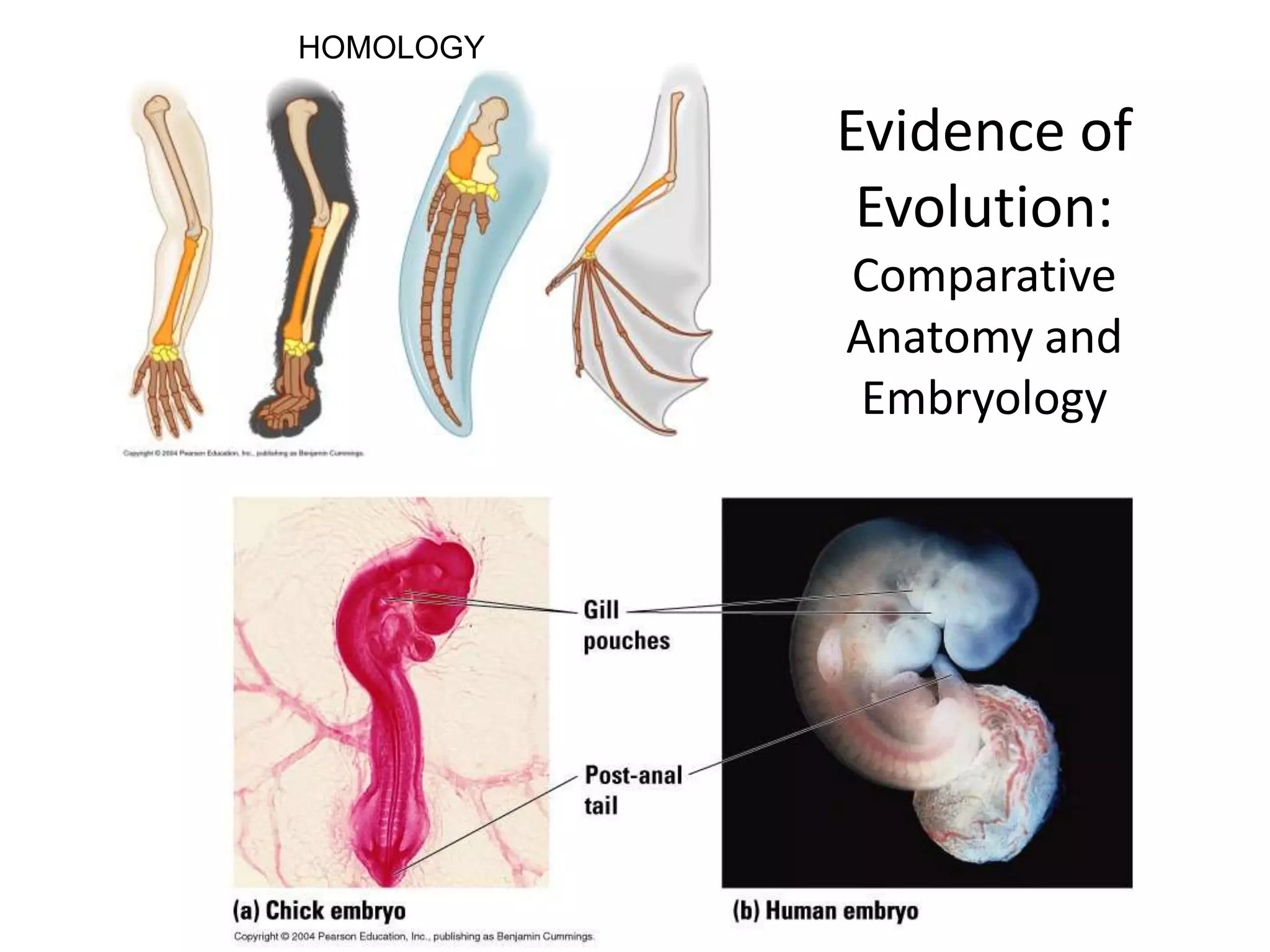
HOMOLOGY

           Evidence of
            Evolution:
           Comparative
           Anatomy and
            Embryology
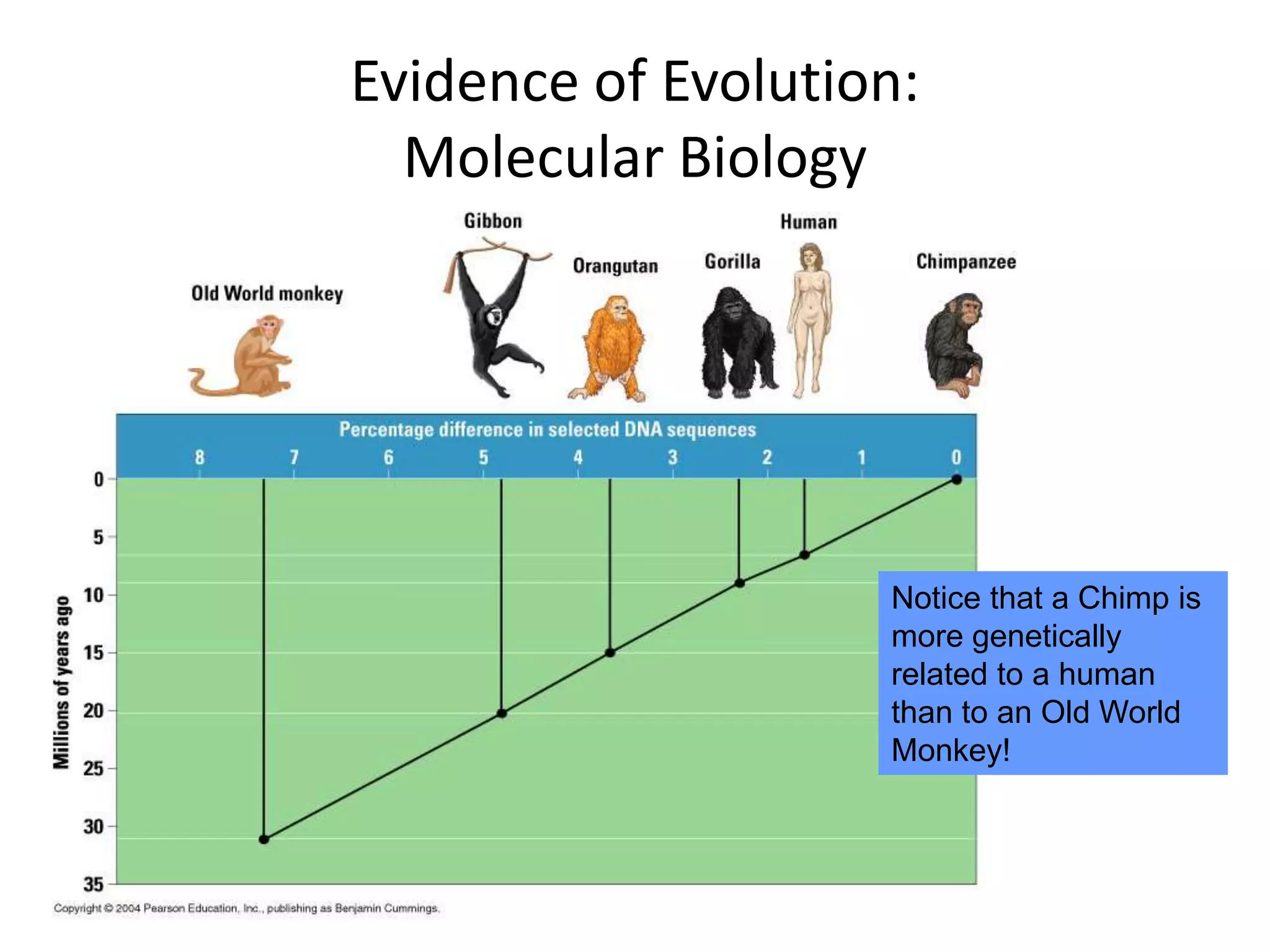
Evidence of Evolution:
  Molecular Biology


                    Notice that a Chimp is
                    more genetically
                    related to a human
                    than to an Old World
                    Monkey!
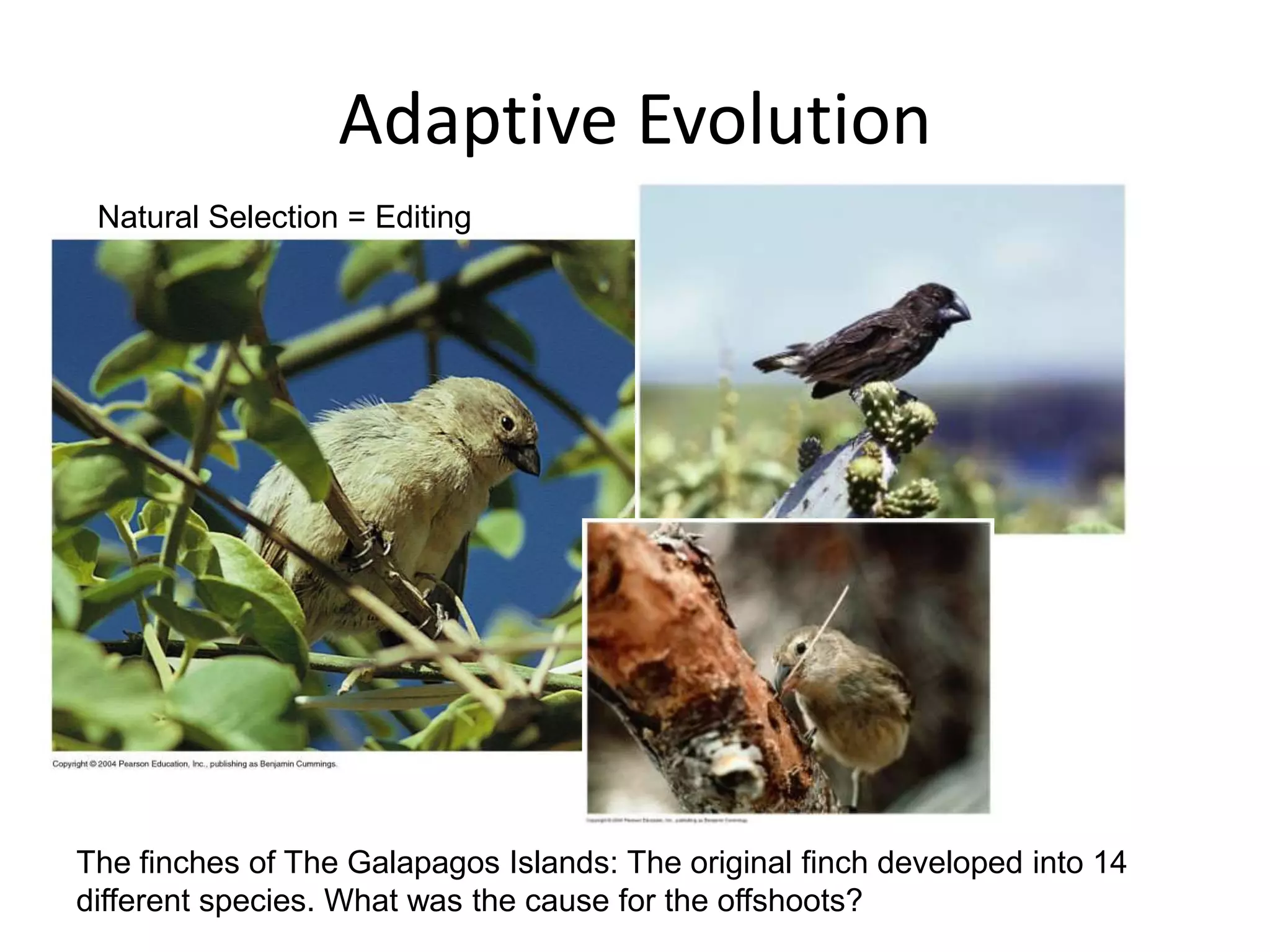
Adaptive Evolution
 Natural Selection = Editing


The finches of The Galapagos Islands: The original finch developed into 14
different species. What was the cause for the offshoots?
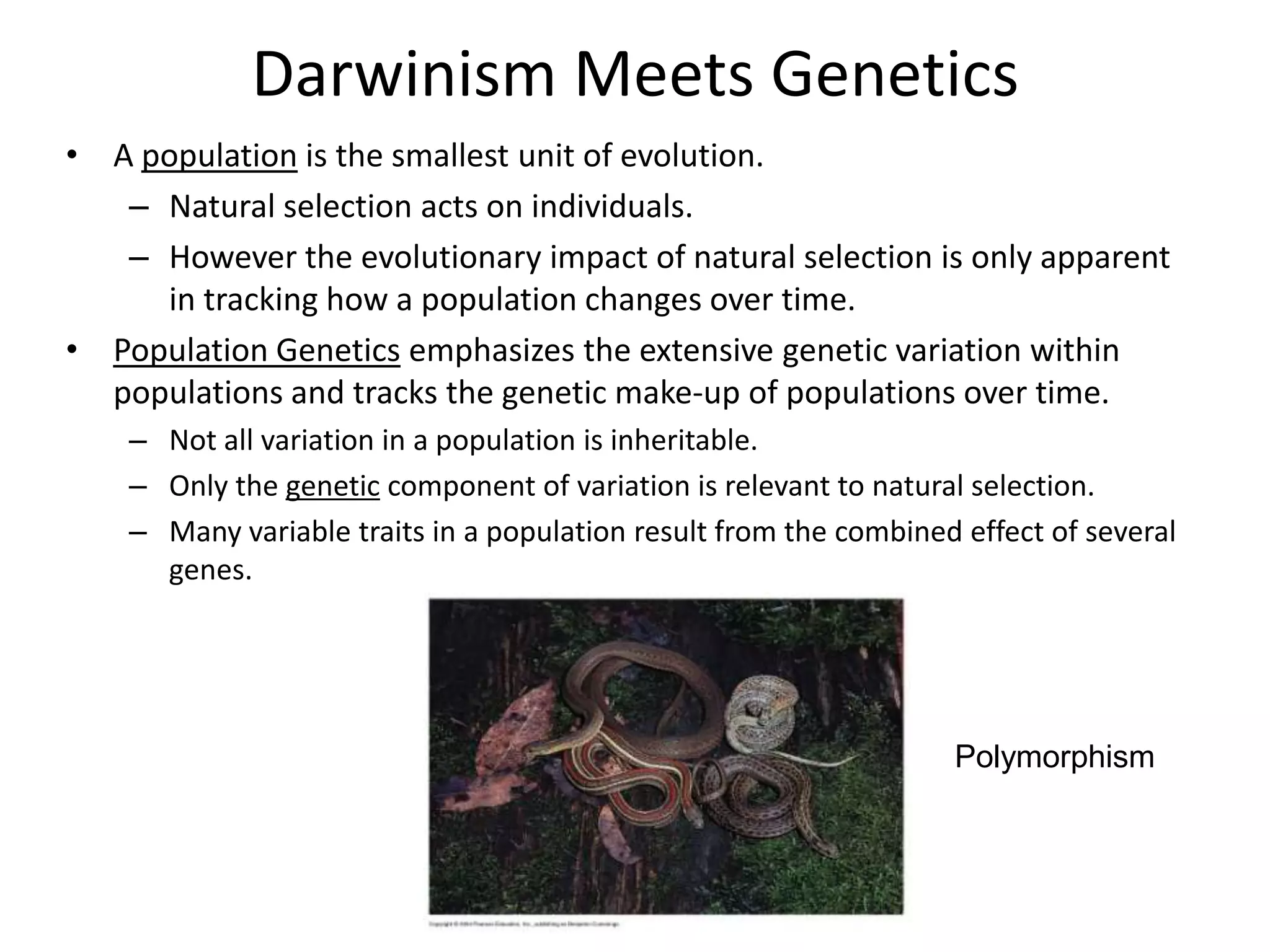
Darwinism Meets Genetics
• A population is the smallest unit of evolution.
   – Natural selection acts on individuals.
   – However the evolutionary impact of natural selection is only apparent
     in tracking how a population changes over time.
• Population Genetics emphasizes the extensive genetic variation within
  populations and tracks the genetic make-up of populations over time.
    – Not all variation in a population is inheritable.
    – Only the genetic component of variation is relevant to natural selection.
    – Many variable traits in a population result from the combined effect of several
      genes.


                                                                   Polymorphism
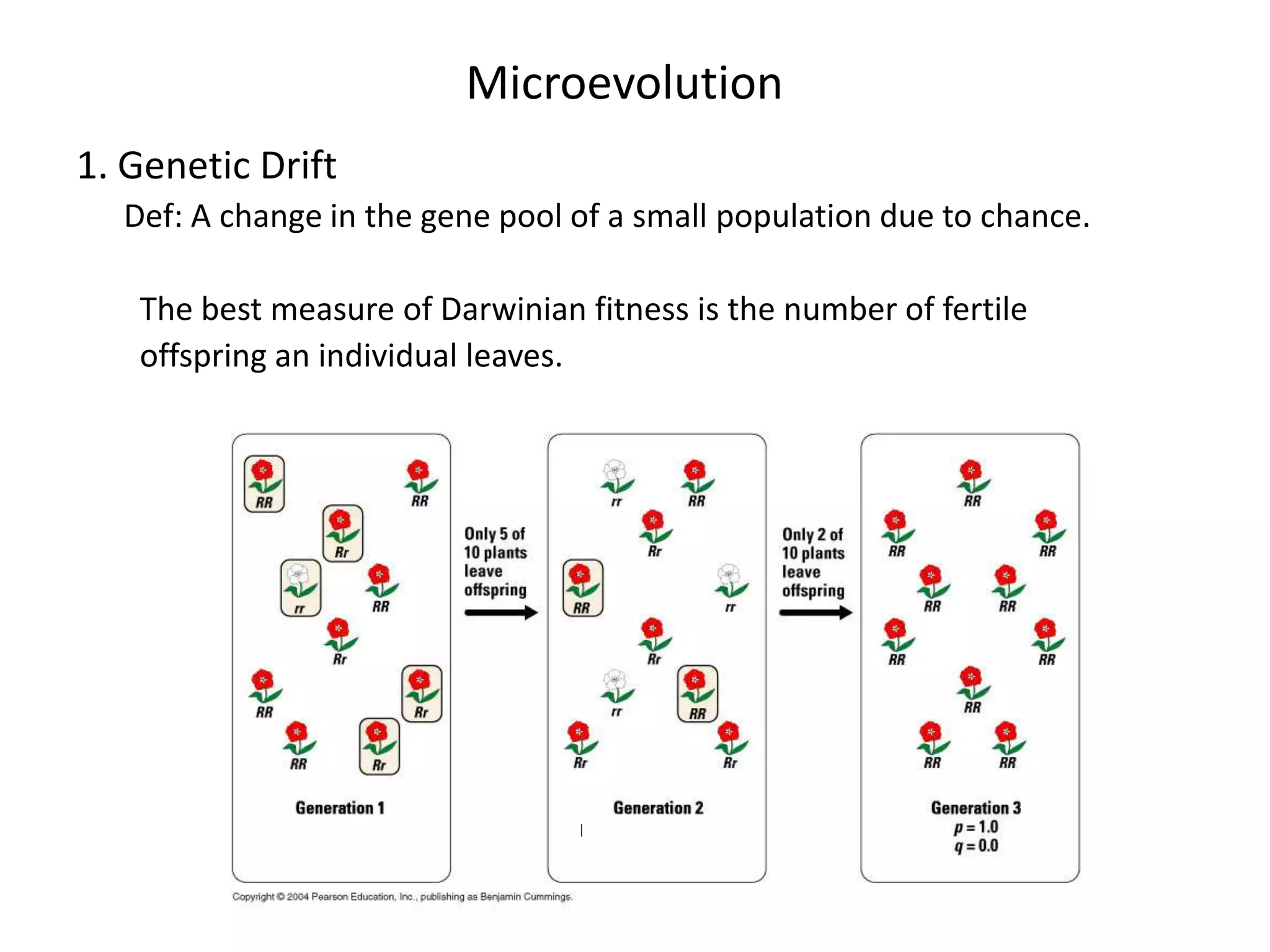
Microevolution
1. Genetic Drift
  Def: A change in the gene pool of a small population due to chance.

   The best measure of Darwinian fitness is the number of fertile
   offspring an individual leaves.
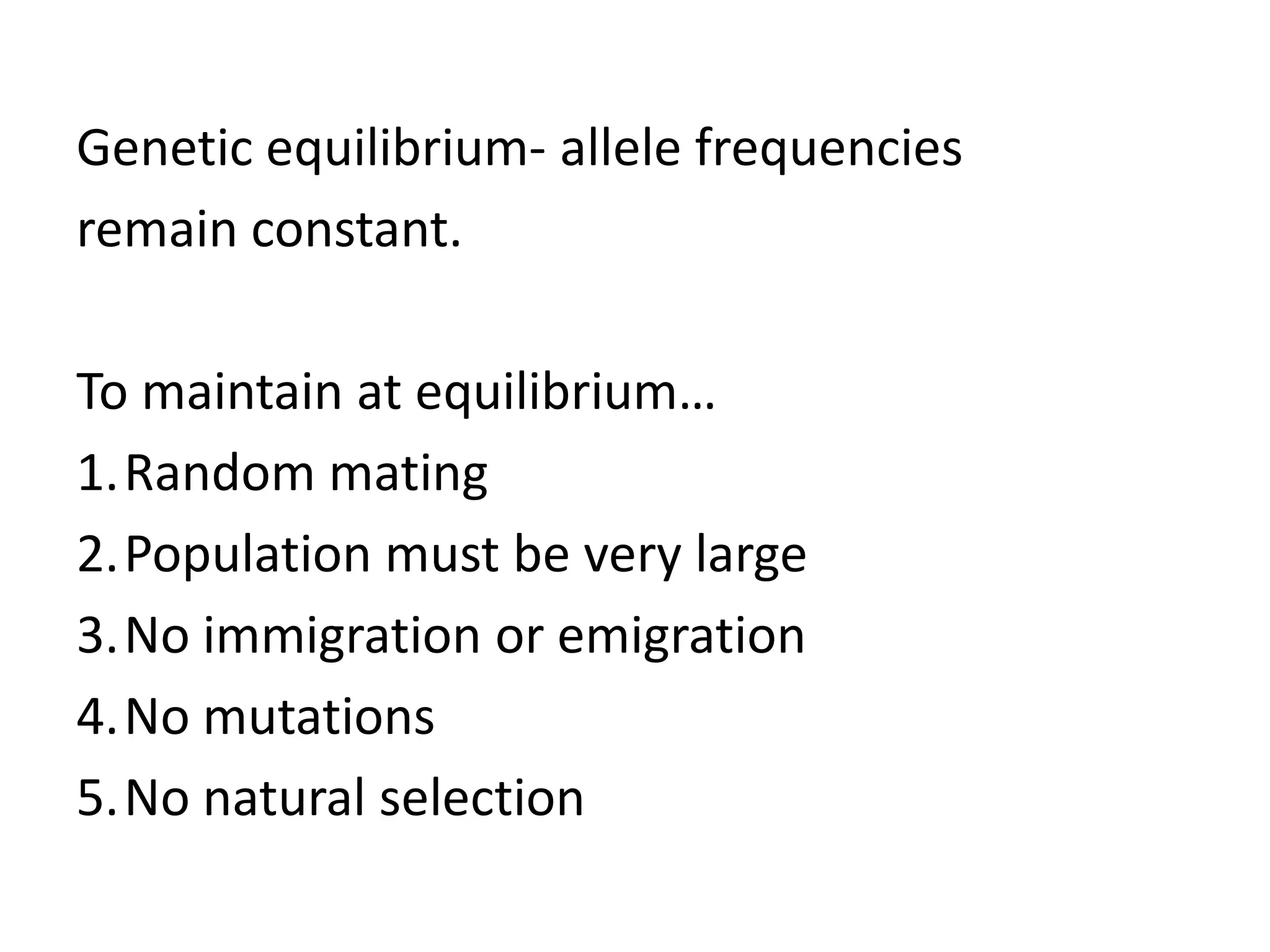
Genetic equilibrium- allele frequencies
remain constant.

To maintain at equilibrium…
1.Random mating
2.Population must be very large
3.No immigration or emigration
4.No mutations
5.No natural selection
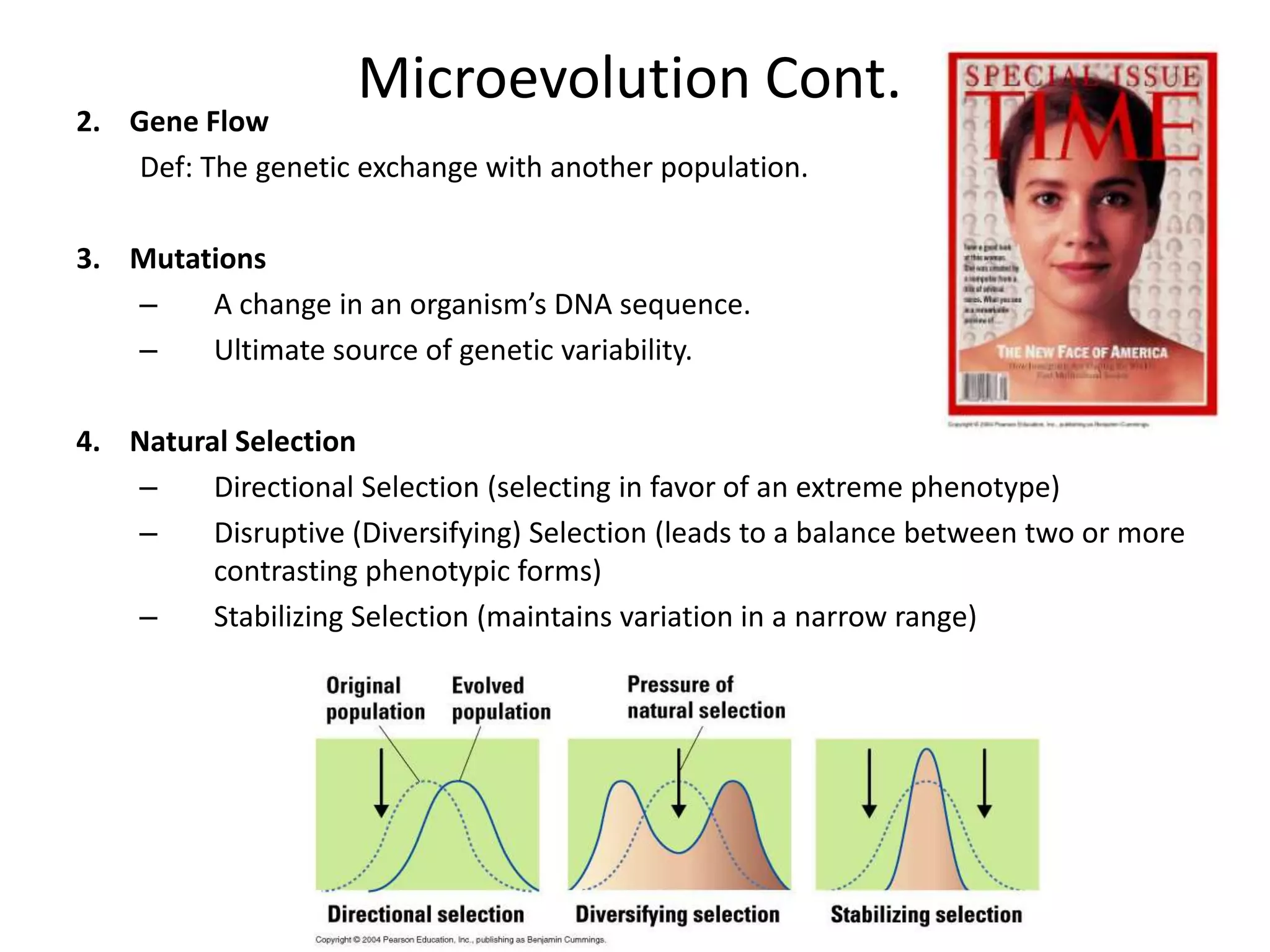
Microevolution Cont.
2. Gene Flow
    Def: The genetic exchange with another population.

3. Mutations
   –    A change in an organism’s DNA sequence.
   –    Ultimate source of genetic variability.

4. Natural Selection
   –     Directional Selection (selecting in favor of an extreme phenotype)
   –     Disruptive (Diversifying) Selection (leads to a balance between two or more
         contrasting phenotypic forms)
   –     Stabilizing Selection (maintains variation in a narrow range)
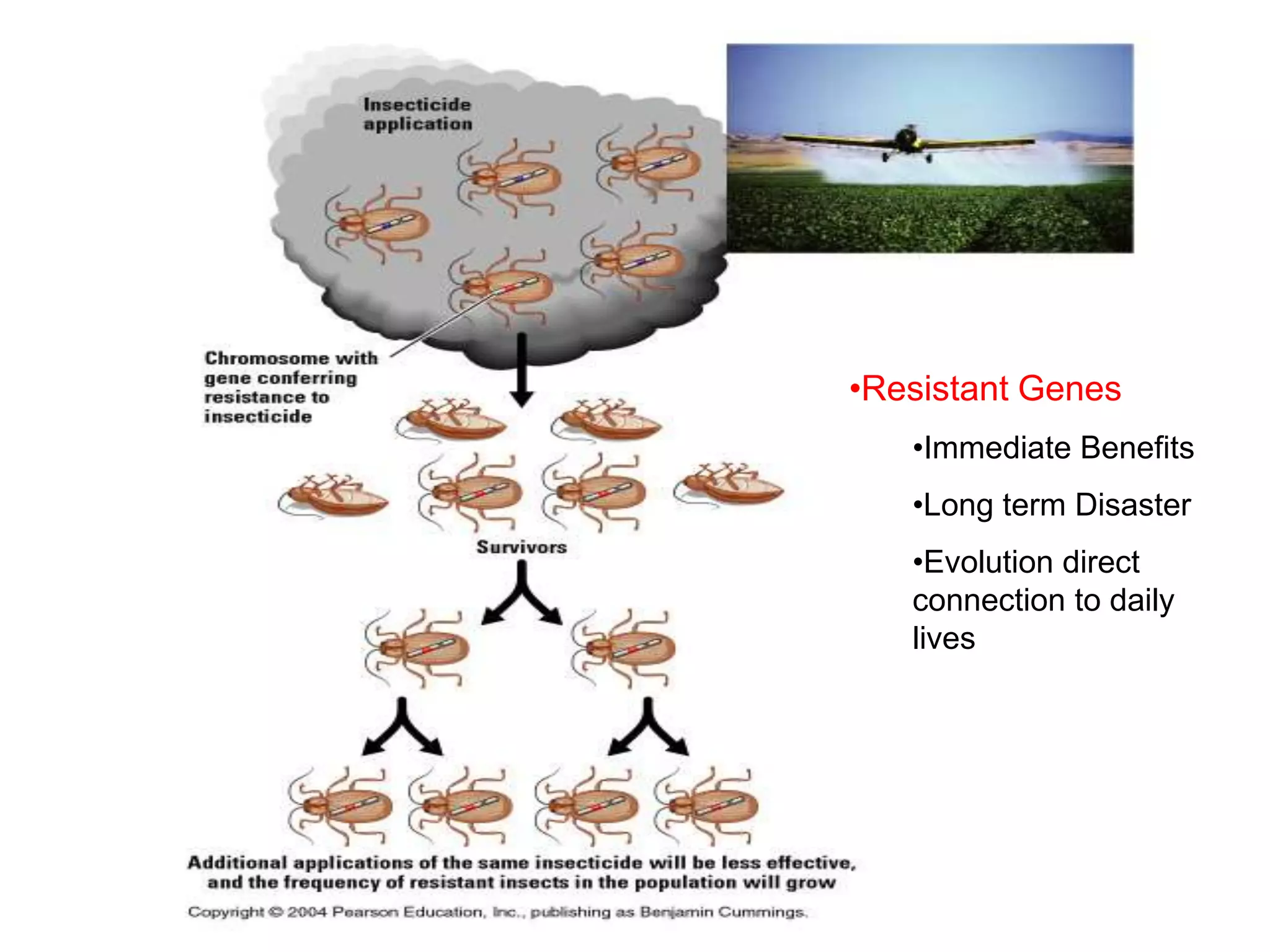
•Resistant Genes
   •Immediate Benefits
   •Long term Disaster
   •Evolution direct
   connection to daily
   lives
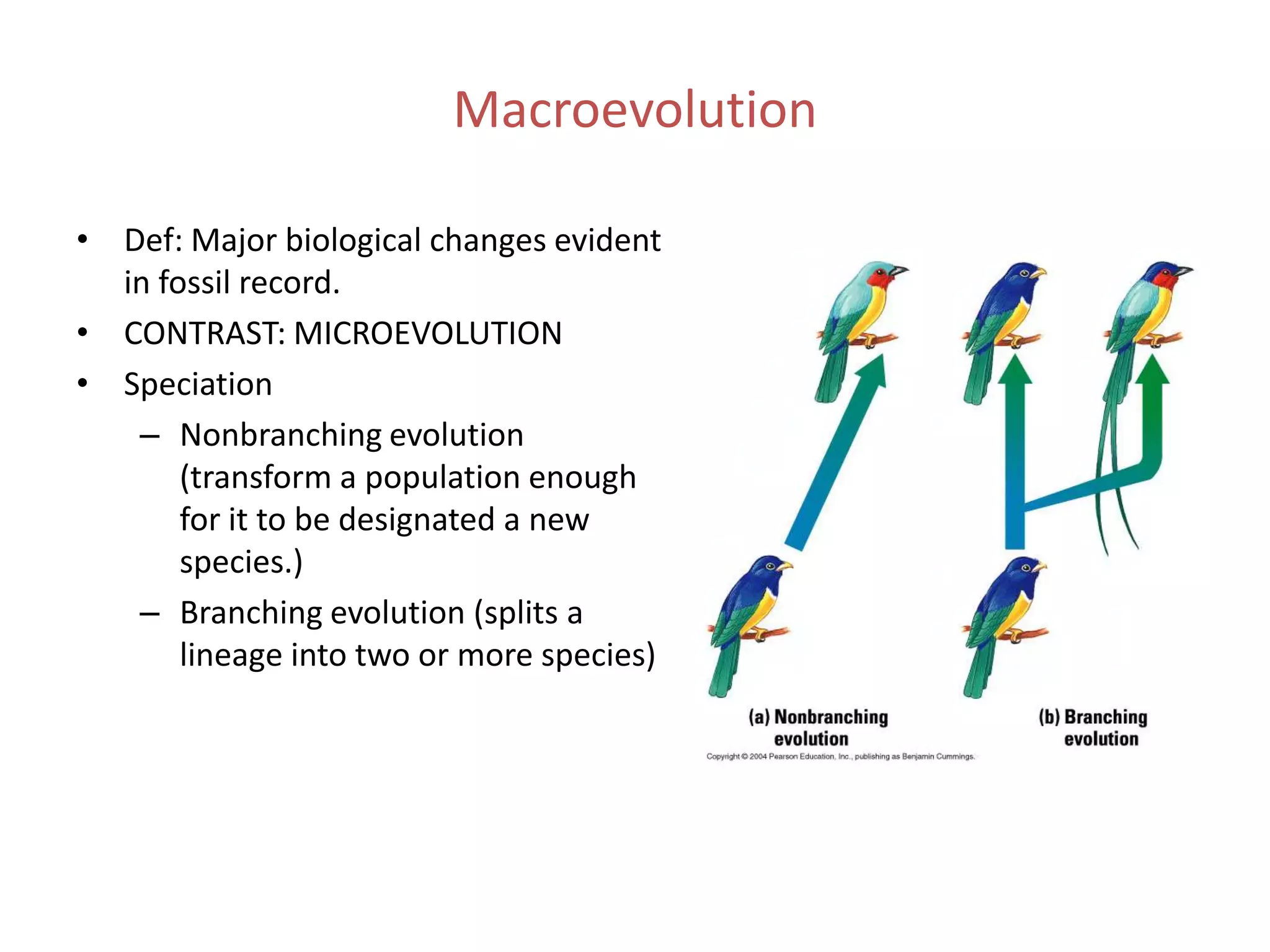
Macroevolution

• Def: Major biological changes evident
  in fossil record.
• CONTRAST: MICROEVOLUTION
• Speciation
   – Nonbranching evolution
       (transform a population enough
       for it to be designated a new
       species.)
   – Branching evolution (splits a
       lineage into two or more species)
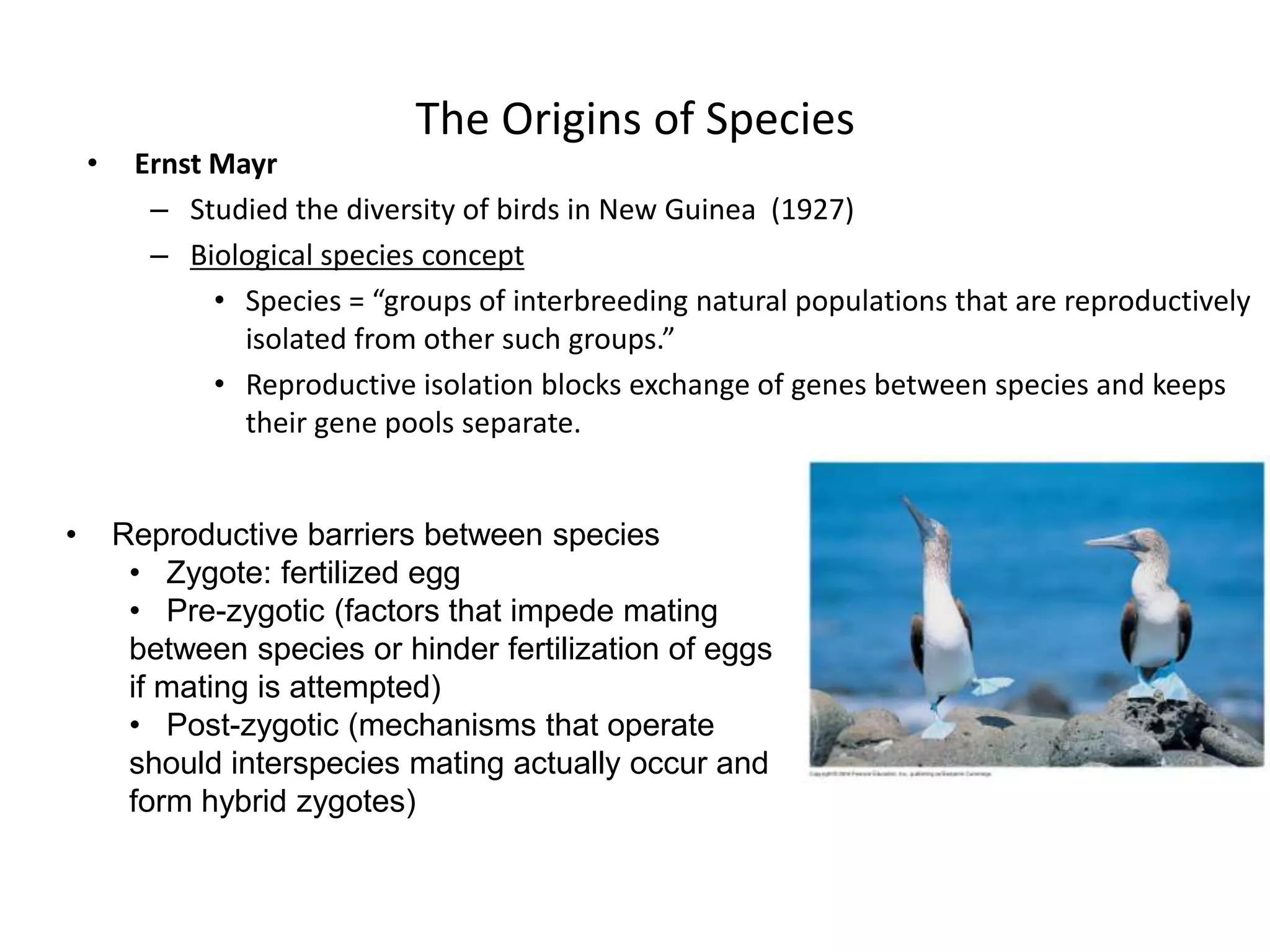
The Origins of Species
    •    Ernst Mayr
          – Studied the diversity of birds in New Guinea (1927)
          – Biological species concept
               • Species = “groups of interbreeding natural populations that are reproductively
                 isolated from other such groups.”
               • Reproductive isolation blocks exchange of genes between species and keeps
                 their gene pools separate.


•       Reproductive barriers between species
         • Zygote: fertilized egg
         • Pre-zygotic (factors that impede mating
         between species or hinder fertilization of eggs
         if mating is attempted)
         • Post-zygotic (mechanisms that operate
         should interspecies mating actually occur and
         form hybrid zygotes)
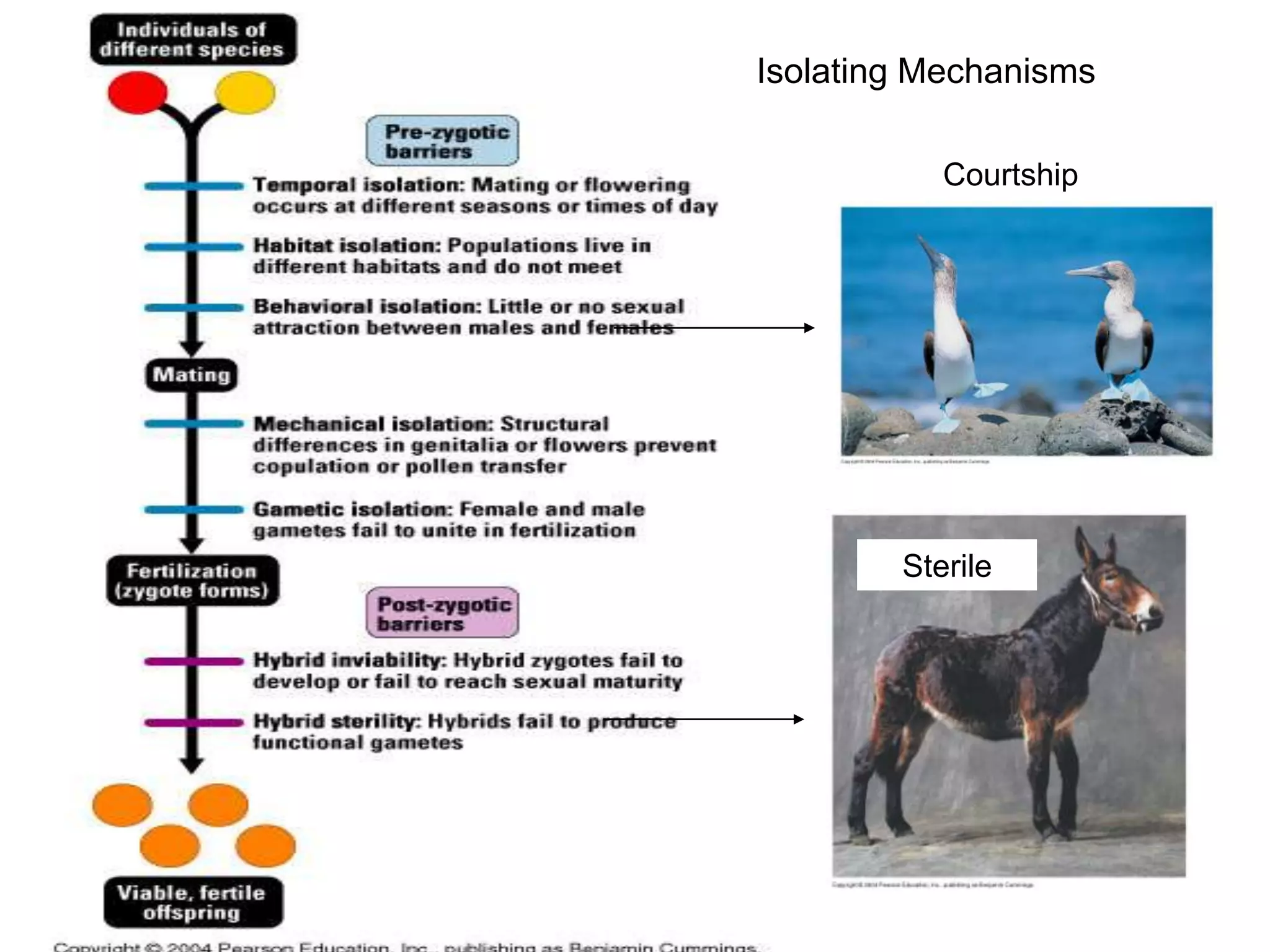
Isolating Mechanisms

           Courtship


        Sterile
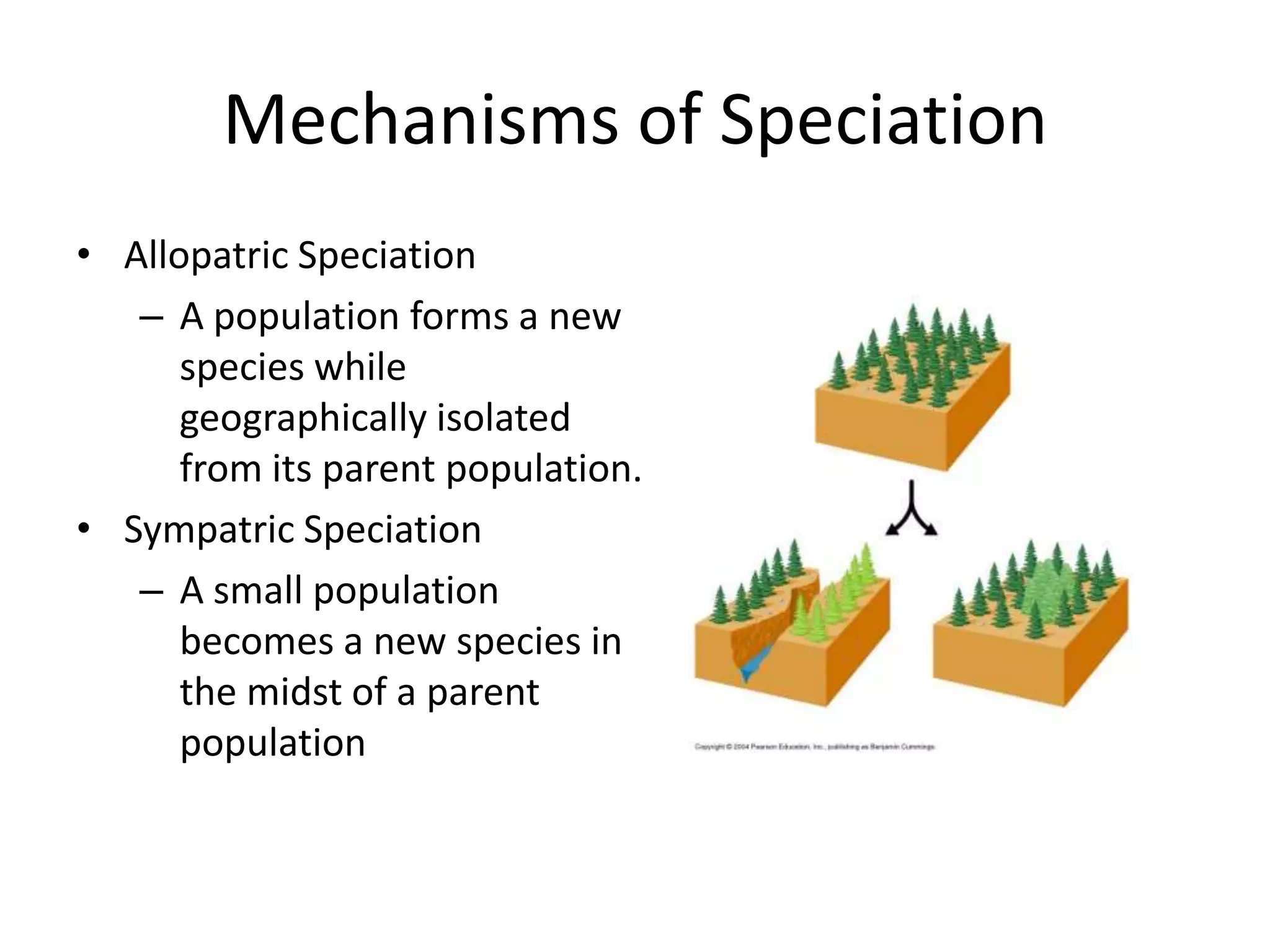
Mechanisms of Speciation
• Allopatric Speciation
   – A population forms a new
      species while
      geographically isolated
      from its parent population.
• Sympatric Speciation
   – A small population
      becomes a new species in
      the midst of a parent
      population
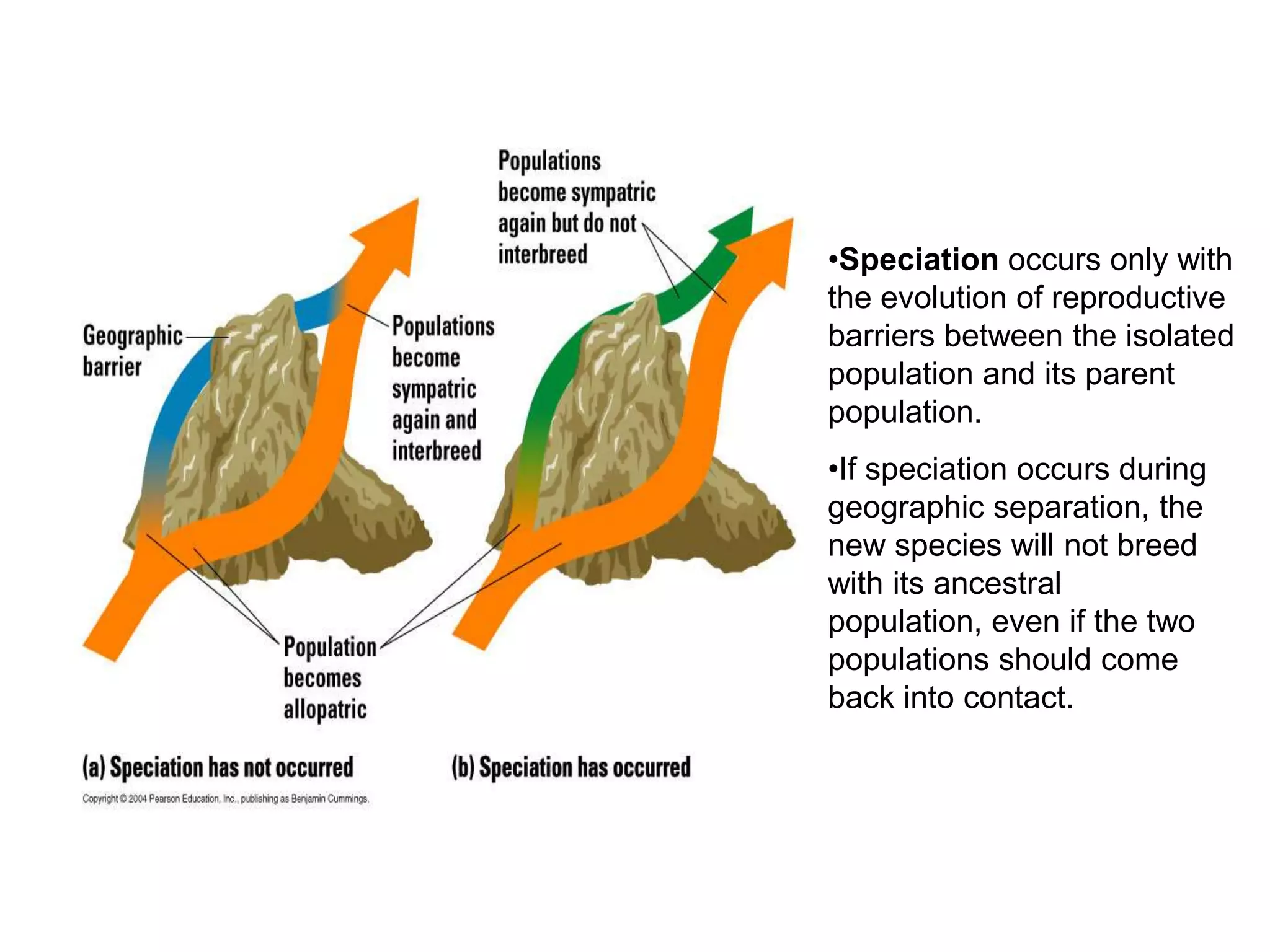
•Speciation occurs only with
the evolution of reproductive
barriers between the isolated
population and its parent
population.
•If speciation occurs during
geographic separation, the
new species will not breed
with its ancestral
population, even if the two
populations should come
back into contact.
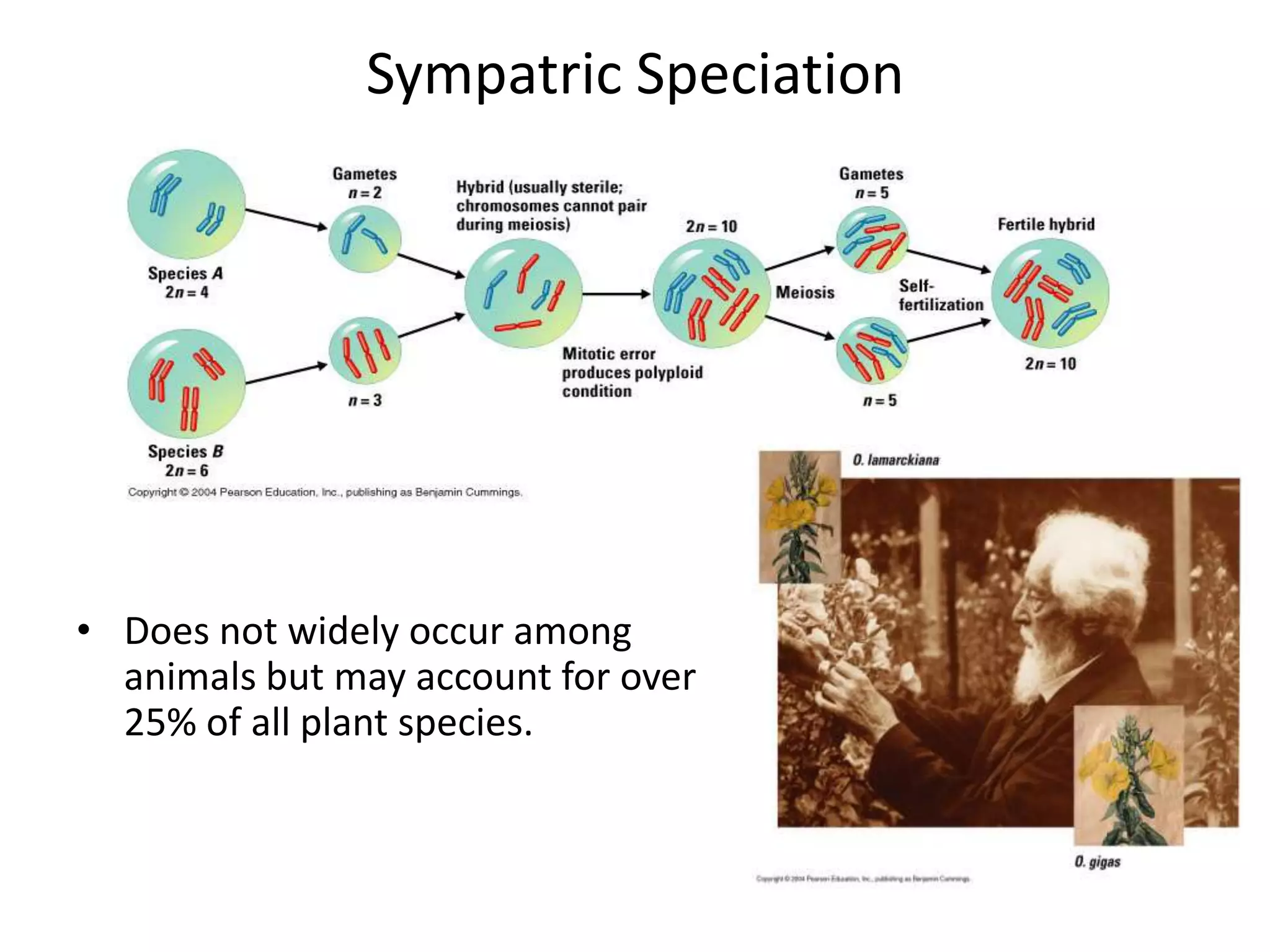
Sympatric Speciation


• Does not widely occur among
  animals but may account for over
  25% of all plant species.
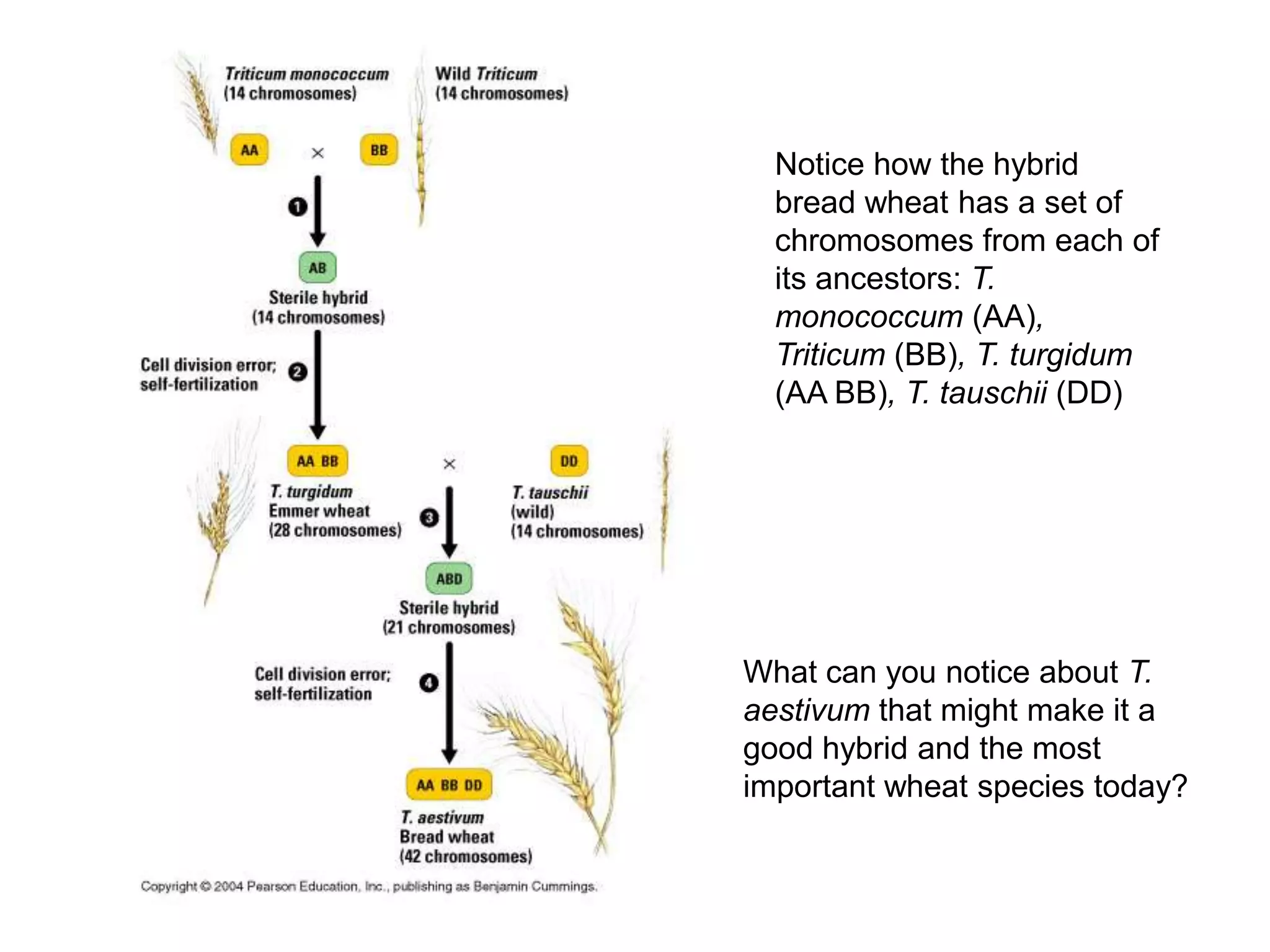
Notice how the hybrid
  bread wheat has a set of
  chromosomes from each of
  its ancestors: T.
  monococcum (AA),
  Triticum (BB), T. turgidum
  (AA BB), T. tauschii (DD)


What can you notice about T.
aestivum that might make it a
good hybrid and the most
important wheat species today?
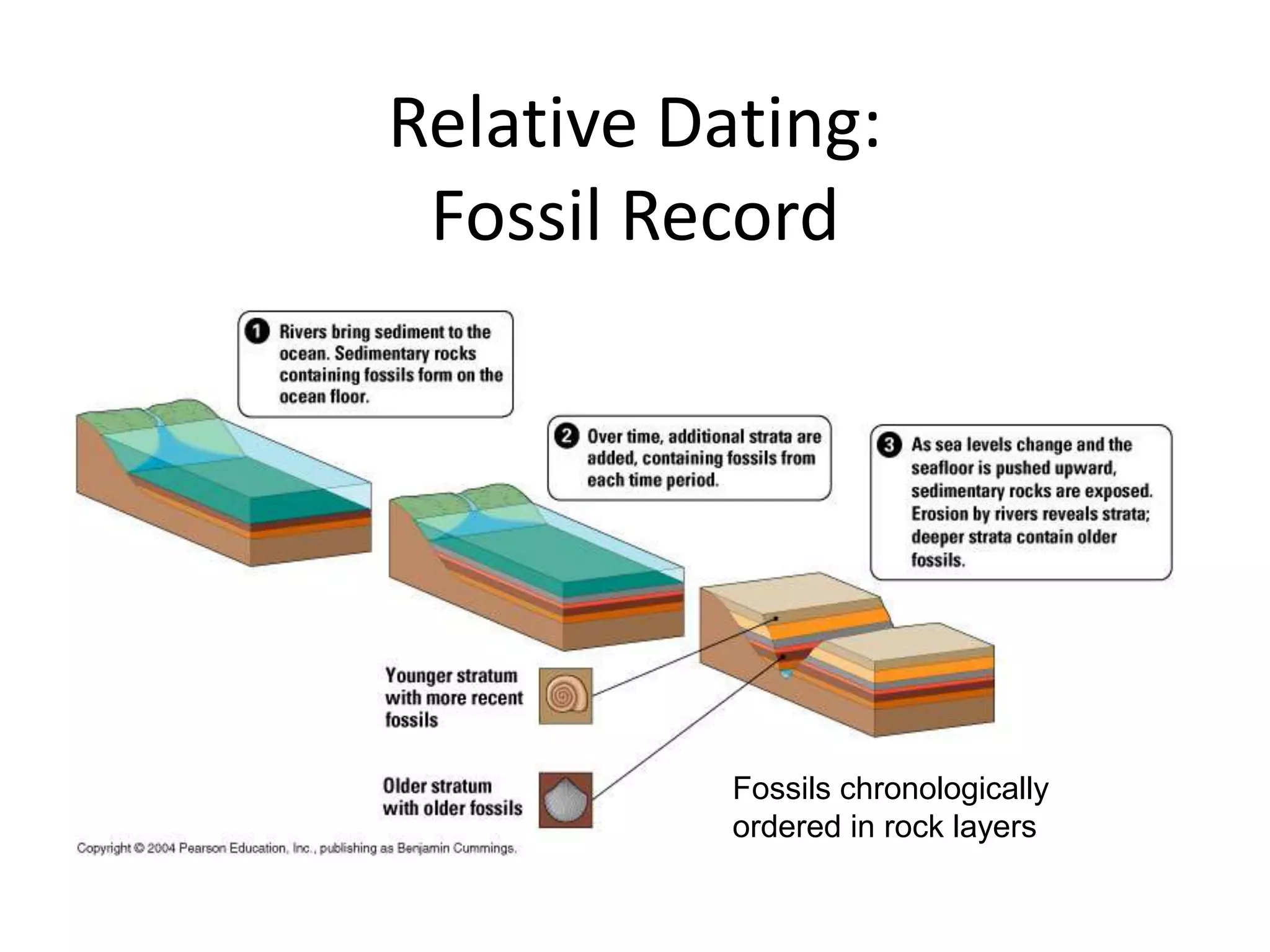
Relative Dating:
 Fossil Record


           Fossils chronologically
           ordered in rock layers
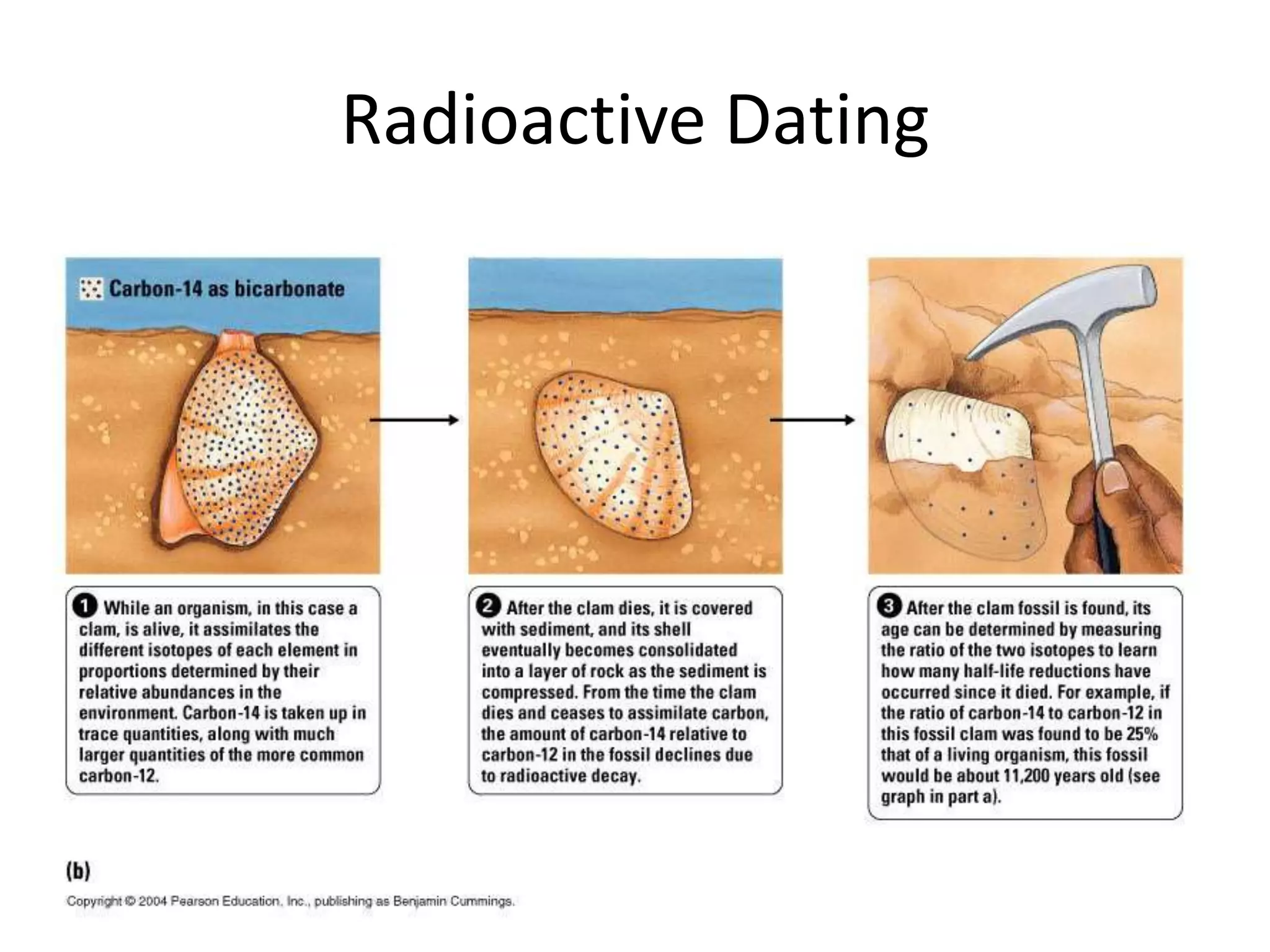
Radioactive Dating
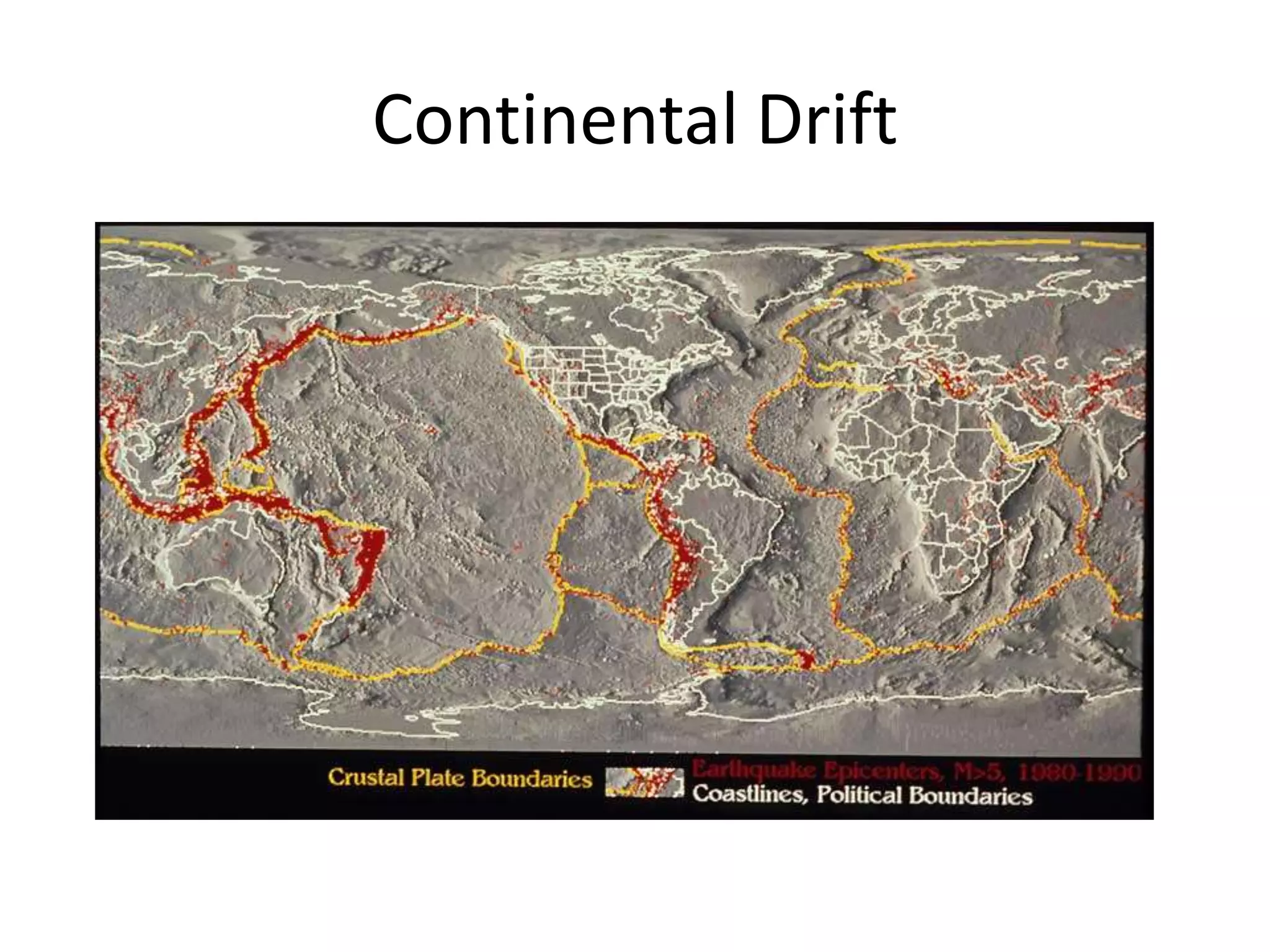
Continental Drift
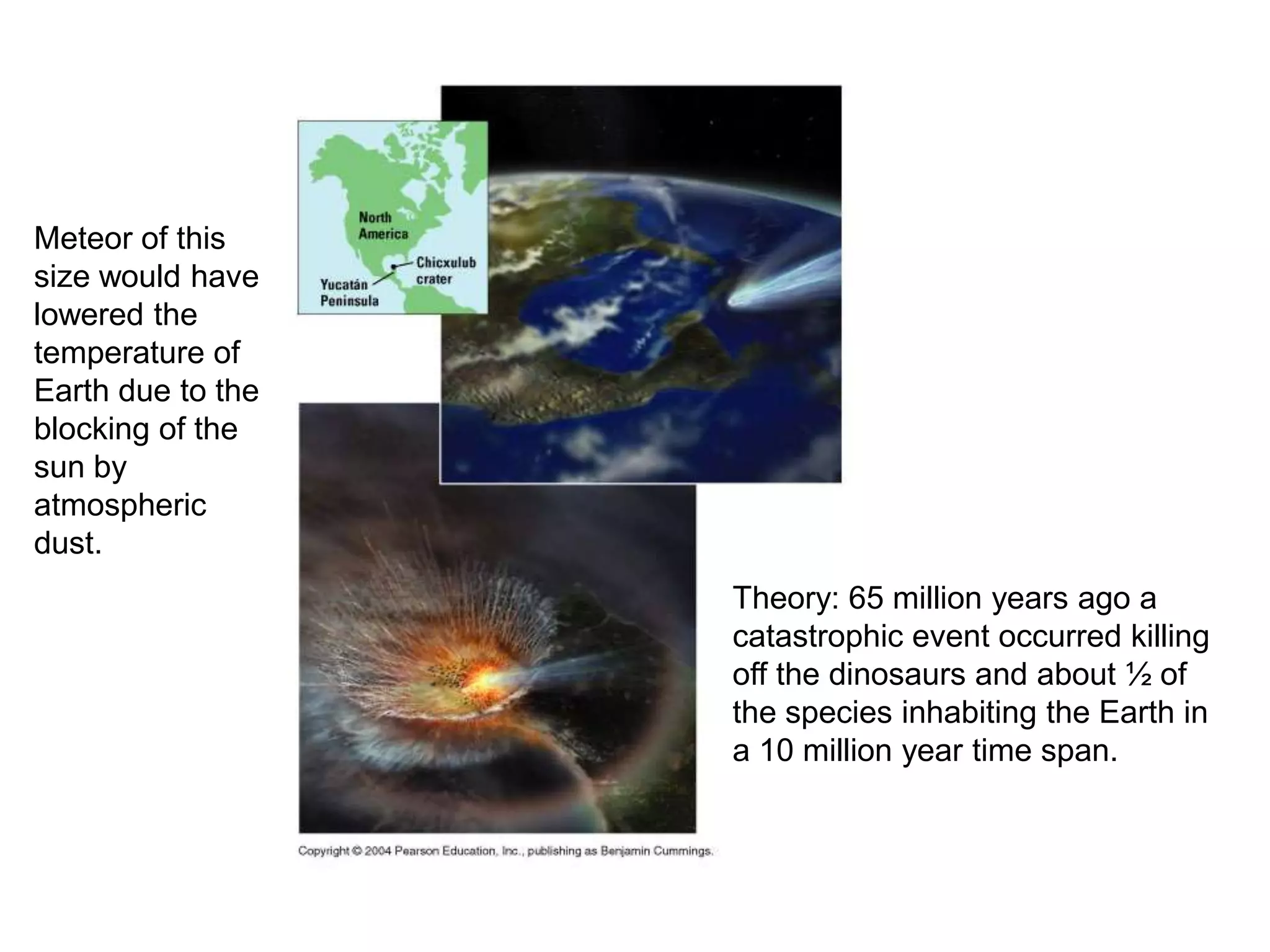
Meteor of this
size would have
lowered the
temperature of
Earth due to the
blocking of the
sun by
atmospheric
dust.
                   Theory: 65 million years ago a
                   catastrophic event occurred killing
                   off the dinosaurs and about ½ of
                   the species inhabiting the Earth in
                   a 10 million year time span.
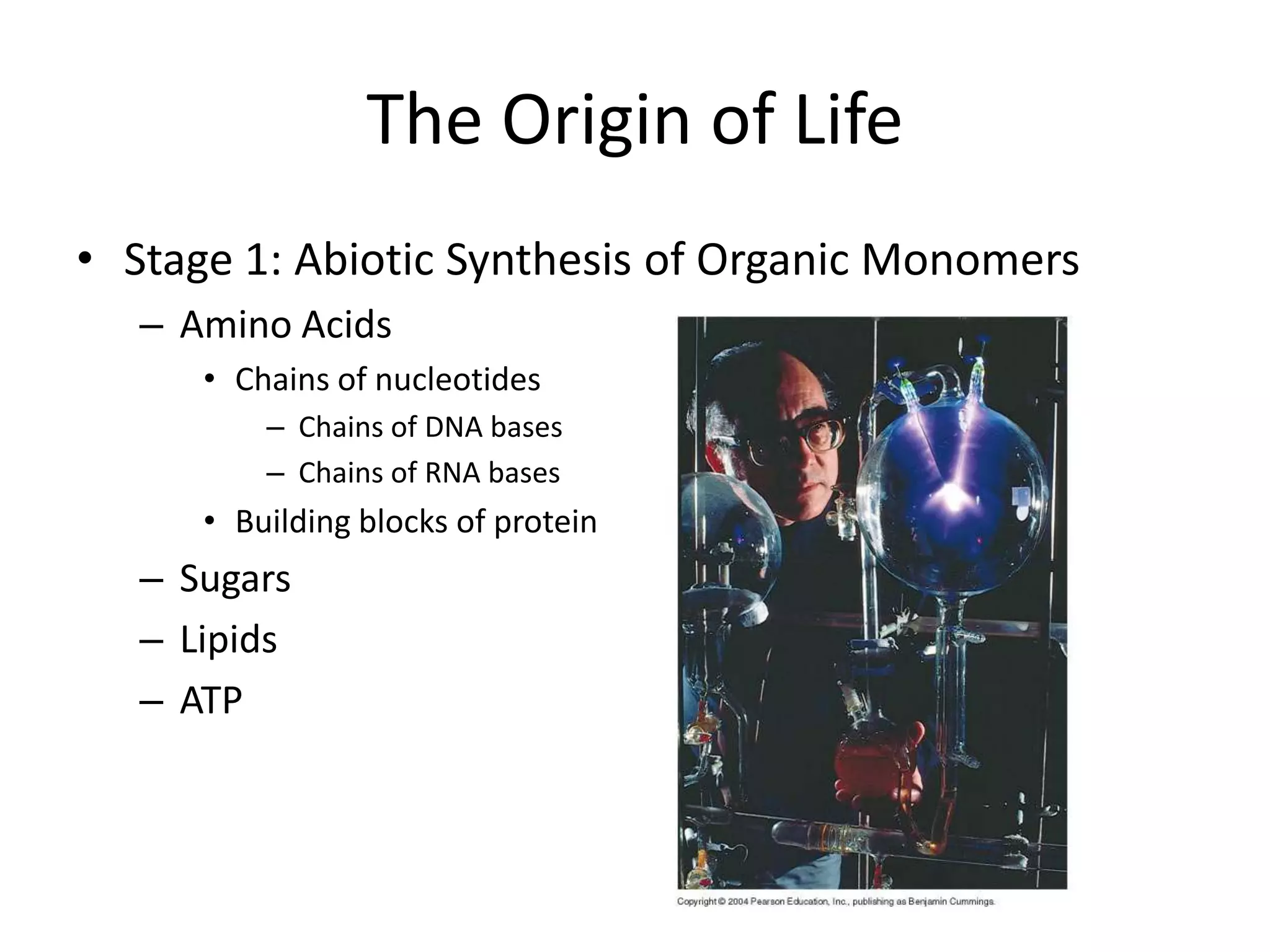
The Origin of Life
• Stage 1: Abiotic Synthesis of Organic Monomers
   – Amino Acids
      • Chains of nucleotides
          – Chains of DNA bases
          – Chains of RNA bases
      • Building blocks of protein
   – Sugars
   – Lipids
   – ATP
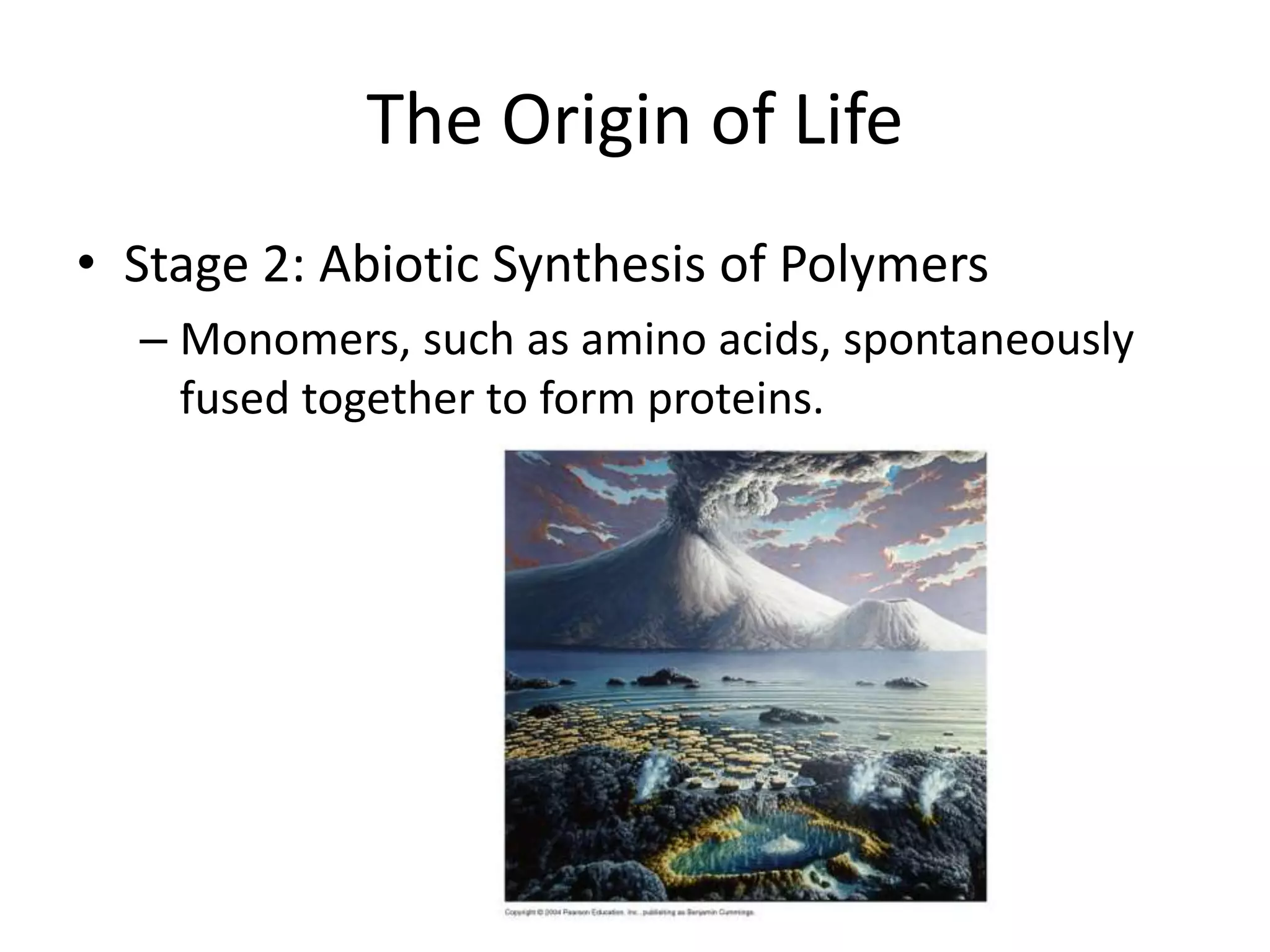
The Origin of Life
• Stage 2: Abiotic Synthesis of Polymers
  – Monomers, such as amino acids, spontaneously
    fused together to form proteins.
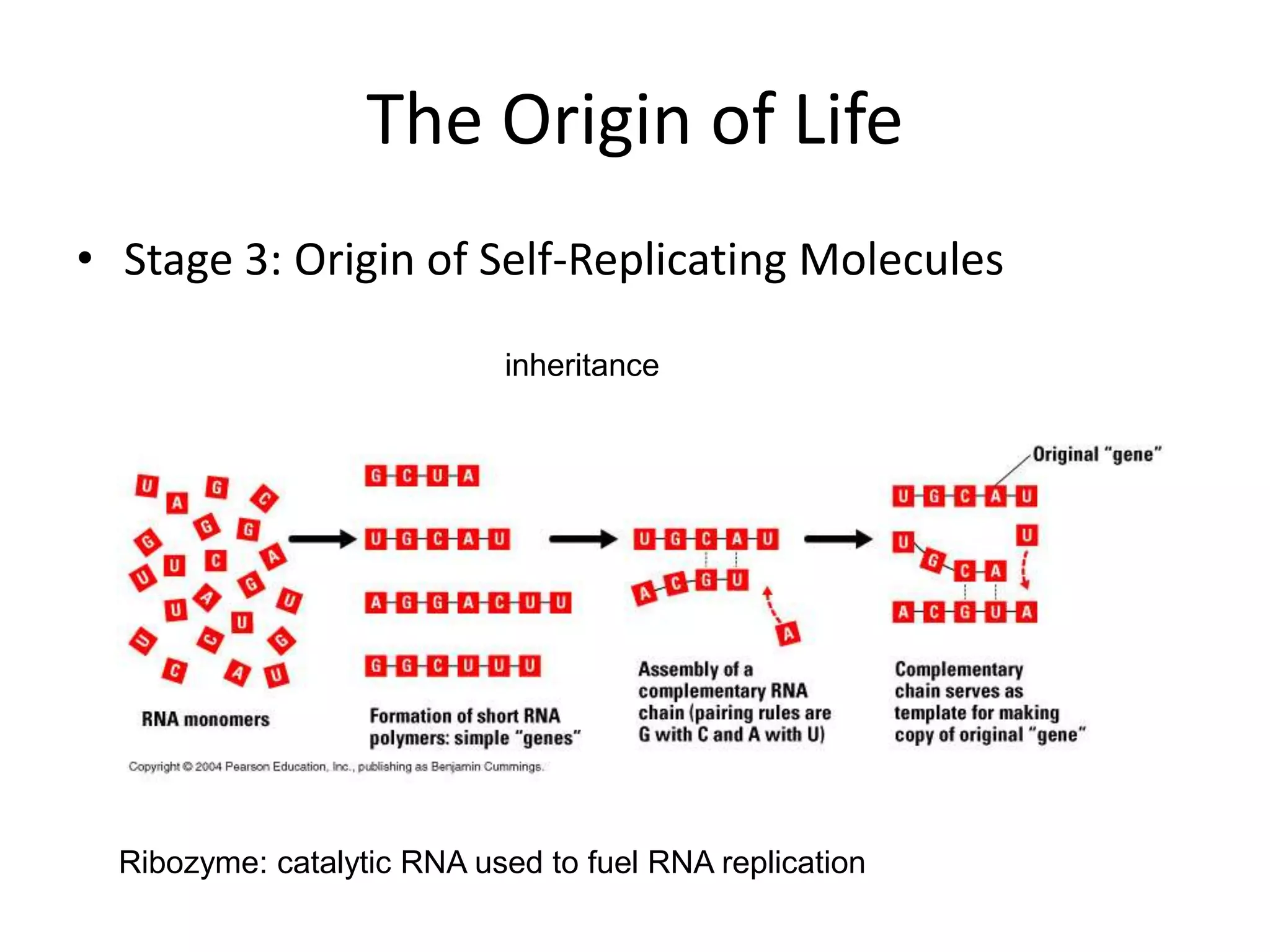
The Origin of Life
• Stage 3: Origin of Self-Replicating Molecules

                            inheritance


  Ribozyme: catalytic RNA used to fuel RNA replication
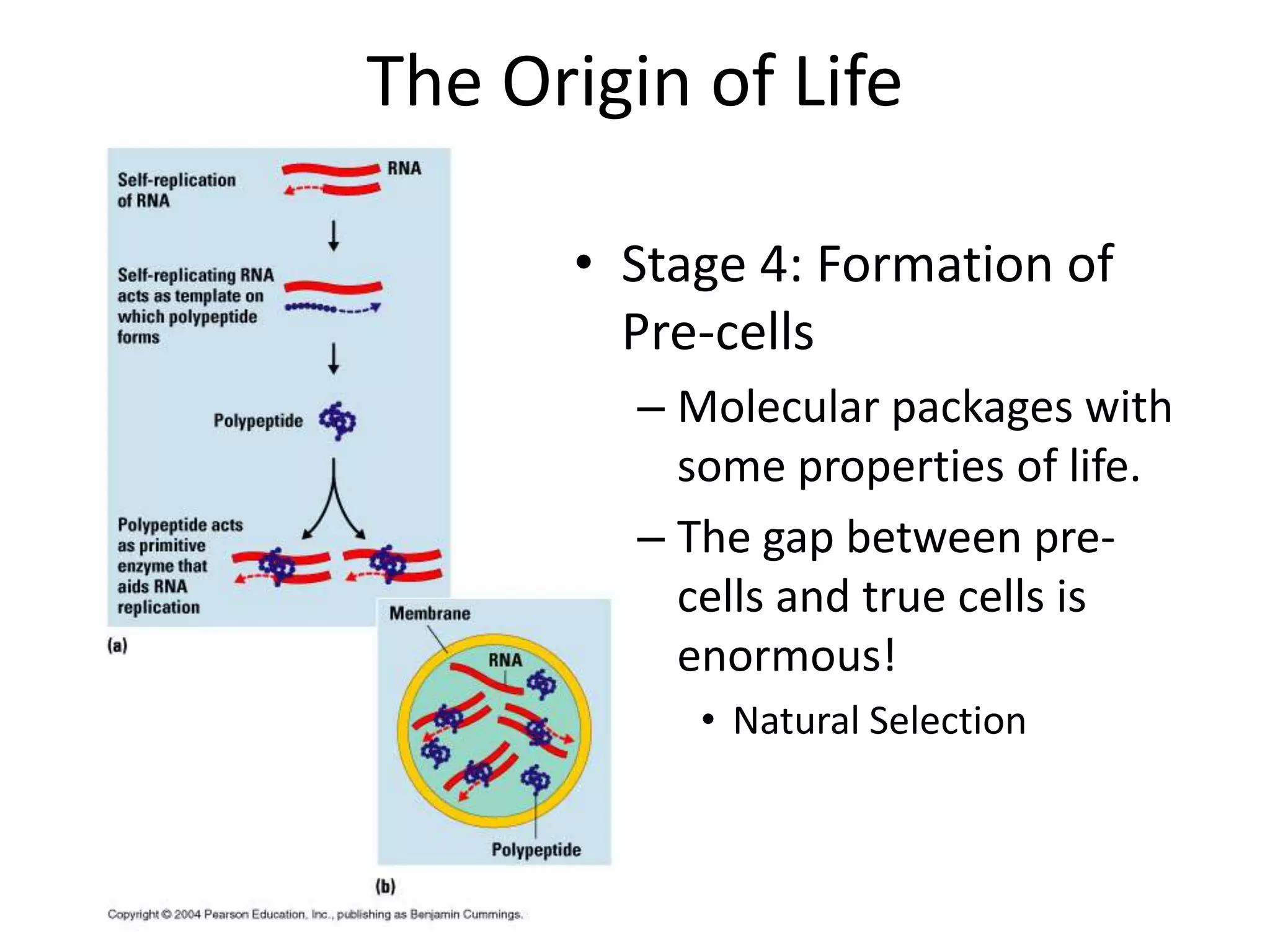
The Origin of Life

      • Stage 4: Formation of
        Pre-cells
         – Molecular packages with
           some properties of life.
         – The gap between pre-
           cells and true cells is
           enormous!
            • Natural Selection
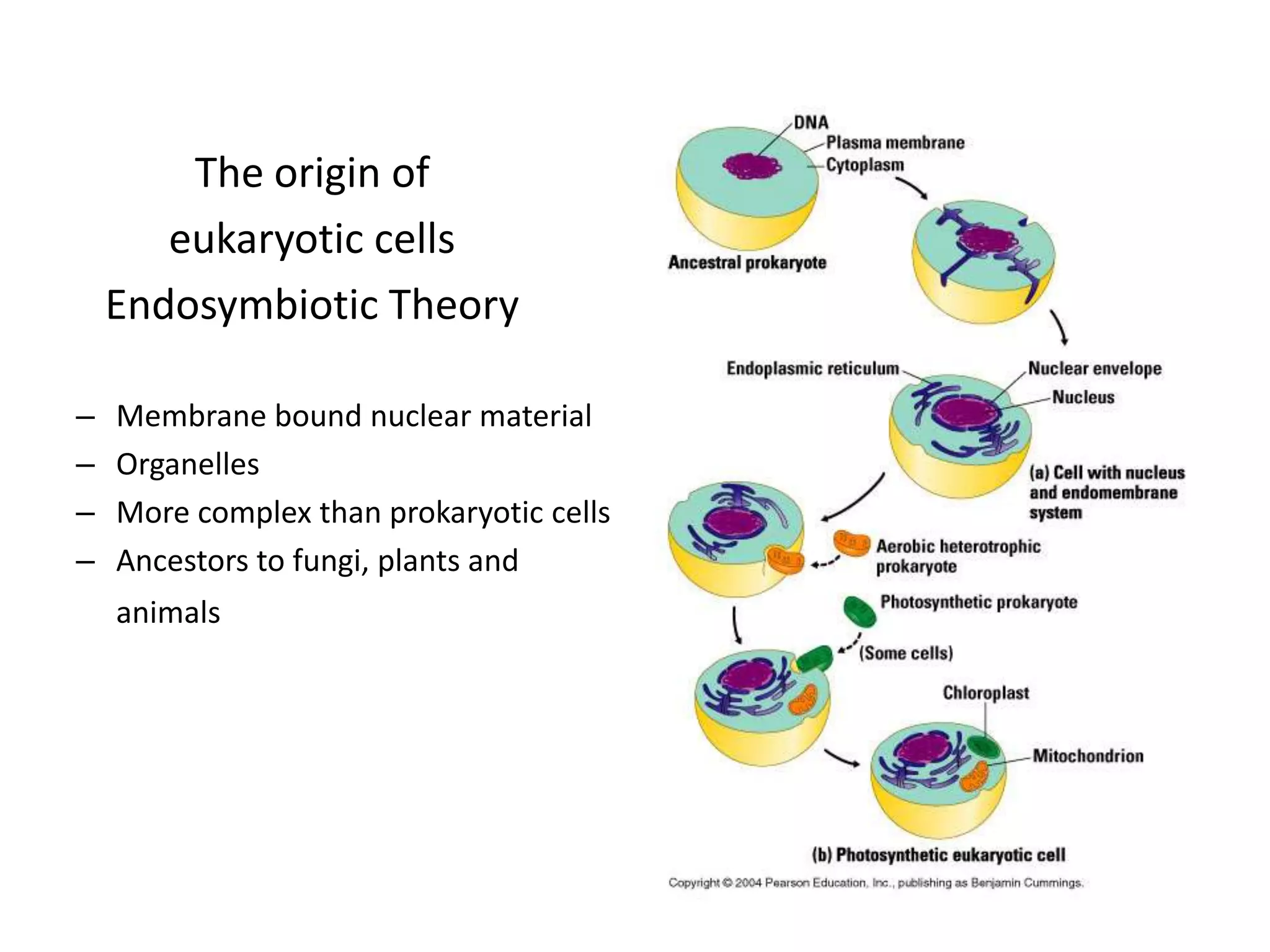
The origin of
       eukaryotic cells
    Endosymbiotic Theory

–   Membrane bound nuclear material
–   Organelles
–   More complex than prokaryotic cells
–   Ancestors to fungi, plants and
    animals
Concept Map
Section 17-2
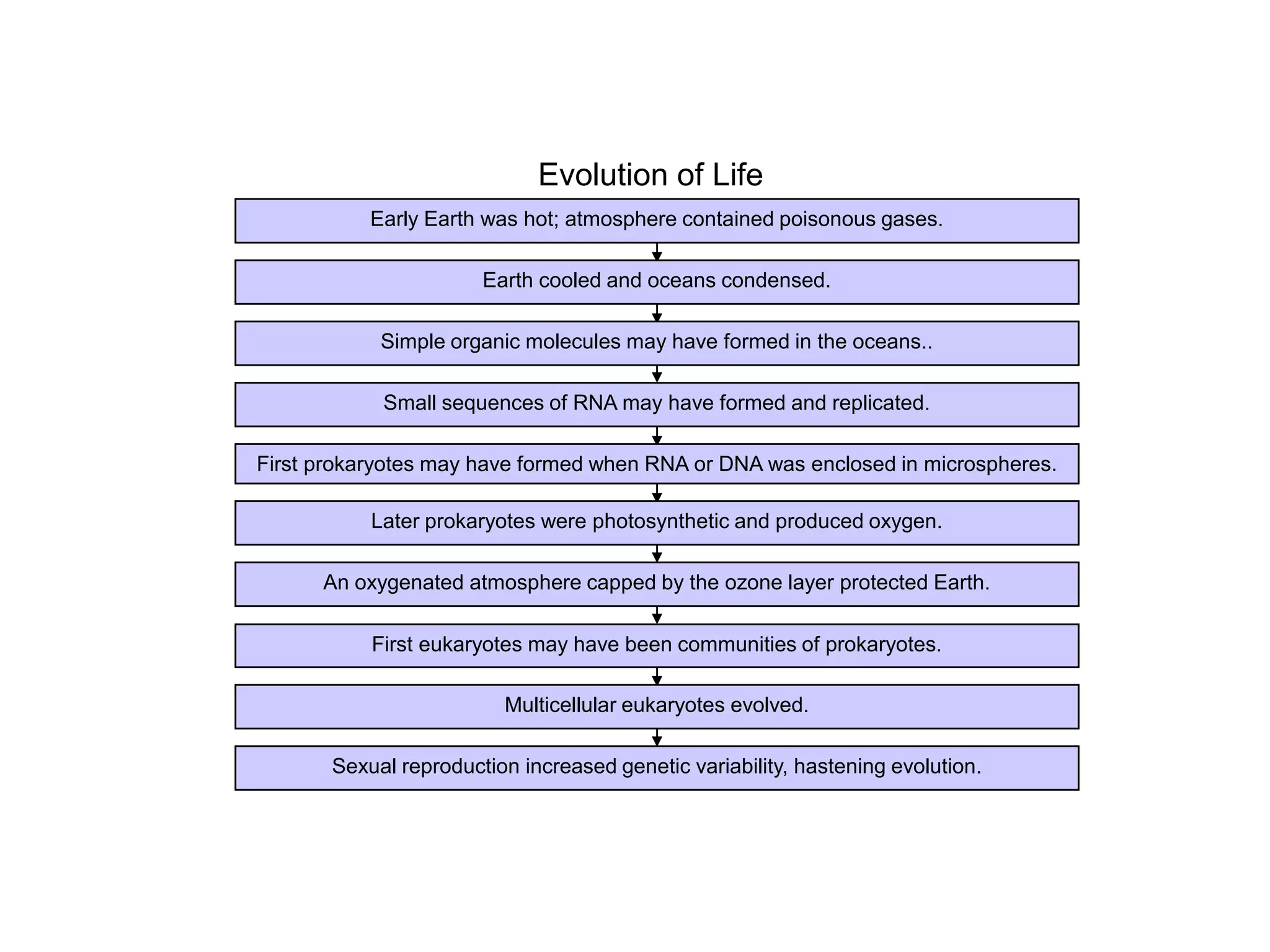
                                      Evolution of Life
                    Early Earth was hot; atmosphere contained poisonous gases.

                                Earth cooled and oceans condensed.

                     Simple organic molecules may have formed in the oceans..

                     Small sequences of RNA may have formed and replicated.

         First prokaryotes may have formed when RNA or DNA was enclosed in microspheres.

                    Later prokaryotes were photosynthetic and produced oxygen.

               An oxygenated atmosphere capped by the ozone layer protected Earth.

                    First eukaryotes may have been communities of prokaryotes.

                                  Multicellular eukaryotes evolved.

                Sexual reproduction increased genetic variability, hastening evolution.
Convergent Evolution
• Process by which unrelated animals come to
  look like each other.

• Dolphin
• Penguin
• Shark
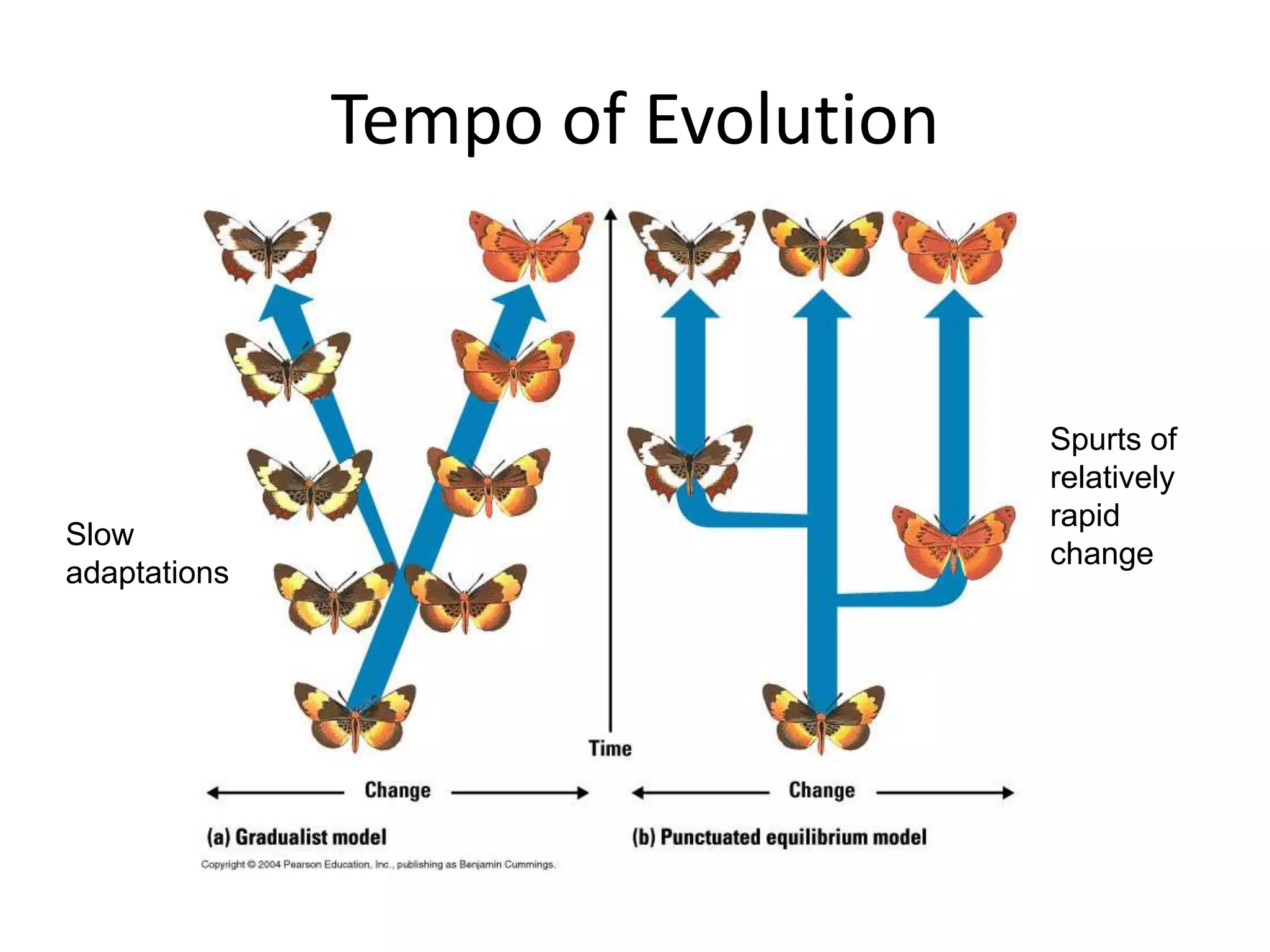
Tempo of Evolution


                                   Spurts of
                                   relatively
                                   rapid
Slow
                                   change
adaptations
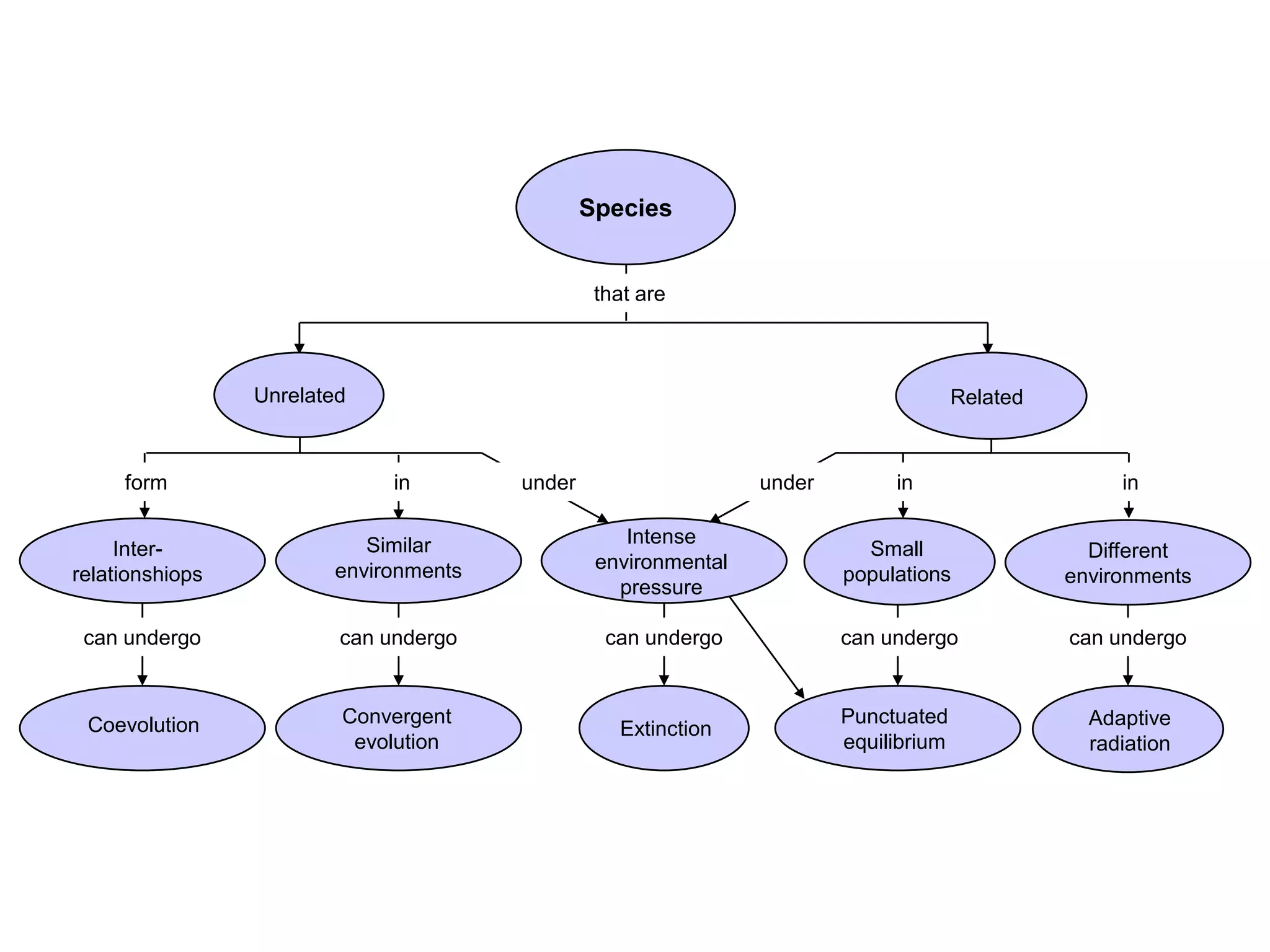
Flowchart
      Section 17-4


                                               Species


                                                that are


                 Unrelated                                                            Related


     form                     in       under                    under        in                      in

                           Similar                 Intense
     Inter-                                                               Small                   Different
                        environments            environmental
relationshiops                                                          populations             environments
                                                  pressure

 can undergo             can undergo             can undergo            can undergo             can undergo


 Coevolution             Convergent                                     Punctuated                Adaptive
                                                  Extinction
                          evolution                                     equilibrium               radiation
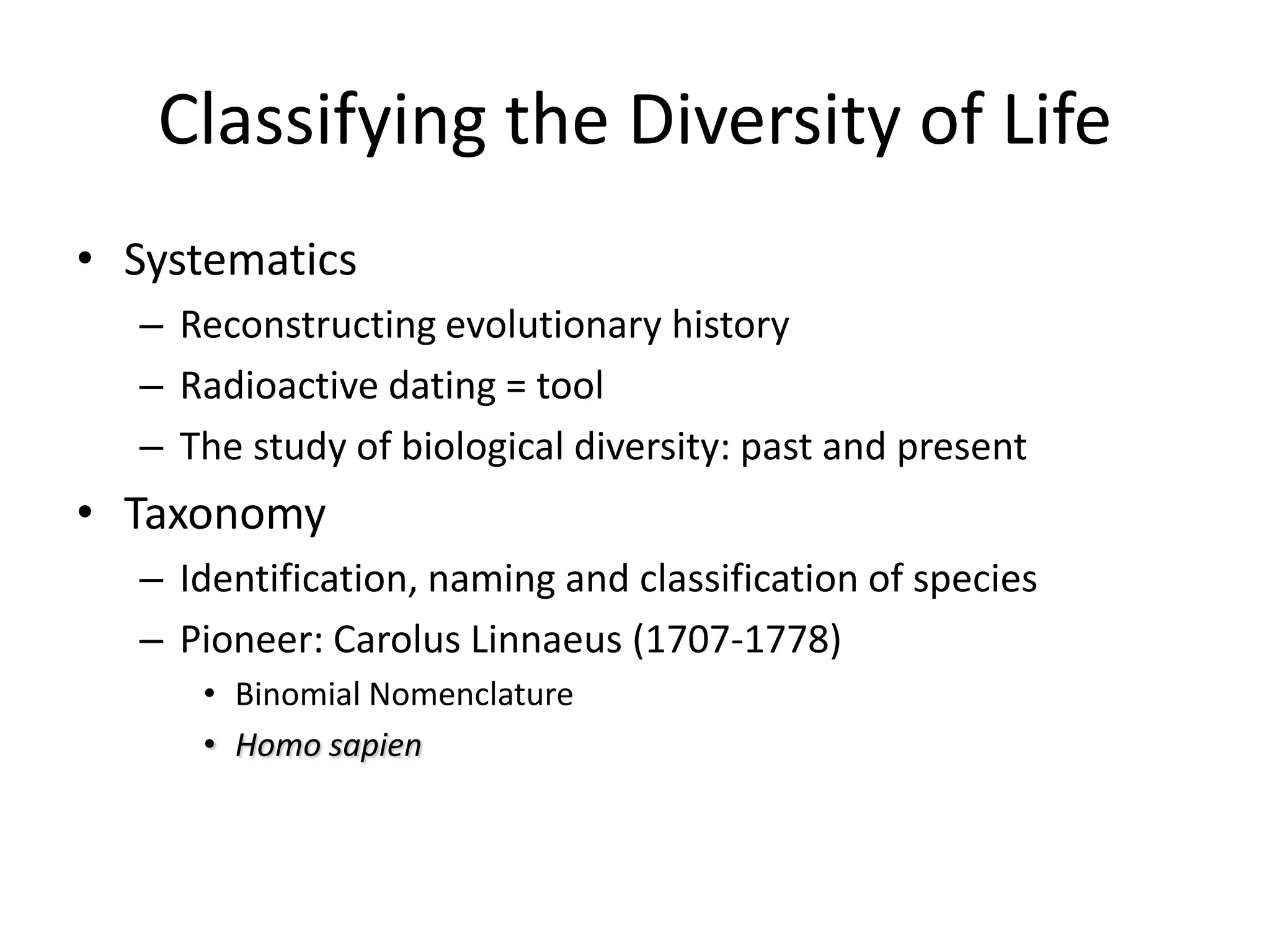
Classifying the Diversity of Life
• Systematics
  – Reconstructing evolutionary history
  – Radioactive dating = tool
  – The study of biological diversity: past and present
• Taxonomy
  – Identification, naming and classification of species
  – Pioneer: Carolus Linnaeus (1707-1778)
     • Binomial Nomenclature
     • Homo sapien
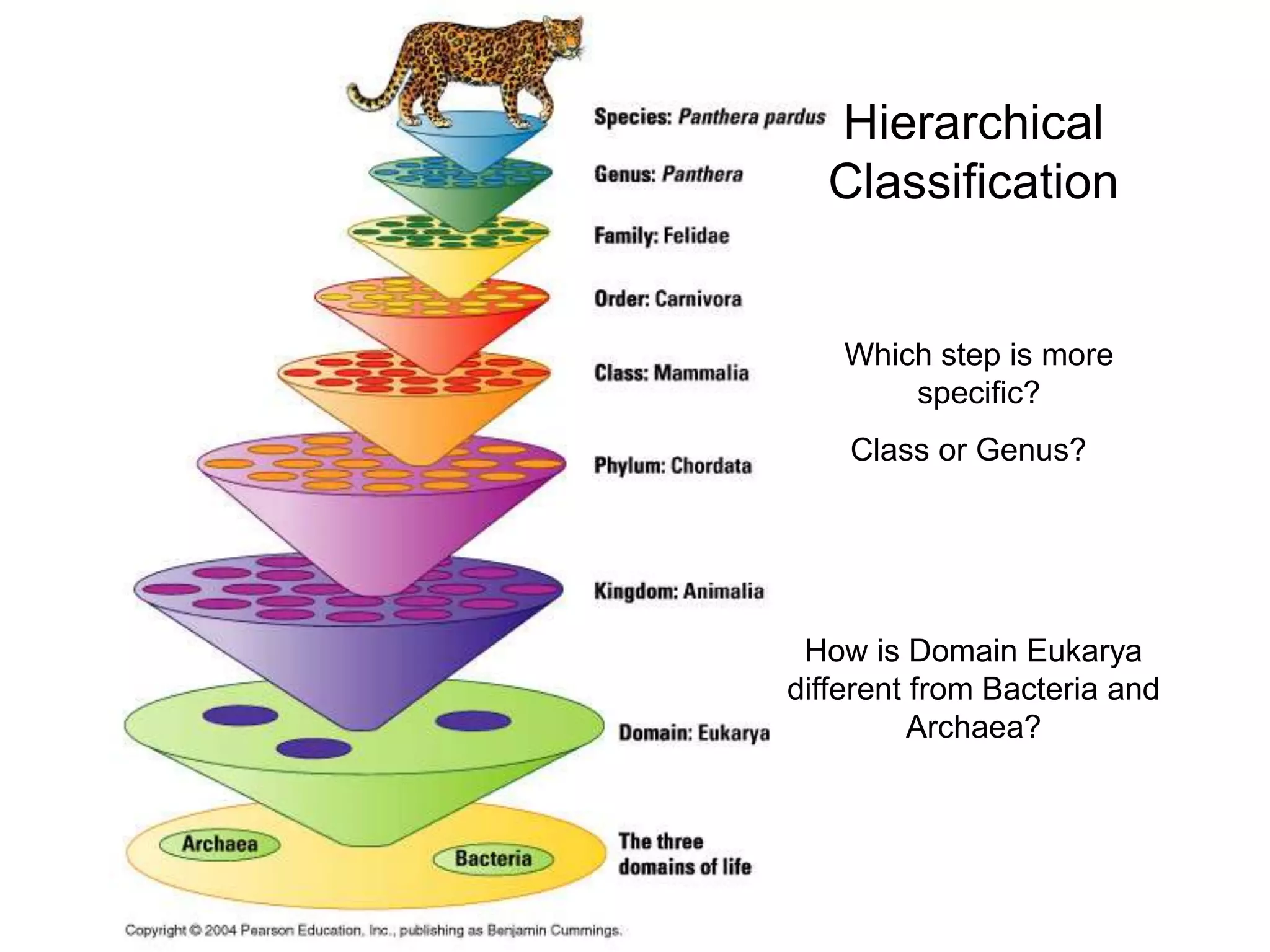
Hierarchical
  Classification


    Which step is more
        specific?
    Class or Genus?


 How is Domain Eukarya
different from Bacteria and
          Archaea?
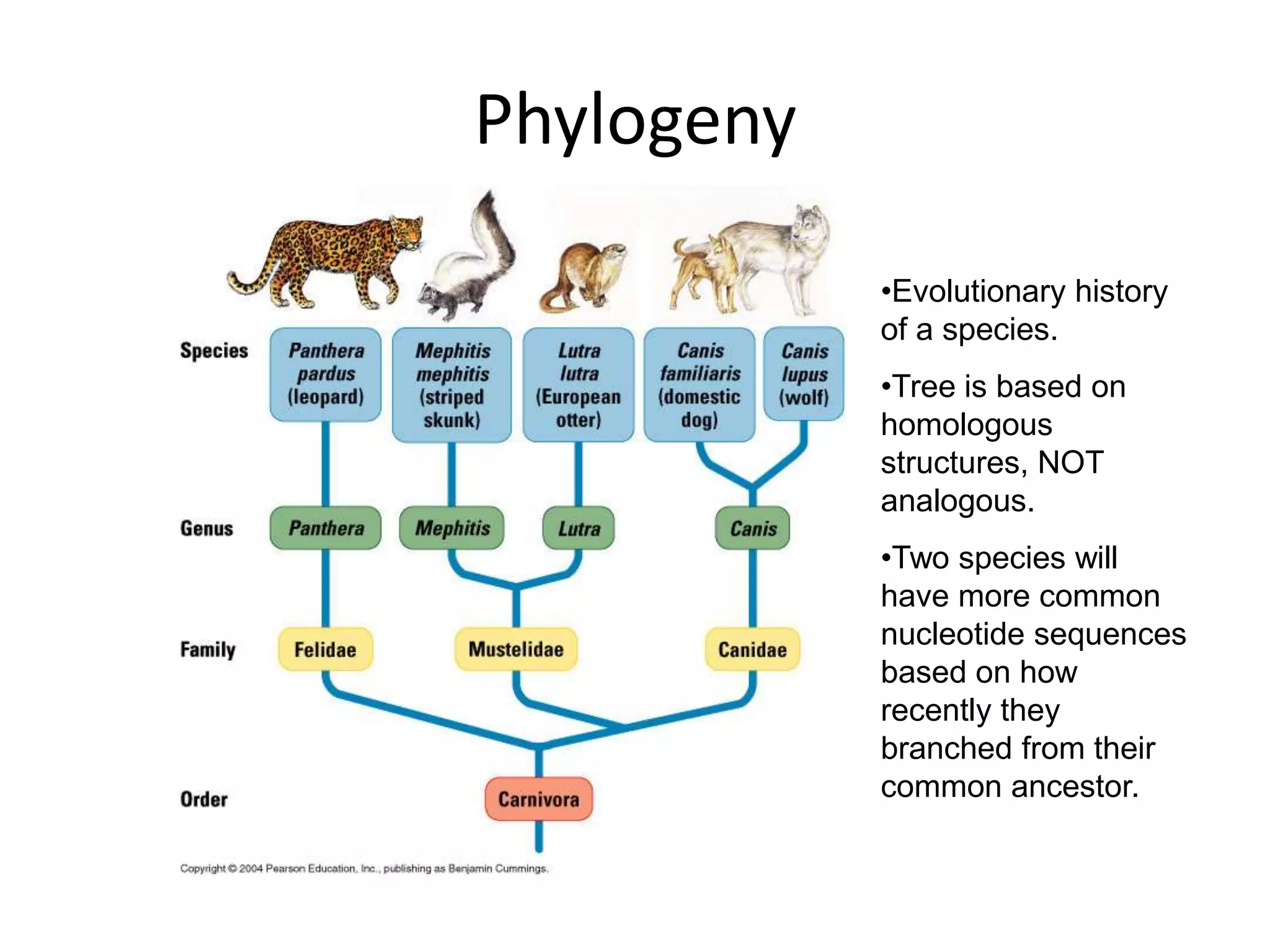
Phylogeny

            •Evolutionary history
            of a species.
            •Tree is based on
            homologous
            structures, NOT
            analogous.
            •Two species will
            have more common
            nucleotide sequences
            based on how
            recently they
            branched from their
            common ancestor.
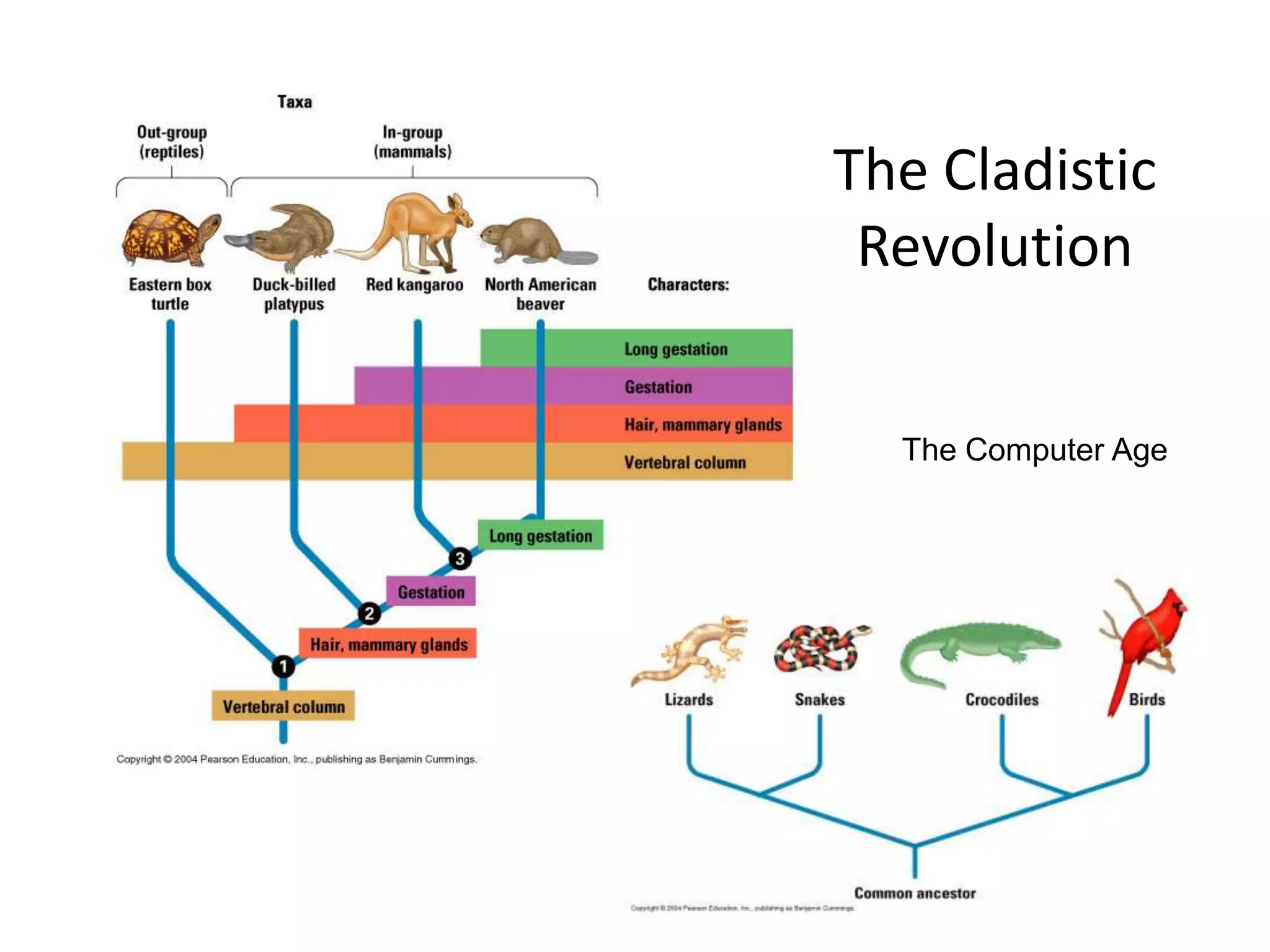
The Cladistic
 Revolution


  The Computer Age
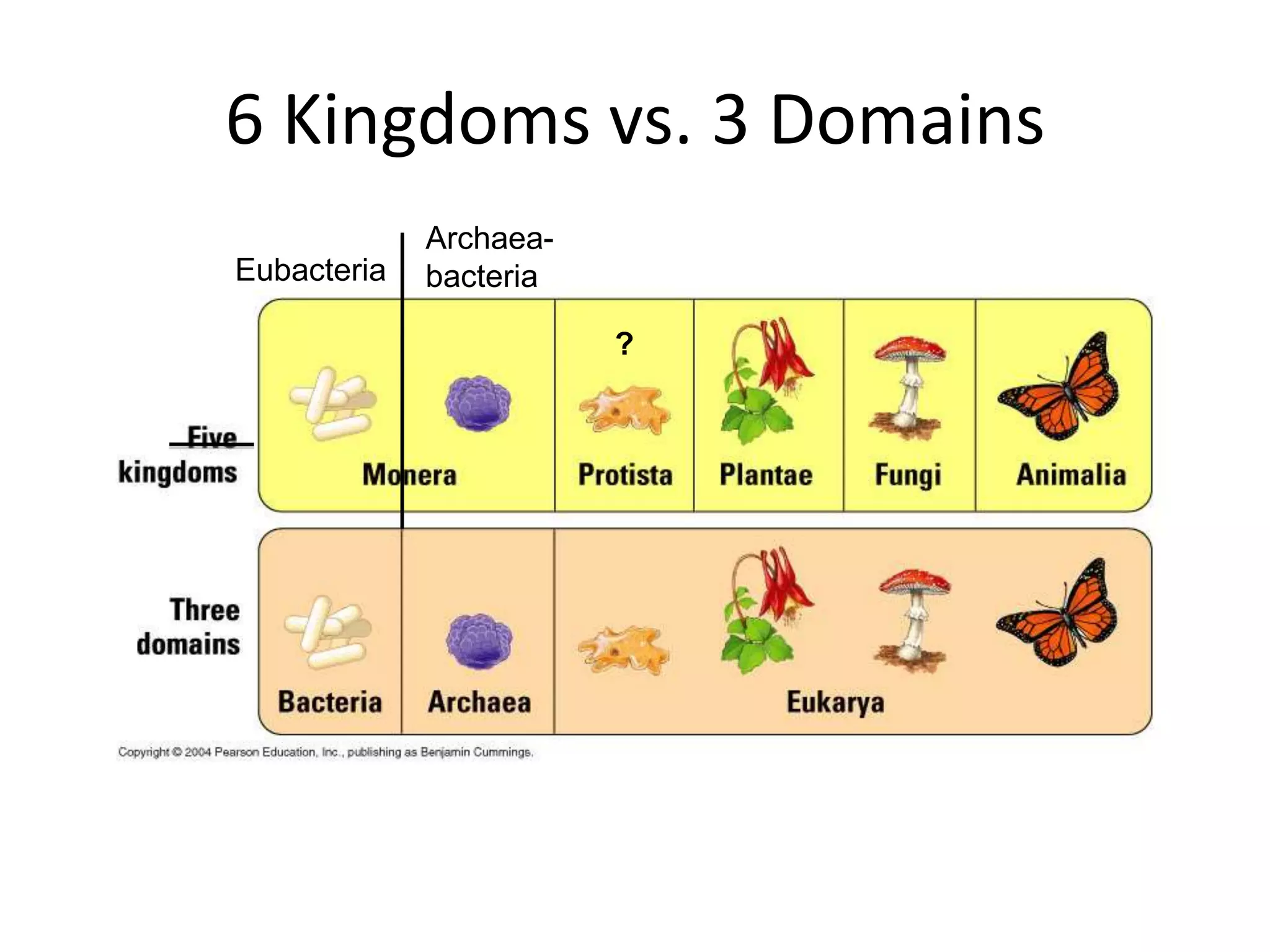
6 Kingdoms vs. 3 Domains
             Archaea-
Eubacteria   bacteria

                        ?

Evolutionary Theory

  • 1.
    Evolution = “Descentwith Modification” 1. Organisms evolved due to being spread over different habitats and therefore adapting and modifying themselves to fit the habitat. 2. Natural Selection • A population of organisms can change over generations if certain inheritable traits leave more offspring than others and those others get the chance to reproduce and continue the lineage. • Evolutionary Adaptation
  • 2.
  • 3.
  • 4.
    Evidence of Evolution: Fossil Record Fossils chronologically ordered in rock layers
  • 5.
    Evidence of Evolution: Biogeography Geographic distribution of species: Australian marsupials
  • 6.
    HOMOLOGY Evidence of Evolution: Comparative Anatomy and Embryology
  • 7.
    Evidence of Evolution: Molecular Biology Notice that a Chimp is more genetically related to a human than to an Old World Monkey!
  • 8.
    Adaptive Evolution NaturalSelection = Editing The finches of The Galapagos Islands: The original finch developed into 14 different species. What was the cause for the offshoots?
  • 9.
    Darwinism Meets Genetics •A population is the smallest unit of evolution. – Natural selection acts on individuals. – However the evolutionary impact of natural selection is only apparent in tracking how a population changes over time. • Population Genetics emphasizes the extensive genetic variation within populations and tracks the genetic make-up of populations over time. – Not all variation in a population is inheritable. – Only the genetic component of variation is relevant to natural selection. – Many variable traits in a population result from the combined effect of several genes. Polymorphism
  • 10.
    Microevolution 1. Genetic Drift Def: A change in the gene pool of a small population due to chance. The best measure of Darwinian fitness is the number of fertile offspring an individual leaves.
  • 11.
    Genetic equilibrium- allelefrequencies remain constant. To maintain at equilibrium… 1.Random mating 2.Population must be very large 3.No immigration or emigration 4.No mutations 5.No natural selection
  • 12.
    Microevolution Cont. 2. GeneFlow Def: The genetic exchange with another population. 3. Mutations – A change in an organism’s DNA sequence. – Ultimate source of genetic variability. 4. Natural Selection – Directional Selection (selecting in favor of an extreme phenotype) – Disruptive (Diversifying) Selection (leads to a balance between two or more contrasting phenotypic forms) – Stabilizing Selection (maintains variation in a narrow range)
  • 13.
    •Resistant Genes •Immediate Benefits •Long term Disaster •Evolution direct connection to daily lives
  • 14.
    Macroevolution • Def: Majorbiological changes evident in fossil record. • CONTRAST: MICROEVOLUTION • Speciation – Nonbranching evolution (transform a population enough for it to be designated a new species.) – Branching evolution (splits a lineage into two or more species)
  • 15.
    The Origins ofSpecies • Ernst Mayr – Studied the diversity of birds in New Guinea (1927) – Biological species concept • Species = “groups of interbreeding natural populations that are reproductively isolated from other such groups.” • Reproductive isolation blocks exchange of genes between species and keeps their gene pools separate. • Reproductive barriers between species • Zygote: fertilized egg • Pre-zygotic (factors that impede mating between species or hinder fertilization of eggs if mating is attempted) • Post-zygotic (mechanisms that operate should interspecies mating actually occur and form hybrid zygotes)
  • 16.
    Isolating Mechanisms Courtship Sterile
  • 17.
    Mechanisms of Speciation •Allopatric Speciation – A population forms a new species while geographically isolated from its parent population. • Sympatric Speciation – A small population becomes a new species in the midst of a parent population
  • 18.
    •Speciation occurs onlywith the evolution of reproductive barriers between the isolated population and its parent population. •If speciation occurs during geographic separation, the new species will not breed with its ancestral population, even if the two populations should come back into contact.
  • 19.
    Sympatric Speciation • Doesnot widely occur among animals but may account for over 25% of all plant species.
  • 20.
    Notice how thehybrid bread wheat has a set of chromosomes from each of its ancestors: T. monococcum (AA), Triticum (BB), T. turgidum (AA BB), T. tauschii (DD) What can you notice about T. aestivum that might make it a good hybrid and the most important wheat species today?
  • 21.
    Relative Dating: FossilRecord Fossils chronologically ordered in rock layers
  • 22.
  • 24.
  • 25.
    Meteor of this sizewould have lowered the temperature of Earth due to the blocking of the sun by atmospheric dust. Theory: 65 million years ago a catastrophic event occurred killing off the dinosaurs and about ½ of the species inhabiting the Earth in a 10 million year time span.
  • 26.
    The Origin ofLife • Stage 1: Abiotic Synthesis of Organic Monomers – Amino Acids • Chains of nucleotides – Chains of DNA bases – Chains of RNA bases • Building blocks of protein – Sugars – Lipids – ATP
  • 27.
    The Origin ofLife • Stage 2: Abiotic Synthesis of Polymers – Monomers, such as amino acids, spontaneously fused together to form proteins.
  • 28.
    The Origin ofLife • Stage 3: Origin of Self-Replicating Molecules inheritance Ribozyme: catalytic RNA used to fuel RNA replication
  • 29.
    The Origin ofLife • Stage 4: Formation of Pre-cells – Molecular packages with some properties of life. – The gap between pre- cells and true cells is enormous! • Natural Selection
  • 30.
    The origin of eukaryotic cells Endosymbiotic Theory – Membrane bound nuclear material – Organelles – More complex than prokaryotic cells – Ancestors to fungi, plants and animals
  • 31.
    Concept Map Section 17-2 Evolution of Life Early Earth was hot; atmosphere contained poisonous gases. Earth cooled and oceans condensed. Simple organic molecules may have formed in the oceans.. Small sequences of RNA may have formed and replicated. First prokaryotes may have formed when RNA or DNA was enclosed in microspheres. Later prokaryotes were photosynthetic and produced oxygen. An oxygenated atmosphere capped by the ozone layer protected Earth. First eukaryotes may have been communities of prokaryotes. Multicellular eukaryotes evolved. Sexual reproduction increased genetic variability, hastening evolution.
  • 32.
    Convergent Evolution • Processby which unrelated animals come to look like each other. • Dolphin • Penguin • Shark
  • 33.
    Tempo of Evolution Spurts of relatively rapid Slow change adaptations
  • 34.
    Flowchart Section 17-4 Species that are Unrelated Related form in under under in in Similar Intense Inter- Small Different environments environmental relationshiops populations environments pressure can undergo can undergo can undergo can undergo can undergo Coevolution Convergent Punctuated Adaptive Extinction evolution equilibrium radiation
  • 35.
    Classifying the Diversityof Life • Systematics – Reconstructing evolutionary history – Radioactive dating = tool – The study of biological diversity: past and present • Taxonomy – Identification, naming and classification of species – Pioneer: Carolus Linnaeus (1707-1778) • Binomial Nomenclature • Homo sapien
  • 36.
    Hierarchical Classification Which step is more specific? Class or Genus? How is Domain Eukarya different from Bacteria and Archaea?
  • 37.
    Phylogeny •Evolutionary history of a species. •Tree is based on homologous structures, NOT analogous. •Two species will have more common nucleotide sequences based on how recently they branched from their common ancestor.
  • 38.
    The Cladistic Revolution The Computer Age
  • 39.
    6 Kingdoms vs.3 Domains Archaea- Eubacteria bacteria ?