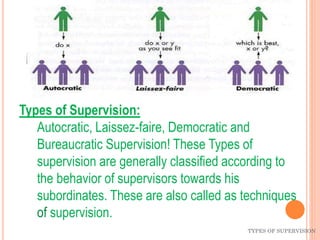
There are several types of supervision styles described in the document:
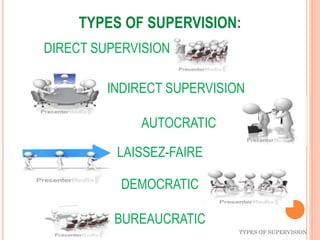
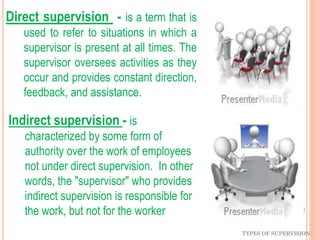
- Direct supervision involves a supervisor being present at all times to oversee work and provide feedback. Indirect supervision involves authority over employees not directly supervised.
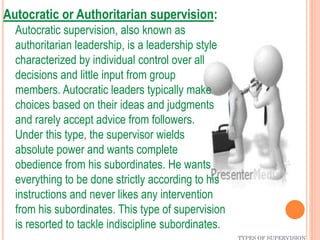
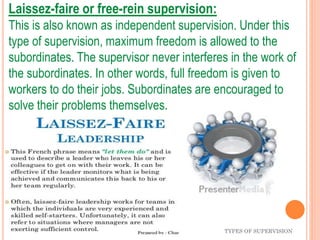
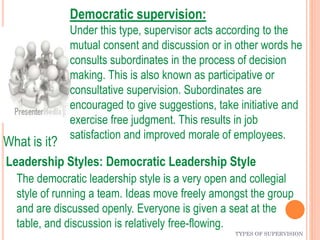
- Autocratic supervision involves absolute control by the supervisor and obedience from subordinates. Democratic supervision involves mutual consent and discussion between supervisor and subordinates in decision making. Laissez-faire supervision provides maximum freedom and little interference for subordinates.
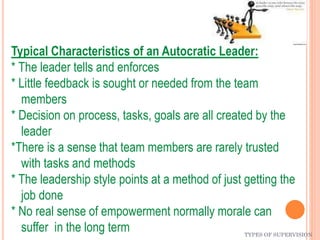
- Each supervision style has benefits and drawbacks depending on the situation. Democratic supervision works well for experienced teams, allowing them to share views. Autocratic supervision can be effective for urgent or dangerous tasks requiring structure. Laissez-faire supervision is suitable when subordinates are highly skilled