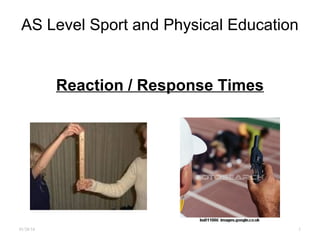
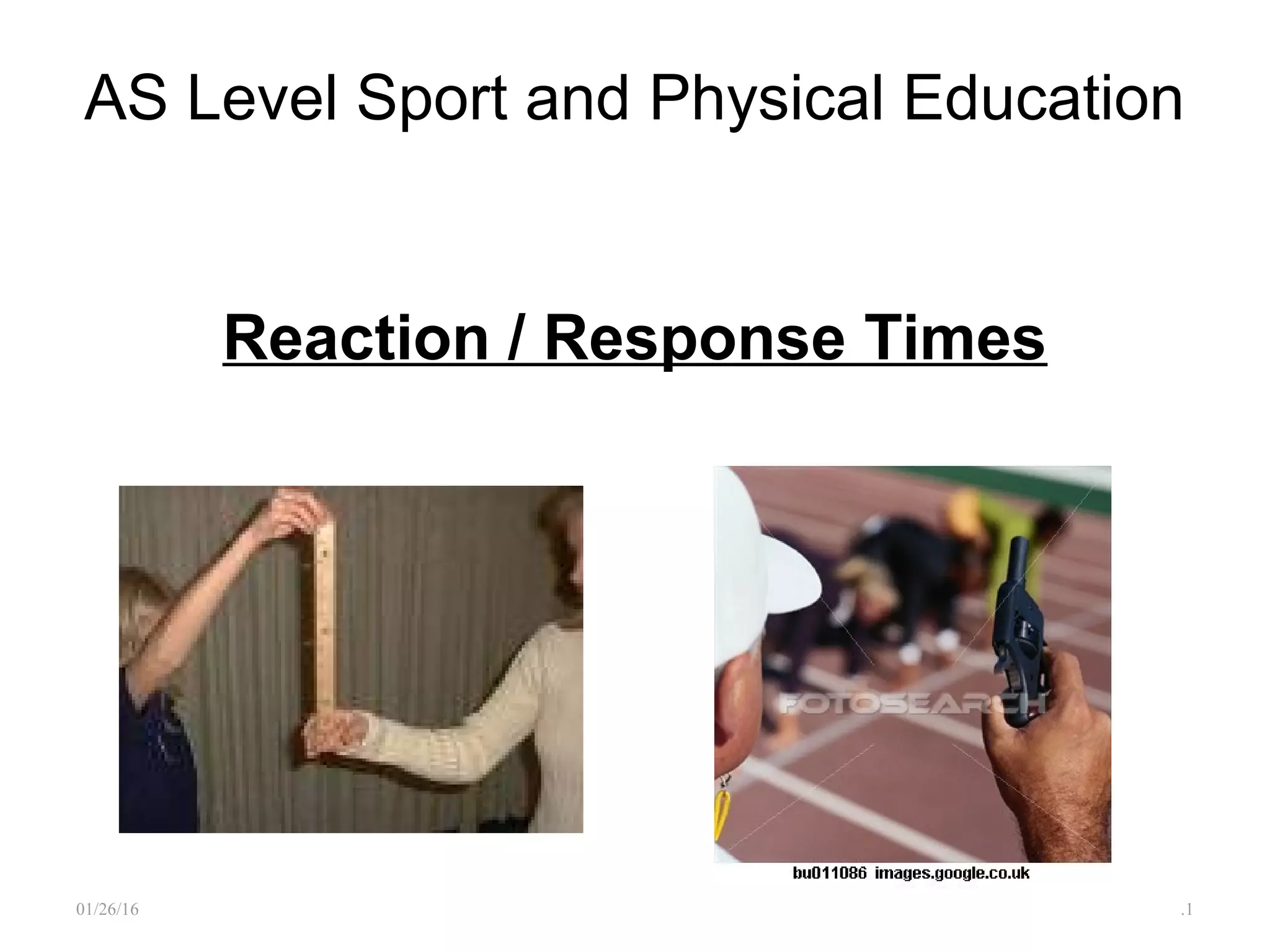
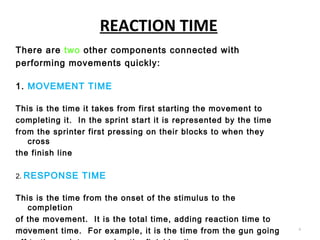
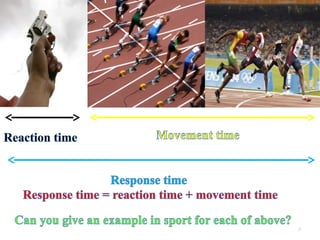
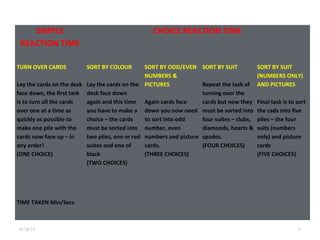
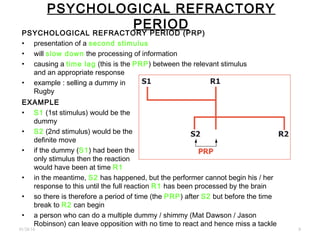
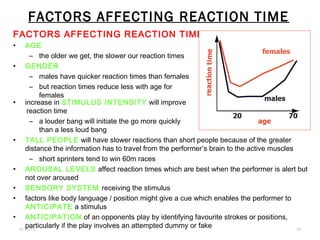
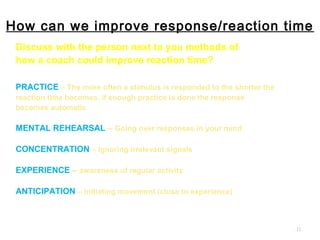
This document discusses reaction time and factors that affect it. It defines reaction time and identifies its components - movement time and response time. It describes simple reaction time involving one stimulus and choice reaction time involving multiple stimuli. More stimulus choices leads to longer reaction times based on Hick's Law. It also discusses the psychological refractory period and how a second stimulus can slow response time. Key factors that affect reaction time include age, gender, stimulus intensity, height, arousal levels, and anticipation through experience and practice. Anticipation allows one to partially predict events and eliminate some response time.