Motor Control Theories
Ahmed Shawky Ali
Motor Control Theories
Reflex theory
Reflex Theory
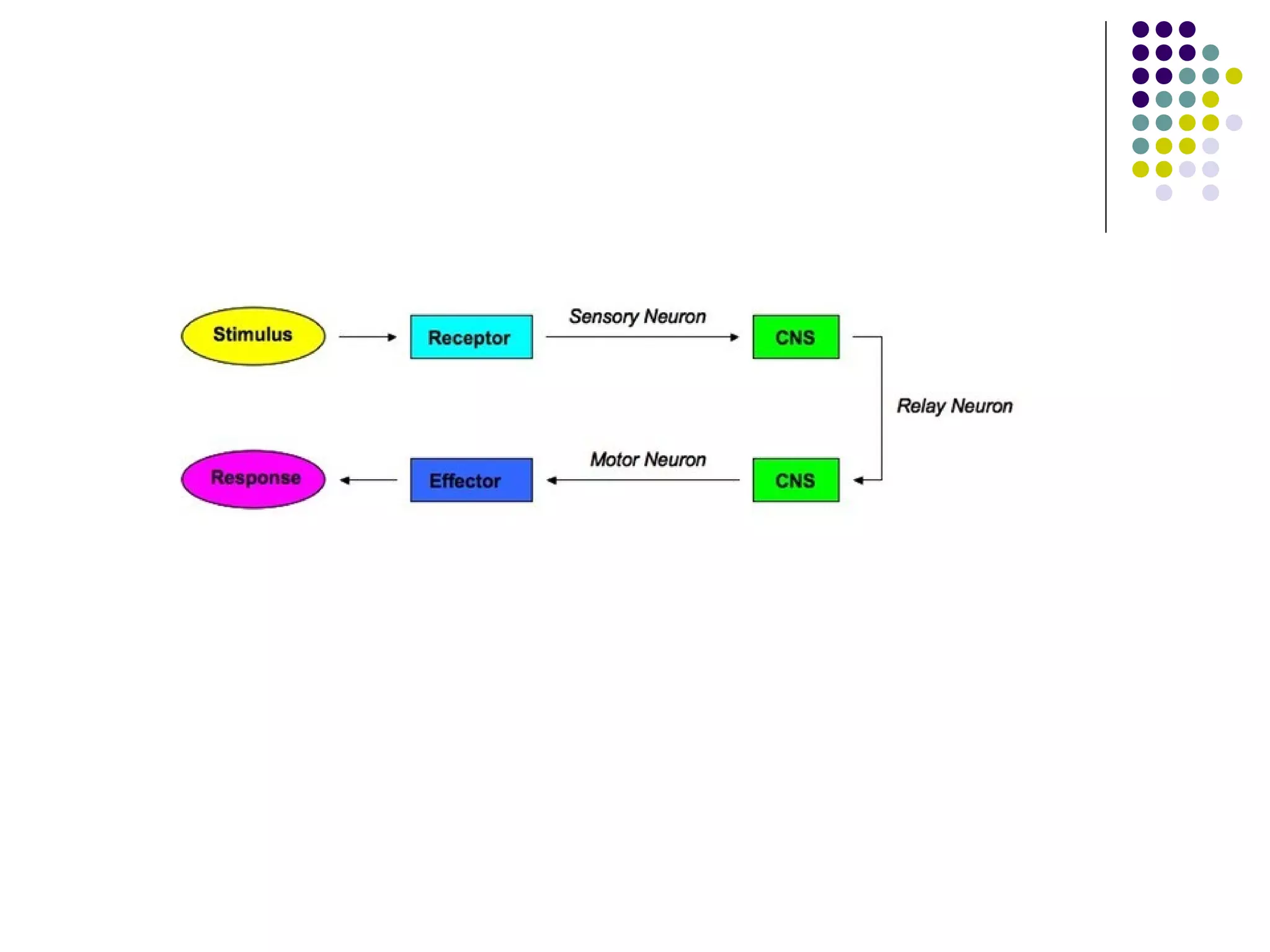
Basic structure of a reflex :
A-receptor
B- conductor
C-effector
Reflex Theory
Stimulus applied to muscle results in stereotypical
responses referred to as a reflex (peripherally
based)
-afferent sensory inputs are necessary pre-
requisite for efferent motor output .
Reflex Theory
Sherrington, Reflexes are the building blocks of complex
motor behaviors or movements.
Sherrington belived that, complex behaviors could be
occur through combined action of individual reflexes
that were chained together.
Reflex Theory
Sir Charles Sherrington, the
integrative action of the nervous
system (1906)
 Reflex chaining: complex movements
are a sequence of reflexes elicited
together
Limitations of Reflex Theory
Unable to explain:
1-Spontaneous and voluntary
movements:
Reflex can not be considered basic unit
of behavior as reflex must be
activated by an outside agent .
Limitations of Reflex Theory
Unable to explain:
2-Movement can occur without a sensory
stimulus:
Recent resarch shown that , animals
can move in a relative coordinated
fashion in absence of sensory input.
Limitations of Reflex Theory
Unable to explain:
3-Fast sequential movements, e.g. typing
As sequence of movement too rapidly to allow for
sensory feedback from the preceding movement
to trigger the next
Limitations of Reflex Theory
•Unable to explain:
4- A single stimulus can trigger various
responses (reflexes can be modulated)
Which depend on context and descending
commands ..for example we can override
reflexes to achieve a goal .
e.g withdrawl of the hand in fire and when
your child in fire you may override reflexive
withdrawl to pull the child.
Limitations of Reflex Theory
Unable to explain:
5-Novel movements can be carried out:
As novel movement put together combination of
stimuli and responses .
e.g a violenist learned rules for playing the piece
and applied them to new situation .
Clinical implications
1- Clinical straegies which designed to test reflexes
should allow therapist to predict the function .
2- Patient movement behavior would be interpreted in
term of prescence or absence of controlling reflexes.
3- Reteaining of motor control for functional skills
would focus on enhancing or reducing the effect of
various reflexes during motor tasks ( e.g facilitating or
inhibiting reflexes & on reducing hypertonicity )
Reflex- and Hierarchical Based
Neurofacilitation Approaches
Brunnstrom, Rood, Proprioceptive
neuromuscular facilitation (PNF),
Bobath’s neurodevelopmental
treatment (NDT)
 Retraining motor control through
“techniques” to facilitate and/or inhibit
different movement patterns
Assumptions of
Neurofacilitation Approaches
 Abnormal movement is a direct result of
the neurologic lesion
 Inhibit abnormal movement patterns to
facilitate the normal movement patterns
will lead to the return of functional skills
 Repetition of normal movement patterns
will automatically transfer to functional
tasks

1 5 Motor Control Theories

  • 1.
  • 2.
  • 3.
    Reflex Theory Basic structureof a reflex : A-receptor B- conductor C-effector
  • 5.
    Reflex Theory Stimulus appliedto muscle results in stereotypical responses referred to as a reflex (peripherally based) -afferent sensory inputs are necessary pre- requisite for efferent motor output .
  • 6.
    Reflex Theory Sherrington, Reflexesare the building blocks of complex motor behaviors or movements. Sherrington belived that, complex behaviors could be occur through combined action of individual reflexes that were chained together.
  • 7.
    Reflex Theory Sir CharlesSherrington, the integrative action of the nervous system (1906)  Reflex chaining: complex movements are a sequence of reflexes elicited together
  • 8.
    Limitations of ReflexTheory Unable to explain: 1-Spontaneous and voluntary movements: Reflex can not be considered basic unit of behavior as reflex must be activated by an outside agent .
  • 9.
    Limitations of ReflexTheory Unable to explain: 2-Movement can occur without a sensory stimulus: Recent resarch shown that , animals can move in a relative coordinated fashion in absence of sensory input.
  • 10.
    Limitations of ReflexTheory Unable to explain: 3-Fast sequential movements, e.g. typing As sequence of movement too rapidly to allow for sensory feedback from the preceding movement to trigger the next
  • 11.
    Limitations of ReflexTheory •Unable to explain: 4- A single stimulus can trigger various responses (reflexes can be modulated) Which depend on context and descending commands ..for example we can override reflexes to achieve a goal . e.g withdrawl of the hand in fire and when your child in fire you may override reflexive withdrawl to pull the child.
  • 12.
    Limitations of ReflexTheory Unable to explain: 5-Novel movements can be carried out: As novel movement put together combination of stimuli and responses . e.g a violenist learned rules for playing the piece and applied them to new situation .
  • 13.
    Clinical implications 1- Clinicalstraegies which designed to test reflexes should allow therapist to predict the function . 2- Patient movement behavior would be interpreted in term of prescence or absence of controlling reflexes. 3- Reteaining of motor control for functional skills would focus on enhancing or reducing the effect of various reflexes during motor tasks ( e.g facilitating or inhibiting reflexes & on reducing hypertonicity )
  • 14.
    Reflex- and HierarchicalBased Neurofacilitation Approaches Brunnstrom, Rood, Proprioceptive neuromuscular facilitation (PNF), Bobath’s neurodevelopmental treatment (NDT)  Retraining motor control through “techniques” to facilitate and/or inhibit different movement patterns
  • 15.
    Assumptions of Neurofacilitation Approaches Abnormal movement is a direct result of the neurologic lesion  Inhibit abnormal movement patterns to facilitate the normal movement patterns will lead to the return of functional skills  Repetition of normal movement patterns will automatically transfer to functional tasks

Editor's Notes

  • #7 Reflex is the fundamental building block of movements. Sensory stimulus is essential to produce a movement.
  • #8 Note that only one side of the sensory input was removed. Sherrington’s 1906 monograph, published simultaneously in London, New Haven and New York, was based on a series of 10 endowed lectures delivered in 1904 at Yale College in New Haven, Connecticut, under the auspices of the Silliman Foundation.
  • #9 Voluntary spontaneous movement does not require an outside stimulus to be initiated, unlike reflexes Movement can occur without a sensory stimulus Reflex theory was not supported by Dr. Edward Taub’s studies: deafferented monkeys were able to move the affected arm when the good arm was “constrained” in a sling  “constraint induced movement therapy” Sequences of movements occur too fast to allow for sensory stimuli from the preceding movement to trigger the next movement (e.g. typing) A single stimulus can result in a variety of movements Reflexes can be modulated according to the context Novel movements can be carried out by combing stimuli and response previously learned (e.g. playing piano)
  • #15 Nowadays NDT approach has changed a great deal. In essence, it is more like “motor learning and motor control”, instead of the NDT 20 years ago. However, continuing using the same name is sometimes confusing.
  • #16 Normal movement control requires top-down control, a process of “corticalization” Following a neurologic lesion, abnormal movement is caused by Disruption of normal reflex mechanisms Release of lower level reflexes Recovery of normal function requires higher centers regain control