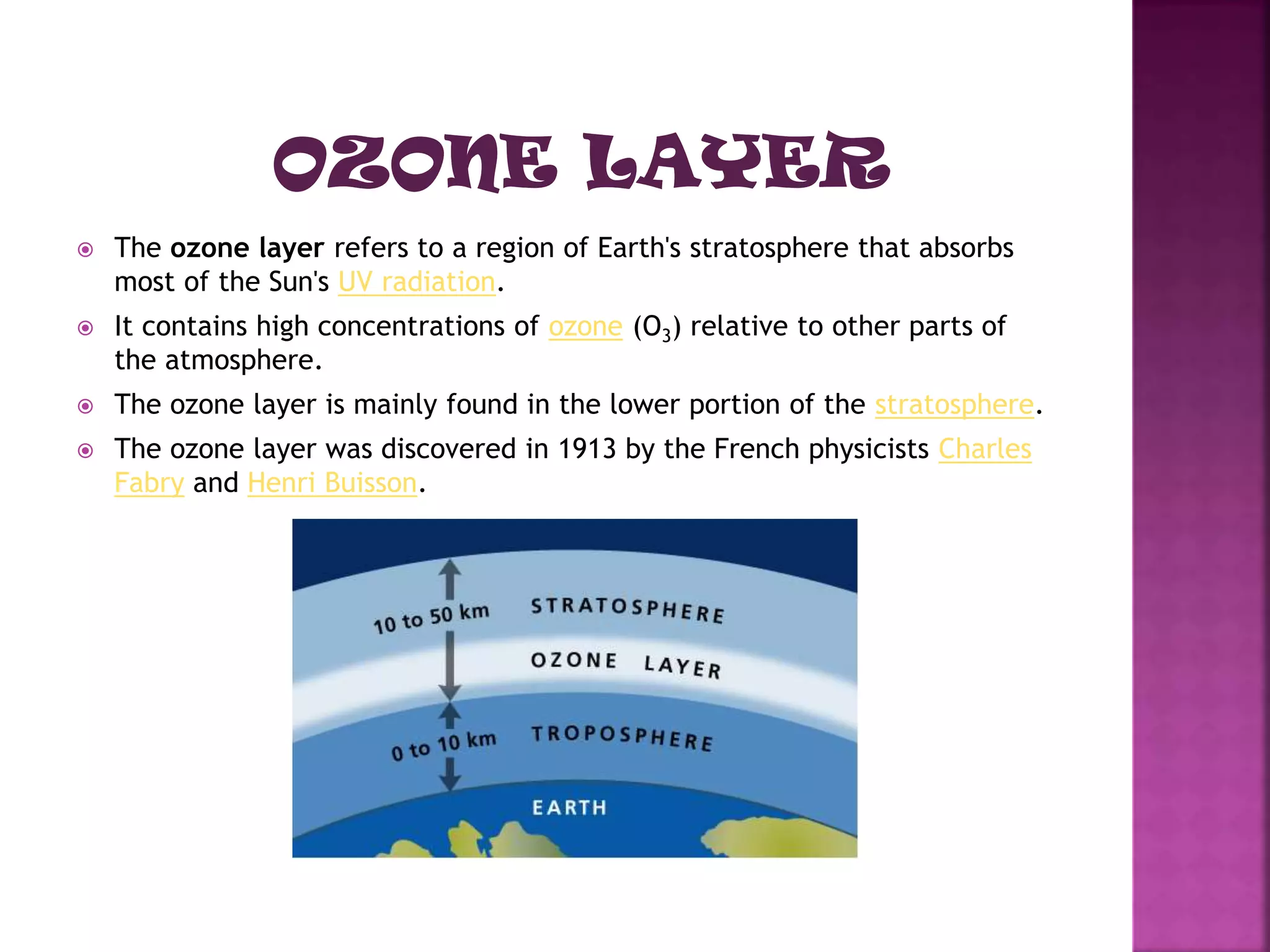
 The ozone layer refers to a region of Earth's stratosphere that absorbs
most of the Sun's UV radiation.
 It contains high concentrations of ozone (O3) relative to other parts of
the atmosphere.
 The ozone layer is mainly found in the lower portion of the stratosphere.
 The ozone layer was discovered in 1913 by the French physicists Charles
Fabry and Henri Buisson.
 Ozone depletion describes two phenomena : a steady decline of about
4% per decade in the total volume of ozone in Earth's stratosphere,the
ozone hole.
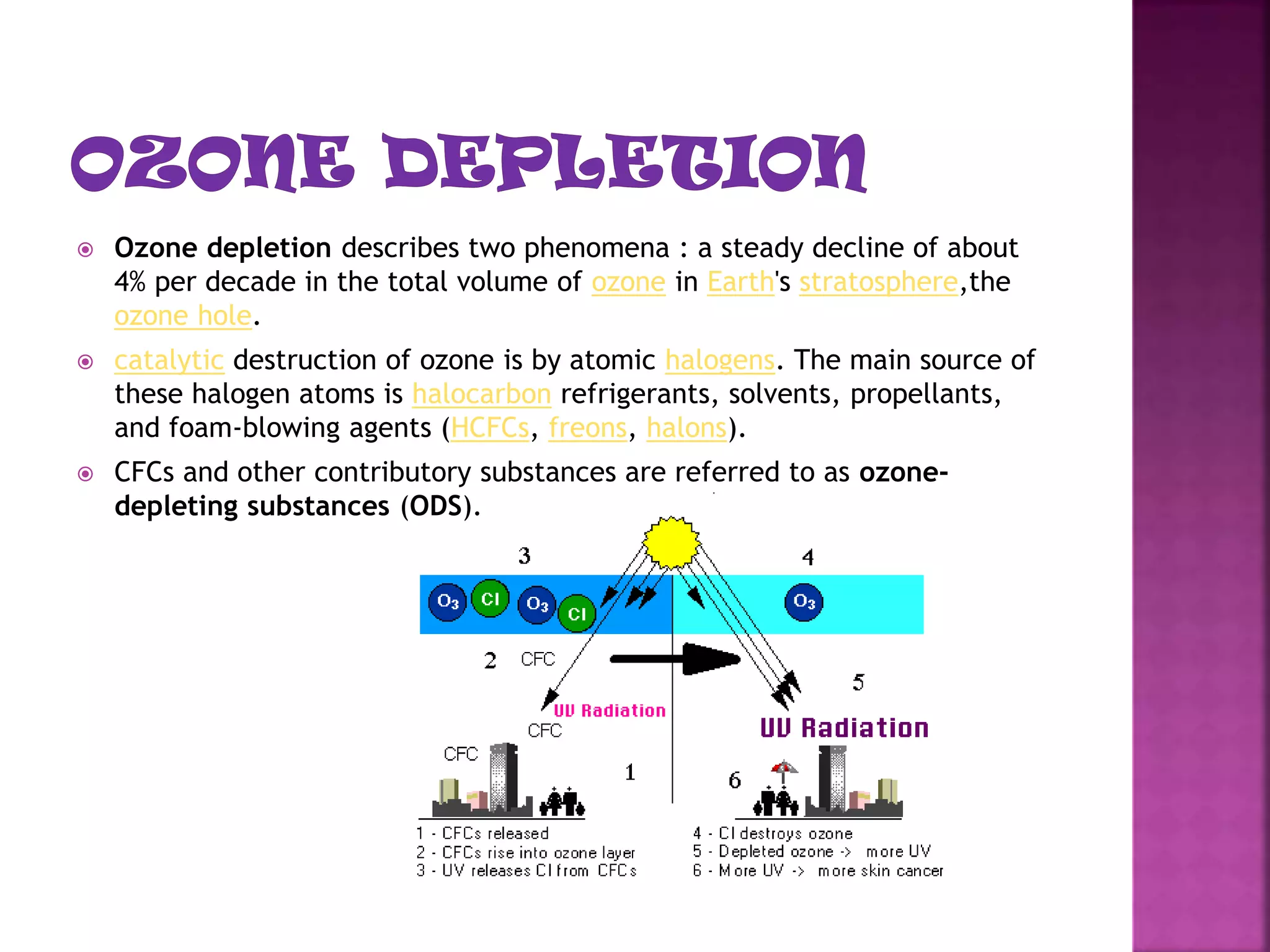
 catalytic destruction of ozone is by atomic halogens. The main source of
these halogen atoms is halocarbon refrigerants, solvents, propellants,
and foam-blowing agents (HCFCs, freons, halons).
 CFCs and other contributory substances are referred to as ozone-
depleting substances (ODS).
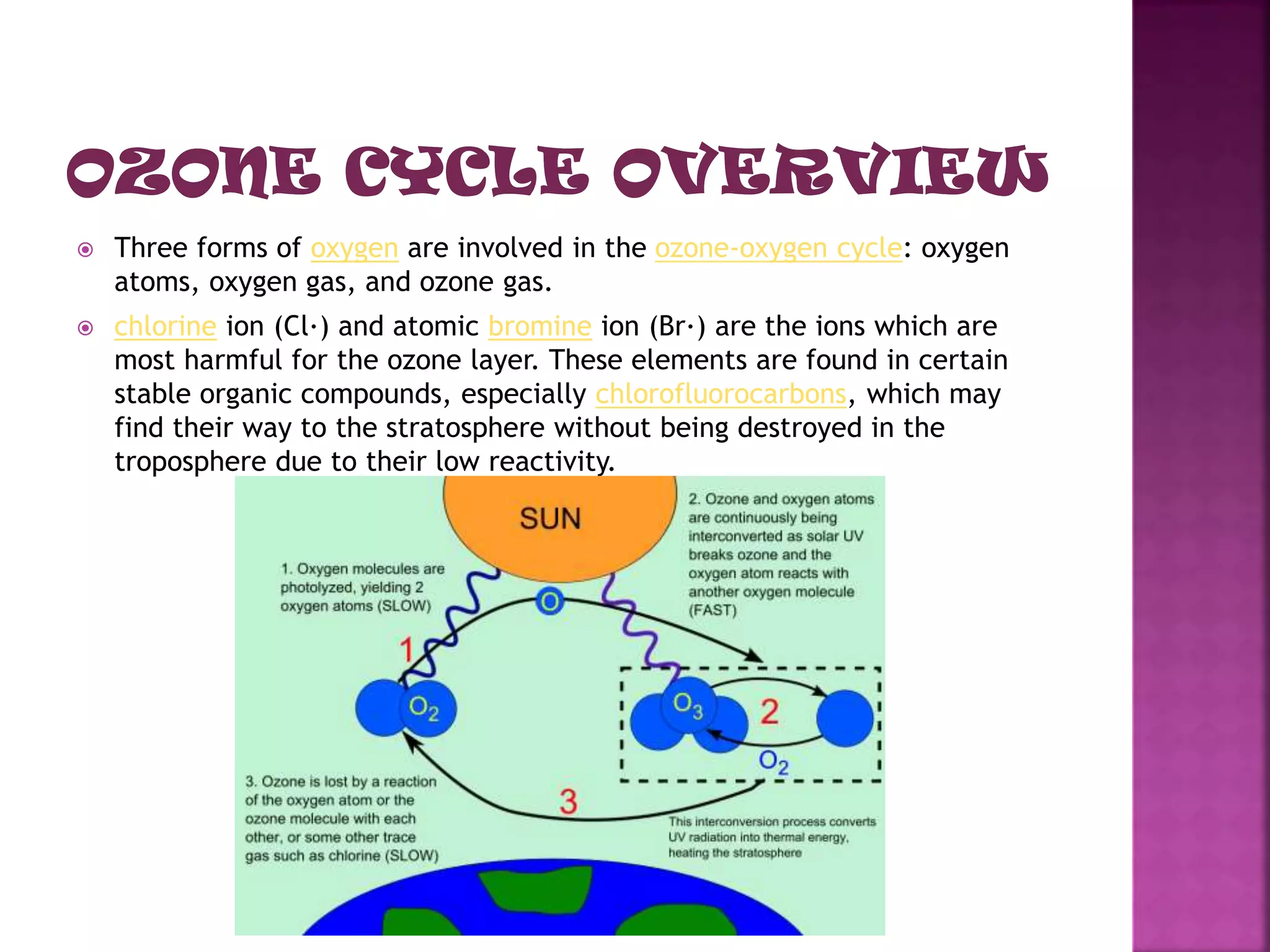
 Three forms of oxygen are involved in the ozone-oxygen cycle: oxygen
atoms, oxygen gas, and ozone gas.
 chlorine ion (Cl·) and atomic bromine ion (Br·) are the ions which are
most harmful for the ozone layer. These elements are found in certain
stable organic compounds, especially chlorofluorocarbons, which may
find their way to the stratosphere without being destroyed in the
troposphere due to their low reactivity.
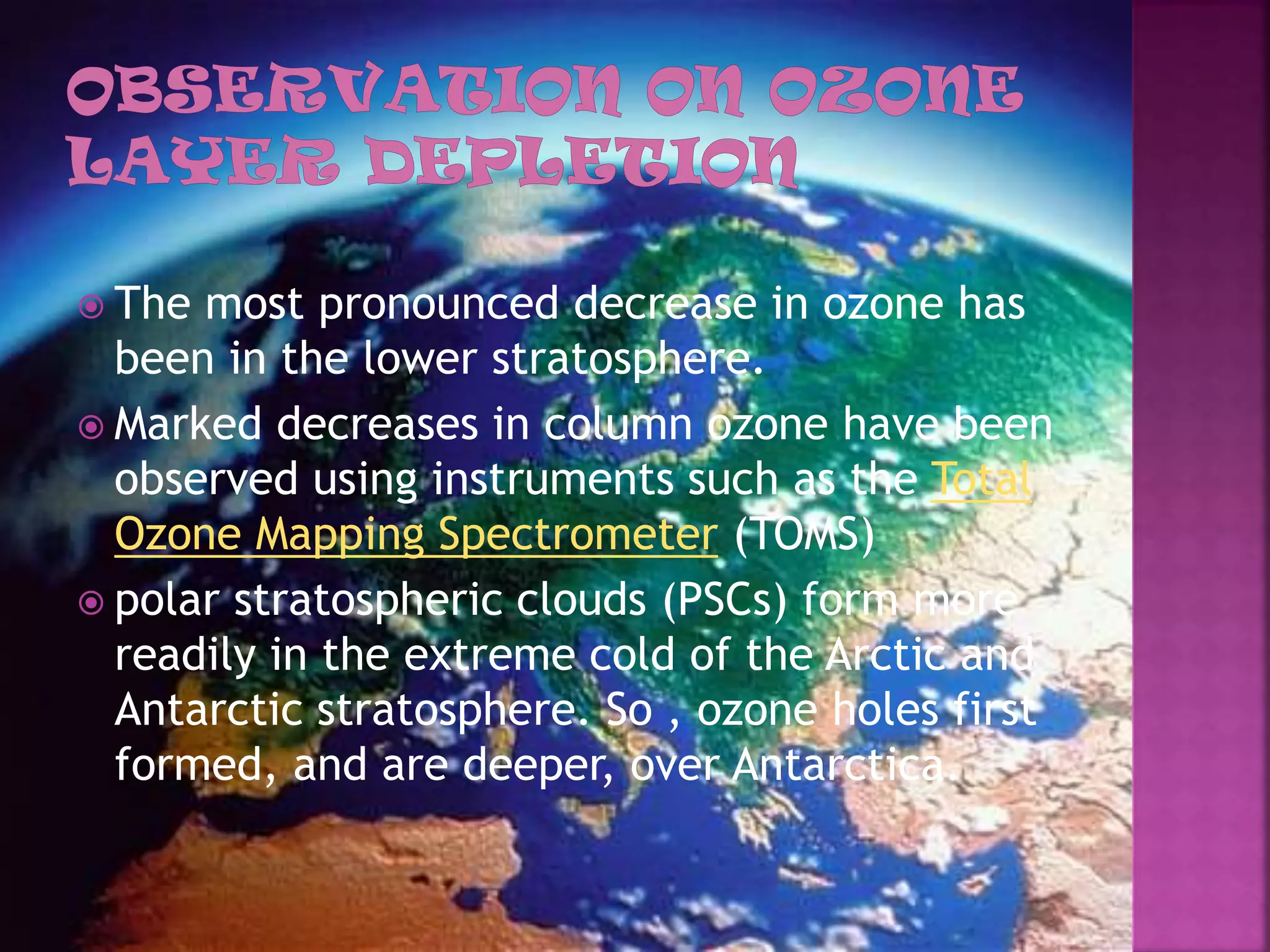
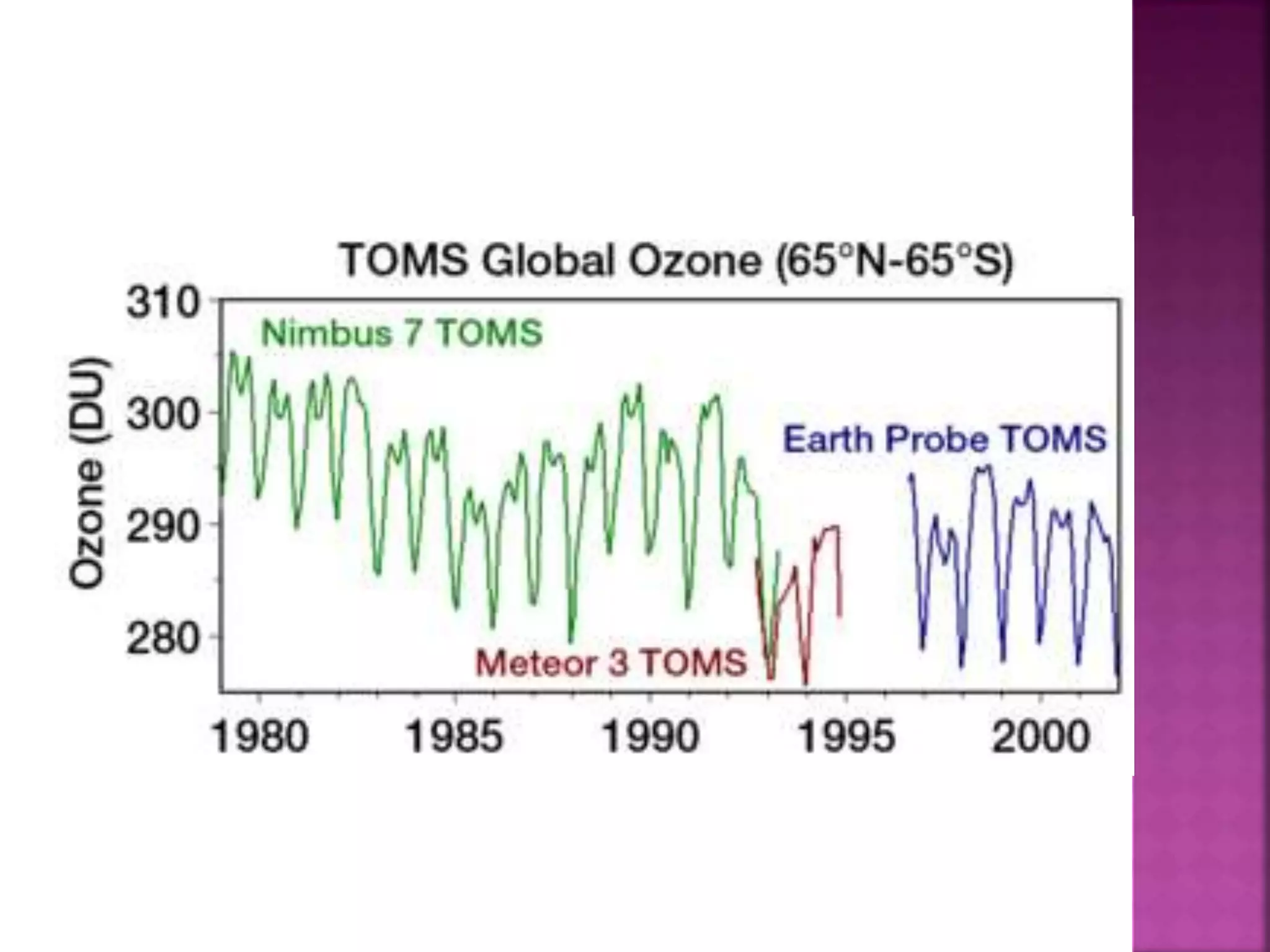
 The most pronounced decrease in ozone has
been in the lower stratosphere.
 Marked decreases in column ozone have been
observed using instruments such as the Total
Ozone Mapping Spectrometer (TOMS)
 polar stratospheric clouds (PSCs) form more
readily in the extreme cold of the Arctic and
Antarctic stratosphere. So , ozone holes first
formed, and are deeper, over Antarctica.
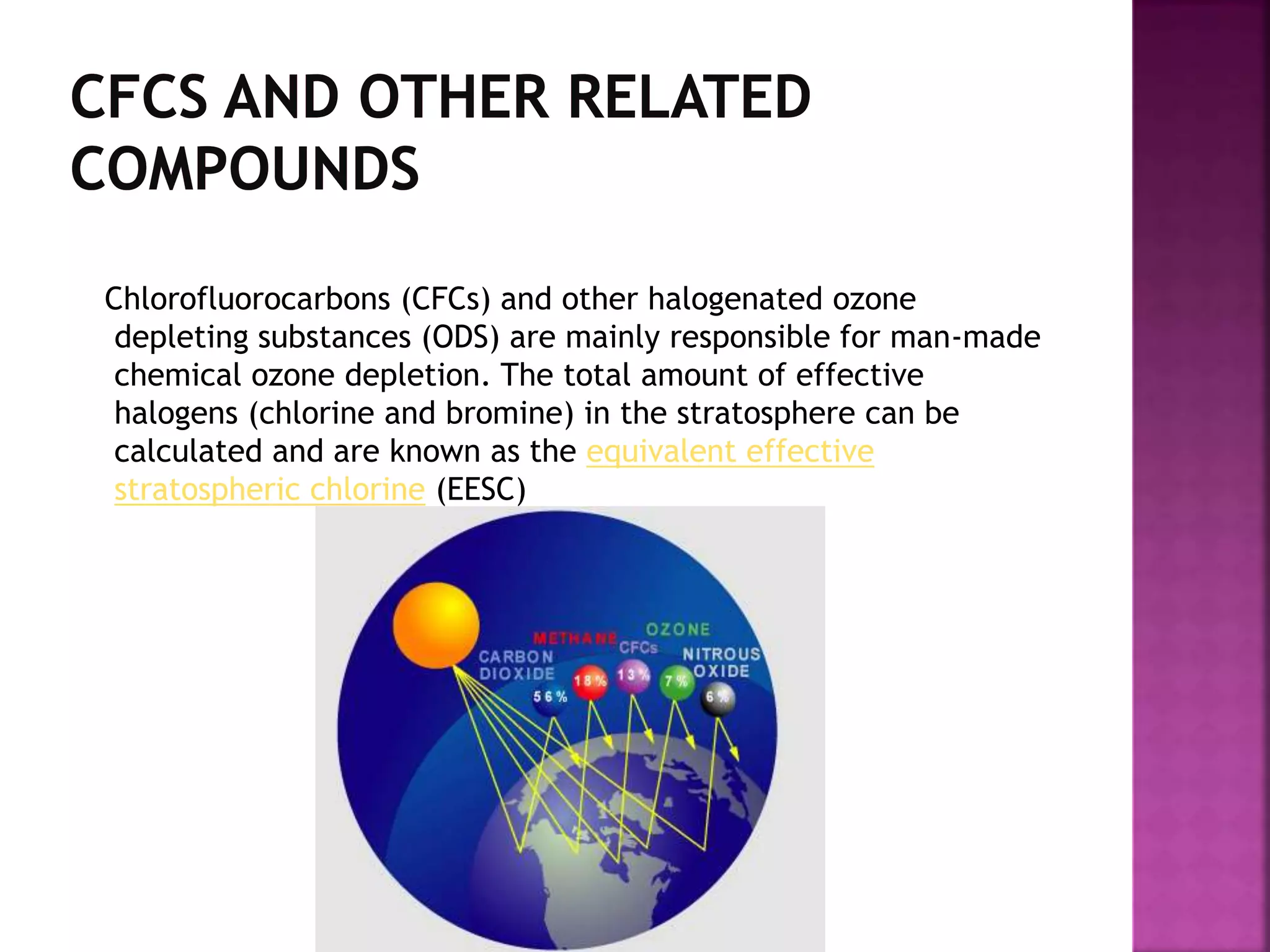
Chlorofluorocarbons (CFCs) and other halogenated ozone
depleting substances (ODS) are mainly responsible for man-made
chemical ozone depletion. The total amount of effective
halogens (chlorine and bromine) in the stratosphere can be
calculated and are known as the equivalent effective
stratospheric chlorine (EESC)
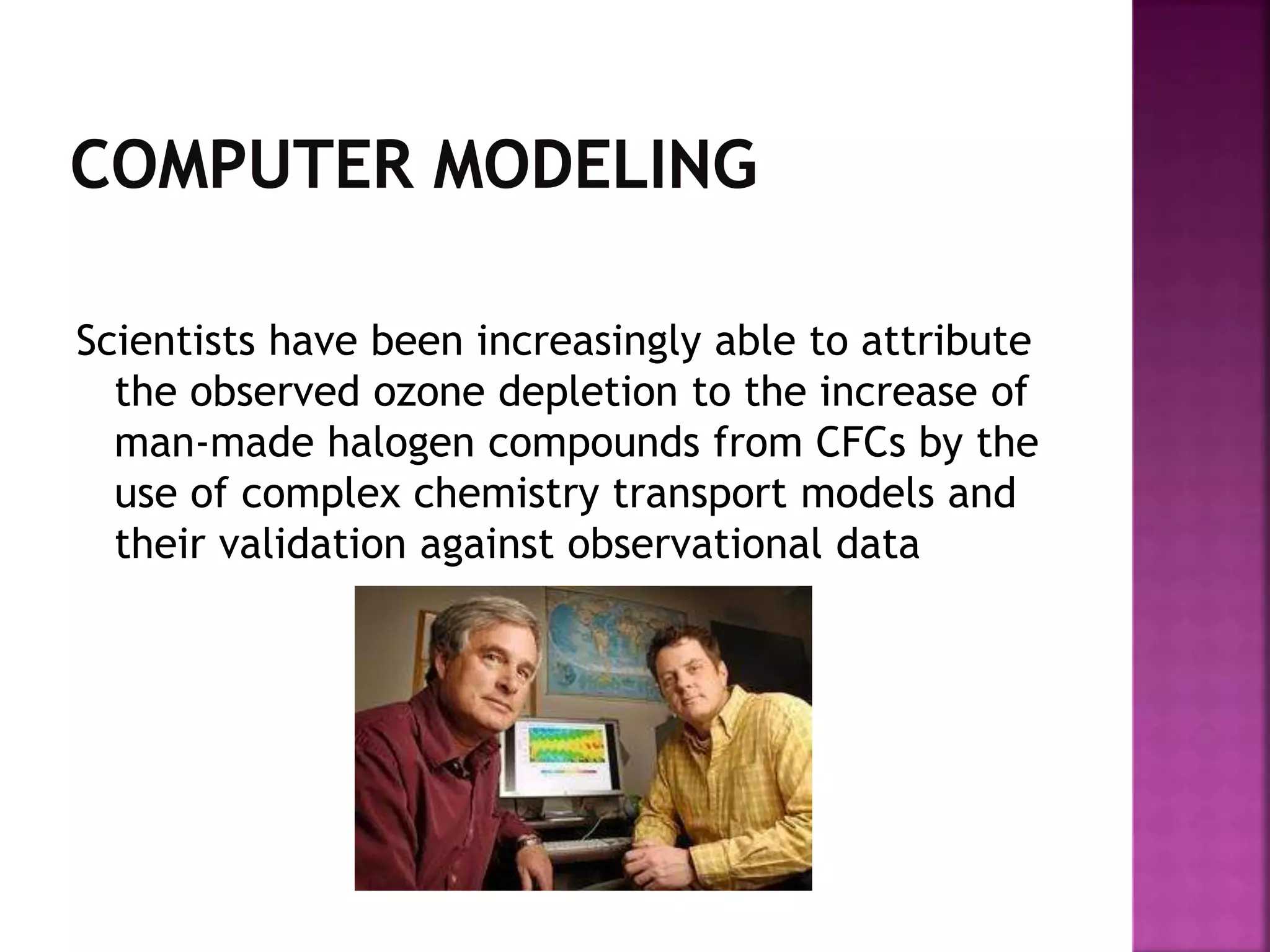
Scientists have been increasingly able to attribute
the observed ozone depletion to the increase of
man-made halogen compounds from CFCs by the
use of complex chemistry transport models and
their validation against observational data
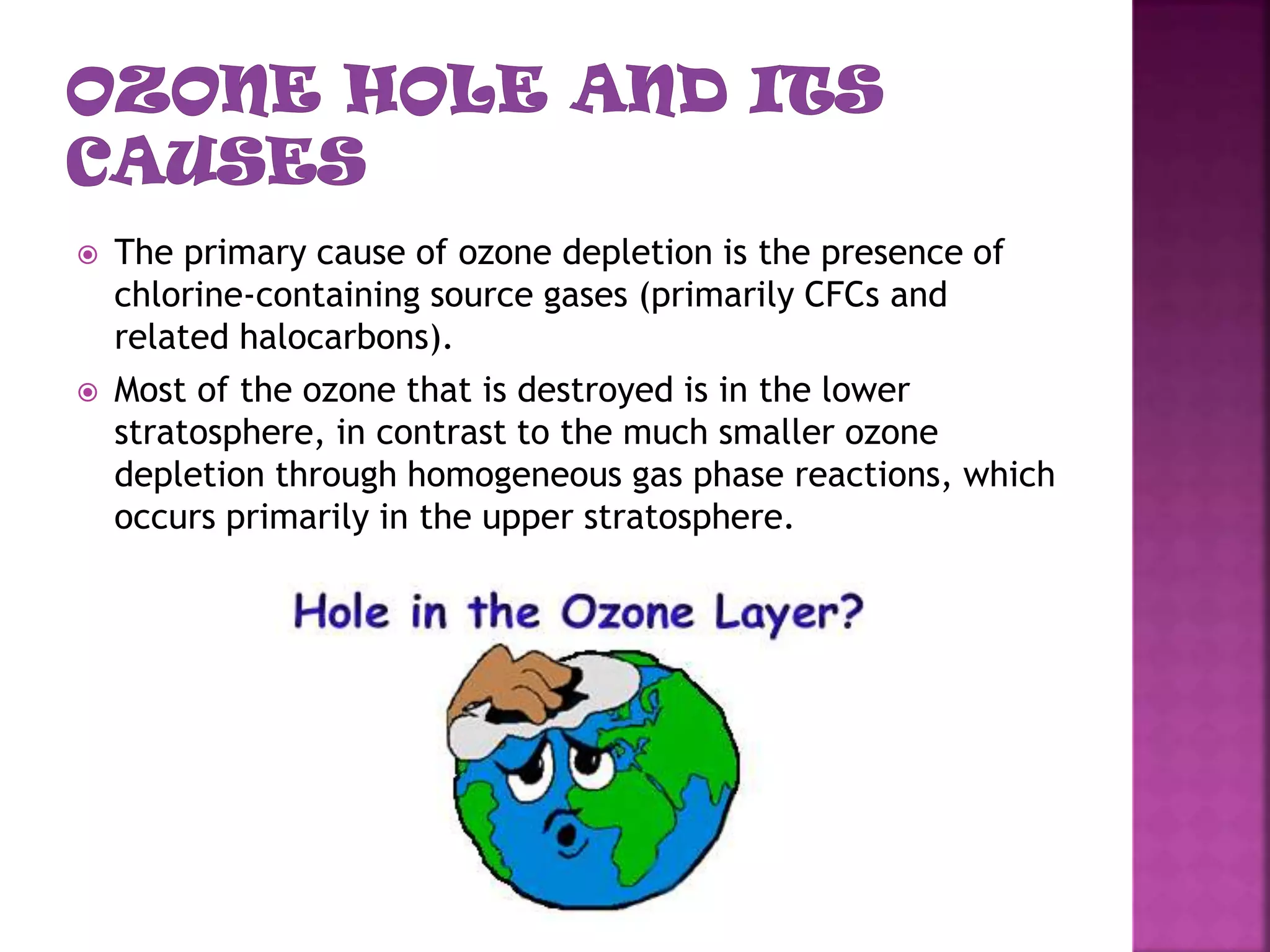
 The primary cause of ozone depletion is the presence of
chlorine-containing source gases (primarily CFCs and
related halocarbons).
 Most of the ozone that is destroyed is in the lower
stratosphere, in contrast to the much smaller ozone
depletion through homogeneous gas phase reactions, which
occurs primarily in the upper stratosphere.
The decrease in the ozone layer was
predicted in the early 1980s to be
roughly 7% over a 60-year period.
The sudden recognition in 1985 that
there was a substantial "hole" was
widely reported in the press.
Many of those unsure about what
the ozone hole was and what
caused it were worried that ozone
holes might start appearing over
other areas of the globe.
If the conditions become more
severe global ozone may
decrease at a much greater pace
When the Antarctic ozone hole
breaks up, the ozone depleted
air drifts out into nearby areas.
Increased UV
Effect on human
health
Effects on non
human animals
Crop production is
affected
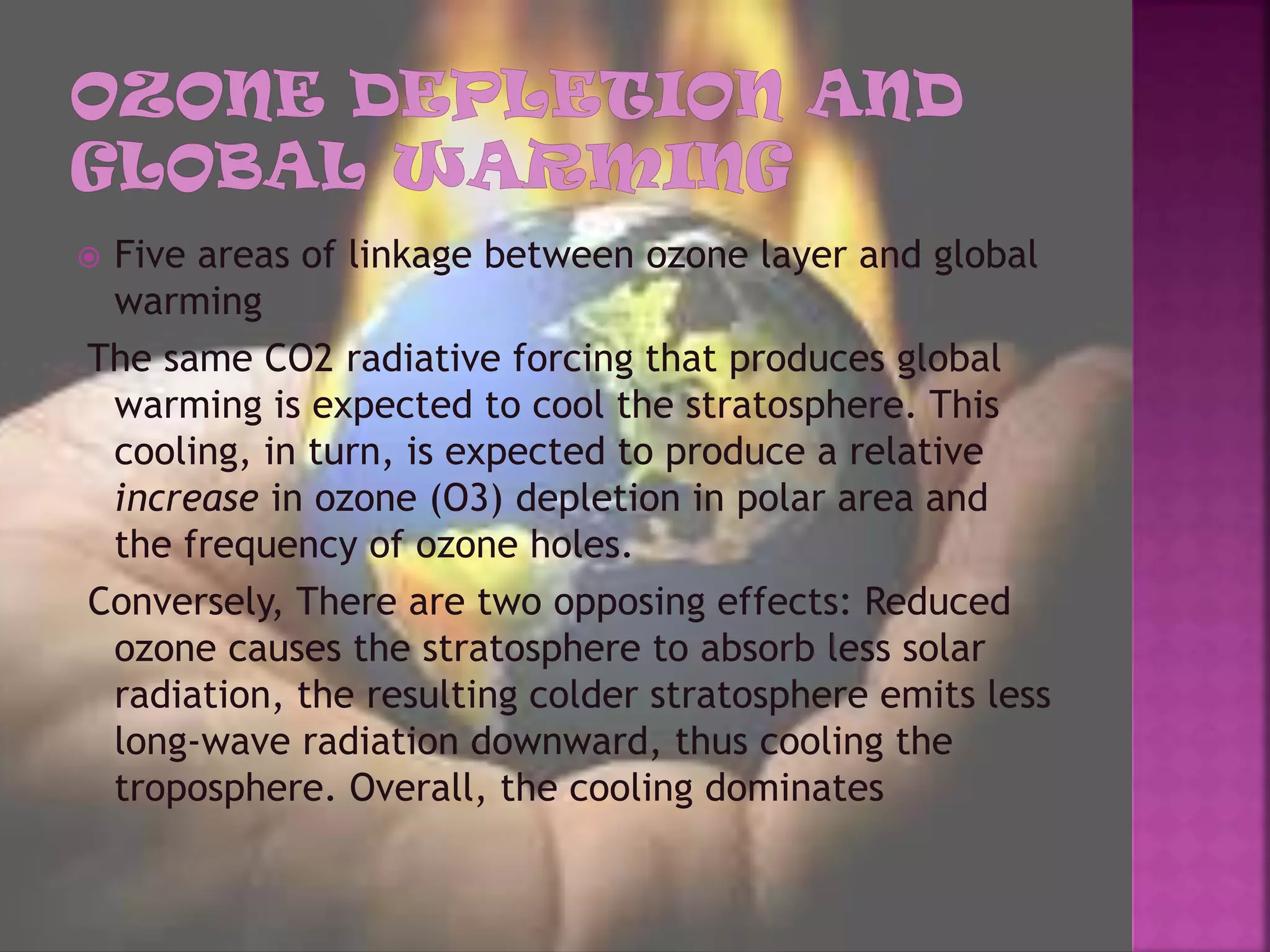
 Five areas of linkage between ozone layer and global
warming
The same CO2 radiative forcing that produces global
warming is expected to cool the stratosphere. This
cooling, in turn, is expected to produce a relative
increase in ozone (O3) depletion in polar area and
the frequency of ozone holes.
Conversely, There are two opposing effects: Reduced
ozone causes the stratosphere to absorb less solar
radiation, the resulting colder stratosphere emits less
long-wave radiation downward, thus cooling the
troposphere. Overall, the cooling dominates
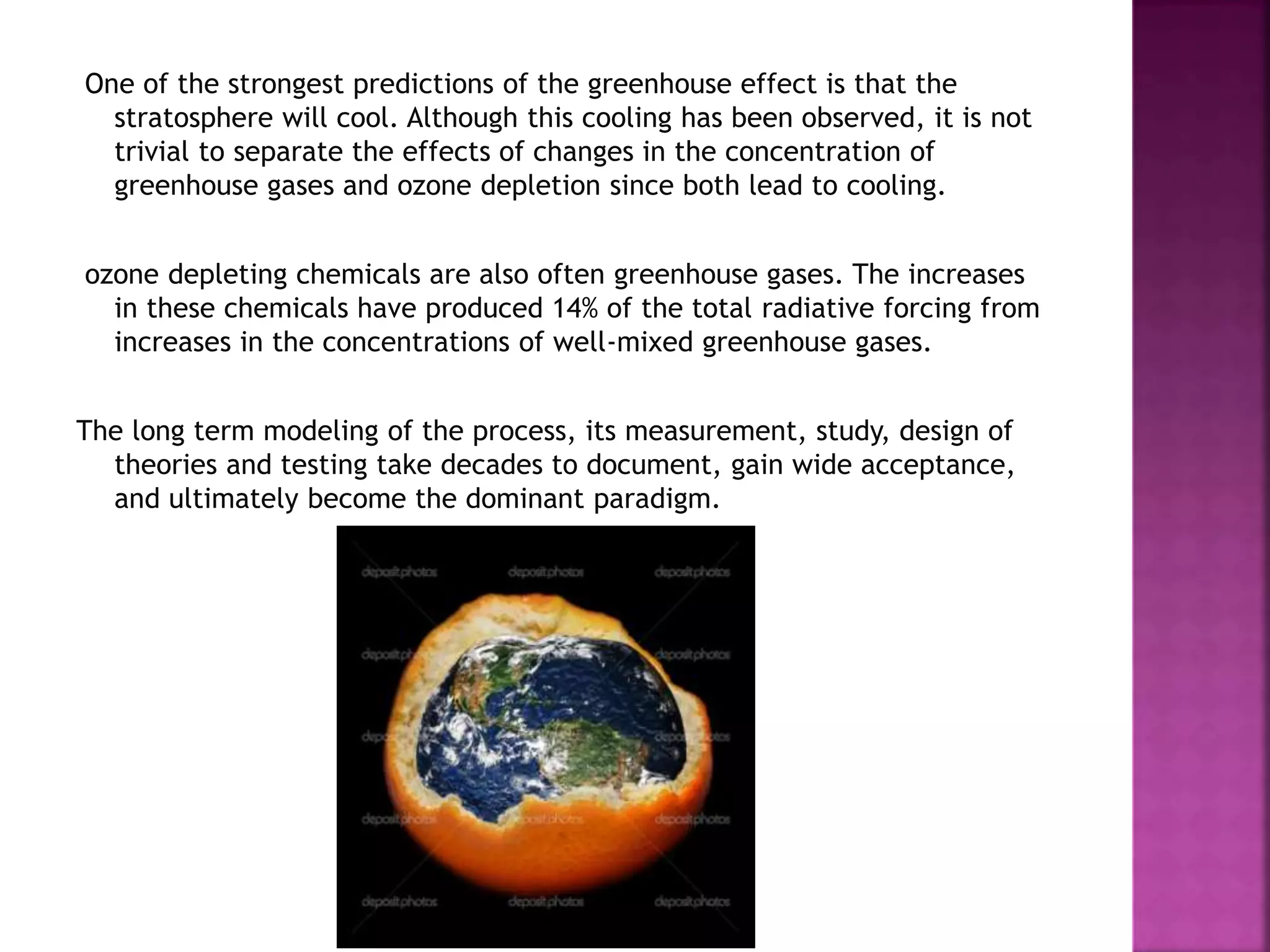
One of the strongest predictions of the greenhouse effect is that the
stratosphere will cool. Although this cooling has been observed, it is not
trivial to separate the effects of changes in the concentration of
greenhouse gases and ozone depletion since both lead to cooling.
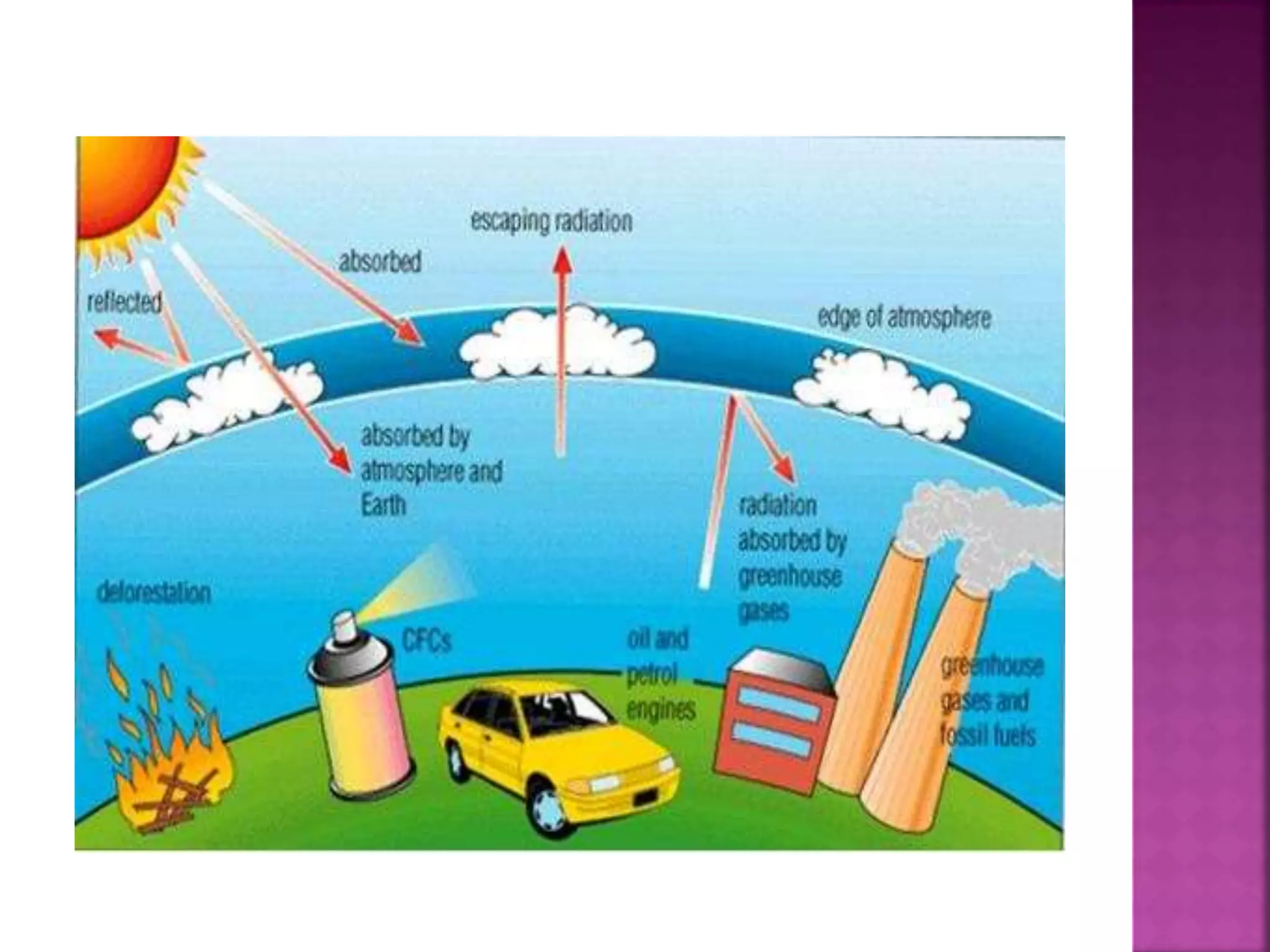
ozone depleting chemicals are also often greenhouse gases. The increases
in these chemicals have produced 14% of the total radiative forcing from
increases in the concentrations of well-mixed greenhouse gases.
The long term modeling of the process, its measurement, study, design of
theories and testing take decades to document, gain wide acceptance,
and ultimately become the dominant paradigm.
 In 1994, the United Nations General Assembly
voted to designate September 16 as "World
Ozone Day", to commemorate the signing of
the Montreal Protocol on that date in 1987.
PRESENTED BY-
ANMOL GUPTA 132103
ANCHAL SINGHAL 132117
KAJAL AGGARWAL 132197
GAURAV BANSAL 132195

Ozone layer depletion ppt

  • 2.
     The ozonelayer refers to a region of Earth's stratosphere that absorbs most of the Sun's UV radiation.  It contains high concentrations of ozone (O3) relative to other parts of the atmosphere.  The ozone layer is mainly found in the lower portion of the stratosphere.  The ozone layer was discovered in 1913 by the French physicists Charles Fabry and Henri Buisson.
  • 3.
     Ozone depletiondescribes two phenomena : a steady decline of about 4% per decade in the total volume of ozone in Earth's stratosphere,the ozone hole.  catalytic destruction of ozone is by atomic halogens. The main source of these halogen atoms is halocarbon refrigerants, solvents, propellants, and foam-blowing agents (HCFCs, freons, halons).  CFCs and other contributory substances are referred to as ozone- depleting substances (ODS).
  • 5.
     Three formsof oxygen are involved in the ozone-oxygen cycle: oxygen atoms, oxygen gas, and ozone gas.  chlorine ion (Cl·) and atomic bromine ion (Br·) are the ions which are most harmful for the ozone layer. These elements are found in certain stable organic compounds, especially chlorofluorocarbons, which may find their way to the stratosphere without being destroyed in the troposphere due to their low reactivity.
  • 6.
     The mostpronounced decrease in ozone has been in the lower stratosphere.  Marked decreases in column ozone have been observed using instruments such as the Total Ozone Mapping Spectrometer (TOMS)  polar stratospheric clouds (PSCs) form more readily in the extreme cold of the Arctic and Antarctic stratosphere. So , ozone holes first formed, and are deeper, over Antarctica.
  • 7.
    Chlorofluorocarbons (CFCs) andother halogenated ozone depleting substances (ODS) are mainly responsible for man-made chemical ozone depletion. The total amount of effective halogens (chlorine and bromine) in the stratosphere can be calculated and are known as the equivalent effective stratospheric chlorine (EESC)
  • 8.
    Scientists have beenincreasingly able to attribute the observed ozone depletion to the increase of man-made halogen compounds from CFCs by the use of complex chemistry transport models and their validation against observational data
  • 10.
     The primarycause of ozone depletion is the presence of chlorine-containing source gases (primarily CFCs and related halocarbons).  Most of the ozone that is destroyed is in the lower stratosphere, in contrast to the much smaller ozone depletion through homogeneous gas phase reactions, which occurs primarily in the upper stratosphere.
  • 11.
    The decrease inthe ozone layer was predicted in the early 1980s to be roughly 7% over a 60-year period. The sudden recognition in 1985 that there was a substantial "hole" was widely reported in the press. Many of those unsure about what the ozone hole was and what caused it were worried that ozone holes might start appearing over other areas of the globe.
  • 12.
    If the conditionsbecome more severe global ozone may decrease at a much greater pace When the Antarctic ozone hole breaks up, the ozone depleted air drifts out into nearby areas.
  • 13.
    Increased UV Effect onhuman health Effects on non human animals Crop production is affected
  • 14.
     Five areasof linkage between ozone layer and global warming The same CO2 radiative forcing that produces global warming is expected to cool the stratosphere. This cooling, in turn, is expected to produce a relative increase in ozone (O3) depletion in polar area and the frequency of ozone holes. Conversely, There are two opposing effects: Reduced ozone causes the stratosphere to absorb less solar radiation, the resulting colder stratosphere emits less long-wave radiation downward, thus cooling the troposphere. Overall, the cooling dominates
  • 15.
    One of thestrongest predictions of the greenhouse effect is that the stratosphere will cool. Although this cooling has been observed, it is not trivial to separate the effects of changes in the concentration of greenhouse gases and ozone depletion since both lead to cooling. ozone depleting chemicals are also often greenhouse gases. The increases in these chemicals have produced 14% of the total radiative forcing from increases in the concentrations of well-mixed greenhouse gases. The long term modeling of the process, its measurement, study, design of theories and testing take decades to document, gain wide acceptance, and ultimately become the dominant paradigm.
  • 16.
     In 1994,the United Nations General Assembly voted to designate September 16 as "World Ozone Day", to commemorate the signing of the Montreal Protocol on that date in 1987.
  • 17.
    PRESENTED BY- ANMOL GUPTA132103 ANCHAL SINGHAL 132117 KAJAL AGGARWAL 132197 GAURAV BANSAL 132195