TOPIC OZONE LAYER
BIOTECHNLOGY
PREPARED BY RIDA,SAIMA REHMAN,TAYABA GUL,
MARYAM YOUSAF,QANDEEL IQBAL,
AND HUMAIRA
OZONE LAYER
Introduction to ozone layer
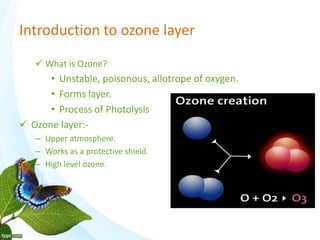
 What is Ozone?
• Unstable, poisonous, allotrope of oxygen.
• Forms layer.
• Process of Photolysis
 Ozone layer:-
– Upper atmosphere.
– Works as a protective shield.
– High level ozone.
CONT..
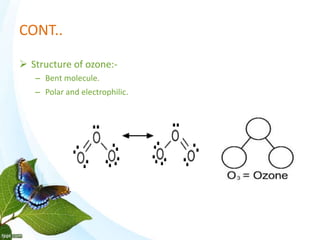
 Structure of ozone:-
– Bent molecule.
– Polar and electrophilic.
CONT..
 Properties of ozone layer:-
– Pale blue gas.
– Absorbs UV rays.
– O3.
– Mol.weight: 48.
– Diamagnetic.
– Oxidizing agent.
– Insoluble in water and soluble in inert polar solvents.
CONT..
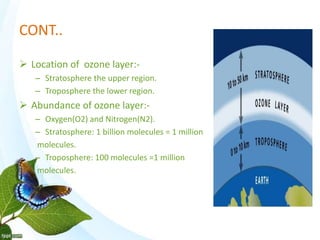
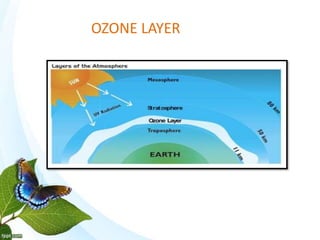
 Location of ozone layer:-
– Stratosphere the upper region.
– Troposphere the lower region.
 Abundance of ozone layer:-
– Oxygen(O2) and Nitrogen(N2).
– Stratosphere: 1 billion molecules = 1 million
molecules.
– Troposphere: 100 molecules =1 million
molecules.
OZONE LAYER
Distribution of ozone layer over globe:
• Sum of al the ozone layer in the atmosphere
• Varies with location on timescale ranging from
daily to seasonal.
Units used for ozone measurement:
• Dobson unit
• Ozone pioneer G.M.B dobson (1920s to 1970s)
• 1mm thickness = 1DU
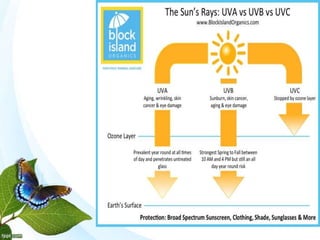
Ultraviolet radiations:
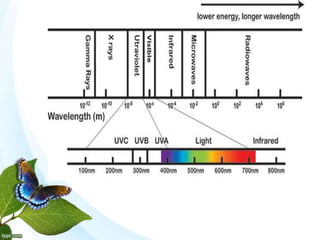
• That portion of the electromagnetic spectrum
between x-rays and visible light.
• Source of vitamin D
• Not seen or felt
• Health effects of too much UV radiations.
Types of UV RADIATIONS:
• UVA wavelength (320-400nm)
• UVB wavelength (290-320nm)
• UVC wavelength (100-290nm)
Ozone formation
• Ozone has tow layers
Stratosphere
Troposphere
Stratosphere
 It protect life on earth
 In 1920 it was first observed
 It is formed naturally by chemical reaction
 It involve;
i. Oxygen
ii. UV radiation
stratosphere
oxygen molecules makes up 21% of the atmosphere
Two oxygen molecules are involve in formation of
stratospheric ozone
The stratospheric ozone is formed in two steps
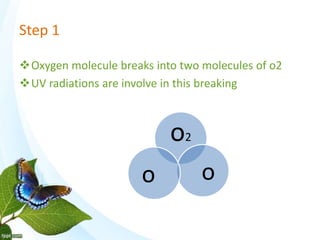
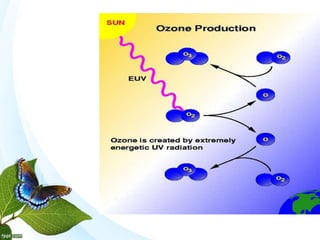
Step 1
Oxygen molecule breaks into two molecules of o2
UV radiations are involve in this breaking
o2
oo
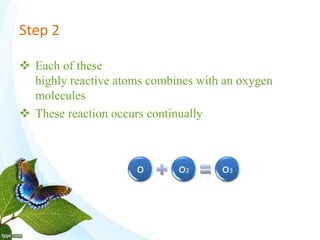
Step 2
 Each of these
highly reactive atoms combines with an oxygen
molecules
 These reaction occurs continually
o o2 o3
CONT..
As a result largest ozone production occurs
Its is balanced by destruction in chemical reaction
In each reaction an ozone molecule is lost
Its is considered as “good ozone”
troposphere
 Near to earth surface
 Ozone is produced by chemical reaction
 Primarily involve hydrocarbons and nitrogen
oxides
 All reactions are completed in the presence of
sunlight
 it is considered as “bad ozone”
 It is destroyed by naturally occurs reaction and
by human produce chemical reaction
UV radiations
 Portion of the electromagnetic spectrum between X-
rays and visible lights
 Scientists classify UV radiation into three types
i. UVA
ii. UVB
iii. UVC
Ozone depletion
 Destruction of upper atmospheric layers of ozone
 Which protect earth form UV radiation
 and thinning of ozone
EFFECTS OF OZONE LAYER DEPLETION
Effects on human and animal health
 Increased penetration of UV-B radiation
have adverse
 effects
 Cause many diseases like
 Eye diseases
 Skin cancer
 Infection diseases
 Experiments on animal prove UV radiation
effects immune system
Effects on terrestrial plants
• Physiological and developmental process of plants
• Thought of scientist
• UV-B cause mutation in plants
• Affects plant community
Effects on aquatic ecosystem
• Phytoplankton forms food web
• Phytoplankton have the limited productivity in
euphotic zone
• Many phytoplankton are capable of active
movement that enhance their productivity and
survival
• UV-b radiation effects motility and survival rate of
phytoplankton
Effects on air quality
• Reduction in stratospheric ozone
• Cause destruction of ozone and related oxidants such
as hydrogen peroxide
• Air quality required for normal environment is
destroyed
Effects on bio-geo-chemical cycle
• Affect terrestrial and aquatic bio geo chemical
cycle
I. Changes the production and decomposition of
plant matter
II. Reduction of primary production changes in
the uptake and release of atmospheric gases
III. Reduction of bacterioplankton growth in the
upper ocean etc.
• Nitrogen cycle is also affected by UV radiation
Effects on ultraviolet radiation
• Depletion of ozone layer leads the uv radiation to
reach on earth
• Largest decrease in ozone have been observed over
Antarctica
CATALYTIC DISTRUCTION OF STRATOSPHERIC
OZONE
Destroyed by reactions
Halogen gases
Most reactive gases
Three reaction cycles
Cycle 1
Made up of two basic reactions
1. Cl +o3
2. Clo +o2
Result
Chlorine act as a catalyst
Break the catalytic cycle
Cycle 2 and 3
Polar
Clo increase
Cycle 2,3 become dominant
Reactions of cycle 2
Clo +clo (clo2)2
(clo2)2+sunlight cloo+cl
Cloo cl+o2
Result
Reactions of cycle 3
Clo +bro cl+br+o2
Brcl +sunlight cl +br
Cl +o3 clo+o2
Br +o3 bro+o2
Result
Also react with nitrogen, hydrogen
Global warming and ozone depletion
Ozone hole
Not mechanism of global warming
Global warming
Chlorofluorocarbon
Down the capacity
Catalytic destruction of stratospheric
ozone
The most reactive gases are
chlorine(clo),bromine(bro)
Three principal reaction cycles that
destroy ozone
Cycle one
Cl+o3 and clo+o2
Convert one ozone and one oxygen atom
into two oxygen molecules
Polar cycle 2 and 3
Cycle 2,3 become dominant reaction
mechanism for polar ozone less because
of the high abundance of clo and low
abundance of o2
 cycle 2 begins with the reaction of clo and
3 with reaction of clo with bro
Destroy two ozone molecules and create
three oxygen molecules
These reactions occur naturally in
stratosphere
Global warming and ozone depletion
A gradual increase in the overall
temperature of the earth’s atmosphere
generally attributed to the green house
effect caused by increased level of co2 and
other pollutants
These gases spread around the planet like
blanket ,capturing the solar heat that
would otherwise be radiated out into
space
 Ozone Layer (components, formation and depletion)

Ozone Layer (components, formation and depletion)

  • 2.
    TOPIC OZONE LAYER BIOTECHNLOGY PREPAREDBY RIDA,SAIMA REHMAN,TAYABA GUL, MARYAM YOUSAF,QANDEEL IQBAL, AND HUMAIRA
  • 3.
  • 4.
    Introduction to ozonelayer  What is Ozone? • Unstable, poisonous, allotrope of oxygen. • Forms layer. • Process of Photolysis  Ozone layer:- – Upper atmosphere. – Works as a protective shield. – High level ozone.
  • 5.
    CONT..  Structure ofozone:- – Bent molecule. – Polar and electrophilic.
  • 6.
    CONT..  Properties ofozone layer:- – Pale blue gas. – Absorbs UV rays. – O3. – Mol.weight: 48. – Diamagnetic. – Oxidizing agent. – Insoluble in water and soluble in inert polar solvents.
  • 7.
    CONT..  Location ofozone layer:- – Stratosphere the upper region. – Troposphere the lower region.  Abundance of ozone layer:- – Oxygen(O2) and Nitrogen(N2). – Stratosphere: 1 billion molecules = 1 million molecules. – Troposphere: 100 molecules =1 million molecules.
  • 8.
  • 9.
    Distribution of ozonelayer over globe: • Sum of al the ozone layer in the atmosphere • Varies with location on timescale ranging from daily to seasonal.
  • 10.
    Units used forozone measurement: • Dobson unit • Ozone pioneer G.M.B dobson (1920s to 1970s) • 1mm thickness = 1DU
  • 11.
    Ultraviolet radiations: • Thatportion of the electromagnetic spectrum between x-rays and visible light. • Source of vitamin D • Not seen or felt • Health effects of too much UV radiations.
  • 13.
    Types of UVRADIATIONS: • UVA wavelength (320-400nm) • UVB wavelength (290-320nm) • UVC wavelength (100-290nm)
  • 15.
    Ozone formation • Ozonehas tow layers Stratosphere Troposphere
  • 16.
    Stratosphere  It protectlife on earth  In 1920 it was first observed  It is formed naturally by chemical reaction  It involve; i. Oxygen ii. UV radiation
  • 17.
    stratosphere oxygen molecules makesup 21% of the atmosphere Two oxygen molecules are involve in formation of stratospheric ozone The stratospheric ozone is formed in two steps
  • 18.
    Step 1 Oxygen moleculebreaks into two molecules of o2 UV radiations are involve in this breaking o2 oo
  • 19.
    Step 2  Eachof these highly reactive atoms combines with an oxygen molecules  These reaction occurs continually o o2 o3
  • 20.
    CONT.. As a resultlargest ozone production occurs Its is balanced by destruction in chemical reaction In each reaction an ozone molecule is lost Its is considered as “good ozone”
  • 22.
    troposphere  Near toearth surface  Ozone is produced by chemical reaction  Primarily involve hydrocarbons and nitrogen oxides  All reactions are completed in the presence of sunlight  it is considered as “bad ozone”  It is destroyed by naturally occurs reaction and by human produce chemical reaction
  • 23.
    UV radiations  Portionof the electromagnetic spectrum between X- rays and visible lights  Scientists classify UV radiation into three types i. UVA ii. UVB iii. UVC
  • 24.
    Ozone depletion  Destructionof upper atmospheric layers of ozone  Which protect earth form UV radiation  and thinning of ozone
  • 25.
    EFFECTS OF OZONELAYER DEPLETION
  • 26.
    Effects on humanand animal health  Increased penetration of UV-B radiation have adverse  effects  Cause many diseases like  Eye diseases  Skin cancer  Infection diseases  Experiments on animal prove UV radiation effects immune system
  • 27.
    Effects on terrestrialplants • Physiological and developmental process of plants • Thought of scientist • UV-B cause mutation in plants • Affects plant community
  • 28.
    Effects on aquaticecosystem • Phytoplankton forms food web • Phytoplankton have the limited productivity in euphotic zone • Many phytoplankton are capable of active movement that enhance their productivity and survival • UV-b radiation effects motility and survival rate of phytoplankton
  • 29.
    Effects on airquality • Reduction in stratospheric ozone • Cause destruction of ozone and related oxidants such as hydrogen peroxide • Air quality required for normal environment is destroyed
  • 30.
    Effects on bio-geo-chemicalcycle • Affect terrestrial and aquatic bio geo chemical cycle I. Changes the production and decomposition of plant matter II. Reduction of primary production changes in the uptake and release of atmospheric gases III. Reduction of bacterioplankton growth in the upper ocean etc. • Nitrogen cycle is also affected by UV radiation
  • 31.
    Effects on ultravioletradiation • Depletion of ozone layer leads the uv radiation to reach on earth • Largest decrease in ozone have been observed over Antarctica
  • 32.
    CATALYTIC DISTRUCTION OFSTRATOSPHERIC OZONE Destroyed by reactions Halogen gases Most reactive gases Three reaction cycles
  • 33.
    Cycle 1 Made upof two basic reactions 1. Cl +o3 2. Clo +o2 Result Chlorine act as a catalyst Break the catalytic cycle
  • 34.
    Cycle 2 and3 Polar Clo increase Cycle 2,3 become dominant Reactions of cycle 2 Clo +clo (clo2)2 (clo2)2+sunlight cloo+cl Cloo cl+o2 Result
  • 35.
    Reactions of cycle3 Clo +bro cl+br+o2 Brcl +sunlight cl +br Cl +o3 clo+o2 Br +o3 bro+o2 Result Also react with nitrogen, hydrogen
  • 36.
    Global warming andozone depletion Ozone hole Not mechanism of global warming Global warming Chlorofluorocarbon Down the capacity
  • 37.
    Catalytic destruction ofstratospheric ozone The most reactive gases are chlorine(clo),bromine(bro) Three principal reaction cycles that destroy ozone Cycle one Cl+o3 and clo+o2 Convert one ozone and one oxygen atom into two oxygen molecules
  • 38.
    Polar cycle 2and 3 Cycle 2,3 become dominant reaction mechanism for polar ozone less because of the high abundance of clo and low abundance of o2  cycle 2 begins with the reaction of clo and 3 with reaction of clo with bro Destroy two ozone molecules and create three oxygen molecules These reactions occur naturally in stratosphere
  • 39.
    Global warming andozone depletion A gradual increase in the overall temperature of the earth’s atmosphere generally attributed to the green house effect caused by increased level of co2 and other pollutants These gases spread around the planet like blanket ,capturing the solar heat that would otherwise be radiated out into space