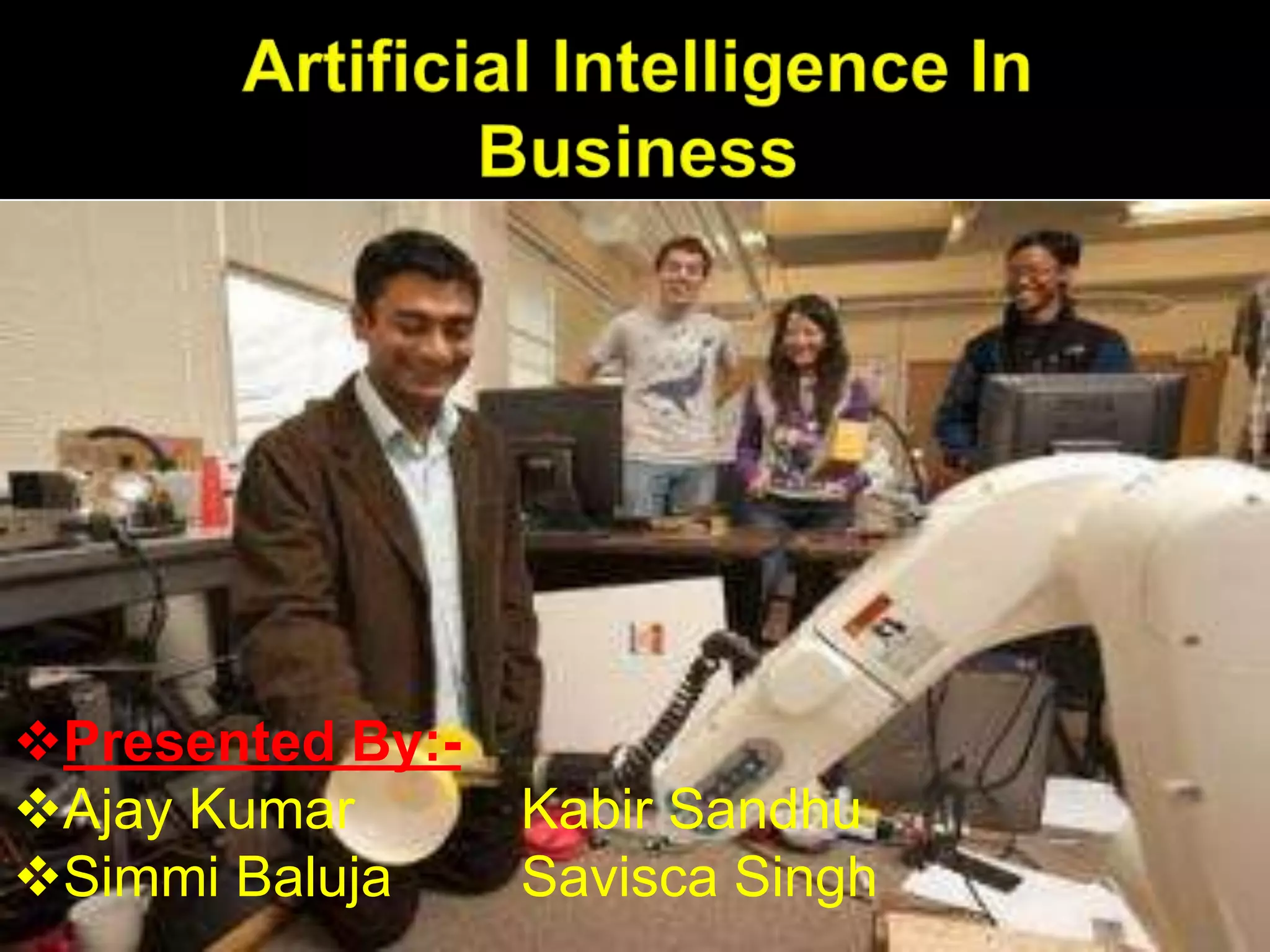
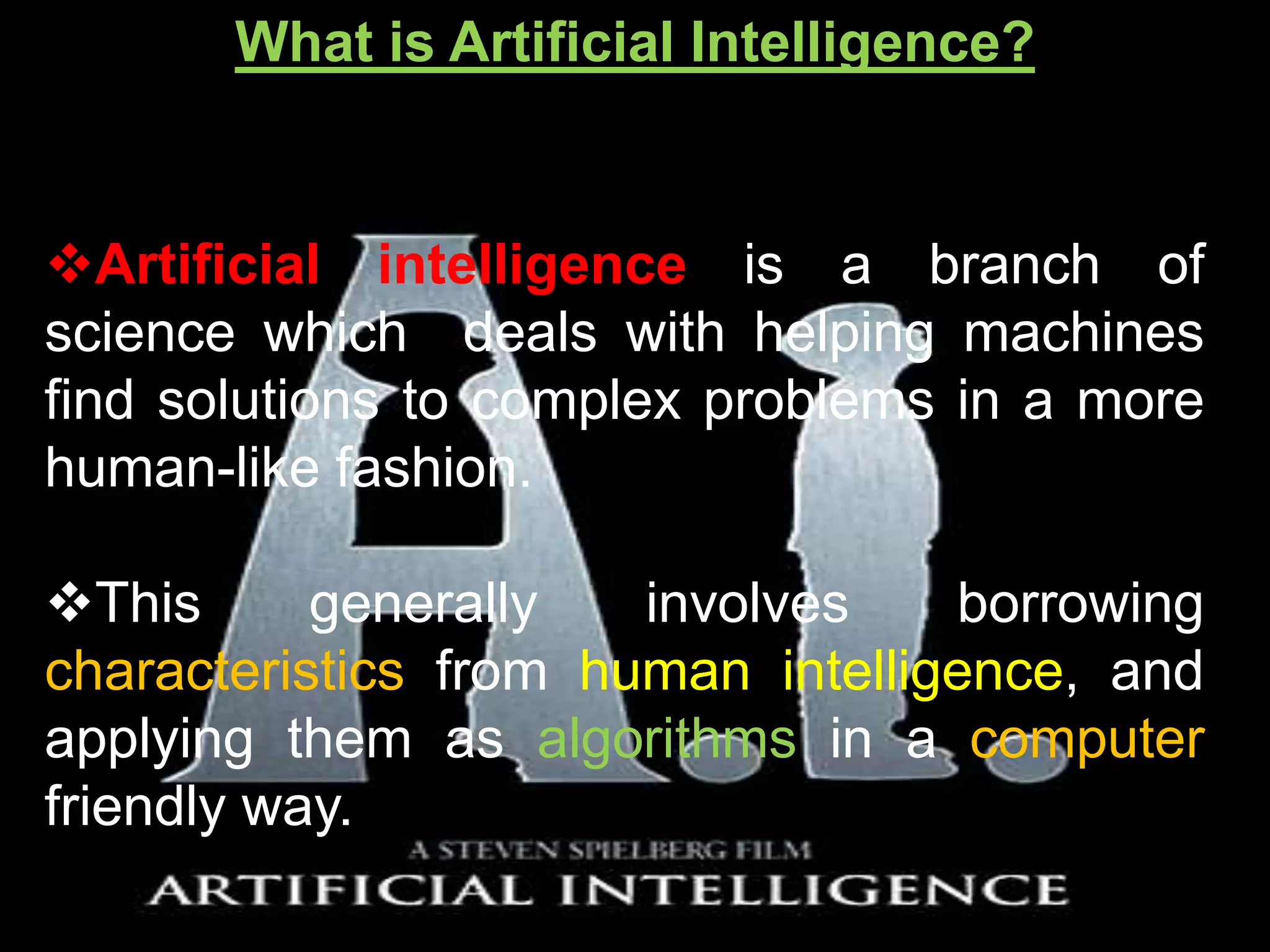
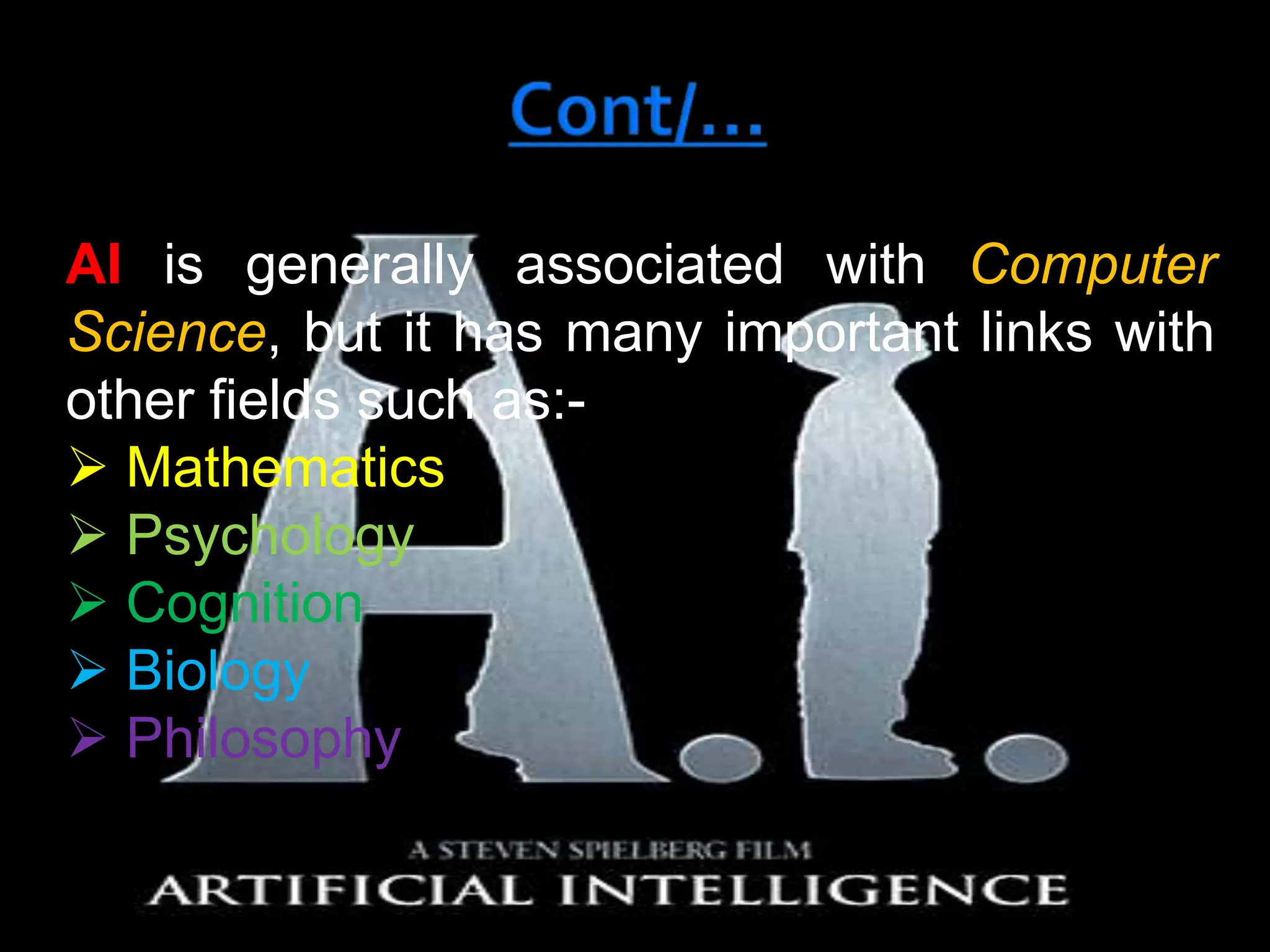
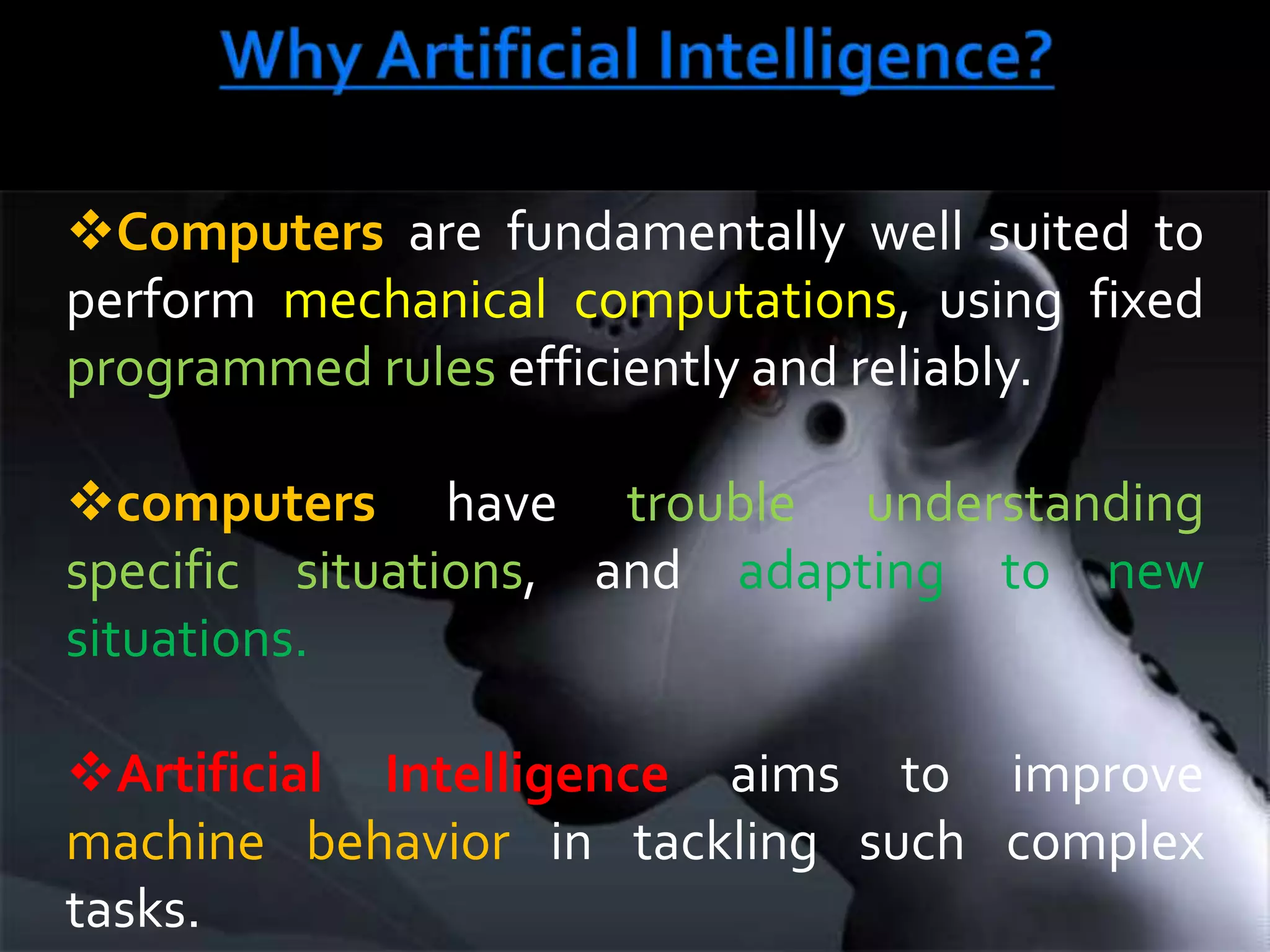
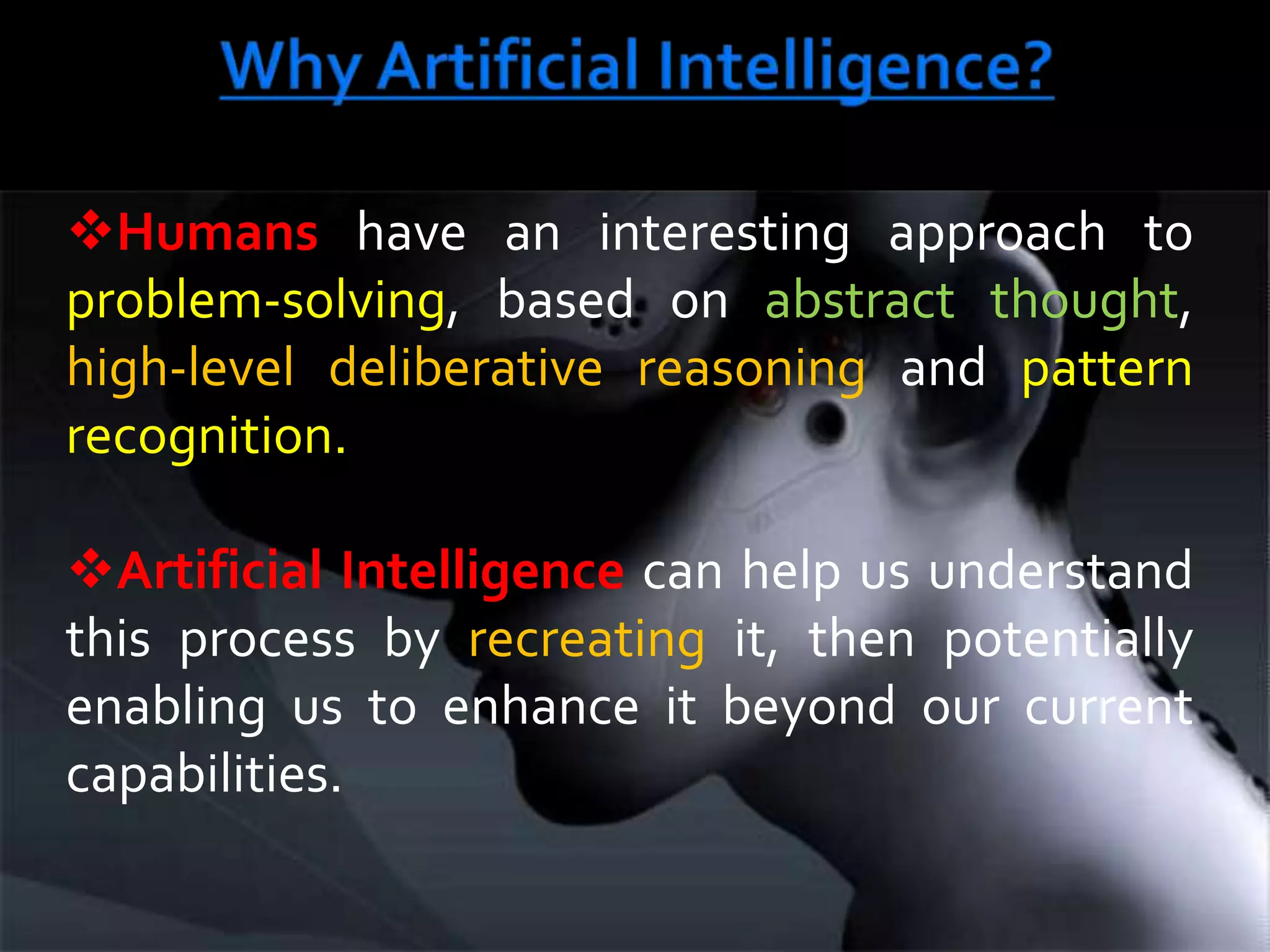


Artificial intelligence (AI) is a branch of computer science that aims to help machines solve complex problems like humans by borrowing characteristics from human intelligence. AI has many applications in business including credit screening, risk assessment, forecasting, portfolio management, customer analytics, and human resources. The future of AI could include intelligent personal robots and autonomous vehicles networked together. While AI may replace some human jobs, it will likely produce more applications and augment human capabilities rather than replace humans altogether.
Overview of the presentation by Ajay Kumar, Kabir Sandhu, Simmi Baluja, and Savisca Singh.
Definition and branches of AI, implications for human-like problem-solving, and links with other disciplines.
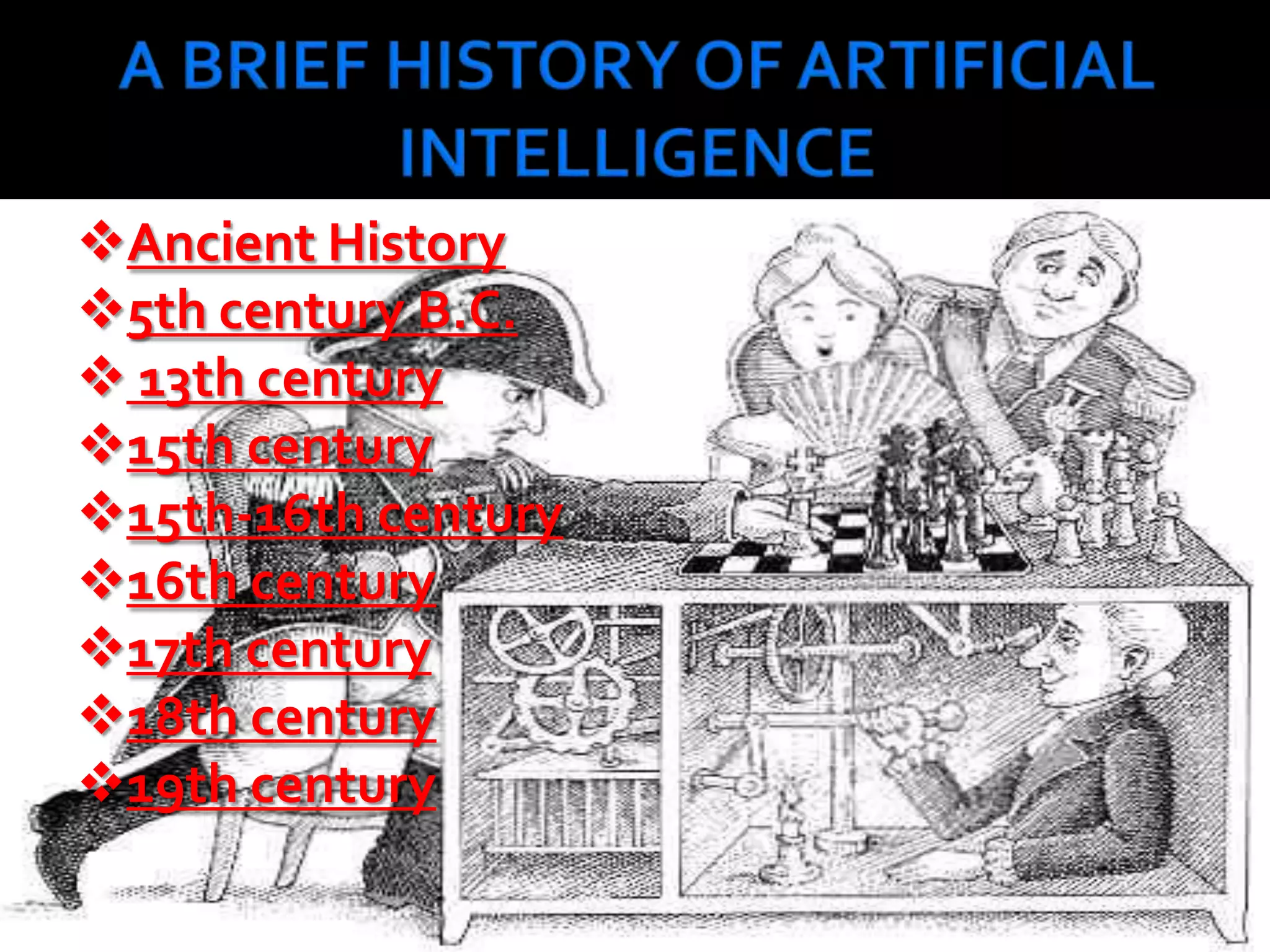
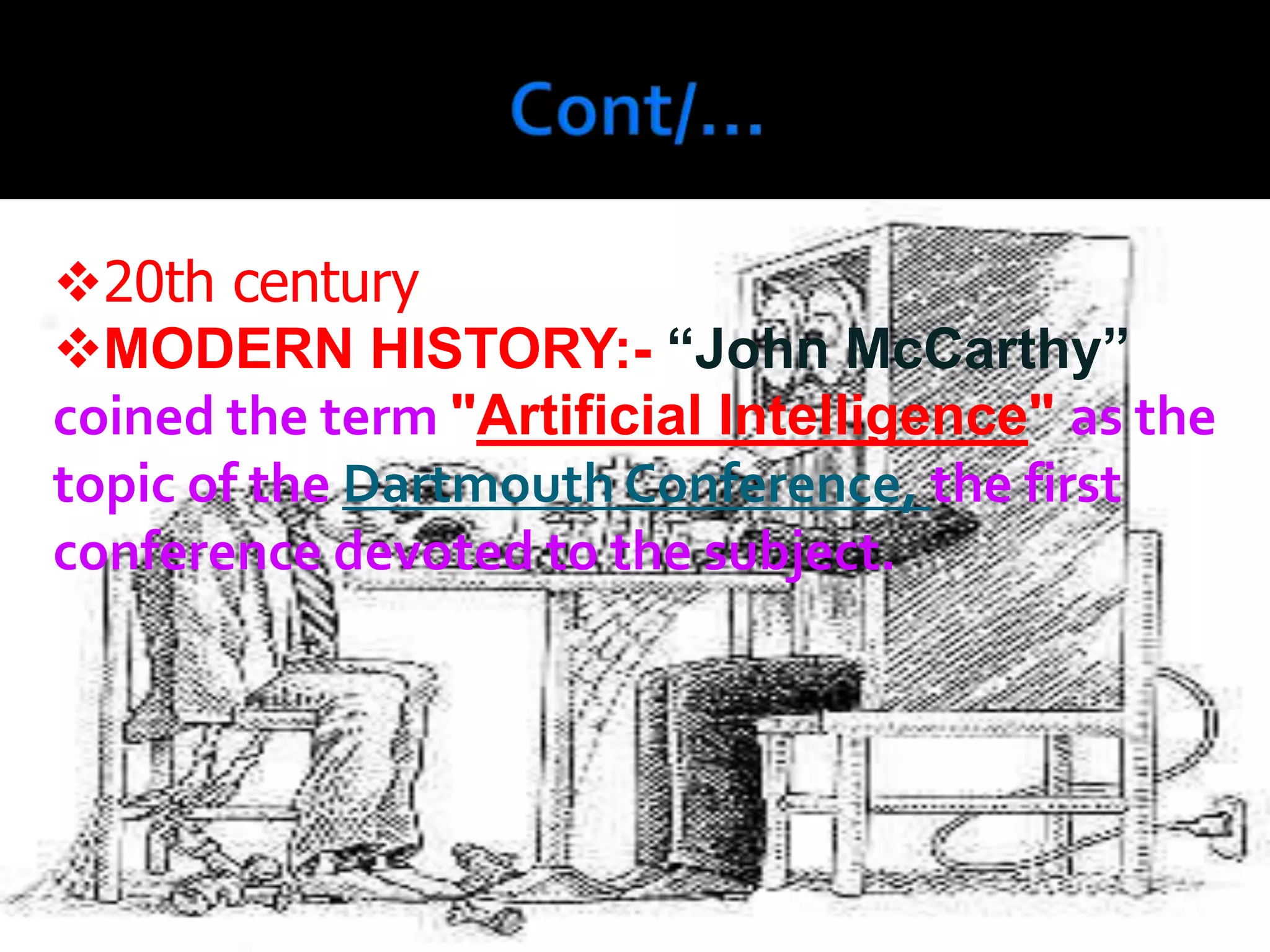
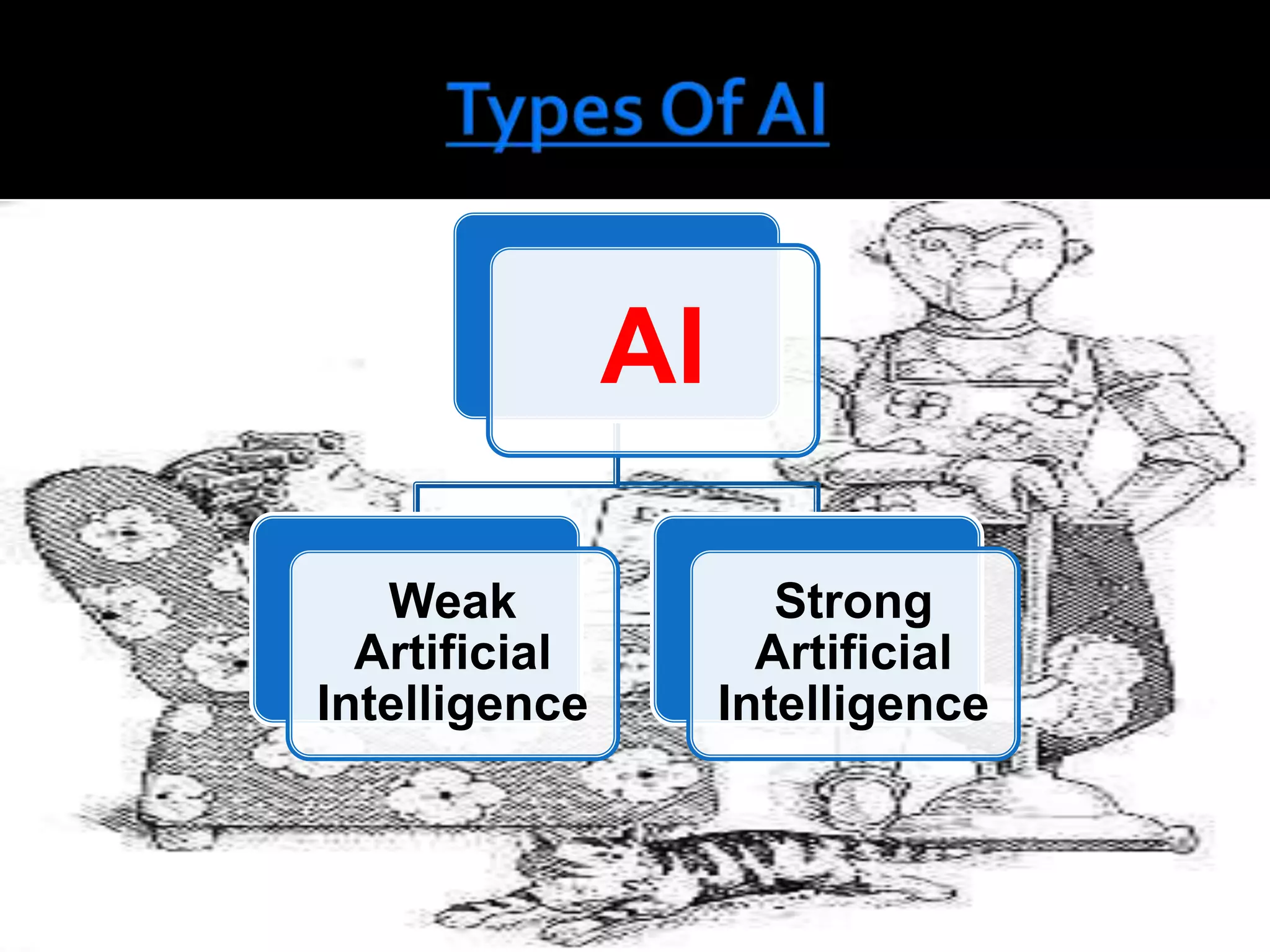
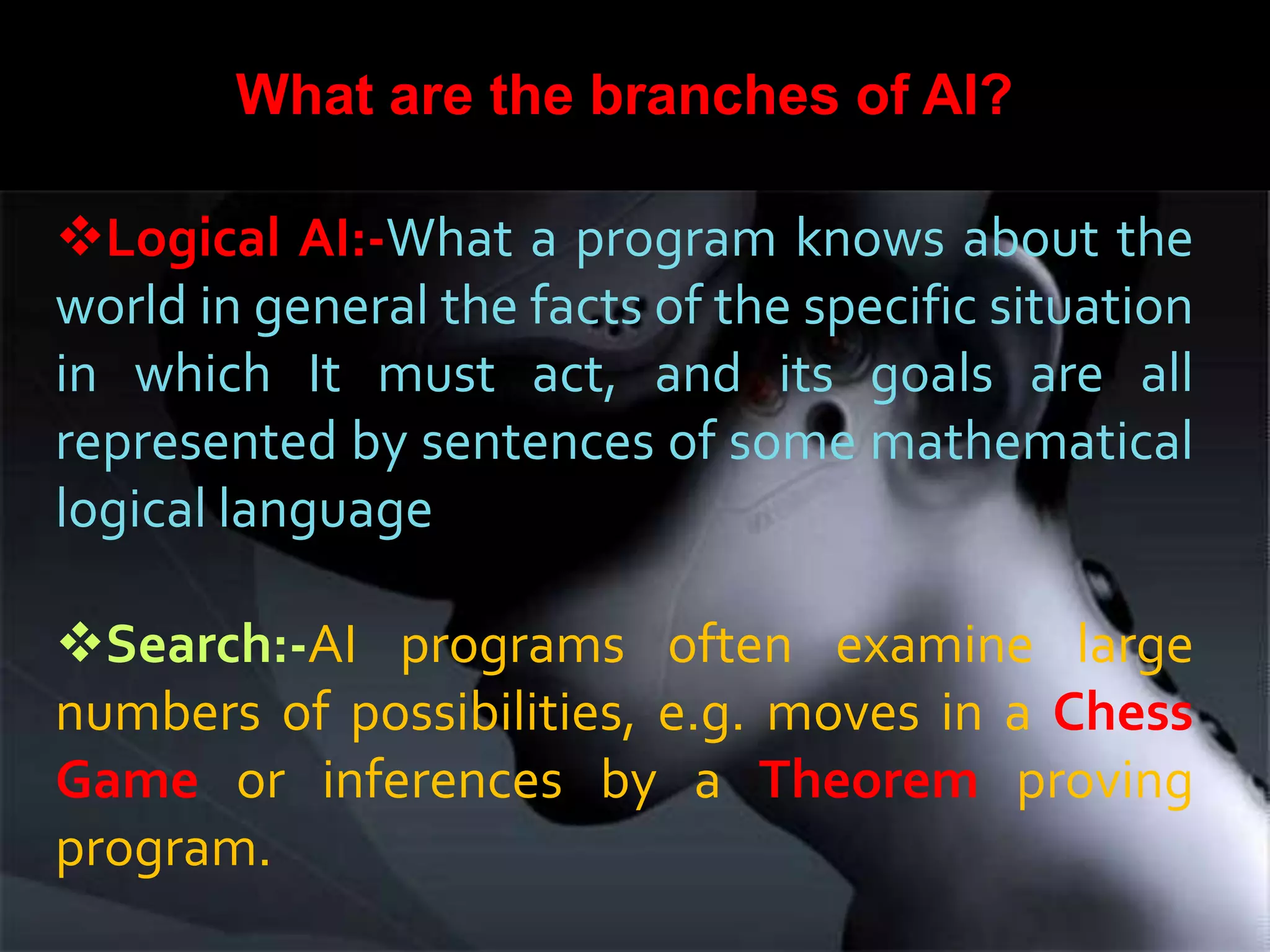
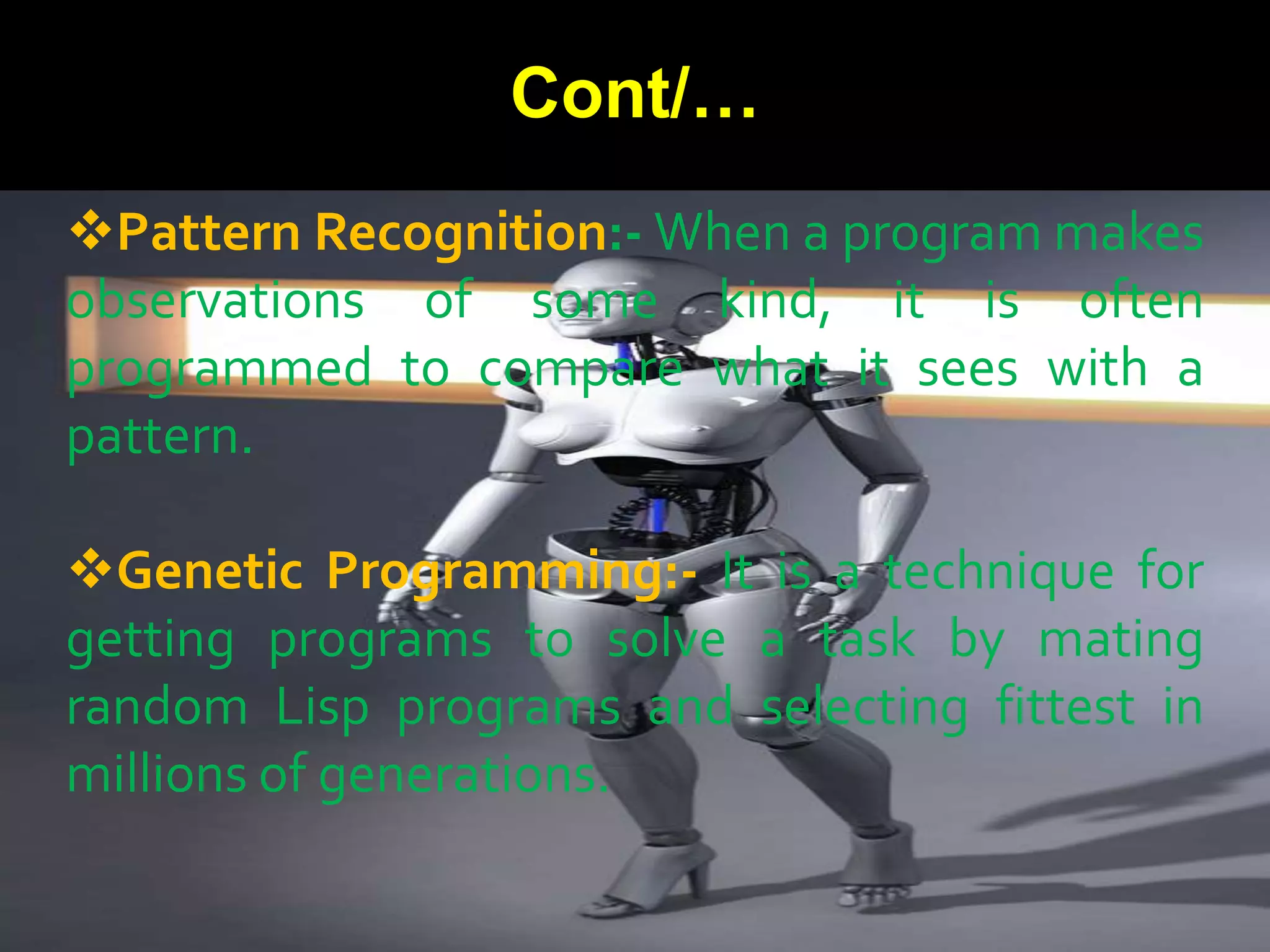
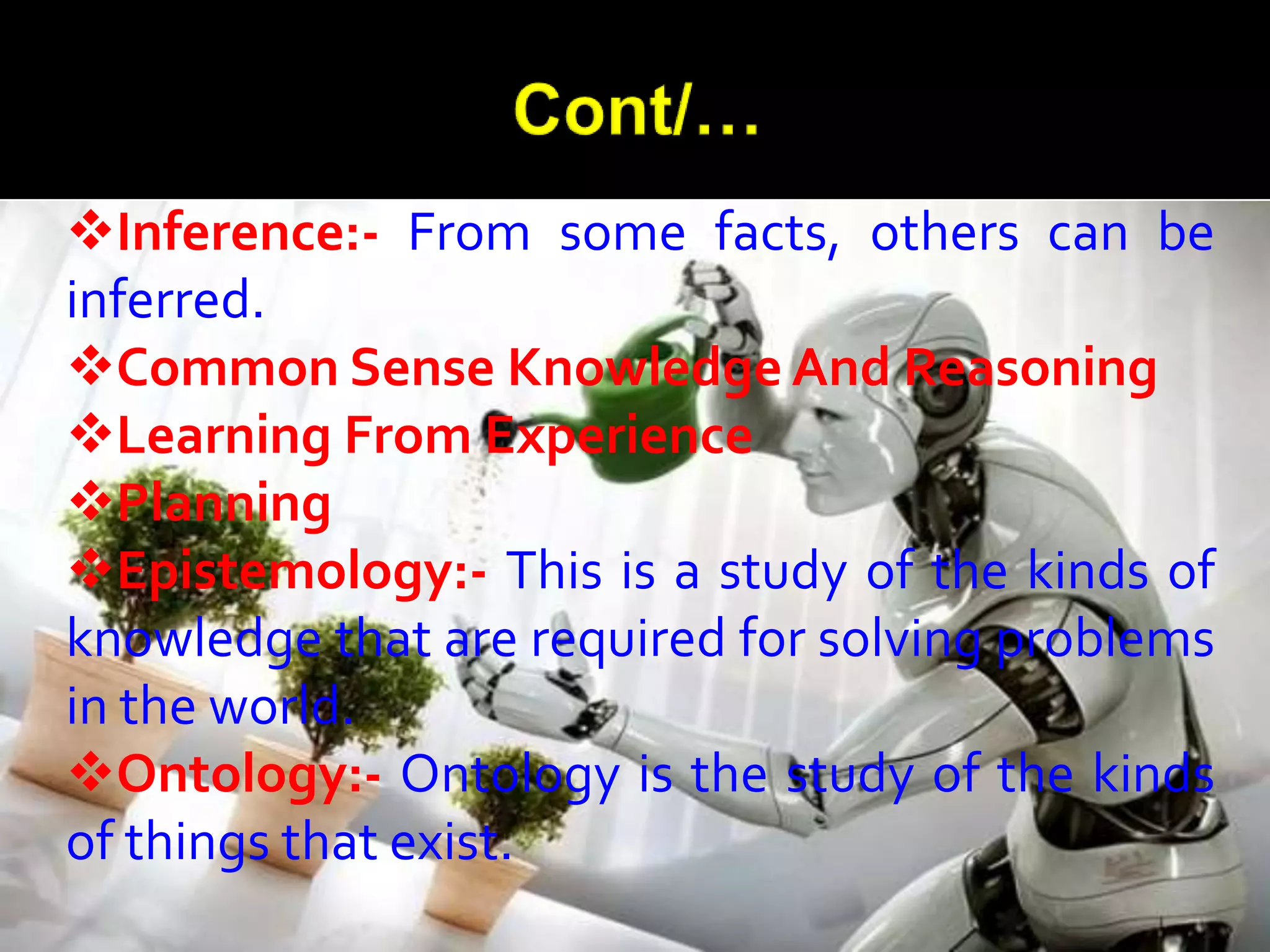
A brief historical backdrop of AI, highlighting key developments from ancient times to the Dartmouth Conference. Types of AI include Logical AI, Search, Pattern Recognition, Genetic Programming, and reasoning techniques.
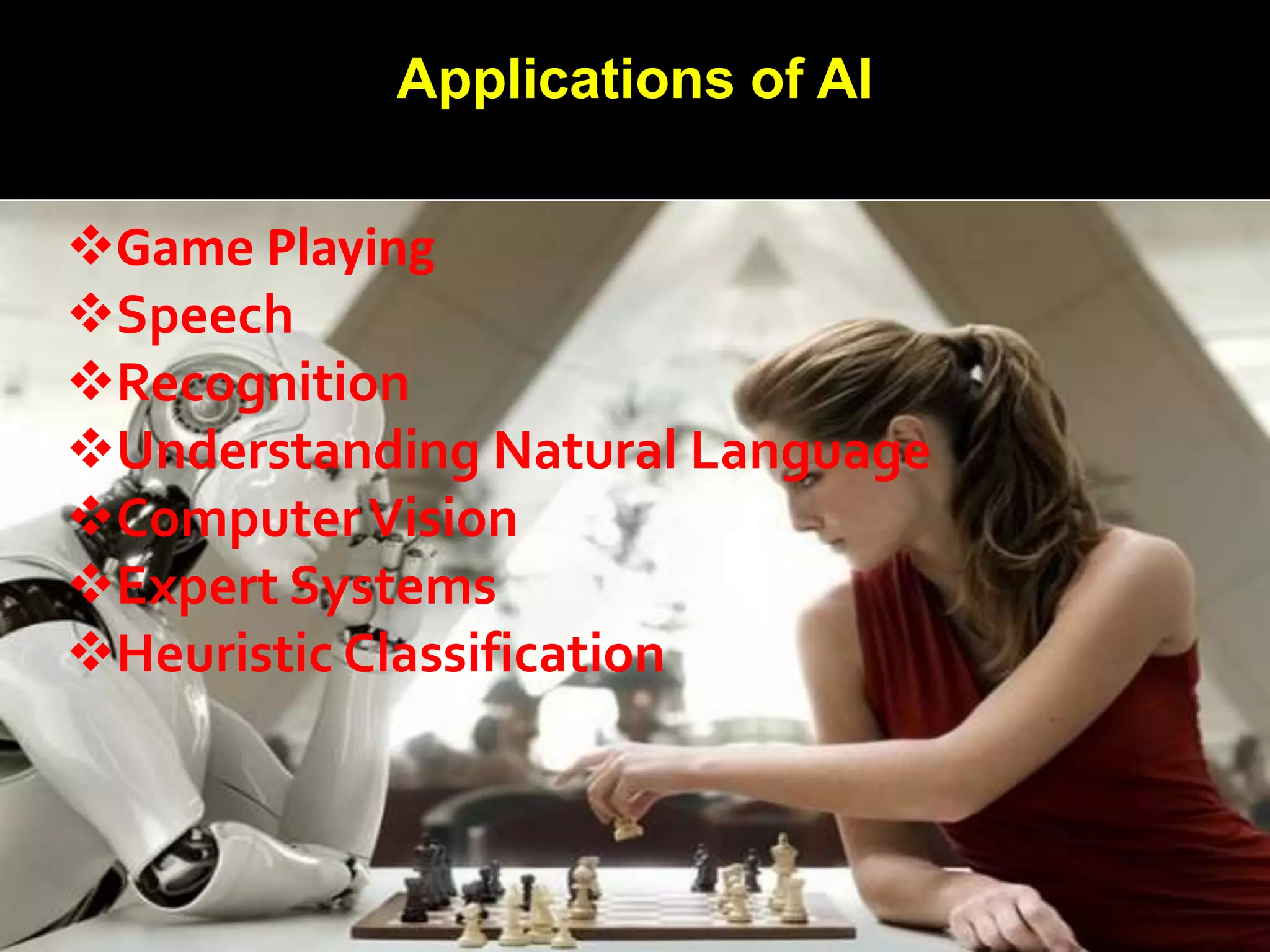
AI applications across various fields like computer vision, game playing, speech recognition, and expert systems.
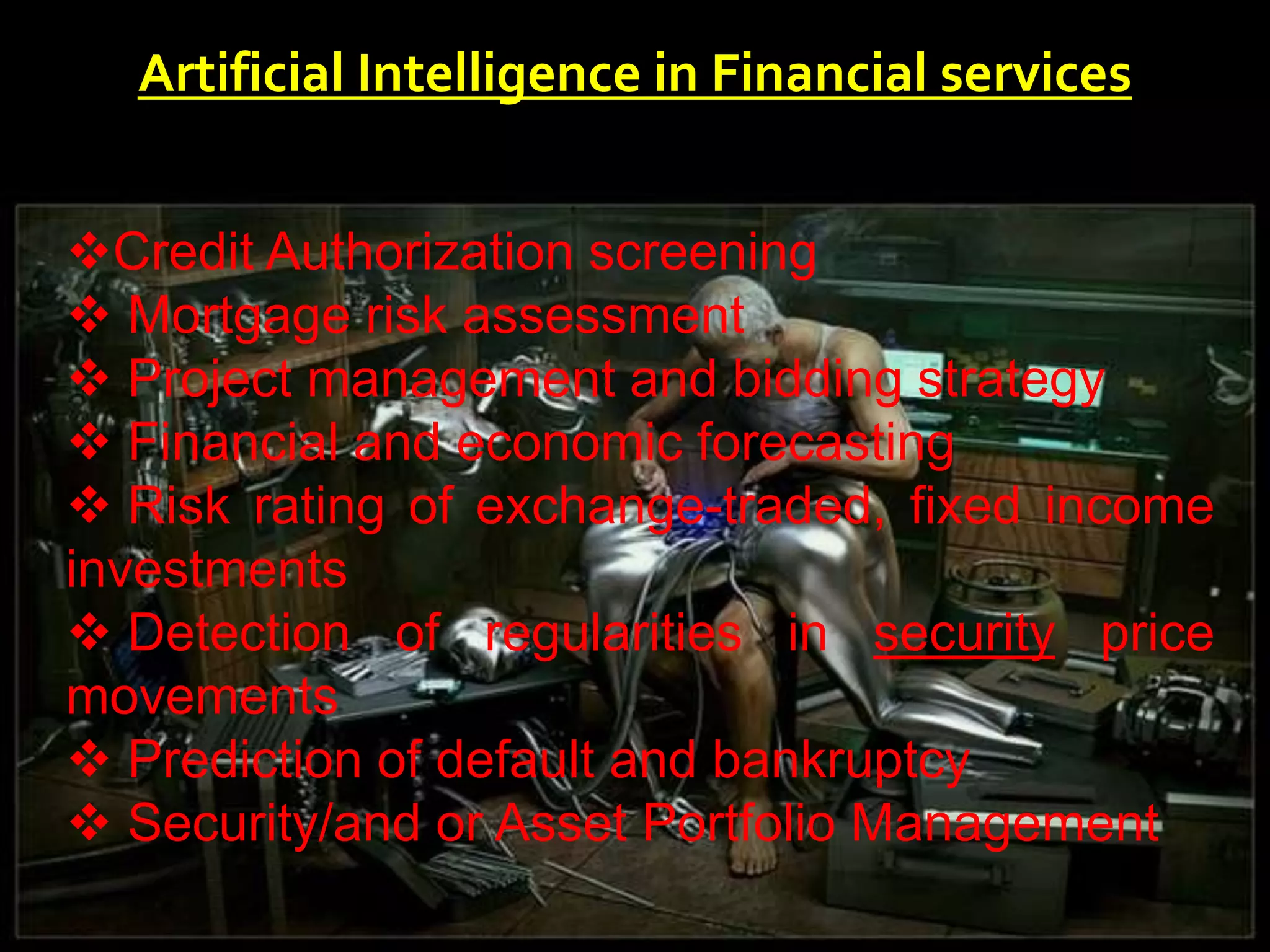
AI's role in financial services including credit screening, risk assessment, forecasting, and portfolio management.
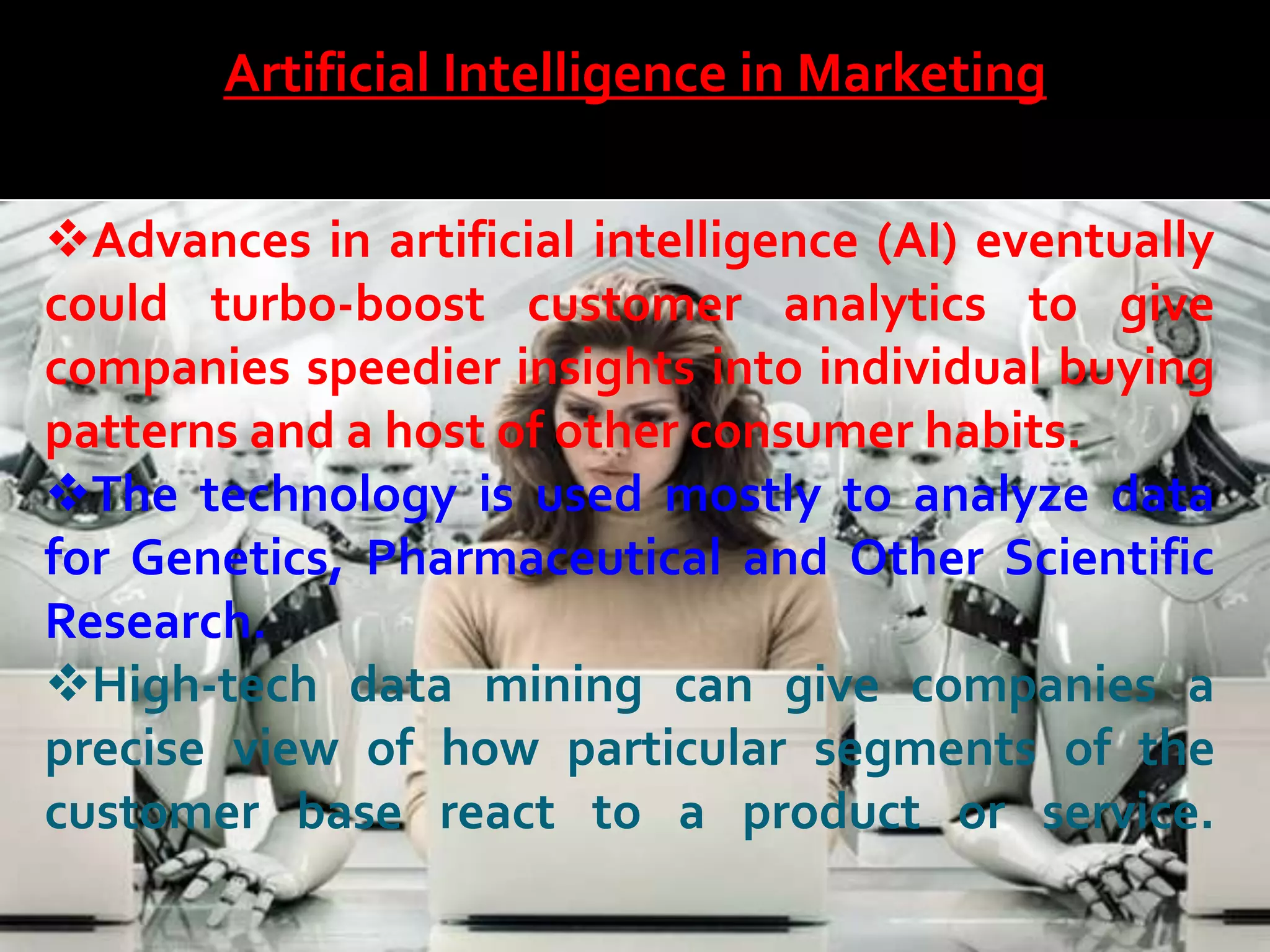
AI enhancing customer analytics and data mining for better understanding of consumer behavior and trends.
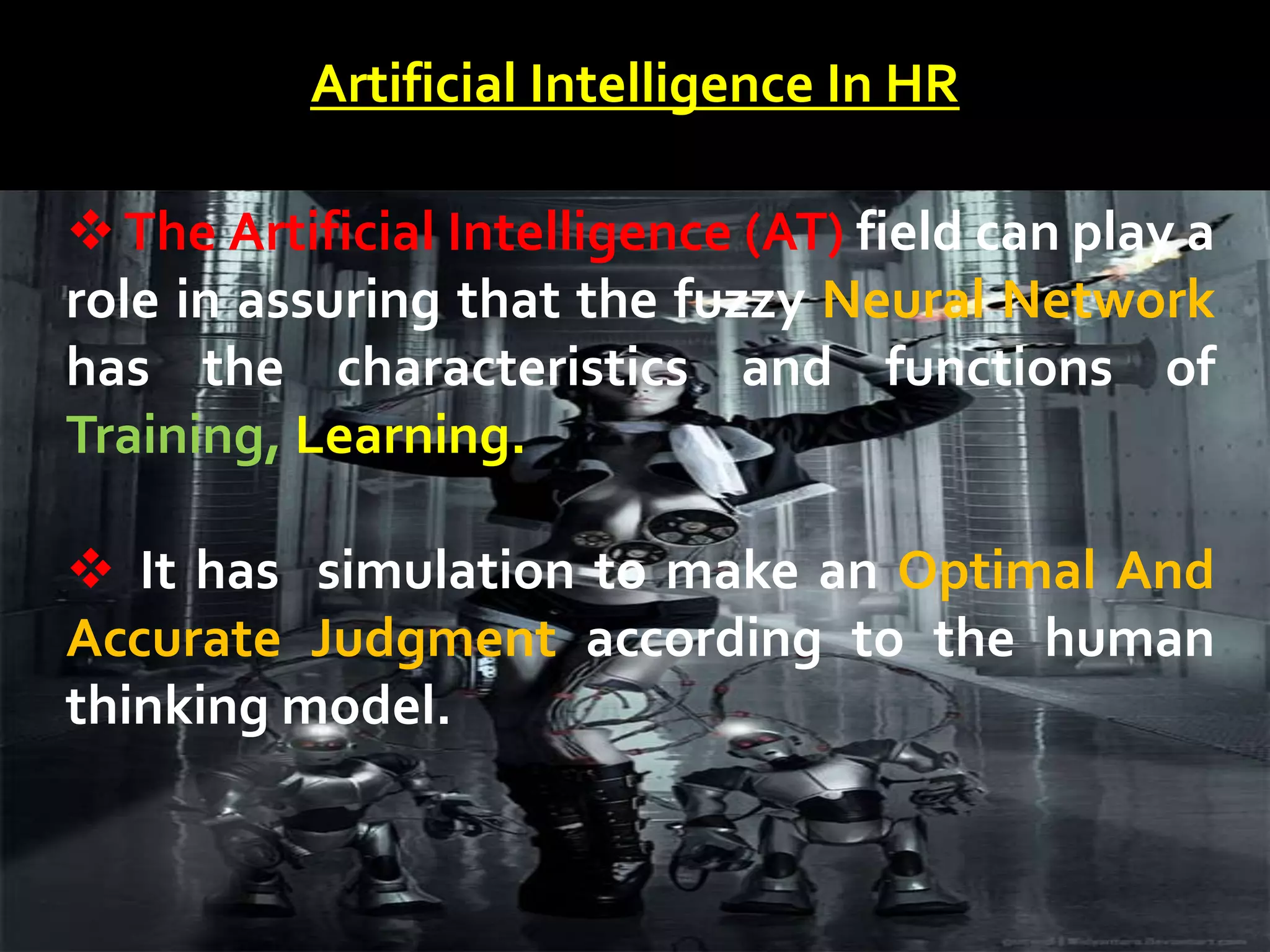
The role of AI in HR for training and decision making through simulations mimicking human thought processes.
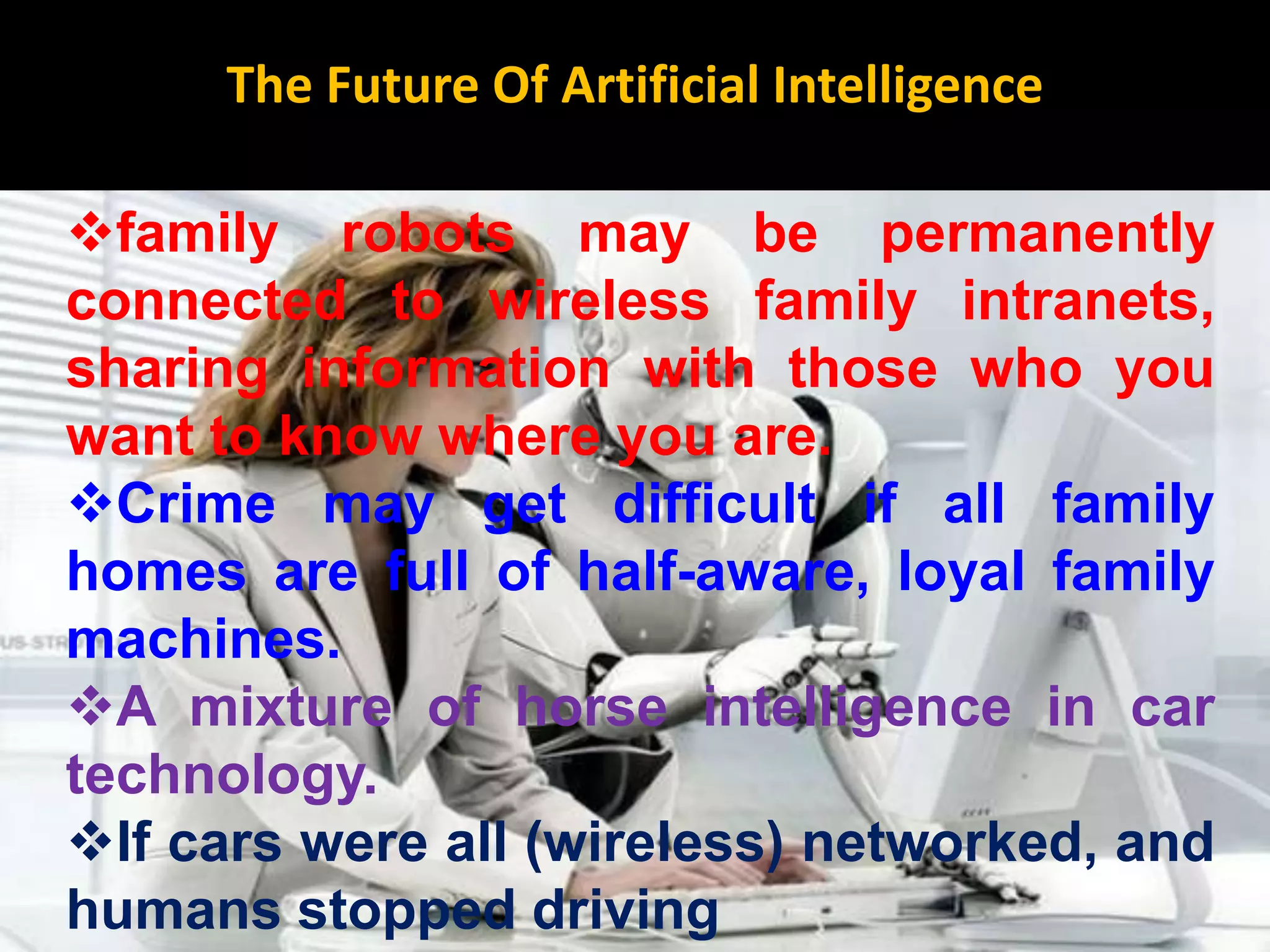
Predictions about AI integration in daily life, including robotics, crime prevention, and vehicle automation.
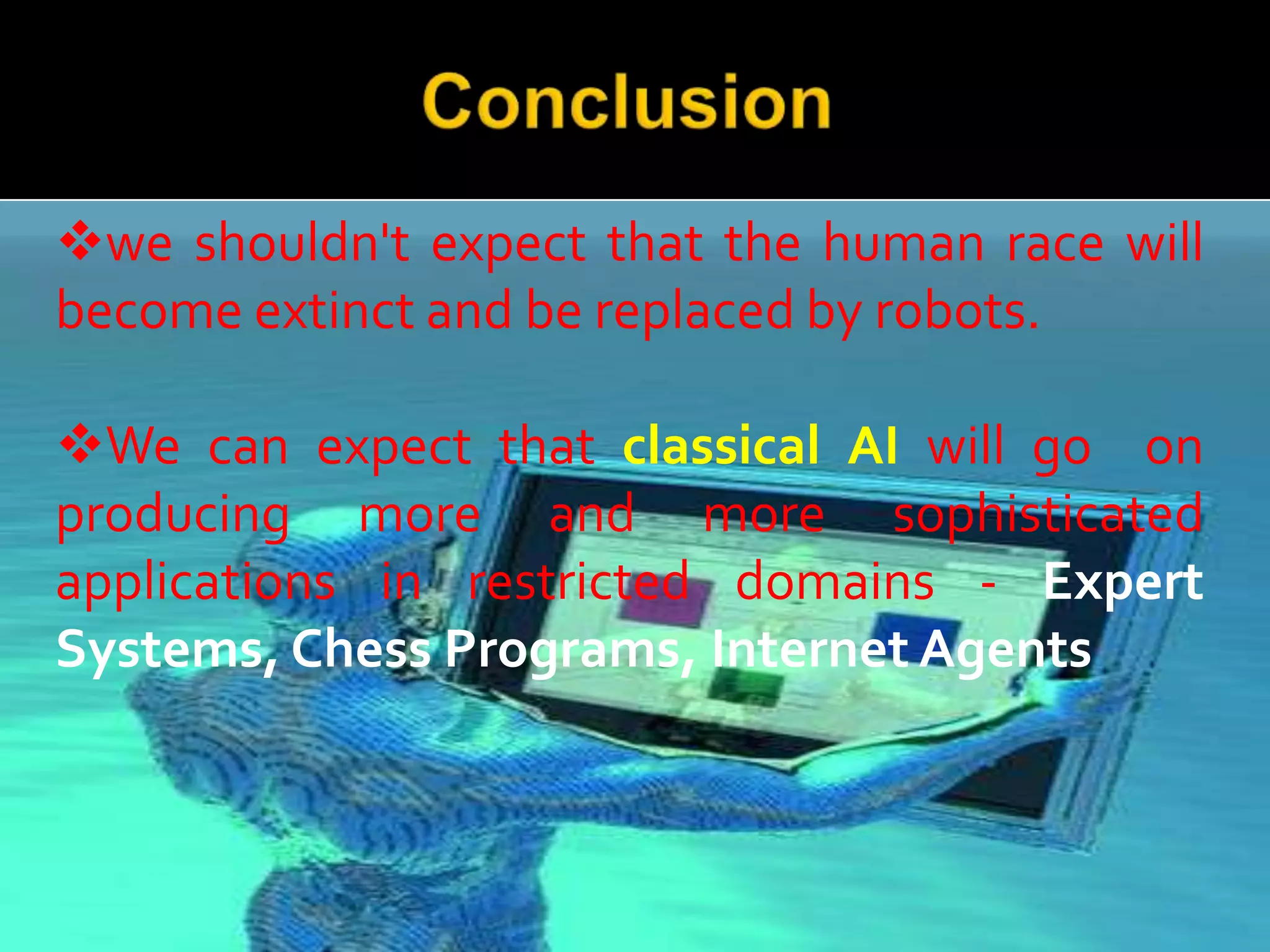
The future of AI development, emphasizing the continued advancement of sophisticated applications in niche areas.
Closing remarks and gratitude from the presenters.


![PassFab iPhone Unlocker 3.0.21.8 Full Crack [Latest]](https://cdn.slidesharecdn.com/ss_thumbnails/artificialintelligence13-250529091340-e0db214f-thumbnail.jpg?width=640&height=640&fit=bounds)

![FonePaw Data Recovery 2.6.0 Crack Full Version [Latest]](https://cdn.slidesharecdn.com/ss_thumbnails/artificialintelligence13-250528092522-e4cb8a2d-thumbnail.jpg?width=640&height=640&fit=bounds)

![Apowersoft Screen Recorder Pro 2.4.2.3 Full Crack [Latest]](https://cdn.slidesharecdn.com/ss_thumbnails/artificialintelligence3-250520121439-7278bb97-thumbnail.jpg?width=640&height=640&fit=bounds)

![Adobe Character Animator CC 2025 v22.0.0.111 Full Crack [Latest]](https://cdn.slidesharecdn.com/ss_thumbnails/artificialintelligence3-250521091638-30c30c30-thumbnail.jpg?width=640&height=640&fit=bounds)
![Extreme Picture Finder 3.51.4 with Crack Free Download [Latest]](https://cdn.slidesharecdn.com/ss_thumbnails/artificialintelligence3-250603094856-8c2bb257-thumbnail.jpg?width=640&height=640&fit=bounds)


