Presented By : Tenzin Topgyal
PhD Biochemistry
Introduction
 RNA editing is a molecular process through which some cells
can make discrete changes to specific nucleotide sequences
within a RNA molecule after it has been generated
by RNA polymerase.
 Defination: any type of change in RNA trancript sequence
without RNA splicing called RNA editing.
 In pre-RNA having three types of modification occur to
become a mature RNA
1) Capping at 5 end and polyadenylation at 3 end
2) RNA editing
3) RNA splicing
 This is done to obtain large diversity in proteins by using
small no of genes.
 Editing is done by insertion , modification or deletion of
one or more bases.
 Editing was firstly discovered in mitochondria of
Trypnosomes.
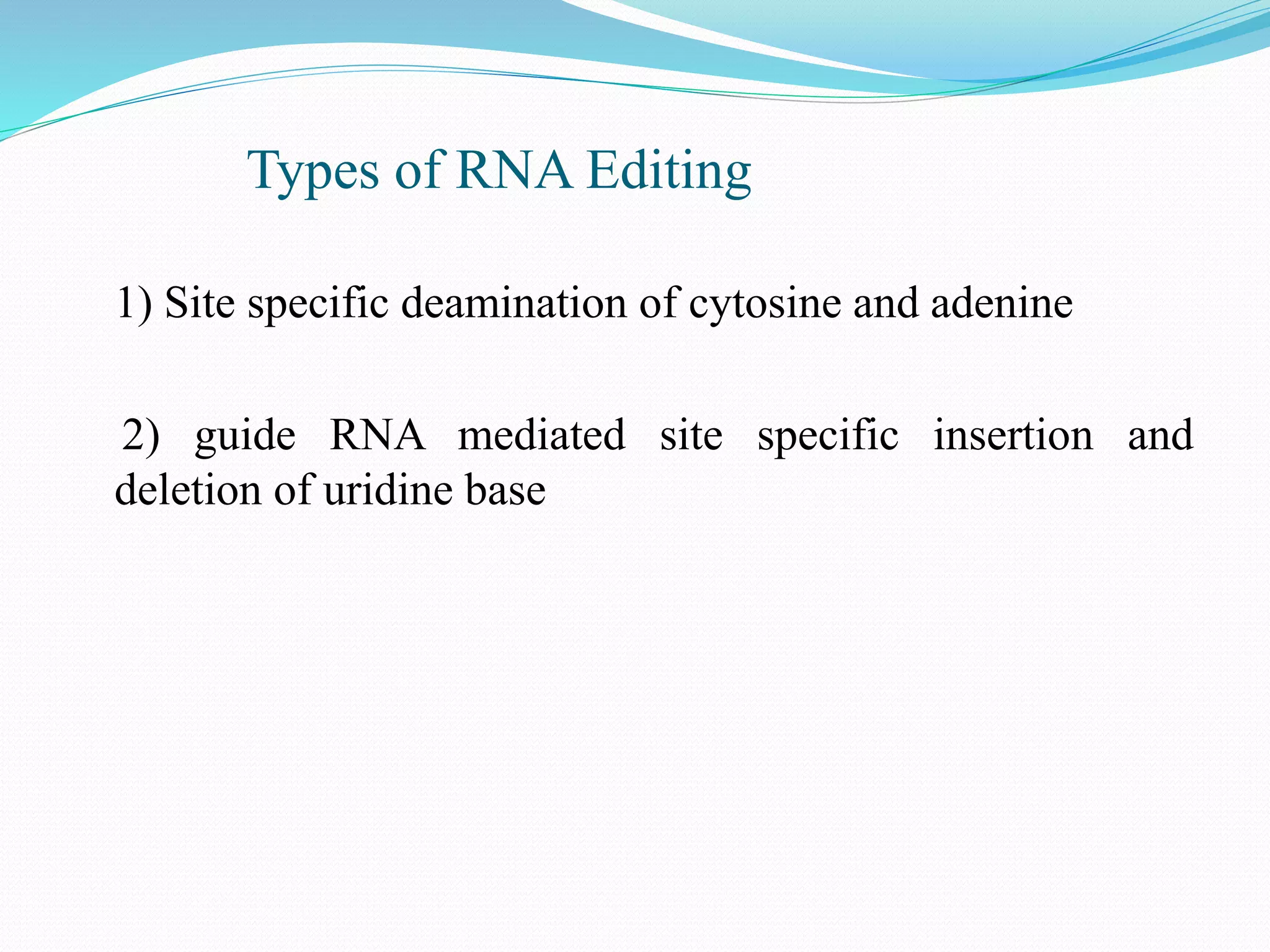
Types of RNA Editing
1) Site specific deamination of cytosine and adenine
2) guide RNA mediated site specific insertion and
deletion of uridine base
Site specific deamination of cytosine and adenine
 Cytidine deamination is tissue or site specific.
 Like Cytidine deaminase occur in intestine carry out
deamination of cytosine in mRNA of ApoB100 genes to produce
apoB48
Mechanism of cytosine deamination to uracil
 A Cytidine deaminase activity involved in Apobec protein
 Another protein ACF (apobec complimentation factor) is
also required
 Apobec + ACF complex called as editisome
 Both recognizes the sequences flanking the C to edited.
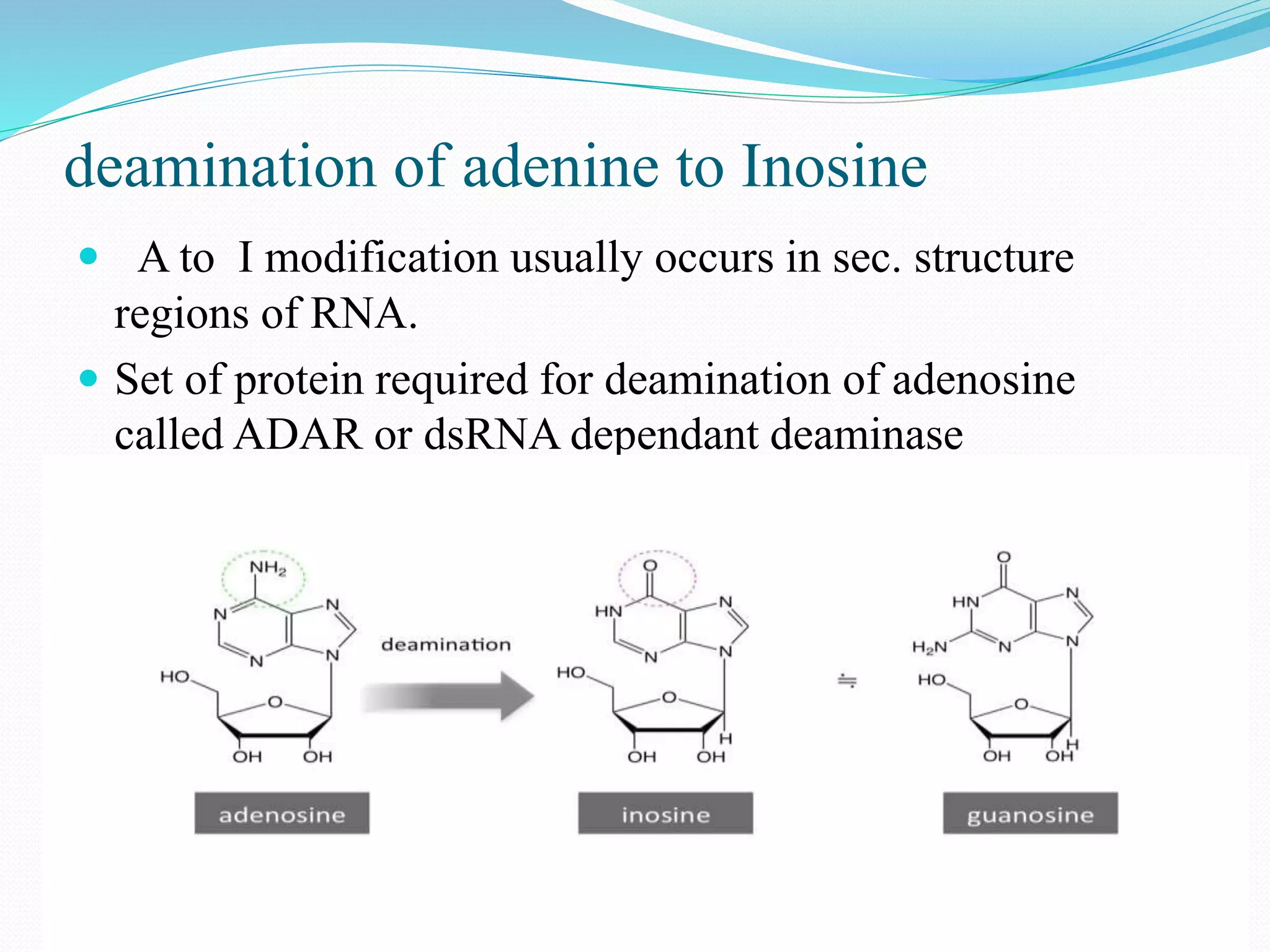
deamination of adenine to Inosine
 A to I modification usually occurs in sec. structure
regions of RNA.
 Set of protein required for deamination of adenosine
called ADAR or dsRNA dependant deaminase
 This ionise can be base pair with either A,T,G or C
 Inosine detect as guanine during translation.
 Eg. Different types of glut receptars for insuline
Mechanism used for deamination of C U
guide RNA mediated site specific insertion and
deletion of uridine base
 guide RNA : it is a part of degraded introns.
 It is a small fraction of RNA sequence just come out of the
splicing of RNA.
 This small part of rna act as guide RNA
Guide RNA guide the process of RNA editing in eukaryotes
that’s why called as guide RNA.
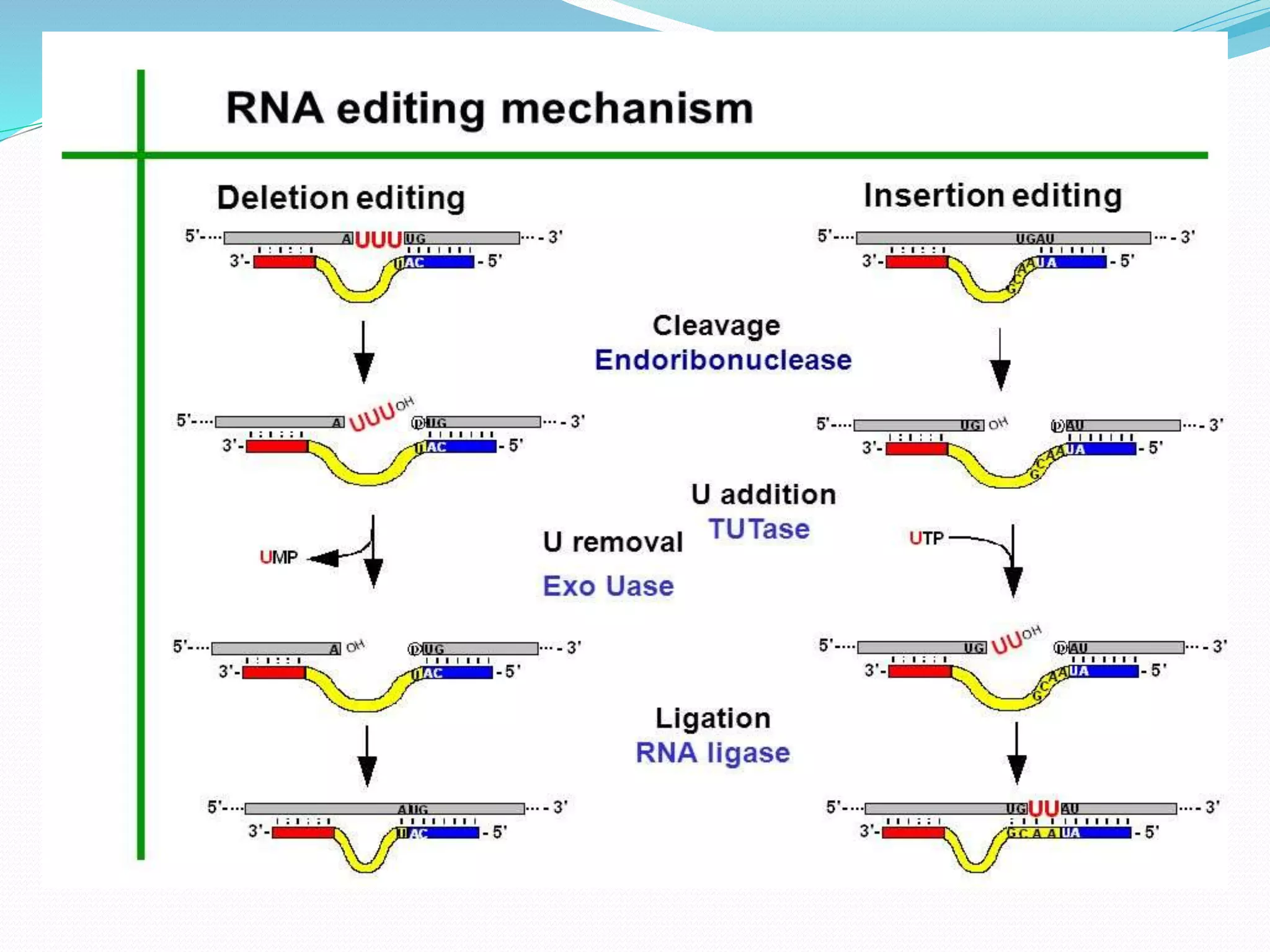
Mechanism of gRNA mediated RNA editing
 Steps :
1) hybridization of RNA with gRNA
2) cleavage of RNA with endonuclease
3) activity of TuTase and addition of uridine base
4) ligation of nick using ligase
Significance of RNA editing
 It is essential in regulating gene expression of organism
 RNA editing mutant was reported with strong defects in
organelle development
 It is a mechanism to increases the number different
proteins available without the need to increase the no of
genes in the genome
THANK YOU.………

RNA editing

  • 1.
    Presented By :Tenzin Topgyal PhD Biochemistry
  • 2.
    Introduction  RNA editingis a molecular process through which some cells can make discrete changes to specific nucleotide sequences within a RNA molecule after it has been generated by RNA polymerase.  Defination: any type of change in RNA trancript sequence without RNA splicing called RNA editing.  In pre-RNA having three types of modification occur to become a mature RNA 1) Capping at 5 end and polyadenylation at 3 end 2) RNA editing 3) RNA splicing
  • 4.
     This isdone to obtain large diversity in proteins by using small no of genes.  Editing is done by insertion , modification or deletion of one or more bases.  Editing was firstly discovered in mitochondria of Trypnosomes.
  • 5.
    Types of RNAEditing 1) Site specific deamination of cytosine and adenine 2) guide RNA mediated site specific insertion and deletion of uridine base
  • 6.
    Site specific deaminationof cytosine and adenine  Cytidine deamination is tissue or site specific.  Like Cytidine deaminase occur in intestine carry out deamination of cytosine in mRNA of ApoB100 genes to produce apoB48
  • 8.
    Mechanism of cytosinedeamination to uracil  A Cytidine deaminase activity involved in Apobec protein  Another protein ACF (apobec complimentation factor) is also required  Apobec + ACF complex called as editisome  Both recognizes the sequences flanking the C to edited.
  • 10.
    deamination of adenineto Inosine  A to I modification usually occurs in sec. structure regions of RNA.  Set of protein required for deamination of adenosine called ADAR or dsRNA dependant deaminase
  • 11.
     This ionisecan be base pair with either A,T,G or C  Inosine detect as guanine during translation.  Eg. Different types of glut receptars for insuline
  • 12.
    Mechanism used fordeamination of C U
  • 13.
    guide RNA mediatedsite specific insertion and deletion of uridine base  guide RNA : it is a part of degraded introns.  It is a small fraction of RNA sequence just come out of the splicing of RNA.  This small part of rna act as guide RNA Guide RNA guide the process of RNA editing in eukaryotes that’s why called as guide RNA.
  • 14.
    Mechanism of gRNAmediated RNA editing  Steps : 1) hybridization of RNA with gRNA 2) cleavage of RNA with endonuclease 3) activity of TuTase and addition of uridine base 4) ligation of nick using ligase
  • 16.
    Significance of RNAediting  It is essential in regulating gene expression of organism  RNA editing mutant was reported with strong defects in organelle development  It is a mechanism to increases the number different proteins available without the need to increase the no of genes in the genome
  • 17.