
J4011 - PNEUMATIC &
    HYDRAULICS
Safety Rules
      Never blow compressed air at anyone, not even
       yourself.

      Never let compressed air come into contact with
       your skin, as this can be very dangerous.

      Always wear safety goggles when you are
       connecting and operating circuits.

      Check that all airlines are connected before
       turning on the main air supply.
Safety Rules
     Always turn off the main air supply before changing
      a circuit.

     Keep your hands away from moving parts.

     Avoid having airlines trailing across the floor or
      where someone could trip or become entangled.
Pneumatics - Use
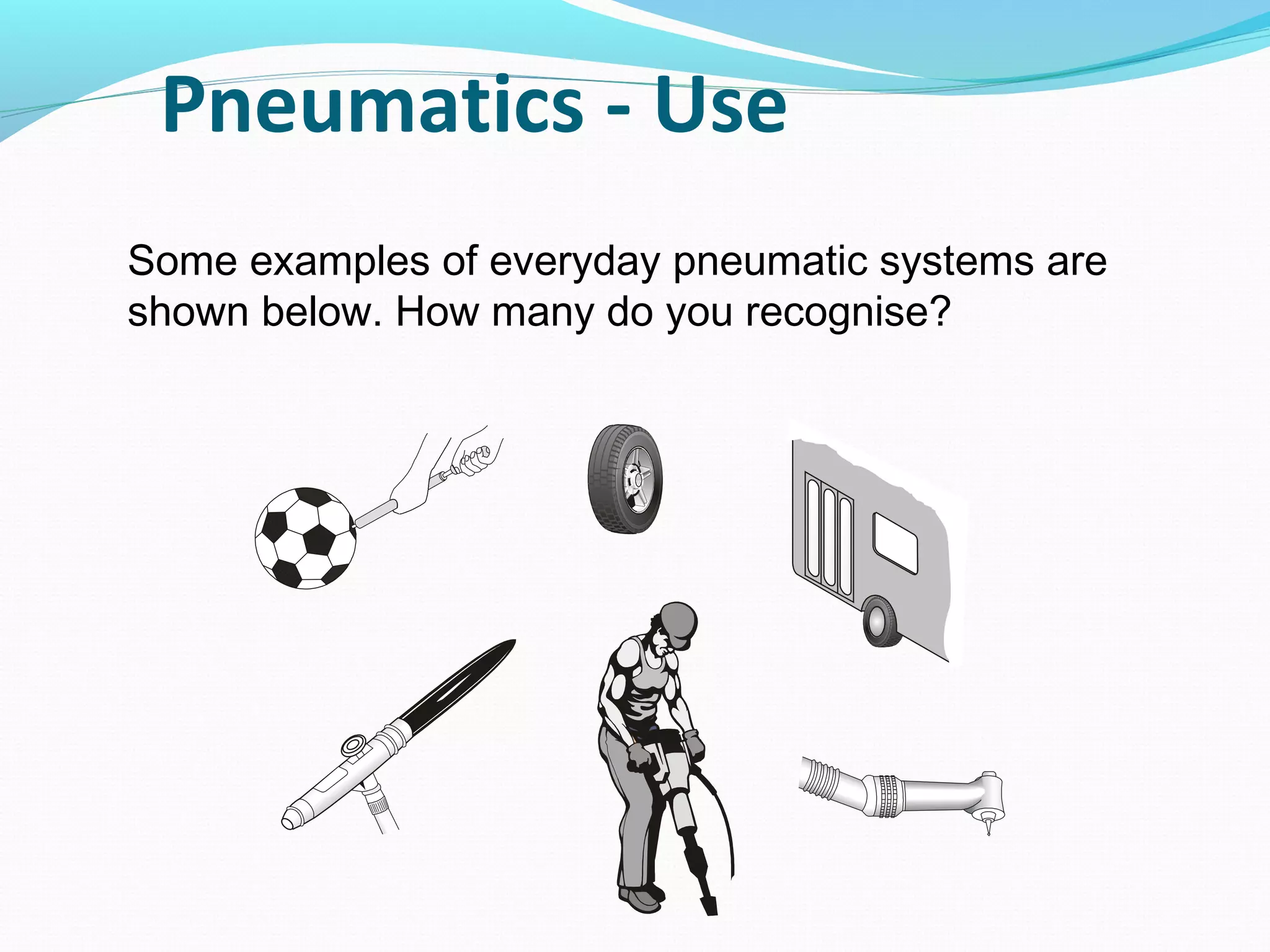
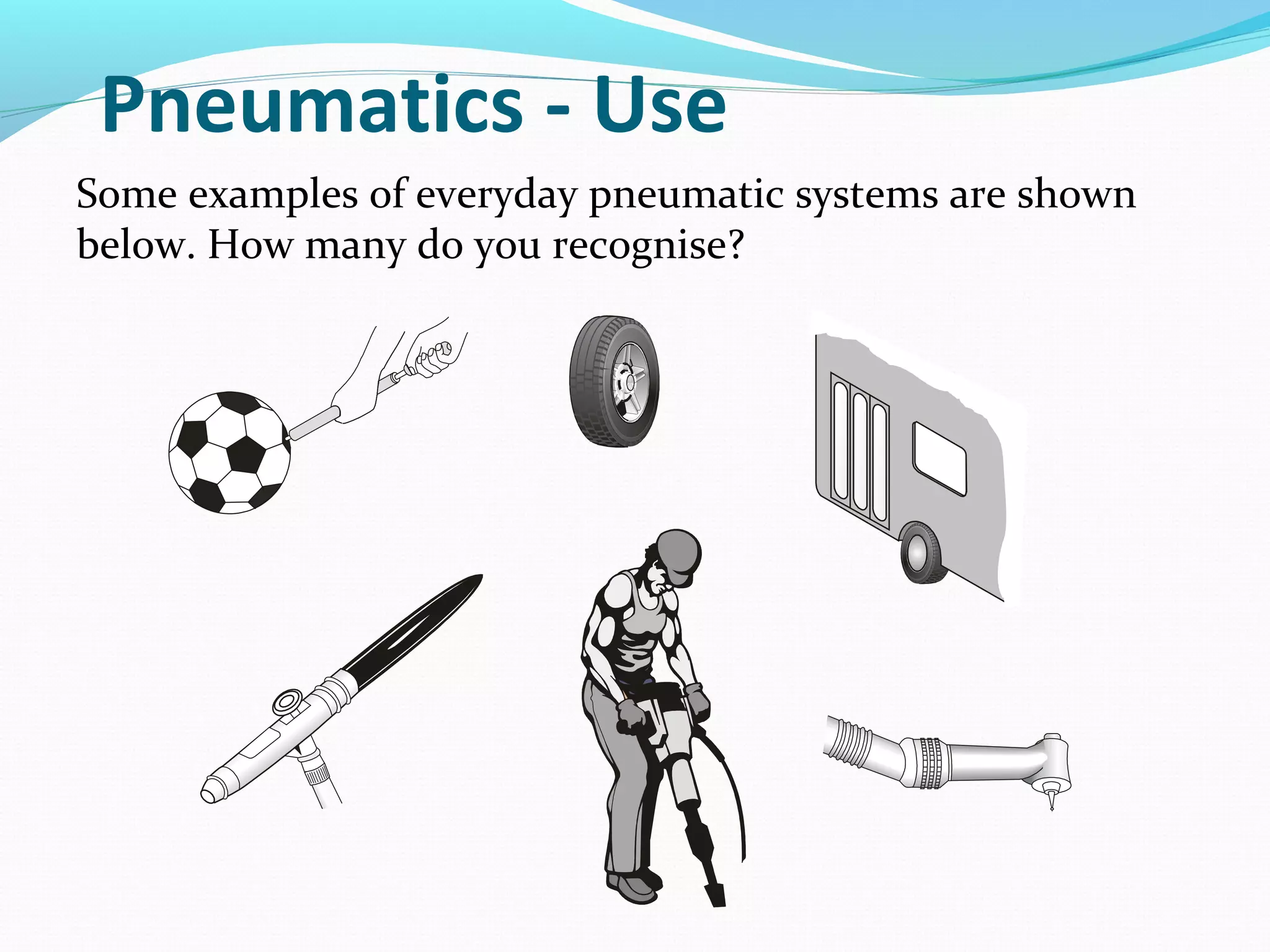
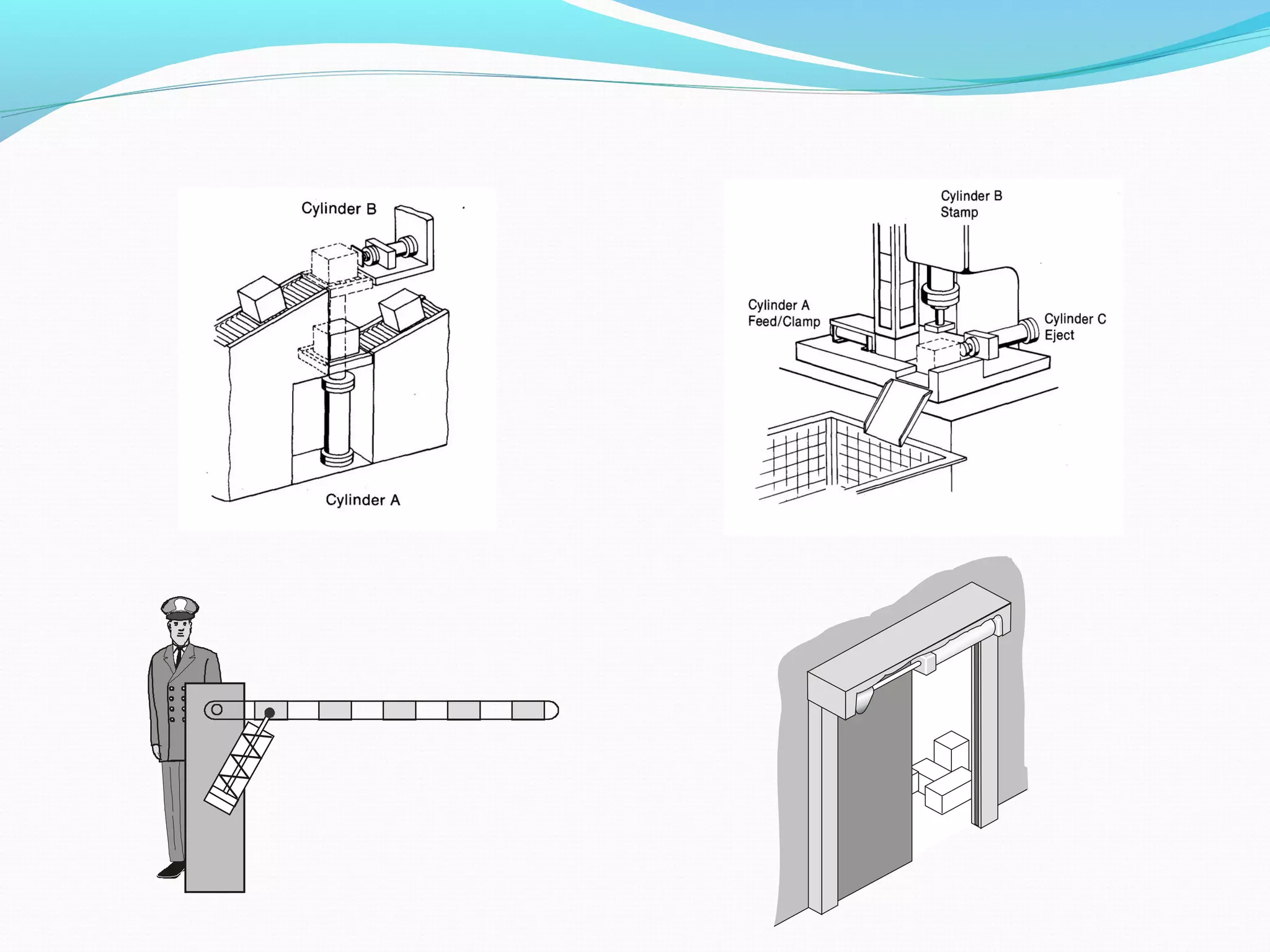
Some examples of everyday pneumatic systems are
shown below. How many do you recognise?
Pneumatics - Use
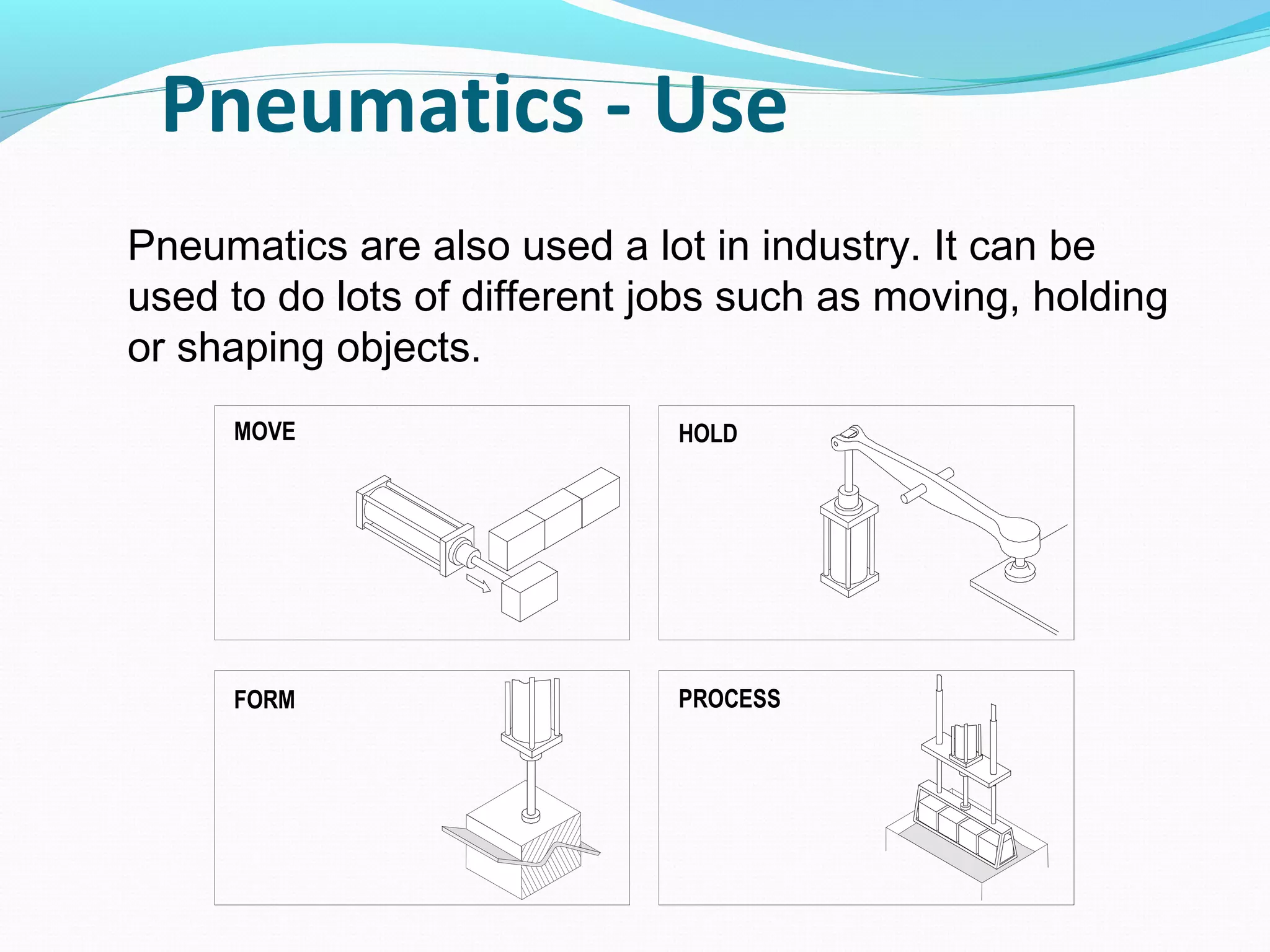
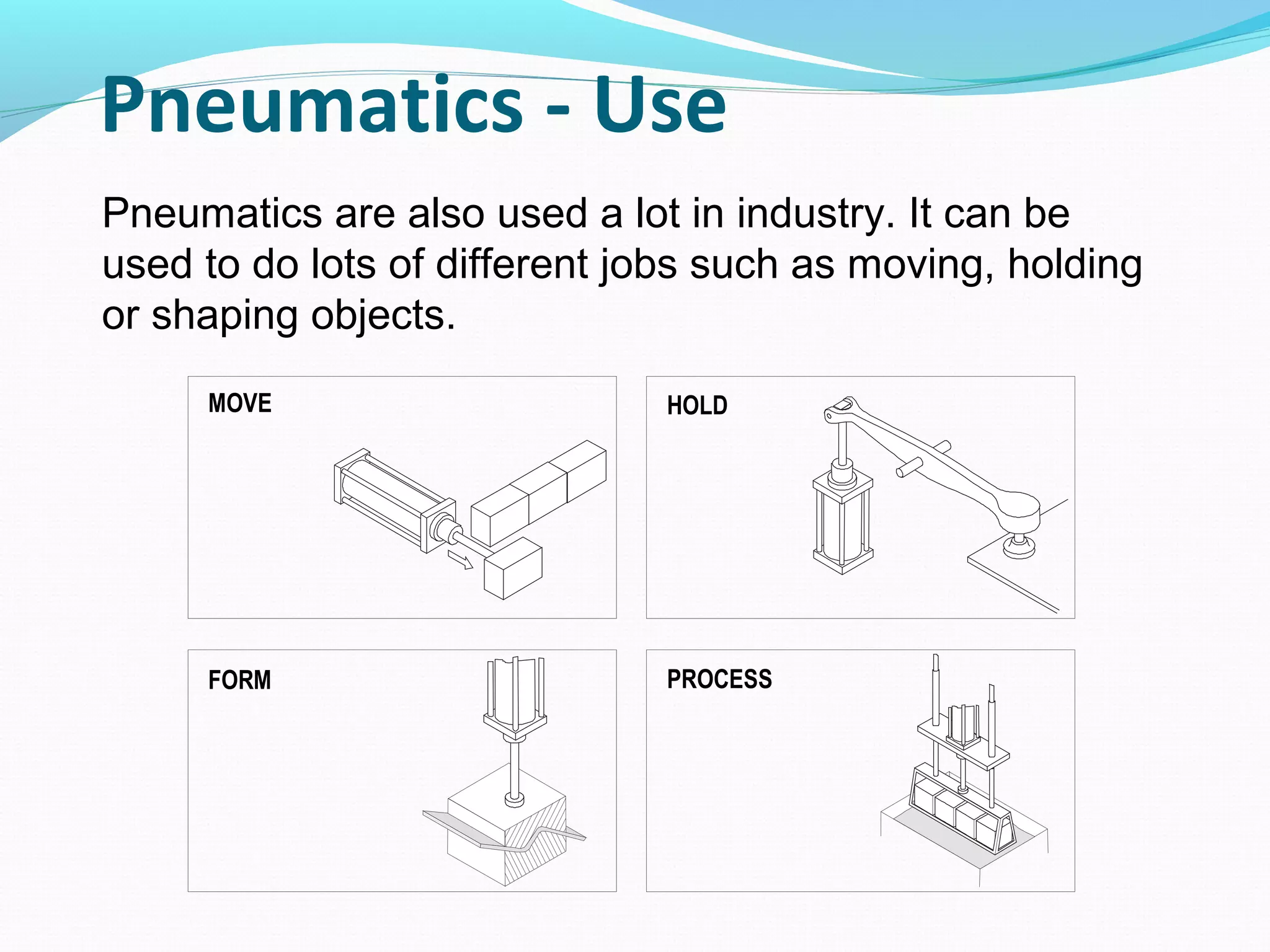
Pneumatics are also used a lot in industry. It can be
used to do lots of different jobs such as moving, holding
or shaping objects.
     MOVE                     HOLD


     FORM                     PROCESS
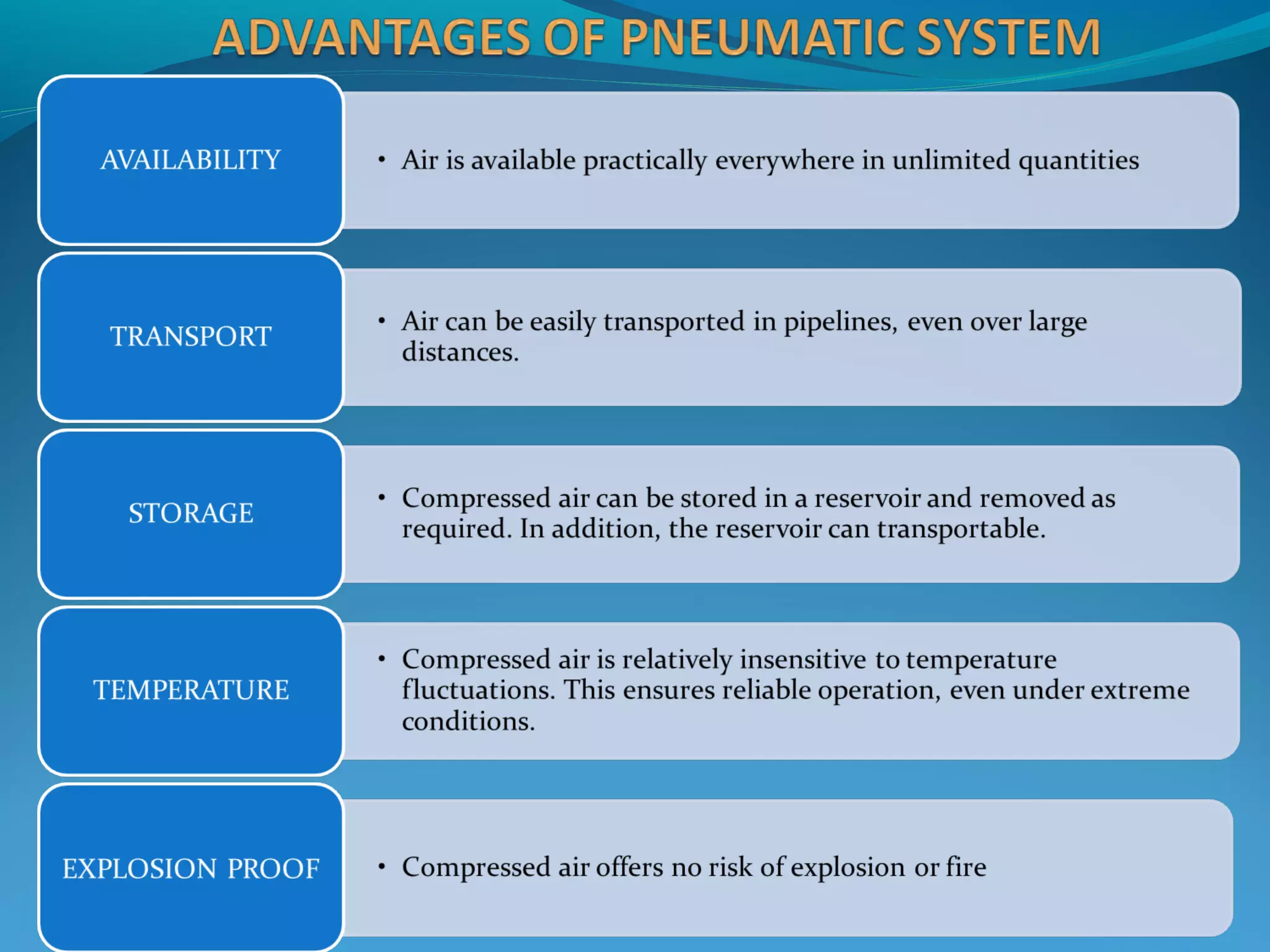
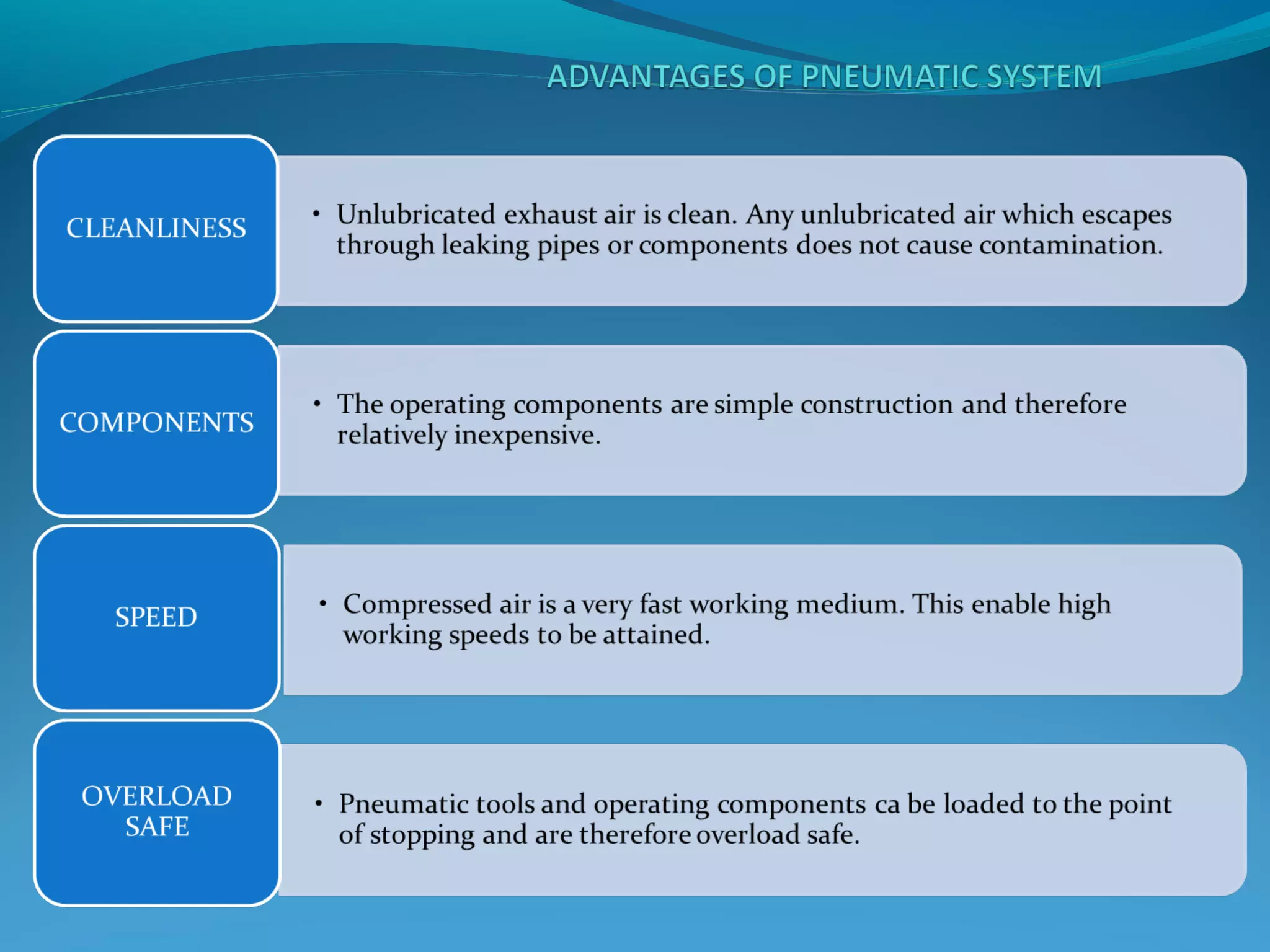
Advantages of Pneumatics
   Clean:     Pneumatic systems are clean because they
   use               compressed air. If a pneumatic system
                     develops a leak, it will be air that
   escapes and             not oil. This air will not drip or
   cause a mess            which makes pneumatics
   suitable for food       production lines.

       Safe:   Pneumatic systems are very safe compared to
               other systems. We cannot, for example, use
               electronics for paint spraying because many
               electronic components produce sparks and
this           could cause the paint to catch fire.
Advantages of Pneumatics
Reliable:     Pneumatic systems are very reliable and can
              keep working for a long time. Many
              companies invest in pneumatics because they
              know they will not have a lot of breakdowns
              and that the equipment will last for a long
              time.

Economical:   If we compare pneumatic systems to other
              systems, we find that they are cheaper to
              run. This is because the components last for
              a long time and because we are using
              compressed air.
Advantages of Pneumatics

Flexible:   Once you have bought the basic components, you
            can set them up to carry out different tasks.
            Pneumatic systems are easy to install and they do
            not need to be insulated or protected like electronic
            systems.
HOMEWORK
 Give three examples of the everyday use of pneumatics.

 What is compressed air?

 Give two reasons why pneumatic systems are used in
  industry.

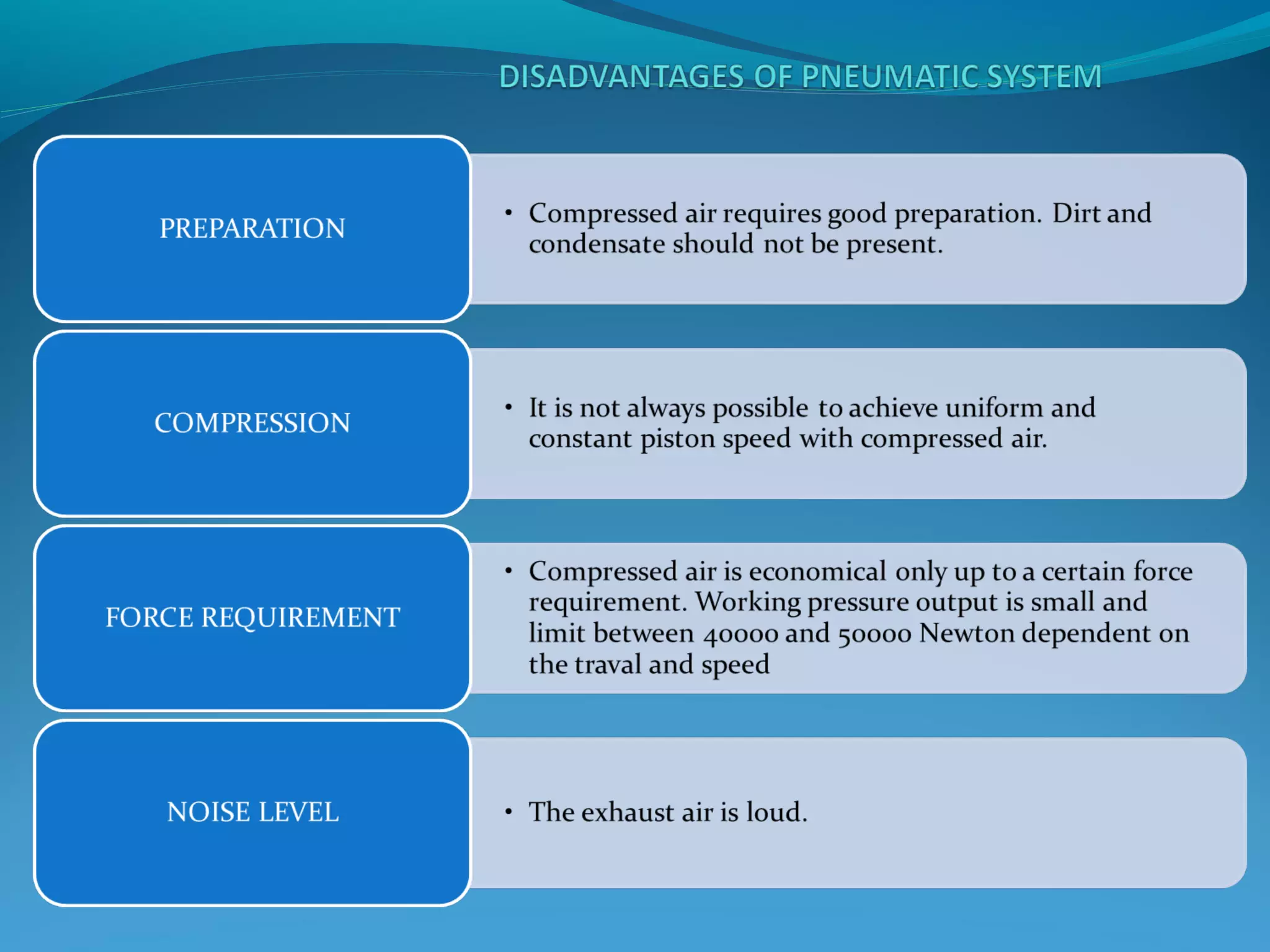
 Explain the advantages and disadvantages of
  pneumatics.
•Pneumatics is the general term used to describe the
mechanics of gases

•Pneumatics, derived from the Greek word pneumatikos,
where;
• pneu = wind/gases
• matikos = power


• Pneumatics is a type of power transmission that uses a gas
and pressure differential to create movement.
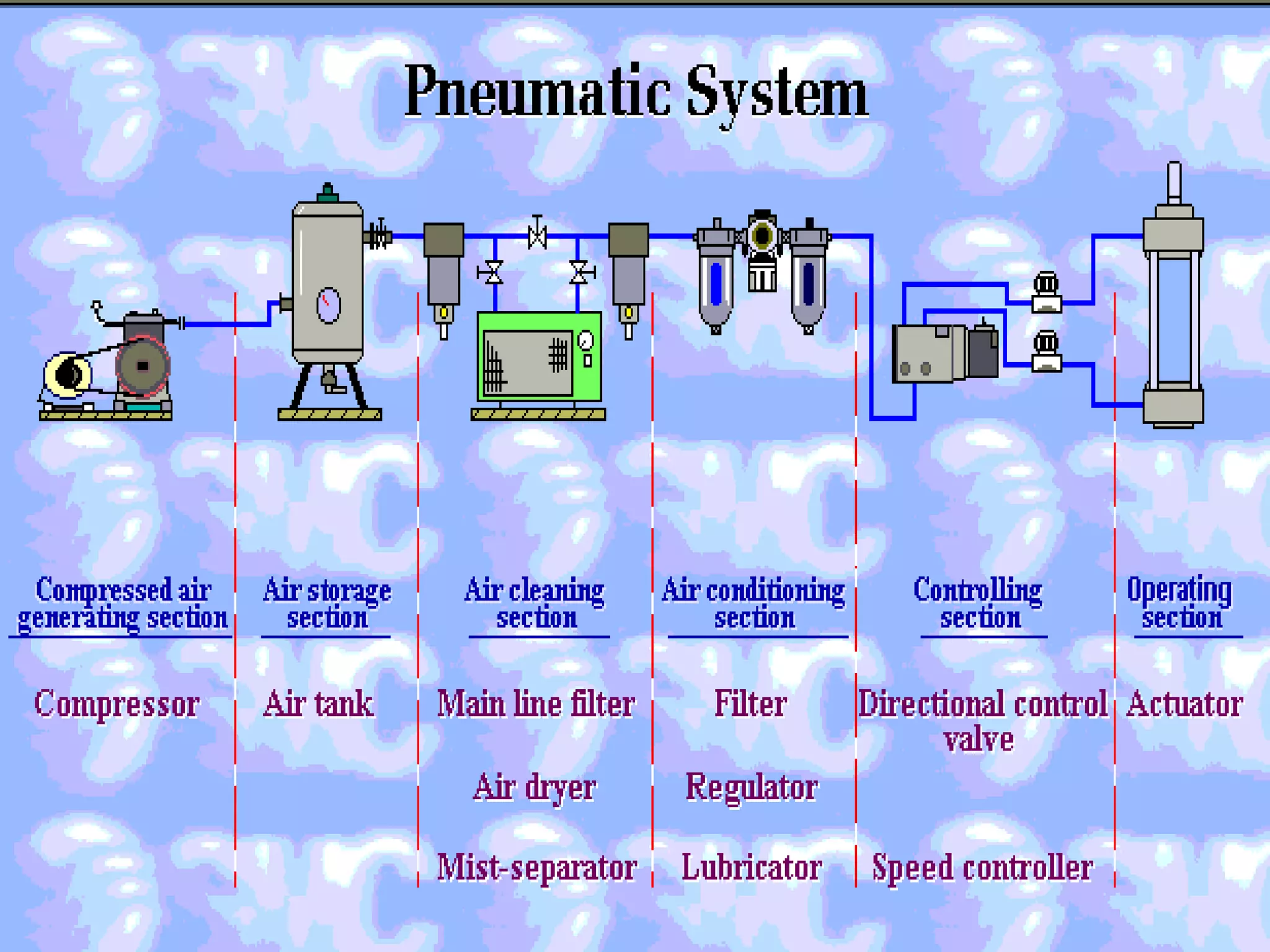
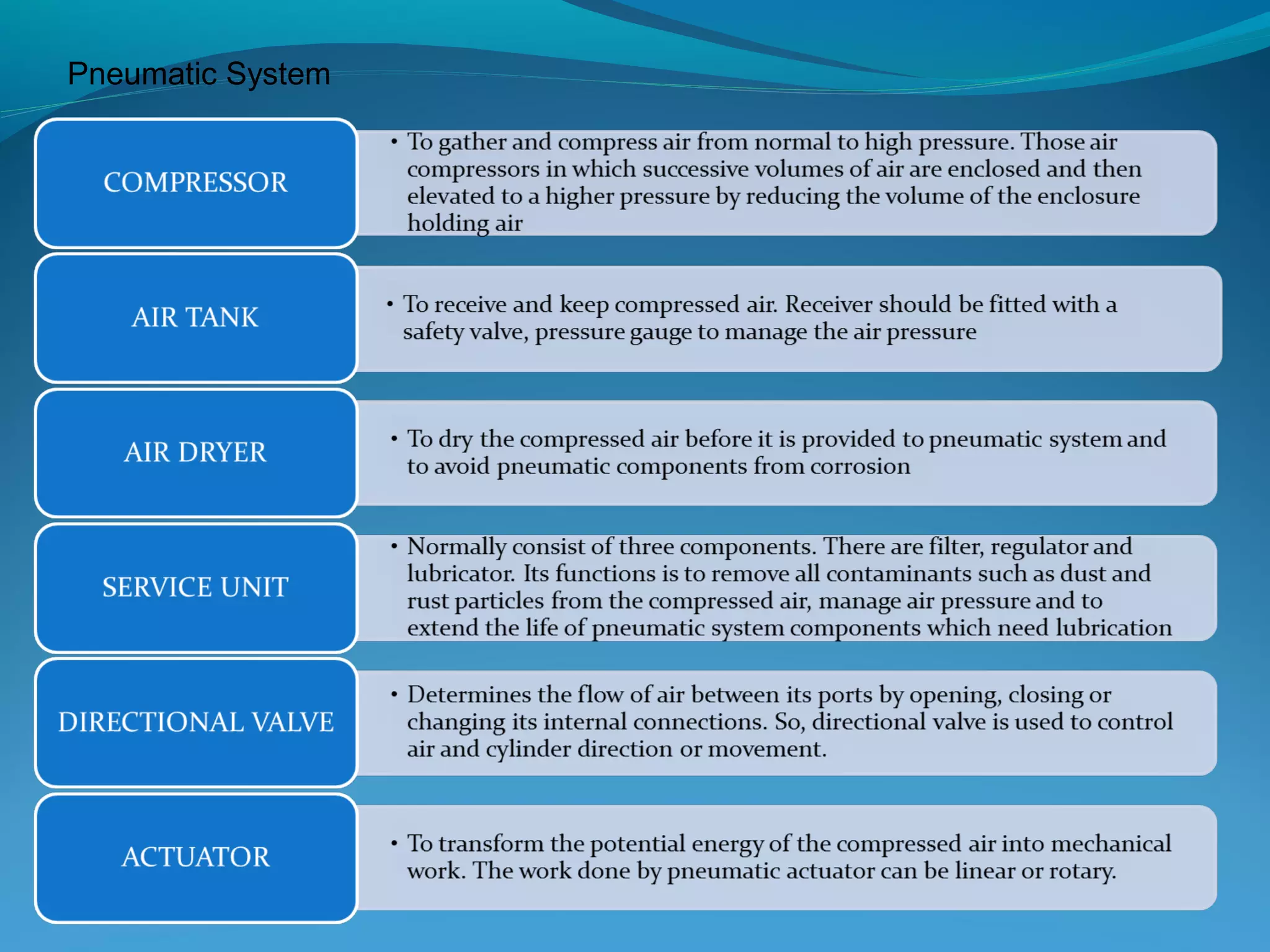
Pneumatic System
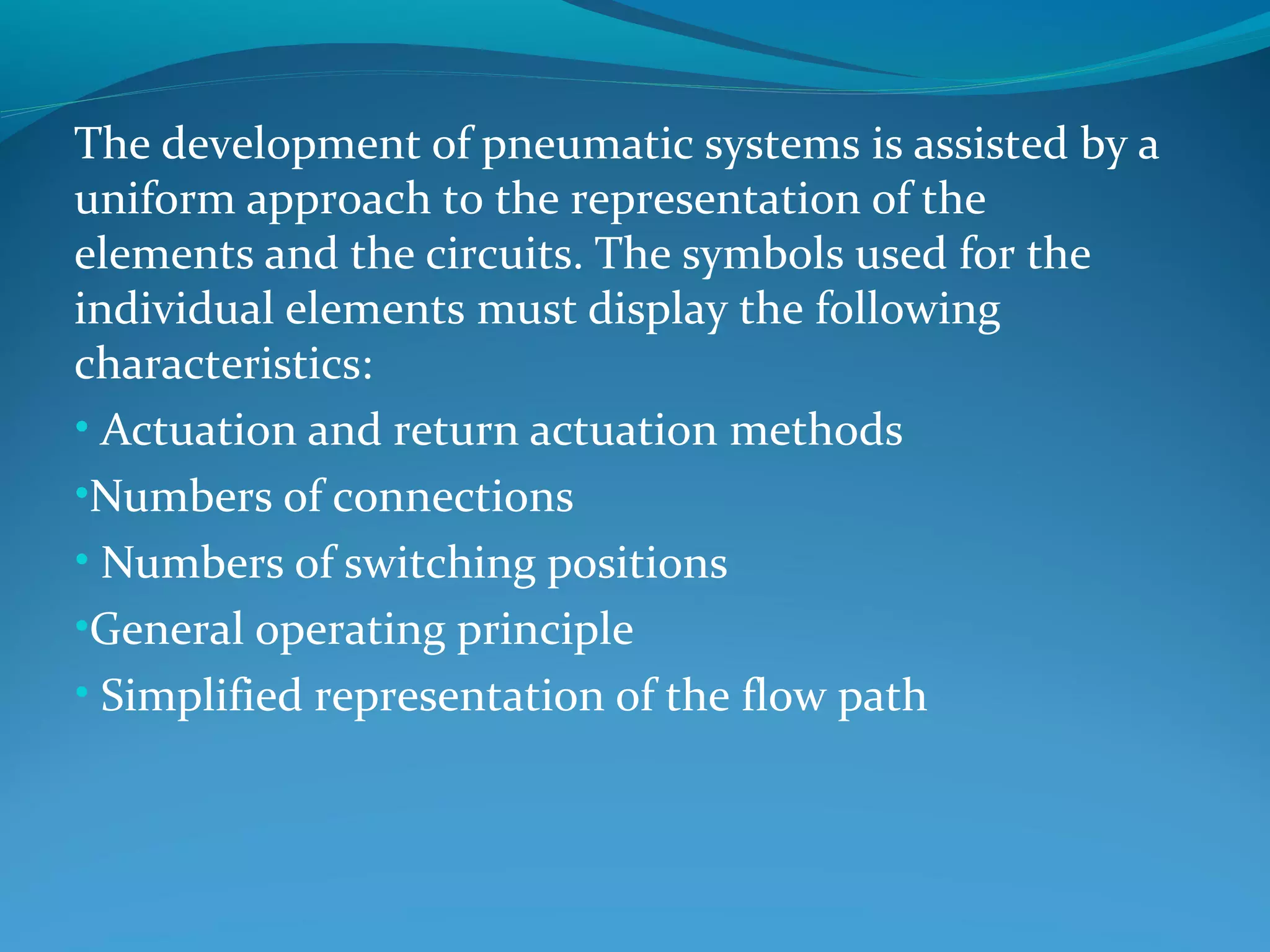
The development of pneumatic systems is assisted by a
uniform approach to the representation of the
elements and the circuits. The symbols used for the
individual elements must display the following
characteristics:
• Actuation and return actuation methods
•Numbers of connections
• Numbers of switching positions
•General operating principle
• Simplified representation of the flow path
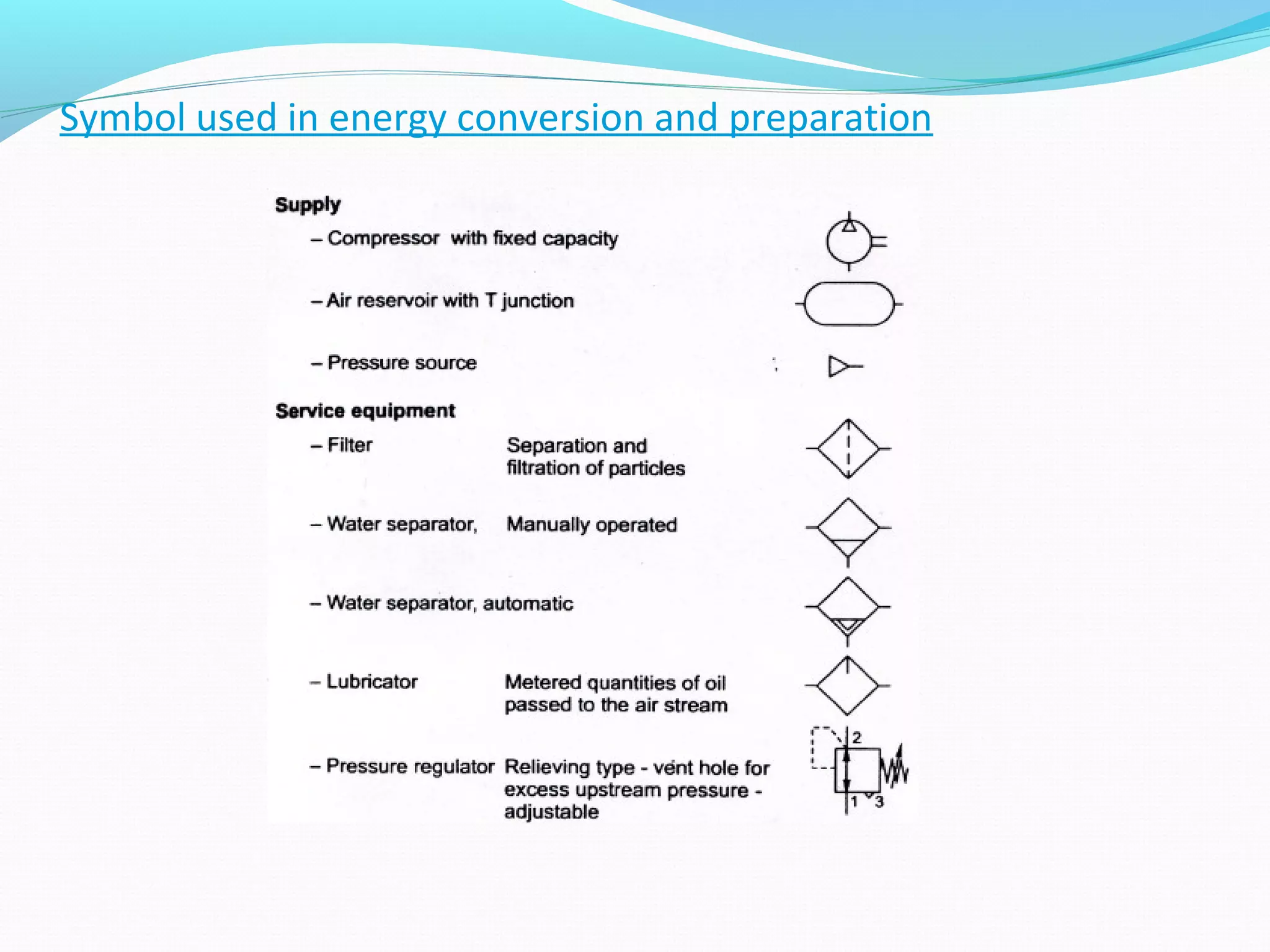
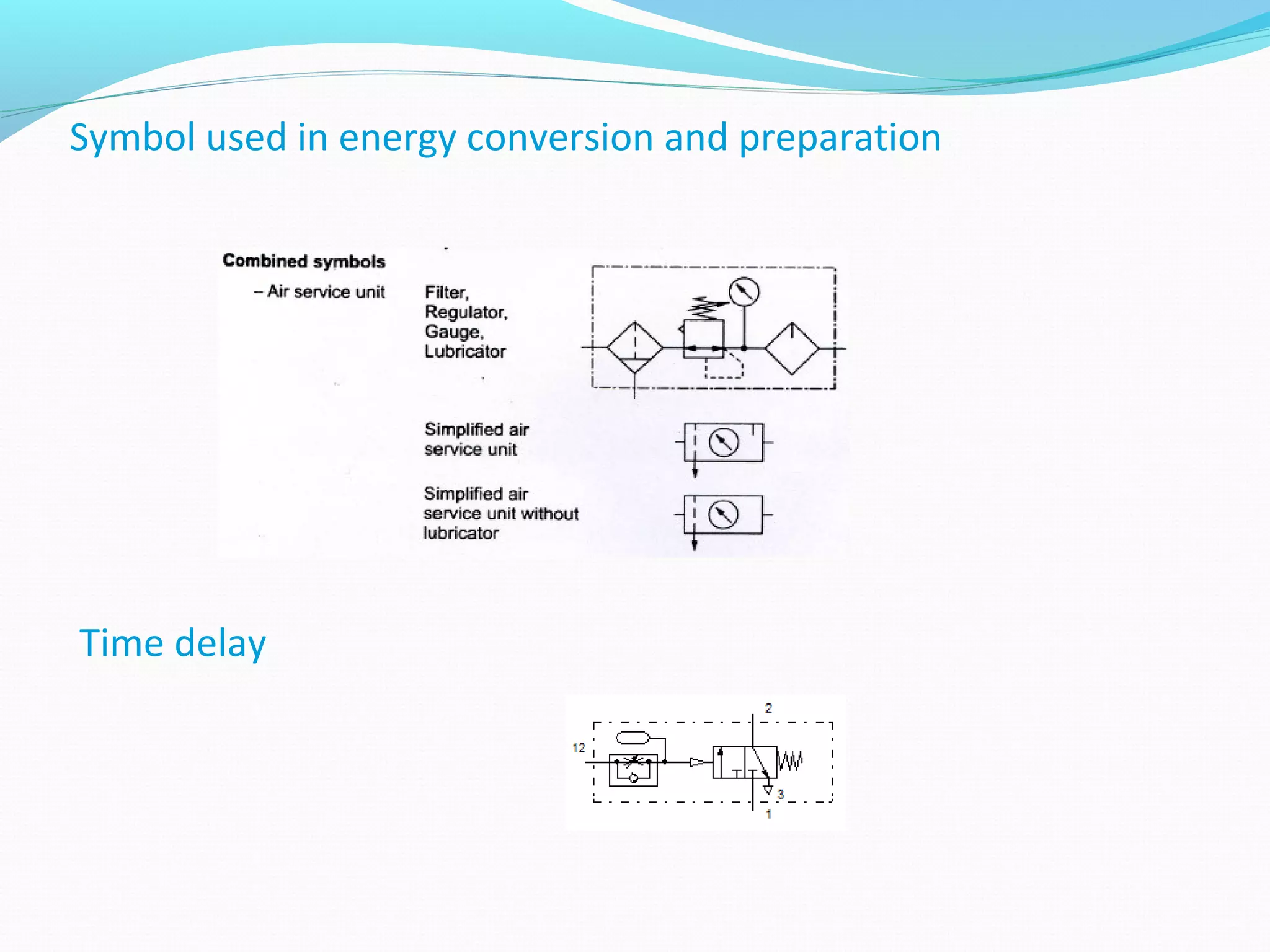
Symbol used in energy conversion and preparation


Time delay
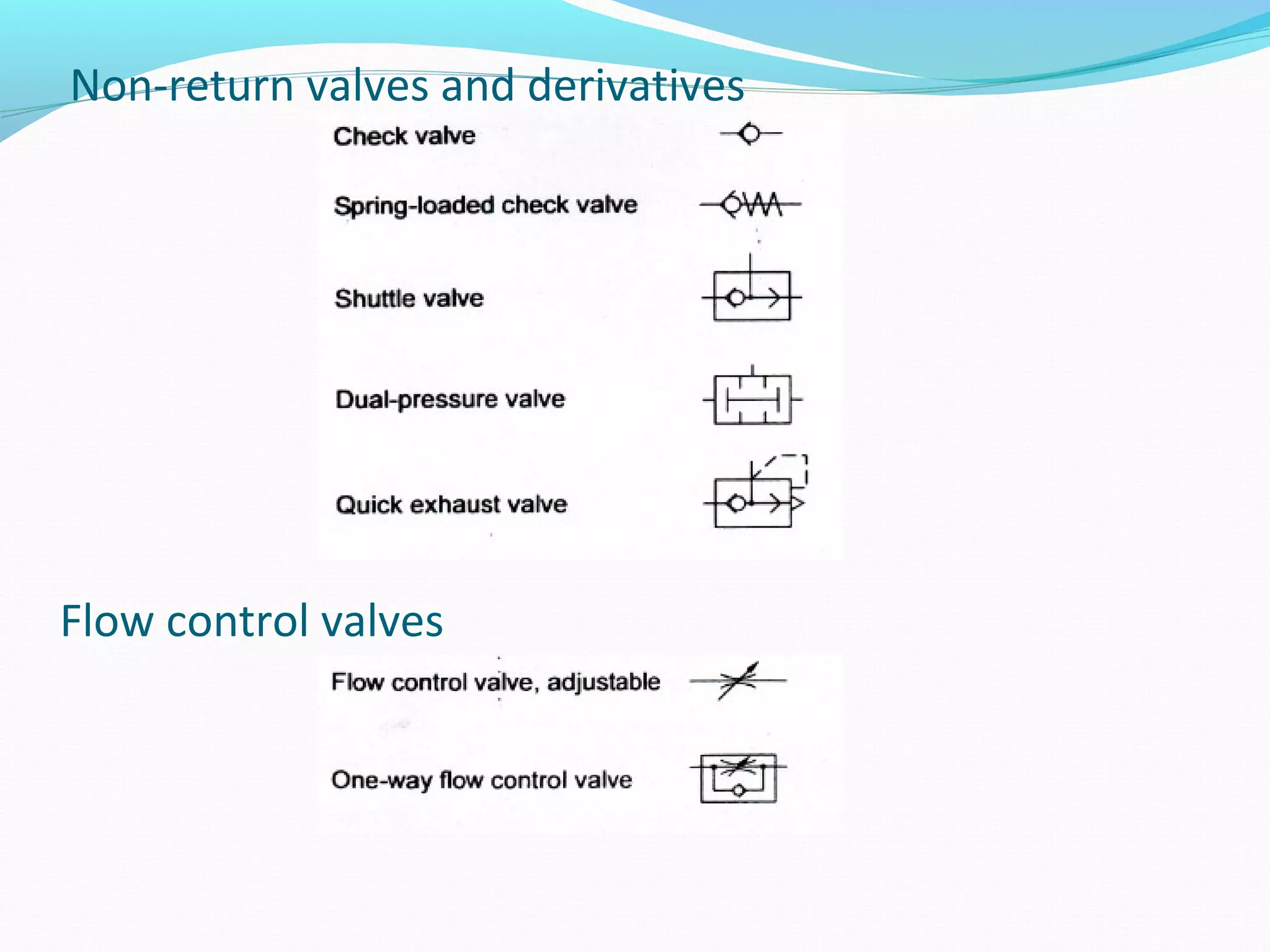
Non-return valves and derivatives


Flow control valves
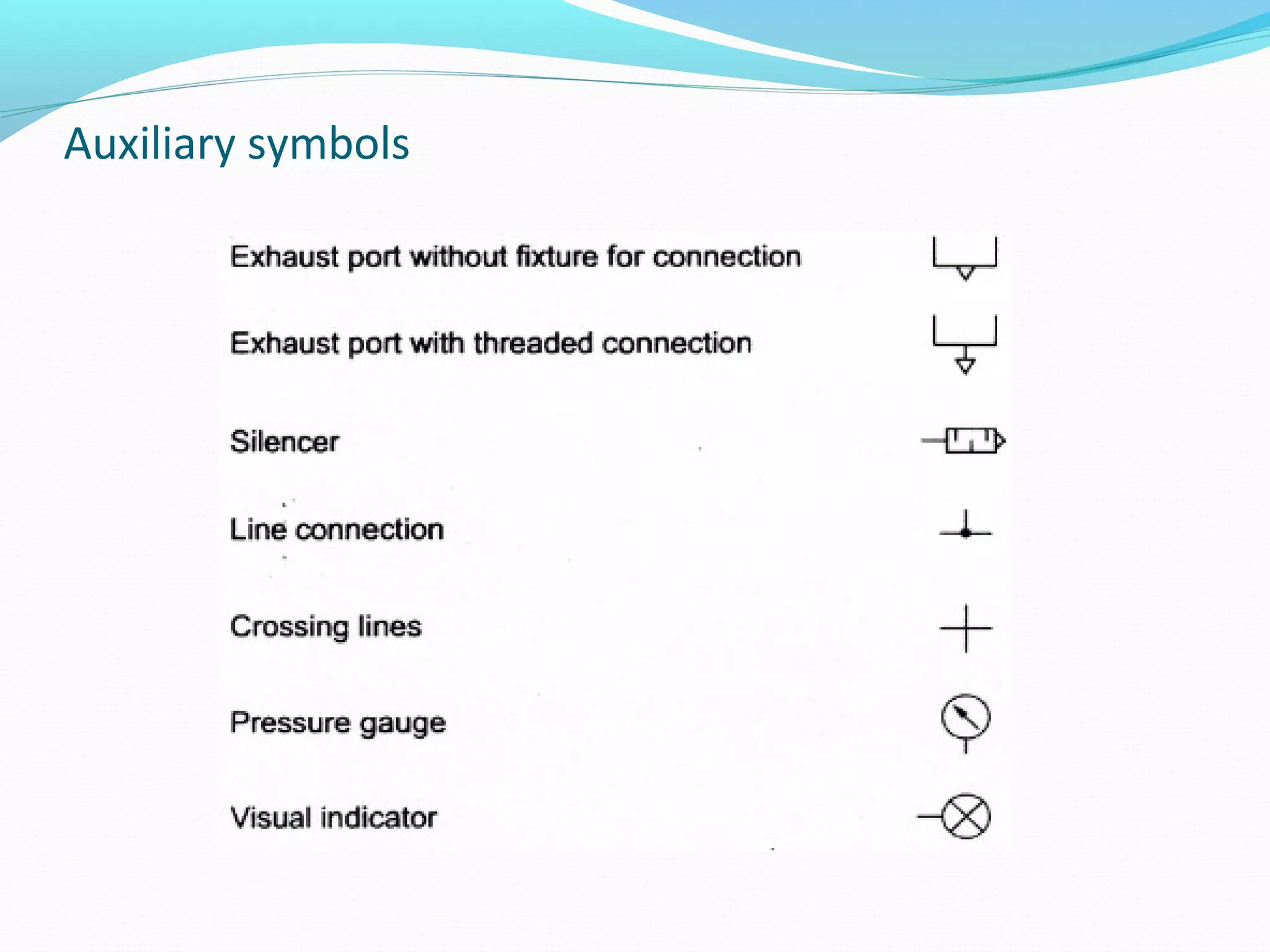
Auxiliary symbols
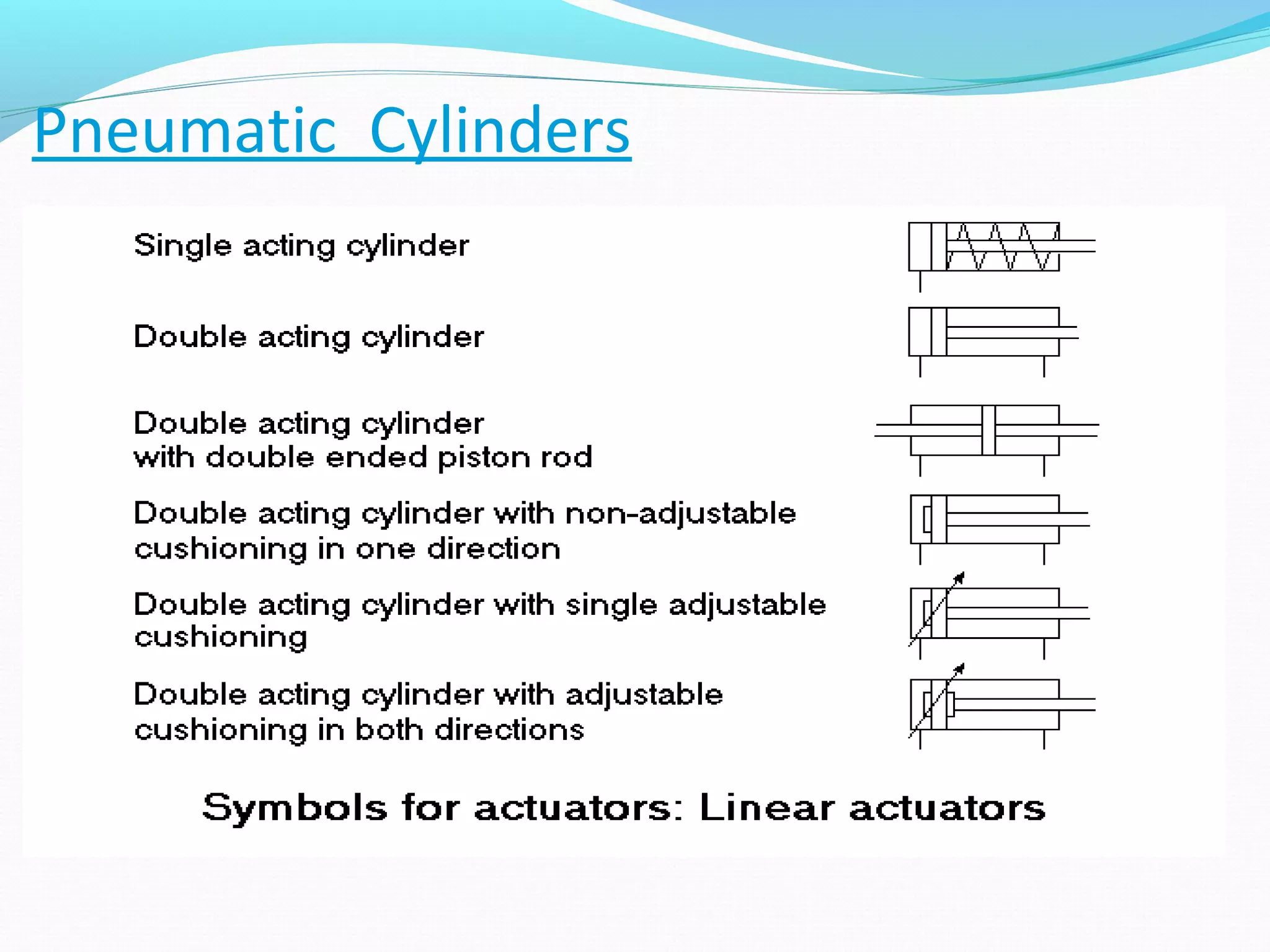
Pneumatic Cylinders
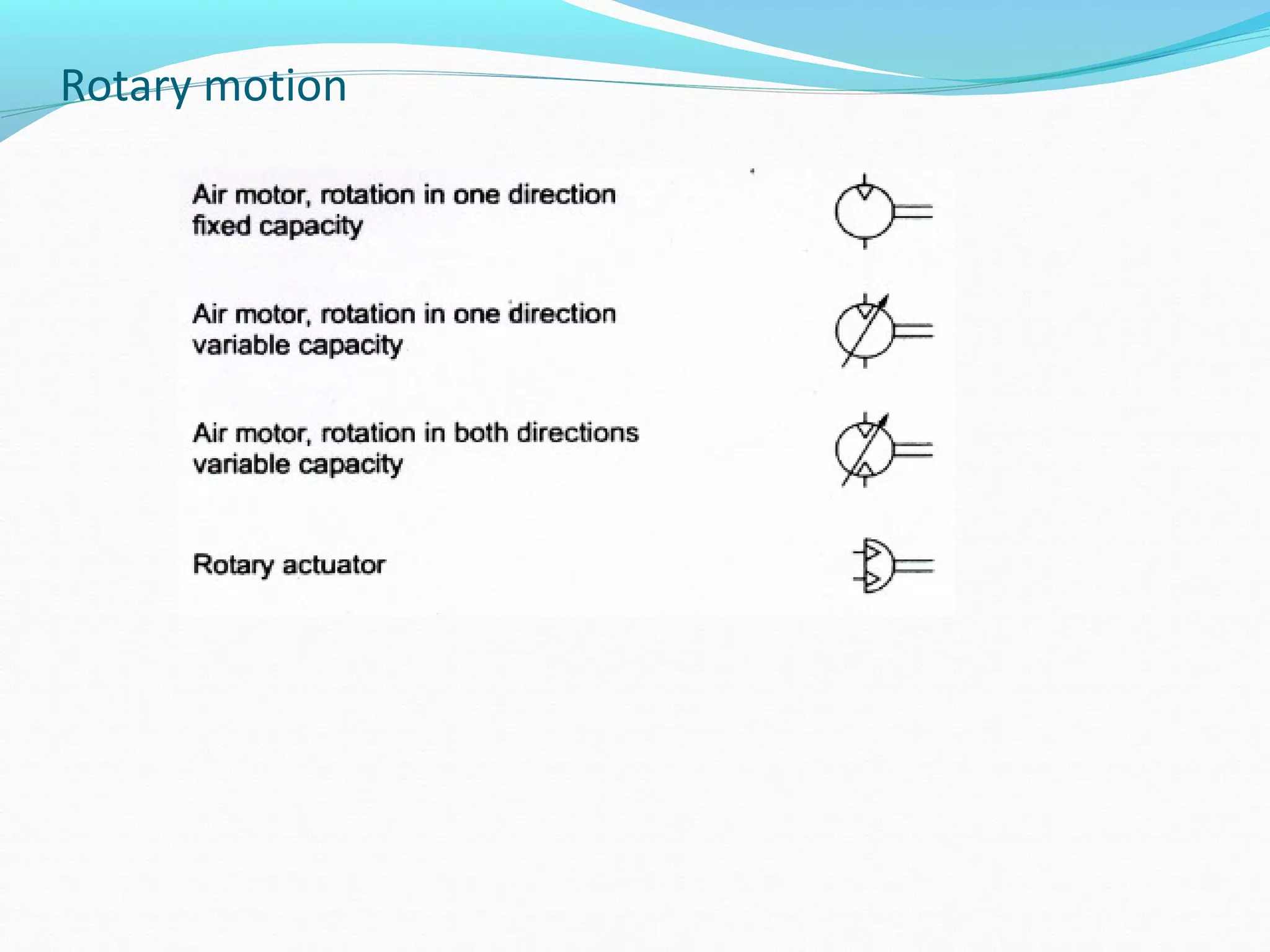
Rotary motion
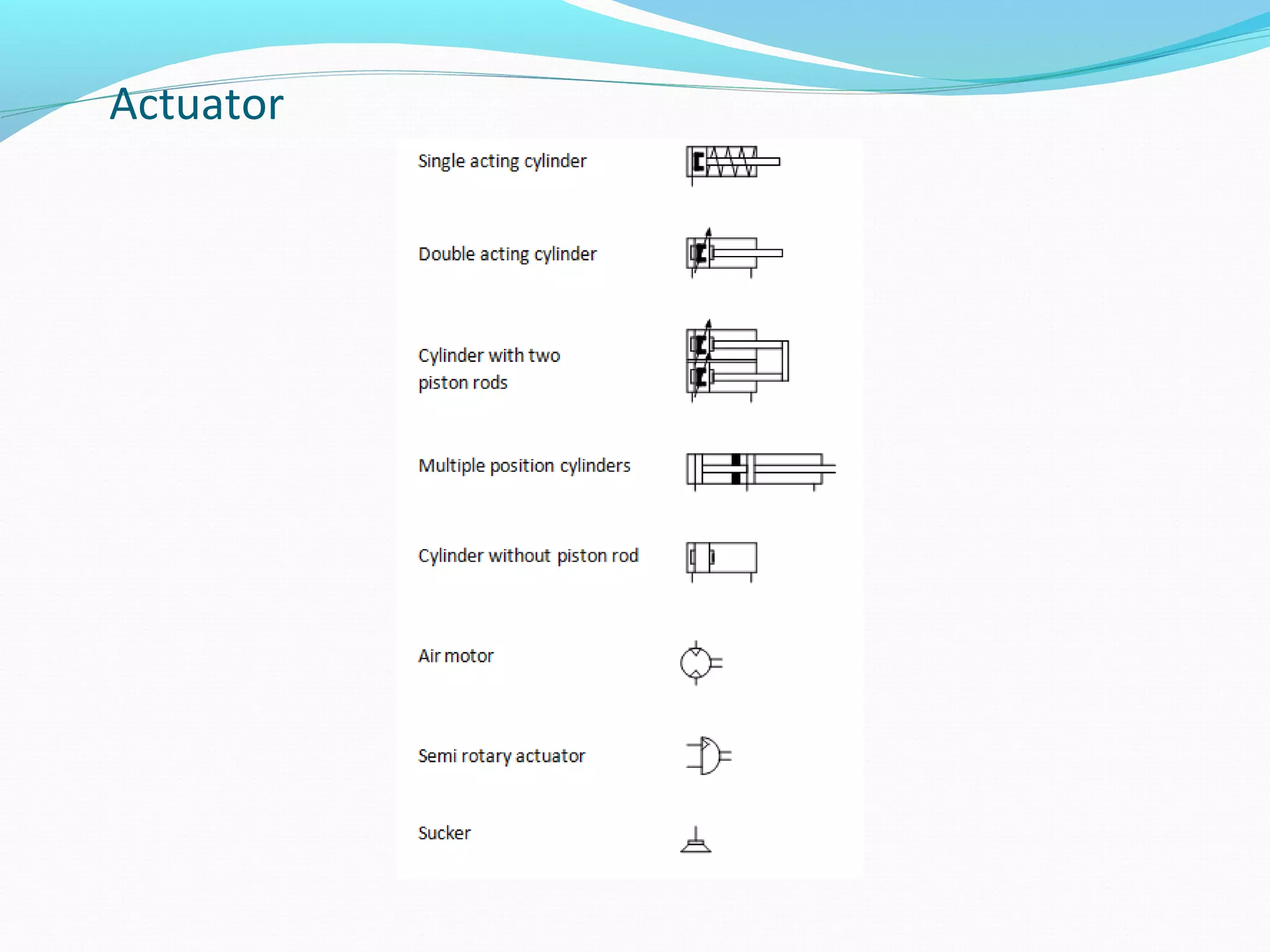
Actuator
Pneumatics - Use
Some examples of everyday pneumatic systems are shown
below. How many do you recognise?
Pneumatics - Use
Pneumatics are also used a lot in industry. It can be
used to do lots of different jobs such as moving, holding
or shaping objects.
     MOVE                     HOLD


     FORM                     PROCESS
QUIZ
Give three examples of the everyday use of
 pneumatics.
Give two reasons why pneumatic systems are used in
 industry.
THANK YOU

Chapter 1 introduction to pneumatic

  • 1.
    J4011 - PNEUMATIC& HYDRAULICS
  • 2.
    Safety Rules  Never blow compressed air at anyone, not even yourself.  Never let compressed air come into contact with your skin, as this can be very dangerous.  Always wear safety goggles when you are connecting and operating circuits.  Check that all airlines are connected before turning on the main air supply.
  • 3.
    Safety Rules  Always turn off the main air supply before changing a circuit.  Keep your hands away from moving parts.  Avoid having airlines trailing across the floor or where someone could trip or become entangled.
  • 4.
    Pneumatics - Use Someexamples of everyday pneumatic systems are shown below. How many do you recognise?
  • 5.
    Pneumatics - Use Pneumaticsare also used a lot in industry. It can be used to do lots of different jobs such as moving, holding or shaping objects. MOVE HOLD FORM PROCESS
  • 6.
    Advantages of Pneumatics Clean: Pneumatic systems are clean because they use compressed air. If a pneumatic system develops a leak, it will be air that escapes and not oil. This air will not drip or cause a mess which makes pneumatics suitable for food production lines. Safe: Pneumatic systems are very safe compared to other systems. We cannot, for example, use electronics for paint spraying because many electronic components produce sparks and this could cause the paint to catch fire.
  • 7.
    Advantages of Pneumatics Reliable: Pneumatic systems are very reliable and can keep working for a long time. Many companies invest in pneumatics because they know they will not have a lot of breakdowns and that the equipment will last for a long time. Economical: If we compare pneumatic systems to other systems, we find that they are cheaper to run. This is because the components last for a long time and because we are using compressed air.
  • 8.
    Advantages of Pneumatics Flexible: Once you have bought the basic components, you can set them up to carry out different tasks. Pneumatic systems are easy to install and they do not need to be insulated or protected like electronic systems.
  • 9.
    HOMEWORK  Give threeexamples of the everyday use of pneumatics.  What is compressed air?  Give two reasons why pneumatic systems are used in industry.  Explain the advantages and disadvantages of pneumatics.
  • 10.
    •Pneumatics is thegeneral term used to describe the mechanics of gases •Pneumatics, derived from the Greek word pneumatikos, where; • pneu = wind/gases • matikos = power • Pneumatics is a type of power transmission that uses a gas and pressure differential to create movement.
  • 12.
  • 17.
    The development ofpneumatic systems is assisted by a uniform approach to the representation of the elements and the circuits. The symbols used for the individual elements must display the following characteristics: • Actuation and return actuation methods •Numbers of connections • Numbers of switching positions •General operating principle • Simplified representation of the flow path
  • 18.
    Symbol used inenergy conversion and preparation
  • 19.
    Symbol used inenergy conversion and preparation Time delay
  • 20.
    Non-return valves andderivatives Flow control valves
  • 21.
  • 22.
  • 23.
  • 24.
  • 25.
    Pneumatics - Use Someexamples of everyday pneumatic systems are shown below. How many do you recognise?
  • 27.
    Pneumatics - Use Pneumaticsare also used a lot in industry. It can be used to do lots of different jobs such as moving, holding or shaping objects. MOVE HOLD FORM PROCESS
  • 28.
    QUIZ Give three examplesof the everyday use of pneumatics. Give two reasons why pneumatic systems are used in industry.
  • 29.