SPLINTING
Sharon Treesa Antony
Assistant Professor
Govt. College of Nursing Kottayam
• The splints are devices or means used temporarily for
immobilizing or supporting fractured bones or injured
joints prior to hospitalization or seeking medical help.
• They are mainly applied for fractures, sprains, strains or
dislocations.
Purposes
• To immobilize a fractured or injured body part prior to
hospitalization
• To prevent injury to blood vessels and nerves from jagged
edges of the bone
• To reduce pain induced by fracture
• To manage sprains and strains
General rules
• The splint should be large enough to cover the joint above and
below the fracture
• It should be wide enough to support the area
• It should be well padded to prevent injury to the limb
• It should applied without interference with circulation
• It may be applied over clothing or may be applied with a
cloth over the skin
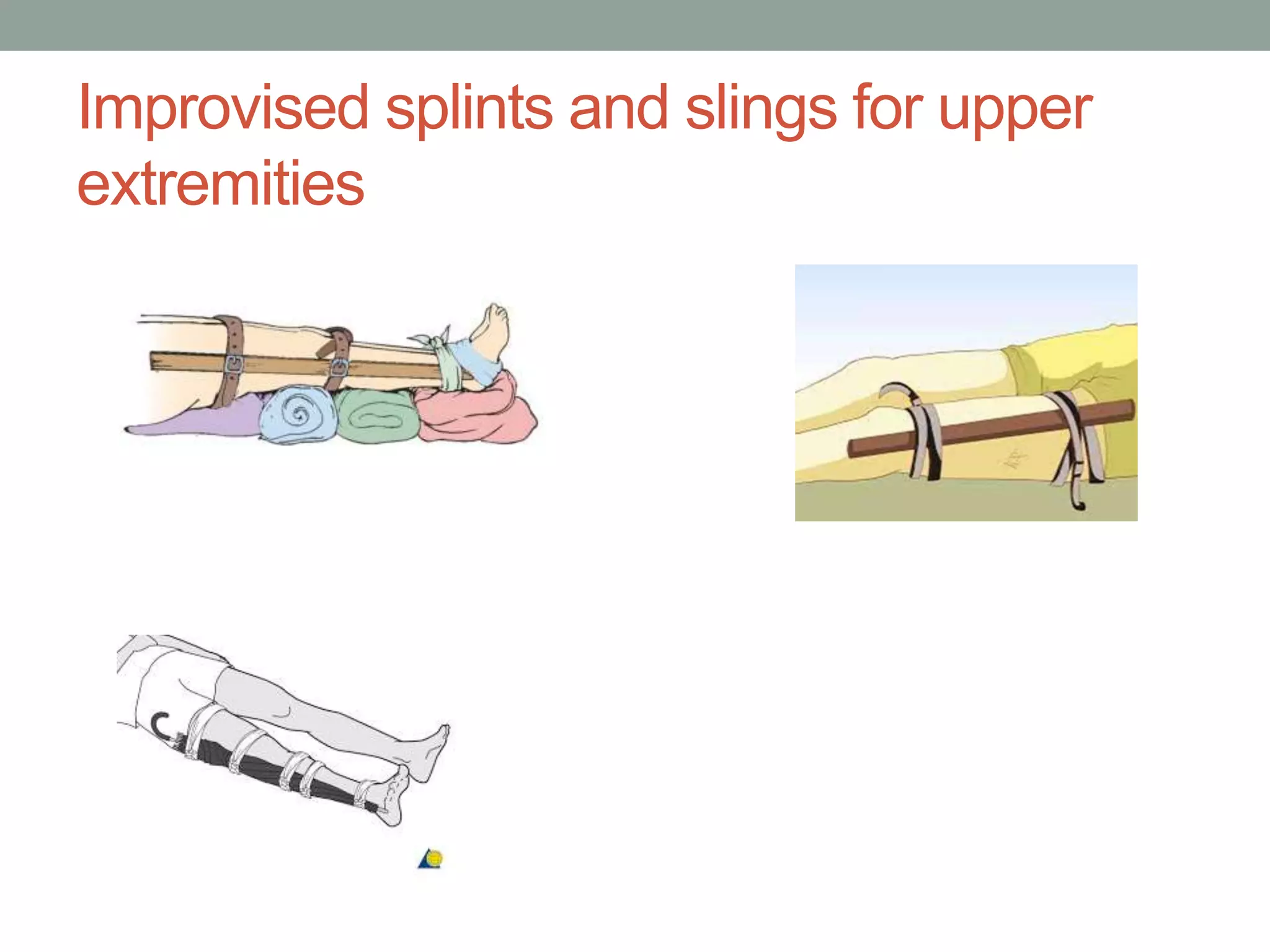
• Splints may be improvised from piece of wood, card board,
thick folded paper, sticks etc
• The body parts of the casualty itself can be used for the
purpose.
( 1. in case of injured lower limb, uninjured limb may be used as
a splint,
2. for upper limb fracture, the trunk of the victim can be utilized
as a splint)
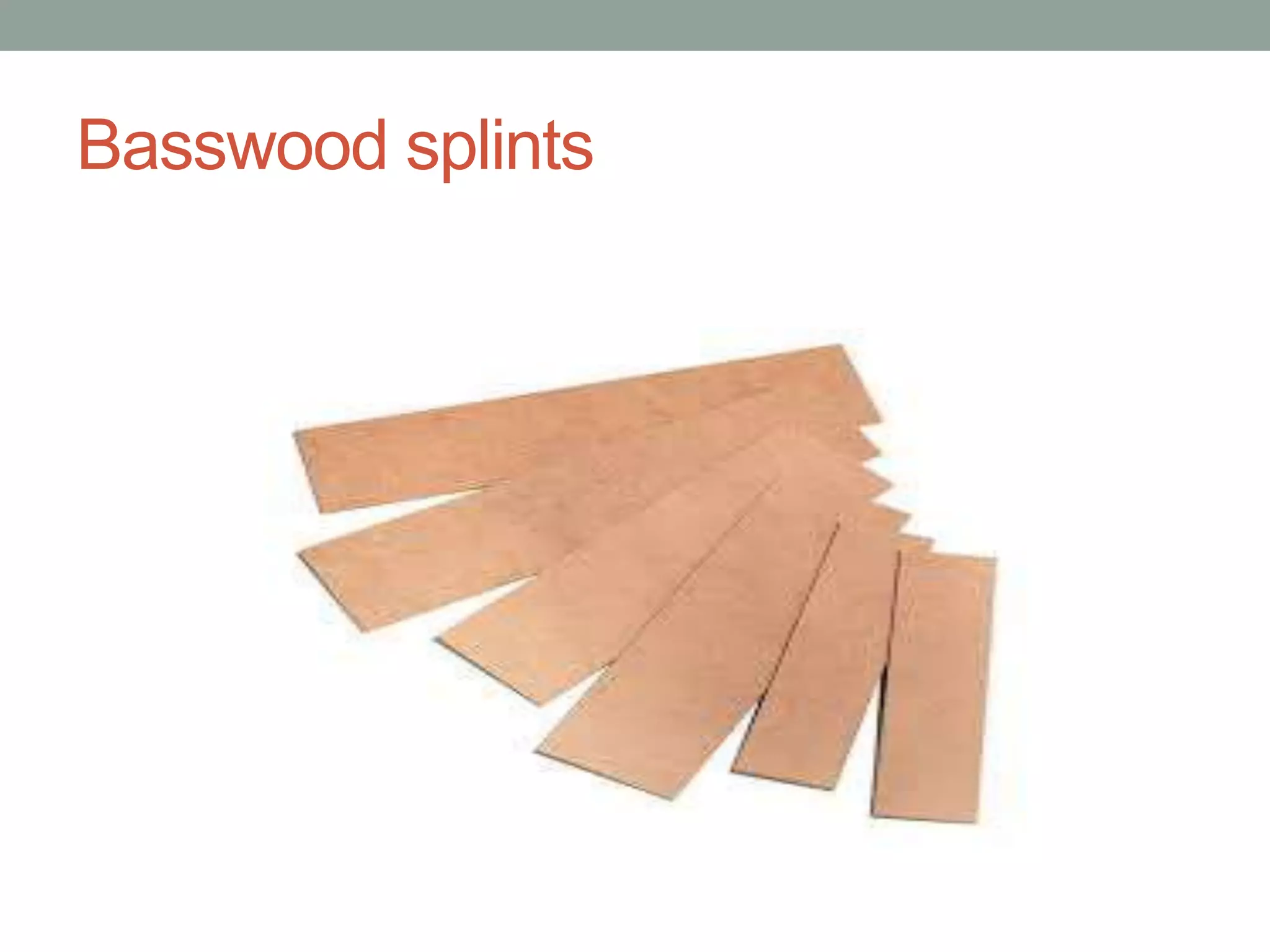
Basswood splints
Splinting fractures of upper limb
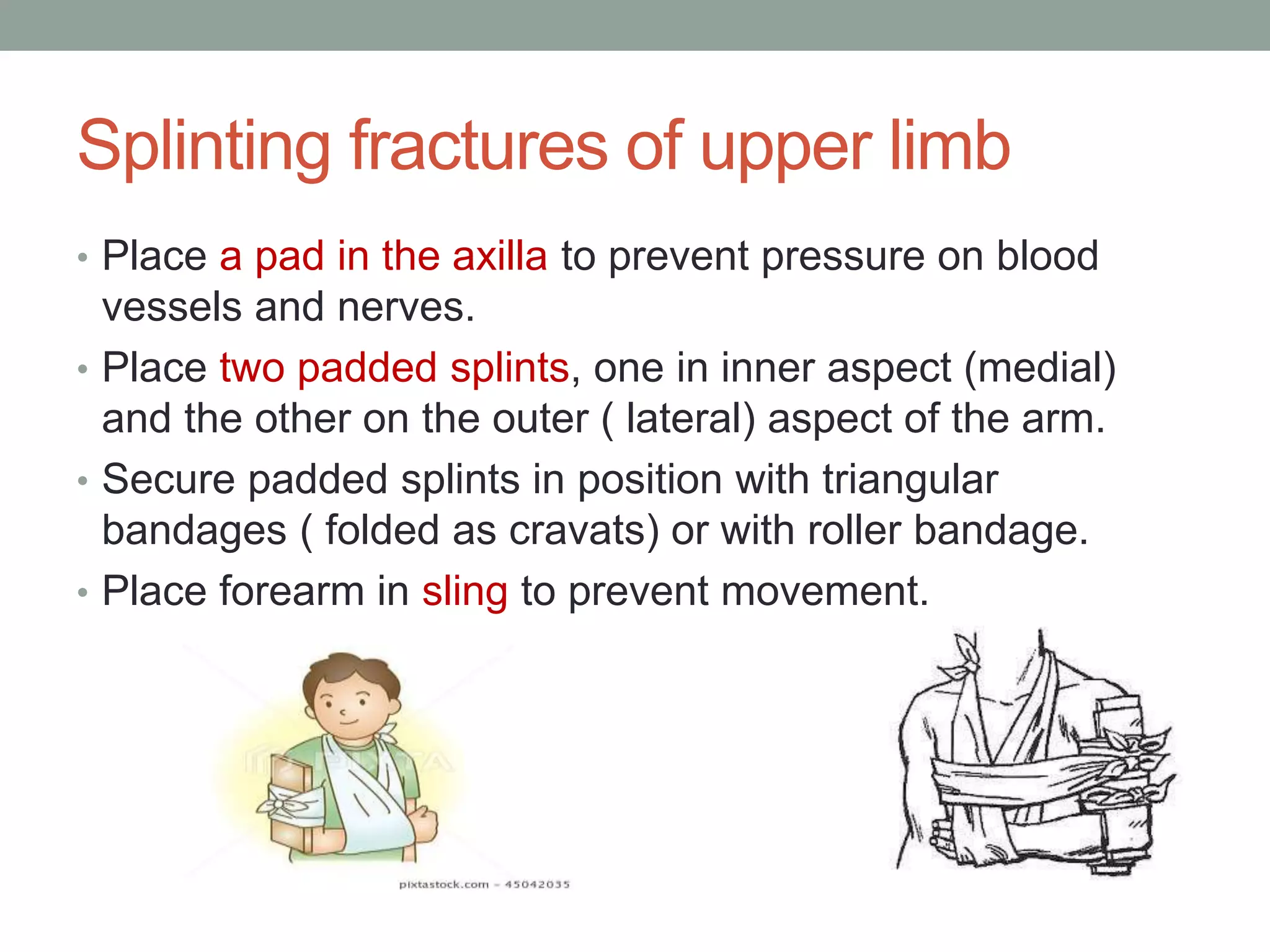
• Place a pad in the axilla to prevent pressure on blood
vessels and nerves.
• Place two padded splints, one in inner aspect (medial)
and the other on the outer ( lateral) aspect of the arm.
• Secure padded splints in position with triangular
bandages ( folded as cravats) or with roller bandage.
• Place forearm in sling to prevent movement.
Splinting for fractures at or near elbow
• Keep the arm at approximately 45 degree angle from the
body
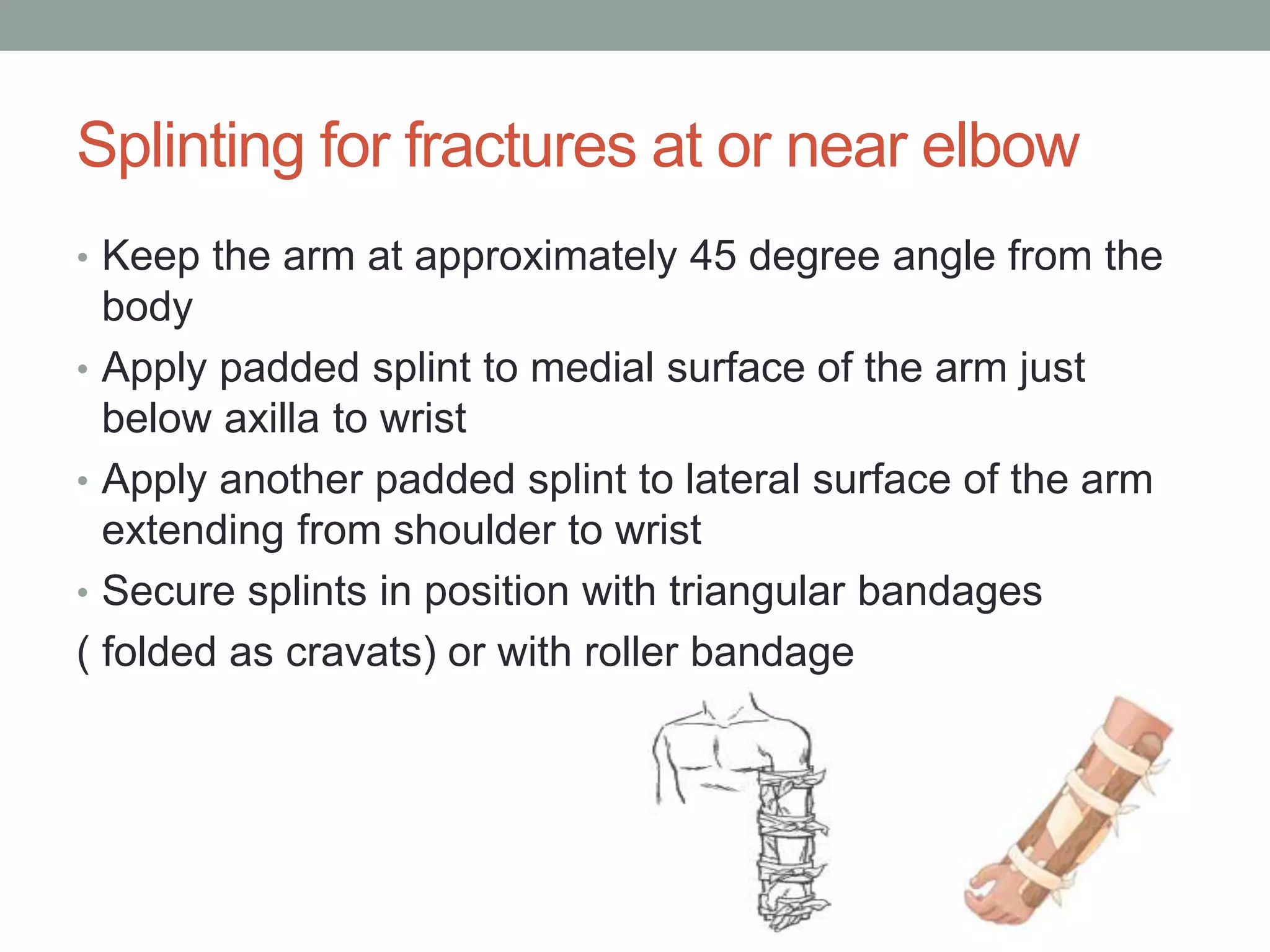
• Apply padded splint to medial surface of the arm just
below axilla to wrist
• Apply another padded splint to lateral surface of the arm
extending from shoulder to wrist
• Secure splints in position with triangular bandages
( folded as cravats) or with roller bandage
Fracture of forearm, wrist hand
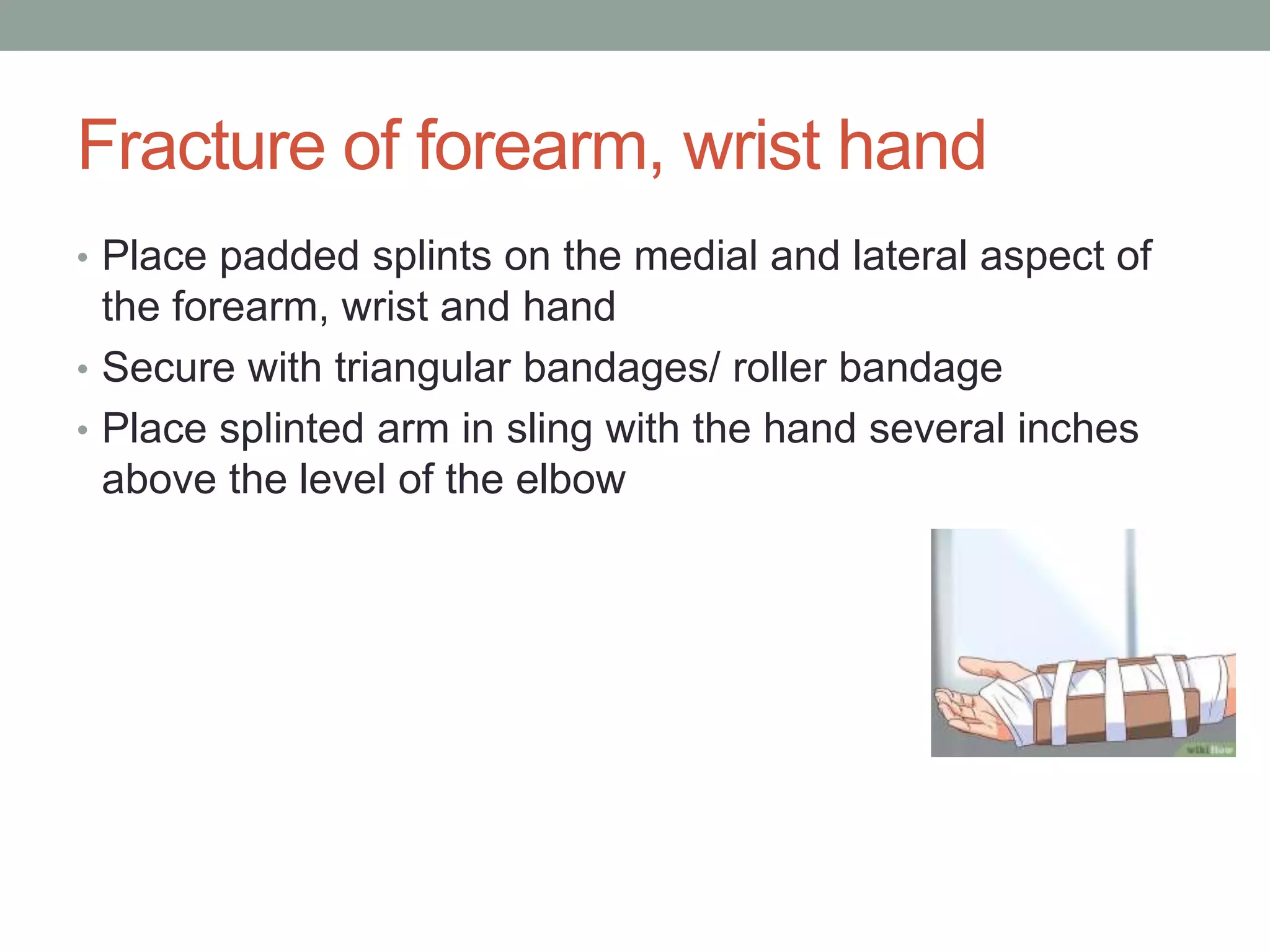
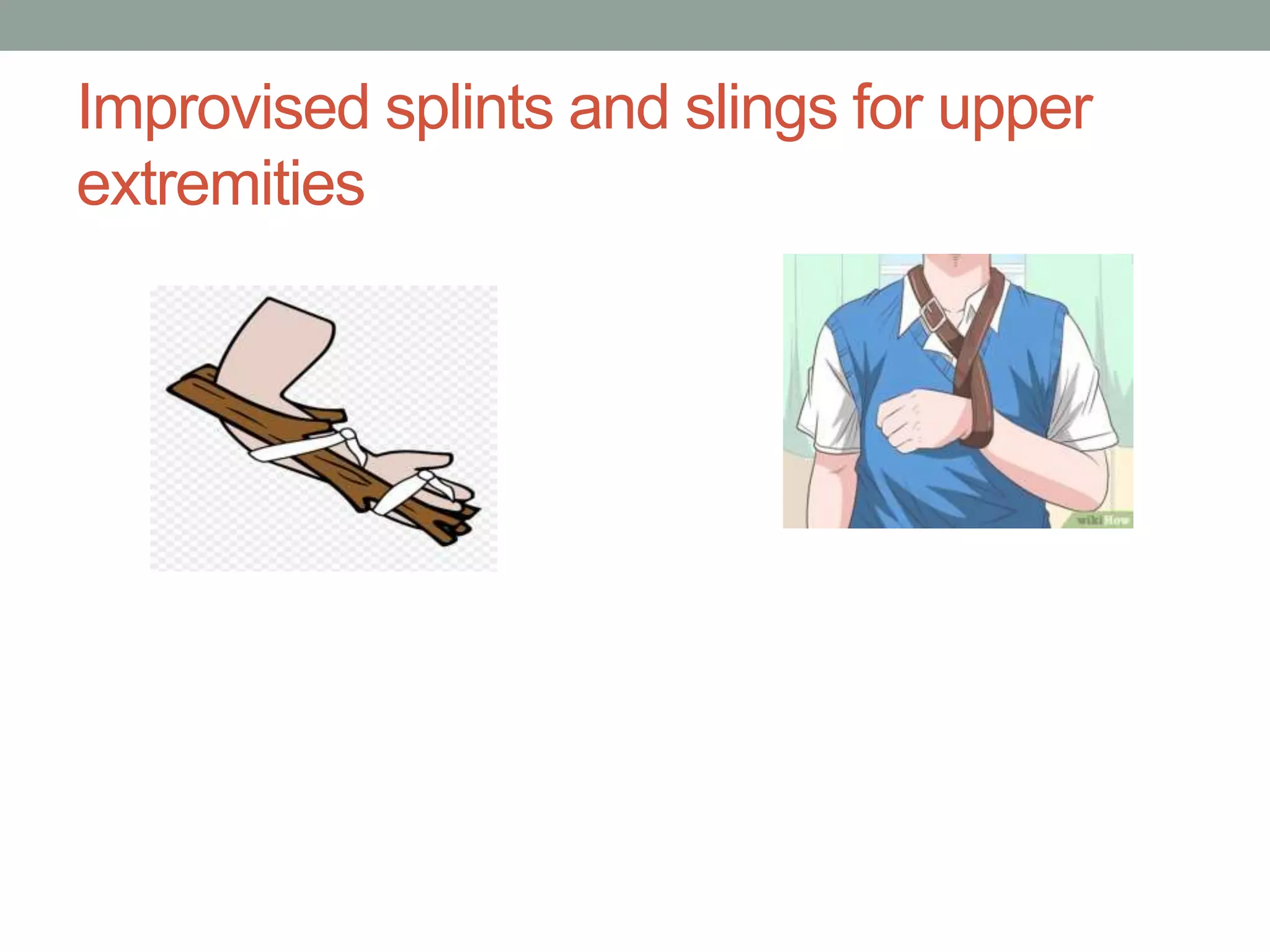
• Place padded splints on the medial and lateral aspect of
the forearm, wrist and hand
• Secure with triangular bandages/ roller bandage
• Place splinted arm in sling with the hand several inches
above the level of the elbow
Splinting fractures of lower extremities
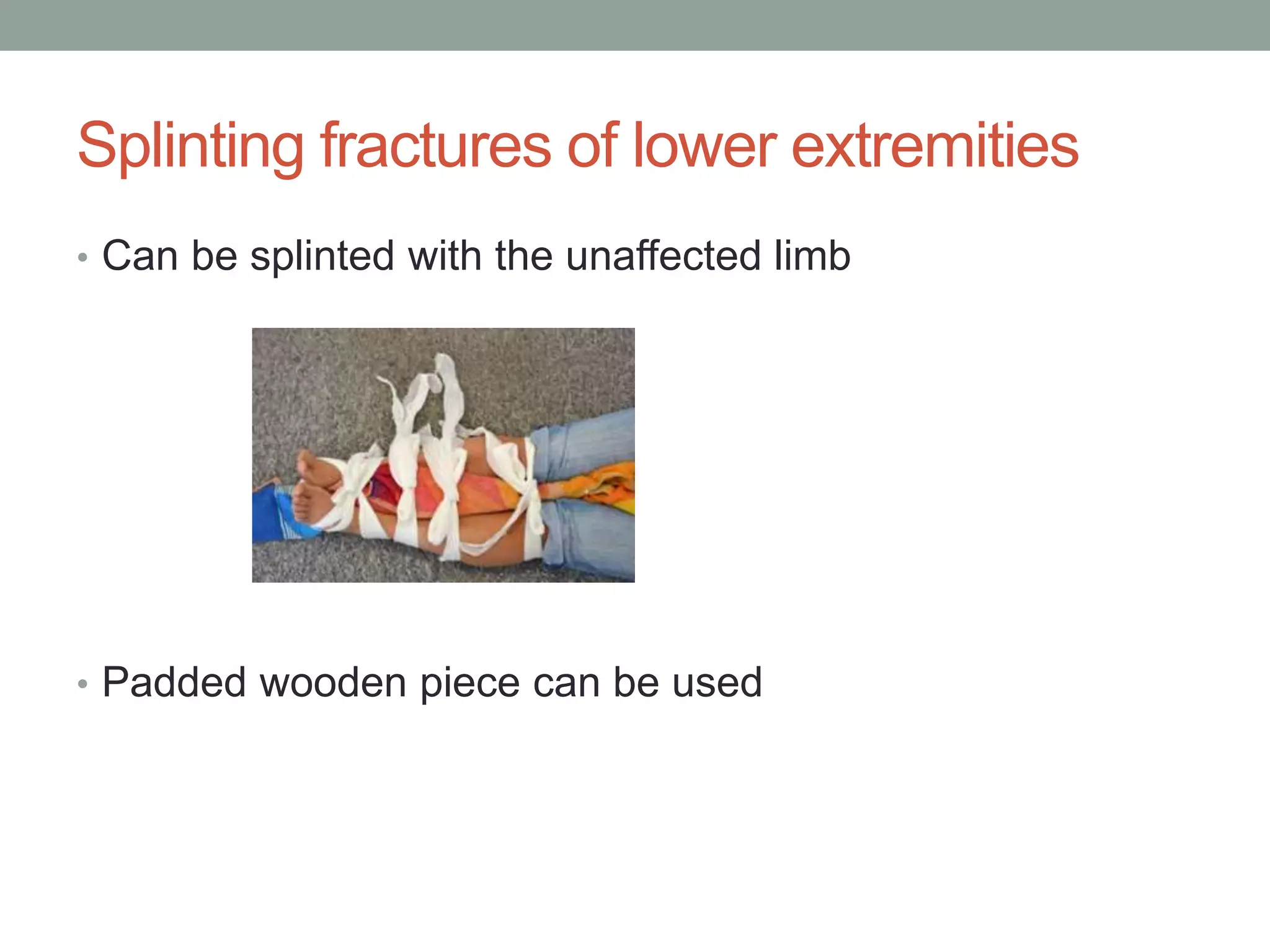
• Can be splinted with the unaffected limb
• Padded wooden piece can be used
Improvised splints and slings for upper
extremities
Improvised splints and slings for upper
extremities
THANK YOU

Splinting in first aid

  • 1.
    SPLINTING Sharon Treesa Antony AssistantProfessor Govt. College of Nursing Kottayam
  • 2.
    • The splintsare devices or means used temporarily for immobilizing or supporting fractured bones or injured joints prior to hospitalization or seeking medical help. • They are mainly applied for fractures, sprains, strains or dislocations.
  • 3.
    Purposes • To immobilizea fractured or injured body part prior to hospitalization • To prevent injury to blood vessels and nerves from jagged edges of the bone • To reduce pain induced by fracture • To manage sprains and strains
  • 4.
    General rules • Thesplint should be large enough to cover the joint above and below the fracture • It should be wide enough to support the area • It should be well padded to prevent injury to the limb • It should applied without interference with circulation • It may be applied over clothing or may be applied with a cloth over the skin • Splints may be improvised from piece of wood, card board, thick folded paper, sticks etc • The body parts of the casualty itself can be used for the purpose. ( 1. in case of injured lower limb, uninjured limb may be used as a splint, 2. for upper limb fracture, the trunk of the victim can be utilized as a splint)
  • 5.
  • 6.
    Splinting fractures ofupper limb • Place a pad in the axilla to prevent pressure on blood vessels and nerves. • Place two padded splints, one in inner aspect (medial) and the other on the outer ( lateral) aspect of the arm. • Secure padded splints in position with triangular bandages ( folded as cravats) or with roller bandage. • Place forearm in sling to prevent movement.
  • 7.
    Splinting for fracturesat or near elbow • Keep the arm at approximately 45 degree angle from the body • Apply padded splint to medial surface of the arm just below axilla to wrist • Apply another padded splint to lateral surface of the arm extending from shoulder to wrist • Secure splints in position with triangular bandages ( folded as cravats) or with roller bandage
  • 8.
    Fracture of forearm,wrist hand • Place padded splints on the medial and lateral aspect of the forearm, wrist and hand • Secure with triangular bandages/ roller bandage • Place splinted arm in sling with the hand several inches above the level of the elbow
  • 9.
    Splinting fractures oflower extremities • Can be splinted with the unaffected limb • Padded wooden piece can be used
  • 10.
    Improvised splints andslings for upper extremities
  • 11.
    Improvised splints andslings for upper extremities
  • 12.