Rangeen Chandran
 Any material used to support a fracture is
known as splint.
 Unconventional.
 Conventional.
 Temporary immobilization of sprains,
fractures, and reduced dislocations
 Control of pain
 Prevention of further soft tissue or
neurovascular injuries
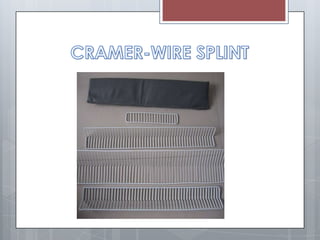
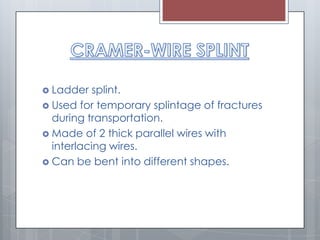
 Ladder splint.
 Used for temporary splintage of fractures
during transportation.
 Made of 2 thick parallel wires with
interlacing wires.
 Can be bent into different shapes.
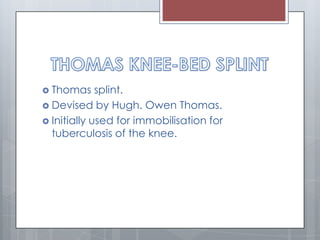
 Thomas splint.
 Devised by Hugh. Owen Thomas.
 Initially used for immobilisation for
tuberculosis of the knee.
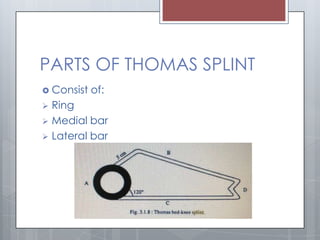
PARTS OF THOMAS SPLINT
 Consist of:
 Ring
 Medial bar
 Lateral bar
USE
 Immobilisation of lower limb
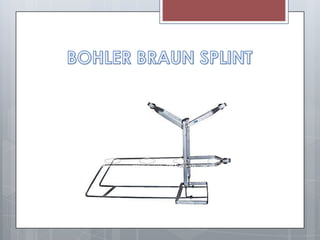
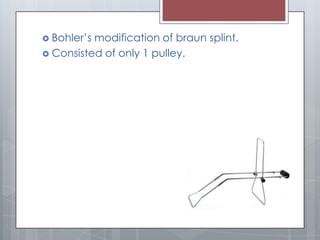
 Bohler’s modification of braun splint.
 Consisted of only 1 pulley.
• Pulley a-
calcaneal/dist
al tibeal
traction.
• Pulley b-distal
femoral/proxim
al tibial traction
• Pulley c-
change angle
of traction
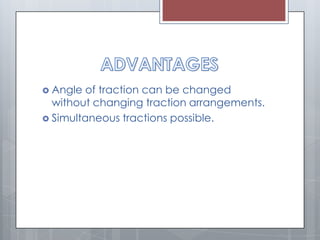
 Angle of traction can be changed
without changing traction arrangements.
 Simultaneous tractions possible.
 Not suitable for transportation.
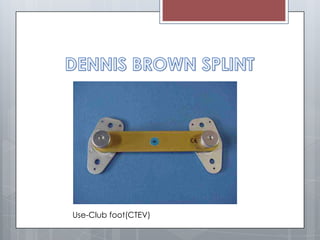
Use-Club foot(CTEV)
 Splint should be properly applied, well padded at
bony prominences and at the fracture sites
 Bandage of the splint shouldn’t be too tight nor
too loose.
 Patient should be encouraged to actively exercise
the muscles and the joints inside the splint as much
as permitted.
 Any compression of nerve or vessel should be
detected early and managed accordingly.
 Daily checking and adjustments should be made.
 Traction is a method of restoring
alignment to a fracture through gradual
neutralisation of muscular forces.
USES
a) Reduction of fractures and dislocations.
b) Immobilising painful and inflamed joint.
c) Preventing deformities.
d) Correction of soft tissue contractures.
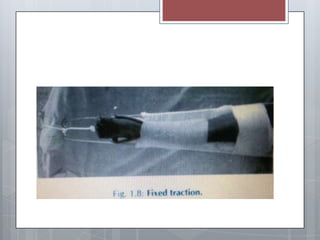
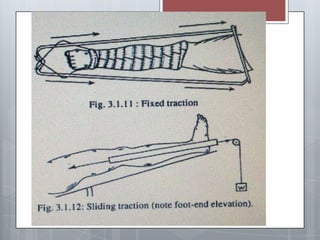
 FIXED TRACTION
Counter-traction is provided by a part of the
body.
 SLIDING TRACTION
Weight of the body under influence of
gravity provides counter-traction.
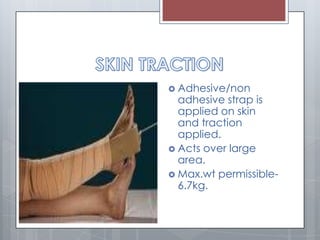
 SKIN TRACTION
 SKELETAL TRACTION
 Adhesive/non
adhesive strap is
applied on skin
and traction
applied.
 Acts over large
area.
 Max.wt permissible-
6.7kg.
 Traction applied through pin/wire driven
through bone.
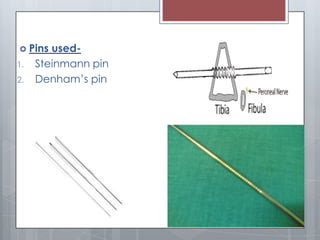
 Pins used-
1. Steinmann pin
2. Denham’s pin
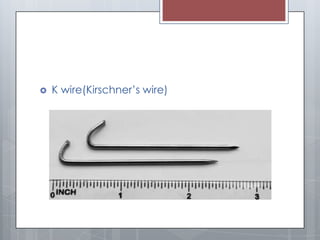
 K wire(Kirschner’s wire)
 Olecranon
 Greater trochanter
 Lower end of femur
 Upper end of tibia
 Lower end f tibia
 Calcaneum
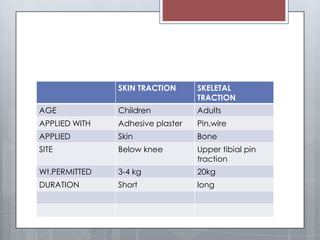
SKIN TRACTION SKELETAL
TRACTION
AGE Children Adults
APPLIED WITH Adhesive plaster Pin,wire
APPLIED Skin Bone
SITE Below knee Upper tibial pin
traction
Wt.PERMITTED 3-4 kg 20kg
DURATION Short long
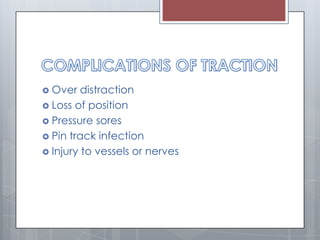
 Over distraction
 Loss of position
 Pressure sores
 Pin track infection
 Injury to vessels or nerves
a. Traction should be made comfortable.
b. Proper functioning of traction unit must
be ensured.
c. Sensations over toes and fingers should
be normal.
d. Proper position of fracture ensured by
taking check xrays in traction.
e. Physiotherapy of limb should be
continued to minimise muscle wasting.
Splint and tractions

Splint and tractions

  • 1.
  • 2.
     Any materialused to support a fracture is known as splint.  Unconventional.  Conventional.
  • 3.
     Temporary immobilizationof sprains, fractures, and reduced dislocations  Control of pain  Prevention of further soft tissue or neurovascular injuries
  • 5.
     Ladder splint. Used for temporary splintage of fractures during transportation.  Made of 2 thick parallel wires with interlacing wires.  Can be bent into different shapes.
  • 6.
     Thomas splint. Devised by Hugh. Owen Thomas.  Initially used for immobilisation for tuberculosis of the knee.
  • 7.
    PARTS OF THOMASSPLINT  Consist of:  Ring  Medial bar  Lateral bar
  • 8.
  • 10.
     Bohler’s modificationof braun splint.  Consisted of only 1 pulley.
  • 11.
    • Pulley a- calcaneal/dist altibeal traction. • Pulley b-distal femoral/proxim al tibial traction • Pulley c- change angle of traction
  • 12.
     Angle oftraction can be changed without changing traction arrangements.  Simultaneous tractions possible.
  • 13.
     Not suitablefor transportation.
  • 14.
  • 25.
     Splint shouldbe properly applied, well padded at bony prominences and at the fracture sites  Bandage of the splint shouldn’t be too tight nor too loose.  Patient should be encouraged to actively exercise the muscles and the joints inside the splint as much as permitted.  Any compression of nerve or vessel should be detected early and managed accordingly.  Daily checking and adjustments should be made.
  • 26.
     Traction isa method of restoring alignment to a fracture through gradual neutralisation of muscular forces.
  • 27.
    USES a) Reduction offractures and dislocations. b) Immobilising painful and inflamed joint. c) Preventing deformities. d) Correction of soft tissue contractures.
  • 28.
     FIXED TRACTION Counter-tractionis provided by a part of the body.  SLIDING TRACTION Weight of the body under influence of gravity provides counter-traction.
  • 31.
     SKIN TRACTION SKELETAL TRACTION
  • 32.
     Adhesive/non adhesive strapis applied on skin and traction applied.  Acts over large area.  Max.wt permissible- 6.7kg.
  • 33.
     Traction appliedthrough pin/wire driven through bone.
  • 34.
     Pins used- 1.Steinmann pin 2. Denham’s pin
  • 35.
  • 36.
     Olecranon  Greatertrochanter  Lower end of femur  Upper end of tibia  Lower end f tibia  Calcaneum
  • 37.
    SKIN TRACTION SKELETAL TRACTION AGEChildren Adults APPLIED WITH Adhesive plaster Pin,wire APPLIED Skin Bone SITE Below knee Upper tibial pin traction Wt.PERMITTED 3-4 kg 20kg DURATION Short long
  • 38.
     Over distraction Loss of position  Pressure sores  Pin track infection  Injury to vessels or nerves
  • 39.
    a. Traction shouldbe made comfortable. b. Proper functioning of traction unit must be ensured. c. Sensations over toes and fingers should be normal. d. Proper position of fracture ensured by taking check xrays in traction. e. Physiotherapy of limb should be continued to minimise muscle wasting.