Downloaded 51 times





A stye, also known as a hordeolum, is an infection of a sebaceous gland in the eyelid caused by staphylococcus bacteria. It results in a red, tender bump on the eyelid. Styes are commonly caused by bacterial infection, excessive cosmetic use, poor nutrition, lack of hygiene, sleep deprivation, or rubbing of the eyes. Signs and symptoms include eyelid swelling, pain, redness, tenderness, crusting, and blurred vision. Treatment involves analgesics, warm compresses, antibiotics like erythromycin ophthalmic ointment or chloramphenicol, and incision and drainage for severe cases. Prevention focuses on proper eye and hand hy
The presentation is introduced by Romena Begum, a second-year MSC Nursing student from KGI, Bangalore.
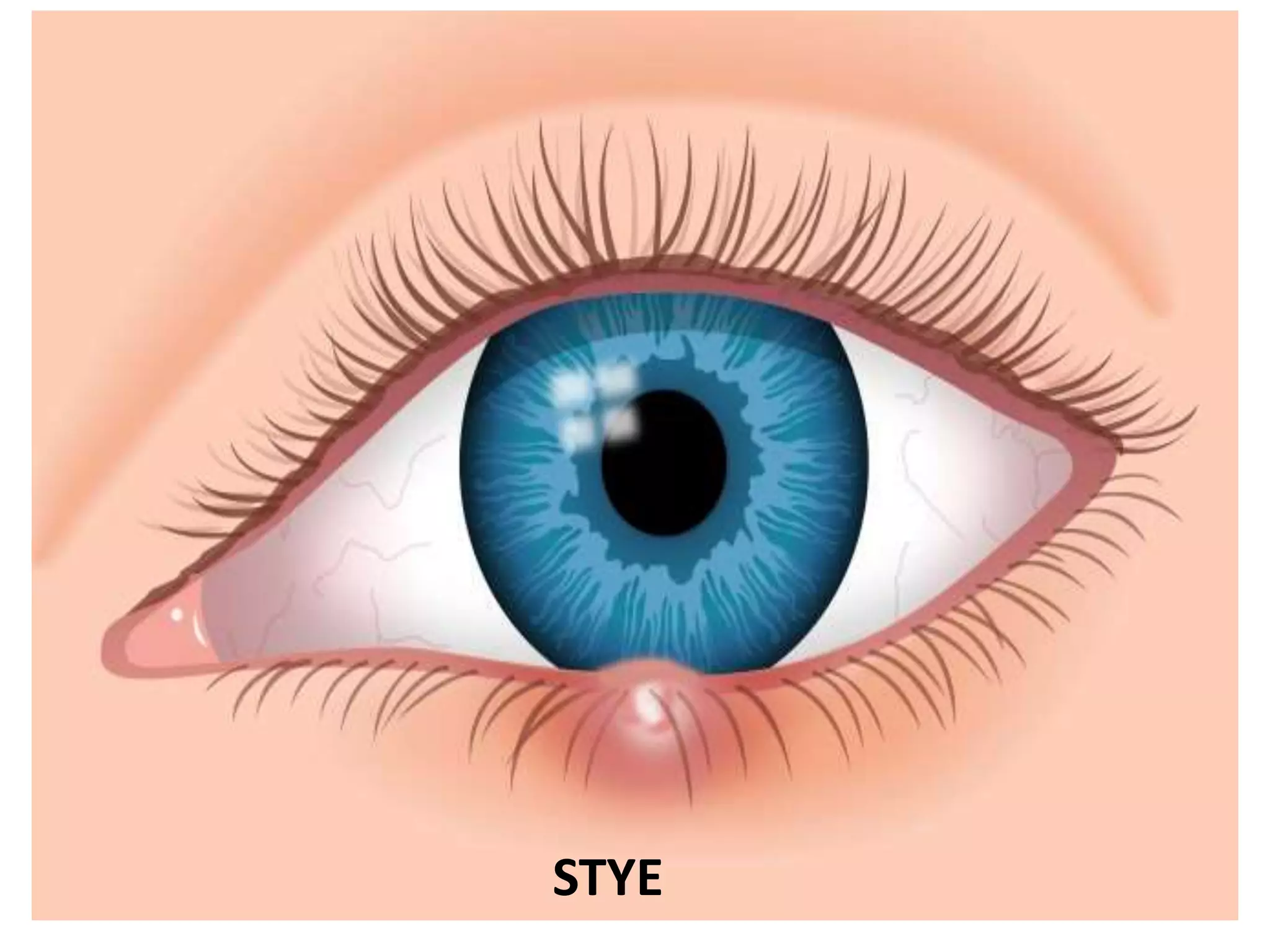
A stye, or hordeolum, is a painful, red lump on the eyelid caused by infection of a sebaceous gland.
Styes are caused by staphylococcal infection, excessive cosmetic use, poor nutrition, sleep deprivation, lack of hygiene, dehydration, and eye rubbing.
Symptoms include localized swelling, pain, redness, itching, lump formation, and other discomforts affecting vision and eye health.
Investigation includes patient history and a thorough eye examination to diagnose the condition.
Medical treatment includes analgesics, antibiotics (Erythromycin, Chloramphenicol), and warm compressions.
If necessary, styes may require surgical intervention such as incision and drainage.
Preventive measures include proper eye hygiene, hand washing, avoiding shared cosmetics, and regular makeup removal.


