STYE,CHALAZION,INTERNAL
HORDEOLUM
Dr.sharada H
INSTITUTE OF AYURVEDA MAJOR SD SINGH UNIVERSITY
FARRUKHABAD
EXTERNAL HORDEOLUM (STYE)
 Defn: An acute suppurative inflammation of gland of the Zeis or Moll.
 Causative organism -Staphylococcus Aureus
 Predisposing factors
 Habitual rubbing of the eyes
 Fingering of the lids and nose,
 Chronic blepharitis and
 Diabetes mellitus
 Excessive intake of carbohydrates and alcohol.
Individuals with
diabetes are generally
prone to acute
infections of any
kind especially when
there is uncontrolled
diabetes.
The eyelids are
more susceptible to
infection and, hence,
ulcerative blepharitis
and styes are more
commonly found in
diabetes patients.
Why are
people with
diabetes more
prone to
infections?
High blood sugar levels can
weaken a person's immune
system defenses. People
who have had diabetes for a
long time may have
peripheral nerve damage
and reduced blood flow to
their extremities, which
increases the chance for
infection.
 Symptoms
 Acute pain
 swelling of lid
 Mild watering
 Photophobia.
 Signs
 Stage of cellulitis -localised, Hard, red, tender swelling at the lid
margin associated with marked oedema
 Stage of Abscess formation -visible pus point on the lid margin in
relation to the affected cilia.
 Usually there is one stye, but occasionally, these may be multiple.
Treatment
 Hot compresses 2-3 times a day are very useful in
cellulitis stage.
 When the pus point is formed it may be evacuated by
Epilating the involved cilia.
 Surgical incision is required rarely for a large abscess.
 Antibiotic eyedrops (3-4 times a day) and
 Eye ointment (at bed time).
 Anti-inflammatory and analgesics relieve pain and
reduce oedema.
 Systemic antibiotics may be used for early control of
infection.
CHALAZION
 Tarsal Or Meibomian Cyst.
 Defn: It is a Chronic non-infective granulomatous inflammation
of the Meibomian gland.
 Pathology
Low grade of
infection
Accumulation
of meibomian
secretion
Obstruction
of ducts
Clinical picture
 Painless swelling in the lid
 A feeling of mild heaviness.
 Nodule-small, firm to hard, non-tender swelling present
slightly away from the lid margin.
 Drooping of eyelid in multiple/large Chalazion.
 Upper lid is more involved than the lower.
 On everting the lid-a reddish purple area is seen on palpebral
conjunctiva after of eversion of lids.
Complications
 Slowly increases in size and
becomes very large.
 A large chalazion of the upper lid
may press on the cornea and cause
blurred vision.
 A large chalazion of the lower lid
may rarely cause eversion of the
punctum or even ectropion and
epiphora
 Ptosis
Treatment
Conservative treatment-
Hot fomentation,
Topical antibiotic eyedrops and
 Oral anti-inflammatory drugs.
 Intralesional injection of long-acting steroid
(Triamcinolone)
 Incision and curettage
Incision and curettage
 Topical anaesthesia-
 Instillation of xylocaine drops in the eye
 Chalazion is infiltrated with 2 percent xylocaine solution.
 Incision is made with a sharp blade, which should be vertical on
the conjunctival side .
 The contents are curetted out with the help of a chalazion scoop.
 To avoid recurrence, its cavity should be cauterised with carbolic
acid.
 An antibiotic ointment is instilled and eye padded for about 12
hours.
Postoperative treatment
Antibiotic eyedrops,
 Hot fomentation and
 Oral anti-inflammatory and
 Analgesics may be given for 3-4 days
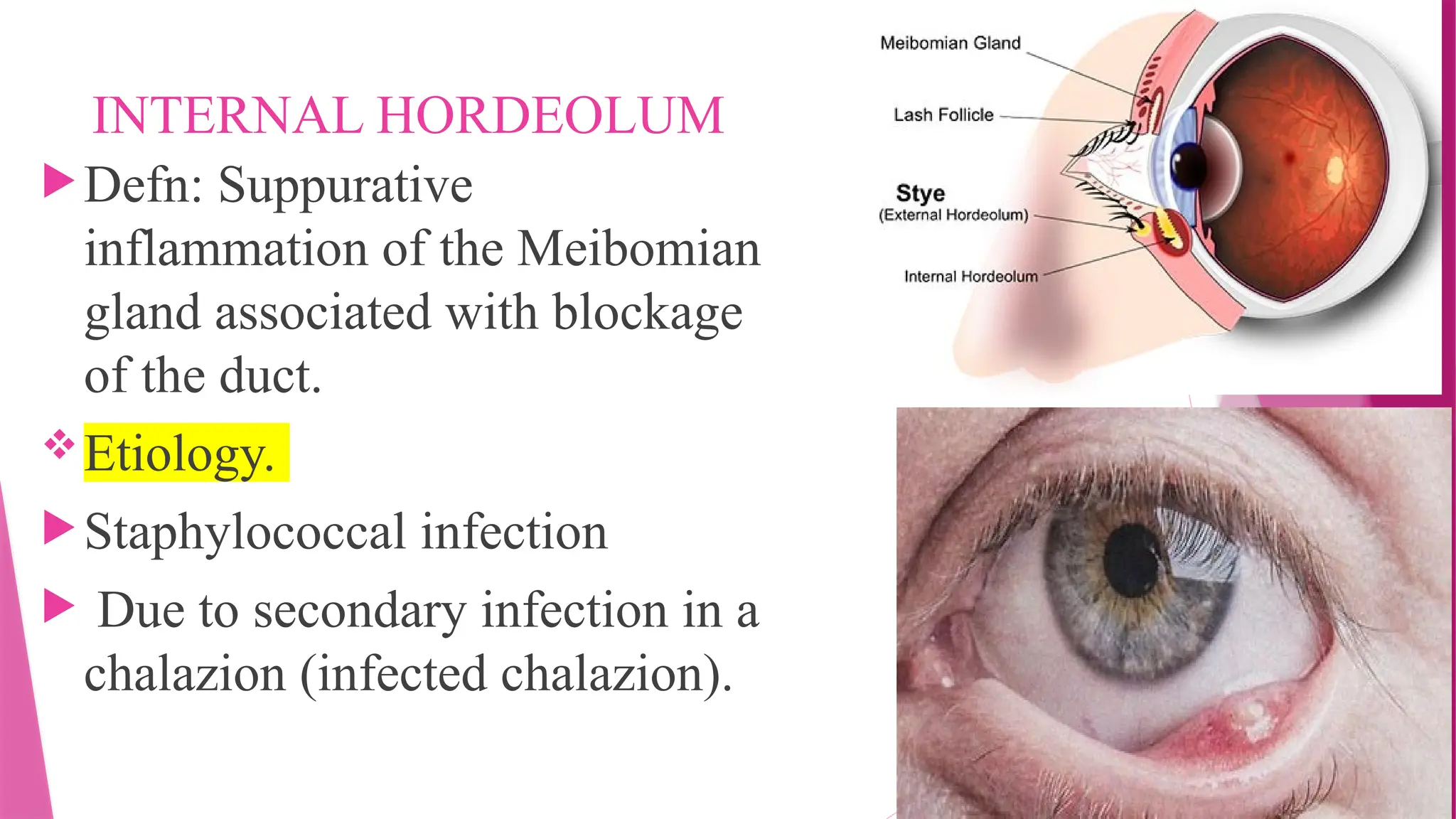
INTERNAL HORDEOLUM
Defn: Suppurative
inflammation of the Meibomian
gland associated with blockage
of the duct.
Etiology.
Staphylococcal infection
 Due to secondary infection in a
chalazion (infected chalazion).
Clinical picture
 Similar to hordeolum externum, except that pain
is more intense,
 Mild watering
 Photophobia
 Localizes Firm, Red,tender, Swelling of Lid with
marked oedema
Treatment.
 It is similar to Hordeolum Externum
 except that, when the pus is formed, it should be drained
by a vertical incision from the tarsal conjunctiva
THANK
YOU….

Stye, CHALAZION, Internal hordeolum.pptx

  • 1.
    STYE,CHALAZION,INTERNAL HORDEOLUM Dr.sharada H INSTITUTE OFAYURVEDA MAJOR SD SINGH UNIVERSITY FARRUKHABAD
  • 2.
    EXTERNAL HORDEOLUM (STYE) Defn: An acute suppurative inflammation of gland of the Zeis or Moll.  Causative organism -Staphylococcus Aureus  Predisposing factors  Habitual rubbing of the eyes  Fingering of the lids and nose,  Chronic blepharitis and  Diabetes mellitus  Excessive intake of carbohydrates and alcohol.
  • 3.
    Individuals with diabetes aregenerally prone to acute infections of any kind especially when there is uncontrolled diabetes. The eyelids are more susceptible to infection and, hence, ulcerative blepharitis and styes are more commonly found in diabetes patients. Why are people with diabetes more prone to infections? High blood sugar levels can weaken a person's immune system defenses. People who have had diabetes for a long time may have peripheral nerve damage and reduced blood flow to their extremities, which increases the chance for infection.
  • 4.
     Symptoms  Acutepain  swelling of lid  Mild watering  Photophobia.  Signs  Stage of cellulitis -localised, Hard, red, tender swelling at the lid margin associated with marked oedema  Stage of Abscess formation -visible pus point on the lid margin in relation to the affected cilia.  Usually there is one stye, but occasionally, these may be multiple.
  • 5.
    Treatment  Hot compresses2-3 times a day are very useful in cellulitis stage.  When the pus point is formed it may be evacuated by Epilating the involved cilia.  Surgical incision is required rarely for a large abscess.  Antibiotic eyedrops (3-4 times a day) and  Eye ointment (at bed time).  Anti-inflammatory and analgesics relieve pain and reduce oedema.  Systemic antibiotics may be used for early control of infection.
  • 6.
    CHALAZION  Tarsal OrMeibomian Cyst.  Defn: It is a Chronic non-infective granulomatous inflammation of the Meibomian gland.  Pathology Low grade of infection Accumulation of meibomian secretion Obstruction of ducts
  • 7.
    Clinical picture  Painlessswelling in the lid  A feeling of mild heaviness.  Nodule-small, firm to hard, non-tender swelling present slightly away from the lid margin.  Drooping of eyelid in multiple/large Chalazion.  Upper lid is more involved than the lower.  On everting the lid-a reddish purple area is seen on palpebral conjunctiva after of eversion of lids.
  • 8.
    Complications  Slowly increasesin size and becomes very large.  A large chalazion of the upper lid may press on the cornea and cause blurred vision.  A large chalazion of the lower lid may rarely cause eversion of the punctum or even ectropion and epiphora  Ptosis
  • 9.
    Treatment Conservative treatment- Hot fomentation, Topicalantibiotic eyedrops and  Oral anti-inflammatory drugs.  Intralesional injection of long-acting steroid (Triamcinolone)  Incision and curettage
  • 10.
    Incision and curettage Topical anaesthesia-  Instillation of xylocaine drops in the eye  Chalazion is infiltrated with 2 percent xylocaine solution.  Incision is made with a sharp blade, which should be vertical on the conjunctival side .  The contents are curetted out with the help of a chalazion scoop.  To avoid recurrence, its cavity should be cauterised with carbolic acid.  An antibiotic ointment is instilled and eye padded for about 12 hours.
  • 12.
    Postoperative treatment Antibiotic eyedrops, Hot fomentation and  Oral anti-inflammatory and  Analgesics may be given for 3-4 days
  • 13.
    INTERNAL HORDEOLUM Defn: Suppurative inflammationof the Meibomian gland associated with blockage of the duct. Etiology. Staphylococcal infection  Due to secondary infection in a chalazion (infected chalazion).
  • 14.
    Clinical picture  Similarto hordeolum externum, except that pain is more intense,  Mild watering  Photophobia  Localizes Firm, Red,tender, Swelling of Lid with marked oedema
  • 15.
    Treatment.  It issimilar to Hordeolum Externum  except that, when the pus is formed, it should be drained by a vertical incision from the tarsal conjunctiva THANK YOU….