BLEPHARITIS
By Dr. Sandhya
Definition-
Blepharitis is an inflammatory condition of the
eyelid margin, is a common cause of ocular
discomfort and irritation in all age and ethnic
groups.
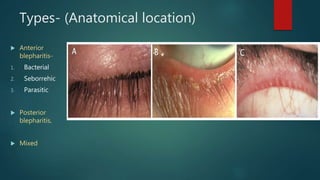
Types- (Anatomical location)
 Anterior
blepharitis-
1. Bacterial
2. Seborrehic
3. Parasitic
 Posterior
blepharitis.
 Mixed
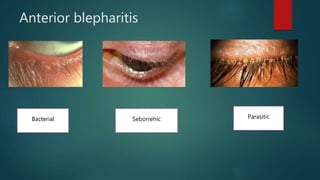
Anterior blepharitis
Bacterial Seborrehic Parasitic
Bacterial blepharitis
 Reason for chronic anterior blepharitis
 Etiology-
 Coagulase positive staph
 Streptococci
 Propionibacterium acne
 moraxella
Clinical features
signs symptoms
Yellow cilia are seen at the root of the cilia
which glue them together
Chronic pain
Small ulcers, bleeds on removal of crusts Itching
Red thickened lid margins with dialted
blood vessels
lacrimation
Mild papillary conjunctivitis and
conjunctival hyperemia are common
associations
Glue cilia
symptoms worse in the morning
Remissions and exacerabations in the
symptoms are quite common
Seborrheic blepharitis
 It is the primary anterior blepharitis with some posterior
spil over.
Etiology-
 Associated with seborrhoea of scalp (dandruff).
 Gland of zeis- secrete abnormal excessive neutral lipids
which are are spilt by corynebacterium acne into irritating
free fatty acids.
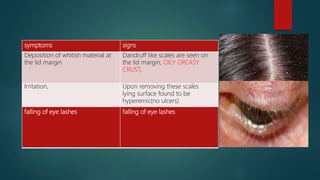
symptoms signs
Deposition of whitish material at
the lid margin
Dandruff like scales are seen on
the lid margin, OILY GREASY
CRUST,
Irritation, Upon removing these scales
lying surface found to be
hyperemic(no ulcers)
falling of eye lashes falling of eye lashes
Parasitic blepharitis
 Etiology
Phthiriasis palpebram (mite/ectoparasite)
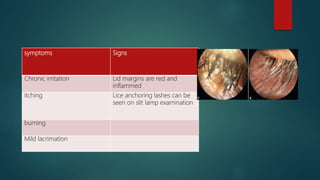
symptoms Signs
Chronic irritation Lid margins are red and
inflammed
itching Lice anchoring lashes can be
seen on slit lamp examination
burning
Mild lacrimation
Posterior blepharitis/Meibomitis
 Acute meibomitis- CA is staph
 Chronic meibomitis is a meibomian gland dysfunction, seen more
commonly in middle aged persons with acne roasacea and seborrhoic
dermatitis.
Symptoms signs
Frothy (foam like) secretion on
eye lid margin
On eversion of the eyelids,
vertical yellowish streaks
shinning through the
are seen.
Openings of meibomian glands
become prominent with thick
secretions
Conditions associated with chronic
blepharitis
 Lash abnormality- triachiasis, madarosis, poliosis
 Epiphora-
 Eczema of skin and ectropion
 Recurrent styes/chalazion
 Tear film instability and dry eye.
 Acne vulgaris
 Atopic keratoconjunctivitis
 Bacterial keratitis
DIAGNOSIS
 In all forms of blepharitis, examination of the tear film may show instability
and rapid evaporation.
 Tear break-up time (TBUT)- The time interval between a complete blink
and the first appearance of a dry spot in the pre-corneal tear film after
fluorescein instillation..<10 sec(ABN).
 Schirmer’s test.
 RECENT ADVANCES-
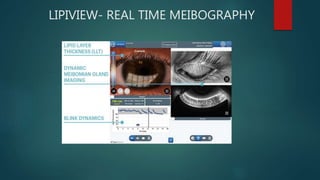
 Meibography-The silhouette of the meibomian gland structure is captured
 LIPIVIEW-This instrument measures the lipid layer thickness between blinks
and gives a quantitative assessment.
Meibography
LIPIVIEW- REAL TIME MEIBOGRAPHY
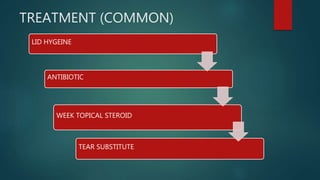
TREATMENT (COMMON)
LID HYGEINE
ANTIBIOTIC
WEEK TOPICAL STEROID
TEAR SUBSTITUTE
Treatment
Bacterial seborrheic parasitic Posterior blepharitis
Lid hygiene
Manual removal of
crusts after softening
and hot compress.
Avoid rubbing of eyes
Improvement of health
and balanced diet
Mechanical removal of
parasite with the help of
forceps.
Expression of glands by
repeated Vertical lid
massage
AB ointment/DROPS-
tid/Qid
Oral antibiotics-
erythromycin
Scalp dandruff should
be treated adequately
Delousing of patient
and other family
members, clothing and
bedding
Antibiotic eye drops-
tid/qid
Oral NSAIDS- to reduce
inflammation.
Removal of scales from
lid margins with the
help of baby shampoo.
Antibiotic ointment over
eye lids.
Systemic
tetracyclines(DOXYCYCL
INES)- 6-12 weeks
mainstay.
MACROLIDES( AZITHRO
Week topical steroids-
FML/LOTEPREDNOL
Combined antibiotic
and steroid eye
ointment at the lid
margin
50%TEA TREE OIL
EYELID SCRUBS
Restasis.
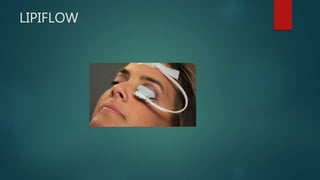
LIPIFLOW
LIPIFLOW
References
 https://eyewiki.aao.org/Blepharitis
 https://eyewiki.aao.org/Diagnostic_Testing_for_Dry_Eye
BLEPHARITIS ppt.pptx

BLEPHARITIS ppt.pptx

  • 1.
  • 2.
    Definition- Blepharitis is aninflammatory condition of the eyelid margin, is a common cause of ocular discomfort and irritation in all age and ethnic groups.
  • 3.
    Types- (Anatomical location) Anterior blepharitis- 1. Bacterial 2. Seborrehic 3. Parasitic  Posterior blepharitis.  Mixed
  • 4.
  • 5.
    Bacterial blepharitis  Reasonfor chronic anterior blepharitis  Etiology-  Coagulase positive staph  Streptococci  Propionibacterium acne  moraxella
  • 6.
    Clinical features signs symptoms Yellowcilia are seen at the root of the cilia which glue them together Chronic pain Small ulcers, bleeds on removal of crusts Itching Red thickened lid margins with dialted blood vessels lacrimation Mild papillary conjunctivitis and conjunctival hyperemia are common associations Glue cilia symptoms worse in the morning Remissions and exacerabations in the symptoms are quite common
  • 7.
    Seborrheic blepharitis  Itis the primary anterior blepharitis with some posterior spil over. Etiology-  Associated with seborrhoea of scalp (dandruff).  Gland of zeis- secrete abnormal excessive neutral lipids which are are spilt by corynebacterium acne into irritating free fatty acids.
  • 8.
    symptoms signs Deposition ofwhitish material at the lid margin Dandruff like scales are seen on the lid margin, OILY GREASY CRUST, Irritation, Upon removing these scales lying surface found to be hyperemic(no ulcers) falling of eye lashes falling of eye lashes
  • 9.
  • 10.
    symptoms Signs Chronic irritationLid margins are red and inflammed itching Lice anchoring lashes can be seen on slit lamp examination burning Mild lacrimation
  • 11.
    Posterior blepharitis/Meibomitis  Acutemeibomitis- CA is staph  Chronic meibomitis is a meibomian gland dysfunction, seen more commonly in middle aged persons with acne roasacea and seborrhoic dermatitis.
  • 12.
    Symptoms signs Frothy (foamlike) secretion on eye lid margin On eversion of the eyelids, vertical yellowish streaks shinning through the are seen. Openings of meibomian glands become prominent with thick secretions
  • 13.
    Conditions associated withchronic blepharitis  Lash abnormality- triachiasis, madarosis, poliosis  Epiphora-  Eczema of skin and ectropion  Recurrent styes/chalazion  Tear film instability and dry eye.  Acne vulgaris  Atopic keratoconjunctivitis  Bacterial keratitis
  • 14.
    DIAGNOSIS  In allforms of blepharitis, examination of the tear film may show instability and rapid evaporation.  Tear break-up time (TBUT)- The time interval between a complete blink and the first appearance of a dry spot in the pre-corneal tear film after fluorescein instillation..<10 sec(ABN).  Schirmer’s test.  RECENT ADVANCES-  Meibography-The silhouette of the meibomian gland structure is captured  LIPIVIEW-This instrument measures the lipid layer thickness between blinks and gives a quantitative assessment.
  • 15.
  • 16.
  • 17.
    TREATMENT (COMMON) LID HYGEINE ANTIBIOTIC WEEKTOPICAL STEROID TEAR SUBSTITUTE
  • 18.
    Treatment Bacterial seborrheic parasiticPosterior blepharitis Lid hygiene Manual removal of crusts after softening and hot compress. Avoid rubbing of eyes Improvement of health and balanced diet Mechanical removal of parasite with the help of forceps. Expression of glands by repeated Vertical lid massage AB ointment/DROPS- tid/Qid Oral antibiotics- erythromycin Scalp dandruff should be treated adequately Delousing of patient and other family members, clothing and bedding Antibiotic eye drops- tid/qid Oral NSAIDS- to reduce inflammation. Removal of scales from lid margins with the help of baby shampoo. Antibiotic ointment over eye lids. Systemic tetracyclines(DOXYCYCL INES)- 6-12 weeks mainstay. MACROLIDES( AZITHRO Week topical steroids- FML/LOTEPREDNOL Combined antibiotic and steroid eye ointment at the lid margin 50%TEA TREE OIL EYELID SCRUBS Restasis. LIPIFLOW
  • 19.
  • 20.