A Presentation
On
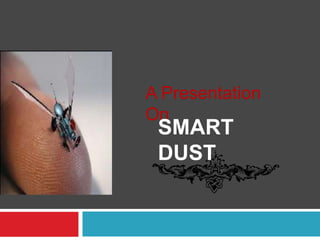
 SMART
 DUST
   Introduction
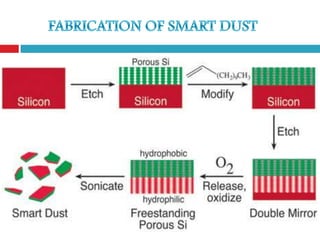
   Fabrication of Smart Dust
   Working
   Major challenges
   Applications
   Advantages & Disadvantages
   Conclusion
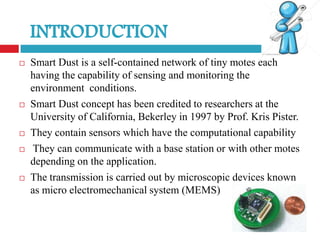
   Smart Dust is a self-contained network of tiny motes each
    having the capability of sensing and monitoring the
    environment conditions.
   Smart Dust concept has been credited to researchers at the
    University of California, Bekerley in 1997 by Prof. Kris Pister.
   They contain sensors which have the computational capability
    They can communicate with a base station or with other motes
    depending on the application.
   The transmission is carried out by microscopic devices known
    as micro electromechanical system (MEMS)
N


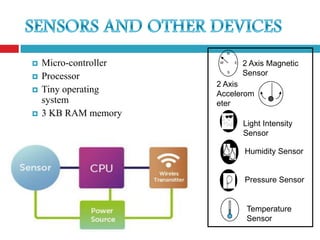
   Micro-controller   W       E
                                   2 Axis Magnetic
   Processor
                           S
                                   Sensor
                       2 Axis
   Tiny operating     Accelerom
    system             eter
   3 KB RAM memory
                                   Light Intensity
                                   Sensor

                                   Humidity Sensor


                                   Pressure Sensor


                                    Temperature
                                    Sensor
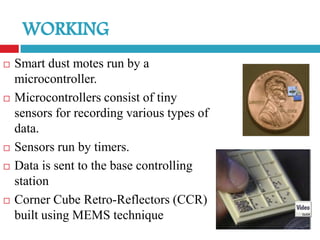
   Smart dust motes run by a
    microcontroller.
   Microcontrollers consist of tiny
    sensors for recording various types of
    data.
   Sensors run by timers.
   Data is sent to the base controlling
    station
   Corner Cube Retro-Reflectors (CCR)
    built using MEMS technique
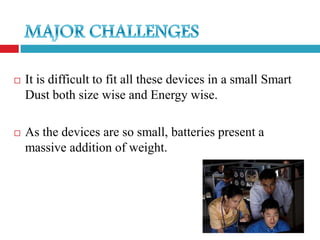
   It is difficult to fit all these devices in a small Smart
    Dust both size wise and Energy wise.

   As the devices are so small, batteries present a
    massive addition of weight.
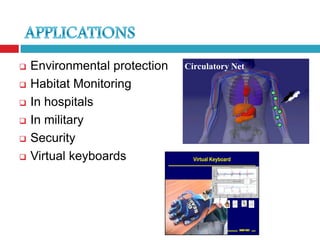
   Environmental protection   Circulatory Net

   Habitat Monitoring
   In hospitals
   In military
   Security
   Virtual keyboards            Virtual Keyboard


                                                    SMART DUST
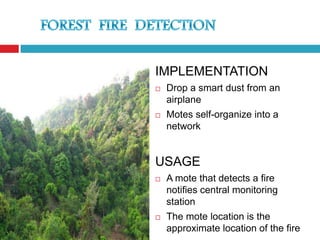
IMPLEMENTATION
   Drop a smart dust from an
    airplane
   Motes self-organize into a
    network


USAGE
   A mote that detects a fire
    notifies central monitoring
    station
   The mote location is the
    approximate location of the fire
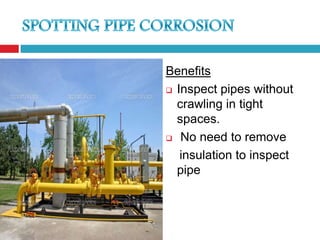
Benefits
 Inspect pipes without
  crawling in tight
  spaces.
 No need to remove

   insulation to inspect
  pipe
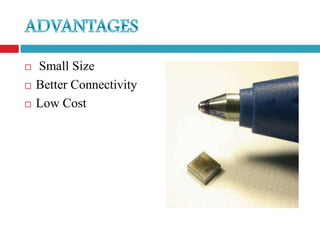
   Small Size
   Better Connectivity
   Low Cost
   The main concern is privacy. Because it is so tiny, this
    device can be used to spy on people without their
    approval.
    Another concern is the security of the information
    transmitted through this sensors. Like in any other
    computer, hackers can brake into the system and steal
    or modify important data.
There are many ongoing researches on Smart Dust,
the main purpose of these researches is to make
Smart Dust mote as small as possible and to make
it available at as low price as possible.
Smart dust

Smart dust

  • 1.
  • 2.
    Introduction  Fabrication of Smart Dust  Working  Major challenges  Applications  Advantages & Disadvantages  Conclusion
  • 3.
    Smart Dust is a self-contained network of tiny motes each having the capability of sensing and monitoring the environment conditions.  Smart Dust concept has been credited to researchers at the University of California, Bekerley in 1997 by Prof. Kris Pister.  They contain sensors which have the computational capability  They can communicate with a base station or with other motes depending on the application.  The transmission is carried out by microscopic devices known as micro electromechanical system (MEMS)
  • 4.
    N  Micro-controller W E 2 Axis Magnetic  Processor S Sensor 2 Axis  Tiny operating Accelerom system eter  3 KB RAM memory Light Intensity Sensor Humidity Sensor Pressure Sensor Temperature Sensor
  • 6.
    Smart dust motes run by a microcontroller.  Microcontrollers consist of tiny sensors for recording various types of data.  Sensors run by timers.  Data is sent to the base controlling station  Corner Cube Retro-Reflectors (CCR) built using MEMS technique
  • 7.
    It is difficult to fit all these devices in a small Smart Dust both size wise and Energy wise.  As the devices are so small, batteries present a massive addition of weight.
  • 8.
    Environmental protection Circulatory Net  Habitat Monitoring  In hospitals  In military  Security  Virtual keyboards Virtual Keyboard SMART DUST
  • 9.
    IMPLEMENTATION  Drop a smart dust from an airplane  Motes self-organize into a network USAGE  A mote that detects a fire notifies central monitoring station  The mote location is the approximate location of the fire
  • 10.
    Benefits  Inspect pipeswithout crawling in tight spaces.  No need to remove insulation to inspect pipe
  • 11.
    Small Size  Better Connectivity  Low Cost
  • 12.
    The main concern is privacy. Because it is so tiny, this device can be used to spy on people without their approval.  Another concern is the security of the information transmitted through this sensors. Like in any other computer, hackers can brake into the system and steal or modify important data.
  • 13.
    There are manyongoing researches on Smart Dust, the main purpose of these researches is to make Smart Dust mote as small as possible and to make it available at as low price as possible.