The Evolution of The
  Atomic Theory
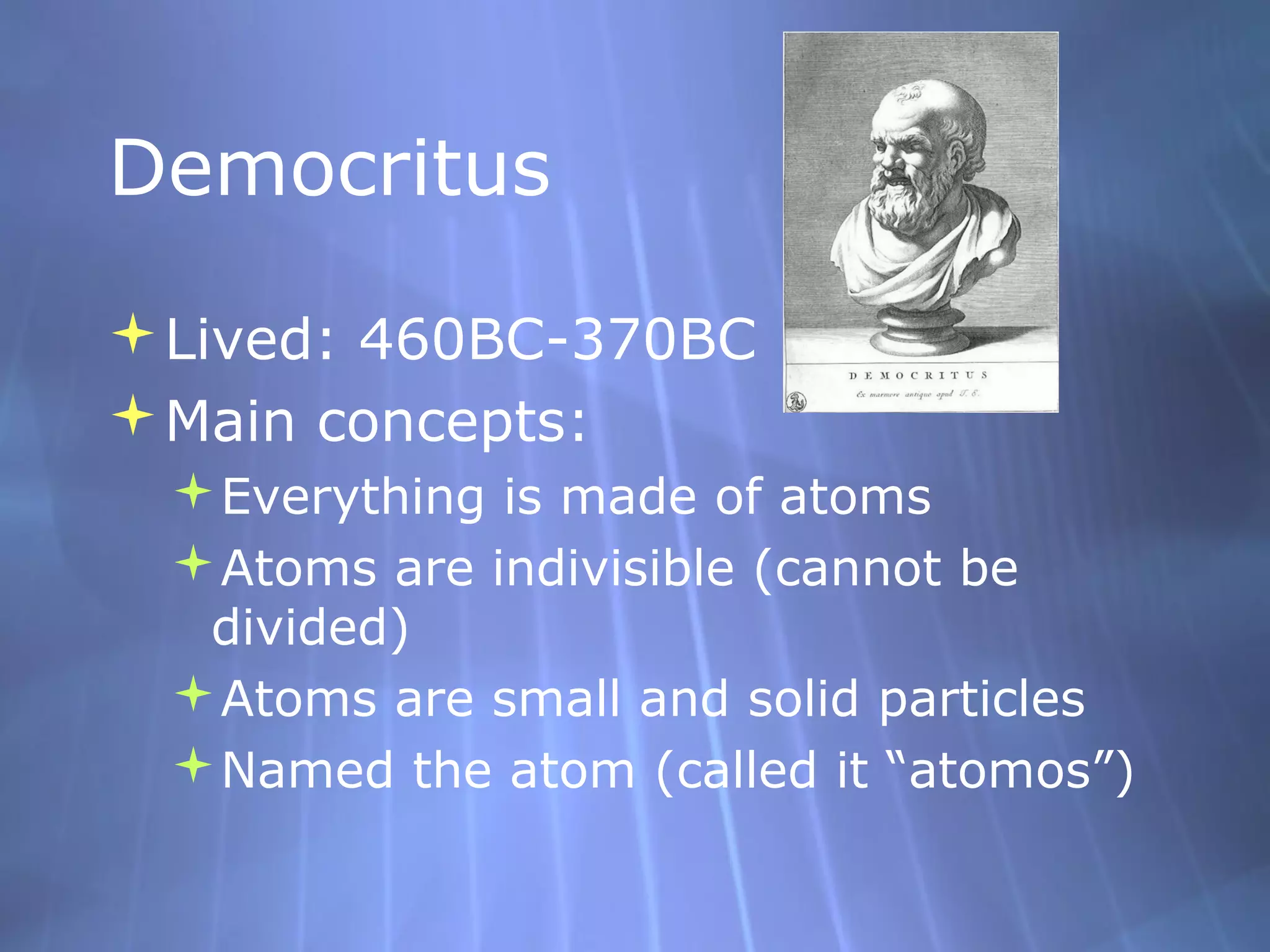
Democritus

Lived: 460BC-370BC
Main concepts:
 Everything is made of atoms
 Atoms are indivisible (cannot be
  divided)
 Atoms are small and solid particles
 Named the atom (called it “atomos”)
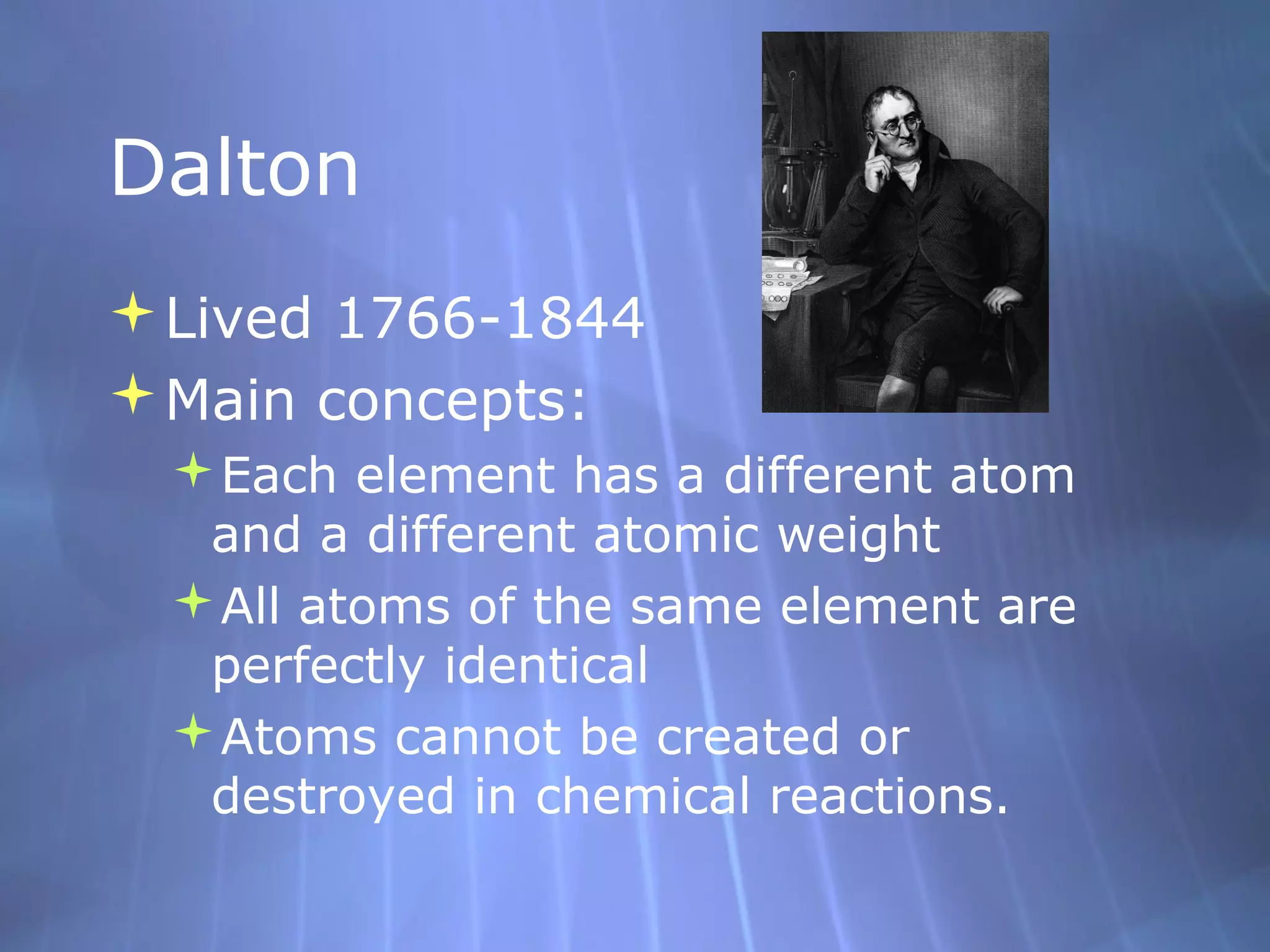
Dalton
Lived 1766-1844
Main concepts:
 Each element has a different atom
  and a different atomic weight
 All atoms of the same element are
  perfectly identical
 Atoms cannot be created or
  destroyed in chemical reactions.
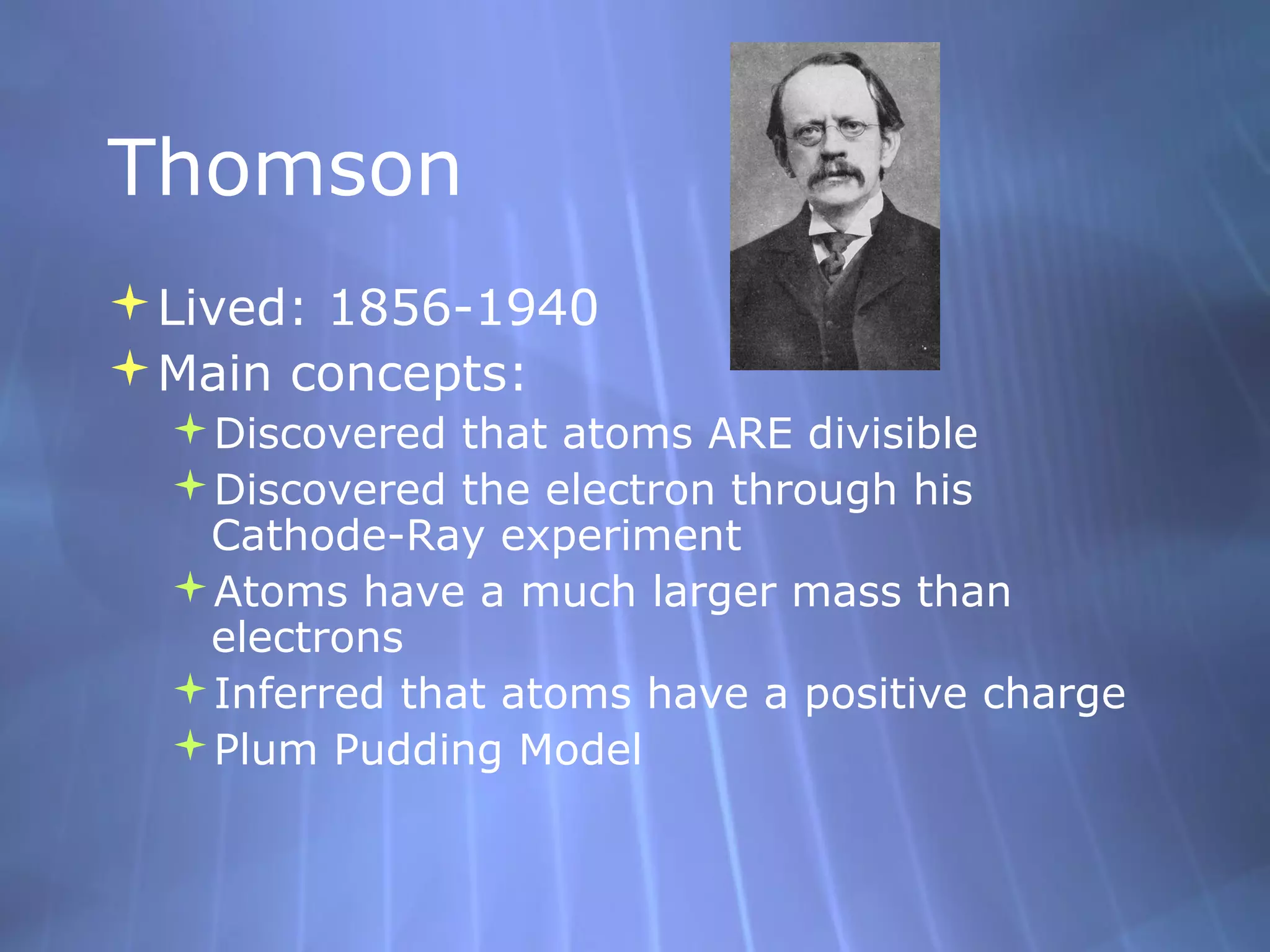
Thomson
Lived: 1856-1940
Main concepts:
  Discovered that atoms ARE divisible
  Discovered the electron through his
   Cathode-Ray experiment
  Atoms have a much larger mass than
   electrons
  Inferred that atoms have a positive charge
  Plum Pudding Model
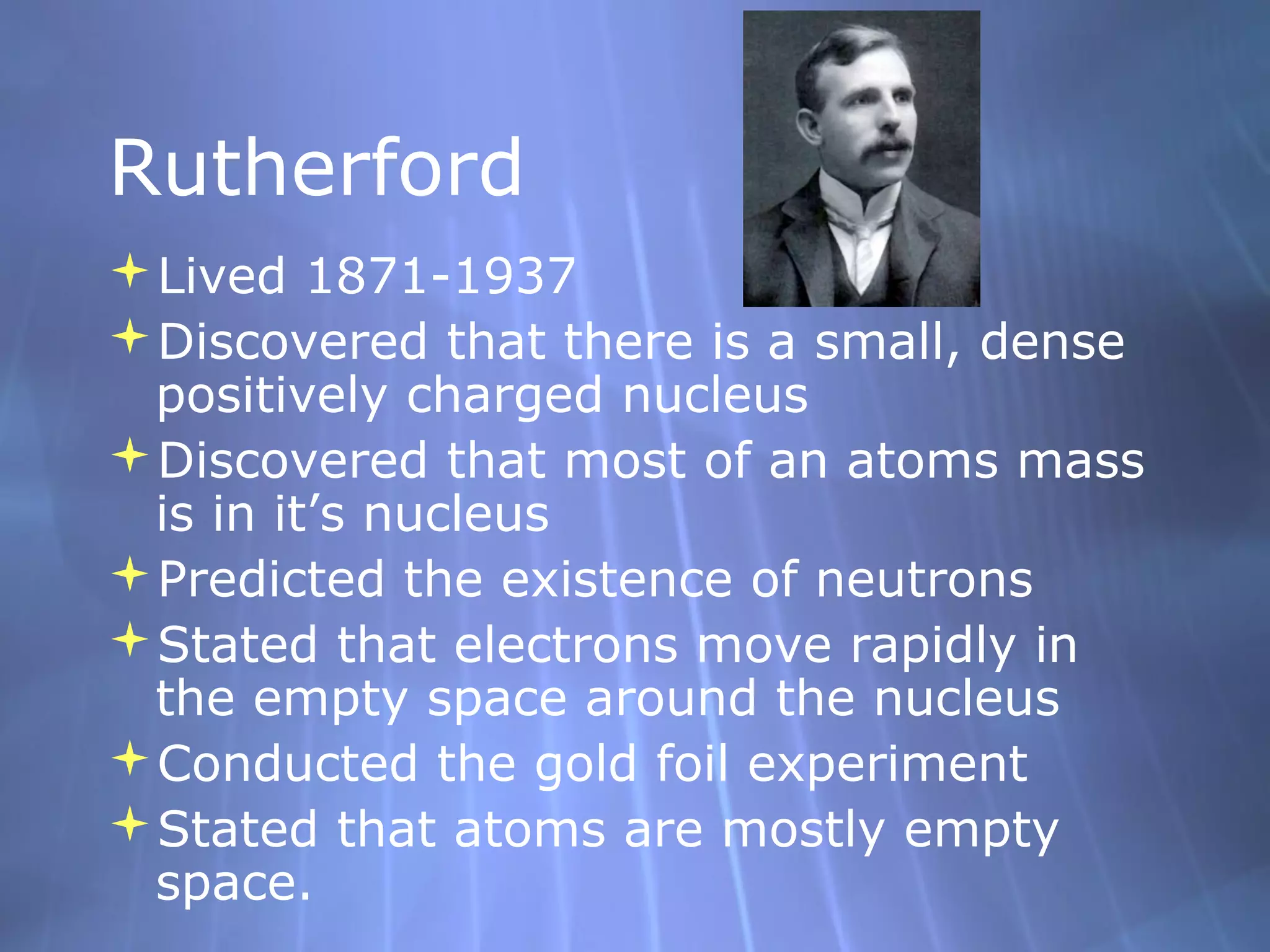
Rutherford
Lived 1871-1937
Discovered that there is a small, dense
 positively charged nucleus
Discovered that most of an atoms mass
 is in it’s nucleus
Predicted the existence of neutrons
Stated that electrons move rapidly in
 the empty space around the nucleus
Conducted the gold foil experiment
Stated that atoms are mostly empty
 space.
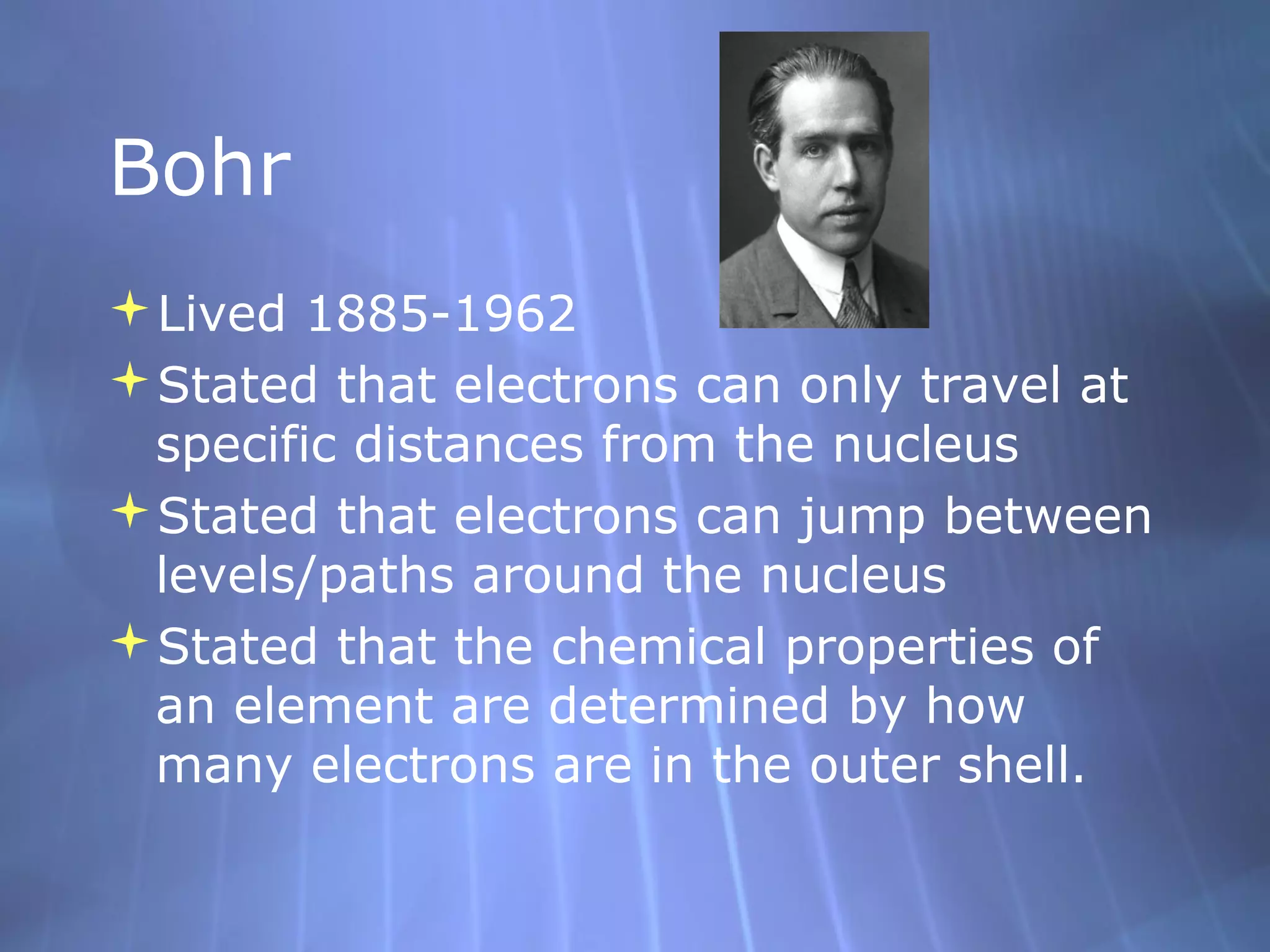
Bohr
Lived 1885-1962
Stated that electrons can only travel at
 specific distances from the nucleus
Stated that electrons can jump between
 levels/paths around the nucleus
Stated that the chemical properties of
 an element are determined by how
 many electrons are in the outer shell.
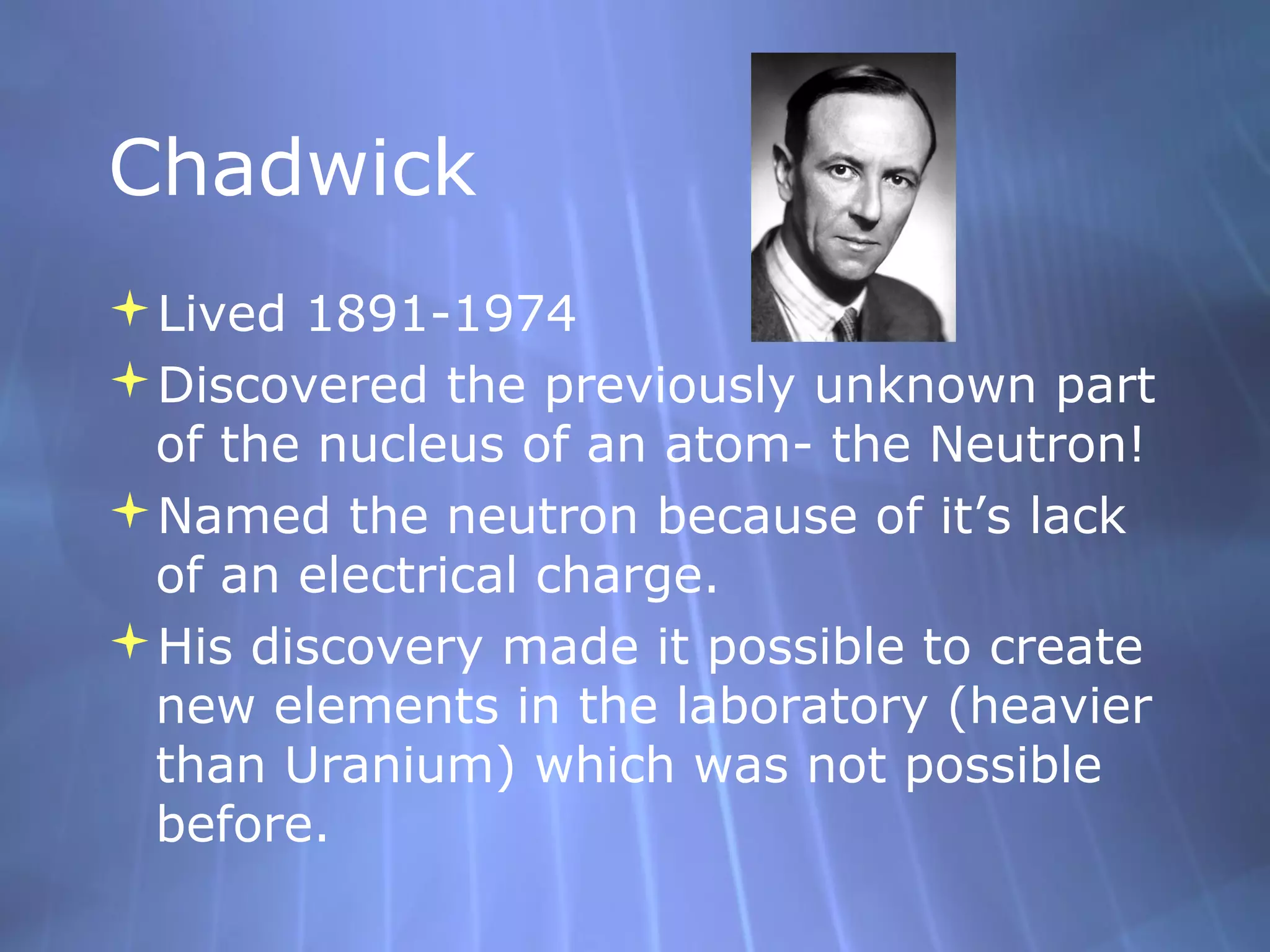
Chadwick
Lived 1891-1974
Discovered the previously unknown part
 of the nucleus of an atom- the Neutron!
Named the neutron because of it’s lack
 of an electrical charge.
His discovery made it possible to create
 new elements in the laboratory (heavier
 than Uranium) which was not possible
 before.
Electron Cloud Model
This is our most modern and
 accepted model of the atom
It differs from Bohr’s model
 because it states that the electrons
 can be found in a general region
 around the nucleus, not specific
 paths.
Time for:
The atom song!
http://www.youtube.com/wat
     ch?v=vUzTQWn-wfE

Evolution of atomic theory

  • 1.
    The Evolution ofThe Atomic Theory
  • 2.
    Democritus Lived: 460BC-370BC Main concepts: Everything is made of atoms Atoms are indivisible (cannot be divided) Atoms are small and solid particles Named the atom (called it “atomos”)
  • 3.
    Dalton Lived 1766-1844 Main concepts: Each element has a different atom and a different atomic weight All atoms of the same element are perfectly identical Atoms cannot be created or destroyed in chemical reactions.
  • 4.
    Thomson Lived: 1856-1940 Main concepts: Discovered that atoms ARE divisible Discovered the electron through his Cathode-Ray experiment Atoms have a much larger mass than electrons Inferred that atoms have a positive charge Plum Pudding Model
  • 5.
    Rutherford Lived 1871-1937 Discovered thatthere is a small, dense positively charged nucleus Discovered that most of an atoms mass is in it’s nucleus Predicted the existence of neutrons Stated that electrons move rapidly in the empty space around the nucleus Conducted the gold foil experiment Stated that atoms are mostly empty space.
  • 6.
    Bohr Lived 1885-1962 Stated thatelectrons can only travel at specific distances from the nucleus Stated that electrons can jump between levels/paths around the nucleus Stated that the chemical properties of an element are determined by how many electrons are in the outer shell.
  • 7.
    Chadwick Lived 1891-1974 Discovered thepreviously unknown part of the nucleus of an atom- the Neutron! Named the neutron because of it’s lack of an electrical charge. His discovery made it possible to create new elements in the laboratory (heavier than Uranium) which was not possible before.
  • 8.
    Electron Cloud Model Thisis our most modern and accepted model of the atom It differs from Bohr’s model because it states that the electrons can be found in a general region around the nucleus, not specific paths.
  • 9.
    Time for: The atomsong! http://www.youtube.com/wat ch?v=vUzTQWn-wfE