XIV INTERNATIONAL CONGRESS OF THE 
MEXICAN HYDROGEN SOCIETY CANCUN 2014 
By: 
J. M. Sandoval Cancino, I. Domínguez Ibarvo, D. E. Pacheco Catalán, 
Y. Verde-Goméz, J. L. Durán Gómez
Content 
 Introduction 
 Methodology 
 Converter description 
 Results and discussions 
 Conclusions
Introduction 
 Hybrid Renewable Energy Systems (HRES) 
 Intermittency Issues 
 Energy Storage Systems (ESS) 
 Batteries 
 Supercapacitors (SC) 
 Fuel Cells(FC) 
 Compressed Air 
 Interconnection via Integrated Bi-directional Flyback 
Converter (IBFBC)
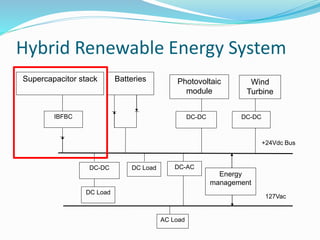
Hybrid Renewable Energy System 
Wind 
Turbine 
Photovoltaic 
module 
DC-DC DC-DC 
+24Vdc Bus 
DC-DC 
DC Load 
Energy 
management 
DC Load DC-AC 
AC Load 
127Vac 
Supercapacitor stack Batteries 
IBFBC
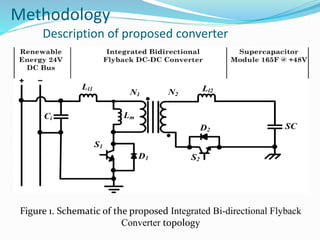
Figure 1. Schematic of the proposed Integrated Bi-directional Flyback 
Converter topology 
Methodology 
Description of proposed converter
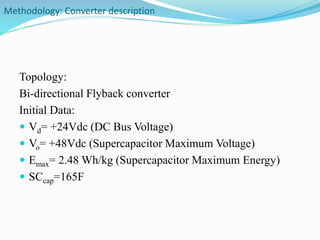
Methodology: Converter description 
Topology: 
Bi-directional Flyback converter 
Initial Data: 
 Vd= +24Vdc (DC Bus Voltage) 
 Vo= +48Vdc (Supercapacitor Maximum Voltage) 
 Emax= 2.48 Wh/kg (Supercapacitor Maximum Energy) 
 SCcap=165F
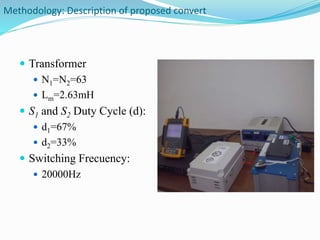
Methodology: Description of proposed convert 
 Transformer 
 N1=N2=63 
 Lm=2.63mH 
 S1 and S2 Duty Cycle (d): 
 d1=67% 
 d2=33% 
 Switching Frecuency: 
 20000Hz
Methodology: Converter description 
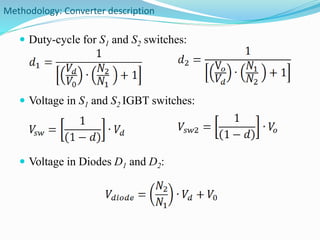
 Duty-cycle for S1 and S2 switches: 
 Voltage in S1 and S2 IGBT switches: 
 Voltage in Diodes D1 and D2:
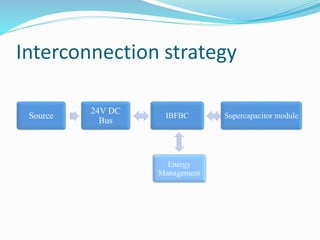
Interconnection strategy 
Source 
24V DC 
Bus 
IBFBC Supercapacitor module 
Energy 
Management
80 
40 
8 
4 
80 
40 
10 
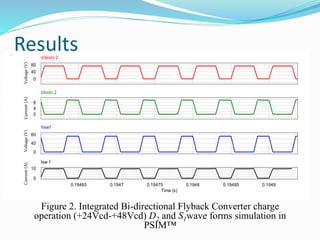
Figure 2. Integrated Bi-directional Flyback Converter charge 
operation (+24Vcd-+48Vcd) D2 and S1wave forms simulation in 
PSIM™ 
Results 
0 
Vdiodo 2 
0 
Idiodo 2 
0 
Vsw1 
0.19465 0.1947 0.19475 0.1948 0.19485 0.1949 
Time (s) 
0 
Isw 1 
Current (A) Voltage (V) Current (A) Voltage (V)
Results 
40 
0 
Vdiodo1 
3 
2 
1 
0 
Idiodo 1 
80 
40 
0 
Vsw 2 
0.2796 0.27965 0.2797 0.27975 
Time (s) 
2.5 
0 
Isw 2 
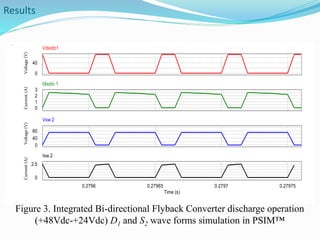
Figure 3. Integrated Bi-directional Flyback Converter discharge operation 
(+48Vdc-+24Vdc) D1 and S2 wave forms simulation in PSIM™ 
Current (A) Voltage (V) Current (A) Voltage (V)
Results 
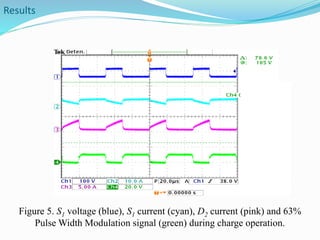
Figure 5. S1 voltage (blue), S1 current (cyan), D2 current (pink) and 63% 
Pulse Width Modulation signal (green) during charge operation.
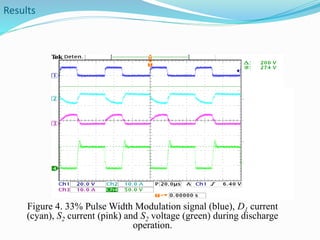
Figure 4. 33% Pulse Width Modulation signal (blue), D1 current 
(cyan), S2 current (pink) and S2 voltage (green) during discharge 
operation. 
Results
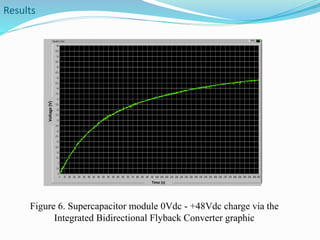
Figure 6. Supercapacitor module 0Vdc - +48Vdc charge via the 
Integrated Bidirectional Flyback Converter graphic 
Results 
Time (s) 
Voltage (V)
Output voltage 
50 48 46 44 42 40 38 36 34 32 30 
25 
20 
15 
10 
Output voltage (V) 
Input voltage (V) 
Results 
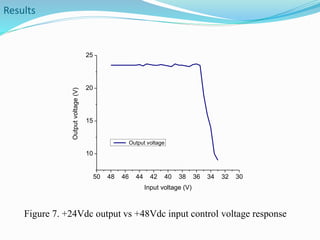
Figure 7. +24Vdc output vs +48Vdc input control voltage response
Conclusions 
 The IBFBC is a simple bidirectional topology that 
requires few components reducing costs an energy losses. 
 This Converter can be used to charge and discharge a 
supercapacitor module with a single device. 
 The IBFBC becomes unstable after 13V (27%) drop in 
supercapacitor terminals, and hence cannot reach deep 
discharge cycles. 
 Further enhancements are required for better performances 
and full topology potential.
Acknowledgments 
 CONACYT FOMIX Qroo-2011-001-174895, under Grant 
BS123CONACYT No. 280955. 
 CICY for the movility economical support granted 
 SMH for the conference scholarship 
 Centro de Investigación Científica de Yucatán A.C. 
 Instituto Tecnológico de Chihuahua 
 Instituto Tecnológico de Cancun 
 Dr. Ysmael Verde Gómez 
 M.C. Enrique Escobedo 
 M.C. Isaias Dominguez Ivarbo

Bi-directional Flyback DC-DC Converter

  • 1.
    XIV INTERNATIONAL CONGRESSOF THE MEXICAN HYDROGEN SOCIETY CANCUN 2014 By: J. M. Sandoval Cancino, I. Domínguez Ibarvo, D. E. Pacheco Catalán, Y. Verde-Goméz, J. L. Durán Gómez
  • 2.
    Content  Introduction  Methodology  Converter description  Results and discussions  Conclusions
  • 3.
    Introduction  HybridRenewable Energy Systems (HRES)  Intermittency Issues  Energy Storage Systems (ESS)  Batteries  Supercapacitors (SC)  Fuel Cells(FC)  Compressed Air  Interconnection via Integrated Bi-directional Flyback Converter (IBFBC)
  • 4.
    Hybrid Renewable EnergySystem Wind Turbine Photovoltaic module DC-DC DC-DC +24Vdc Bus DC-DC DC Load Energy management DC Load DC-AC AC Load 127Vac Supercapacitor stack Batteries IBFBC
  • 5.
    Figure 1. Schematicof the proposed Integrated Bi-directional Flyback Converter topology Methodology Description of proposed converter
  • 6.
    Methodology: Converter description Topology: Bi-directional Flyback converter Initial Data:  Vd= +24Vdc (DC Bus Voltage)  Vo= +48Vdc (Supercapacitor Maximum Voltage)  Emax= 2.48 Wh/kg (Supercapacitor Maximum Energy)  SCcap=165F
  • 7.
    Methodology: Description ofproposed convert  Transformer  N1=N2=63  Lm=2.63mH  S1 and S2 Duty Cycle (d):  d1=67%  d2=33%  Switching Frecuency:  20000Hz
  • 8.
    Methodology: Converter description  Duty-cycle for S1 and S2 switches:  Voltage in S1 and S2 IGBT switches:  Voltage in Diodes D1 and D2:
  • 9.
    Interconnection strategy Source 24V DC Bus IBFBC Supercapacitor module Energy Management
  • 10.
    80 40 8 4 80 40 10 Figure 2. Integrated Bi-directional Flyback Converter charge operation (+24Vcd-+48Vcd) D2 and S1wave forms simulation in PSIM™ Results 0 Vdiodo 2 0 Idiodo 2 0 Vsw1 0.19465 0.1947 0.19475 0.1948 0.19485 0.1949 Time (s) 0 Isw 1 Current (A) Voltage (V) Current (A) Voltage (V)
  • 11.
    Results 40 0 Vdiodo1 3 2 1 0 Idiodo 1 80 40 0 Vsw 2 0.2796 0.27965 0.2797 0.27975 Time (s) 2.5 0 Isw 2 Figure 3. Integrated Bi-directional Flyback Converter discharge operation (+48Vdc-+24Vdc) D1 and S2 wave forms simulation in PSIM™ Current (A) Voltage (V) Current (A) Voltage (V)
  • 12.
    Results Figure 5.S1 voltage (blue), S1 current (cyan), D2 current (pink) and 63% Pulse Width Modulation signal (green) during charge operation.
  • 13.
    Figure 4. 33%Pulse Width Modulation signal (blue), D1 current (cyan), S2 current (pink) and S2 voltage (green) during discharge operation. Results
  • 14.
    Figure 6. Supercapacitormodule 0Vdc - +48Vdc charge via the Integrated Bidirectional Flyback Converter graphic Results Time (s) Voltage (V)
  • 15.
    Output voltage 5048 46 44 42 40 38 36 34 32 30 25 20 15 10 Output voltage (V) Input voltage (V) Results Figure 7. +24Vdc output vs +48Vdc input control voltage response
  • 16.
    Conclusions  TheIBFBC is a simple bidirectional topology that requires few components reducing costs an energy losses.  This Converter can be used to charge and discharge a supercapacitor module with a single device.  The IBFBC becomes unstable after 13V (27%) drop in supercapacitor terminals, and hence cannot reach deep discharge cycles.  Further enhancements are required for better performances and full topology potential.
  • 17.
    Acknowledgments  CONACYTFOMIX Qroo-2011-001-174895, under Grant BS123CONACYT No. 280955.  CICY for the movility economical support granted  SMH for the conference scholarship  Centro de Investigación Científica de Yucatán A.C.  Instituto Tecnológico de Chihuahua  Instituto Tecnológico de Cancun  Dr. Ysmael Verde Gómez  M.C. Enrique Escobedo  M.C. Isaias Dominguez Ivarbo