Building Methods & Construction
Technology
Reinforced Brickwork
Tutor Copy
RETAINING WALLS
Definition:
A wall so designed and constructed to withstand any forces and
detrimental (harmful) effects imposed upon it.
Forces and detrimental effects could be :-
• Lateral thrust from the ground being retained, can be caused by:
wall not being thick enough causing cracking or collapse.
incorrect choice of bond.
topple or slide from its foundation.
• Soaking from ground water in the soil, can cause breakdown of
brickwork and mortar:
sulphate attack
frost attack
efflorescence / unsightly dampness
• Rising dampness
• Dampness from above
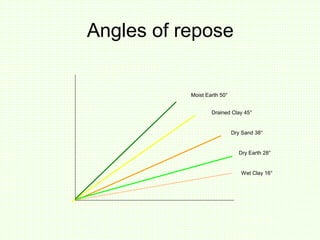
Moist Earth 50°
Angles of repose
Drained Clay 45°
Dry Sand 38°
Dry Earth 28°
Wet Clay 16°
3 TYPICAL EXAMPLES OF BRICK
RETAINING WALLS
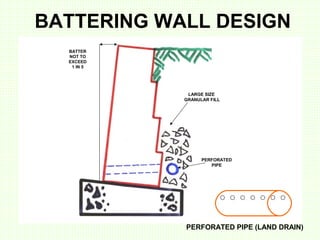
LARGE SIZE
GRANULAR FILL
PERFORATED
PIPE
BATTERING WALL DESIGN
BATTER
NOT TO
EXCEED
1 IN 5
PERFORATED PIPE (LAND DRAIN)
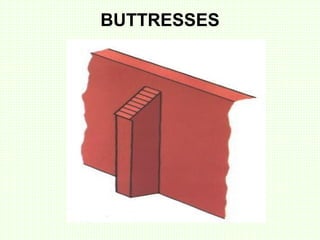
BUTTRESSES
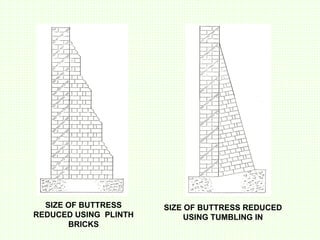
SIZE OF BUTTRESS
REDUCED USING PLINTH
BRICKS
SIZE OF BUTTRESS REDUCED
USING TUMBLING IN
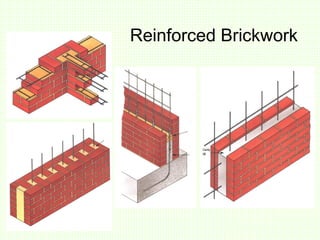
Reinforced Brickwork
REINFORCED CONCRETE
RETAINING WALL
The reinforced
concrete wall is
designed to absorb /
counteract all the
forces of thrust – the
masonry ‘cladding’ is
only cosmetic.
STEEL
REINFORCEMENT
CONCRETE
SLOTTED
TIES
BRICKWORK or
STONEWORK etc.
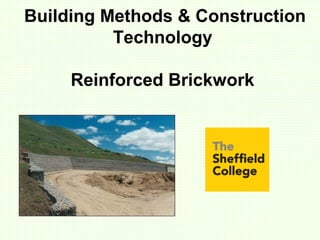
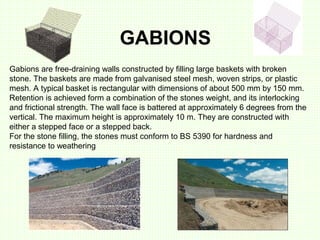
GABIONS
Gabions are free-draining walls constructed by filling large baskets with broken
stone. The baskets are made from galvanised steel mesh, woven strips, or plastic
mesh. A typical basket is rectangular with dimensions of about 500 mm by 150 mm.
Retention is achieved form a combination of the stones weight, and its interlocking
and frictional strength. The wall face is battered at approximately 6 degrees from the
vertical. The maximum height is approximately 10 m. They are constructed with
either a stepped face or a stepped back.
For the stone filling, the stones must conform to BS 5390 for hardness and
resistance to weathering
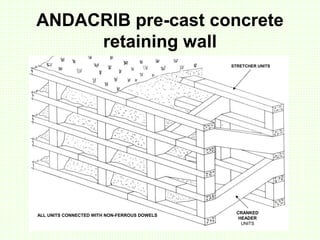
ANDACRIB pre-cast concrete
retaining wall
STRETCHER UNITS
ALL UNITS CONNECTED WITH NON-FERROUS DOWELS
CRANKED
HEADER
UNITS
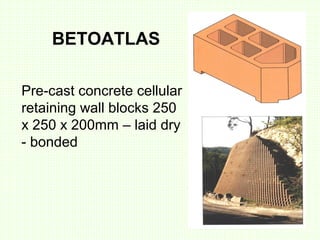
BETOATLAS
Pre-cast concrete cellular
retaining wall blocks 250
x 250 x 200mm – laid dry
- bonded
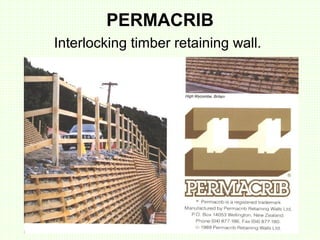
PERMACRIB
Interlocking timber retaining wall.

Tutor retaining reinforced brickwork

  • 1.
    Building Methods &Construction Technology Reinforced Brickwork
  • 2.
  • 3.
    RETAINING WALLS Definition: A wallso designed and constructed to withstand any forces and detrimental (harmful) effects imposed upon it. Forces and detrimental effects could be :- • Lateral thrust from the ground being retained, can be caused by: wall not being thick enough causing cracking or collapse. incorrect choice of bond. topple or slide from its foundation. • Soaking from ground water in the soil, can cause breakdown of brickwork and mortar: sulphate attack frost attack efflorescence / unsightly dampness • Rising dampness • Dampness from above
  • 4.
    Moist Earth 50° Anglesof repose Drained Clay 45° Dry Sand 38° Dry Earth 28° Wet Clay 16°
  • 5.
    3 TYPICAL EXAMPLESOF BRICK RETAINING WALLS
  • 6.
    LARGE SIZE GRANULAR FILL PERFORATED PIPE BATTERINGWALL DESIGN BATTER NOT TO EXCEED 1 IN 5 PERFORATED PIPE (LAND DRAIN)
  • 7.
  • 8.
    SIZE OF BUTTRESS REDUCEDUSING PLINTH BRICKS SIZE OF BUTTRESS REDUCED USING TUMBLING IN
  • 9.
  • 10.
    REINFORCED CONCRETE RETAINING WALL Thereinforced concrete wall is designed to absorb / counteract all the forces of thrust – the masonry ‘cladding’ is only cosmetic. STEEL REINFORCEMENT CONCRETE SLOTTED TIES BRICKWORK or STONEWORK etc.
  • 11.
    GABIONS Gabions are free-drainingwalls constructed by filling large baskets with broken stone. The baskets are made from galvanised steel mesh, woven strips, or plastic mesh. A typical basket is rectangular with dimensions of about 500 mm by 150 mm. Retention is achieved form a combination of the stones weight, and its interlocking and frictional strength. The wall face is battered at approximately 6 degrees from the vertical. The maximum height is approximately 10 m. They are constructed with either a stepped face or a stepped back. For the stone filling, the stones must conform to BS 5390 for hardness and resistance to weathering
  • 12.
    ANDACRIB pre-cast concrete retainingwall STRETCHER UNITS ALL UNITS CONNECTED WITH NON-FERROUS DOWELS CRANKED HEADER UNITS
  • 13.
    BETOATLAS Pre-cast concrete cellular retainingwall blocks 250 x 250 x 200mm – laid dry - bonded
  • 14.