The Cell-Mediated Immunity.
Hypersensitivity: classification, the
Mechanisms of Development,
Prophylaxis and Treatment
Svitich Oxana Anatolievna
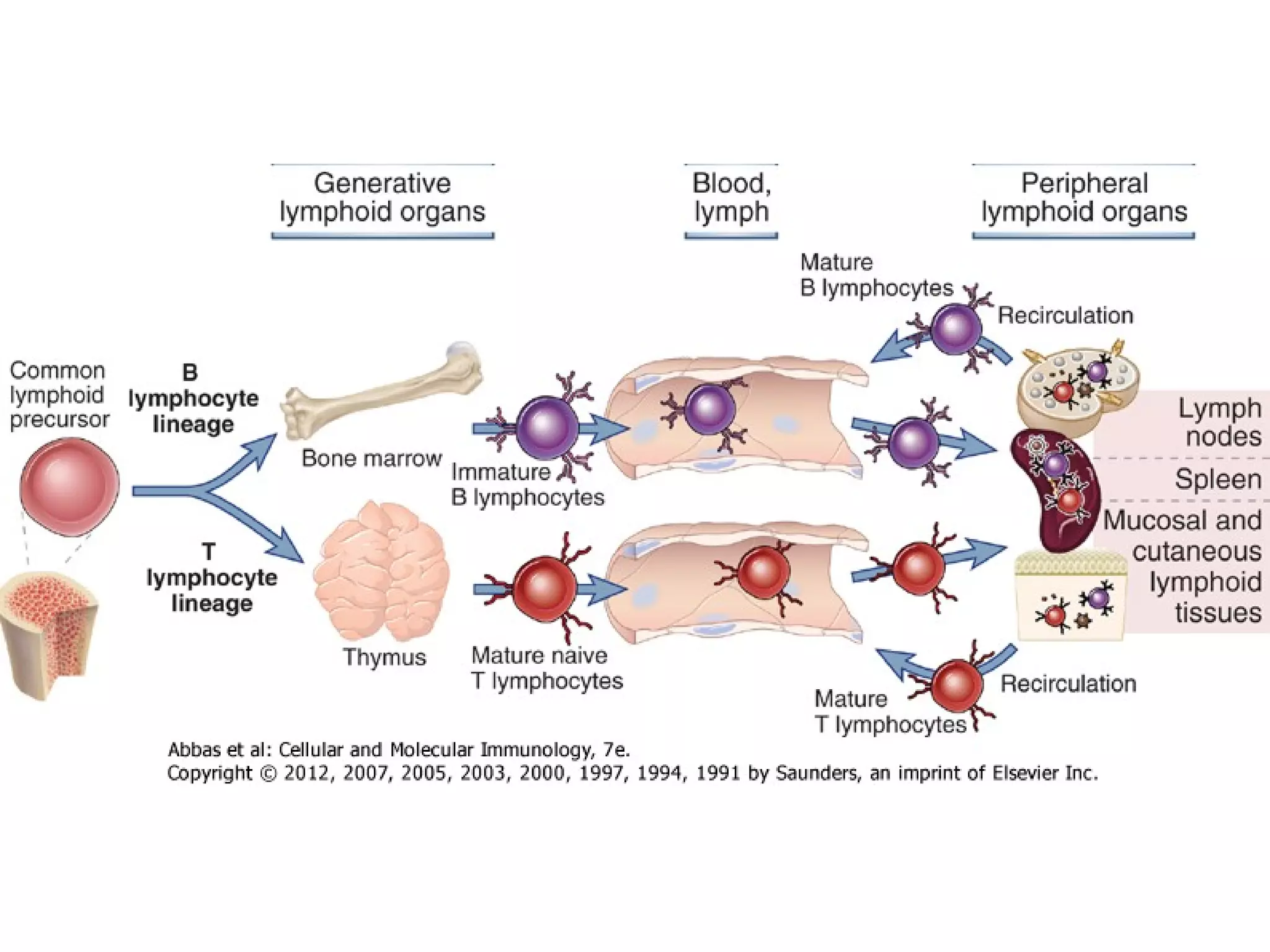
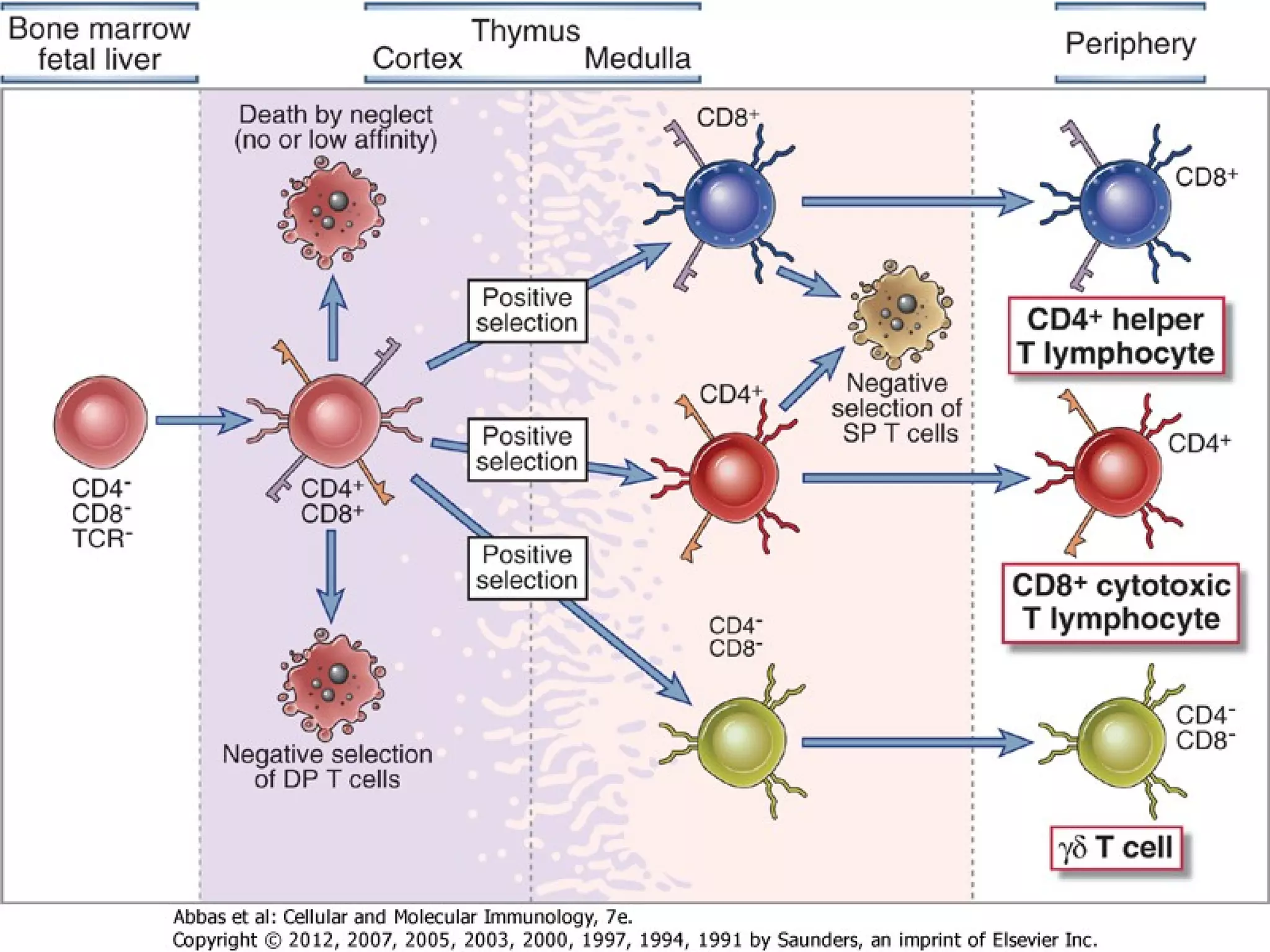
differentiation of T cells…
МНС
MHC (HLA)
6р
4 000 000 n
200 genes
The Cell-Mediated Immunity
Hypersensitivity: classification, the
Mechanisms of Development
Type I hypersensitivity
• The IgE-antigen reaction occurring on the
surface of basophils and mast cells leads to
receptor cross-linking and degranulation
(histamine and serotonin), which collectively
cause of vasodilation, increased vascular
permeability ets.
• These reactions can affect a single tissue or
organ (as in asthma) or multiple ones (as in
generalised anaphilaxis).
Type II hypersensitivity
• Unlike Type I reactions, Type II hypersensitivity is caused by
direct antibody-mediated cell damage or lysis.
• (i) complement-dependent red blood cell lysis, for example as
a result of haemolytic transfusion reactions (HTR).
• (ii) antibody-dependent red blood cell degradation (Rh
incompatibility).
• (iii) antibody-dependent cell-mediated cytotoxicity (ADCC),
which occurs when cytotoxic antibodies become fixed on the
surface of cytotoxic T cells and subsequent antigen binding
induce perforin-dependent cell lysis of the cell bearing the
antigen.
Type III hypersensitivity
• Type III hypersensitivity reactions are caused by
antibody-antigen complexes. When significant quantities
of such immune complexes are formed, they can deposit
in tissues and lead to a tissue reaction which is initiated
by complement activation and leads to mast cell
degranulation and an inflammatory reactions caused by
the activation of these cells.
Treatment
• Removal or avoidance of allergic triggers
• Mast cell stabilizers
• Anti-inflammatory corticosteroids and
leukotriene inhibitors
• Immunotherapy (desensitization)
thank you for attention
• Методы лабораторной диагностики
аллергии : выявление уровня сывороточных
IgE, циркулирующих и фиксированных
(тканевых) иммунных комплексов,
провокационные и кожные пробы с
предполагаемыми аллергенами, выявление
сенсибилизированных клеток тестами in vitro
— реакция бласттрансформации лимфоцитов
(РБТЛ), цитотоксические тесты и др.
Allergens
• By definition, an allergen induces type I IgE-mediated or
type IV T-cell–mediated immune responses. Allergic
triggers are almost always low molecular weight proteins;
many of them can become attached to airborne particles.
• Allergens that most commonly cause acute and chronic
allergic reactions include
• House dust
• Mite feces
• Animal dander
• Pollens (tree, grass, weed)
• Molds

Cell mediated Immunity

  • 1.
    The Cell-Mediated Immunity. Hypersensitivity:classification, the Mechanisms of Development, Prophylaxis and Treatment Svitich Oxana Anatolievna
  • 2.
  • 9.
  • 10.
    MHC (HLA) 6р 4 000000 n 200 genes
  • 15.
  • 19.
  • 21.
  • 22.
    • The IgE-antigenreaction occurring on the surface of basophils and mast cells leads to receptor cross-linking and degranulation (histamine and serotonin), which collectively cause of vasodilation, increased vascular permeability ets. • These reactions can affect a single tissue or organ (as in asthma) or multiple ones (as in generalised anaphilaxis).
  • 24.
    Type II hypersensitivity •Unlike Type I reactions, Type II hypersensitivity is caused by direct antibody-mediated cell damage or lysis. • (i) complement-dependent red blood cell lysis, for example as a result of haemolytic transfusion reactions (HTR). • (ii) antibody-dependent red blood cell degradation (Rh incompatibility). • (iii) antibody-dependent cell-mediated cytotoxicity (ADCC), which occurs when cytotoxic antibodies become fixed on the surface of cytotoxic T cells and subsequent antigen binding induce perforin-dependent cell lysis of the cell bearing the antigen.
  • 25.
    Type III hypersensitivity •Type III hypersensitivity reactions are caused by antibody-antigen complexes. When significant quantities of such immune complexes are formed, they can deposit in tissues and lead to a tissue reaction which is initiated by complement activation and leads to mast cell degranulation and an inflammatory reactions caused by the activation of these cells.
  • 31.
    Treatment • Removal oravoidance of allergic triggers • Mast cell stabilizers • Anti-inflammatory corticosteroids and leukotriene inhibitors • Immunotherapy (desensitization)
  • 32.
    thank you forattention
  • 34.
    • Методы лабораторнойдиагностики аллергии : выявление уровня сывороточных IgE, циркулирующих и фиксированных (тканевых) иммунных комплексов, провокационные и кожные пробы с предполагаемыми аллергенами, выявление сенсибилизированных клеток тестами in vitro — реакция бласттрансформации лимфоцитов (РБТЛ), цитотоксические тесты и др.
  • 35.
    Allergens • By definition,an allergen induces type I IgE-mediated or type IV T-cell–mediated immune responses. Allergic triggers are almost always low molecular weight proteins; many of them can become attached to airborne particles. • Allergens that most commonly cause acute and chronic allergic reactions include • House dust • Mite feces • Animal dander • Pollens (tree, grass, weed) • Molds