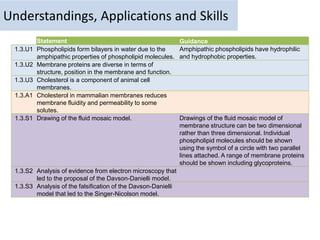
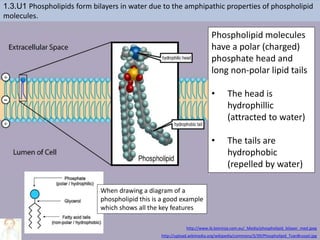
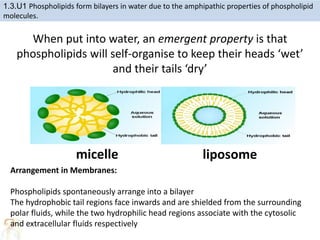
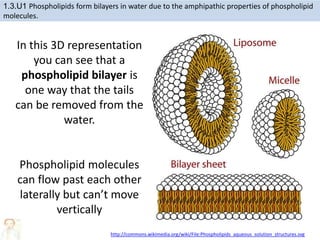
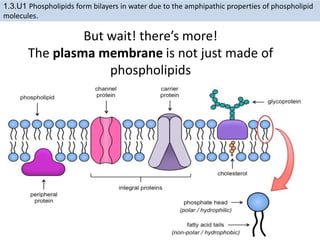
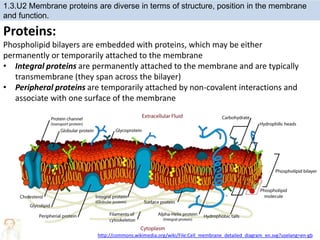
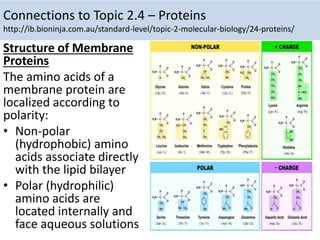
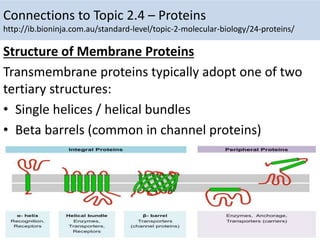
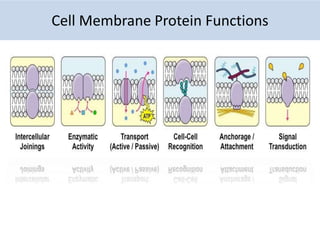
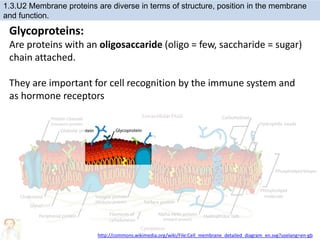
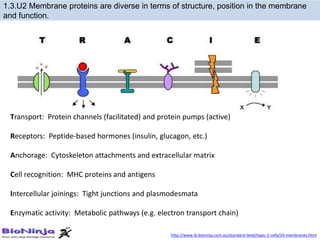
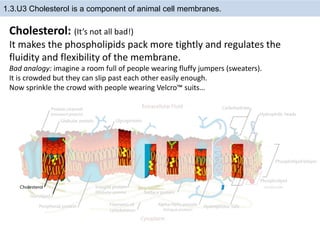
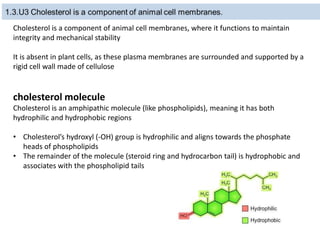
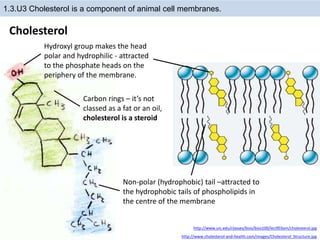
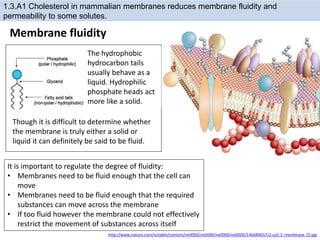
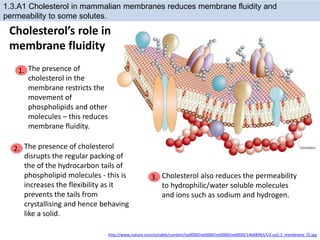
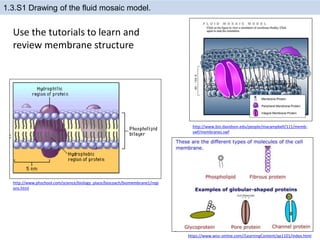
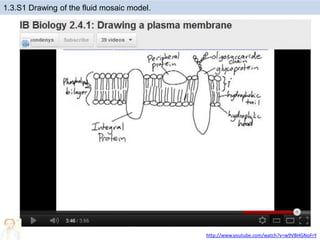
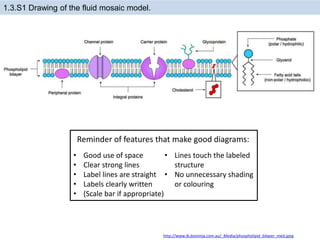
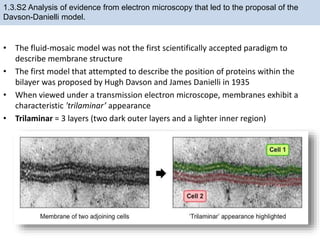
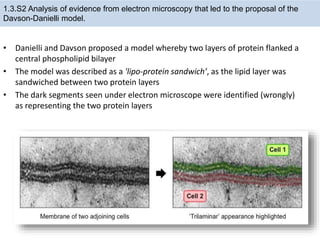
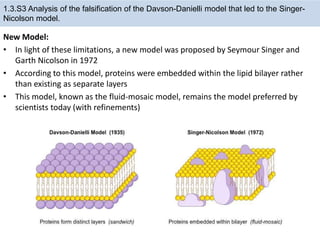
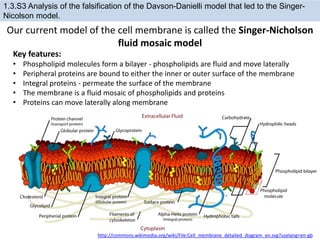
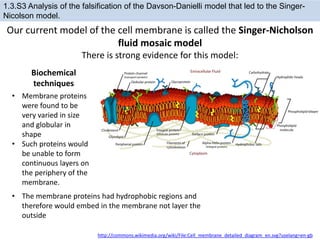
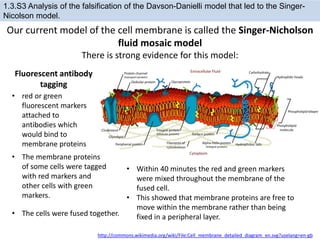
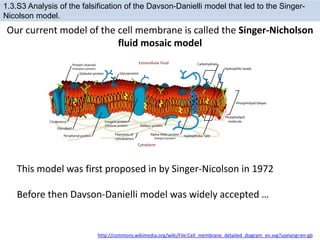
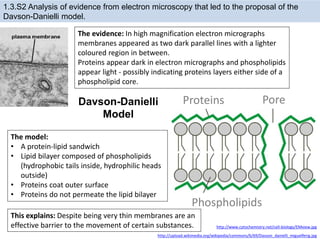
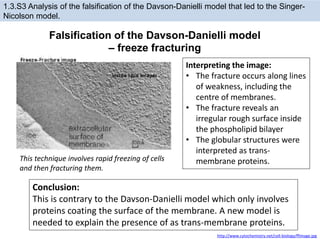
The structure of biological membranes allows them to be fluid and dynamic. Membranes are made of a phospholipid bilayer with proteins and cholesterol embedded within. Phospholipids form bilayers due to their amphipathic properties - their hydrophobic tails orient inward while hydrophilic heads remain on the outer surfaces. Membrane proteins perform diverse functions and can be integral or peripheral. Cholesterol increases membrane stability while reducing fluidity. Early models of membrane structure proposed protein layers sandwiching the bilayer, but evidence demonstrated proteins are mobile within the bilayer, leading to the current fluid mosaic model.