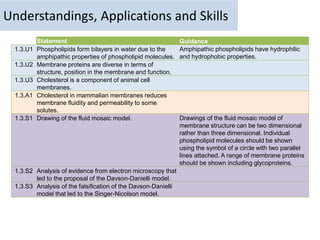
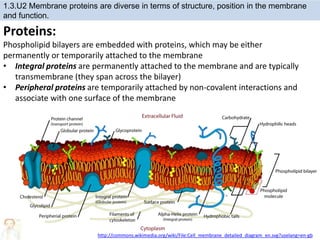
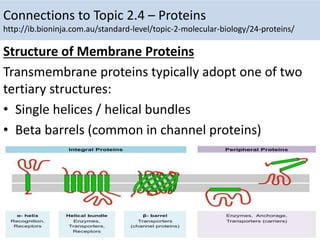
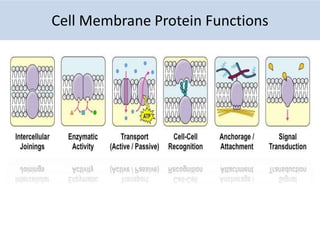
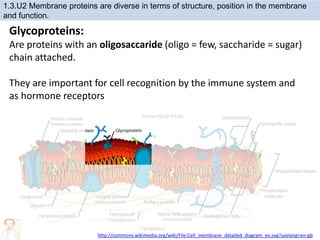
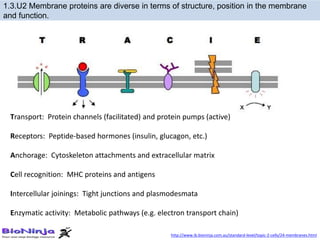
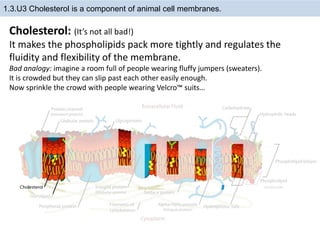
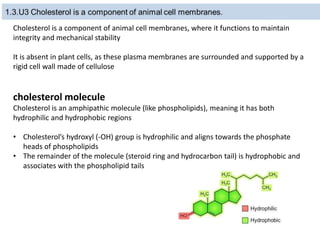
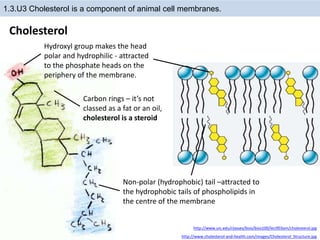
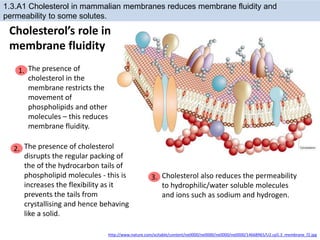
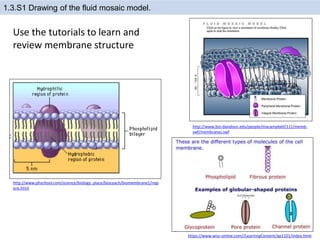
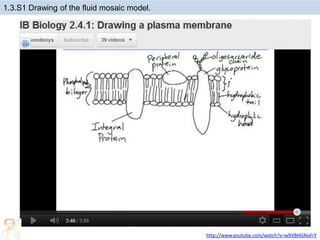
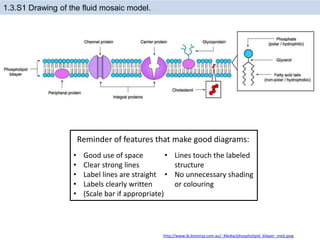
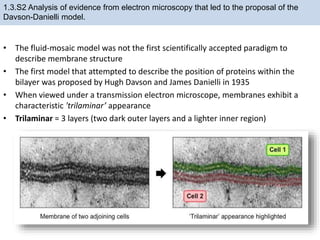
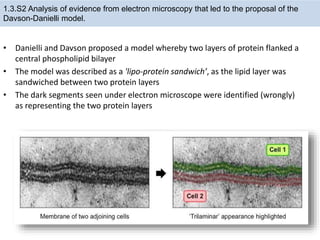
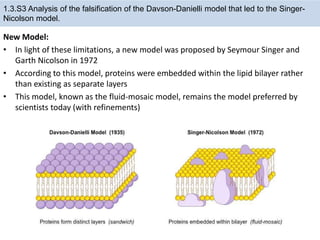
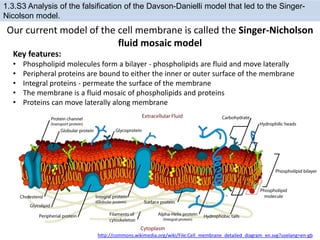
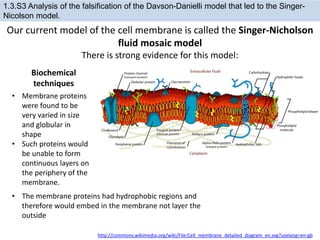
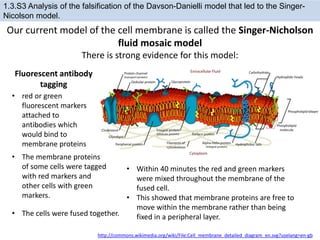
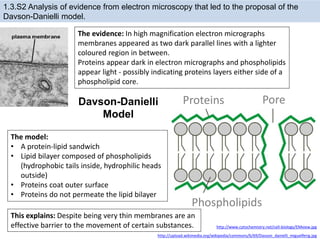
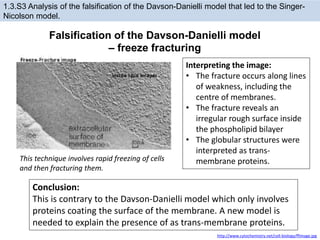
The structure of biological membranes allows them to be fluid and dynamic. Phospholipid molecules spontaneously arrange into a bilayer structure in water due to their amphipathic properties. This structure orients the hydrophobic tails of the phospholipids inward, shielded from water, while the hydrophilic heads remain in contact with water. Additional components such as membrane proteins and cholesterol are embedded within the phospholipid bilayer and influence membrane properties such as fluidity. Cholesterol increases the packing of phospholipids and regulates membrane fluidity and permeability.